Niall Horan Pays Tribute To Liam Payne On Heartbreaking New Song

Niall Horan is opening up about his former bandmate Liam Payne’s death.

The ex-One Direction star recently sat down for an interview with GQ Hype, where the subject of Liam came up during the course of the conversation.

Liam died in October 2024 at the age of 31, after falling from a balcony in Argentina while under the influence of numerous substances.

Shortly before his death, he attended Niall’s concert in Buenos Aires, with the two also catching up while they were both in South America.

“It was great,” the Slow Hands singer recalled, claiming the two quickly fell “back in like it was 10 years ago” when they met up. “[Liam] seemed in good form and we had a good laugh, good reminisce.”

Liam Payne and Niall Horan with One Direction bandmates Louis Tomlinson, Zayn Malik and Harry Styles in 2014

via Associated Press

Niall later got the message that Liam had died, admitting: “I just didn’t think it was real. Someone so young, you’re not expecting to hear that they’ve passed, especially someone that you’ve just seen. I just went back from shock to sadness to anger.”

After he and his former bandmates attended Liam’s funeral, he said that he “went into hiding a little bit” to allow himself time to grieve, and has written a song about the loss on his upcoming album Dinner Party.

Per GQ Hype, on the song End Of An Era, Niall can be heard singing: “We had it, pure magic, remember what it was like, time passes so fast and I couldn’t tell you goodbye.”

In the days after Liam’s death, Niall told his Instagram followers: “Liam had an energy for life and a passion for work that was infectious. He was the brightest in every room and always made everyone feel happy and secure.

“All the laughs we had over the years, sometimes about the simplest of things, keep coming to mind through the sadness. We got to live out our wildest dreams together and I will cherish every moment we had forever. The bond and friendship we had doesn’t happen often in a lifetime.

“I feel so fortunate that I got to see him recently. I sadly didn’t know that after saying goodbye and hugging him that evening, I would be saying goodbye forever. It’s heartbreaking.”

Meanwhile, Harry Styles recently shared his own feelings about the loss of Liam during a recent interview.

Share Button

Stay at home advice questioned and rules too tough – key findings from Covid report

An NHS close to collapse, patients failed and NHS staff put at risk – what you need to know.

Share Button

Patients harmed as Covid pandemic brought NHS close to collapse, inquiry finds

Third report into the pandemic says patients and staff were failed as health service only just coped.

Share Button

The best strength training plan might be simpler than you think

The first major update to resistance training recommendations in 17 years delivers a straightforward message. Even small amounts of resistance training can improve strength, increase muscle size, enhance power, and support overall physical function.

The updated guidance, released by the American College of Sports Medicine (ACSM) as a Position Stand, is built on 137 systematic reviews covering more than 30,000 participants. This makes it the most extensive and evidence-based set of resistance training recommendations to date.

“The best resistance training program is the one you’ll actually stick with,” says Stuart Phillips, distinguished professor in the Department of Kinesiology and an author on the Position Stand. “Training all major muscle groups at least twice a week matters far more than chasing the idea of a ‘perfect’ or complex training plan. Whether it’s barbells, bands, or bodyweight, consistency and effort drive results.”

Updated Guidance Reflects Surge in Strength Research

This update comes after years of growing scientific interest in muscle health and aging. The last ACSM Position Stand on resistance training for healthy adults was published in 2009, before a wave of new research on how strength impacts long term health and well-being.

“The new document reflects that surge in evidence and expands its recommendations to include more people and more types of training than ever before,” Phillips says.

A key takeaway from the updated guidelines is that the biggest benefits often come from a simple starting point. Transitioning from no resistance training to any regular activity can lead to meaningful improvements. While factors such as load, volume, and frequency can be adjusted, experts say the main priority for most adults should be building a routine they can follow consistently.

No Gym Required for Strength and Muscle Gains

Another important shift in the recommendations is the recognition that effective resistance training does not require access to a gym. Exercises using elastic bands, bodyweight movements, or simple at home routines can still produce measurable gains in strength, muscle size, and daily function.

According to Phillips, strict rules about the “ideal” training plan are no longer supported by current evidence. Instead, personal preferences, enjoyment, and the ability to maintain a routine over time are what matter most. This approach is especially important for adults who want to stay strong, healthy, and capable as they age.

Focus on Consistency Over Complexity

Athletes and highly trained individuals may still need more specialized, sport specific programs. However, for most adults, the guidance is clear. Choose a resistance training routine that fits your lifestyle and stick with it over time.

The full ACSM Position Stand is now available in Medicine & Science in Sports & Exercise.

Share Button

Health bosses can’t confirm meningitis outbreak contained

Health workers across England are urged to look out for signs of infection as thousands have jabs.

Share Button

Better NHS care might have saved 58 babies, BBC finds

There are growing calls for a statutory public inquiry into maternity services in Oxford.

Share Button

Labour Should Pledge To Rejoin European Union At Next General Election, Says Sadiq Khan

Labour should include a pledge to rejoin the European Union in the party’s next general election manifesto, Sadiq Khan has declared.

In comments which will be seen as a direct challenge to Keir Starmer, the London mayor said it was time for the party to “be bold” in its offer to voters.

In an interview with Italian newspaper La Repubblica, Khan repeated his call for Britain to rejoin the EU customs union and single market in this parliament – a move already ruled out by the prime minister.

But he said Labour should go even further by pledging to take the UK back into the EU if it wins the next election, which is expected in 2029.

Khan said: “I’m quite clear. On the ballot paper of the next general election is a vote for Labour, a vote to rejoin the European Union, and we should be unequivocal about the benefits of the European Union because we’ve now seen the alternative.

“We’ve now seen what happens when you’re outside the European Union: less investment in the UK, less exports to the European Union.”

Asked in 2024 whether he could foresee the UK rejoining the single market or customs union in his lifetime, Starmer said: “No. I don’t think that that is going to happen. I’ve been really clear about not rejoining the EU, the single market or the customs union.”

However, in his interview, Khan said it was “inevitable” that the UK would once again become an EU member state now that voters have seen the damage done by Brexit.

He said: “We’ve now seen what happens when you’re outside the European Union: less investment in the UK, less exports to the European Union.

“But let me speak from experience. You know, since 2019, and it breaks my heart, I’ve seen Londoners who are EU nationals leaving London.

“We had in 2019 more than 840,000 EU Londoners working in London. That’s gone down to now 700,000, that means 140,000 Londoners have left London, and the two biggest sectors they’ve left concerned construction and hospitality.

“And these are Romanians, Polish, Italian, French, Irish Londoners, who’ve left their friends. They’ve left their neighbours. As a consequence, we’ve suffered economically, in construction, hospitality, but also we’ve suffered socially and culturally as well.”

Share Button

Why has this meningitis outbreak spread so fast?

There have been 20 cases since the weekend in one small area of Kent – but this isn’t the normal pattern, so what could have happened?

Share Button

Trump Sends Bizarre Warning To ‘Non-Responsive’ Allies Over Iran War

Donald Trump has issued a bizarre threat to his “non-responsive” allies who are not supporting the US’s war against Iran.

The president has called for Nato members to send warships to the Strait of Hormuz, the major oil shipping lane which Iranian forces have effectively closed by targeting all vessels which pass through there.

But allies, including Britain, have refused to get drawn into the wider war even as the cost of oil continues to climb.

So the president fumed on TruthSocial: “I wonder what would happen if we ‘finished off’ what’s left of the Iranian Terror State, and let the Countries that use it, we don’t, be responsible for the so called ‘Strait?’

“That would get some of our non-responsive ‘Allies’ in gear, and fast!!!”

Trump also attacked Nato on Tuesday, claiming the defensive alliance had abandoned the US “in its time of need”.

Speaking from the Oval Office, he insisted “we don’t need any help” from Nato, before adding: “But they should’ve been there.”

The president has also lashed out repeatedly at the UK in particular for not backing the US’s strikes.

Keir Starmer rejected America’s first request to use British military sites to attack Iran before granting permission to a second query, asking to use the bases for “defensive” and “limited” strikes.

Trump has raged about this decision, claiming this week that the UK-US relationship was “always the best” until “Keir came along”.

He said the war a “great test” of the so-called “special relationship” with America.

Share Button

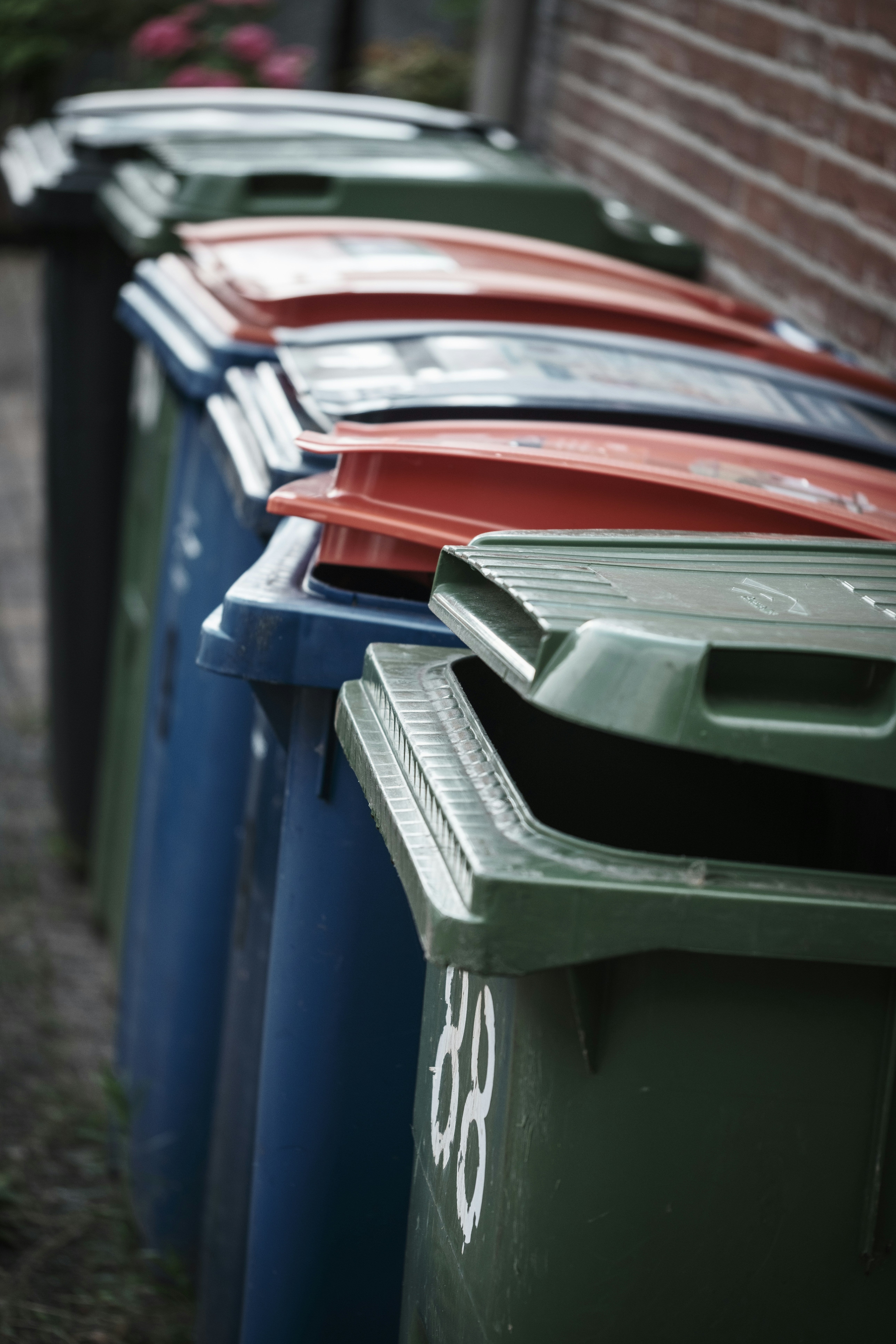
Everything You Need To Know About This Month’s New Bin Collection Changes

As a part of their “Simpler Recycling” initiative, the government is going to change the rules around how bins are collected across England this month.

It will mean councils will have to offer collections for the same four kinds of waste.

Here’s when it comes into place, what it means, why it’s happening, and what you need to do next:

When do the bin changes come into place?

For households, the changes begin on 31 March, 2026.

For workplace recycling, they have been in place at businesses with 10 or more employees since 31 March, 2025.

If you need more information on changes that might affect your local area, check your council’s website or contact them directly.

Where do the bin changes apply?

They will apply in England.

What do the new “Simpler Recycling” rules mean?

The standard requirement for businesses and households will be the following four bins:

  • residual (non-recyclable) waste,
  • food waste (mixed with garden waste if appropriate),
  • paper and card,
  • all other dry recyclable materials (plastic, metal and glass).

That means they’ll be collected separately.

“Plastic film packaging and plastic bags will need to be collected with plastic recycling from 31 March 2027,” the government explained on its website.

In the meantime, the four options bullet-pointed above will become the standard ones in England.

They must be collected from all households, including flats.

Why has the government created this change?

They hope it will make recycling easier.

Recycling rates have stayed under 45% since 2015 in the UK. But the government wants us to reach a 65% recycling rate by 2035.

It is hoped that by getting rid of a “muddled and confusing patchwork of approaches to bin collections,” people will be more likely to recycle.

Currently (prior to the March 21 change), some households would have to use seven bins to get all of their waste collected properly.

The government hopes a country-wide approach will “end the ‘postcode lottery’ of bin collections in England whereby councils collect different materials for recycling, causing confusion for households”.

This way, you won’t have to check with your specific council to see whether your waste can be collected. It will be the same across England.

Simpler Recycling aims to make recycling simple and consistent. It will include food waste bins nationally, which will get rid of “bad-smelling” food waste. At the moment, lots of UK households don’t get food waste collection.

So, what do I put in each bin under the new rules?

1) Paper and card

This covers all paper and card, except that which has been laminated, contains glitter, or is dirty, wet, and/or sticky.

This will also not include books, wallpaper, or padded envelopes.

2) Mixed recycling

That includes glass items like jars and bottles.

But waste collectors don’t have to collect glass not used as packaging, like mirrors, drinking glasses, microwave plates, light bulbs, or glass vases as mixed recycling.

The category also excludes ceramics like earthenware or crockery.

Mixed recycling also includes metals, like aluminium and steel cans, tins, and spray cans, foil, food trays, jar and bottle lids, and tubes (like empty tomato puree tubes).

But it does not include “laminated foil, like pet food pouches and coffee pouches”, electrical items like batteries, kitchenware like knives and forks, kettles, irons, or containers that held white spirits, paints, engine oils or antifreeze.

Plastics like bottles, tubs, trays, tubes (like toothpaste tubes), and cartons for food or drink (like Tetra-Pak) also count as mixed recycling.

But any plastic labelled “biodegradable” or “compostable,” like coffee pods, or plastic containers that held white spirits, paints, engine oils or antifreeze, does not count as mixed recycling.

Mixed recycling also does not cover bulky plastics like garden furniture, or polystyrene or PVC packaging.

3) Food waste

This counts for all food waste except liquid. That can include eggshells, vegetable peels, etc.

The food waste caddy liners that your food waste will sit in can also be collected.

4) Residual waste

That includes things that can’t be recycled, like plastic film, foil, kitchen roll, food containers that can’t be wiped clean, and nappies.

You can also put some garden waste in here, like grass clippings.

But it does not cover animal bedding, sand, sawdust, plastic, rocks, plant pots, gardening tools, bulky waste like fencing or garden furniture, or very large branches that have not been cut down.

Share Button