The latest number of confirmed cases is 14 355.
According to the latest update, 261 deaths have been recorded in the country.
There have now been 6 478 recoveries.
Of significance, according to Health Minister Zweli Mkhize, is that the country’s recovery rate is 42.4%, above the global average of 38% – while the mortality rate in SA is 1.8%, below the global average of 6.6%
So far, 439 559 tests have been conducted, with more than 18 000 new tests.
READ MORE | All the confirmed cases of coronavirus in SA
Latest news:
The ban on cigarette sales is failing in what it set out to do – and rather than stopping smokers from smoking, it could be setting up an illicit market for survival well beyond the coronavirus outbreak, a new study has found.
The study, by University of Cape Town researchers Corne van Walbeek, Samantha Filby and Kirsten van der Zee, is titled Lighting up the illicit market: Smokers’ responses to the cigarette sales ban in South Africa, and is based on a survey among 16 000 respondents.
“Our findings suggest that the ban on cigarettes is failing on what it was supposed to do,” the authors write.
“While the original intention of the ban was to support public health, the current disadvantages of the ban may well outweigh the advantages. Smokers are buying cigarettes in large quantities despite the lockdown, and unusual brands are becoming prevalent.”
The ban also does not make “economic sense”, they argue.
“While one should not exaggerate the revenue potential of excise taxes on tobacco products, since it contributes only 1% of total government revenue, it does not make economic sense to not collect this revenue.
“The current sales ban is feeding an illicit market that will be increasingly difficult to eradicate when the lockdown and the Covid-19 crisis is over. It was an error to continue with the cigarette sales ban into Level 4 lockdown.
“The government should lift the ban on cigarette sales as soon as possible.”
READ MORE | Cigarette ban is ‘failing’, can create lasting illicit market – study
The government’s phased exit from the lockdown is nonsensical and unscientific, says one of the top scientists advising it.
Dr Glenda Gray, a member of the Ministerial Advisory Committee (MAC) and chairperson of the South African Medical Research Council (SAMRC), said the lockdown should be eradicated completely, and that non-pharmaceutical interventions (NPI), such as handwashing, wearing masks, social distancing and prohibitions on gatherings, should be put in place.
According to Gray:
• Malnutrition cases were being seen in hospitals.
• The month-to-month phasing-out of the lockdown has no basis in science.
• Many lockdown regulations were seemingly thumb sucks.
The government needed to reflect on its decisions and admit it had made mistakes because the nature of the pandemic was always changing, she said.
READ MORE | Unscientific and nonsensical: Top scientist slams government’s lockdown strategy
At the beginning of May, South Africa entered Level 4, the second phase of its National Covid-19 lockdown. Some regulations setting out what people may and may not do under level 4 have been controversial and government has been criticised from various of quarters.
President Cyril Ramaphosa addressed the nation on Wednesday evening (13 May) and admitted that the government has at times “fallen short” of the country’s expectation.
“Some of the actions we have taken have been unclear, some have been contradictory, and some have been poorly explained. Implementation has sometimes been slow, and enforcement has sometimes been inconsistent and too harsh,” he said.
Ramaphosa also indicated that some regulations may change in the coming days and that most of the country should be on a level 3 lockdown by the end of May.
Spotlight spoke to six health experts about the rationale behind some of the most controversial of the current regulations
READ MORE | Covid-19: Some health experts critical of lockdown regulations
A major women’s organisation has written to the United Nations Women, pleading for it to order the Department of Social Development to stay away from soup kitchens and non-profit organisations (NPOs) in the country.
Founding member of 1000Women1Voice, Tina Thiart, said in a statement that the organisation had written to executive director of the UN Women, Phumzile Mlambo-Ngcuka, complaining about the department’s proposal to control and accredit soup kitchens.
Thiart claimed that many women’s organisations had already started soup kitchens, mobilised funding, solicited food donations, recruited volunteers and had already served thousands of meals to vulnerable communities.
“The department now proposes to control, manage and determine who can run a soup kitchen. It wants to centralise donations. We say no. Keep your hands off our soup kitchens. We as communities and non-profit organisations will decide how and when we provide food. We demand the department to stop,” Thiart said.
WHAT’S HAPPENING IN THE REST OF THE WORLD
Cases update:
For the latest global data, follow this interactive map from Johns Hopkins University & Medicine.
Late on Saturday night, positive cases worldwide were more than 4.6 million, while deaths were more than 310 000.
The United States had the most cases in the world – more than 1.45 million, as well as the most deaths – more than 88 000.
READ MORE | All the confirmed cases worldwide
Latest news:
China has confirmed that it had ordered unauthorised laboratories to destroy samples of the new coronavirus but insisted that it was due to “biosafety reasons”.
The announcement comes after Secretary of State Mike Pompeo has repeatedly said that China refused to give virus samples taken from patients infected with Covid-19 in late December last year and that officials had destroyed early samples, according to South China Morning Post.
Liu Dengfeng, an official with the Chinese National Health Commission’s science and education department, said in a Beijing briefing on Friday that the samples were destroyed to “prevent the risk to laboratory biological safety and prevent secondary disasters caused by unidentified pathogens.”
He insisted that this was not done to cover-up or hide samples from other countries, but was done strictly for biosafety reasons.”The remarks made by some US officials were taken out of context and intended to confuse,” Liu said.
President Cyril Ramaphosa addressed the nation on Wednesday evening (13 May) and admitted that the government has at times “fallen short” of the country’s expectation.
“Some of the actions we have taken have been unclear, some have been contradictory, and some have been poorly explained. Implementation has sometimes been slow, and enforcement has sometimes been inconsistent and too harsh,” he said.
Ramaphosa also indicated that some regulations may change in the coming days and that most of the country should be on a level 3 lockdown by the end of May.
Spotlight spoke to six health experts about the rationale behind some of the most controversial of the current regulations.
Professor Landon Myer, Director and Head of the School of Public Health & Family Medicine at the University of Cape Town, stressed that there are no clear right answers.
“The clear driver of all the problems, is that we don’t know enough about the epidemiology of the virus to know exactly what is going to be the most effective strategies,” he said.
READ MORE | Covid-19: Some health experts critical of lockdown regulations
The new coronavirus, named SARS-CoV-2, received its name for its crown-like spikes on its surface which can be seen under a microscope.
However, according to a news release by EurekAlert, scientists from the biomedical visualisation studio, Visual Science, have recently created a three-dimensional (3D) model of the virus at atomic resolution, which allows for the incredible ability to view individual atoms.
To create an accurate model, the team of scientists and CGI specialists used the latest scientific research that looks at the structure of coronaviruses, and communicated with virologists currently working with SARS-CoV-2.
Apart from their recent model, they also previously created models of Ebola, HIV, Zika and flu viruses.
Their HIV virion model was awarded first place at the 2010 Science and Engineering Visualization Challenge (SEVC), according to EurekAlert.
The new coronavirus isn’t just attacking the lungs: New research shows it’s causing harm to the gastrointestinal tract, especially in more advanced cases of Covid-19.
A variety of imaging scans performed on hospitalised Covid-19 patients showed bowel abnormalities, according to a study published online on 11 May in Radiology. Many of the effects were severe and linked with clots and impairment of blood flow.
“Some findings were typical of bowel ischaemia, or dying bowel, and in those who had surgery we saw small vessel clots beside areas of dead bowel,” said study lead author Dr Rajesh Bhayana, who works in the department of radiology at Massachusetts General Hospital in Boston.
“Patients in the ICU can have bowel ischaemia for other reasons, but we know Covid-19 can lead to clotting and small vessel injury, so bowel might also be affected by this,” Bhayana explained in a journal news release.
One expert unconnected to the new study said the findings aren’t surprising.
“Our emerging understanding of Covid-19 has found the disease to have multisystem involvement including the nervous, cardiac, vascular [excess clotting] and finally the digestive systems, among others,” said Dr Sherif Andrawes.
He directs endoscopy in the division of gastroenterology and haematology at Staten Island University in New York City.
READ MORE | Studies show Covid-19 can infect and harm digestive organs
HEALTH TIPS (as recommended by the NICD and WHO)
• Maintain physical distancing – stay at least one metre away from somebody who is coughing or sneezing
• Practise frequent hand-washing, especially after direct contact with ill people or their environment
• Avoid touching your eyes, nose and mouth, as your hands touch many surfaces and could potentially transfer the virus
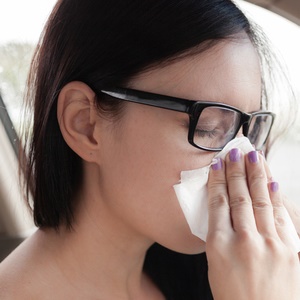
• Practise respiratory hygiene – cover your mouth with your bent elbow or tissue when you cough or sneeze. Remember to dispose the tissue immediately after use.
Image credit: Getty Images