Cabinet Minister Sends Warning To Starmer Rivals As Leadership Tensions Rise

A senior minister has torn into anyone considering challenging Keir Starmer’s leadership, saying rivals must “give their heads a gentle wobble”.

Labour is expected to take a beating when voters across the UK head to the ballot box for England’s local elections and devolved elections in Scotland and Wales.

According to widespread reports, senior Labour figures – including health secretary Wes Streeting, former deputy PM Angela Rayner and Greater Manchester mayor Andy Burnham – could be looking to topple Starmer if the party receives devastating results next week.

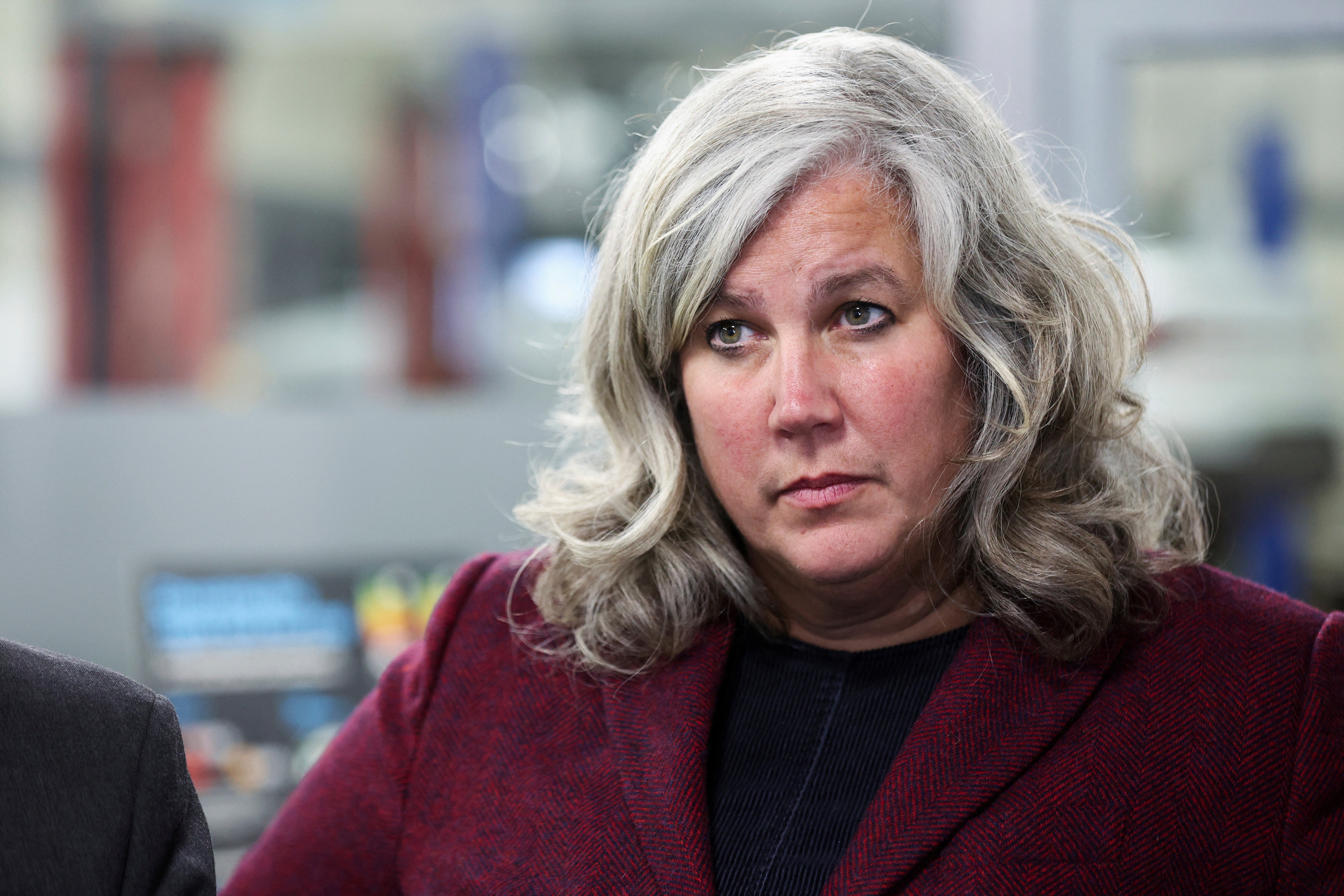
But Transport secretary Heidi Alexander stood by her boss on Sky News, urging challengers not to turn Labour into a “self-indulgent debating society”.

She said: “I think Keir is the best person to lead our country through the period of extreme international volatility that we are experiencing at the moment.

“I don’t think the public would thank us if the Labour Party turned into some sort of self-indulgent debating society when there are pockets of the world that feel like they are going to hell in a hand cart at the moment.”

She pointed to Starmer’s efforts to reopen the Strait of Hormuz, the major oil shipping lane which has been impacted by the US’s war in Iran.

“I think asking the prime minister to somehow reapply for his job while all of that is going on and he is entirely focused on the concerns of the British people would be the wrong thing to do,” Alexander said.

“I think those people who think we should have a leadership election now and repeat the mistakes that the Conservative government made in churning through prime ministers probably do need to give their head a gentle wobble at the moment.”

She claimed Starmer is “determined” to take what he has learned from the last two years in office and build a “stronger and fairer country for everyone”.

Asked if Alexander was sending that message to leadership rivals, she said: “This is about what the Labour Party needs to do to put the country first.

“We were elected in 2024 to deliver the change that the country was crying out for after Covid, Brexit, Liz Truss and Kwasi Kwarteng and 14 years of Conservative government.”

“Change is going to take time,” she said, adding: “Does that mean we’re going to get a dopamine hit every couple of months? No it doesn’t. But does it mean we are going to put this country on the right path, yes, I do believe that.”

Alexander’s comments are striking considering other ministers started to distance themselves from Starmer over the Peter Mandelson scandal last month.

Work and pensions secretary Pat McFadden, questioned the prime minister’s judgment over the controversy.

Energy secretary Ed Miliband also admitted he and former foreign secretary David Lammy had both expressed concerns over Mandelson’s appointment before the ex-Labour peer became the UK’s ambassador to the US.

Subscribe to Commons People, the podcast that makes politics easy. Every week, Kevin Schofield and Kate Nicholson unpack the week’s biggest stories to keep you informed. Join us for straightforward analysis of what’s going on at Westminster.

Share Button

‘Heel Walks’ Can Make Your Shins Stronger And Improve Your Balance

We’ve written before at HuffPost UK about “Japanese walking,” “incline walking”, “6-6-6 walking”, and “retro walking”.

But if you want to strengthen your calves and shins, either for running or just for better mobility, some experts, like physical therapist Dr Jo, reccomend “heel walking”.

In the caption of a YouTube video, they shared: “Walking on heels is a great exercise for helping with lower leg injuries and muscle imbalances. It can also help with ankle pain and plantar fasciitis.”

What are heel walks?

Happily, it doesn’t involve walking in high heels.

They’re performed by lifting your toes and the balls of your feet up and walking on a flat surface on your heels. You can go forward or backwards with your feet hip-width apart, physical therapist group Therapeutic Associates Inc shared.

They should be short, small steps. “The aim is to point your toes as much as you can towards the ceiling so there is as much dorsiflexion in the ankle as possible,” said Runna.

You should keep your upper body tall with your eyes looking straight forward. Tuck your elbows in and let your arms follow your leg movements.

Keep your glutes and hips tucked in.

Theraputic Associates Inc added, “you may want to perform this exercise to fatigue as in, you can’t keep your toes up off the ground anymore and exhaust the shin muscles”.

What are the benefits of heel walks?

Runna explained that, “Heel walks are a very simple but effective warm-up exercise for the muscle that runs along the front of the shin bone (tibialis anterior).”

This is responsible for keeping your feet lifted and preventing a condition called “foot drop”. Calling it an “underappreciated muscle,” Mirafit added that a strong tibialis anterior contributes to healthy movements of the lower leg which are “all essential when it comes to everyday life and specifically when walking and hiking.”

It may help to prevent shin splints, increase your balance and mobility, and reduce your risk of overuse injuries because they make you better at absorbing shocks, they continued.

Heel walks also stretch your calf muscles and strengthen the flexors in your foot, Runna said.

Share Button

‘Disgusting And Abhorrent’: Minister Slams Polanski’s Reaction To Golders Green Attack

Heidi Alexander has slammed Zack Polanski over his “abhorrent” criticism of the police response to the Golders Green terror attack.

Shilome Rand, 34, and Moshe Shine, 76, were left seriously injured in what police have described as a terrorist incident in north west London on Wednesday.

Polanski, the Green Party leader, attracted backlash this week after he reshared a post on X which suggested officers may have used too much force to detain the suspect.

After the head of the Metropolitan Police, Mark Rowley, called Polanski’s words “inaccurate and misinformed”, the Green Party leader issued an apology for “sharing a tweet in haste”.

But the transport secretary still slammed the London Assembly member during an interview on Sky News.

Alexander said: “I thought it was disgusting what he [Polanski] did and absolutely abhorrent.

“Those police officers ran towards danger, they were armed only with a Taser that they had already discharged. The guy still had a knife in his hand.”

The minister continued: “I think for the leader of a political party to jump onto Twitter, start retweeting content, criticising those policemen who responded with incredible bravery in what was a very difficult situation. I think it demonstrates that the man is not fit to lead a political party.”

Prime minister Keir Starmer already hit out at Polanski’s comments on Friday, saying his comments were “disgraceful”.

The Green Party’s leader in Wales, Anthony Slaughter, also questioned the wisdom of Polanski’s action on social media, calling it “inappropriate”.

Polanski’s apology on Friday read: “Everyone in leadership has a responsibility for lowering the temperature at a time of such tension, and I apologise for sharing a tweet in haste.

“Police responses to emergency situations such as these do need later reflection in the right forums, but I accept that social media is not the appropriate channel for doing so.

“I have invited Mark Rowley to meet with me to discuss the police response and the wider issues raised in his letter.”

Subscribe to Commons People, the podcast that makes politics easy. Every week, Kevin Schofield and Kate Nicholson unpack the week’s biggest stories to keep you informed. Join us for straightforward analysis of what’s going on at Westminster.

Share Button

Powerful AI finds 100+ hidden planets in NASA data including rare and extreme worlds

Astronomers at the University of Warwick have confirmed more than 100 exoplanets, including 31 newly identified worlds, using a new artificial intelligence system. The team applied this tool to data from NASA’s Transiting Exoplanet Survey Satellite (TESS), a mission that scans the sky for slight dips in starlight that occur when a planet crosses in front of its host star.

Their findings, published in MNRAS, are based on a detailed analysis of observations from more than 2.2 million stars gathered during TESS’s first four years. The researchers focused on planets that orbit very close to their stars, completing a full orbit in less than 16 days. This approach has produced one of the most precise measurements yet of how common these short-period planets are.

“Using our newly developed RAVEN pipeline, we were able to validate 118 new planets, and over 2,000 high-quality planet candidates, nearly 1,000 of them entirely new,” said first author Dr. Marina Lafarga Magro, Postdoctoral Researcher at the University of Warwick. “This represents one of the best characterized samples of close in planets and will help us identify the most promising systems for future study.”

Rare and Extreme Planet Types Identified

The newly confirmed planets include several especially interesting categories. Some are ultra-short-period planets that circle their stars in under 24 hours. Others belong to the so-called ‘Neptunian desert,’ a region where few planets are expected to exist based on current theories. The study also revealed tightly packed multi-planet systems, including previously unknown pairs of planets orbiting the same star.

How RAVEN Improves Planet Detection

Modern planet-hunting missions often flag thousands of possible planets, but determining which signals are genuine remains difficult. Many false signals can mimic planets, including eclipsing binary stars.

“The challenge lies in identifying if the dimming is indeed caused by a planet in orbit around the star or by something else, like eclipsing binary stars, which is what RAVEN tries to answer. Its strength stems from our carefully created dataset of hundreds of thousands of realistically simulated planets and other astrophysical events that can masquerade as planets. We trained machine learning models to identify patterns in the data that can tell us the type of event we have detected, something that AI models excel at.” said Warwick’s Dr. Andreas Hadjigeorghiou, who led the development of the pipeline.

“In addition, RAVEN is designed to handle the whole process in one go, from detecting the signal, to vetting it with machine learning and statistically validating it. This gives the pipeline an additional edge over contemporary tools that only focus on specific parts of the workflow.”

Dr. David Armstrong, Associate Professor at Warwick and senior co-author on the RAVEN studies, added: “RAVEN allows us to analyse enormous datasets consistently and objectively. Because the pipeline is well-tested and carefully validated, this is not just a list of potential planets — it is also reliable enough use as a sample to map the prevalence of distinct types of planets around Sun-like stars.”

Measuring How Common Planets Really Are

With this carefully validated dataset, the researchers were able to go beyond individual discoveries and examine broader patterns. In a companion MNRAS study, they measured how often close-in planets occur around Sun-like stars, mapping results by orbital period and planet size with an unprecedented level of detail.

The results show that about 9-10% of Sun-like stars host a close-in planet. This aligns with earlier findings from NASA’s Kepler mission — a space telescope that previously measured planet occurrence rates, but the new analysis reduces uncertainties by up to a factor of ten.

The team also made the first direct measurement of how rare ‘Neptunian desert’ planets are, finding that they appear around just 0.08% of Sun-like stars.

“For the first time, we can put a precise number on just how empty this ‘desert’ is,” said Dr. Kaiming Cui, Postdoctoral Researcher at Warwick and first author of the population study. “These measurements show that TESS can now match, and in some cases surpass, Kepler for studying planetary populations.”

A New Era for Planet Discovery

Together, these studies highlight how advances in artificial intelligence are transforming astronomy. By combining massive datasets with machine learning, researchers can uncover new planets while also improving the tools themselves through challenging real-world data.

The team has also released interactive catalogs and tools so other scientists can explore the results and identify promising targets for follow-up observations using ground-based telescopes and future missions such as ESA’s PLATO.

What Is RAVEN

RAVEN is an automated system designed to address one of astronomy’s biggest challenges, turning enormous volumes of space telescope data into reliable discoveries. It scans data from millions of stars to find the tiny drops in brightness caused by planets passing in front of them. The system then uses artificial intelligence trained on realistic simulations to filter out false signals such as binary stars or instrument noise, before statistically confirming the strongest candidates.

Importantly, RAVEN also evaluates which types of planets are easier or harder to detect, helping researchers correct for hidden biases. This means it not only speeds up the discovery of new worlds but also produces cleaner, more reliable datasets that can be used to answer larger questions about how common different kinds of planets are across the galaxy.

Share Button

What death doulas can teach us about dying

Death doulas or soul midwives have increased in popularity in recent years. What do they do?

Share Button

18th-century mechanical volcano roars to life 250 years later

A mechanical artwork first imagined in 1775 to recreate the eruption of Italy’s Mount Vesuvius has been brought to life for the first time, 250 years after it was conceived. The revival was made possible through modern technology and the creativity of two engineering students at the University of Melbourne.

The original idea came from Sir William Hamilton, British ambassador to Naples and Sicily from 1765 to 1800, who was also deeply interested in volcanology. His concept blended artistic expression with mechanical design to capture the dramatic visual effects of a volcanic eruption.

Inspired by the 1771 watercolor ‘Night view of a current of lava’ by British-Italian artist Pietro Fabris, the device was designed to use light and movement to mimic flowing lava and explosive bursts from Vesuvius. It remains uncertain whether Hamilton ever constructed the mechanism, but a detailed sketch preserved in the Bordeaux Municipal Library served as the foundation for its modern recreation.

Reconstructing the Historic Vesuvius Device

Dr. Richard Gillespie, Senior Curator in the Faculty of Engineering and Information Technology, launched the project and guided its development.

“It is fitting that after 250 years exactly, our students have brought this dormant project to life,” he said.

“It is a wonderful piece of science communication. People around the world have always been fascinated by the immense power of volcanoes.”

Modern Engineering Meets 18th-Century Design

Master of Mechatronics student Xinyu (Jasmine) Xu and Master of Mechanical Engineering student Yuji (Andy) Zeng spent three months building the device in The Creator Space student workshop. Using modern materials and technologies, including laser-cut timber and acrylic, programmable LED lighting, and electronic control systems, they adapted Hamilton’s clockwork-based design for today’s audience.

“The project offered a wealth of learning opportunities. I’ve extended many skills, including programming, soldering and physics applications,” Ms. Xu said.

Mr. Zeng said the experience gave him a deeper understanding of mechanical engineering in practice.

“It was a fantastic way to build my hands-on problem-solving skills,” he said. “We still faced some of the challenges that Hamilton faced. The light had to be designed and balanced so the mechanisms were hidden from view.”

Hands-On Learning and Engineering Skills

Research engineer Mr. Andrew Kogios, who supervised the students, highlighted the growth they achieved through the project.

“From selecting materials and 3D printing, to troubleshooting electronics and satisfying requirements, working collaboratively with Yuji and Xinyu has been extremely rewarding,” Mr. Kogios said. “Experiences like these, supplementing their university studies, position them well for their future endeavors.”

On Display at The Grand Tour Exhibition

The completed device is now the centerpiece of The Grand Tour, an exhibition at the University’s Baillieu Library, where it will be on display until June 28, 2026.

Share Button

Boosting one protein helps the brain fight Alzheimer’s

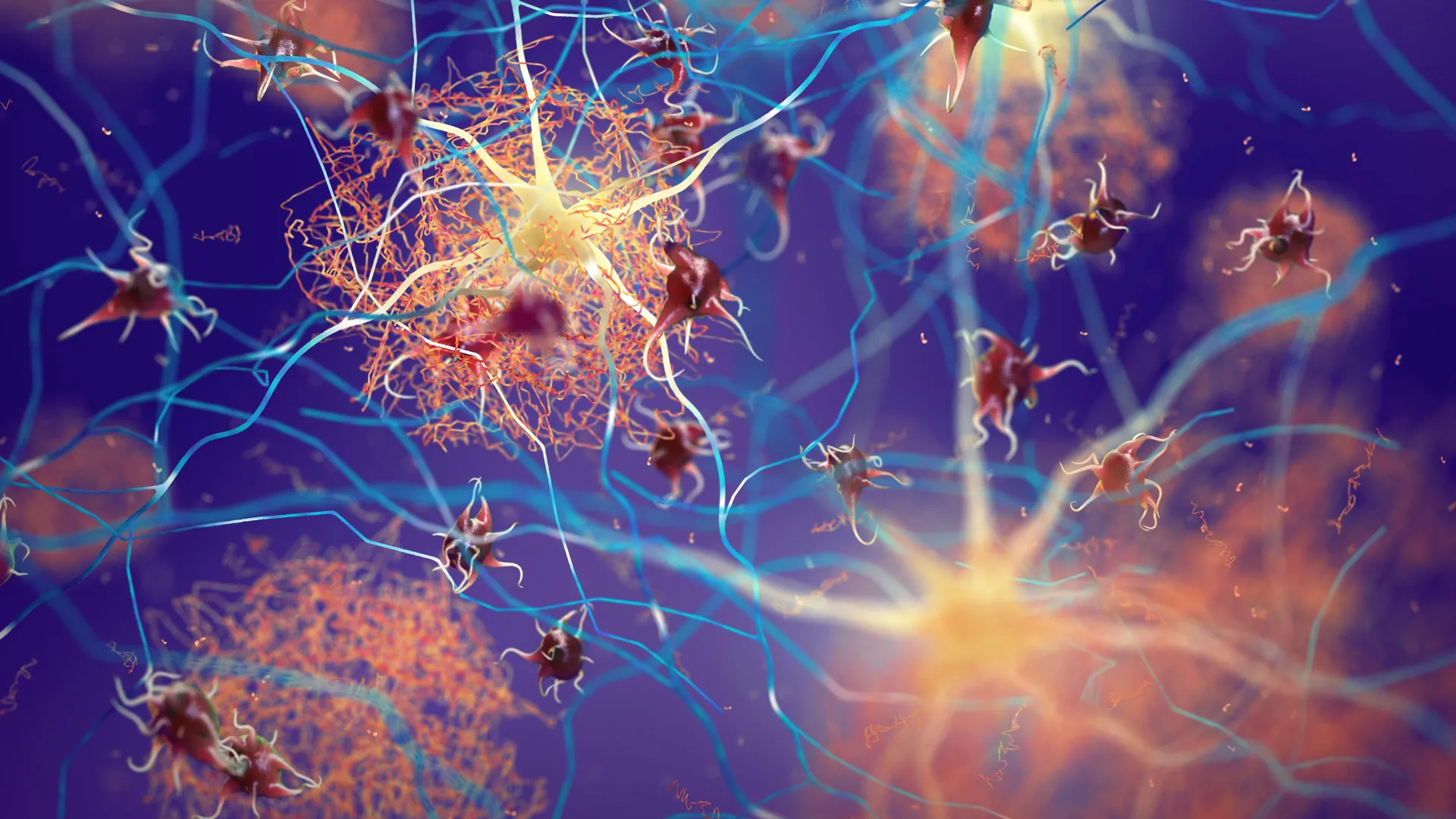
Researchers at Baylor College of Medicine have uncovered a built in process that can remove existing amyloid plaques from the brains of mouse models of Alzheimer’s disease while also helping preserve memory and thinking ability. The discovery centers on astrocytes, star shaped support cells in the brain, which can be directed to clear away the toxic plaque deposits commonly seen in Alzheimer’s.

The team found that increasing levels of Sox9, a protein that plays a major role in regulating astrocyte activity during aging, significantly improved these cells’ ability to remove amyloid plaques. The findings, published in Nature Neuroscience, point to a potential treatment strategy that focuses on boosting the brain’s own support system to slow cognitive decline in neurodegenerative disease.

Astrocytes and Brain Function

“Astrocytes perform diverse tasks that are essential for normal brain function, including facilitating brain communications and memory storage. As the brain ages, astrocytes show profound functional alterations; however, the role these alterations play in aging and neurodegeneration is not yet understood,” said first author Dr. Dong-Joo Choi, who conducted the work while at Baylor’s Center for Cell and Gene Therapy and Department of Neurosurgery. Choi is now an assistant professor at the Center for Neuroimmunology and Glial Biology, Institute of Molecular Medicine at the University of Texas Health Science Center at Houston.

Sox9 and Aging Astrocytes

In this study, researchers set out to better understand how astrocytes change with age and how those changes are linked to Alzheimer’s disease. They focused on Sox9 because it controls the activity of many genes in aging astrocytes.

“We manipulated the expression of the Sox9 gene to assess its role in maintaining astrocyte function in the aging brain and in Alzheimer’s disease models,” said corresponding author Dr. Benjamin Deneen, professor and Dr. Russell J. and Marian K. Blattner Chair in the Department of Neurosurgery, director of the Center for Cancer Neuroscience, a member of the Dan L Duncan Comprehensive Cancer Center at Baylor and a principal investigator at the Jan and Dan Duncan Neurological Research Institute at Texas Children’s Hospital.

Testing in Mice With Established Symptoms

“An important point of our experimental design is that we worked with mouse models of Alzheimer’s disease that had already developed cognitive impairment, such as memory deficits, and had amyloid plaques in the brain,” Choi said. “We believe these models are more relevant to what we see in many patients with Alzheimer’s disease symptoms than other models in which these types of experiments are conducted before the plaques form.”

To test their approach, the researchers either increased or eliminated Sox9 in these mice and tracked their cognitive performance over six months. The animals were evaluated on their ability to recognize familiar objects and environments. At the end of the study, the team measured how much plaque had accumulated in the brain.

Boosting Sox9 Improves Plaque Clearance and Memory

The results revealed a clear contrast. Lower Sox9 levels led to faster plaque buildup, simpler astrocyte structure and reduced ability to clear amyloid deposits. Increasing Sox9 produced the opposite outcome, enhancing astrocyte activity, improving their structural complexity and promoting plaque removal.

Importantly, mice with higher Sox9 levels maintained better cognitive function, suggesting that activating astrocytes to clear plaques can help slow the mental decline associated with Alzheimer’s disease.

“We found that increasing Sox9 expression triggered astrocytes to ingest more amyloid plaques, clearing them from the brain like a vacuum cleaner,” Deneen said. “Most current treatments focus on neurons or try to prevent the formation of amyloid plaques. This study suggests that enhancing astrocytes’ natural ability to clean up could be just as important.”

A New Direction for Alzheimer’s Treatment

The researchers emphasize that more work is needed to understand how Sox9 functions in the human brain over time. Even so, the findings open the door to new therapies that aim to harness astrocytes as a natural defense against neurodegenerative disease.

Research Team and Funding

Additional contributors to the study from Baylor College of Medicine include Sanjana Murali, Wookbong Kwon, Junsung Woo, Eun-Ah Christine Song, Yeunjung Ko, Debo Sardar, Brittney Lozzi, Yi-Ting Cheng, Michael R. Williamson, Teng-Wei Huang, Kaitlyn Sanchez and Joanna Jankowsky.

The research was supported by National Institutes of Health grants (R35-NS132230, R01- AG071687, R01-CA284455, K01-AG083128, R56-MH133822). Additional funding came from the David and Eula Wintermann Foundation, the Eunice Kennedy Shriver National Institute of Child Health & Human Development of the National Institutes of Health under Award Number P50HD103555 and shared resources from Houston Methodist and Baylor College of Medicine.

Share Button

The “big one” might not come alone: Double West Coast earthquake threat

Two major fault systems along North America’s West Coast, the Cascadia subduction zone and the San Andreas fault, may be more closely connected than previously believed. A new study suggests that activity on one fault could trigger earthquakes on the other, raising the possibility of closely timed seismic events.

“We’re used to hearing the ‘Big One’ — Cascadia — being this catastrophic huge thing,” said Chris Goldfinger, a marine geologist at Oregon State University and lead author of the study. “It turns out it’s not the worst case scenario.”

Deep-Sea Evidence Reveals a Hidden Pattern

To investigate this possibility, Goldfinger and his colleagues examined sediment cores taken from the ocean floor. These cores preserve about 3,100 years of geological history. The team focused on turbidites, which are layers of sediment left behind by underwater landslides that are often triggered by earthquakes.

By comparing turbidite layers from areas influenced by both fault systems, the researchers identified similarities in their structure and timing. These patterns point to a potential synchronization between Cascadia and the northern San Andreas fault.

Pinpointing the exact timing between earthquakes on the two faults is challenging. However, Goldfinger noted three cases within the past 1,500 years, including the most recent event in 1700, where the data suggests the earthquakes occurred within minutes to hours of each other.

A Larger Disaster Scenario

This possible connection has major implications for earthquake preparedness.

“We could expect that an earthquake on one of the faults alone would draw down the resources of the whole country to respond to it,” Goldfinger said. “And if they both went off together, then you’ve got potentially San Francisco, Portland, Seattle, and Vancouver all in an emergency situation in a compressed timeframe.”

Scientists have long considered the idea that faults might interact in this way, but real-world evidence has been scarce. The only documented example occurred in Sumatra, where two large earthquakes struck three months apart in 2004 and 2005.

A Chance Discovery Leads to a Breakthrough

Goldfinger’s interest in this question goes back decades, including a key moment during a 1999 research cruise. While collecting sediment cores from the Cascadia subduction zone off Oregon and northern California, the team accidentally drifted off course. They ended up about 55 miles south of Cape Mendocino in California, within the San Andreas fault zone.

Instead of abandoning the location, the researchers decided to collect a core there as well. What they found turned out to be highly unusual.

“Doublets” Point to Back-to-Back Earthquakes

Under normal conditions, turbidites show a consistent pattern, with coarse material settling at the bottom and finer sediment layering on top. In this unexpected core, the pattern was reversed. Coarse, sandy material sat above finer, silty sediment.

This unusual structure suggested a two-step process. The lower, finer layer likely formed first during a major Cascadia earthquake. The coarser material on top appeared to result from a subsequent event along the nearby San Andreas fault.

To confirm this idea, the team used radiocarbon dating on this core and others collected near Cape Mendocino, where the two fault systems meet. The results supported the idea that these reversed layers, which the researchers call “doublets,” were created by earthquakes occurring close together in time, rather than aftershocks or unrelated events.

Researchers and Collaboration

The study also included contributions from Ann Morey, Christopher Romsos and Bran Black of Oregon State’s College of Earth, Ocean, and Atmospheric Sciences; Jeff Beeson of the National Oceanic and Atmospheric Administration Oregon State; Maureen Walzcak, University of Washington; Alexis Vizcaino, Springer Nature Group in Germany; Jason Patton, California Department of Conservation; and C. Hans Nelson and Julia Gutiérrez-Pastor, Instituto Andaluz de Ciencias de la Tierra in Spain.

Share Button

The 2 Words You Never, Ever Want To Say To An Angry Person

The last thing that most of us want to deal with is an angry person in our face. But chances are, sooner or later, it’s going to happen.

So what do we do? And, maybe more importantly, what shouldn’t we do?

Those are some of the questions that Raj Punjabi and Noah Michelson, the co-hosts of HuffPost’s “Am I Doing It Wrong?” podcast, recently posed to Ryan Martin, better know as the Anger Professor, to find out how to “do anger better.”

“You had a great tweet,” Michelson said during the conversation. “You said something like, ‘Never in the history of “calm downs’ has ‘calm down’ calmed down someone.’ So I’m guessing ‘calm down’ is not the thing you want to say.”

“I think ‘relax’ is even worse,” Punjabi added.

“No, ‘relax’ has never relaxed anyone,” agreed Martin, a psychology professor and an associate dean for the College of Arts, Humanities and Social Sciences at the University of Wisconsin-Green Bay.

“This is a case where … people are elevated and they’re not necessarily thinking as rationally, and they’re a little defensive. You’re not going to make as much progress with those sort of direct statements that you want to make,” he added. “Telling people to do things like ‘just breathe’ aren’t going to have much of an impact.”

Instead, modelling those actions yourself is going to be more effective.

“One of the things I think is funny is that often when people tell someone to ‘calm down,’ they yell it or they say it in a very loud, stern voice,” said Martin, the author of How To Deal With Angry People and Why We Get Mad: How To Use Your Anger for Positive Change.

“But if you actually back up a little bit and you start speaking softer than normal, you start to communicate in a little more gentle tone, people will sort of inherently match that. This also is rooted in our evolutionary history, that we tend to match the people around us in tone.”

This can help take the edge off the situation without using those triggering phrases, which tend to make us even more irritated.

“It’s, frankly, manipulative. … You’re actually decreasing that elevation,” Martin said. “So speaking in that more gentle voice, staying calm yourself, finding ways to ultimately, if they’re venting, [offer] some minimal encouragers to let them get through that.”

Once there’s less intensity, you’re more likely to have an opportunity to respond.

“I don’t think you want to agree with someone if you don’t agree with them,” said Martin. “But if you can frame a response that seems validating, to let them know ‘you’re obviously really upset about this, let’s talk through some solutions together’ — ways that you can validate their feelings without necessarily validating the cause of their feelings.”

We also discussed the three questions that you should ask yourself before you get angry, what you should do before you send an angry email, and much more.

For more from Ryan Martin, visit his website and Instagram.

Need some help with something you’ve been doing wrong? Email us at AmIDoingItWrong@HuffPost.com, and we might investigate the topic in an upcoming episode.

Share Button

Rectal Cancer Is Rising In Millennials. Doctors Have A Theory Why.

The untimely deaths of actors Chadwick Boseman and James Van Der Beek, who both died of colorectal cancer in their 40s, have brought more awareness to the disease, which is impacting younger people at higher rates each year.

Colorectal cancer, which is the group name for colon and rectal cancer, is the leading cause of cancer deaths in adults under 50, and new research has found that rectal cancer deaths specifically are rising in adults in this age group — namely, millennials. According to NBC’s reporting, rectal cancer will be the top cause of cancer deaths in people under 50 by 2035 if the trend continues.

While rectal cancer is similar to colon cancer, the difference lies in where the cancer is located. “The rectum is considered a part of the colon … it is the end of the colon before the anus,” explained Dr. Jatin Roper, a gastroenterologist with Duke Health and associate professor of medicine at Duke University School of Medicine in North Carolina. “Because the tissue is biologically fairly similar, rectal cancer is often categorised with colon cancer under the name of ‘colorectal cancer.’”

“Rectal cancers are tumours that start in the rectum. They’re similar to colon tumours in many ways,” said Dr. Michael Foote, a gastrointestinal medical oncologist at Memorial Sloan Kettering Cancer Center in New York.

HuffPost spoke with doctors who pointed out the biggest warning signs of rectal cancer, along with guidance on what you can do to reduce your risk.

The most common signs of rectal cancer include bleeding and abdominal pain.

The most common symptom of rectal cancer is rectal bleeding. This red flag is particularly “much more common” in younger people with rectal cancer, Foote said. This could be blood in the stool or even maroon-coloured stools, according to Roper.

The blood can range in colour from bright red to dark red and can happen when you poop, or at random times throughout the day. The blood may appear in the poop itself or on the toilet paper when you wipe. This can cause some folks to confuse the bleeding for hemorrhoids or even menstruation.

Abdominal pain is also commonly reported. Additional symptoms include changes in bowel habits, constipation, thinner stool, fatigue and weight loss, Roper said. Anemia is also a sign of rectal cancer, he said.

Since rectal cancer happens at the end of the colon, it’s more likely that patients will experience thinner stools or blood in the stool, according to Roper.

“I think the key message is that any change in your gastrointestinal tract should not be ignored, and so any change in your GI function should be investigated by a doctor, and the most concerning signs that should prompt an investigation include any sign of blood in the stool,” Roper said.

In some people, though, rectal cancer has no symptoms, Roper said, which makes regular colorectal screenings even more crucial.

Rates of rectal cancer deaths are rising in younger adults.

Maskot via Getty Images

Rates of rectal cancer deaths are rising in younger adults.

Rectal cancer rates are currently rising in younger adults in their 30s and 40s.

Recent research published by the American Cancer Society shows that while colorectal cancer rates are declining in people 65 and older, rates are increasing in younger adults.

“We know that young people getting cancer, most of it’s on either the left side of the colon or especially in the rectum,” Foote said.

“The rate of rectal cancer is rising more quickly than the rate of colon cancer. We don’t know why,” Roper said. Historically, colon and rectal cancer were considered diseases of older individuals, according to Roper, but “it is now recognised that rates of colon and rectal cancer are rising dramatically in younger people. Such that it is unfortunately becoming common to diagnose cancers in individuals under the age of 50.”

Foote stressed that colon and rectal cancer are still overall rare in younger adults. However, cases are increasing more steeply in younger generations, Roper explained. The rate of rectal cancer in people born in 2001 (Gen Z) is higher than for millennials born in 1991, which is, in turn, higher than for the oldest millennials, born in 1981.

“Even in a recent report at a conference that looked at rates of colorectal cancer in teenagers ― very young individuals ― while the absolute numbers are quite low, the rate of rise is just remarkable,” Roper said.

Research shows that the rates of colorectal cancer in adults under 50 has increased by 63% since 1988, according to Foote. Eight out of 100,000 adults under 50 had colorectal cancer in 1988, and now that number is 13 out of 100,000.

While the overall numbers seem low, the increase is concerning “because it raises the possibility that there’s something in our environment or in our diet that we haven’t pinpointed that is increasing this risk in people that are younger, and until we identify what that is, it’ll be very hard to address it,” Roper said.

While research is ongoing, there are a few things experts think could be behind the increase in rectal cancer rates.

Obesity is a risk factor for colorectal cancer in both younger adults and older adults, both experts told HuffPost. “But, most of the people that have young onset colorectal cancer are not obese,” Foote said. Diabetes is also a risk factor, Foote added, but most younger people with colorectal cancer are also not diabetic.

“The rise in colorectal cancer in younger people started sometime between probably 1950 and 1990 … and [rates have] been increasing at a greater rate since,” Foote said.

It’s thought that something changed in our environment during that time; experts don’t believe the rate increase is simply because people are being screened more.

“It’s associated with a Western diet … high animal fat, high carbohydrates, relatively lower vegetables, red and processed meat, and … refined grains and processed sugars,” Foote said.

According to Foote, from 1950 to 1990, our food landscape changed. Fast food popped up across the country, preservatives became more plentiful and even plastic food containers ― which contain microplastics ― became commonplace.

“Other possible causes can include changes in the gut microbiome, or the bacteria that live in our intestinal tract,” Roper suggested. “That microbiome can be changing due to changes in our dietary habits in the last few decades or change in exercise habits. It’s a little bit unclear.”

There are steps you can take to lower your rectal cancer risk.

While there is no one way to totally erase your risk of developing rectal cancer, there are actions you can do to reduce your risk. First, it’s important to get your routine colonoscopy or a stool-based test, which both screen for colon cancer and rectal cancer.

For people at average risk, these start at age 45. “If the 45th birthday is coming up, plan one year in advance to get scheduled for one of these tests with the doctor,” Roper suggested.

For folks who can’t make time for a colonoscopy or don’t have someone to pick them up after the procedure, stool-based tests such as Cologuard and faecal immunochemical tests (FIT) are good options.

“And a positive FIT test or a positive Cologuard test means that you should get a colonoscopy to follow up to investigate that positive test,” Roper explained.

Those with a first-degree family history of colon or rectal cancer (a parent or sibling who had it) may be eligible to get a screening test before 45.

Beyond screenings, Roper recommended following a Mediterranean diet, which is low in animal fats, especially red meat, and high in soluble fibres such as many types of beans, veggies, fruits, seeds and whole grains.

“Try to avoid sugar-sweetened beverages,” Foote suggested. It’s also a good idea to limit your alcohol consumption.

“People are trying to avoid plastic containers more — I think that’s not such a bad idea,” Foot said, who added the caveat that data linking microplastics to colorectal cancer is not as clear.

“If you do have obesity or diabetes, think about trying medications or trying a lifestyle change to reduce your risk there as well,” Foote said. “And then talk to your doctor, get established with a primary care doctor early. A lot of young people don’t have access to primary care. They don’t prioritise it.”

Having a doctor you regularly check in with and who knows your personal history is an important way to manage your health. Don’t ignore symptoms of rectal cancer symptoms, either.

“I think this is a change in how the medical community looks at these symptoms over the last …10 to 20 years, because the incidence of rectal and colon cancers [is] rising so dramatically in younger people,” Roper said, before adding that the symptoms mentioned above deserve investigation but aren’t always signs of rectal cancer.

“If you’re having symptoms, don’t just sit on them,” Foote said. And if your doctor doesn’t take your symptoms seriously, don’t be afraid to escalate the problem.

Share Button