The eukaryotic cell emerged as an evolutionary algorithmic phase transition

An international collaboration between four senior scientists from Mainz, Valencia, Madrid, and Zurich has published groundbreaking research in the journal PNAS, shedding light on the most significant increase in complexity in the history of life’s evolution on Earth: the origin of the eukaryotic cell. While the endosymbiotic theory is widely accepted, the billions of years that have passed since the fusion of an Archaea and a Bacteria have resulted in a lack of evolutionary intermediates in the phylogenetic tree until the emergence of the eukaryotic cell. It is a gap in our knowledge, referred to as the black hole at the heart of biology. “The new study is a blend of theoretical and observational approaches that quantitatively understands how the genetic architecture of life was transformed to allow such an increase in complexity,” stated Dr. Enrique M. Muro, representative of Johannes Gutenberg University Mainz (JGU) in this project.

Proteins and protein coding genes increase in length

The article in PNAS demonstrates that the distributions of protein lengths and their corresponding genes follow log-normal distributions across the whole tree of life. To do this, 9,913 different proteomes and 33,627 genomes were analyzed. Log-normal distributions typically arise as a result of multiplicative processes. Following Ockham’s razor principle, the researchers modeled the evolution of gene length distributions as multiplicative stochastic processes. In fact, they modeled the action of all genetic operators combined in relation to sequence length. Starting from LUCA, i.e., the hypothesized last universal common ancestor from which the three domains of life — the Bacteria, the Archaea, and the Eukarya — originated, the researchers found both theoretically and observationally that the average gene lengths have evolved exponentially over evolutionary time across different species. Furthermore, they discovered a scaling-invariant mechanism of gene growth across the entire tree of life, where the variance directly depends on the mean protein length. By representing all the species captured in the 33,627 genomes, the team was able to observationally verify the predictions and, moreover, show that the average gene length is a very good surrogate for organismal complexity. In a pure exercise of quantitative biology, Dr. Bartolo Luque from the Polytechnic University of Madrid added: “From knowing the average length of protein-coding genes in a species, we can calculate the whole distribution of gene length within that species.”

When representing the evolution of the average protein lengths versus their corresponding gene lengths across different species, it is observed that they evolve simultaneously in prokaryotes, because there are almost no non-coding sequences in their genes. However, once the average gene length reaches 1,500 nucleotides, the proteins decouple from the multiplicative process of gene growth, and the average protein length stabilizes after the onset of the eukaryotic cell at about 500 amino acids in a clear threshold, marking the appearance of the eukaryotic cell. From that point onward, and unlike what happens with proteins, the average gene length continues to increase as it did in prokaryotes, due to the presence of non-coding sequences.

Algorithmic phase transition

A critical phenomena analysis then concluded that a phase transition, well studied in the physics of magnetic materials, occurred at a critical gene length of 1,500 nucleotides. This marked eukaryogenesis and divides the evolution of life into two distinct phases: a coding phase (Prokarya) and a non-coding phase (Eukarya). Additionally, characteristic phenomena of these transitions are observed, such as critical slowing down, where the system’s dynamics become trapped in many metastable states around the critical point. “This is corroborated in early protists and fungi,” said Dr. Fernando Ballesteros from the University of Valencia.

Moreover, “the phase transition was algorithmic,” added Professor Jordi Bascompte from the University of Zurich. In the coding phase, in a scenario close to LUCA, with short proteins, increasing the length of proteins and their corresponding genes was computationally simple. However, as the protein lengths grew, the search for longer proteins became unfeasible. This tension caused by genes that grew at the same rate as before while proteins could not was resolved continuously but abruptly with the incorporation of non-coding sequences into the genes. With this innovation, the algorithm for searching for new proteins rapidly reduced its computational complexity, becoming non-linear through the spliceosome and the nucleus, which separated transcription and splicing from translation. This happened at the critical point of phase transition, which this study dates to 2.6 billion years ago.

The study recently published in PNAS not only answers essential questions, but is interdisciplinary, combining computational biology, evolutionary biology, and physics. “It has the potential to interest a wide audience across many disciplines and serve as a foundation for other groups to explore different research avenues, such as energy or information theory,” emphasized Dr. Enrique Muro of the Institute of Organismic and Molecular Evolution at Mainz University. The eukaryotic cell, the most significant increase in complexity in the history of life’s evolution on Earth, emerged as a phase transition and unlocked the path toward other major transitions — such as multicellularity, sexuality, and sociability — that shaped life on our planet as we know it today.


Share Button

High-fat, high-sugar diets impact cognitive function

New research from the University of Sydney links fatty, sugary diets to impaired brain function. The findings build on a growing body of evidence showing the negative impact of high-fat, high-sugar (HFHS) diets on cognitive ability, adding to their well-known physical effects.

Published on Friday in the International Journal of Obesity, the research is the first to test in humans the relationship between HFHS diets, particularly those high in refined sugar and saturated fat, and first-person spatial navigation. Spatial navigation is the ability to learn and remember a path from one location to another, a process that can approximate the health of the brain’s hippocampus.

Dr Dominic Tran from the Faculty of Science’s School of Psychology led the research, which found HFHS diets have a detrimental effect on some aspects of cognitive function. It is likely those effects centre on the hippocampus, the brain structure important for spatial navigation and memory formation, rather than acting across the entire brain.

“The good news is we think this is an easily reversible situation,” Dr Tran said. “Dietary changes can improve the health of the hippocampus, and therefore our ability to navigate our environment, such as when we’re exploring a new city or learning a new route home.”

The research team recruited 55 university students aged between 18 and 38. Each participant completed questionnaires capturing their intake of sugary and fatty foods. They also had their working memory tested in a number recall exercise, and their body mass index (BMI) recorded.

The experiment itself required participants to navigate a virtual reality maze and locate a treasure chest six times. The maze was surrounded by landmarks that participants could use to remember their route. Their starting point and the location of the treasure chest remained constant in each trial.

If participants found the treasure in less than four minutes, they continued to the next trial. If they failed to find the treasure in this time, they were teleported to its location and given 10 seconds to familiarise themselves with that location before the next trial.

A seventh trial removed the treasure chest from the virtual maze but asked participants to find and mark its former location based purely on memory. Those with lower levels of fat and sugar in their diets were able to pinpoint the location with a higher degree of accuracy than those who consumed these foods multiple times a week.

“After controlling for working memory and BMI, measured separately to the experiment, participants’ sugar and fat intake was a reliable predictor of performance in that final, seventh, test,” Dr Tran said.

Dr Tran said the results highlight the importance of making good dietary choices to maintain healthy brain function.

“We’ve long known eating too much refined sugar and saturated fat brings the risk of obesity, metabolic and cardiovascular disease, and certain cancers. We also know these unhealthy eating habits hasten the onset of age-related cognitive decline in middle age and older adults.

“This research gives us evidence that diet is important for brain health in early adulthood, a period when cognitive function is usually intact,” Dr Tran said.

Dr Tran said the sample group used in this research was not representative of the wider population, but the findings still apply more broadly.

“It’s likely our participants were a little healthier than the general population and we think, if our sample better represented the public, the impact of diet on spatial navigation would likely be even more pronounced.”

Dr Tran is a recipient of an Australian Research Council Discovery Early Career Research Award (DECRA).

Share Button

Russian Children Are Being ‘Indoctrinated’ To Boost Support For Putin’s War, Says UK

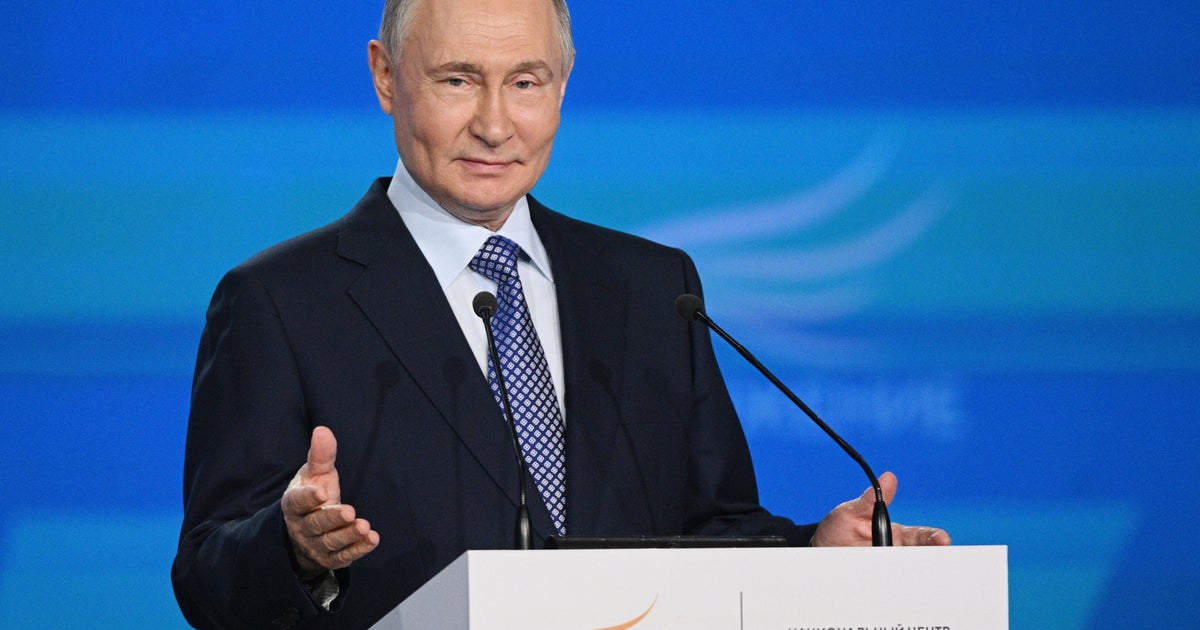
Russian schoolchildren are being subjected to “ideological indoctrination” as Vladimir Putin’s regime tries to boost support for the war in Ukraine, according to UK intelligence.

The country’s education system is becoming “increasingly politicised, militarised and ideologically driven”, the Ministry of Defence (MoD) said.

Moscow has suffered more than 920,000 casualties since the conflict began with Russia’s invasion of its neighbour in February, 2022.

But according to the MoD’s latest update on the war, the Putin regime is going to extraordinary lengths to ensure Russian youngsters remain willing to join the military.

In a post on X, they said independent Russian media are reporting that schools are increasingly using “pro-military” textbooks supporting the war and attacking the West.

Russian authorities have even ordered the removal of the word “Ukraine” from some textbooks.

“The Russian state highly likely seeks to use the education system to develop a more militarised, nationalistic society,” the MoD said.

“The intent is almost certainly to facilitate both deeper support for Russia’s illegal war against Ukraine, and greater willingness amongst the young to join a military suffering significant casualties.

“These efforts also seek to indoctrinate Russia’s young into a rejection of the legally mandated and internationally recognised basis for Ukraine’s nationhood and sovereignty.

“It is likely that the politicisation and militarisation of Russian education, coupled with increasing ideological indoctrination of Russian children and young people more broadly, will perpetuate aggressive, expansionist Russian nationalism in the longer term.”

The warning came after Donald Trump said he believed a peace deal between Ukraine and Russia could be struck as soon as this week.

Meanwhile, Keir Starmer told Volodymyr Zelenskyy that the UK’s support for Ukraine remains “iron clad” as the pair spoke on the phone on Monday.

A Downing Street spokesperson said: “He said that the UK supports Ukraine’s calls for Russia to commit to a full ceasefire and that now is the time for Putin to show he is serious about ending his brutal war.”

Share Button

Barack Obama Pays Touching Tribute To ‘Rare Leader’ Pope Francis

Former President Barack Obama mourned the loss of “rare leader” Pope Francis in an emotional statement on Monday, hours after the announcement of the death of the pope.

“Pope Francis was the rare leader who made us want to be better people,” the former president said in a statement shared on X, formerly Twitter.

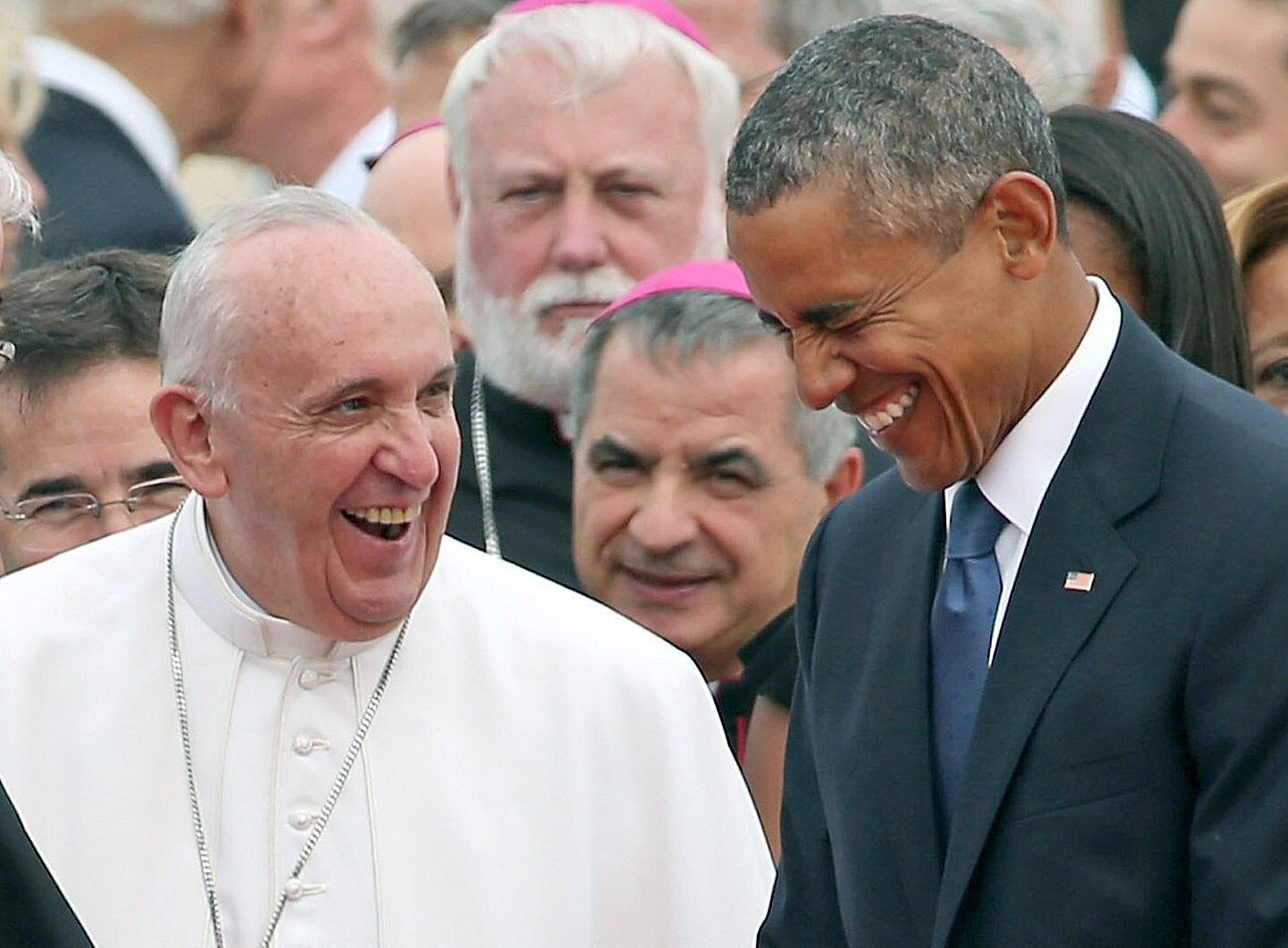
“In his humility and his gestures at once simple and profound — embracing the sick, ministering to the homeless, washing the feet of young prisoners — he shook us out of our complacency and reminded us that we are all bound by moral obligations to God and one another,” Obama wrote, alongside a photo of the two men shaking hands and smiling at each other.

“Today, Michelle and I mourn with everyone around the world — Catholic and non-Catholic alike — who drew strength and inspiration from the Pope’s example,” Obama added. “May we continue to heed his call to “never remain on the sidelines of this march of living hope.”

Francis and Obama first met at the Vatican in 2014, and shared a warm relationship with each other.

<div class="js-react-hydrator" data-component-name="Twitter" data-component-id="4932" data-component-props="{"itemType":"rich","index":7,"contentIndexByType":2,"contentListType":"embed","code":"

Pope Francis was the rare leader who made us want to be better people. In his humility and his gestures at once simple and profound – embracing the sick, ministering to the homeless, washing the feet of young prisoners – he shook us out of our complacency and reminded us that we… pic.twitter.com/AFI0BEotUO

— Barack Obama (@BarackObama) April 21, 2025

","type":"rich","meta":{"author":"Barack Obama","author_url":"https://twitter.com/BarackObama","cache_age":86400,"description":"Pope Francis was the rare leader who made us want to be better people. In his humility and his gestures at once simple and profound – embracing the sick, ministering to the homeless, washing the feet of young prisoners – he shook us out of our complacency and reminded us that we… pic.twitter.com/AFI0BEotUO— Barack Obama (@BarackObama) April 21, 2025\n\n\n","options":{"_hide_media":{"label":"Hide photos, videos, and cards","value":false},"_maxwidth":{"label":"Adjust width","placeholder":"220-550, in px","value":""},"_theme":{"value":"","values":{"dark":"Use dark theme"}}},"provider_name":"Twitter","thumbnail_height":1279,"thumbnail_url":"https://pbs.twimg.com/media/GpD1TGvWgAAJAx0.jpg:large","thumbnail_width":1920,"title":"Barack Obama on Twitter / X","type":"rich","url":"https://twitter.com/BarackObama/status/1914299709344133351","version":"1.0"},"flags":[],"enhancements":{},"fullBleed":false,"options":{"theme":"news","device":"desktop","editionInfo":{"id":"uk","name":"U.K.","link":"https://www.huffingtonpost.co.uk","locale":"en_GB"},"originalEdition":"uk","isMapi":false,"isAmp":false,"isAdsFree":false,"isVideoEntry":false,"isEntry":true,"isMt":false,"entryId":"6806701be4b08b23340b40ac","entryPermalink":"https://www.huffingtonpost.co.uk/entry/barack-obama-pays-touching-tribute-to-rare-leader-pope-francis_uk_6806701be4b08b23340b40ac","entryTagsList":"barack-obama,pope-francis,@us_huffpost_now,@widget-imported","sectionSlug":"politics","deptSlug":null,"sectionRedirectUrl":null,"subcategories":"","isWide":false,"headerOverride":null,"noVideoAds":false,"disableFloat":false,"isNative":false,"commercialVideo":{"provider":"custom","site_and_category":"uk.politics","package":null},"isHighline":false,"vidibleConfigValues":{"cid":"60afc140cf94592c45d7390c","disabledWithMapiEntries":false,"overrides":{"all":"60b8e525cdd90620331baaf4"},"whitelisted":["56c5f12ee4b03a39c93c9439","56c6056ee4b01f2b7e1b5f35","59bfee7f9e451049f87f550b","5acccbaac269d609ef44c529","570278d2e4b070ff77b98217","57027b4be4b070ff77b98d5c","56fe95c4e4b0041c4242016b","570279cfe4b06d08e3629954","5ba9e8821c2e65639162ccf1","5bcd9904821576674bc55ced","5d076ca127f25f504327c72e","5b35266b158f855373e28256","5ebac2e8abddfb04f877dff2","60b8e525cdd90620331baaf4","60b64354b171b7444beaff4d","60d0d8e09340d7032ad0fb1a","60d0d90f9340d7032ad0fbeb","60d0d9949340d7032ad0fed3","60d0d9f99340d7032ad10113","60d0daa69340d7032ad104cf","60d0de02b627221e9d819408"],"playlists":{"default":"57bc306888d2ff1a7f6b5579","news":"56c6dbcee4b04edee8beb49c","politics":"56c6dbcee4b04edee8beb49c","entertainment":"56c6e7f2e4b0983aa64c60fc","tech":"56c6f70ae4b043c5bdcaebf9","parents":"56cc65c2e4b0239099455b42","lifestyle":"56cc66a9e4b01f81ef94e98c"},"playerUpdates":{"56c6056ee4b01f2b7e1b5f35":"60b8e525cdd90620331baaf4","56c5f12ee4b03a39c93c9439":"60d0d8e09340d7032ad0fb1a","59bfee7f9e451049f87f550b":"60d0d90f9340d7032ad0fbeb","5acccbaac269d609ef44c529":"60d0d9949340d7032ad0fed3","5bcd9904821576674bc55ced":"60d0d9f99340d7032ad10113","5d076ca127f25f504327c72e":"60d0daa69340d7032ad104cf","5ebac2e8abddfb04f877dff2":"60d0de02b627221e9d819408"}},"connatixConfigValues":{"defaultPlayer":"16b0ecc6-802c-4120-845f-e90629812c4d","clickToPlayPlayer":"823ac03a-0f7e-4bcb-8521-a5b091ae948d","videoPagePlayer":"05041ada-93f7-4e86-9208-e03a5b19311b","defaultPlaylist":"2e062669-71b4-41df-b17a-df6b1616bc8f"},"topConnatixThumnbailSrc":"https://img.connatix.com/d3ef9bca-3061-4c6a-b827-a5af1768ab29/1_th.jpg?crop=629:354,smart&width=629&height=354&format=jpeg&quality=60&fit=crop","customAmpComponents":[],"ampAssetsUrl":"https://amp.assets.huffpost.com","videoTraits":null,"positionInUnitCounts":{"buzz_head":{"count":0},"buzz_body":{"count":0},"buzz_bottom":{"count":0}},"positionInSubUnitCounts":{"article_body":{"count":6},"blog_summary":{"count":0},"before_you_go_content":{"count":0}},"connatixCountsHelper":{"count":1},"buzzfeedTracking":{"context_page_id":"6806701be4b08b23340b40ac","context_page_type":"buzz","destination":"huffpost","mode":"desktop","page_edition":"en-uk"},"tags":[{"name":"Barack Obama ","slug":"barack-obama","links":{"relativeLink":"news/barack-obama","permalink":"https://www.huffingtonpost.co.uk/news/barack-obama","mobileWebLink":"https://www.huffingtonpost.co.uk/news/barack-obama"},"relegenceId":3646062,"url":"https://www.huffingtonpost.co.uk/news/barack-obama/"},{"name":"Pope Francis","slug":"pope-francis","links":{"relativeLink":"news/pope-francis","permalink":"https://www.huffingtonpost.co.uk/news/pope-francis","mobileWebLink":"https://www.huffingtonpost.co.uk/news/pope-francis"},"relegenceId":6238017,"url":"https://www.huffingtonpost.co.uk/news/pope-francis/"}],"isLiveblogLive":null,"isLiveblog":false,"cetUnit":"buzz_body","bodyAds":["

\r\n\r\n HPGam.cmd.push(function(){\r\n\t\treturn HPGam.render(\"inline-1\", \"entry_paragraph_1\", false, false);\r\n });\r\n\r\n","

\r\n\r\n HPGam.cmd.push(function(){\r\n\t\treturn HPGam.render(\"inline\", \"entry_paragraph_2\", false, false);\r\n });\r\n\r\n","

\r\n\r\n HPGam.cmd.push(function(){\r\n\t\treturn HPGam.render(\"inline-2\", \"entry_paragraph_3\", false, false);\r\n });\r\n\r\n","

\r\n\r\n HPGam.cmd.push(function(){\r\n\t\treturn HPGam.render(\"inline-infinite\", \"repeating_dynamic_display\", false, false);\r\n });\r\n\r\n"],"adCount":0},"isCollectionEmbed":false}”>

Pope Francis was the rare leader who made us want to be better people. In his humility and his gestures at once simple and profound – embracing the sick, ministering to the homeless, washing the feet of young prisoners – he shook us out of our complacency and reminded us that we… pic.twitter.com/AFI0BEotUO

— Barack Obama (@BarackObama) April 21, 2025

Francis died weeks after a five-week hospital stay for bronchitis and later pneumonia. He was released March 23 and had just celebrated Easter Mass.

Cardinal Kevin Farrell, Camerlengo of the Apostolic Chamber, announced the pope’s death with “deep sorrow” on Monday.

“At 7:35 this morning, the Bishop of Rome, Francis, returned to the house of the Father,” he said. “His entire life was dedicated to the service of the Lord and of His Church.”

Tributes poured in from royalty, world leaders and celebrities following the news.

Share Button