AI models of the brain could serve as ‘digital twins’ in research

Much as a pilot might practice maneuvers in a flight simulator, scientists might soon be able to perform experiments on a realistic simulation of the mouse brain. In a new study, Stanford Medicine researchers and collaborators used an artificial intelligence model to build a “digital twin” of the part of the mouse brain that processes visual information.

The digital twin was trained on large datasets of brain activity collected from the visual cortex of real mice as they watched movie clips. It could then predict the response of tens of thousands of neurons to new videos and images.

Digital twins could make studying the inner workings of the brain easier and more efficient.

“If you build a model of the brain and it’s very accurate, that means you can do a lot more experiments,” said Andreas Tolias, PhD, Stanford Medicine professor of ophthalmology and senior author of the study published April 10 in Nature. “The ones that are the most promising you can then test in the real brain.”

The lead author of the study is Eric Wang, PhD, a medical student at Baylor College of Medicine.

Beyond the training distribution

Unlike previous AI models of the visual cortex, which could simulate the brain’s response to only the type of stimuli they saw in the training data, the new model can predict the brain’s response to a wide range of new visual input. It can even surmise anatomical features of each neuron.

The new model is an example of a foundation model, a relatively new class of AI models capable of learning from large datasets, then applying that knowledge to new tasks and new types of data — or what researchers call “generalizing outside the training distribution.”

(ChatGPT is a familiar example of a foundation model that can learn from vast amounts of text to then understand and generate new text.)

“In many ways, the seed of intelligence is the ability to generalize robustly,” Tolias said. “The ultimate goal — the holy grail — is to generalize to scenarios outside your training distribution.”

Mouse movies

To train the new AI model, the researchers first recorded the brain activity of real mice as they watched movies — made-for-people movies. The films ideally would approximate what the mice might see in natural settings.

“It’s very hard to sample a realistic movie for mice, because nobody makes Hollywood movies for mice,” Tolias said. But action movies came close enough.

Mice have low-resolution vision — similar to our peripheral vision — meaning they mainly see movement rather than details or color. “Mice like movement, which strongly activates their visual system, so we showed them movies that have a lot of action,” Tolias said.

Over many short viewing sessions, the researchers recorded more than 900 minutes of brain activity from eight mice watching clips of action-packed movies, such as Mad Max. Cameras monitored their eye movements and behavior.

The researchers used the aggregated data to train a core model, which could then be customized into a digital twin of any individual mouse with a bit of additional training.

Accurate predictions

These digital twins were able to closely simulate the neural activity of their biological counterparts in response to a variety of new visual stimuli, including videos and static images. The large quantity of aggregated training data was key to the digital twins’ success, Tolias said. “They were impressively accurate because they were trained on such large datasets.”

Though trained only on neural activity, the new models could generalize to other types of data.

The digital twin of one particular mouse was able to predict the anatomical locations and cell type of thousands of neurons in the visual cortex as well as the connections between these neurons.

The researchers verified these predictions against high-resolution, electron microscope imaging of that mouse’s visual cortex, which was part of a larger project to map the structure and function of the mouse visual cortex in unprecedented detail. The results of that project, known as MICrONS, was published simultaneously in Nature.

Opening the black box

Because a digital twin can function long past the lifespan of a mouse, scientists could perform a virtually unlimited number of experiments on essentially the same animal. Experiments that would take years could be completed in hours, and millions of experiments could run simultaneously, speeding up research into how the brain processes information and the principles of intelligence.

“We’re trying to open the black box, so to speak, to understand the brain at the level of individual neurons or populations of neurons and how they work together to encode information,” Tolias said.

In fact, the new models are already yielding new insights. In another related study, also simultaneously published in Nature, researchers used a digital twin to discover how neurons in the visual cortex choose other neurons with which to form connections.

Scientists had known that similar neurons tend to form connections, like people forming friendships. The digital twin revealed which similarities mattered the most. Neurons prefer to connect with neurons that respond to the same stimulus — the color blue, for example — over neurons that respond to the same area of visual space.

“It’s like someone selecting friends based on what they like and not where they are,” Tolias said. “We learned this more precise rule of how the brain is organized.”

The researchers plan to extend their modeling into other brain areas and to animals, including primates, with more advanced cognitive capabilities.

“Eventually, I believe it will be possible to build digital twins of at least parts of the human brain,” Tolias said. “This is just the tip of the iceberg.”

Researchers from the University Göttingen and the Allen Institute for Brain Science contributed to the work.

The study received funding from the Intelligence Advanced Research Projects Activity, a National Science Foundation NeuroNex grant, the National Institute of Mental Health, the National Institute of Neurological Disorders and Stroke (grant U19MH114830), the National Eye Institute (grant R01 EY026927 and Core Grant for Vision Research T32-EY-002520-37), the European Research Council and the Deutsche Forschungsgemeinschaft.

Share Button

Eight or more drinks per week linked to signs of injury in the brain

Heavy drinkers who have eight or more alcoholic drinks per week have an increased risk of brain lesions called hyaline arteriolosclerosis, signs of brain injury that are associated with memory and thinking problems, according to a study published on April 9, 2025, online in Neurology®, the medical journal of the American Academy of Neurology. The study does not prove that heavy drinking causes brain injury; it only shows an association.

Hyaline arteriolosclerosis is a condition that causes the small blood vessels to narrow, becoming thick and stiff. This makes it harder for blood to flow, which can damage the brain over time. It appears as lesions, areas of damaged tissue in the brain.

“Heavy alcohol consumption is a major global health concern linked to increased health problems and death,” said study author Alberto Fernando Oliveira Justo, PhD, of University of Sao Paulo Medical School in Brazil. “We looked at how alcohol affects the brain as people get older. Our research shows that heavy alcohol consumption is damaging to the brain, which can lead to memory and thinking problems.”

The study included 1,781 people who had an average age of 75 at death. All had brain autopsies.

Researchers examined brain tissue to look for signs of brain injury including tau tangles and hyaline arteriolosclerosis. They also measured brain weight and the height of each participant.

Family members answered questions about participants’ alcohol consumption.

Researchers then divided the participants into four groups: 965 people who never drank, 319 moderate drinkers who had seven or fewer drinks per week; 129 heavy drinkers who had eight or more drinks per week; and 368 former heavy drinkers. Researchers defined one drink as having 14 grams of alcohol, which is about 350 milliliters (ml) of beer, 150 ml of wine or 45 ml of distilled spirits.

Of those who never drank, 40% had vascular brain lesions. Of the moderate drinkers, 45% had vascular brain lesions. Of the heavy drinkers, 44% had vascular brain lesions. Of the former heavy drinkers, 50% had vascular brain lesions.

After adjusting for factors that could affect brain health such as age at death, smoking and physical activity, heavy drinkers had 133% higher odds of having vascular brain lesions compared to those who never drank, former heavy drinkers had 89% higher odds and moderate drinkers, 60%.

Researchers also found heavy and former heavy drinkers had higher odds of developing tau tangles, a biomarker associated with Alzheimer’s disease, with 41% and 31% higher odds, respectively.

Former heavy drinking was associated with a lower brain mass ratio, a smaller proportion of brain mass compared to body mass, and worse cognitive abilities. No link was found between moderate or heavy drinking and brain mass ratio or cognitive abilities.

Justo noted that, in addition to brain injuries, impaired cognitive abilities were observed only in former drinkers.

Researchers also found that heavy drinkers died an average of 13 years earlier than those who never drank.

“We found heavy drinking is directly linked to signs of injury in the brain, and this can cause long-term effects on brain health, which may impact memory and thinking abilities,” said Justo. “Understanding these effects is crucial for public health awareness and continuing to implement preventive measures to reduce heavy drinking.”

A limitation of the study was that it did not look at participants before death and did not have information on the duration of alcohol consumption and cognitive abilities.

The study was supported by The São Paulo Research Foundation.

Share Button

Saliva test may turn tide on prostate cancer, claim scientists

Analysing DNA in saliva can identify men at the greatest risk of prostate cancer

Share Button

How much food can the world grow? International team calls for new yield potential estimates

An international team of agronomists is calling for a new approach to estimate crop yield potential and gaps — information that is critical in planning how to meet growing food demand.

University of Nebraska-Lincoln researchers made major contributions to the study, published online April 8 in the journal Nature Food.

“We are in a race to feed the world and to try to feed the population with the available agricultural land that we have,” said Patricio Grassini, Sunkist Distinguished Professor of Agronomy and one of the paper’s authors.

To do so requires estimates that predict both yield potential, as determined by weather and soil properties, and yield gaps, which is the difference between yield potential and current farm yields, which indicates the room that exists to increase food production on existing cropland. Those estimates are essential in making investments in agricultural research and development, both from public and private sources.

At issue is how best to compile those estimates.

In the Nature Food paper, a team that includes scientists from Nebraska and three other institutions calls into question the statistical methods now widely used. In addition to Grassini, Husker authors of the study included Fatima Tenorio, Fernando Aramburu Merlos and Juan Rattalino Edreira, research assistant professors of agronomy.

In the United States, for example, current statistical models tend to rely too heavily on best-case scenarios — the most productive counties with the most fertile soils in a year with the most favorable weather, Grassini said. The methods also extrapolate a single yield potential across large regions with a wide diversity of climates and soils that likely would produce a similarly wide range in yield potential.

“Therefore, if you use that year as a reference, you are going to be overestimating your production potential because the best county with the best soils in the best year doesn’t really represent your average climate or your most typical soil across the state,” Grassini said.

But in other parts of the world — Africa, for example — these models might underestimate crop yield. There, farmers may have limited access to inputs compared to producers in other areas, thus attaining yields far below what the climate can support.

This statistical approach also leads to conflicting results, with production potential estimates almost doubling from one method to another. Grassini said this approach — driven mostly by geographers and statisticians, not agronomists — has been largely accepted, and more rigorous analysis is needed.

The research team’s conclusions are explained in the paper, titled “Statistical approaches are inadequate for accurate estimation of yield potential and gaps at regional level.”

The study compared estimates of yield potential and yield gaps of major U.S. rainfed crops — corn, soybeans and wheat — derived from four statistical models against those derived from a “bottom-up” spatial scaling approach based on robust crop modeling and local weather and soil data, such as the Global Yield Gap and Water Productivity Atlas developed at Nebraska.

Process-based crop models used in this study have been rigorously validated for their capacity to estimate yield potential based on experimental data from well-managed crops grown across a wide range of environments. This bottom-up approach, which better incorporates long-term data and regional variations, is clearly superior, the team found.

“I expect some controversy,” Grassini said of the team’s conclusions challenging the conventional wisdom.

The approach recommended by the team should better capture yield gaps, which “can help identify regions with largest room to increase crop production, which, in turn provides a basis to orient agricultural research and development programs.”

“This is a call to set the record straight because if we are going to use this information to inform policy and our investments, we better make sure that the information is sound and has been validated,” Grassini said.

Additional team members included Romulo Lollato, associate professor of agronomy, Kansas State University; Sotirios Archontoulis, professor of agronomy, Iowa State University; and Antoine Couëdel, who completed his postdoctoral research at Nebraska and is a researcher at the French Agricultural Research Centre for International Development, France.

Share Button

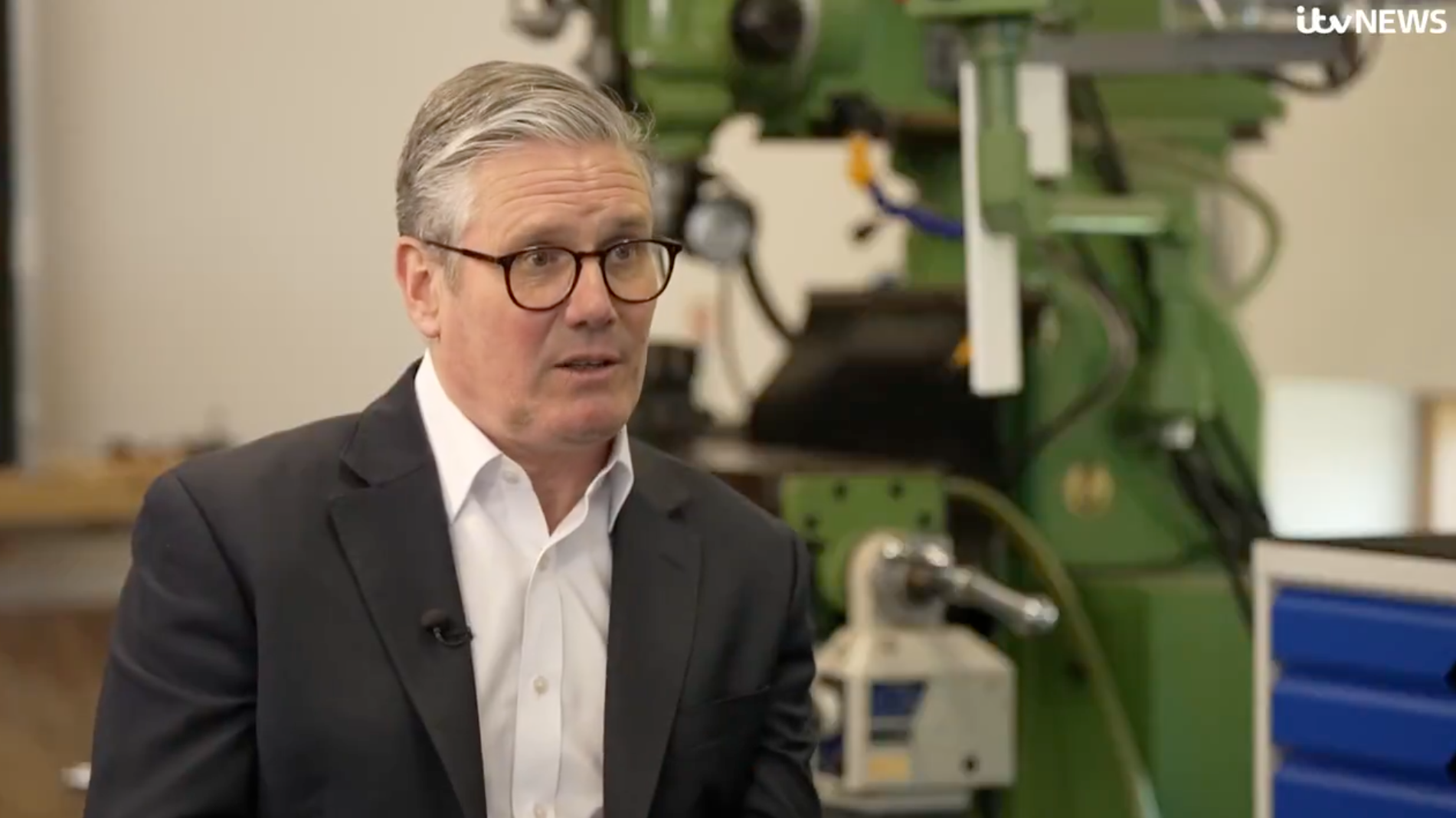
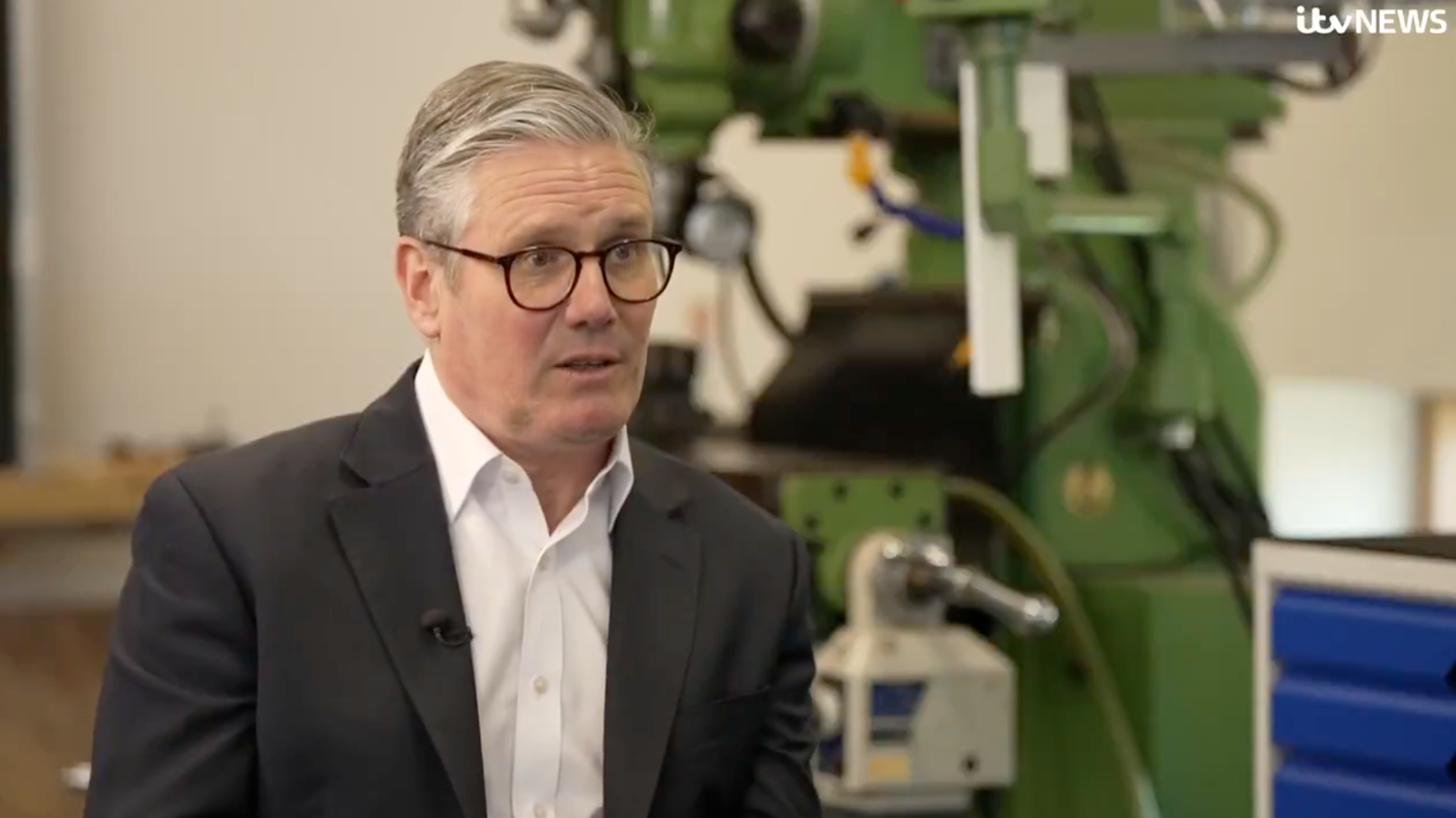
Keir Starmer Warns Trump Tariff Fallout Won’t Be Fixed With ‘Any’ Trade Deal

Keir Starmer has warned that it is not “enough” for the UK to secure “any” US trade deal in a bid to get reduced tariffs, as the global economic turmoil rumbles on.

Donald Trump announced global tariffs on foreign goods going into the US on April 2.

The UK was hit with only the “base rate” 10% tax on its imports, but it came on top of the global levy of 25% on cars and steel products.

Still, the Labour government have avoided publicly condemning the dramatic move from the White House.

Starmer is hoping to secure a trade deal with the US before May 1, which – ideally – would see the UK secure exemptions to the tariffs in exchange for some British concessions.

If the deal is not across the line by the end of the month, Starmer has warned he may look to issue reciprocal tariffs on the States.

Speaking on Wednesday, ITV News’ Robert Peston asked the prime minister just what he wanted out of the tariff chaos.

He said: “Do we have to have 10% forever, you know, you’re obviously keen to get the 25% on cars and steel down, but is the 10% permanent?”

“Look, I don’t know,” Starmer replied.

“We are negotiating and we hope to improve the situation, but what I mean by this is that simply thinking that any change in the rates or any deals is going to be enough, to my mind is wrong.

“Because just as we’ve done with defence and security, where we’ve recognised it’s a changing world, we’ve got to step up and act differently.

“In that case with defence spend, coordinating better across Europe, so too with trade and the economy.”

While emphasising this is not a “passing phase” the world is going through, he also refused to call on Trump to reduce the 104% levy on China.

He said: “I’m not going to engage in diplomacy through the media, but I mean I’ve been clear that throughout that a trade war is in nobody’s interest.”

Peston tried again, and asked: “For America, this looks like a Liz Truss-style financial crisis.

“The price that America pays to borrow is soaring and we’ve been infected.

“I don’t know if you’ve been told this, but the government’s borrowing costs are now the highest since 1998. He’s harming us. Surely you’ve got to say to him, ‘stop, change course’.”

But Starmer still refused to make any public statement against Trump’s economic policy.

He also told ITV News he would not follow Truss’s example of “putting to one side rules and institutions, checks and balances” by changing the government’s own fiscal rules.

When Labour got into office, chancellor Rachel Reeves promised she would not borrow for day-to-day spending.

Despite the growing pressure on the struggling British economy, he said these are still “ironclad” ideas.

He added: “Those fiscal rules are foundational to the stability that we brought to our economy, so we go ahead in that calm way, obviously we’re talking to the US to see what we can do to mitigate the situation.”

Starmer said it was important to be “calm” and “pragmatic”, focus on “turbocharging” the UK economy and “talking to other world leaders about lowering trade barriers across the world”.

He rejected any suggestion the public spending may have to be cut again or taxes may have to rise in the autumn as a result of the struggling markets.

“I don’t accept the proposition that it’s inevitable things will happen in six months’ time,” the PM said.

Share Button

This Humane, Chemical-Free Slug Repellant is Probably Already In Your Kitchen

There are no two ways about it: some slugs can be disastrous for your garden. Between eating your veggies, boring holes in your hydrangeas, and even tunnelling into your tubers (yes, really), the legless leaf-lovers have historically been the enemy of the common British gardener.

Of course, we now know that slugs have their part to play in the ecosystem (even if you wish they didn’t play it so close to your radishes). They’re a vital food source for Britain’s rapidly-decreasing bird population; they do a great job at composting; and they help the overall biodiversity and ecological balance of your lawn (never a bad thing).

Cruelty-free hacks to remove slugs from your garden include putting a scooped-out melon in your yard overnight for the critters before removing the beast-filled rinds the next morning.

And while we love that hack, it seems there’s another, easier trick to keep your veggies slug-free – and it also helps with everything from scaring off birds to keeping deer away and even creating sunboxes.

Simple aluminium foil, it turns out, is the gardener’s best friend. So we thought we’d share some of its many uses:

1) It makes a great pest control

Herbicides can be harsher on your garden’s health than they are to the pests you want to target. “If you’ve got children, if you’ve got pets, you shouldn’t be using chemicals. But what’s worse is if you are using chemicals, you’re killing our pollinators, which we need for food production. I am very much against any chemicals and herbicides being used,” gardening expert Arthur Parkinson told HuffPost UK.

Thankfully, adding a bit of foil to your plants won’t kill off any all-important pollinators – it’ll just inhibit some slugs and other unwanted garden guests. “Reflective mulches repel invading insect populations,” the University of California shared.

And when it comes to slugs, the foil uses roughly the same logic as copper tape – “the metal causes a reaction with their mucusy bodies that they really don’t like,” Metro said.

Simply place some sheets of foil around the base of your plants for pest-repelling magic.

2) Tinfoil can create helpful sunboxes

If you’re worried your plants aren’t getting enough light, a little foil can go a long way. “Using aluminium foil can help you double the sun your indoor plants receive,” House Digest revealed.

This is because “its reflective properties will work as a mirror and reflect the light from the window to every niche and cranny of your indoor plants,” meaning you won’t have to turn your potted plants around as often to ensure every side gets as much light.

And they’re not just for indoor plants – “they also work to grow any seedlings indoors and help new plants from the nursery grow straighter and stronger.”

You can either assemble a tinfoil-lined box yourself using foil, tape, and cardboard.

3) Tinfoil can scare off birds and deer

Though it’s not really a good idea to scare off birds if they’re not causing a problem, under severe conditions, you can banish any unwanted birds by wrapping foil on or around your most-pecked plants. “Birds don’t like the feel of the foil under their beaks and will stay away,” Northwest says.

The trick also works for peckish deer, who HowStuffWorks says hate the shiny stuff. They advise wrapping foil around the stem of any deer-demolished plants: “The foil should at least be as high as your waist because deer are very adept (at) feeding on plants that are shorter than they are. This foil force field can also deter other pesky nibblers like mice and rabbits,” they say.

Well, I’m off to the kitchen…

Share Button

Trump threatens to end pharmaceuticals tariff exemption

The US president vows “major” tariffs on imported medicines – raising fears of an increase in costs for Americans.

Share Button

Why Black Mirror Creator Charlie Brooker Won’t Watch This Hit TV Show

Black Mirror season seven is set to hit Netflix soon (April 10).

You might associate creator Charlie Brooker with the series – but he’s also worked on other shows like the BBC series Weekly Wipe, which included reviews of TV shows, news events, and games.

It showed how much of a telly fan the writer and executive producer really is, which makes his admission to The Hollywood Reporter, that he “hasn’t let himself” watch a hit show, pretty notable.

Black Mirror 2025
Black Mirror 2025

“There’s certainly a show I haven’t watched that’s made me jealous,” he revealed.

“People keep telling me to watch Severance, and I haven’t let myself do it because they also say to me, ‘Oh, you’ll love it. It’s a bit Black Mirror-y, but it’s much better.’”

The Apple TV+ hit, which involves people who have “severed” their minds to cut their working selves off from their out-of-hours consciousness, certainly shares the Netflix show’s eerie sci-fi feel – but Charlie need not be jealous.

Not least because Severance’s creator, Dan Erickson, told The New York Times in 2022 that a 2014 Black Mirror episode actually inspired a Severance plot.

Zach Cherry as Dylan in Severance

Erickson said that White Christmas, an episode in which characters are trapped in an eternal loop (not unlike Severance’s ‘innies’), left him feeling “so cold and afraid after seeing that, this devastating idea of having to experience this endless solitude”.

He added that this is linked to the season one scene in which Helly R tries to escape the severed floor.

“It’s this nightmare of running out a door and then you’re just running back in, and you realise you’re truly stuck in this liminal space with this kind of nightmare logic,” he said.

Share Button

Infected blood victims losing faith as inquiry hearings restart

Inquiry chair is acting amid grave concerns over payouts to victims after final report was published last year.

Share Button

First Ofcom probe launched into suicide site exposed by BBC

BBC News found the forum, which has thousands of members, is linked to at least 50 deaths in the UK.

Share Button