Leonie Miller was invited to coach the then-opposition leader on his response to Johnson’s Brexit deal.


Leonie Miller was invited to coach the then-opposition leader on his response to Johnson’s Brexit deal.

Ever notice how much more tempting it is to pick up fast food for dinner after being stuck in traffic? It’s not just you. New University of Illinois Urbana-Champaign research shows that traffic delays significantly increase visits to fast food restaurants, leading to unhealthier eating for millions each year.
“In our analysis focusing on Los Angeles County, unexpected traffic delays beyond the usual congestion led to a 1% increase in fast food visits. That might not sound like a lot, but it’s equivalent to 1.2 million more fast food visits per year in LA County alone. We describe our results as being modest but meaningful in terms of potential for changing unhealthy food choices,” said study author Becca Taylor, assistant professor in the Department of Agricultural and Consumer Economics, part of the College of Agricultural, Consumer and Environmental Sciences at Illinois.
Taylor and her co-authors had access to daily highway traffic patterns over more than two years in Los Angeles, along with data showing how many cell phone users entered fast-food restaurants in the same time period. With these data, the team created a computational model showing a causal link between unexpected traffic slow-downs and fast food visits.
This pattern held at various time scales, including 24-hour cycles and by the hour throughout a given day. When analyzed by the day, traffic delays of just 30 seconds per mile were enough to spike fast-food visits by 1%.
“It might not be intuitive to imagine what a 30-second delay per mile feels like,” Taylor said. “I think of it as the difference between 10 a.m. traffic and 5 p.m. traffic.”
When the researchers broke the day into hour-long segments, they found a significantly greater number of fast food visits when traffic delays hit during the evening rush hour. At the same time, grocery store visits declined slightly.
“If there’s traffic between 5 and 7 p.m., which happens to be right around the evening meal time, we see an increase in fast food visits,” Taylor said. “Drivers have to make a decision about whether to go home and cook something, stop at the grocery store first, or just get fast food.”
Considering every major city has both traffic and fast food restaurants lining highway feeder roads, it’s not a stretch to extrapolate the pattern beyond Los Angeles. Taylor and her co-authors say the link between traffic and unhealthy food choices is just one more reason policymakers around the country and the globe should prioritize infrastructure reforms to ease congestion.
“Our results contribute to the literature suggesting time constraints are really important to the food choices people make. Any policies aimed at loosening time constraints — and traffic is essentially lost time — could help battle unhealthy eating,” Taylor said. “That could mean improvements in infrastructure to mitigate traffic congestion, expanding public transport availability, and potentially increasing work from home opportunities.”

A team led by a Rutgers-New Brunswick scientist has concluded water did not arrive as early during Earth’s formation as previously thought, an insight that bears directly on the question of when life originated on the planet.
The finding, reported in the science journal Geochimica et Cosmochimica Acta, is significant because the data reported by the study support the idea that water arrived towards the final stages of Earth’s development into a planet from dust and gas, what geologists refer to as late accretion.
Scientists seek to learn when the constituent materials necessary for life appeared so that they can understand how and when life began. According to present scientific understanding, at least three necessary ingredients are essential to kick-start life. These are water, energy and a soup of organic chemicals known as CHNOPS — scientific shorthand for carbon, hydrogen, nitrogen, oxygen, phosphorus and sulfur.
“When water was delivered to the planet is a major unanswered question in planetary science,” said Katherine Bermingham, an associate professor in the Department of Earth and Planetary Sciences in the Rutgers School of Arts and Sciences and lead author of the study. “If we know the answer, we can better constrain when and how life developed.”
Bermingham is a cosmogeochemist, a scientist who studies the chemical composition of matter in the solar system, particularly focusing on the origin and evolution of the solar system and its rocky planets by analyzing Earth rocks and extraterrestrial materials such as meteorites.
Using thermal ionization mass spectrometry and a new analytical method the team developed, Bermingham and colleagues studied isotopes of the element molybdenum. An isotope is a form of an element with the same number of protons but a different number of neutrons. This allows it to share the same chemical properties while having a different atomic mass.
“The molybdenum isotopic composition of Earth rocks provides us with a special window into events occurring around the time of Earth’s final core formation, when the last 10% to 20% of material was being assembled by the planet. This period is thought to coincide with the Moon’s formation,” Bermingham said.
They extracted molybdenum from meteorite samples obtained from the National Museum of Natural History of the Smithsonian Institution. The scientific community has divided meteorites into two general groups — the first, “CC,” with constituent elements suggesting the meteorites formed in the outer, presumably wetter, Solar System. The second group, “NC,” has characteristics indicating its meteorites formed in the inner, presumably drier, solar system. This study focused on samples that belong to the NC group.
They compared the molybdenum isotopic composition of these meteorites to Earth rocks from Greenland, South Africa, Canada, the United States and Japan collected by field geologists. The molybdenum in these rocks is generally considered to have been added to Earth during the time the Moon was formed, which is when final core formation occurred. This is precisely when the team wanted to search for the origins of water.
“Once we gathered the different samples and measured their isotopic compositions, we compared the meteorites signatures with the rock signatures to see if there was a similarity or a difference,” Bermingham said. “And from there, we drew inferences.”
The analyses showed that the Earth rocks they studied were more similar to meteorites sourced from the inner solar system meteorites (NC) rather than meteorites sourced from the outer solar system (CC).
“We have to figure out from where in our solar system Earth’s building blocks — the dust and the gas — came and around when that happened,” Bermingham said. “That’s the information needed to understand when the stage was set for life to begin.”
Since the chemical composition of the Earth rocks they studied matches that of the presumed inner solar system (NC) meteorites, the scientists concluded that the Earth had not received as much water from the Moon-forming event as previously thought. The finding is significant, Bermingham said, because a popular theory of water delivery is that a significant amount of the Earth’s water was added when the Moon was formed.
This research, however, showed that a substantial amount of water likely did not come during this period of growth. Instead, the data support the interpretation that water was delivered to Earth in smaller portions after the Moon was formed, far later during Earth’s formation.
“Our results suggest that the Moon-forming event was not a major supplier of water, unlike what has been thought previously,” Bermingham said. “These findings, however, permit a small amount of water to be added after final core formation, during what is called late accretion.”
Other Rutgers authors of the study include Linda Godfrey, an assistant research professor, and laboratory researcher Hope Tornebene, both of the Department of Earth and Planetary Sciences.

A Canadian research team has released the results of a study on stress resilience in seniors. Their findings were published on January 5, 2025 in Frontiers in Psychology.The study involving 170 seniors with an average age of 76 found that O’stress, a six-week stress management program, had beneficial effects on the emotional health of participants. Those who followed the program used more problem-solving strategies and had less anxiety three weeks after completing the program and their diurnal cortisol levels, an indicator of chronic stress, were significantly lower than those of non-participants.
Program for teens adapted to seniors
The O’stress program is based on DeStress for Success, an innovative program created by the Centre for Studies on Human Stress to help teens deal with the stress of transitioning to high school.
In a groundbreaking study led by Sonia Lupien, the Centre’s director, published in Neuroscience in 2013, DeStress for Success was shown to decrease cortisol levels and depressive symptoms in participating teens who were experiencing strong negative emotions at the start of the school year.
Since then, DeStress for Success has been adapted in partnership with Plusquellec’s team for several populations, including teens at high risk for behavioural problems (2016) and young people with autism spectrum disorder (2018).
Countering emotional contagion
In her doctoral research under the supervision of Université de Montréal professors Pierrich Plusquellec and Sébastien Grenier, Marie-Josée Richer adapted DeStress for Success to the specific needs of seniors.
“Aging, like adolescence but for different reasons, is a particularly sensitive period when individuals are more vulnerable to chronic stress and its consequences,” Plusquellec noted.
O’stress incorporates elements relevant to aging, social relationships and, in particular, emotional contagion, the tendency to get caught up in the emotions of others. According to a recent study by the same researchers, emotional contagion is a significant factor in psychological distress among seniors. An educational component on emotional contagion was therefore included in the O’stress program to help participants recognize and manage this dynamic on a daily basis.
O’stress uses a variety of approaches including small-group workshops to help seniors identify symptoms of stress and release that energy through activities such as bopping to The Beatles’ “Twist and Shout.” Participants also analyze their social network to identify sources of support, pressure and emotional contagion, and then problem-solve to find solutions.
The success of O’stress highlights the enormous potential of short, accessible interventions to counteract the harmful effects of chronic stress in the elderly.
“By demystifying stress and its effects, and then teaching effective techniques for coping with that stress, we equip participants to strengthen their resilience and overall well-being,” said Richer.
The research team now hopes to expand the O’stress program and evaluate its effectiveness in other contexts and populations. Their work could also inspire similar interventions in the areas of mental health and aging.
Sandie Peggie, who was suspended after complaining about sharing a changing room with a transgender colleague, gave evidence at an employment tribunal.
The service in Alder Hey Childrens’ Hospital aims to get 11 to 16-year-olds “nicotine free”.
Last night’s Grammy awards ceremony included an In Memoriam segment “paying tribute to those who have deeply impacted the musical community”.
The first among them was dedicated to musician Liam Payne, whose unexpected sudden death occurred in 2024.
Advertisement
The In Memoriam section seems to have touched viewers, who shared their sadness for the loss of the former One Direction singer on X.

via Associated Press
In an social media post about the section, X users wrote that it was the “most beautiful moment of the evening”.
Advertisement
Another commenter shared: “I’m in tears, he wasn’t mean to be remembered like this he was supposed to be getting awards and touring and enjoying his life.”
“The fact that they gave him the most recognition tonight out of everyone with a whole video package is everything. That got me sobbing,” another comment reads.
Chris Martin of Coldplay played All My Love during the In Memoriam segment, accompanied by a string section.
Advertisement

via Associated Press
Quincy Jones also received a special nod during the segment, with multiple artists paying tribute to the music legend’s discography.
Will Smith said at the awards show: “In his 91 years, Q touched countless lives, but I have to say he changed mine forever. You probably wouldn’t even know who Will Smith was if it wasn’t for Quincy Jones.”
Advertisement
Other tributes were paid to Phil Lesh of Grateful Dead, Fatman Scoop, Sandra Crouch, Richard Sherman, Joe Chambers, Tito Jackson of the Jackson 5, and many more.


If life seems expensive right now, that’s because it is.
Between high energy costs, spenny supermarket bills and extortionate childcare expenses, your bank balance probably looks a little worse for wear by the time payday comes around.
For those looking for ways to accrue a bit of extra cash, a personal finance expert has shared the one hack that’s helped save her thousands of pounds a year – and it’s surprisingly simple.
Advertisement
Gemma Bird, who is known on social media as @MoneyMumOfficial and is also a member of ITV Lorraine’s Saver Squad, told HuffPost UK that she stopped paying for parking when she worked for a bank.
What did she do instead then? Well, she found somewhere to park for free just over a mile away from where she worked.
Advertisement
That might sound like your worst nightmare – especially if you’re prone to running late. But the hack actually helped save her a lot of cash in the long-run.
“I also cancelled the gym because I was getting my steps and could do home workouts instead. I ended up saving on the gym and parking all at once,” Bird revealed.
In addition to avoiding daily parking charges, Bird rented her driveway during the daytime when she was at work, and claims that in total she saved £250 a month.
That’s £3,000 a year.
Sites like JustPark enable you to rent out your driveway each month. You can see how much you could earn here.
Advertisement
Recently, Bird also shared a handy hack on her Instagram account for Lidl shoppers.
The money pro said if you spend £250 at Lidl within a calendar month, and you use their Lidl Plus app, you can get 10% off your next food shop.
She also revealed how she bought some brand new games and puzzles for her kids from a charity shop – with four items costing her just £12.


Conspiracy theory-peddling Representative Marjorie Taylor Greene (Republican, Georgia) drew criticism this weekend for a social media post about the foreign accent of a journalist ― who asked a question during a White House press briefing ― and her subsequent suggestion to “throw out all the foreign press.”
“How about that accent from that reporter? I think we need to throw out all the foreign press! American media first!”
Dridi shared Greene’s post on social media and noted: “Marjorie Taylor Greene thinks I should be thrown out of the press room because of my accent.”
While some commenters lapped up Greene’s comment, critics expressed solidarity with Dridi and accused the Georgia congresswoman of using divisive language.

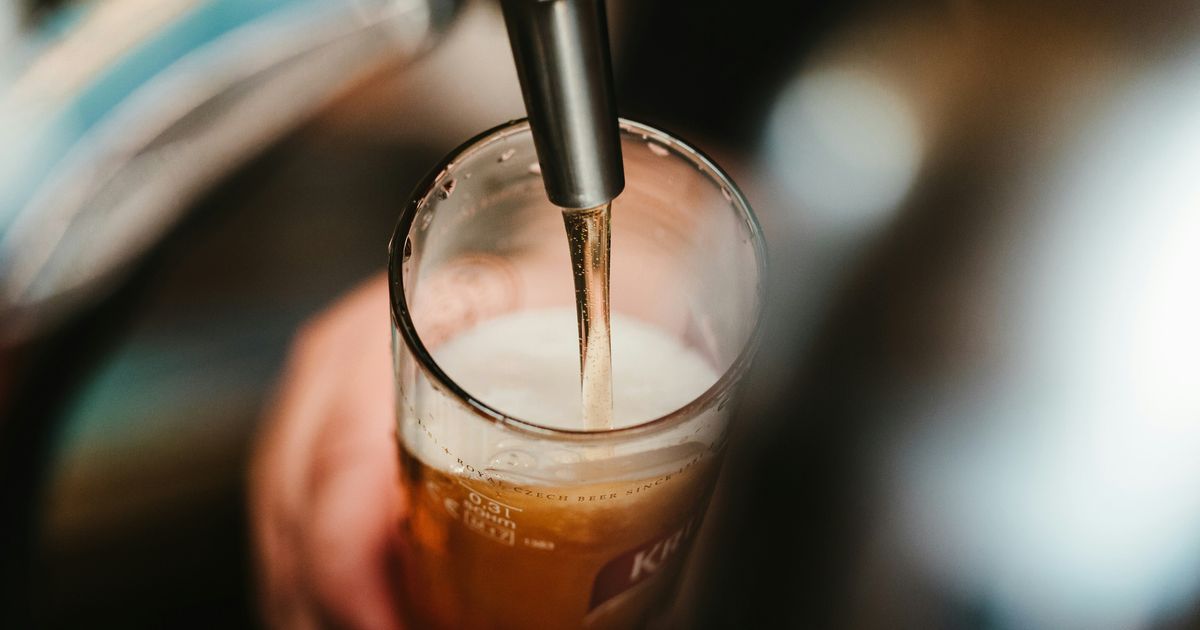
Did you know that healthy cholesterol levels can change a little by age?
They also differ by gender ― women usually have lower cholesterol readings than men, but this can change after menopause, which causes some peoples’ levels to skyrocket.
And while most of us know that fatty foods, smoking, and staying inactive can also put your cholesterol levels outside of the healthy range, I for one wasn’t aware how much of an effect booze can have on the metric.
Advertisement
According to cholesterol charity Heart UK, alcohol’s better-known toll on your liver can have knock-on effects on your heart.
When we drink alcohol, it gets broken down into triglycerides (a type of fat) and cholesterol in our body.
Triglycerides can settle in our liver, which causes fatty liver if it happens too often.
In that case, Heart UK says your liver stops being as good at removing cholesterol from your system as it should be. That leads to higher cholesterol levels.
Advertisement
“Alcohol can lead to the combination of a high triglyceride level along with low HDL cholesterol,” they add, which may cause heart disease.
Over time, drinking a lot of alcohol can lead to high blood pressure too (this is sometimes referred to as a “silent killer” because it’s linked to heart health issues like cardiac arrest and stroke, but shows few symptoms).
Drinkaware adds that you can even develop a condition called ‘Holiday Heart Syndrome’, when you experience an irregular heartbeat following a period of binge drinking.
Advertisement
The Chief Medical Officers’ guidelines read: “to keep health risks from alcohol to a low level it is safest not to drink more than 14 units a week on a regular basis.”
If you do go over those limits, it’s better to do so over three or more days, they advise.
Drinkaware offers a test to see whether your relationship to alcohol may be unhealthy.
If you’re worried about it, seek help ― you don’t have to manage any concerns alone.

