They will now be called resident doctors in an attempt to better reflect their expertise.


They will now be called resident doctors in an attempt to better reflect their expertise.

Some plants are able to take over uninhabited spaces like sand dunes, volcanic substrates and rockfall areas. The first colonizers have specific traits that allow them to grow in such hostile environments. Other plants lack such traits but will soon follow these pioneers. Ricardo Martínez-García from the Center for Advanced Systems Understanding (CASUS), an institute of the Helmholtz-Zentrum Dresden-Rossendorf (HZDR), and collaborators from Spain and Brazil investigated the type of interaction between different species on these newly conquered grounds with the help of a mathematical model based on existing root physiology knowledge. Their new model connects the type of species interaction with the general availability of a scarce soil resource. It also reveals the best strategy for the pioneer who can harness a resource that is not freely available.
Plants interact in many different ways and very often we see that one individual is supporting another from a different species. The term experts use for that is facilitation. With symbiotic facilitation, both plants support each other. With commensalistic facilitation, the nurtured plant neither affects its benefactor positively nor negatively. The third type of facilitation is called antagonistic facilitation. Here, the nurtured partner benefits at the expense of the benefactor. The latter, for example, leaves a self-produced resource to the partner, even though he could actually use it himself. The benefactor appears to “accept” this situation: Neither a kind of defensive reaction against the removal of resources nor a complete halt to production can be observed.
“There is an ongoing debate about whether antagonistic facilitation actually exists. Our study provides a clear result: this type of interaction between plant species could occur in nature,” says Dr. Ricardo Martínez-García, CASUS Young Investigator and corresponding author of the study that will be published in the second October issue of the journal New Phytologist. “To prove antagonistic facilitation experimentally, requires a big effort. To begin with, it must be ruled out that this type of interaction is neither symbiotic nor commensalistic facilitation. In addition, it has to be shown that it is not a classic competition where both plants are harming each other in the fight for resources.”
Plants as miners
Martínez-García as well as Ciro Cabal (King Juan Carlos University, Madrid, Spain) and Gabriel A. Maciel (South American Institute for Fundamental Research, São Paulo, Brazil), the two lead authors of the study, focused with their modelling efforts on an example from nature where the existence of antagonistic facilitation had been suspected for a long time: pioneering plants starting to grow on uninhabited ground and other plants soon following track. Such pioneer plants can engineer their environment to increase the availability of certain scarce soil resources like nitrogen and phosphorus. Their abilities certainly help them thrive and they do not seem to be bothered by appearing opportunistic plants helping themselves at the buffet. The bottom line is that the pioneer still benefits from its special traits. From an experimental point of view, the pioneer plant example appears to be a manageable system. Nevertheless, practitioners have not yet been able to determine the type of interaction for this example with certainty. The results of the model presented here are now a strong argument for the existence of antagonistic facilitation in these pioneer areas. Of course, it stands to reason that this type of interaction probably exists not only here, but also elsewhere in nature.
“Our model also shows that plant interactions are an emergent property of resource availability,” adds Cabal. “It turned out that in environments with low and intermediate resource availability antagonistic facilitation is the best strategy. This too was suggested some time ago but it was so far not backed by either experimental data or theoretical models.” Consequently, the research team was not only able to provide reliable results for the general existence of this type of interaction. In fact, antagonistic facilitation is even the optimal interaction between two plant communities under some environmental conditions.
As over time the soil changes and more and more plant species flourish, the interaction between the species changes. Although the pioneer species continue to increase the availability of resources, this no longer affects the other plants due to the generally good resource situation. The phase of antagonistic facilitation is over and all plants compete against each other. Further into the future, the mining capability of the pioneer will even become a burden in this competition. The pioneers are at a disadvantage. In the end, other plant species prevail in the competition and pioneer plants are no longer to be found on the site.
How root modeling helps to explain ecological patterns
Modeling is an important tool in ecology, because it allows to test hypotheses and explore ideas that are hard to investigate in field or laboratory experiments. In these cases, computational simulations can help understanding ecological dynamics and patterns and even guide the design of field and lab experiments. In a 2020 Science paper Cabal, Martínez-García and others presented a mathematical model that predicts the density and spatial distribution of roots of interacting plants. A comparison with greenhouse experiments showed great overlap with the model’s prediction.
For the New Phytologist study, the 2020 root model has been extended and refined to represent the interaction of pioneer plants with their environment as well as with other plants. Among others, the model takes into account the dynamics of an in-demand soil resource (input, decay, availability for the plants, mining trait of the pioneer plants), the size and shape of the plants’ root systems and the costs of growing and maintaining roots, mining the resource as well as transporting it within the plants.

Thanks to nanoscale devices as small as human cells, researchers can create groundbreaking material properties, leading to smaller, faster, and more energy-efficient electronics. However, to fully unlock the potential of nanotechnology, addressing noise is crucial. A research team at Chalmers University of Technology, in Sweden, has taken a significant step toward unraveling fundamental constraints on noise, paving the way for future nanoelectronics.
Nanotechnology is rapidly advancing, capturing widespread interest across industries such as communications and energy production. At the nano level — equivalent to a millionth of a millimeter — particles adhere to quantum mechanical laws. By harnessing these properties, materials can be engineered to exhibit enhanced conductivity, magnetism, and energy efficiency.
“Today, we witness the tangible impact of nanotechnology — nanoscale devices are ingredients to faster technologies and nanostructures make materials for power production more efficient,” says Janine Splettstösser, Professor of Applied Quantum Physics at Chalmers.
Devices smaller than the human cell unlocking novel electronic and thermoelectric properties
To manipulate charge and energy currents down to the single-electron level, researchers use so-called nanoscale devices, systems smaller than human cells. These nanoelectronic systems can act as “tiny engines” performing specific tasks, leveraging quantum mechanical properties.
“At the nanoscale, devices can have entirely new and desirable properties. These devices, which are a hundred to ten thousand times smaller than a human cell, allow to design highly efficient energy conversion processes,” says Ludovico Tesser, PhD student in Applied Quantum Physics at Chalmers University of Technology.
Navigating nano-noise: a crucial challenge
However, noise poses a significant hurdle in advancing this nanotechnology research. This disruptive noise is created by electrical charge fluctuations and thermal effects within devices, hindering precise and reliable performance. Despite extensive efforts, researchers have yet to find out to which extent this noise can be eliminated without hindering energy conversion, and our understanding of its mechanisms remains limited. But now a research team at Chalmers has succeeded in taking an important step in the right direction.
In their recent study, published as editor’s suggestion in Physical Review Letters, they investigated thermoelectric heat engines at the nanoscale. These specialised devices are designed to control and convert waste heat into electrical power.
“All electronics emit heat and recently there has been a lot of effort to understand how, at the nano-level, this heat can be converted to useful energy. Tiny thermoelectric heat engines take advantage of quantum mechanical properties and nonthermal effects and, like tiny power plants, can convert the heat into electrical power rather than letting it go to waste,” says Professor Splettstösser.
Balancing noise and power in nanoscale heat engines
However, nanoscale thermoelectric heat engines work better when subject to significant temperature differences. These temperature variations make the already challenging noise researchers are facing even trickier to study and understand. But now, the Chalmers researchers have managed to shed light on a critical trade-off between noise and power in thermoelectric heat engines.
“We can prove that there is a fundamental constraint to the noise directly affecting the performance of the ‘engine’. For example, we can not only see that if you want the device to produce a lot of power, you need to tolerate higher noise levels, but also the exact amount of noise. It clarifies a trade-off relation, that is how much noise one must endure to extract a specific amount of power from these nanoscale engines. We hope that these findings can serve as a guideline in the area going forward to design nanoscale thermoelectric devices with high precision,” says Ludovico Tesser.

Symptoms for patients with the gastrointestinal disease IBS improved as much by eating less sugar and starch as for those who followed FODMAP — the diet currently recommended to patients. The results, presented in a new study from Lund University in Sweden, also show that weight loss is greater and sugar cravings are reduced among those who follow the starch and sucrose-reduced diet.
Bodil Ohlsson is a professor at Lund University and consultant at Skåne University Hospital. Her choice to investigate the role of sugars and starches in IBS is linked to a geneticist’s discovery: a genetic variation that hinders the breakdown of sugars and starches in the gut is overrepresented among IBS patients.
“‘Let’s try giving these patients less sugar and starch,’ we thought,” says Bodil Ohlsson.
A few years ago, she led a study involving 105 people with IBS. For four weeks, they ate significantly less sugar and starch, known as the starch and sucrose-reduced diet (SSRD). In addition to sweet treats, highly processed food — “ready meals” — were also to be avoided. The results of that study showed that the SSRD diet greatly reduced IBS symptoms. The most common symptoms of IBS are recurring pain and tightness in the abdomen, and diarrhea and/or constipation.
The current study, now published in the scientific journal Nutrients, addresses a question that no other research has previously: how does SSRD compare to the current dietary recommendation for IBS, the FODMAP diet? FODMAP is a stricter, more regulated diet where lists of foods that are allowed/not allowed must be consistently followed. This diet also excludes gluten and lactose.
“We launched this study in 2022 to compare SSRD and Low FODMAP. One hundred and fifty-five patients diagnosed with IBS were included and randomly allocated to follow either SSRD or Low FODMAP for four weeks. They were not allowed to have been on a diet at the start of the trial, but rather ate ‘everything’,” says Bodil Ohlsson.
Participants in both groups had to follow the basic principles of each diet. But they chose how often or regularly they ate. In both groups, regardless of diet, IBS symptoms improved in 75-80 per cent of the patients, which according to Bodil Ohlsson “was even better than we expected.” In addition, weight loss after four weeks was greater in the SSRD group. Sugar cravings also decreased the most in this group, which is positive, as IBS patients weigh more on average than healthy people, says Bodil Ohlsson.
“We wouldn’t really even call SSRD a diet. It’s how everyone should eat, not just those with IBS. And unlike Low FODMAP, SSRD is easy to understand and easier to follow. You can eat everything when you are invited to dinner, just less of certain things. If you rest your stomach for the rest of the week, you can indulge a little one day!” says Bodil Ohlsson.
Dame Ruth May tells the Covid inquiry nurses struggled with low staffing levels and difficulties accessing protective equipment.

Entry-level “fun fact” commenters like to mention that tomatoes are technically a fruit. Intermediate obscure info lovers, meanwhile, will know bananas are technically berries.
True trivia fans, on the other hand, will know that strawberries are neither a berry nor even a fruit and that the “seeds” on the outside are actually the fruit, each of which contains the actual seeds.
Advertisement
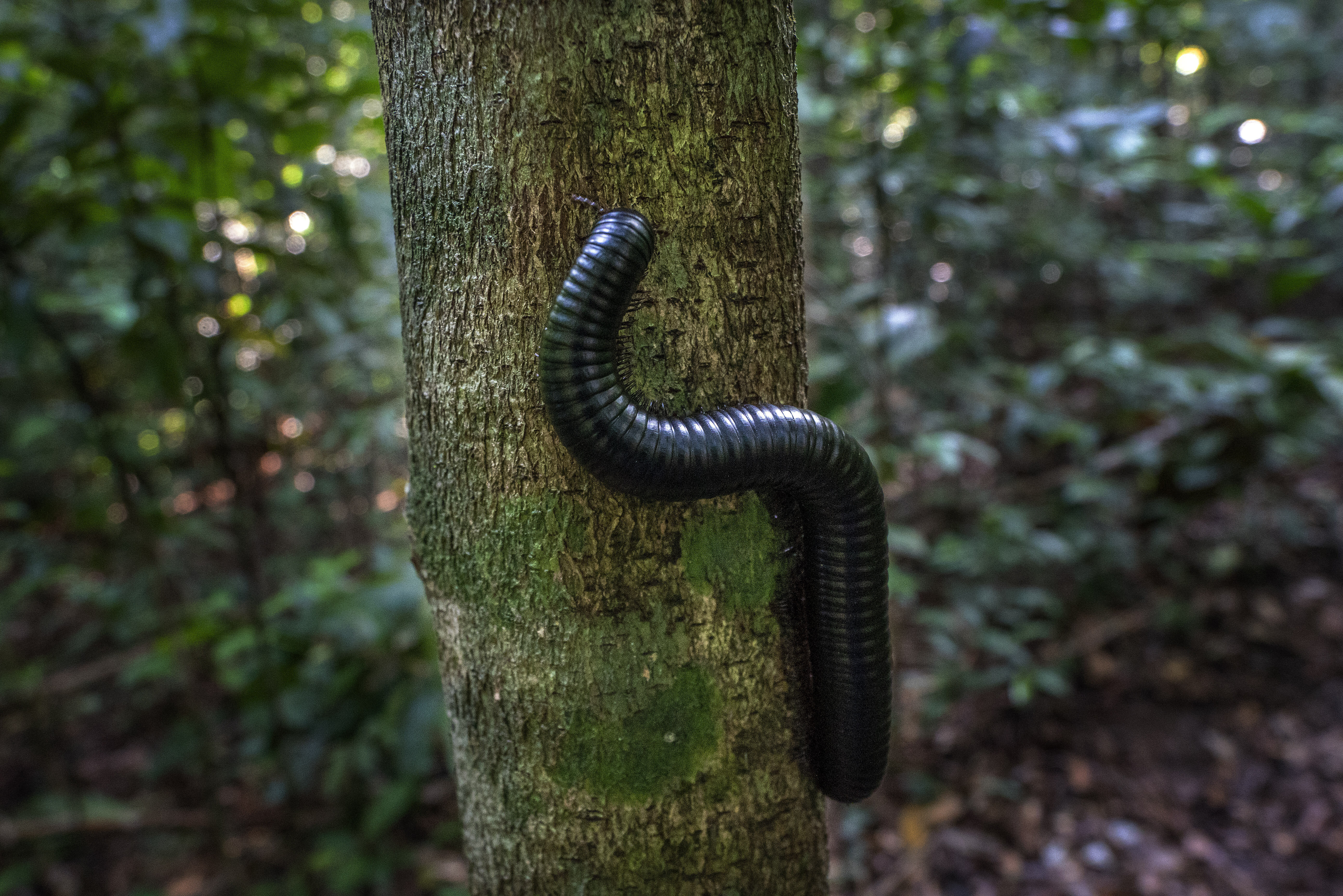
But not even the most successful pub quiz participants I know were aware that technically, millipedes (and centipedes) aren’t insects.
Instead, the Royal Horticultural Society (RHS) says they belong to a group called myriapods, a type of arthropod.
Arthropods account for 84% of animal life on Earth, the online encyclopedia Brittanica says.
They’re distinguished by their jointed skeletal covering made from chitin, which is bonded to a protein.
“The body is usually segmented, and the segments bear paired jointed appendages, from which the name arthropod (jointed feet) is derived,” Britannica adds.
Advertisement
Arthropods can be insects, but the natural history-based Australian Museum in Sydney says: “Centipedes and millipedes are not insects as they have more than six legs.”
The nonprofit conservation, education, and advocacy organisation National Wildlife Federation (NWF) agrees that millipedes “are not insects — they’re actually more closely related to lobsters, shrimp, and crayfish”.
Likening a millipede to the kind of sea creatures I like to see on my plate is pretty stomach-churning, but the onslaught of new info doesn’t end there.
The NWF says that some millipedes in the genus Motyxia are bioluminescent, meaning they grow in the dark.
Giant African millipedes can grow to 30cm long (oh, good), and though their name (“milli” meaning “thousand”, and “pede” meaning “feet”) might suggest otherwise, they typically only have between 40 and 400 legs.
Advertisement
Still, the RHS points out that “millipedes feed on decaying organic matter and are part of a healthy garden ecosystem”, adding they “should not be controlled.”
Looks like I’ll just have to live with those odd little prawn bugs for the sake of my soil…
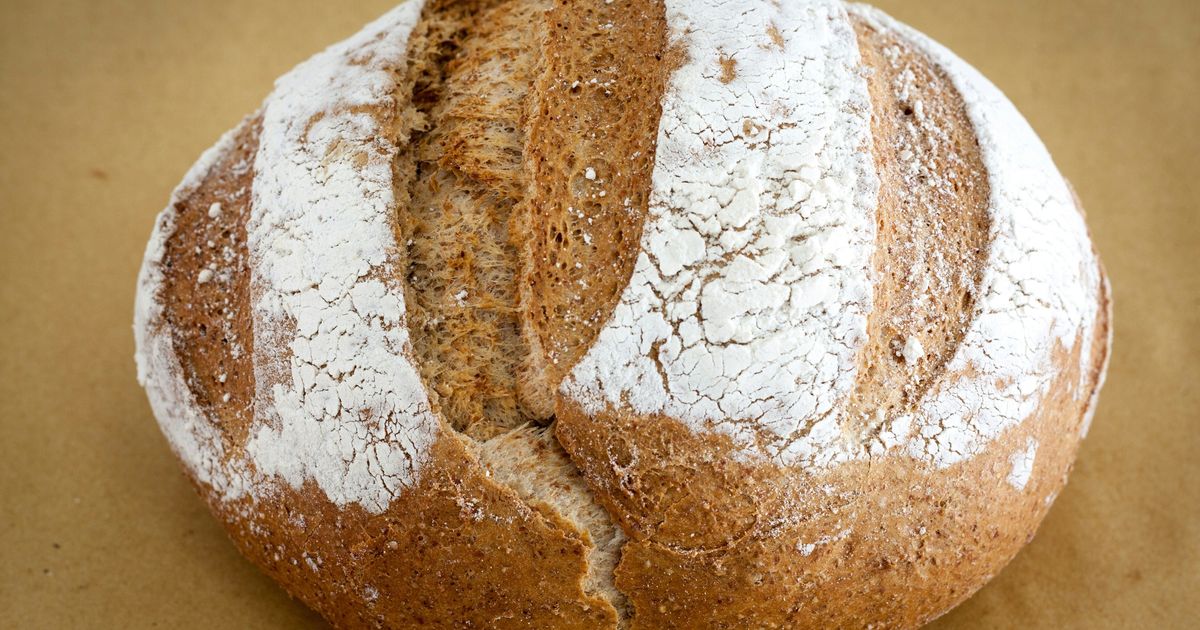
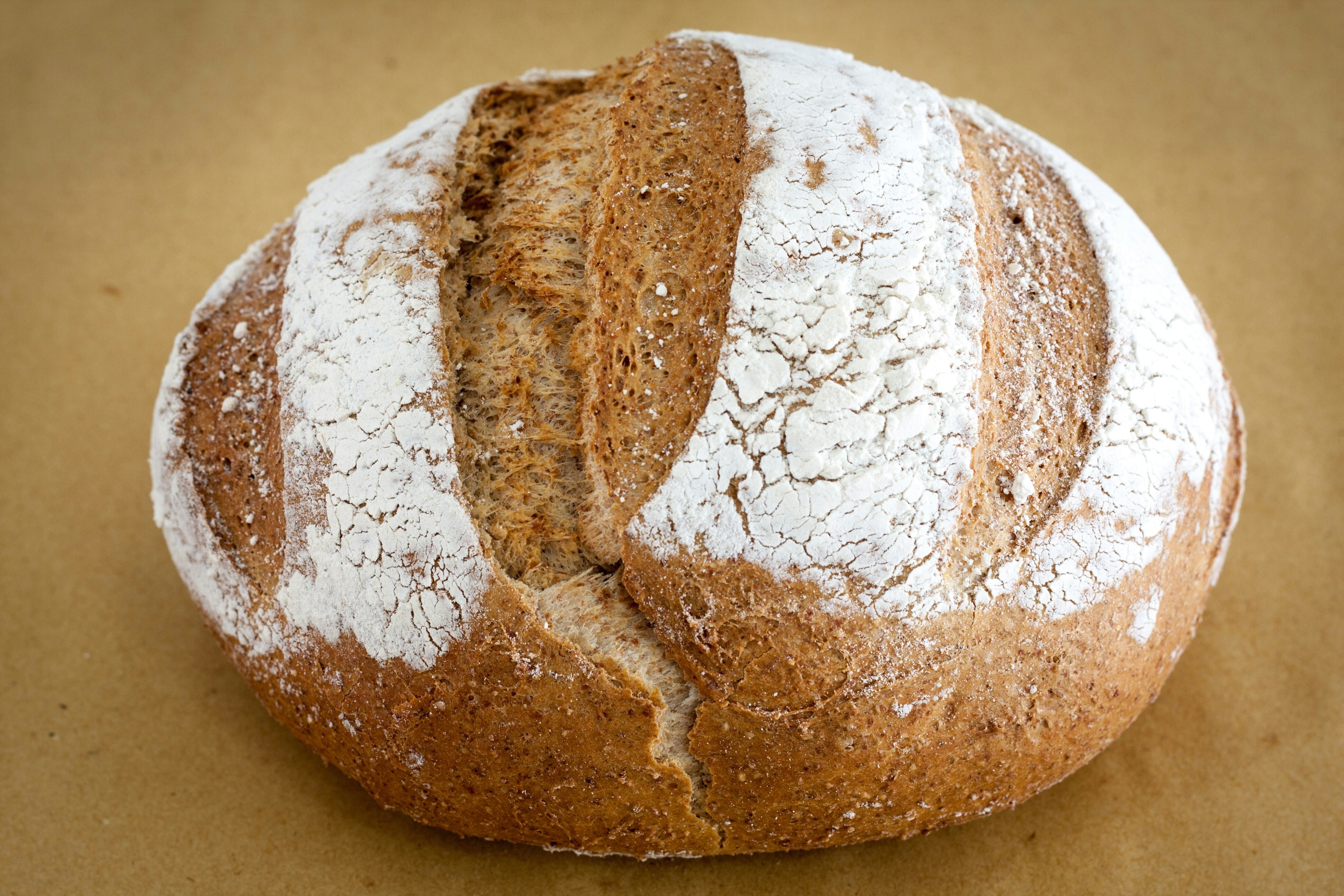
If you’ve ever gone through a breadmaking phase, you’ve likely dabbled in creating your own sourdough using either a starter of your own or one given to you.
However, if you weren’t familiar, BBC Good Food has a pretty explanation of what it is: “Sourdough is naturally leavened bread, which means it doesn’t use commercial yeast to rise. Instead, it uses a ‘starter’ – a fermented flour and water mixture that contains wild yeast and good bacteria – to rise.
Advertisement
“This also produces the tangy flavour and slightly chewy texture you’ll find in sourdough.”
It’s also delicious. Perfect for sandwiches, toasting, dipping in soup, on the side of salads… you name it, sourdough is the perfect accompaniment.
However, the hidden benefit of sourdough isn’t its taste or how easy it is to create. It turns out that sourdough is actually very good for your health, too.
According to Web MD, sourdough is rich in nutrients that make the bread overall good for our bodies, disease prevention and lowering blood sugar.
However, it’s our gut health that sees the most benefits, especially in comparison with other breads.
Advertisement
The health experts said: “Sourdough bread may be easier to digest than white bread for some people.
“According to some studies, sourdough bread acts as a prebiotic, which means that the fibre in the bread helps feed the “good” bacteria in your intestines. These bacteria are important for maintaining a stable, healthy digestive system.”
If you want to try your hand at making sourdough, you’ll first need to make a starter.
For a starter, according to Jamie Oliver, you’ll need 100g strong white bread flour, 100g dark rye flour, 200ml of water and a container that can be sealed — around 1L is ideal.
View Jamie’s recipe full here, and good luck!
Union says more above-inflation rises needed in coming years or there will be consequences.

Chappell Roan has opened up about the writing process of her signature hit Good Luck, Babe!.
While the success of older songs like Hot To Go! and Pink Pony Club has helped boost the US singer’s profile in the last year, it’s 2024 hit Good Luck, Babe! that really put her on the map.
As it turns out, though, the song was very nearly called something very different.
Speaking to Konbini, Chappell recalled: “Originally, it was not called Good Luck, Babe!. It was originally called Good Luck, Jane!, but my co-writer and I kept getting into arguments about it. So, it became Good Luck, Babe!.”
Advertisement
It’s fair to say fans were pretty happy with Chappell’s final decision:
Advertisement
When Konbini’s interviewer pointed out that the “babe” in the title made the song more ambiguous, meaning Chappell could even be singing about herself, she agreed: “Exactly. I wrote it because I fell in love with this girl, and she started dating this fucking loser of a guy! And I was like, ‘OK, bitch. Sure. You’re not gay. Good luck with that!’.
Advertisement
“And then, it kind of turned into, ‘oh, I think this is a story about me’ – especially the bridge, only dating men prior to the past couple of years, and it would have been horrible to wake up in the middle of the night being like, ‘oh my god, what have I done?’, thinking about that girl that I fell in love with.”
Good Luck, Babe! has proved to be Chappell’s biggest hit to date, peaking at number six in the US and number two here in the UK.
Even more impressively, she managed it without shooting an accompanying music video, and it doesn’t sound like the Red Wine Supernova singer is in any rush to change that.
However, she has brought the song to life visually on several occasions, including an elaborate performance on Jimmy Fallon’s US talk show, and a show-stopping rendition of it while making her VMAs stage debut.
Advertisement


Repeated scans during one woman’s pregnancy show brain changes never charted before.
