Would You Know What To Do If Your Child Was Burned By A Hot Drink?

A mum and former nurse has shared the burns and scalds advice that she reckons plenty of parents don’t know, but definitely should.

Beki (@beki.guinta) recalled the mortifying moment her 18-month-old son pulled her hot tea – consisting of pure boiling water and no milk – down on top of him.

“I was standing right next to him, I did not think this would happen, I’m the most safe parent alive,” she said in a TikTok video which has been viewed more than 5.3 million times.

Beki explained how she used to be a registered nurse and worked in a children’s intensive care unit and therefore has “seen it all” and is “so safe” with her child. But noted these accidents still happen.

She then proceeded to tell other parents “exactly” what to do in the event that their child gets burnt.

“The lack of knowledge people have around what to do if a child gets burnt is astonishing,” she said.

So what’s the advice?

“The first thing you need to do is call an ambulance and then you need to take all your child’s clothing off, get them completely nude, and get them in a shower or under continuous cold running water for a minimum – a minimum – of 20 minutes,” she said.

“Not only does this aid in stopping the burn, this helps aid with the pain as well.”

The NHS shares similar advice for treating burns or scalds. Firstly, it advises to remove any clothing or jewellery from near the burnt area of skin, including babies’ nappies, unless – and this is important – the item of clothing is stuck to the burnt skin.

Then it says to “cool the burn with cool or lukewarm running water for 20 minutes as soon as possible after the injury”.

It warns parents to “never use ice, iced water, or any creams or greasy substances like butter”.

You’ll need to keep your child warm to help prevent hypothermia – “use a blanket or layers of clothing, but avoid putting them on the injured area,” reads the advice.

Beki said she used her body heat to keep her son warm while he was in the shower.

Next, cover the burn with cling film (laying the film flat over the burn rather than wrapping it around a limb) and treat any pain with paracetamol or ibuprofen, advises the NHS. It might also help to raise the affected area to reduce swelling.

Recalling the horrifying moment her son was burned, Beki continued: “My little boy was beside himself. I had to sing Twinkle Twinkle Little Star while I was sobbing, holding him in the shower just running icy cold water over his burn.

“His whole face, his neck, his torso, his stomach – everything was bright red. I’m talking like, a red that isn’t… you don’t normally see it. It was terrifying.

“I just thought instantly: he was going to be in the burns unit, he was going to be having skin grafts, he was going to have surgery and that would’ve 100% happened had I not done what I did that day.”

She said her son is now fine and “doesn’t even have a mark on him” – and she credits running cool water on him for 20 minutes as the reason why.

According to the NHS, you’ll need to go to A&E if your child is under 10, has a medical condition or weakened immune system and has a scald or burn.

You should also head to hospital if they have:

  • large burns bigger than the size of their hand,
  • deep burns of any size that cause white or charred skin,
  • burns on the face, neck, hands, feet, any joints, or genitals,
  • chemical and electrical burns,
  • any other injuries that need treating,
  • any signs of shock – symptoms include cold, clammy skin; sweating; rapid, shallow breathing; and weakness or dizziness.

Share Button

Junior doctors to strike for four days in August

The walkout in England, beginning at 07:00 on 11 August, is the fifth round of strikes this year.

Share Button

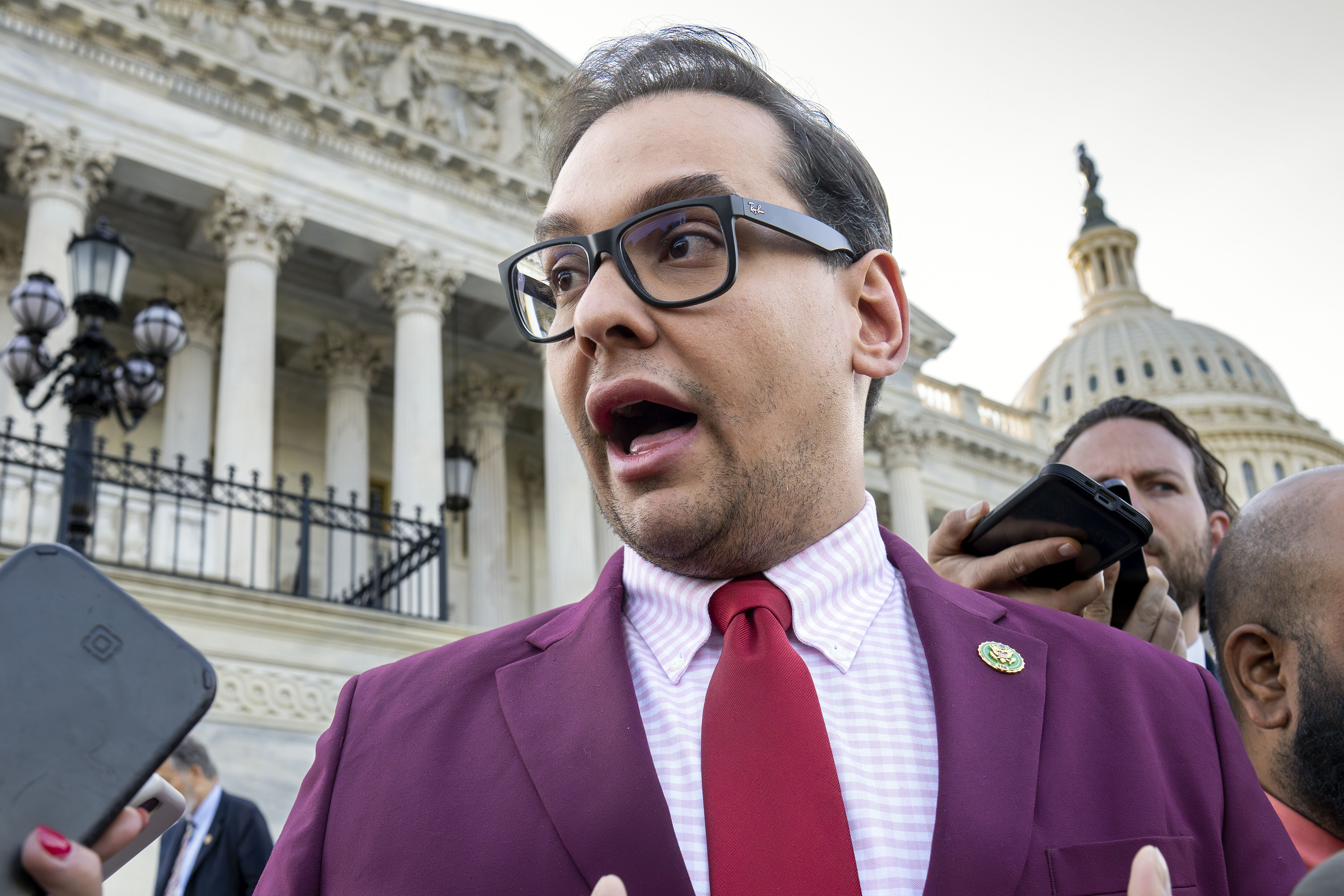
Twitter Users Mock George Santos For Demanding Biden’s Impeachment

And so is one member of Congress who should probably sit this one out: George Santos .

Considering that Santos was indicted on 13 counts in May for allegedly embezzling money from his campaign, lying to Congress about his income and cheating his way into undeserved unemployment benefits, some people wondered if he was in any position to be calling for an indictment ― including Anna M. Kaplan, who is running to replace him in Congress.

She posted two tweets, the first of which offered some helpful advice ― “Sit this one out, George” ― while the second suggested that McCarthy expel Santos “instead of this partisan impeach inquiry.”

Others joined in on mocking Santos ― and some even brought receipts.

Share Button

Why John Fetterman Believes Donald Trump Would Be ‘Formidable’ In 2024

Senator John Fetterman said a rematch between President Joe Biden and Donald Trump in the 2024 election in Pennsylvania would be “closer” than some might expect, though he still believes Biden holds an edge in the hypothetical contest.

The freshman Democratic senator addressed the race for the GOP nomination, Trump, and life in the Senate since his bout with depression in a rare sit-down with reporters in his congressional office on Monday.

“Donald Trump can’t beat President Biden in Pennsylvania but, assuming it will be President Trump, it’s going to be closer,” Fetterman said of the current Republican presidential front-runner.

“Trump has to perform above his ceiling,” he explained, adding that the former president is still very popular in the state. “You still see Trump signs everywhere in Pennsylvania, and you have to respect Trump’s strength.”

Trump won Pennsylvania’s 20 electoral votes in 2016 by a narrow margin but lost the state resoundingly to Biden in 2020. Democrats are looking to repeat that kind of performance next year, especially with blue-collar voters in deep-red counties.

Fetterman said no other Republican presidential candidate stands a better chance against Biden than Trump, including Florida Governor Ron DeSantis. He cast DeSantis as extreme, citing his staunch anti-abortion stance and his focus on waging culture wars, including over transgender rights.

“There’s no way Ron DeSantis could win Pennsylvania,” the senator said. “Watching DeSantis turn into [former Wisconsin Governor and 2016 Republican presidential candidate] Scott Walker and get liquidated by Trump’s machine, I respect Trump in terms of how formidable he would be in Pennsylvania.”

Fetterman spoke with the help of an iPad that transcribed the conversation with Capitol Hill reporters in real time, helping compensate for auditory processing difficulties caused by his stroke over a year ago.

The Pennsylvania Democrat seems to be taking his own approach to life in the Senate after being hospitalized for depression. He often eschews suits in favor of shorts and a hoodie on his way to Senate votes, though, given the warm summer months, he has traded in the hoodie for a short-sleeve, button-down shirt.

Monday’s sit-down seemed to mark a shift in Fetterman’s media strategy. Embracing conversations with reporters, both in formal settings and in more informal interactions in the Senate hallways, is something he hasn’t done much before.

Share Button

NatWest Boss Alison Rose Resigns After Admitting To ‘Serious Error’ Over Farage Leak

NatWest chief executive Alison Rose has resigned after admitting to discussing Nigel Farage’s relationship with the bank with a senior BBC journalist.

Rose had remained in post after saying she made a “serious error of judgment” over talking to Simon Jack about the former Brexit party leader and his closed accounts, with the company’s board stating they had “full confidence” in her.

But in the early hours of Wednesday morning, Howard Davies, chairman of the NatWest board, announced Rose had agreed to step down “by mutual consent”.

Her position had become untenable following the intense political and media scrutiny over a decision by NatWest’s private bank, Coutts, to close Farage’s accounts. NatWest is taxpayer-funded, with the state’s shareholding just below 40%.

Farage had alleged the decision to “exit” him was “political” after he obtained an internal document that said the “de-banking” was partly because his views were not “aligned” with the bank’s. The 40-page dossier refers to the ex-MEP as “xenophobic and racist” and a former “fascist”.

It raised into question a report by Jack, the broadcaster’s business editor, who had suggested Farage lost his account because he lacked the funds needed to hold it.

Jack on Monday apologised to Farage, saying the information his reporting was based on “turned out to be incomplete and inaccurate”. This was followed by Rose’s admission on Tuesday and her subsequent resignation.

Before the departure, Farage had hit back at NatWest’s statement on his GB News show, criticising Rose as “unfit” to run a bank, as well as lambasting Davies and Coutts CEO Peter Flavel.

“The government ought to say we have no confidence in this management. Frankly, I think they should all go,” Farage said, after declaring that Rose had breached an “essential confidence”.

Rose confirmed in the statement that she had discussed Farage’s “relationship with the bank” with Jack.

“I recognise that in my conversations with Simon Jack of the BBC, I made a serious error of judgment,” Rose said, but added she had not revealed any personal financial information about Farage and had answered a general question about eligibility.

Coutts’ website advises its clients should be able to borrow or invest at least £1 million with the bank or hold £3 million in savings.

Rose also said she was not part of the decision-making process to close Farage’s accounts and said this was a decision made by Coutts.

The government’s shareholding in NatWest is managed “at arm’s length” and on a commercial basis by the UK Government Investments (UKGI). UKGI’s role is to manage the shareholding, not the bank itself.

Treasury minister Andrew Griffith is set to meet lenders on Wednesday to discuss concerns that banks have closed customer accounts over their political views, ahead of reforms requiring banks to explain and delay these decisions.

Share Button

Wall squats and planks best way to lower blood pressure

All exercise is good for blood pressure but research suggests strength training is most effective.

Share Button

Faulty concrete fears at 250 NHS Scotland sites

The buildings could contain a material which NHS Scotland warns is vulnerable to “catastrophic failure”.

Share Button

Gloomy climate calculation: Scientists predict a collapse of the Atlantic ocean current to happen mid-century

Important ocean currents that redistribute heat, cold and precipitation between the tropics and the northernmost parts of the Atlantic region will shut down around the year 2060 if current greenhouse gas emissions persist. This is the conclusion based on new calculations from the University of Copenhagen that contradict the latest report from the IPCC.

Contrary to what we may imagine about the impact of climate change in Europe, a colder future may be in store. In a new study, researchers from the University of Copenhagen’s Niels Bohr Institute and Department of Mathematical Sciences predict that the system of ocean currents which currently distributes cold and heat between the North Atlantic region and tropics will completely stop if we continue to emit the same levels of greenhouse gases as we do today.

Using advanced statistical tools and ocean temperature data from the last 150 years, the researchers calculated that the ocean current, known as the Thermohaline Circulation or the Atlantic Meridional Overturning Circulation (AMOC), will collapse — with 95 percent certainty — between 2025 and 2095. This will most likely occur in 34 years, in 2057, and could result in major challenges, particularly warming in the tropics and increased storminess in the North Atlantic region.

“Shutting down the AMOC can have very serious consequences for Earth’s climate, for example, by changing how heat and precipitation are distributed globally. While a cooling of Europe may seem less severe as the globe as a whole becomes warmer and heat waves occur more frequently, this shutdown will contribute to an increased warming of the tropics, where rising temperatures have already given rise to challenging living conditions,” says Professor Peter Ditlevsen from the Niels Bohr Institute.

“Our result underscores the importance of reducing global greenhouse gas emissions as soon as possible,” says the researcher.

The calculations, just published in the scientific journal, Nature Communications, contradict the message of the latest IPCC report, which, based on climate model simulations, considers an abrupt change in the thermohaline circulation very unlikely during this century.

Early warning signals present

The researchers’ prediction is based on observations of early warning signals that ocean currents exhibit as they become unstable. These Early Warning Signals for the Thermohaline Circulation have been reported previously, but only now has the development of advanced statistical methods made it possible to predict just when a collapse will occur.

advertisement


The researchers analysed sea surface temperatures in a specific area of the North Atlantic from 1870 to present days. These sea surface temperatures are “fingerprints” testifying the strength of the AMOC, which has only been measured directly for the past 15 years.

“Using new and improved statistical tools, we’ve made calculations that provide a more robust estimate of when a collapse of the Thermohaline Circulation is most likely to occur, something we had not been able to do before,” explains Professor Susanne Ditlevsen of UCPH’s Department of Mathematical Sciences.

The thermohaline circulation has operated in its present mode since the last ice age, where the circulation was indeed collapsed. Abrupt climate jumps between the present state of the AMOC and the collapsed state has been observed to happen 25 times in connection with iceage climate. These are the famed Dansgaard-Oeschger events first observed in ice cores from the Greenlandic ice sheet. At those events climate changes were extreme with 10-15 degrees changes over a decade, while present days climate change is 1.5 degrees warming over a century.

Facts:

  • The Atlantic Meridional Overturning Circulation (AMOC) is part of a global system of ocean currents. By far, it accounts for the most significant part of heat redistribution from the tropics to the northernmost regions of the Atlantic region — not least to Western Europe.
  • At the northernmost latitudes, circulation ensures that surface water is converted into deep, southbound ocean currents. The transformation creates space for additional surface water to be moved northward from equatorial regions. As such, thermohaline circulation is critical for maintaining the relatively mild climate of the North Atlantic region.
  • The work is supported by TiPES, a joint-European research collaboration focused on tipping points of the climate system. The TiPES project is an EU Horizon 2020 interdisciplinary climate research project focused on tipping points in the climate system.
Share Button

Groundbreaking e-scooter study shows surface transitions as most common hurdle

A historic study has provided first-time insights on electric scooters.

In September 2019, Virginia Tech Transportation Institute (VTTI) began the first large-scale naturalistic driving study of electric scooter, also known as e-scooter, riders. Over the span of 18 months, 50 scooters, equipped with forward-facing cameras and other research equipment, collected over 9,000 miles of data from over 200,000 rides on Virginia Tech’s Blacksburg campus. Deployment of the scooters began in August 2019. After being removed from campus during the COVID-19 pandemic, they were redeployed in August 2021 through the academic year.

“The e-scooter deployment at Virginia Tech collected the largest naturalistic e-scooter data set known to date and quantified the safety risks associated with behavioral, infrastructure, and environmental factors,” said Elizabeth White, programs and business manager for VTTI. “This was a very exciting research program to be a part of, and our collaboration with many departments on campus was invaluable to ensuring a safe deployment.

White was the lead researcher of the team that included six other Virginia Tech researchers and other industry experts. The results were recently published in published in the Journal of Safety Research.

Utilizing VTTI’s proprietary data acquisition system (DAS), researchers found that infrastructure-related factors, the behaviors of e-scooter riders and other around them, and environmental factors all created risk for e-scooter users. They found loss of control related to infrastructure was the greatest contributor, to all crash- and near-crash events, equating to 47 percent. In total, infrastructure caused 67 percent of incidents, followed by the presence of other road users at 19 percent and rider behavior at 14 percent.

Transitions from surfaces, such as moving from gravel or dirt to grass, proved to be the riskiest. Those riders were almost 60 times more likely to have a crash or near-crash experience. This was supported by data showing that riding off a designated path, or off-road, made users nearly 25 times more likely to experience such issues compared to those who rode on a shared-use path.

uring the study, there were no crashes between an e-scooter and a moving vehicle captured. Conflicts with other road users were shown to be more avoidable through evasive maneuvers when compared to infrastructure-related events. Researchers believe this is likely caused by riders misjudging the terrain or infrastructure or a lack of skill in navigating those obstacles.

advertisement


VTTI pioneered DAS in the 1990s and it is frequently used by researchers to provide an in-depth look at driver behaviors. These systems allowed rider behavior, interactions with other road users, and other valuable safety data to be recorded and analyzed for various trends. To date, it has been used on everything from e-scooters to semi-trucks. For the e-scooter study, devices did not film the rider, just the riding behavior in order to maintain rider privacy. Riders also were limited to the Blacksburg campus.

To improve safety for riders, the research team recommends all riders engage in an educational outreach program that discusses the significant risks associated with infrastructure, behavior, and environmental factors. Meanwhile, VTTI and its partners will continue to study ways to improve safety around Blacksburg and beyond.

“We are in continued conversations with campus stakeholders to determine the future of micromobility on the Virginia Tech campus,” said White.

The project was funded in part by the Safety Through Disruption, a grant from the U.S. Department of Transportation’s University Transportation Centers program. The research was conducted in partnership with Ford and Spin.

Ford later sold off Spin.

Share Button

New image reveals secrets of planet birth

A spectacular new image released today by the European Southern Observatory gives us clues about how planets as massive as Jupiter could form. Using ESO’s Very Large Telescope (VLT) and the Atacama Large Millimeter/submillimeter Array (ALMA), researchers have detected large dusty clumps, close to a young star, that could collapse to create giant planets.

“This discovery is truly captivating as it marks the very first detection of clumps around a young star that have the potential to give rise to giant planets,” says Alice Zurlo, a researcher at the Universidad Diego Portales, Chile, involved in the observations.

The work is based on a mesmerising picture obtained with the Spectro-Polarimetric High-contrast Exoplanet REsearch (SPHERE) instrument on ESO’s VLT that features fascinating detail of the material around the star V960 Mon. This young star is located over 5000 light-years away in the constellation Monoceros and attracted astronomers’ attention when it suddenly increased its brightness more than twenty times in 2014. SPHERE observations taken shortly after the onset of this brightness ‘outburst’ revealed that the material orbiting V960 Mon is assembling together in a series of intricate spiral arms extending over distances bigger than the entire Solar System.

This finding then motivated astronomers to analyse archive observations of the same system made with ALMA, in which ESO is a partner. The VLT observations probe the surface of the dusty material around the star, while ALMA can peer deeper into its structure. “With ALMA, it became apparent that the spiral arms are undergoing fragmentation, resulting in the formation of clumps with masses akin to those of planets,” says Zurlo.

Astronomers believe that giant planets form either by ‘core accretion’, when dust grains come together, or by ‘gravitational instability’, when large fragments of the material around a star contract and collapse. While researchers have previously found evidence for the first of these scenarios, support for the latter has been scant.

“No one had ever seen a real observation of gravitational instability happening at planetary scales — until now,” says Philipp Weber, a researcher at the University of Santiago, Chile, who led the study published today in The Astrophysical Journal Letters.

“Our group has been searching for signs of how planets form for over ten years, and we couldn’t be more thrilled about this incredible discovery,” says team-member Sebastián Pérez from the University of Santiago, Chile.

ESO instruments will help astronomers unveil more details of this captivating planetary system in the making, and ESO’s Extremely Large Telescope (ELT) will play a key role. Currently under construction in Chile’s Atacama Desert, the ELT will be able to observe the system in greater detail than ever before, collecting crucial information about it. “The ELT will enable the exploration of the chemical complexity surrounding these clumps, helping us find out more about the composition of the material from which potential planets are forming,” concludes Weber.

Share Button