Ketamine is licensed to be used as an anaesthetic but has a reputation as an illegal party drug.


Ketamine is licensed to be used as an anaesthetic but has a reputation as an illegal party drug.

With ITV1 splitting TV coverage of the Women’s World Cup with the BBC, there’s set to be disruption to regular programming in the coming weeks.
The tournament is currently underway in Australia and New Zealand, meaning that many games are taking place in the morning hours for sports fans in the UK.
Advertisement
As a result, ITV1′s regular daytime staples Good Morning Britain, Lorraine, This Morning and Loose Women will either be off air completely or have adjusted timeslots.
So, if you’re flicking on the telly disappointed not to see Susanna Reid, Lorraine Kelly, Alison Hammond and co on your screens, here’s the full schedule for ITV1 daytime this week…
No Good Morning Britain
No Lorraine
No This Morning
No Loose Women
Italy vs. Argentina (kick off 7am)
Germany vs. Morocco (kick off 9.30am)
Brazil vs. Panama (kick off 12pm)
No Good Morning Britain
No Lorraine
This Morning (11.15am)
Loose Women (12.30pm)
New Zealand vs. Philippines (kick off 6.30am)
Switzerland vs. Norway (kick off 9am)
No Good Morning Britain
Lorraine (9am)
This Morning (10am – 12.30pm)
No Loose Women
Japan vs. Costa Rica (kick off 6am)
Canada vs. Ireland (kick off 1pm)
Good Morning Britain (6am – 8am)
No Lorraine
This Morning (10.45am)
Loose Women (12.30pm)
Portugal vs. Vietnam (kick off 8.30am)
Good Morning Britain (6am)
Lorraine (9am)
This Morning (10am – 11.30am)
No Loose Women
China vs. Haiti (kick off 12pm)


Keir Starmer has defeated his left-wing critics to win backing for his “serious and credible” general election plans.
In a major victory for the Labour leader, the party’s National Policy Forum rejected “unfunded” proposals by the Unite trade union and pro-Jeremy Corbyn campaign group Momentum.
Advertisement
A party spokesperson said: “Labour’s democratic policy-making body has endorsed Keir Starmer’s programme, his five missions for government, and the fiscal rules that he and Rachel Reeves have set out.
“This is a serious, credible and ambitious policy programme that lays the groundwork for an election-winning manifesto and a mission-driven Labour government that will build a better Britain.
“There are no unfunded spending commitments in the document.
“This weekend is another proof point that shows that Keir Starmer has changed the Labour Party and is ready to change the country in government built on the rock of economic responsibility and strong fiscal rules.”
The GMB union said the plans “would make a real difference for workers and industries they work in”.
But Unite refused to give the policy document their backing, claiming it “clearly crossed the union’s red lines including around workers’ rights”.
Advertisement
“As the general election draws nearer, Keir Starmer has to prove Labour will deliver for workers and we need clear policies on this,” the union said.
Momentum said it was “a missed opportunity for Labour to lay out real solutions to the Tories’ broken Britain”.
They said: “Unions and members proposed urgent, popular policies like a £15 minimum wage, workers’ rights and free school meals. But Starmer’s fiscal conservatism put paid to hope.
“Worse, the leadership’s steadfast refusal to commit to scrap heinous Tory policies like the two-child cap and anti-protest laws means that an undemocratic and unequal status quo risks being left in place under a Labour government. Britain deserves better.”

New Hampshire Governor Chris Sununu highlighted a “huge opportunity” for Republican candidates on Saturday as he gave his two cents on a dip in former President Donald Trump’s polling numbers in his state.
In an appearance on Fox News, Sununu argued that the “reality” that Trump won’t win the 2024 presidential election is “coming to bear” as he looked at a recent University of New Hampshire poll that showed Trump dropping 5 percentage points with likely Republican primary voters since April.
Advertisement
“When you have an incumbent president that’s sitting under 40%, that’s a huge opportunity for everybody else,” said Sununu, who had teased a 2024 presidential bid but ultimately passed on a campaign.
The governor and frequent critic of Trump noted that the poll shows “60-plus percent” of voters are not with the former president in the state, claiming that part of Trump’s performance in the poll is due to sympathy for “political attacks” against him.
Sununu has previously slammed Trump’s Republican rivals for not being more critical of Trump and not bringing up his federal indictment on the campaign trail.
He told Fox News’ Neil Cavuto that rival candidates have to go after Trump as they set their sights on their party’s nomination.
Advertisement
“Either you’re willing to swing, you’re willing to give the punch and take the punch and show leadership, or you’re kowtowing,” said Sununu.
“I don’t understand the politics of it because you’re not going to get a Trump voter, right? They’re with Trump. If the base is with Trump, the base is with Trump. He’s still going to be in the race. So you’ve got to find your own path. … You’ve got to go through him. You can’t go around him. They tried that in ’16, they tried to avoid the controversy. Leadership takes it head-on.”
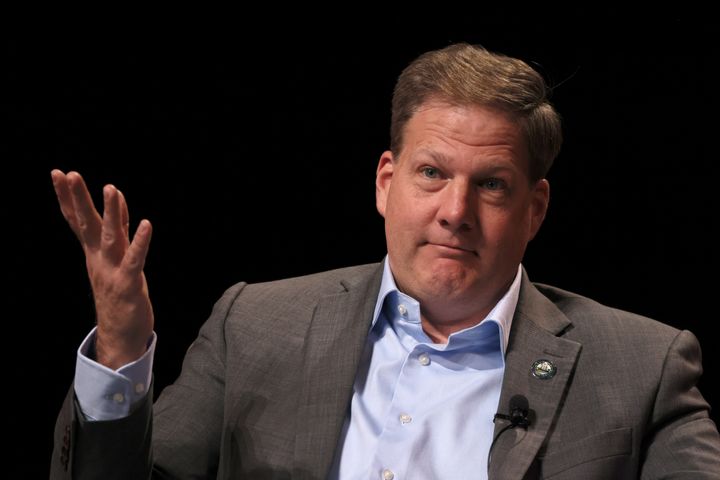
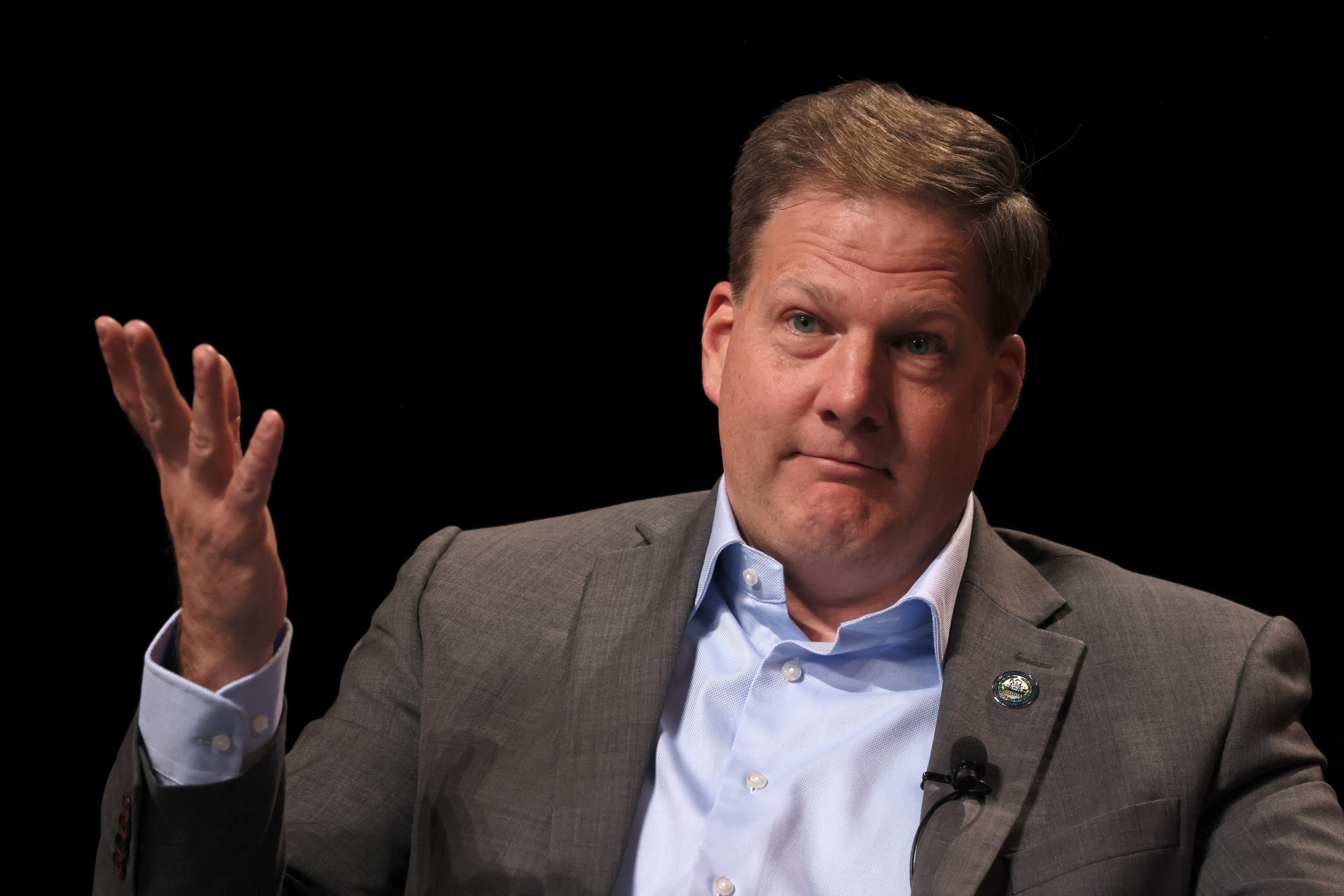
Photo by Jemal Countess/Getty Images for TIME
The governor announced on Wednesday that he won’t seek reelection in 2024 as his state prepares for its presidential primary next year, according to The Associated Press. He vowed to be an “aggressive proponent of everybody else” besides Trump in the primaries.
“Donald Trump does not represent the Republican Party. He might be our nominee, but he doesn’t represent the future. He’s yesterday’s news,” he said.
Advertisement


Former President Donald Trump dodged what he described as a “great question” on faith during a Fox News town hall held Tuesday in Iowa.
In a new video clip released Friday, a woman is seen asking the 2024 hopeful: “How has your faith grown since you decided in 2015 to run for president? And who has mentored you in your faith journey?”
Advertisement
Trump complimented the question before swerving away from a direct answer. He instead mentioned “heartache and turmoil,” quickly adding that he had a “wonderful life” before his career in politics but also saying he “couldn’t be more glad” with his choices now.
“I’ve made America great. We can do it again,” said Trump, who has previously boasted of “total support” from faith leaders in the state.
“But I’ve gotten to know, because of this, evangelicals. I know so many people and they feel so good about themselves and their family, and they base it on religion,” he said during the town hall.
Trump went on to shift focus to the Catholic faith, claiming that the FBI has made Catholics “the enemy” and questioned how they could vote for a Democrat like President Joe Biden.
Advertisement
“I’ve met some of the finest people that I wouldn’t have had the privilege of meeting if I weren’t president,” he said. “They’re religious leaders, and they really are incredible people.”
Twitter users poked fun at Trump’s rambling answer and asked why he didn’t quote from “Two Corinthians,” referring to a Bible-related gaffe he made in 2016 at the evangelical Liberty University.
At the time, Trump downplayed the mistake as a “small deal,” blaming the president of the Family Research Council for how he’d written notes on what Trump should say.
In the current White House race, Trump currently leads Ron DeSantis by over 30 percentage points in an average of national polls on GOP candidates, according to FiveThirtyEight.
Advertisement

A government commitment comes after reports of women being advised to store remains in the fridge.

Labour’s defeated candidate in the Uxbridge by-election has launched a vicious attack on Sadiq Khan’s controversial expansion of London’s Ultra Low Emission Zone (ULEZ).
Danny Beales said the policy had “cut us off at the knees” and handed the seat to the Tories.
In a surprise appearance at Labour’s National Policy Forum (NPF) in Nottingham this morning, he declared: “ULEZ is bad policy. It must be rethought.”
Advertisement
His comments are a further sign of the bitter Labour civil war that has erupted since Conservative candidate Steve Tuckwell defied the odds to win Uxbridge and South Ruislip by just 495 votes.
The result was a major boost for Rishi Sunak on the same night the Tories suffered seismic losses to the Lib Dems in Somerton and Frome and to Labour in Selby and Ainsty.
Khan, the Labour mayor of London, has insisted he will not scrap the ULEZ expansion, which takes place next month and will see drivers of cars that don’t meet strict environmental standards charged £12.50 a day.
But Beales told the NPF: “Our relentless focus on the cost of living hammering voters across the country should have been enough to win my home seat. But it wasn’t.
Advertisement
“Because – let me be frank – a single policy cut us off at the knees. This isn’t complicated. You cannot tell working people you are laser-focused on the cost of living, on the difficulties facing them, on making life easier and then also penalise them, simply for driving their car to work.
“ULEZ is bad policy. It must be rethought.”
He added: “There were people in Uxbridge desperate for change, sick of the Tories, complimentary about our changed party, about our leadership, about our plans.
“But a single policy – one that felt like a grotesque unfairness to many who might otherwise have voted for us – acted as a dead-weight, one that we were forced to trudge around with on our backs, all day, every day, from one door to another.”
Beales said Labour must use the NPF gathering to learn the lessons of the Uxbridge defeat and focus its policies on helping ordinary people currently struggling with the cost of living.
He said: “We can continue to drive our party back into the arms of working people, as we are doing under Keir’s leadership, by focusing entirely on their priorities, their needs and their desires.
Advertisement
“Or we can spend this weekend focused on the hobby horses, the ideological obsessions and – ultimately – the damaging policies that cost us dear in Uxbridge.”
Keir Starmer yesterday called on Khan to “reflect” on the part ULEZ played in Labour’s by-election defeat.
But the mayor vowed to press on with the controversial policy, saying clean air is a “human right, not a privilege”.


A prominent Russian military blogger has been arrested after criticising Vladimir Putin’s handling of the war in Ukraine.
Igor Girkin, who is also a former intelligence officer, has been accused of “extremism” by the Kremlin.
Advertisement
If convicted, he could face five years in prison.
UK intelligence said Girkin has “long been a critic of the Russian Ministry of Defence’s conduct of the war”.
“However, in recent days his comments turned to direct criticism of Russian president Vladimir Putin and his time in power,” the latest update from the UK Ministry of Defence (MoD) added.
“The move is likely to infuriate fellow members of the mil-blogger community – and elements within the serving military – who largely see Girkin as an astute military analyst and patriot.”
The MoD said Girkin had “played a major role in Russia’s war in the Donbas from 2014 and spent months on the front line in 2022”.
Advertisement
They added that last month’s failed mutiny attempt by the Wagner Group had likely emboldened Putin’s critics to speak out.
“The taboo against unmasked criticism of the Putin regime has significantly weakened,” the MoD said.
Referring to Putin, Girkin wrote earlier this week: “The country won’t survive another six years with this talentless coward in power.”
The Times reported that Girkin, who is also known as Igor Strelkov, was found guilty last year by a court in the Hague of shooting down Malaysia Airlines Flight MH17 over eastern Ukraine in 2014, causing the death of all 298 people on board.
With Russia refusing to extradite him, he was sentenced to life in prison in his absence.


Salk Institute researchers, in collaboration with the National Institutes of Health, have discovered the molecular mechanisms by which the human immunodeficiency virus (HIV) becomes resistant to Dolutegravir, one of the most effective, clinically used antiviral drugs for treating HIV.
The new study, published July 21, 2023 in Science Advances, reveals how changes to the 3D structures of integrase, an HIV protein, can lead to Dolutegravir resistance and how other compounds may be able to overcome this resistance.
“With HIV, one must think two steps ahead of the virus,” says Salk Associate Professor Dmitry Lyumkis, co-senior author and the Hearst Foundation Developmental Chair. “We’ve now determined how the virus could continue evolving against drugs like Dolutegravir, which is important to consider for the development of future therapeutics.”
HIV infection depends on the ability of the virus to paste its own genetic material into the genomes of human cells, essentially hijacking the cells to become virus-producing factories. Dolutegravir and related drugs work by blocking integrase, a protein critical to the ability of the virus to integrate its own DNA into the host genome. Without functioning integrase, HIV can’t effectively infect human cells. However, HIV is a rapidly mutating virus, and an increasing number of HIV strains are resistant to Dolutegravir.
In the past, Lyumkis’ lab discovered the 3D structure of the integrase protein while attached to DNA as well as exactly how drugs like Dolutegravir bind to and block integrase. But researchers weren’t sure how the integrase structure changed when the virus stopped responding to Dolutegravir.
In the new study, Lyumkis and collaborators from the National Institutes of Health created versions of the integrase protein with mutations known to make HIV resistant to Dolutegravir. Then they determined the structure of each mutant integrase, revealing why Dolutegravir could no longer bind to and block each version of the protein. The scientists also evaluated the “fitness” of the virus (its capacity to produce infectious descendants) and the activity of the enzyme to better understand what leads to drug resistance in patients.
“We were quite surprised by the magnitude of resistance that these integrase variants had,” says Lyumkis. “The ability of Dolutegravir to function was completely compromised.”
The researchers also tested the efficacy of an experimental HIV drug, 4d, to block the function of Dolutegravir-resistant integrase proteins. 4d was developed by Lyumkis’ collaborators at the NIH as a next-generation integrase-targeting drug and is currently in pre-clinical animal trials. In all the variants, they discovered that 4d still potently blocked the ability of HIV to integrate its genes into human cells. This suggests that 4d or variants of this compound may be effectively used to treat the virus in patients who have developed resistance to Dolutegravir.
advertisement
The structural data on how 4d binds to the Dolutegravir-resistant integrase proteins also hinted at how new drugs could overcome drug resistance.
“4d is really just an example of how to combat drug resistance, but it provides us with some basic principles that we can learn from to design other therapeutics,” says co-senior author Robert Craigie of the National Institute of Diabetes and Digestive and Kidney Diseases (NIDDK), part of the National Institutes of Health. “The way a section of the 4d molecule stacks like a flat sheet on top of a section of the integrase protein-DNA assembly could be replicated in other compounds.”
Next, the scientists will study how integrase variants evolve — including those not yet seen in patients but possible in the future — and how they impact response to the best clinically used drugs as well as the ability of HIV to infect humans.
Other authors include Dario Oliveira Passos, Zelin Shan, Avik Biswas and Timothy S. Strutzenberg of Salk; Min Li, Zhaoyang Li, Steven J. Smith, Xue Zhi Zhao, Terrence R. Burke, Jr. and Stephen H. Hughes of the National Institutes of Health; Qinfang Sun, Indrani Choudhuri, Allan Haldane, and Ronald M. Levy of Temple University; Nanjie Deng of Pace University; and Lorenzo Briganti and Mamuka Kvaratskhelia of University of Colorado Anschutz Medical Campus.

New mothers can expect sleep deprivation in the first few years of baby’s life. But too little sleep can take a toll on the health of both mother and child. A new study from the University of Illinois Urbana-Champaign looks at maternal and infant sleep patterns, identifying predictors and providing recommendations for instilling healthy habits.
“The first two years is a really critical period where a lot of development is going on, and sleep is important for health. We wanted to look at the association of mother and infant sleep and whether it changes over time,” said Tianying Cai, now a postdoctoral researcher at Northwestern University. She worked on the research as a doctoral student in the Department of Human Development and Family Studies (HDFS), part of the College of Agricultural, Consumer and Environmental Sciences (ACES) at the U. of I.
“We identified two distinct groups, a low maternal sleep group where the mothers get 5 to 6 hours of sleep per night, and an average maternal sleep group, which meets the national recommended sleep guidelines with 7 to 8 hours per night. Children in the low maternal sleep group also slept less, although the difference wasn’t as large as for the mothers,” Cai stated.
The research team followed parents of 464 infants in the first two years of life. Mothers completed surveys about bedtime routines, their child’s sleep duration, nighttime waking, and sleep problems at 3, 12, 18, and 24 months of age.
The families were part of STRONG Kids 2, a program at the U. of I. that promotes nutrition and healthy habits in families with young children. STRONG Kids 2 co-directors Barbara Fiese, professor emerita of HDFS, and Sharon Donovan, professor of food science and human nutrition, also contributed to the study.
Mothers who fit the low maternal sleep profile got an average of 5.74 hours of sleep per night at 3 months and 5.9 hours at 12 to 24 months, while their children got 9.6 and 10.52 hours, respectively. In the average sleep profile, mothers got 7.31 hours at 3 months and 7.28 hours at 12 to 24 months, while child sleep averaged 9.99 hours at 3 months and 11 hours at 12 to 24 months.
The research team also identified factors that influence the amount of sleep a mother gets. Not surprisingly, one of the strongest predictors is infant-signaled nighttime waking, which means the infant is more likely to alert the parent at night. This could be either because these infants woke more frequently, or because the mothers were more likely to wake up when infants stirred, Cai noted.
advertisement
Mothers who had longer employment hours were more likely to be in the low sleep group at 3 months, although that was no longer a factor by 12 months. Furthermore, those who breastfed their infant at 12 months were more likely to be in the average sleep group.
Over time, many families transitioned from the low to the average sleep group as infant sleep patterns consolidated. At 3 months, 60% were in the low maternal sleep group and 40% were in the average group, while at 12 months the numbers were reversed. Most of those who were in the average sleep group at 3 months continued to be so throughout the study period.
The researchers found that an earlier bedtime and consistent routines were associated with better sleep patterns, corroborating a previous study from Fiese and Cai.
“If parents can establish early bedtime routines at three months, it improves sleep duration and reduces sleep problems,” Fiese said. “Parents may feel overwhelmed and don’t realize that they have this in their toolkit. Something as simple as setting a regular bedtime early on and having routines, like reading a story to your child before they go to bed. You may not think they’re understanding, but the rhythm of your voice establishes predictability, and you can expand this bedtime routine over the first few years of life.”
The researchers noted they did not observe any significant differences due to demographic characteristics in the sample.
“Maternal education, income, or ethnicity did not predict sleep group memberships across 3 to 24 months; all parents were facing similar challenges. I think having a baby is a great equalizer for a lot of things, although moms who have to go back to work or work longer hours may have more pressures,” Donovan said.
Even so, there are steps everyone can take to improve bedtime habits and sleep patterns.
“Getting kids to bed earlier and trying to meet the American Academy of Pediatrics guidelines is really important because studies have shown that sleep is associated with a lot of neurocognitive outcomes and health in kids. The parents can be quite proactive even early in life to get their kids off on the right foot,” she concluded.
