Doctors in Cambridge hope to understand more about pre-eclampsia and other placental complications.


Doctors in Cambridge hope to understand more about pre-eclampsia and other placental complications.
Patients are warned to expect severe disruption as NHS senior doctors prepare for a 48-hour strike in England.
A BBC investigation finds some have been left with prolonged dental pain as they wait.
The temperature hits 43C (110F) in Phoenix, Arizona, for a record-breaking 19th straight day.
If you’ve watched TV, gone online or even just ventured outside your home lately, it can’t have escaped your attention that Greta Gerwig’s long-awaited Barbie film is finally almost here.
The hype has been building ever since we caught our first glimpse of Margot Robbie in character as the iconic doll, but things ramped up when the first meme-ready trailer dropped in the spring, followed by a marketing campaign that dominated social media.
Advertisement
After that came the star-studded soundtrack, a seemingly-never-ending line of tie-in merchandise and a glittering press tour that has made Margot and Ryan Gosling pretty much unavoidable for the last few weeks (until, of course, the whole thing was brought to an abrupt halt by that whole SAG-AFTRA strike debacle).
As a result, the film has undoubtedly become the most talked-about of 2023, and while we’re happy to hold up our hands and say we’ve been as swept up in the pink tornado as much as anyone… it’s also been hard to ignore that tiny voice in the back of our heads that just kept on questioning: “Can the Barbie film – or, indeed, any film – actually live up to all this hype?”.
Well, we’re pleased to report that it can. Not only is Barbie an effective dose of candy-coloured escapism, and one of the funniest new comedies to come out in recent history, it’s also genuinely thought-provoking and, at times, quite devastating. What a relief.

Warner Bros
Advertisement
In case you’re one of those who hasn’t spent the last three months watching the Barbie trailer at least once a day (we can’t be the only ones, right?), the film centres around the titular doll, played by Margot, who spends her days in Barbie Land hanging out with her Barbie pals, having Barbie dance parties and generally living her best Barbie life. Until she’s not.
From nowhere, things quickly start to unravel in her life. Her unnaturally-arched Barbie feet suddenly hit the floor, her perfect routine is thrown out of whack and, oh yeah, she starts to be consumed by thoughts of impending death. Fun!
Guided by the oracle “Weird Barbie” (and accompanied, begrudgingly, by her always-eager right-hand man Ken), Margot’s character ventures to the “Real World” to help set things right, where she discovers she and her Barbie pals haven’t quite impacted society for the better in the way they’d hoped.
It also turns out to be an eye-opening experience for Ken, who – after a lifetime in Barbie’s shadow – begins to flourish in his new surroundings, with genuinely unsettling results.

Warner Bros./Jaap Buitendijk
Advertisement
This is just one of the areas the Barbie movie managed to surprise us. Our biggest worry heading into the film was that a lot of the plot may have already been given away in the trailer. While admittedly much of the first act plays out like an extended version of the teaser, with a few clever gags added in , there were still plenty of satisfying twists ahead – particularly involving Ryan’s Ken and Rhea Perlman’s mysterious character – that we’re happy were kept under wraps until now.
It’s hard to play favourites among the cast, but we have to shout out Margot for her stand-out performance, helping us root for a character who could so easily have become one-dimensional or even irritating in the wrong hands.
Much has been made of Ryan’s performance as Ken, and he deserves it, taking the character to places we truly didn’t expect, and supporting players Issa Rae, Kate McKinnon, America Ferrera and Will Ferrell all deserved to be singled out for praise, too.
But it has to be said, the true star of the show is Greta Gerwig, who directed and co-wrote Barbie. The three-time Oscar nominee created a film that’s visually stunning and so jam-packed with fun details and Easter eggs that the only way to spot them all would be through repeated viewing.
She’s also gifted film fans with a script that manages to be both laugh-out-loud silly and heart-breaking – often within the same scene – and it’s pretty much guaranteed to be a quote-along sleepover go-to for Generation Alpha, akin to Clueless, Mean Girls and Easy A before it.
Advertisement
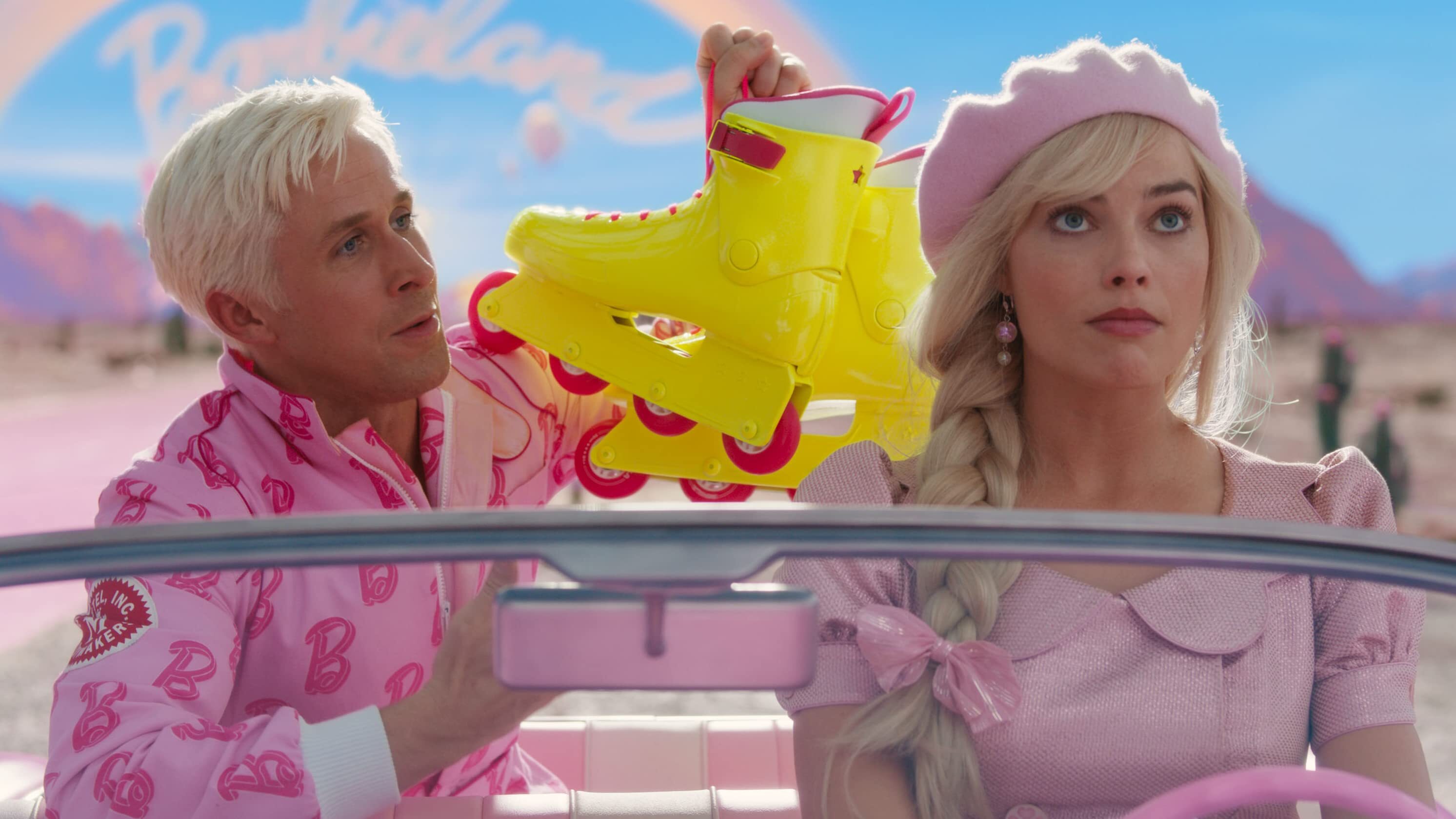
Warner Bros
The filmmaker mostly manages to toe the line between irreverence and outright disrespect, sending up Barbie and pointing out its critiques without turning the whole thing into a hatchet job. She also makes it clear that there’s room for all viewpoints on the brand – love, hate, apathy – in her Barbie Land.
Of course, a Mattel-endorsed Barbie movie is still a Mattel-endorsed Barbie movie, and even the teenager who at one point brands the character a “fascist” who’s responsible for “setting the feminist movement back 50 years”, glorifying capitalism and “destroying the planet” is won over by her in the end.
Still, to anyone nervous about Barbie living up to expectations, take a sigh of relief, gather up your Barbie pals and get ready for some big laughs. Life in plastic, we’re relieved to say, is every bit as fantastic as Aqua promised all those years ago.
Barbie is in cinemas from 21 July. Watch the trailer below:
Advertisement



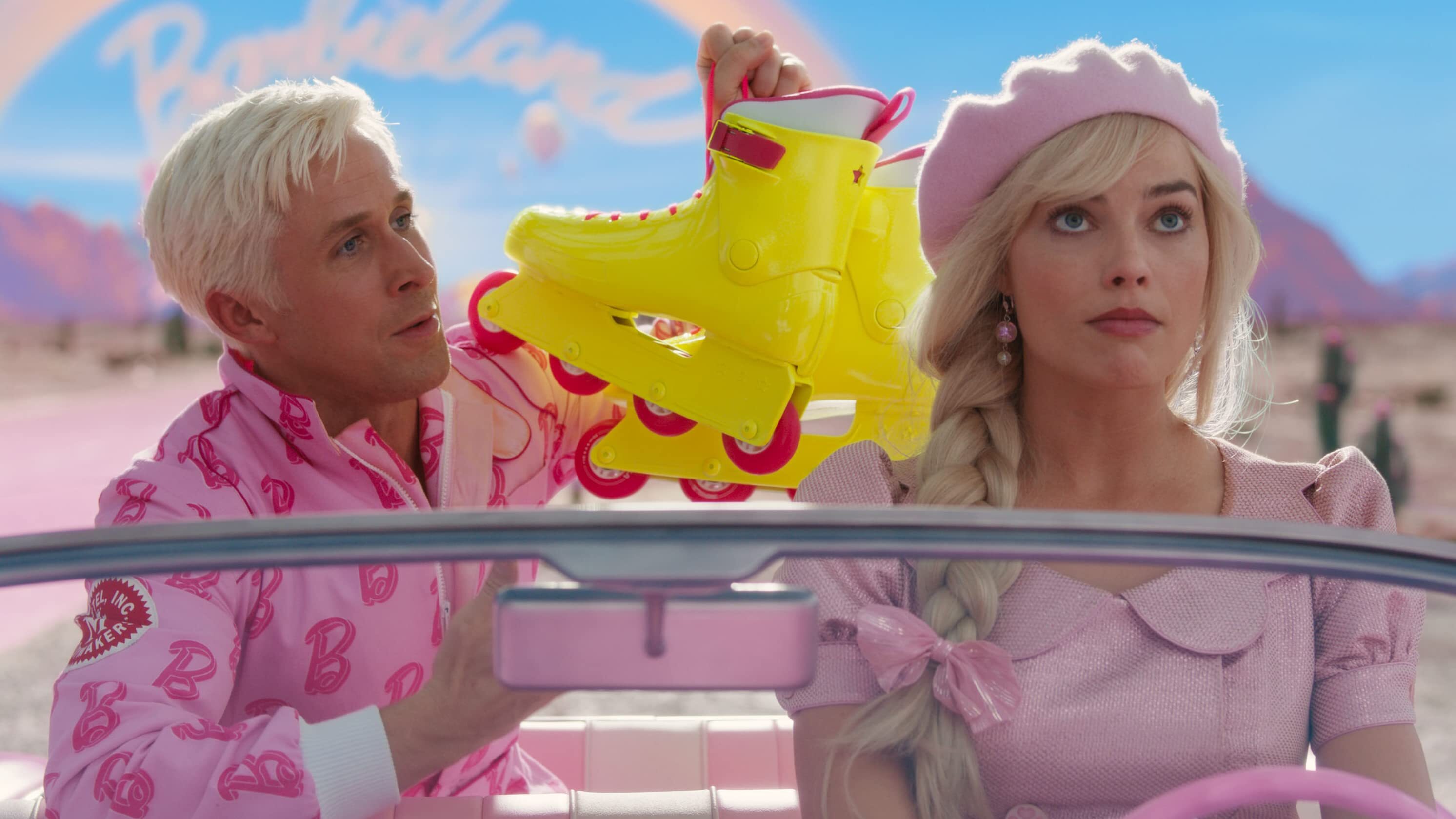

Shocking new research from the campaign group Pregnant Then Screwed has revealed that 1 in every 61 pregnant workers says their boss has insinuated they should terminate their pregnancy for the sake of their career.
Pregnant Then Screwed, who campaign for the rights of parents and against sex discrimination, surveyed over 24,000 parents to uncover the discrimination that women face in the workplace when they become mothers.
Advertisement
The data shows that over half of all mothers (52%) have faced some form of discrimination when pregnant, on maternity leave, or when they returned to work.
One woman involved in the study, Connie*, told her boss about her pregnancy at eight weeks and was told, “It would be easier for your future career if you just brought a coat hanger”. Three colleagues went on to tell Connie that she had ruined her career and should have had an abortion.
For some women, the consequences of having children can have life-changing consequences on their career, with one in five mothers (19%) making the decision to leave their employer due to a negative experience.
Additionally, one in 10 women (10%) revealed they were bullied or harassed when pregnant or returning to work, and 7% of women lost their job — through redundancy, sacking, or feeling forced to leave due to a flexible working request being declined or due to health and safety issues.
Advertisement
If scaled up, this could mean as many as 41,752 pregnant women or mothers are sacked or made redundant every year.
“These stats show how far we have to go before mothers are truly accepted as equal members of the workplace,” says Joeli Brearley, CEO and founder of Pregnant Then Screwed.
“We know that women are treated differently from the point they get pregnant. They are viewed as distracted and less committed to their work, despite there being no change to their performance. This bias plays out in numerous ways, affecting women’s earnings and career potential. There is absolutely no excuse for bosses, who hold the power, to tell their employees to abort a pregnancy. It is sex discrimination and it is inhumane.”

Abraham Gonzalez Fernandez via Getty Images
The discrimination that women face doesn’t always come from their boss; in fact, 73% of women shared that a colleague made hurtful comments about their pregnancy or maternity leave, and 74% of women said that a colleague insinuated that their performance had dipped due to pregnancy or maternity leave. Some women even experience criticism based on the way they look when they are pregnant – with 64% saying their boss or a colleague had made inappropriate comments about their looks.
Advertisement
“The fact that the majority of pregnant women have experienced inappropriate and degrading comments from a colleague or their boss about the way they look is shameful,” says Brearley.
“Why as a society do we accept women being a target for such abuse? These hurtful comments chip away at women’s confidence, ambition and feeling of belonging,” she says.
“Pregnant women are made to feel like an unsightly burden, no wonder a high proportion of women report feeling depressed or anxious when pregnant and one in five women leave their employer after becoming pregnant.’’
The study’s data and the shocking stories shared by pregnant women in workplaces around the UK highlight the worrying and pervasive attitudes towards women in society — even in a supposedly equal one like the UK.
It isn’t just about having children; women are being treated differently for decisions relating to their reproductive health, too. An especially worrying trend in our post-Roe v Wade world, which is seeing our rights rolled back across the globe.
Advertisement
For instance, a third of women (31.58%) who told their employer about having an abortion felt that they experienced discrimination or were unfairly treated as a result. And the majority of women (57.6%) didn’t even tell their employer they had an abortion, presumably for fear of being judged negatively.
Women being bullied out of the workplace for being pregnant, or choosing not to be, is just one more example of the ways women’s freedoms are being infringed upon, and shows that, in the end, the patriarchy doesn’t want us to win.
It’s something we should all vehemently stand against, together.
If you or anyone you know has experienced discrimination in the workplace, please call the Pregnant Then Screwed helpline on Tel: 0161 2229879
*Name changed to protect anonymity


A vessel that will house up to 500 asylum seekers arrived in the UK on Tuesday after parliament passed its long-debated bill to curb migration.
The barge Bibby Stockholm was pulled by a tug into Portland harbor, off the Dorset coast in south west England, after the government’s controversial legislation overcame resistance in the House of Lords and was passed.
Advertisement
The vessel and the bill are both parts of prime minister Rishi Sunak’s strategy to stop migrants from making risky English Channel crossings in small boats. The legislation will become law after receiving the assent of King Charles III.
The Conservative government has pledged to “stop the boats” – overcrowded dinghies and other small craft that cross from northern France carrying migrants who hope to live in the UK. More than 45,000 people crossed the Channel to Britain in 2022; several died in the attempt.
The bill is intended to deter those journeys and will prevent migrants from claiming asylum in the UK. if they arrive illegally. Under the legislation, those caught will be sent back home or deported to another safe country and banned from ever re-entering the UK.
The government planned to send some of those who arrive without authorisation to Rwanda, but last month the Court of Appeal ruled it was illegal. The government is appealing the ruling to the Supreme Court.
Advertisement
Sunak cheered the passage of the bill but said the government must prevail at the higher court for the law to function properly.
“This is an important part of our work to stop the boats. Obviously it needs to be paired with the Rwanda partnership,” said Sunak’s spokesperson, Max Blain. “It’s right that we have this power in place so it can be utilised swiftly and we remain confident we will be successful in the challenge in the Supreme Court.”
The bill was approved after an all-night tussle on Monday between the House of Commons, where the governing Conservatives have a majority, and the unelected House of Lords, which can amend but not block legislation.
Elected MPs defeated amendments that would have included protections for modern slavery and child detention limits.
The United Nations human rights and refugee chiefs said the bill was at odds with Britain’s obligations under international law and will have “profound consequences” for people seeking protection.
Advertisement
The UN warned that the law would even deny protection to children with legitimate claims who are traveling without parents – some of whom might have survived human trafficking.
The Bibby Stockholm is expected to start housing people in two weeks. Its arrival on Tuesday at the port inspired two groups of protesters opposed to it.
Some locals are worried about the impact new arrivals will have on their town. A second group, Stand Up to Racism, said it welcomed refugees but objected to what it calls a “prison barge”.


During the summer of 2018, the Mendocino Complex Fire ripped through UC’s Hopland Research and Extension Center (HREC), transforming the Northern California property’s grassy, oak-dotted hillsides into a smoldering, ash-covered wasteland.
“It felt like something out of the Lord of the Rings — like Mordor. It was hard to imagine much surviving,” said Justin Brashares, a professor of environmental science, policy and management at the University of California, Berkeley.
But mere months after the fire, animals like coyote, gray foxes and black-tailed jackrabbits were seen returning to the area, spotted by grid of motion-sensor camera traps that Brashares’ lab has operated since 2016 at the HREC, a multidisciplinary research and education facility located on the banks of the Russian River about and 13 miles south of Ukiah.
“We were surprised that many species seem to be resistant [to the impacts of the fire],” said Kendall Calhoun, a graduate student at UC Berkeley and a member of Brashares’ lab.
Calhoun is the lead author of a new study that analyzed more that 500,000 camera grid images taken at the HREC in the years before and after the Mendocino Complex Fire to understand how the blaze impacted small- and medium-sized mammals on the property.
The study, which appeared Monday in the journal Ecosphere, is one of the first studies to compare continuous wildlife observations made before and after a megafire. It is also one of a limited number of studies to focus on the impacts of megafires on California’s oak woodlands. Oak woodland ecosystems comprise a large portion of the state, and yet are underrepresented in wildfire research compared to the conifer forests of the Sierra Nevada.
“For the great majority of Californians, these oak woodlands and grassland savannahs are what we think of as the characteristic biome or ecosystem type for our state,” Brashares said. “It’s the primary ecosystem type for livestock grazing, and it’s also the primary habitat type that’s used to grow grapes for wine. It’s a critical ecosystem type, and it’s worth managing well.”
Of the eight animal species included in the study, six were found to be “resistant” to the impacts of the fire, using the area in the same ways and with approximately the same frequency as they did before the fire. These species included coyote, black-tailed jackrabbit, gray fox, racoon, striped skunk and bobcat. Western gray squirrel and black-tailed deer, however, appeared to be more vulnerable to the impacts of the fire.
advertisement
Brashares and Calhoun believe many of the species were able to remain in the area thanks to small patches of tree cover spared by the fire. Photos from the camera traps reveal many animals taking refuge in these patches, using them to obtain food and resources while more heavily burned areas recovered. Some animals were even observed using these locations more often after the fire than before.
These findings highlight the importance of using techniques like grazing and prescribed burning to reduce the intensity of wildfires when they happen. These lower severity fires are more likely to leave the tree canopy intact and create the types of forest heterogeneity that can benefit fire-adapted ecosystems.
“Even this incredibly hot and devastating fire still managed to leave behind these little patches of unburnt areas, andwe were surprised at how quickly many species were able to move into those habitat patches and then spread back out into the burned areas as they recovered,” Brashares said. “This finding is very valuable for forest management because we can do things to the landscape that will increase the chance that when fire does come through, it will leave behind some of these fragments.”
An approaching inferno
Calhoun was halfway around the world visiting New Zealand when he received a text message from study co-author Kaitlyn Gaynor informing him that the HREC was on fire.
“I think my immediate text back was, ‘Is everyone okay?'” Calhoun said.
advertisement
For two years, Calhoun had been helping to maintain the 36 camera traps spread across the property that had been set up in collaboration with the California Department of Fish and Wildlife to test a new way to monitor wildlife populations across the state.
Calhoun had originally joined Brashares’ lab hoping to study impacts of megafire on wildlife diversity, but the unpredictability of wildfire had made it difficult to find a study site. The Mendocino Complex Fire — while terrifying and destructive — provided him with a rare opportunity.
“From what I heard, it was really scary as the fire was coming up to the property because people live on site, so there was a big rush to evacuate. The fire ended up burning more than half of the area,” Calhoun said. “I was a continent away when I found out, but I was interested in hitting the ground running and making sure we got all the data we needed when I got back.”
Calhoun and the team first returned to the site about two months after the fire, when trees were still smoldering and the HREC resembled a “moonscape.” The team’s first task was to check on the cameras, 13 of which had been partially melted by the fire. In addition to replacing broken camera parts, they also checked to make sure the camera traps were set up at the same position and with the same orientation as they were before the fire, to ensure that their data remained as consistent as possible.
Every three months, the team visits all 36 cameras on the site, downloading the photos, ensuring that everything is working correctly and removing any grass or debris blocking the view. They then spend countless hours reviewing each shot to sort out which photos contain animals, then identify the animals and log the data.
“A lot of the data that we collect is just grass blowing in the wind,” Calhoun said.
In addition to small- and medium-sized mammals, the cameras also capture photos of larger animals, like black bears and mountain lions. Because these apex predators have huge home ranges — often many times larger than the HREC’s 5,300 acres — it is impossible to get accurate information about their distributions from the study area.
Calhoun said that, anecdotally, these animals were spotted much less frequently after the fire, suggesting that they were slower to return to the area after the blaze.
After completing his Ph.D. this summer, Calhoun plans to continue his work as a 2023 Smith Fellow, studying how broad changes in fire regimes are affecting wildlife species across California. As part of the work, he hopes to obtain broader scale data on apex predators to better understand what happens to these animals when large fires destroy their home ranges.
“For my next project, I’m really interested in looking at the broadscale effects of fire on those really wide-ranging species, like mountain lions and bears, and then also how wildfires might be impacting their relationship with people,” Calhoun said. “The conflict between bears and humans, especially in Lake Tahoe, is really big in the in the news right now, and I think that either climate change or fire might be driving some of those interactions.”
Additional study co-authors include Benjamin R. Goldstein, Kaitlyn Gaynor, Alex McInturff and Leonel Solorio of UC Berkeley. This work was supported in part by the California Department of Fish and Wildlife (CDFW Grant # P1680002) and by the NSF Graduate Research Fellowship program.

Groundbreaking research from UC Berkeley’s Department of Psychology is shifting the understanding of human decision-making processes by highlighting the importance of goal-oriented rewards. Conducted by Berkeley Psychology Professor Anne Collins and Berkeley Psychology doctoral student Gaia Molinaro, the study suggests that the value people attribute to outcomes is subjective, and heavily influenced by their personal goals and the context of the decision.
“Value isn’t just determined by an objective reward or outcome,” Collins said. “Our research suggests that people’s perception of value is largely shaped by their personal goals and the context in which the decision is made.”
For example, you might order a chocolate ice cream cone and be perfectly satisfied with your choice. But if you then find out that there’s another flavor available, you might feel less satisfied with your initial selection. In this case, the objective value of the ice cream cone hasn’t changed. What’s changed is your subjective perception of its value relative to the newfound best option, thus highlighting the impact of goal achievement on decision-making.
Using data collected from over 1,000 individuals by various laboratories, the Berkeley team has confirmed this theory by developing an “intrinsically enhanced” reinforcement learning model. While other theories propose that subjective value is simply adjusted based on different observed alternatives, the model developed by Berkeley researchers offers a new perspective: it centers around the concept that achieving a goal is crucial. The intrinsically enhanced model is not the first to examine this phenomenon, but it does provide a new way to understand the problem.
“Our study proposes a paradigm shift in how we understand decision-making,” Molinaro said. “It shows the critical importance of considering goal-dependent rewards, which may significantly alter our understanding of decision-making processes.”
The potential applications of this research are vast and varied. This new understanding could inform public policies encouraging positive behavior changes or help shape financial decisions. In an educational setting, it could be utilized to show students how learning specific topics can assist in achieving their particular goals. The research could also inform therapeutic strategies for patients suffering from mental illness or eating disorders.
This research could inspire innovation in the field of the development of artificial intelligence. “As it stands, an AI model cares primarily about extrinsic rewards,” Collins said. “Our research suggests that integrating intrinsic, goal-oriented rewards could substantially enhance these models.”
While these findings are a significant step forward in understanding decision-making processes, further research is needed to fully understand and apply this concept across various fields. The Berkeley team plans to continue exploring this important area of cognitive neuroscience.

How do you study a predator with both camouflage and stealth that make it virtually invisible in the forest?
Even jaguars poop.
A team of researchers led by the University of Cincinnati applied genetic and isotopic analyses to jaguar scat to investigate the habitat needs of the big cats in the Mountain Pine Ridge Forest Preserve of Belize in Central America. The study demonstrates a novel and noninvasive technique for identifying the landscape use and conservation needs of elusive wildlife.
Researchers used scat-detecting dogs named Billy and Bruiser to find telltale evidence left behind by jaguars in the reserve, which is also home to pumas, margays, ocelots and jaguarundis. They subjected the scat to genetic analysis, known as molecular scatology, to identify not just species but also the individual cats that produced each sample. Researchers then subjected the scat to isotopic analysis, which offers clues about where the animal hunted based on the geology and vegetation of the area.
Published in the European Journal of Wildlife Research, the study concluded that the combination of genetic and isotopic analysis provides a powerful, noninvasive approach to surveying wildlife for conservation.
“We’re not interacting with the animal directly,” said Brooke Crowley, lead author and a professor of geosciences and anthropology at the University of Cincinnati. “There’s no trapping or darting. You might never see the animal, but can determine what it ate and where it ate it.”
The Mountain Pine Ridge Forest Reserve covers about 267 square miles of forest, savanna, rocky mountains, caverns and streams in central Belize. The reserve is logged on a rotating basis. The roads are largely unpaved and many are overgrown.
advertisement
Tracking animals here is extremely difficult, said Claudia Wultsch, a study co-author and research fellow at the City University of New York.
“Jaguars tend to stay away from people and are typically found at more remote sites. You have to be extremely lucky to see one in the wild,” Wultsch said.
Isotopic analysis is a good alternative to study an animal that is solitary, wide-ranging, nocturnal, wary of people and dangerous to capture. And it complements other wildlife surveillance methods such as camera trapping, acoustic monitoring and environmental DNA analysis.
Bigger than leopards, jaguars are the world’s third-largest cat and the biggest found in the Western Hemisphere. They are powerful apex predators that were revered by pre-Columbian societies. Opportunistic hunters, jaguars consume a wide variety of prey, including small mammals, birds, fish and reptiles. In Belize, they often eat armadillos, coatis and deer.
“Belize is an important stronghold for jaguars,” co-author Wultsch said. She is studying the big cats with study co-author Marcella Kelly, a professor at Virginia Tech.
In Belize, jaguars are protected and live in a network of dedicated reserves. Wultsch and Kelly in 2000 found that jaguars had a large enough population to maintain genetic diversity in Belize but did see some habitat loss and fragmentation in parts of their historic range.
advertisement
In the latest project, the jaguars the researchers studied hunted prey in the reserve’s pine forest savanna rather than in denser forest or nearby agricultural areas. Male jaguars had territory covering some 60 square miles. As in other areas where jaguars have been studied, researchers found that some of the male jaguars had partially overlapping territories.
They also found some evidence that the jaguars were avoiding areas where prey was scarce from recent wildfires. This corroborates a camera trapping study that had fewer sightings of both jaguars and their prey in these areas as well.
“Some forested areas in Belize have become more fragmented and isolated over the last 50 years, so one of the objectives of our research is to assess how jaguars are doing at several protected areas across Belize,” Wultsch said.
The study was supported by grants from the Virginia Tech Department of Fish and Wildlife Conservation, the Explorers Club, the nonprofit group Panthera, the National Geographic Society, the Oregon Zoo, the Woodland Park Zoo, the Roger Williams Park Zoo and the Wildlife Conservation Society.
