Fox News On Trial: The $1.6bn Defamation Lawsuit Explained

A major defamation lawsuit against Fox News has begun – and much is at stake.

Dominion Voting Systems, a voting machine company, has brought a $1.6 billion (£1.29 billion) defamation case against the right-wing network in a trial over the broadcaster’s alleged role in spreading the lie of a stolen 2020 presidential election.

As well as the threat to Fox of eye-watering damages, the six-week trial has potential to pull back the curtain on former US president Donald Trump’s flse claims and how the right-wing TV network operates.

Sworn testimony is expected from Fox’s billionaire founder, Rupert Murdoch, and on-air talent, including Tucker Carlson and Sean Hannity.

What is the case?

Denver-based Dominion claims New York-based Fox News and its parent company, Fox Corp, essentially destroyed the voting company’s business and subjected employees to threats by falsely implicating it in a bogus conspiracy to rig the election against Trump.

Dominion says its lawyers sent Fox employees more than 3,600 emails attempting to correct Fox’s reporting on the issue. The company identified 20 specific statements from Fox broadcasts between November 8, 2020, and January 26, 2021, that it says were legally defamatory.

Fox contends that it was reporting newsworthy charges made by supporters of the Republican then-president and is supported legally by libel standards. After a one-day delay that raised the possibility of a last-minute settlement between the litigants, seating of the jury in Delaware took place on Tuesday, with opening statements expected to follow.

What do we know already?

Court documents have already been unsealed by Delaware superior court judge Eric M Davis, and the cache has illuminated the inner workings of the conservative network like never before.

It shows prominent figures at Fox didn’t believe the fraud allegations. Yet in public, Dominion argues, Fox News amplified the conspiracy theories and invited guests such as Trump ally Sydney Powell on air to allege Dominion’s voting systems had switched votes from Trump to Joe Biden, the Democrat who beat Trump to the White House.

Multiple staffers texted and emailed in disbelief as Trump latched onto increasingly tenuous claims of being robbed by voter fraud.

Hannity said in a deposition that he did not believe the fraud claims “for one second” but wanted to give accusers the chance to produce evidence. Hosts Carlson, Hannity and Laura Ingraham mocked Powell for spreading the claims. “This Dominion shit is going to give me a fucking aneurysm,” one Fox producer wrote in a message. “MIND BLOWINGLY NUTS,” wrote Fox Corporation SVP Raj Shah, per court documents.

Murdoch, questioned under oath, agreed the 2020 election was free and fair: “The election was not stolen,” he said.

In one email, Murdoch called Trump’s rhetoric “bullshit and damaging”. After Trump aide Rudy Giuliani gave a disastrous press conference on the conspiracy claims, Murdoch commented: “Really crazy stuff”.

Why did Fox adopt its position?

The court papers have laid out a profound concern at Fox over the impact of its election night call that Biden had beaten Trump in the battleground state of Arizona.

Calling Arizona for Biden was an unpleasant shock to supporters of Trump, including many Fox viewers. Not only were they facing losing the White House, but the news had been delivered to them by a source they could usually expect to advocate for their cause.

<img class="img-sized__img landscape" loading="lazy" alt="Tucker Carlson, left, and former US president Donald Trump in 2022.” width=”720″ height=”480″ src=”https://www.wellnessmaster.com/wp-content/uploads/2023/04/fox-news-on-trial-the-1-6bn-defamation-lawsuit-explained-3.jpg”>
Tucker Carlson, left, and former US president Donald Trump in 2022.

via Associated Press

Fox got the scoop on the call, but Trump and many Fox viewers began tuning in to rival conservative media outlets such as Newsmax.

Emails and memos released in the case show Fox executives were highly aware of a drop-off in their network’s viewership at the same time that Newsmax was gaining viewers, and the executives viewed that dynamic as a potential threat.

Carlson noted with irritation that the company’s stock price was down. Fox News Network CEO Suzanne Scott wrote in an email to Murdoch about the need to “keep the audience who loves and trusts us”.

What is Fox’s defence?

While Dominion’s case may seem strong, the US Constitution and Supreme Court precedent makes it difficult to prove defamation by a news outlet. Dominion will need to prove “actual malice”, meaning that Fox either knew what it was airing was wrong or acted in reckless disregard for the truth.

Fox says Dominion can’t prove its case, but some First Amendment advocates suggest the voting machine company has a strong argument. Their worry is that a prolonged legal battle would give the Supreme Court a chance to change libel laws that would weaken protection for all the media.

<img class="img-sized__img landscape" loading="lazy" alt="Rupert Murdoch in 2019.” width=”720″ height=”480″ src=”https://www.wellnessmaster.com/wp-content/uploads/2023/04/fox-news-on-trial-the-1-6bn-defamation-lawsuit-explained-4.jpg”>
Rupert Murdoch in 2019.

via Associated Press

“Dominion’s lawsuit is a political crusade in search of a financial windfall, but the real cost would be cherished First Amendment rights,” Fox said in a statement to HuffPost. “While Dominion has pushed irrelevant and misleading information to generate headlines, Fox News remains steadfast in protecting the rights of a free press, given a verdict for Dominion and its private equity owners would have grave consequences for the entire journalism profession.”

Was there any evidence of election fraud?

Federal and state election officials, exhaustive reviews in multiple battleground states where Trump challenged his loss, and Trump’s attorney general found no widespread fraud that could have changed the outcome of the 2020 election. Nor did they uncover any credible evidence that the vote was tainted. Trump’s allegations of fraud also have been roundly rejected by dozens of courts, including by judges he appointed.


Share Button

Teasing strange matter from the ordinary

In a unique analysis of experimental data, nuclear physicists have made the first-ever observations of how lambda particles, so-called “strange matter,” are produced by a specific process called semi-inclusive deep inelastic scattering (SIDIS). What’s more, these data hint that the building blocks of protons, quarks and gluons, are capable of marching through the atomic nucleus in pairs called diquarks, at least part of the time. These results come from an experiment conducted at the U.S. Department of Energy’s Thomas Jefferson National Accelerator Facility.

It’s a result that has been decades in the making. The dataset was originally collected in 2004. Lamiaa El Fassi, now an associate professor of physics at Mississippi State University and principal investigator of the work, first analyzed these data during her thesis project to earn her graduate degree on a different topic.

Nearly a decade after completing her initial research with these data, El Fassi revisited the dataset and led her group through a careful analysis to yield these unprecedented measurements. The dataset comes from experiments in Jefferson Lab’s Continuous Electron Beam Accelerator Facility (CEBAF), a DOE user facility. In the experiment, nuclear physicists tracked what happened when electrons from CEBAF scatter off the target nucleus and probe the confined quarks inside protons and neutrons. The results were recently published in Physical Review Letters.

“These studies help build a story, analogous to a motion picture, of how the struck quark turns into hadrons. In a new paper, we report first-ever observations of such a study for the lambda baryon in the forward and backward fragmentation regions,” El Fassi said.

In like a lambda, out like a pion

Like the more familiar protons and neutrons, each lambda is made up of three quarks.

Unlike protons and neutrons, which only contain a mixture of up and down quarks, lambdas contain one up quark, one down quark and one strange quark. Physicists have dubbed matter that contains strange quarks “strange matter.”

In this work, El Fassi and her colleagues studied how these particles of strange matter form from collisions of ordinary matter. To do so, they shot CEBAF’s electron beam at different targets, including carbon, iron, and lead. When a high-energy electron from CEBAF reaches one of these targets, it breaks apart a proton or neutron inside one of the target’s nuclei.

“Because the proton or neutron is totally broken apart, there is little doubt that the electron interacts with the quark inside,” El Fassi said.

After the electron interacts with a quark or quarks via an exchanged virtual photon, the “struck” quark(s) begins moving as a free particle in the medium, typically joining up with other quark(s) it encounters to form a new composite particle as they propagate through the nucleus. And some of the time, this composite particle will be a lambda.

But the lambda is short-lived — after formation, it will swiftly decay into two other particles: a pion and either a proton or neutron. To measure different properties of these briefly created lambda particles, physicists must detect its two daughter particles, as well as the beam electron that scattered off the target nucleus.

The experiment that collected this data, EG2, used the CEBAF Large Acceptance Spectrometer (CLAS) detector in Jefferson Lab’s Experimental Hall B. These recently published results, “First Measurement of ? Electroproduction off Nuclei in the Current and Target Fragmentation Regions,” are part of the CLAS collaboration, which involves almost 200 physicists worldwide.

SIDIS

This work is the first to measure the lambda using this process, which is known as semi-inclusive deep inelastic scattering, in the forward and backward fragmentation regions. It’s more difficult to use this method to study lambda particles, because the particle decays so quickly, it can’t be measured directly.

“This class of measurement has only been performed on protons before, and on lighter, more stable particles,” said coauthor William Brooks, professor of physics at Federico Santa María Technical University and co-spokesperson of the EG2 experiment.

The analysis was so challenging, it took several years for El Fassi and her group to re-analyze the data and extract these results. It was her thesis advisor, Kawtar Hafidi, who encouraged her to pursue the investigation of the lambda from these datasets.

“I would like to commend Lamiaa’s hard work and perseverance in dedicating years of her career working on this,” said Hafidi, associate laboratory director for physical sciences and engineering at Argonne National Lab and co-spokesperson of the EG2 experiment. “Without her, this work would not have seen fruition.”

“It hasn’t been easy,” El Fassi said. “It’s a long and time-consuming process, but it was worth the effort. When you spend so many years working on something, it feels good to see it published.”

El Fassi began this lambda analysis when she herself was a postdoc, a couple of years prior to becoming an assistant professor at Mississippi State University. Along the way, several of her own postdocs at Mississippi State have helped extract these results, including coauthor Taya Chetry.

“I’m very happy and motivated to see this work being published,” said Chetry, who is now a postdoctoral researcher at Florida International University.

Two for one

A notable finding from this intensive analysis changes the way physicists understand how lambdas form in the wake of particle collisions.

In similar studies that have used semi-inclusive deep inelastic scattering to study other particles, the particles of interest usually form after a single quark was “struck” by the virtual photon exchanged between the electron beam and the target nucleus. But the signal left by lambda in the CLAS detector suggests a more packaged deal.

The authors’ analysis showed that when forming a lambda, the virtual photonhas been absorbed part of the time by a pair of quarks, known as a diquark, instead of just one. After being “struck,” this diquark went on to find a strange quark and forms a lambda.

“This quark pairing suggests a different mechanism of production and interaction than the case of the single quark interaction,” Hafidi said.

A better understanding of how different particles form helps physicists in their effort to decipher the strong interaction, the fundamental force that holds these quark-containing particles together. The dynamics of this interaction are very complicated, and so is the theory used to describe it: quantum chromodynamics (QCD).

Comparing measurements to models of QCD’s predictions allows physicists to test this theory. Because the diquark finding differs from the model’s current predictions, it suggests something about the model is off.

“There is an unknown ingredient that we don’t understand. This is extremely surprising, since the existing theory can describe essentially all other observations, but not this one,” Brooks said. “That means there is something new to learn, and at the moment, we have no clue what it could be.”

To find out, they’ll need even more measurements.

Data for EG2 were collected with 5.014 GeV (billion electron-volt) electron beams in the CEBAF’s 6 GeV era. Future experiments will use electron beams from the updated CEBAF, which now extend up to 11 GeV for Experimental Hall B, as well as an updated CLAS detector known as CLAS12, to continue studying the formation of a variety of particles, including lambdas, with higher-energy electrons.

The upcoming Electron-Ion Collider (EIC) at DOE’s Brookhaven National Laboratory will also provide a new opportunity to continue studying this strange matter and quark pairing structure of the nucleon with greater precision.

“These results lay the groundwork for upcoming studies at the upcoming CLAS12 and the planned EIC experiments, where one can investigate the diquark scattering in greater detail,” Chetry said.

El Fassi is also a co-spokesperson for CLAS12 measurements of quark propagation and hadron formation. When data from the new experiments is finally ready, physicists will compare it to QCD predictions to further refine this theory.

“Any new measurement that will give novel information toward understanding the dynamics of strong interactions is very important,” she said.

Share Button

Swimming secrets of prehistoric reptiles unlocked by new study

Some of the most extraordinary body transformations in evolution have occurred in animals that adapted to life in water from land-living ancestors, such as modern whales, turtles and seals. During the Mesozoic, from 252 to 66 million years ago, while the dinosaurs stomped about on land, many groups of reptiles took to the seas, such as the iconic ichthyosaurs, plesiosaurs, crocodiles and mosasaurs.

In a new paper, published in the journal Palaeontology, a Bristol team of palaeobiologists used state-of-the-art statistical methods to perform a large-scale quantitative study, the first of its kind, on the locomotion of Mesozoic marine reptiles.

The researchers collected measurements from 125 fossilised skeletons, and used these to explore changes in swimming styles within lineages and through time, discovering that there was no explosive radiation at the beginning of the Mesozoic, but a gradual diversification of locomotory modes, which peaked in the Cretaceous period.

Lead author Dr Susana Gutarra of Bristol’s School of Earth Sciences said: “Changes in anatomy in land-to-sea transitions are intimately linked to the evolution of swimming. For example, sea lions’ flippers have relatively short forearm and large hands, very different from the walking legs of their ancestors. The rich fossil record of Mesozoic marine reptiles provided great opportunity to study these transitions at a large scale.”

Co-author Beatrice Heighton, said: “We included measurements from living aquatic animals, such as otters, seals and turtles, of which we know their swimming behaviour. This is very important to provide a functional reference for the ancient species, with unknown swimming modes.”

In the aftermath of the end-Permian extinction, about 250 million years ago, various groups of reptiles became aquatic hunters, populating the early Mesozoic seas.

Co-author Dr Tom Stubbs said: “After this devastating event, there was a gradual diversification of locomotory modes, which contrasts with the rapid radiation described previously for feeding strategies. This is fascinating because it suggests a ‘head-first’ pattern of evolution in certain lineages.”

This paper sheds light into the swimming of specific groups. Dr Ben Moon explained: “Ichthyosaurs were highly specialised for aquatic locomotion from very early in their evolution. This includes their close relatives, the hupehsuchians, which had a morphology unlike any other known aquatic tetrapod. Further, we see overlap between mosasaurs and ichthyosaurs, which is indicative that mosasaurs evolved a swimming mode by oscillating flukes, different from the eel-like body undulation suggested in the past.

“In contrast, we don’t find evidence of convergence between ichthyosaurs and metriorhynchids (the highly aquatic crocodyliform thalattosuchians). This group retained quite primitive-looking hindlimbs, which seems incompatible with swimming by fluke oscillation.”

This study also delves into the evolution of size, a feature related to locomotion, animal physiology and ocean productivity. Professor Mike Benton said: “We know that transition to life in water is usually accompanied by an increase in body mass, as seen in cetaceans, and one of our previous studies shows that large sizes benefit aquatic animals in reducing the mass-specific costs of drag. Thus, it was essential to explore this trait in the wider ensemble of Mesozoic marine reptiles.”

Dr Gutarra added: “Body size follows a similar trend to the diversification of locomotory modes, and the widest spread of body size also occurred in the Cretaceous, confirming a strong connection between the two. The rate of increase and the maximum limits to body size seems to vary a lot between groups. This is a fascinating observation. We need to explore further what factors influence and limit the increase in body mass in each group.”

This research was funded by the Natural Environment Research Council (NERC) and the European Research Council (ERC).

Share Button

Bird feeding helps small birds fight infection

Seeds and fat balls do more than just fill small birds’ stomachs. New research from Lund University in Sweden shows that feeding during the wintertime causes birds to be healthier, since they do not have to expend as much energy fighting infections.

A small change in body temperature can be fatal for humans. Small birds, meanwhile, lower their body temperature at night by several degrees during the winter. Just like us, the birds attempt to save energy when it is cold. If they are exposed to infection, the body’s first reaction is to raise its temperature, which clashes with the bird’s simultaneous need to save energy by lowering body temperature.

“We investigated how access to food during winter affected the balancing act between maintaining a low body temperature in order to save energy, and the possibility of raising body temperature in order to fight infection,” says Hannah Watson, biologist Lund University.

The study shows that birds who were fed during the winter did not need to lower their body temperature as much at night as birds who did not have access to feeding tables. They had gathered enough energy to survive a winter night in spite of a having higher body temperature.

When the birds were exposed to a simulated infection, all the birds had essentially the same temperature during a fever. Instead of conserving energy to survive the winter, the birds without access to extra food were forced to use more energy in order to raise their body temperature high enough to battle infection.

“We had expected to find that the birds that had access to birdfeeders would have more energy to fight an infection, and that as a result they would exhibit a stronger fever response. Our results, however, show the opposite — birds that did not have access to a reliable source of food had the strongest reaction to infection. This enabled them to reach the same fever temperature as the birds with extra food,” says Hannah Watson.

Climate change and human activity are having an ever-increasing impact on animals. Wild animals come into contact with new pathogens that they have never encountered before. Bird feeding, then, can have positive and negative effects. Birds that visit feeding tables are exposed to more infection because of the spread of pathogens, but this could make their immune defences more tolerant to a new infection. It is therefore important, the researchers argue, to understand the factors that affect animals’ capacity to put up an effective immune response — access to food during winter being one such example.

“A lot of people like to feed the birds. Our study shows that this can have a positive effect on the capacity of our small birds to fight an infection,” concludes Hannah Watson.

Share Button

Get Fired as Quickly as You Can

This week Rachelle and I have been attending the NAB Show, a major creative conference and expo in Vegas covering content creation and production across film, radio, TV, broadcast, streaming, and more. This is the show’s 100th anniversary, so it’s been evolving over many years. I’ve never been to it before, but I heard of it last year, and Aputure offered us free passes this year, so I figured we’d at least check it out. I’m glad we went since it’s been worthwhile.

My favorite part was a one-hour conversation with Brett Goldstein, who was very warm, open-hearted, and funny. Brett is the actor who plays Roy Kent in the Ted Lasso series, and he shared a lot of creative wisdom.

The moderator was Ashley Nicole Black, one of Brett’s co-writers on Ted Lasso. She shared an interesting and effective piece of career advice she’d received as a writer: Try to get fired as quickly as you can.

She took that to mean that instead of trying to fit in as a new writer on a team, share all the ideas that you sense could get you fired for going too far or for being too odd or over-the-top. That’s where you’ll find your creative gold.

This will likely get you fired from teams where you really don’t belong – teams that won’t appreciate what you bring to the table. And that’s a good thing since it will free you up to discover where you do belong.

Both Ashley and Brett agreed that the ideas that you’d think people will reject most harshly are often the best career-making moves. This included Brett suggesting that he be cast as Roy Kent in Ted Lasso, which could have backfired badly since he was a writer for the show. He had a strong feeling that he was meant to play that character, so he went with his gut and made the offer. What if he’d held back and played it safe instead?

“Try to get fired as quickly as you can” could be a nice mantra for finding the work and career path that can handle your full range of strengths and talents. If you try to fully express those aspects of yourself where they aren’t appreciated, you could easily get fired.

Brett also shared that he’s come to believe that there are really no bad ideas – just bad timing and bad context. A seemingly bad idea in one situation might be brilliant in another.

Even if your potential strengths are rough around the edges, you still need to start expressing them in order to hone them. They won’t get any better if you hide them.

Want a lifeless and mediocre career instead? Don’t rock the boat and try to fit in. That’s a great way to end up where you don’t belong. Are you in that situation now? You can still apply the advice here, starting today.

This works if you own a business too. Think of it as scaring away the customers, clients, and partners who can’t handle your uniqueness. If you still have a viable business after that, you probably have a keeper that you can invest in long-term. And you’ll get to serve people who appreciate what you do for them. Plus you won’t have to deal with the headaches of bending over to serve total mismatches.

I’ve seen time and time again that the ideas that felt risky or edgy to me were often those that produced the most value for people. The articles that I was most hesitant to publish were frequently the most impactful. I’ve enjoyed a delightful lifestyle thanks to the simple, repeated act of sharing honestly.

Instead of fearing criticism and consequences from people who aren’t a match for you anyway, you may as well deliberately court their rejection to speed things along. For instance, if Trump supporters are a lousy match for your business – as they are for mine – channel your inner Logan Roy and tell them to fuck off! They need to hear it because they’re being really, really stupid. Then focus on serving the people you like and respect. Remember the rule: Mutual respect or disconnect.

Some people have an objection to this because they feel that we should all be connected on a spiritual level. Hey… spirit gave rise to differentiation too, so don’t be so afraid of it. Go ahead and love everyone at the level of spirit, but dump the mismatches on the mental, physical, and emotional levels, so you can do some real exploring of what matters to you. Don’t hide behind spirituality as an excuse for avoiding rejection – it’s inauthentic and phony, and you’ll lose the respect of some great matches when you do that. Don’t pretend that you resonate with everyone you meet. Bounce over to the circles where mutual alignment is strong. Bounce out where resonance is weak.

It’s often the case that you must bounce out of a mismatch before you’ll even perceive the possibility of a match. That’s because if you’re in a mismatched situation, you’re actually repelling matches, usually before you can even perceive them.

You can also apply this advice to relationships. Think of your best relationships as being anti-fragile. You can express the full range of your personality without holding back, and you’ll still be loved. Imagine getting involved with someone new with the attitude of sharing everything about yourself that’s you think will induce someone to reject you. Anyone who makes it through is likely to be a strong match.

So share the ideas and express the aspects of your personality that you hallucinate will get you fired, rejected, or cast out. That will help you discover where you’re most appreciated and where you can push your talents and develop your ideas even further.

Share Button

End racial disparities in maternal deaths – MPs

Report says racism played a role in the higher death rates of black and Asian women giving birth.

Share Button

How electricity can heal wounds three times as fast

Chronic wounds are a major health problem for diabetic patients and the elderly — in extreme cases they can even lead to amputation. Using electric stimulation, researchers in a project at Chalmers University of Technology, Sweden, and the University of Freiburg, Germany, have developed a method that speeds up the healing process, making wounds heal three times faster.

There is an old Swedish saying that one should never neglect a small wound or a friend in need. For most people, a small wound does not lead to any serious complications, but many common diagnoses make wound healing far more difficult. People with diabetes, spinal injuries or poor blood circulation have impaired wound healing ability. This means a greater risk of infection and chronic wounds — which in the long run can lead to such serious consequences as amputation.

Now a group of researchers at Chalmers and the University of Freiburg have developed a method using electric stimulation to speed up the healing process.

“Chronic wounds are a huge societal problem that we don’t hear a lot about. Our discovery of a method that may heal wounds up to three times faster can be a game changer for diabetic and elderly people, among others, who often suffer greatly from wounds that won’t heal,” says Maria Asplund, Associate Professor of Bioelectronics at Chalmers University of Technology and head of research on the project.

Electric guidance of cells for faster healing

The researchers worked from an old hypothesis that electric stimulation of damaged skin can be used to heal wounds. The idea is that skin cells are electrotactic, which means that they directionally ‘migrate’ in electric fields. This means that if an electric field is placed in a petri dish with skin cells, the cells stop moving randomly and start moving in the same direction. The researchers investigated how this principle can be used to electrically guide the cells in order to make wounds heal faster. Using a tiny engineered chip, the researchers were able to compare wound healing in artificial skin, stimulating one wound with electricity and letting one heal without electricity. The differences were striking.

“We were able to show that the old hypothesis about electric stimulation can be used to make wounds heal significantly faster. In order to study exactly how this works for wounds, we developed a kind of biochip on which we cultured skin cells, which we then made tiny wounds in. Then we stimulated one wound with an electric field, which clearly led to it healing three times as fast as the wound that healed without electric stimulation,” Maria Asplund says.

Hope for diabetes patients

In the study, the researchers also focused on wound healing in connection with diabetes, a growing health problem worldwide. One in 11 adults today has some form of diabetes according to the World Health Organization (WHO) and the International Diabetes Federation.

“We’ve looked at diabetes models of wounds and investigated whether our method could be effective even in those cases. We saw that when we mimic diabetes in the cells, the wounds on the chip heal very slowly. However, with electric stimulation we can increase the speed of healing so that the diabetes-affected cells almost correspond to healthy skin cells,” Asplund says.

Individualised treatment the next step

The Chalmers researchers recently received a large grant which will allow them to continue their research in the field, and in the long run enable the development of wound healing products for consumers on the market. Similar products have come out before, but more basic research is required to develop effective products that generate enough electric field strength and stimulate in the right way for each individual. This is where Asplund and her colleagues come into the picture:

“We are now looking at how different skin cells interact during stimulation, to take a step closer to a realistic wound. We want to develop a concept to be able to ‘scan’ wounds and adapt the stimulation based on the individual wound. We are convinced that this is the key to effectively helping individuals with slow-healing wounds in the future,” Asplund says.

More about the study:

  • “Bioelectronic microfluidic wound healing: a platform for investigating direct current stimulation of injured cell collectives”was published in the journal Lab on a Chip. The article was written by Sebastian Shaner, Anna Savelyeva, Anja Kvartuh, Nicole Jedrusik, Lukas Matter, José Leal and Maria Asplund. The researchers work at the University of Freiburg in Germany and Chalmers University of Technology.
  • In their study, the researchers showed that wound healing on artificial skin stimulated with electric current was three times faster than on the skin that healed naturally. The electric field was low, about 200 mV/mm, and did not have a negative impact on the cells.
  • The method the researchers developed is based on a microfluidic biochip on which artificial skin can be grown, stimulated with an electric current and studied in an effective and controlled manner. The concept allows researchers to conduct multiple experiments in parallel on the same chip.
  • The research project began in 2018 and is funded by the European Research Council (ERC). The project was recently granted more funding so the research can get one step closer to the market and the benefit of patients.
Share Button

Junior doctor strike led to 196,000 cancellations

The walkout was most disruptive NHS strike yet – with bosses warning future action will risk care.

Share Button

‘Just Stop Oil’ Protester Throws Orange Powder Over Table At Snooker World Championship

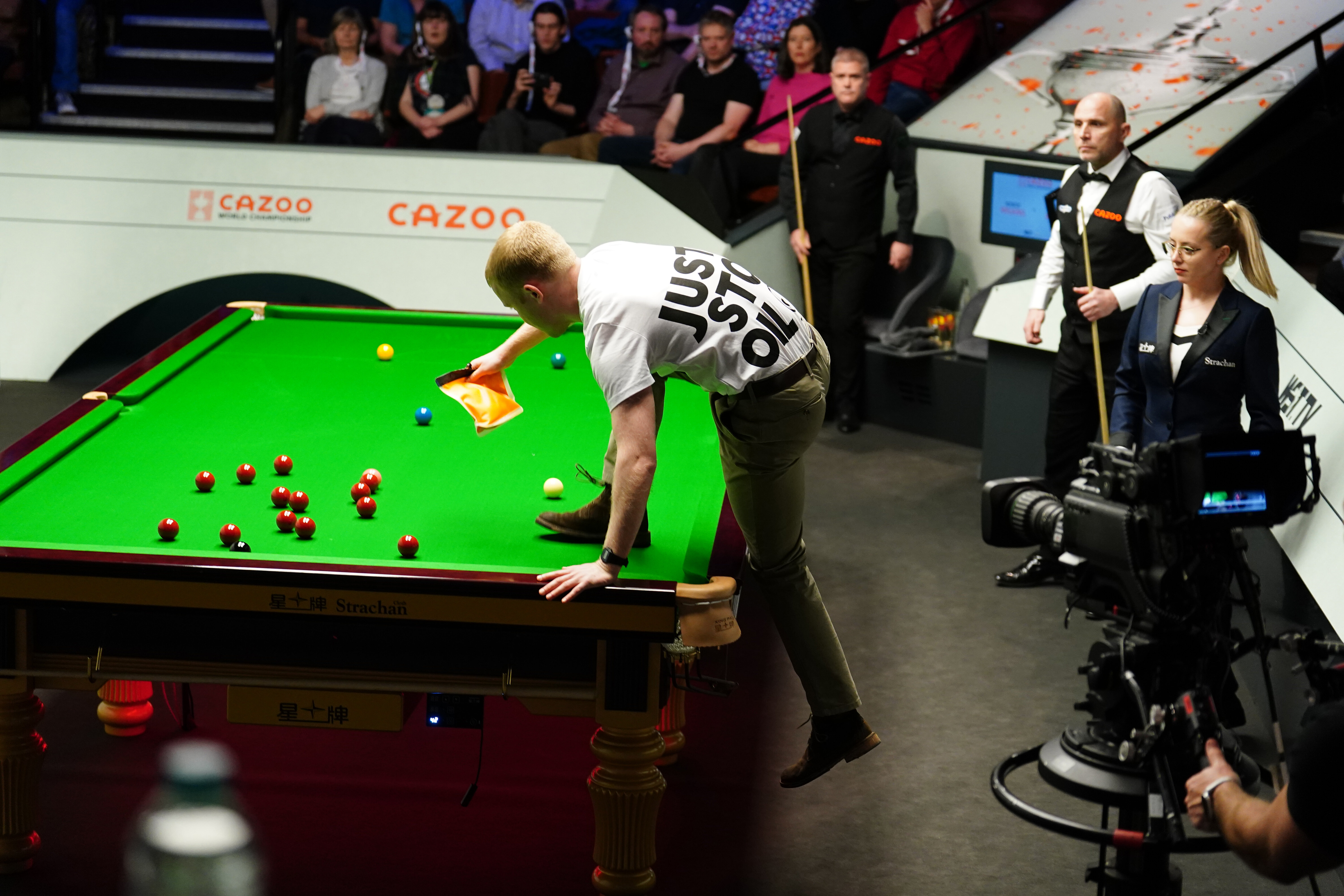
The snooker world championship has been the target of an unlikely protest after an activist tipped orange powder onto one of the tables during a match.

A man wearing a Just Stop Oil T-shirt interrupted the match between Robert Milkins and Joe Perry by jumping onto one of the tables and tipping out the substance.

Meanwhile, a woman was prevented from executing a similar stunt on an adjoining table. The dramatic moment was caught live on the BBC.

Play was suspended for the evening on the affected table, which will be re-covered overnight, while the match between Mark Allen and Fan Zhengyi resumed after a delay of approximately 45 minutes.

Seven-time champion Stephen Hendry, on commentary duties for the BBC, called the incident “scary” and admitted: “I have never seen that before at a snooker event. It’s a first.”

Just Stop Oil posted a video of the incident on their Twitter feed with the caption “New oil and gas will snooker us”.

The group wants Britain to stop all new oil and gas projects and has staged a number of protests.

At the weekend, 118 people were arrested at Aintree on Saturday as they tried to scale the perimeter fence at the Grand National.

Activists also threw soup over Vincent van Gogh’s Sunflowers painting at London’s National Gallery last October.

A 'Just Stop Oil' protester jumps on the table and throws orange powder during the match between Robert Milkins against Joe Perry during day three of the Cazoo World Snooker Championship at the Crucible Theatre, Sheffield.
A ‘Just Stop Oil’ protester jumps on the table and throws orange powder during the match between Robert Milkins against Joe Perry during day three of the Cazoo World Snooker Championship at the Crucible Theatre, Sheffield.

Mike Egerton via PA Wire/PA Images

A Just Stop Oil protester jumps on the table and throws orange powder during the match between Robert Milkins against Joe Perry during day three of the Cazoo World Snooker Championship at the Crucible Theatre, Sheffield. Picture date: Monday April 17, 2023. (Photo by Mike Egerton/PA Images via Getty Images)

Mike Egerton – PA Images via Getty Images

Mike Egerton via PA Wire/PA Images

Share Button

Spectacular galactic merger Arp 220

Shining like a brilliant beacon amidst a sea of galaxies, Arp 220 lights up the night sky in this view from NASA’s James Webb Space Telescope. Actually two spiral galaxies in the process of merging, Arp 220 glows brightest in infrared light, making it an ideal target for Webb. It is an ultra-luminous infrared galaxy (ULIRG) with a luminosity of more than a trillion suns. In comparison, our Milky Way galaxy has a much more modest luminosity of about ten billion suns.

Located 250 million light-years away in the constellation of Serpens, the Serpent, Arp 220 is the 220th object in Halton Arp’s Atlas of Peculiar Galaxies. It is the nearest ULIRG and the brightest of the three galactic mergers closest to Earth.

The collision of the two spiral galaxies began about 700 million years ago. It sparked an enormous burst of star formation. About 200 huge star clusters reside in a packed, dusty region about 5,000 light-years across (about 5 percent of the Milky Way’s diameter). The amount of gas in this tiny region is equal to all of the gas in the entire Milky Way galaxy.

Previous radio telescope observations revealed about 100 supernova remnants in an area of less than 500 light-years. NASA’s Hubble Space Telescope uncovered the cores of the parent galaxies 1,200 light-years apart. Each of the cores has a rotating, star-forming ring blasting out the dazzling infrared light so apparent in this Webb view. This glaring light creates diffraction spikes — the starburst feature that dominates this image.

On the outskirts of this merger, Webb reveals faint tidal tails, or material drawn off the galaxies by gravity, represented in blue — evidence of the galactic dance that is occurring. Organic material represented in reddish-orange appears in streams and filaments across Arp 220.

Webb viewed Arp 220 with its Near-Infrared Camera (NIRCam) and Mid-Infrared Instrument (MIRI).

Share Button