Scientists discover pristine deep-sea coral reefs in the Galápagos Marine Reserve

Scientists have discovered extensive, ancient deep-sea coral reefs within the Galápagos Marine Reserve (GMR) — the first of their kind ever to be documented inside the marine protected area (MPA) since it was established in 1998. The first reef observed was found at 400-600m (1,310-1,970 feet) depth at the summit of a previously unmapped seamount in the central part of the archipelago and supports a breathtaking mix of deep marine life.

Cresting the ridge of a submerged volcano, and stretching over several kilometers, the impressive reef structure was first recorded by Dr. Michelle Taylor (University of Essex, UK) and Dr. Stuart Banks (Charles Darwin Foundation, Ecuador) while diving in the deep-sea research submersible Alvin, operated by the Woods Hole Oceanographic Institution (WHOI, USA).This is the first time

HOV Alvin has explored this region within the GMR. The submersible recently completed upgrades that included improved high-quality still and ultra-high definition 4K video imaging systems, as well as enhanced sampling capabilities.

Taylor and Banks are part of an international group of scientists onboard the US Navy-owned and WHOI-operated research vessel R/V Atlantis, that is undertaking the Galápagos Deep 2023 expedition. The expedition is led by scientists at WHOI, University of Bristol (UK), Boise State University (USA), and University of Essex, in collaboration with the Galápagos National Park Directorate (GNPD), Charles Darwin Foundation and Ecuadorian Navy’s Oceanographic and Antarctic Institute (INOCAR). The expedition is funded by the US National Science Foundation (NSF) and Natural Environmental Research Council (NERC) in the UK.

Commenting on this groundbreaking discovery, the Minister of Environment of Ecuador, Jose Antonio Dávalos said: “This is encouraging news. It reaffirms our determination to establish new marine protected areas in Ecuador and to continue promoting the creation of a regional marine protected area in the Eastern Tropical Pacific. The richness of the yet explored depths of our ocean is another reason to strive towards achieving the commitments of the Global Ocean Alliance 30×30, which aims to protect at least 30% of the world’s oceans by 2030, aligning sustainable economic activities with conservation.”

Prior to this discovery, Wellington Reef off the coast of Darwin Island in the far north of the archipelago was thought to be among the few structural shallow coral reefs in the Galápagos Islands to have survived the 1982-83 El Niño event. The new discovery made during dives by scientists in the HOV Alvin shows that sheltered deep-water coral communities have likely persisted for centuries in the depths of the GMR, supporting rich, diverse, and potentially unique marine communities.

Dr Stuart Banks, Senior Marine Researcher at the Charles Darwin Foundation, and national observer on this expedition adds: “The captivating thing about these reefs is that they are very old and essentially pristine, unlike those found in many other parts of the world’s oceans. This gives us reference points to understand their importance for marine natural biodiversity heritage, connectivity with regional MPAs, as well as their role in providing goods and services such as carbon cycling and fisheries. It also helps us reconstruct past ocean environments to understand modern climate change. Open waters cover over 95% of the known GMR, of which less than 5% have been explored through modern research expeditions. It’s very likely there are more reef structures across different depths waiting to be explored. We’ll forge ahead with the Galapagos National Park Directorate and partners to help ensure that such newly discovered habitats are

folded into the GMR and Hermandad Marine Reserve planning process and recognized as part of their considerable world heritage value.”

Dr Michelle Taylor, co-lead of the expedition and Chair of the Deep Sea Society from the University of Essex notes the importance of this discovery for deep sea habitats: “The discovered reefs are novel for several reasons — in shallow reefs where finding 10-20% of coral cover would be considered a relatively unhealthy reef, in the deep-sea this is the norm. Dead coral skeletons making up the remaining 80-90% still provide homes for a huge diversity of life, which is less reliant on the live sections of coral. However, the reefs we’ve found in the last few days have 50-60% live coral in many areas, which is very rare indeed. They are pristine and teeming with life — pink octopus, batfish, squat lobsters and an array of deep-sea fish, sharks, and rays. These newly discovered reefs are potentially of global significance — a canary in the mine for other reefs globally — sites which we can monitor over time to see how pristine habitats evolve with our current climate crisis.”

Dr Daniel J. Fornari, co-lead of the expedition, marine geologist, and Emeritus Research Scholar at the Woods Hole Oceanographic Institution who has mapped and sampled the marine environment in the Galápagos for over 20 years notes: “Exploring, mapping and sampling the Galápagos Platform with Alvin and Atlantis represents an opportunity to apply 21st-century deep-submergence and seafloor mapping technologies and innovative deep-sea imaging techniques to reveal the beauty and complexity of the volcanic and biological processes that makes the Galápagos so unique.”

Scientific findings such as this help inform effective management and conservation actions. The discovery also comes at a time when the Eastern Tropical Pacific countries of Panama, Costa Rica, Colombia, and Ecuador are actively collaborating through a regional Marine Corridor (CMAR) initiative to protect and responsibly manage the ocean upon which we as people depend. Newly declared MPAs such as the Hermandad Marine Reserve (HMR) now connect seamounts in Ecuadorian waters to offshore marine environments such as Costa Rica’s Cocos Island National Park. Natural oceanographic and marine processes transcend national boundaries, which underscores the need for special measures that protect foraging grounds, migratory routes for marine life and sustain responsible fisheries.

Video of reef: https://youtu.be/yttzKl95TiQ

For more information about the expedition objectives, scientists and the R/V Atlantis and HOV Alvin, please visit: https://galapagosdeep2023.com/

Share Button

King Charles And Camilla’s ‘Coronation Quiche’ Is Not To Everyone’s Taste

A recipe picked to mark the King’s coronation as a “good sharing dish” has been given lukewarm reviews on social media.

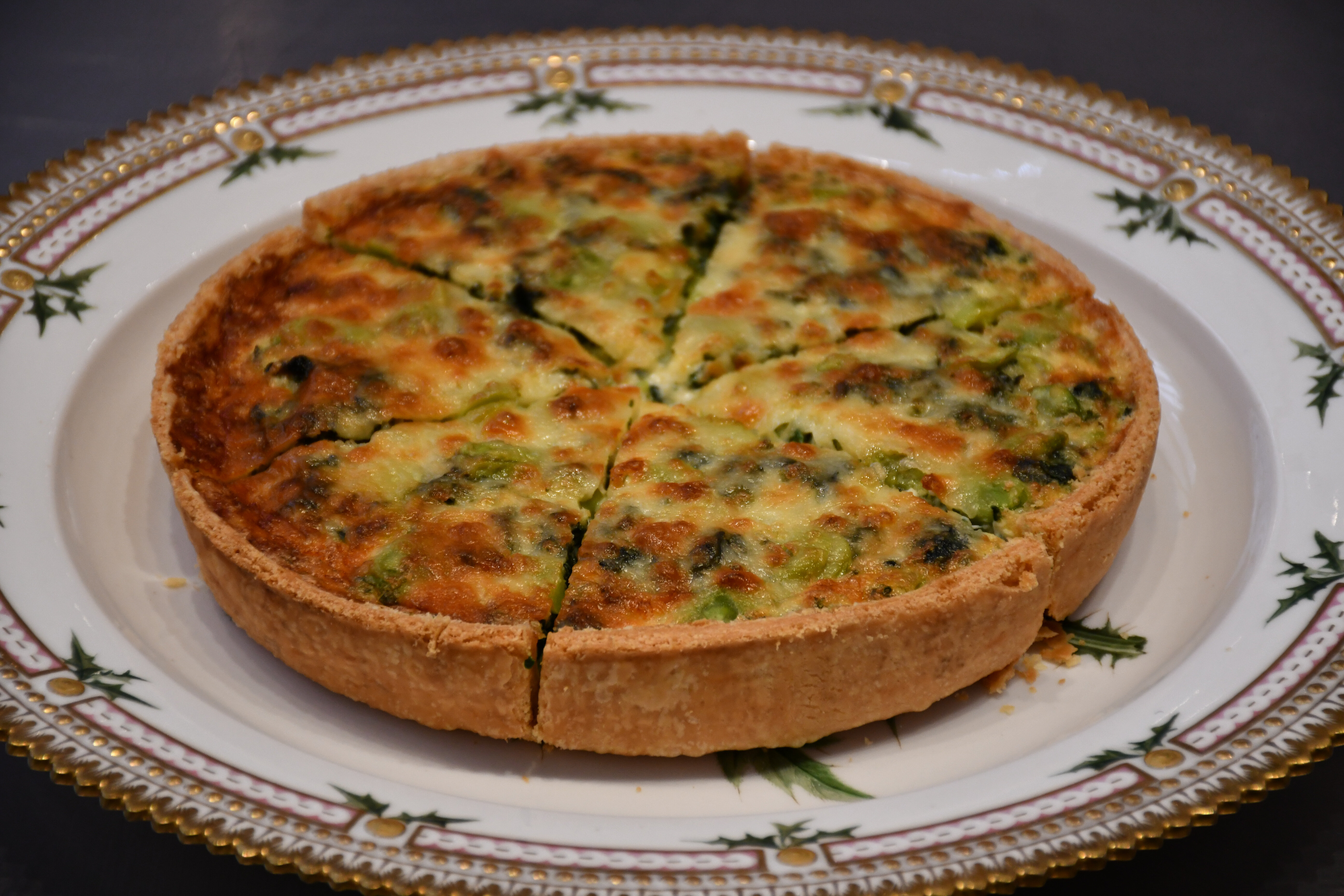
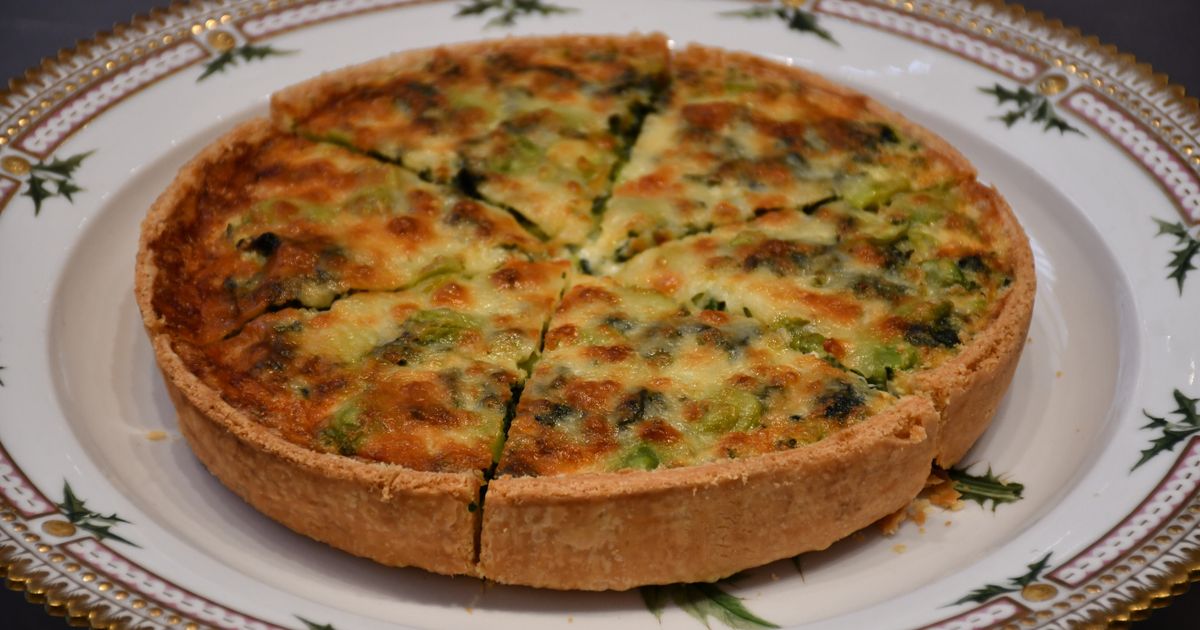
King Charles and the Queen Consort have personally chosen a recipe for “Coronation Quiche” in celebration of the Big Lunches due to be staged at the me time as the ceremony.

The recipe for the open baked savoury tart, which features spinach, broad beans and tarragon, was shared on the royal family’s official Twitter account revealed.

For the late Queen Elizabeth II’s coronation in 1953, Coronation Chicken – cold chicken in a curry cream sauce with a well-seasoned dressed salad of rice, green peas and mixed herbs – was invented to feed the foreign guests who were entertained at Buckingham Palace after the ceremony.

The new recipe is by royal head chef Mark Flanagan and was chosen by Charles and Camilla in collaboration with him.

Buckingham Palace said the quiche was chosen because it worked as a sharing dish, can be served hot or cold, suits a wide variety of dietary requirements and can be easily adapted to suit different tastes.

The Palace also said it had the benefit of not being too complicated and not requiring costly or hard-to-source ingredients.

Quiche is known as a classic French dish, but is said have actually originated in Germany in the Middle Ages with the word quiche from the German kuchen, meaning cake.

But not everyone was impressed with the choice as the UK battles with stubbornly high inflation, despite the Palace suggesting the cost-of-living crisis was taken into consideration.

Broadcaster Richard Bacon tweeted: “Hands up if you’re starting to find this event very silly?”

Others pointed out it comes soon after the UK faced an eggs shortage – and argued that quiche just isn’t very nice.

The Coronation Big Lunch aims to brings neighbours and communities together to celebrate the May 6 coronation.

Camilla has been patron of the Big Lunch initiative since 2013

Share Button

Why Has Vladimir Kara-Murza Been Jailed?

Russia has imposed a 25-year-sentence on a prominent political activist, underlining intensifying intolerance for criticism of the war in Ukraine and other dissenting opinions.

Under president Vladimir Putin, Russia for years has been cracking down on those who challenge the Kremlin. On Monday, Vladimir Kara-Murza was convicted of treason by a Moscow court and sentenced to 25 years in prison.

Who is he?

Kara-Murza, 41, is a historian, journalist and opposition politician who holds Russian and British passports and studied in the UK at Cambridge University. He was a close associate of Boris Nemtsov, a leading opposition figure who was assassinated near the Kremlin in 2015, and continued to speak out against Putin despite the mounting risks.

Twice, in 2015 and 2017, Kara-Murza suddenly fell ill in what he said were poisonings by the Russian security services, on both occasions falling into a coma before eventually recovering. Russian authorities denied involvement in the incidents. Kara-Murza’s lawyers say that as a result, he suffers from a serious nerve disorder called polyneuropathy.

Kara-Murza was one of a small number of opposition politicians who remained active in Russia after it invaded Ukraine in February 2022 and publicly condemned the war in defiance of new censorship laws.

What was he accused of?

Kara-Murza was arrested in April 2022, hours after CNN broadcast an interview in which he said Russia was being run by a “regime of murderers”.

He was declared a “foreign agent” and accused of spreading false information about the actions of the Russian military in Ukraine in connection with a speech he had given the previous month in the Arizona house of representatives, where he said Putin was “dropping cluster bombs on residential areas, mothers’ homes, hospitals, and schools”.

In July, he was additionally charged over his involvement with two foreign-based opposition forums that are labelled by the Russian state as “undesirable”. Finally, on October 6, he was charged with treason over public speeches he had made in Lisbon, Helsinki and Washington.

Prosecutors requested a 25-year jail term.

How did he respond to the charges?

Kara-Murza said he had done nothing wrong and compared the proceedings to Josef Stalin’s show trials of the 1930s.

In a statement at the end of his trial, Kara-Murza said he was jailed for “many years of struggle against Putin’s dictatorship”, his criticism of the war in Ukraine and his long efforts to champion Western sanctions against Russian officials involved in human rights abuses.

“I know that the day will come when the darkness engulfing our country will dissipate,” the father of three told the court in remarks that were posted on his Twitter account. “This day will come as inevitably as spring comes to replace even the frostiest winter.”

Kara-Murza reacted calmly as the judge read the verdict and sentence. His lawyer, Maria Eismont, later quoted him as telling her: “My self-esteem has risen: I realised that I have done everything right. Twenty-five years is the highest appraisal that I could get for doing what I did and what I believed in, as a citizen, a patriot and a politician.”

“A quarter of a century is an ‘A+’ for your courage, consistency and honesty in your years-long work. I am infinitely proud of you, my love, and I’m always by your side,” Kara-Murza’s wife, Evgenia, who lives in the US with their children, tweeted after the verdict.

What have others said?

Human rights organisations and Western governments denounced the verdict and demanded his release. Amnesty International declared the 41-year-old to be a prisoner of conscience as it denounced “yet another chilling example of the systematic repression of civil society, which has broadened and accelerated under the Kremlin since Russia’s invasion of Ukraine last year.”

“The so-called ‘crimes’ Vladimir Kara-Murza was tried for – speaking out against the invasion and advocacy on behalf of victims of human rights violations – are in fact acts of outstanding bravery,” Amnesty’s Russia director, Natalia Zviagina, said in a statement. “This verdict wrongly conflates human rights activism with ‘high treason’ and is reminiscent of Stalin-era repression.”

What else has Russia done?

Days after the invasion, Russia adopted a law criminalising spreading “false information” about its military. Authorities have used the law to stifle criticism of what the Kremlin calls its “special military operation.”

The sweeping campaign of repression is unprecedented since the Soviet era, effectively criminalising independent reporting on the conflict and any public criticism of the war.

Last month, a Russian court convicted a father over social media posts critical of the war and sentenced him to two years in prison. His 13-year-old daughter, who drew an anti-war sketch at school, was sent to an orphanage. Days later, Russia’s security service arrested Evan Gershkovich, an American reporter for The Wall Street Journal, on espionage charges.

With reporting from Reuters and AP.

Share Button

Lucy Letby trial: Nurse’s notes read ‘I killed them’, jury told

A note found at Lucy Letby’s home stated “maybe this is all down to me”, her murder trial is told.

Share Button

NHS Scotland calls 13,000 women for smear tests after error

A review of cervical screening cases has found thousands were wrongly removed from the system.

Share Button

Orkney cancer gene: My mum died not knowing she had it

Tanya Ellis was tested for the Orkney gene mutation after her mother was one of the first to have it identified.

Share Button

New Parents – You Can Grab 20% Off Postpartum Essentials With Lola&Lykke

We hope you love the products we recommend – all of them were independently selected by our editors. Just so you know, HuffPost UK may collect a share of sales or other compensation from the links on this page. Prices accurate and items in stock at time of publication.

April marks C-section Awareness Month, and Lola&Lykke has pulled out all the stops to honour the delivery method many welcome their children into the world via.

Mums who have undergone a Caesarean section, as well as those who have had a vaginal birth, can now save on all the essentials they need to look after themselves and their bodies during their pregnancy, and postpartum, with the popular parenting brand.

For the duration of April, Lola&Lykke is offering shoppers the chance to get 20% off select items.

Lola&Lykke – which was was founded in 2018 by parents Laura and Kati, after they experienced problems during their pregnancies – offers a range of products to see parents before and after their pregnancy.

The selection of support bands, which includes the Core Restore Postpartum Support Band, as well as the Core Relief Pregnancy Support Belt, are firm favourites.

The Postpartum Support Band in particular is a must have as it provides medical-grade compression on the weakened core muscles, and aims to speed up recovery from childbirth and pregnancy. It was also designed by Finnish physiotherapists, so is safe to use.

Not only does it provide support around the stomach to heal diastasis recti, which is when your growing uterus expands causing your muscles to separate, but also to alleviate any back pain.

The Postpartum Support Band, which is also suitable for those recovering after a natural births, has been designed with comfort in mind, as the band fits to your body without inhibiting any movements.

It comes in a range of sizes, from extra small to extra large, to fit all body shapes comfortably.

The Postpartum Support Band is super simple to wear too, all you have to do is wrap around the target area of your stomach, and secure with the double velcro fastening.

It is free from latex, hypoallergenic and breathable, which means it is super delicate on fragile areas of the body.

<img class="img-sized__img portrait" loading="lazy" alt="The Postpartum Support Band provides medical-grade compression on the weakened core muscles.” width=”720″ height=”1079″ src=”https://www.wellnessmaster.com/wp-content/uploads/2023/04/new-parents-you-can-grab-20-off-postpartum-essentials-with-lolalykke-2.jpg”>

The Postpartum Support Band is one of the selected items Lola&Lykke shoppers can claim 20% off of, which sees the price drop from £85 to £67, but for a limited time only.

No discount code is required to claim 20% off as it is discounted at the checkout, which makes for super simple and stress-free shopping.

While browsing Lola&Lykke – which is also famed for its bestselling breast pump, plus so much more – shoppers can save on the Hospital Bag Set, which usually retails at £271 has been slashed to £262.

While those who want to secure the Maternity Support 2-Pack, which features the Pregnancy Band and Postpartum Support Band to see you through all stages of pregnancy, can do so at a more purse-friendly £171 down from £180.

With glowing reviews, support from medical experts, and super affordable price tags, these bargain buys are not to be missed.

While on the Lola&Lykke website, you will also find tool kits, tips and tricks, expert advice from professionals, as well as real life stories from fellow parents, so rest assured you are in a safe space to share your concerns or product recommendations.

The maternity label also has a blog about all subject matters, including in-depth detail on C-sections, so you can be well informed about the surgical procedure prior to giving birth, preparation to help in advance, as well as tips on recovery, and everything in between.

Share Button

More people could have hidden bowel condition

People with microscopic colitis have frequent diarrhoea, stomach pain and fatigue.

Share Button

How artificial intelligence is matching drugs to patients

Health-tech firms around the world are increasingly using AI to help tailor drugs for patients.

Share Button

Tory Chairman Greg Hands Mocked After Claiming Public Services Are ‘In Great Shape’

Tory Party chairman Greg Hands has been savaged after claiming Britain’s public services are “in great shape”.

He made the extraordinary comments despite NHS waiting lists being at a record high and teachers, nurses, doctors and civil servants planning another wave of public sector strikes.

Shadow health secretary Wes Streeting said: “What planet is he on?”

Hands made his astonishing claim while being interviewed on LBC.

He said: “I think public services are getting better. “We’re seeing far more nurses, far more doctors – 38,000 more doctors in the NHS since the Conservatives took over, there’ll be 50,000 nurses by the end of next year.

“Teaching standards are getting better, I think public services are improving.”

Hands added: “We’re dealing with the strikes at the moment but overall our public services are in great shape.”

Presenter Andrew Castle responded: “I find it absolutely extraordinary that you’ve said that.
“I don’t feel that myself and I don’t think my listeners would either.

Responding to the comments, shadow health Secretary Wes Streeting said: “He’s living on a different planet, isn’t he?

“That’s not what people who use public services are experiencing.

“We’ve got objectively the worst crisis in the history of the NHS, school budgets are on their knees.”

In a separate interview on Sky News, Hands was asked why anyone would consider voting Conservative in next month’s local elections, given the state of the country.

Share Button