Study sheds light on concerning new trend in drug advertising: Patient influencers

Patients-turned-social-media-influencers routinely offer prescription drug advice to their followers and often have close ties with pharmaceutical companies, according to new University of Colorado Boulder research.

But they also tend to have good intentions, the study found.

The study, published this week in the Journal of Medical Internet Research, provides some of the first insights into the burgeoning, loosely regulated world of so-called “patient influencers,” sharing findings from 26 in-depth interviews about why and how they do it.

“The bottom line here is that patient influencers act as a form of interactive direct-to-consumer (DTC) advertising, sharing their knowledge and experiences on pharmaceutical drugs with communities of followers in which they wield great influence,” said author Erin Willis, an associate professor of advertising, public relations and media design. “This raises ethical questions that need more investigation.”

The study comes amid growing concerns about the harmful consequences of drug promotion on social media.

In recent weeks, in the wake of a slew of TikTok videos and Twitter posts touting the weight loss benefits of the diabetes drug Ozempic, patients who need the medication to manage their disease have faced global shortages. Meanwhile, those taking it “off-label” to slim down have experienced surprising side-effects, including violent diarrhea and extreme facial thinning.

“This is a great example of the power of social media and the unintended consequences,” said Willis.

A new kind of advertising

Controversial from its start in the 1980s, and still only available in the United States and New Zealand, DTC advertising enables drug companies to target consumers directly, rather than exclusively through physicians. About half of the people who ask their doctor about a drug after seeing a TV ad get it.

With trust in pharmaceutical companies and traditional media declining, drug makers are now turning to real patients as messengers, with companies like Health Union connecting them for partnerships.

Willis conducted one-on-one, hour-long Zoom interviews with influencers with a range of conditions, including lupus, fibromyalgia, Parkinson’s disease, asthma, HIV, celiac disease, chronic migraines and perimenopause. Eighteen of the 26 collaborated with a pharmaceutical company in some way.

Most had between 1,000 and 40,000 followers. Such “micro influencers” tend to be less expensive for advertisers to work with than celebrities, and research has shown they have the most influence on purchasing behaviors, said Willis.

Some interviewees posted company press releases directly. Others read studies about drugs and translated results for followers. Some were paid to post content for drug companies.

“Health literacy and digital literacy are both concerningly low in this country,” said Willis, noting that consumers often fail to recognize the difference between a sponsored ad and an altruistic personal post. “The fact that patients with no medical training are broadly sharing drug information should alarm us.”

Good intentions

On the positive side, Willis was heartened by the reasons participants become influencers.

Almost all said they were drawn to their roles by a sense that the answers they sought as patients, didn’t exist in other channels.

“I spent a lot of time looking for diabetes information that related to me — an African American woman from the South,” reported one study participant. “I didn’t see what I needed, so I created it.”

Others were motivated by a wish to destigmatize disability in certain communities.

“There’s still not a lot of talk about Latinos and HIV,” said another participant. “When there was information, it wasn’t culturally appropriate.”

Five said they never share information about drugs, stating that they believed it was “borderline unethical.”

Others said they would only post about drugs they personally had been prescribed and taken and always encouraged followers to consult with their doctor. They all said they generally strived to behave ethically.

“It’s comforting that the people we interviewed generally want to stay abreast of the science and be a credible source,” said Willis. “But I also know that doctors go to medical school for a reason.”

Concerns abound

Several influencers reported that followers frequently private message them to get detailed information about dosage and side effects.

“In an online community, there are other people there to say, ‘That’s not true or that’s not what I experienced.'” Willis said. “But with social media, a lot of the conversation happens privately.”

Willis also worries that influencers may stress the upsides of medications without fully disclosing the side-effects. For instance, she references a famously controversial 2015 post by celebrity influencer Kim Kardashian, singing the praises of a “#morningsickness” drug called Diclegis to her tens of millions of followers on Instagram.

The Food and Drug Administration swiftly flagged the post for omitting the drug’s long list of risks, required Kardashian to remove the post and dinged the drug maker with a warning letter. The Federal Trade Commission (FTC) now requires influencers to disclose whether they are paid via hashtags, such as #ad or #sponcon, and the Food and Drug Administration has rules on what can be said on social posts. But those rules are open to interpretation, and videos, disappearing content and direct messaging can be tough to track.

Willis acknowledged that her sample was a small one and that because many of her interviewees were referred to her by Health Union, they likely skew to the responsible side. In future studies, she intends to include broader sample sizes, explore how influencers impact treatment decisions and investigate compensation for and regulations around patient influencers.

Analysts predict the influencer marketing industry as a whole will be valued at $21.1 billion in 2023.

As patient influencers increasingly find their place in it, Willis contends that regulators should work harder to keep up with all the new platforms.

“This is happening, with or without regulation, and people should be aware of it,” Willis said.

Share Button

Texas man sues women for helping ex-wife get abortion

He filed a $1m wrongful death lawsuit against three women who helped his ex-wife get abortion pills.

Share Button

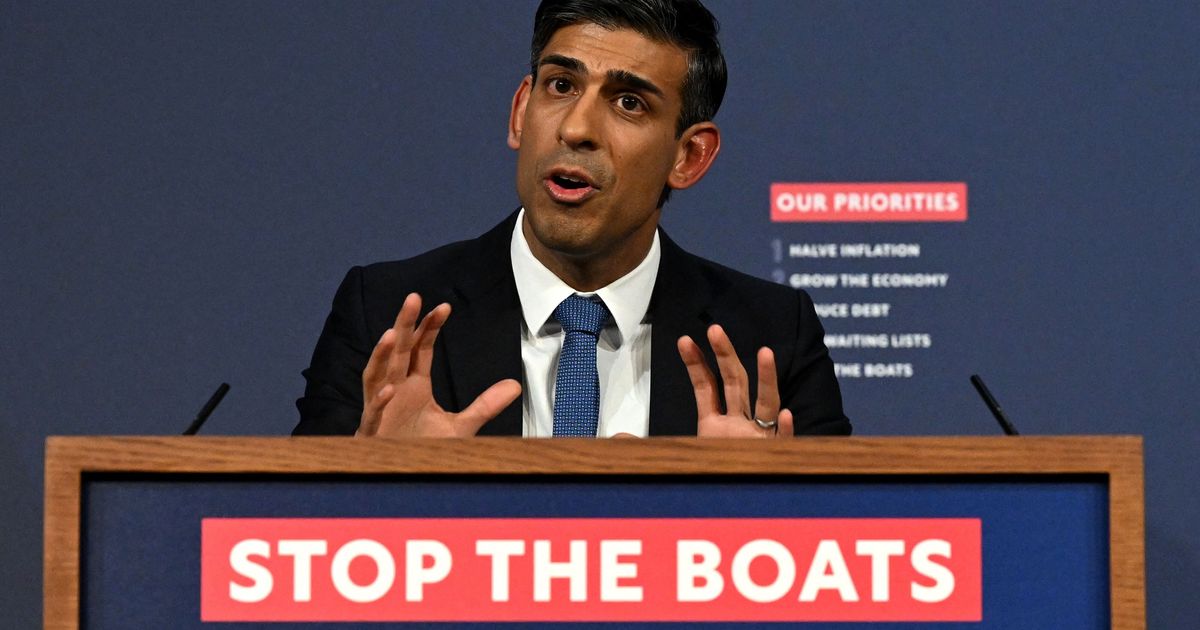
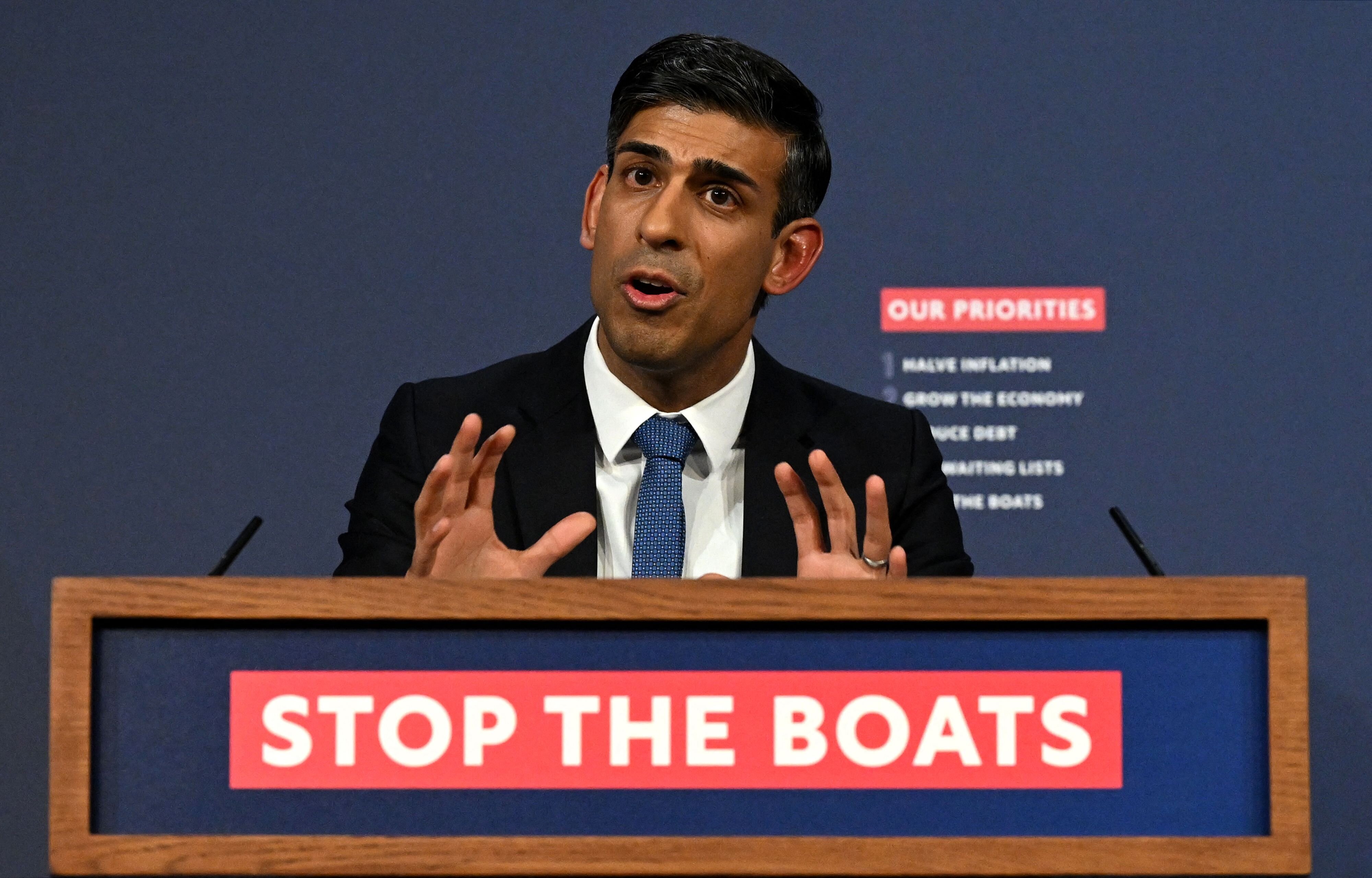
Rishi Sunak’s Own Net Zero Tsar Says He Will Not Vote For Immigration Bill As Revolt Grows

Rishi Sunak is facing a growing Tory revolt over his plans to crack down on asylum seekers arriving in small boats after another senior MP announced that they will not vote for it.

Chris Skidmore – who also currently serves as the PM’s net zero tsar – said he was “not prepared to break international law or the human rights conventions” by backing the Illegal Migration Bill, which MPs will vote on tonight.

He follows former immigration minister Caroline Nokes, the Tory chair of the equalities committee, who yesterday branded the Bill an “absolute horror”.

“I can’t vote for this,” she told Times Radio on Sunday. “I think we have an absolute duty to treat people humanely to keep people safe.”

Nokes warned the bill was “removing protections for pregnant women, removing protections for families”.

Skidmore, who is standing down at the next election, announced his position in a tweet.

George Osborne, the former chancellor, has also said some of the language used by Tories on immigration has been “unacceptable”.

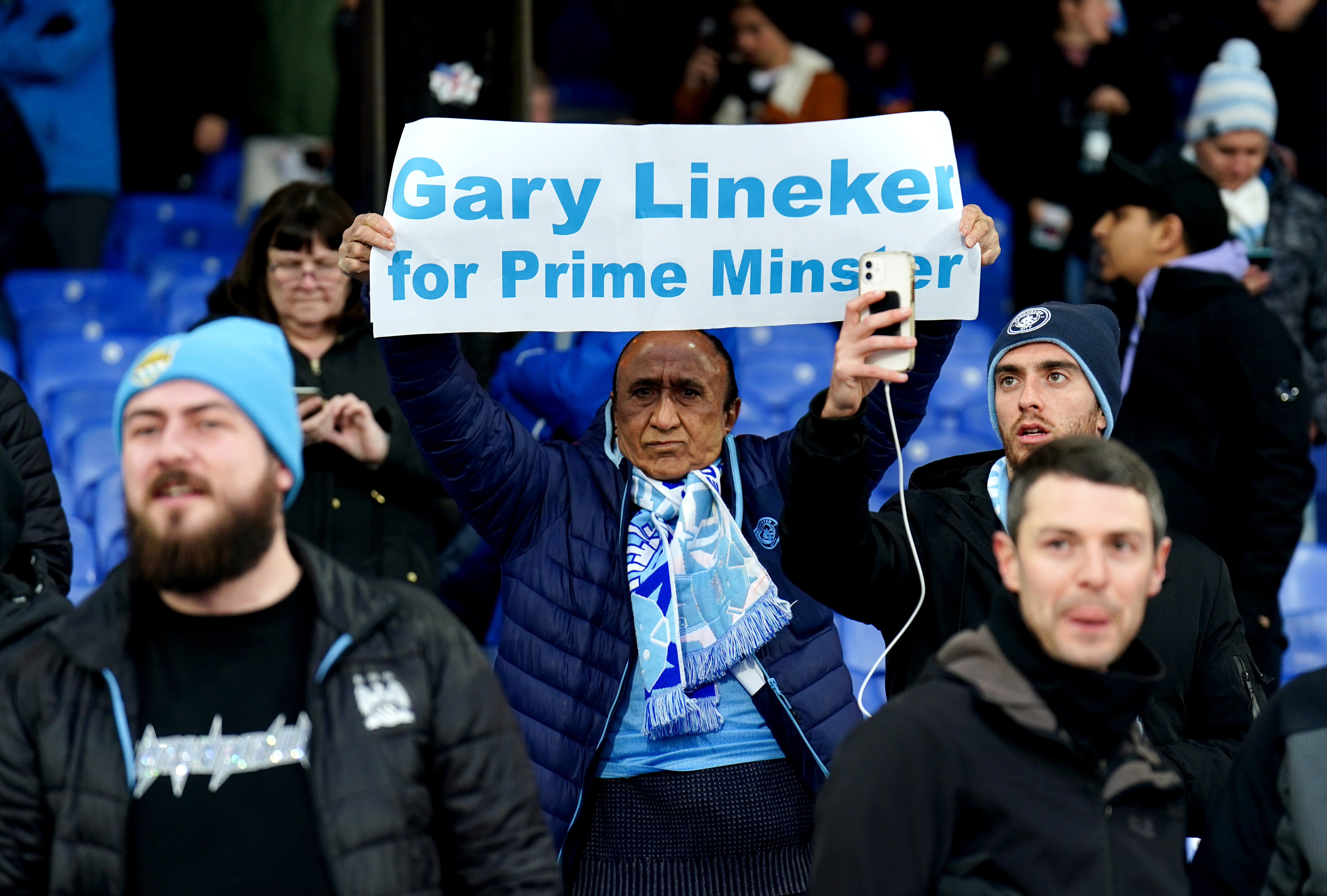
Monday’s vote comes amid a huge row over the bill which saw Gary Lineker removed from his BBC job over the weekend for criticising the government.

The Match of the Day presenter accused home secretary Suella Braverman of using language used was “not dissimilar to that used by Germany in the ’30s”.

The government’s plans would see migrants who arrive through unauthorised means deported and given a lifetime ban from returning.

Anyone who crosses the Channel in a small boat would only be eligible for asylum in a “safe” third country, such as Rwanda.

Braverman has admitted her legislation might not even be legal as it could breach existing human rights laws.

Yvette Cooper, Labour’ shadow home secretary, has said the Bill is a “con which will make our broken asylum system worse”.

“Not only will it fail to tackle dangerous boat crossings, but it shows the repeated false claims and promises that both the Prime Minister and Home Secretary have made,” she said.

Share Button

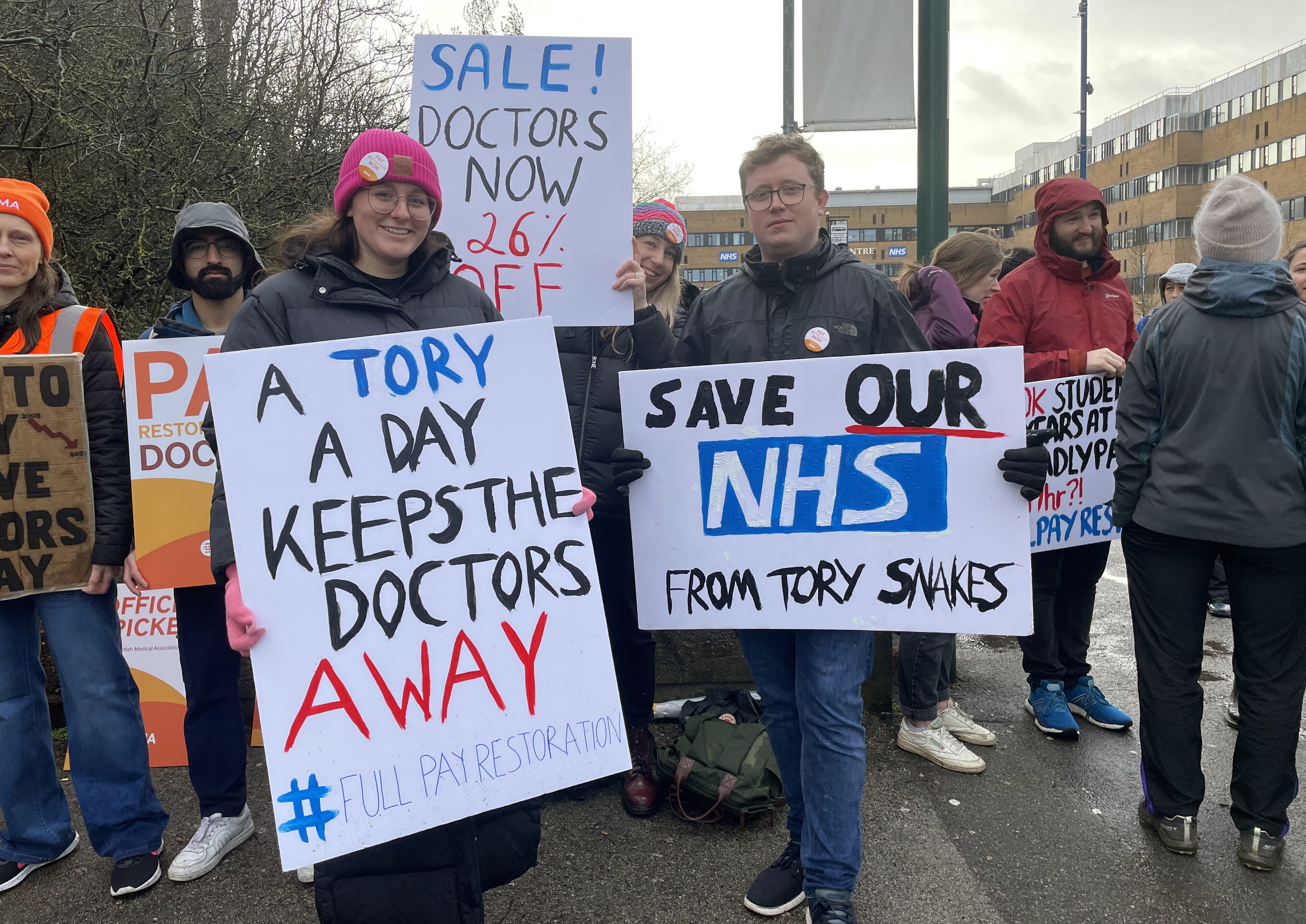
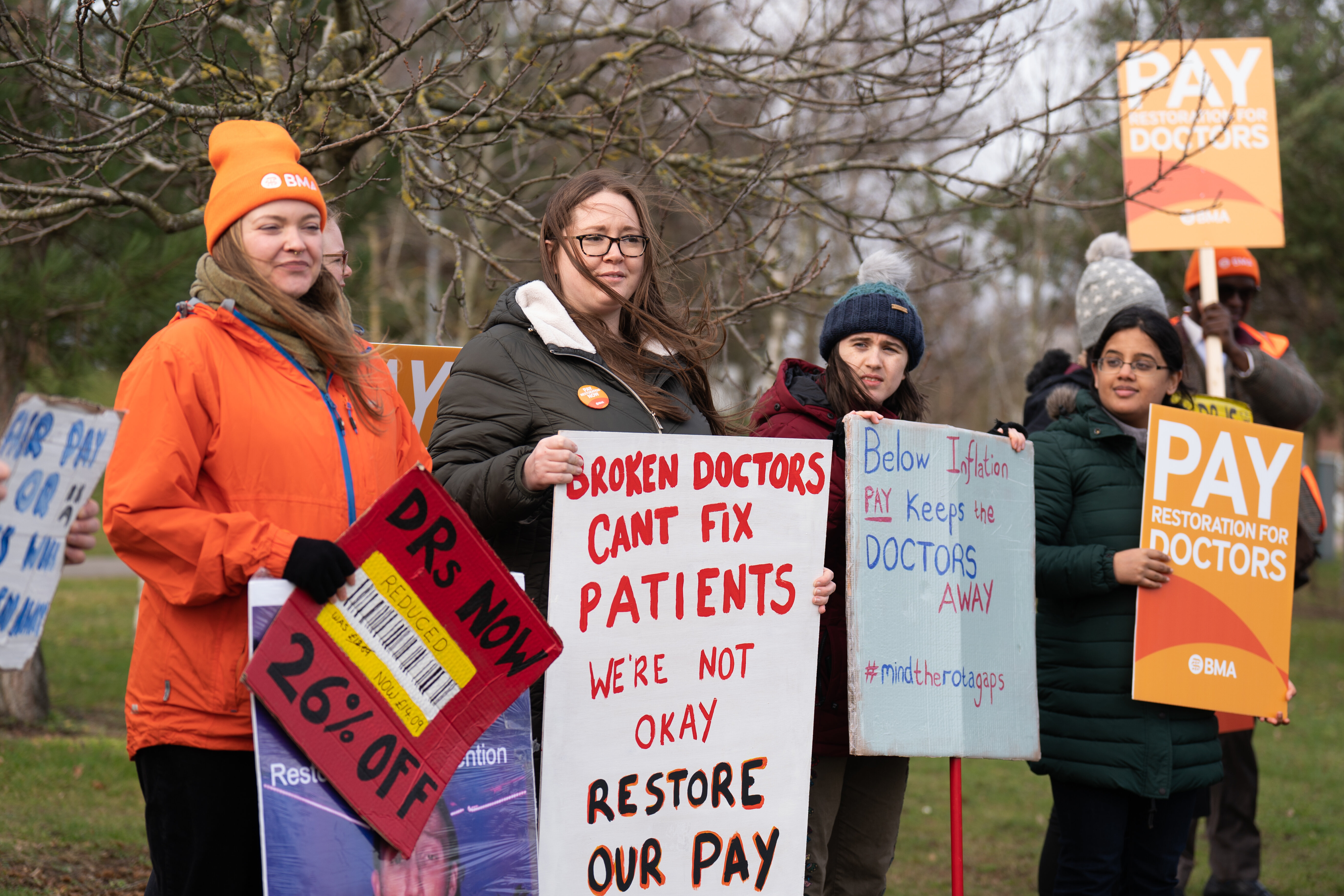
‘Broken Doctors Can’t Fix Patients’ What Junior Doctors Are Saying On The Picket Line

Junior doctors took to picket lines across the UK today as they began a three-day strike in their long-running pay dispute with the government.

The British Medical Association rejected a last-ditch appeal by health secretary Steve Barclay for them to enter into fresh negotiations in an attempt to avert the walkout.

The unions says junior doctors’ pay has fallen in real terms by 26% since 2008/09 and are demanding “full pay restoration”.

Professor Stephen Powis, medical director of NHS England, said it would be “the most disruptive set of industrial action days that we’ve seen all winter”.

But the striking medics say their action is necessary to force the government’s hand.

Here is what some of those striking have been saying from the picket line.

Speaking outside the Queen Elizabeth Hospital in Birmingham, junior doctor Shivam Sharma told the Press Association: “Junior doctors have faced a massive 26% real-terms pay cut over the last 15 years.

“We are not worth 26% less, we don’t do 26% less work, we don’t see 26% less patients. In fact, the work has only gotten harder.

“Currently, 50% of junior doctors are struggling to pay rent, mortgage and bills, and 50% are having to borrow money from friends and family just to make ends meet.

“If you or I were going into hospital critically unwell, we couldn’t want our junior doctor to be worrying about how they’re going to pay their bills.

“So something has to be done – we have to value doctors here if we are going to keep them.”

Paul Smith, a first-year surgical trainee at the Nottingham University Hospitals NHS Trust, said: “I started in my training post in August last year and I’ve spent £3,000 on course fees, professional fees and exams. We can claim some tax back but I’ve still got to pay that upfront.

“Me and my partner managed to save up enough money to buy a house locally and we found a hole in the roof last week.

“We’re genuinely struggling to find the money to fix that at the moment.”

Speaking from the picket line at University College Hospital in London, Rebecca Lissman, 29, a trainee in obstetrics and gynaecology, said: “I still want to work for a service that’s free at the point of use when I’m a fully qualified consultant. We want a health service that works for everyone and that’s why I’m here today.

“We can’t give people the service they deserve and see them as quickly as they need because we are so stretched.

“I want to be in work, looking after people, getting trained. I don’t want to be out here striking but I feel that I have to.”

“Junior doctors have faced a massive 26% real-terms pay cut over the last 15 years. We are not worth 26% less, we don’t do 26% less work, we don’t see 26% less patients.”

Edward Finn, an anaesthetist registrar at the Nottingham University Hospitals NHS Trust, said: “If you look at the overall cost of living, wages that haven’t kept up with that, and we don’t go out for meals, we don’t do anything.

“My wife and I are both part-time – we couldn’t afford to be full-time with the cost of childcare – but we still have to do the occasional extra shift on top of our contracted hours to keep up with things like the electricity bill.

“When you’re talking about somebody who’s been a doctor for 12 years, it’s quite sad really, isn’t it?”

Striking junior doctor Martin Whyte, on the picket line in Newcastle, said the public understood the need for the industrial action.

“We used to say anything above four hours was a breach but we have missed that target so overwhelmingly now, it’s almost not worth counting.

“These systems are failing chronically and I think the public understand that.

“They know steps have to be taken to address that, and that starts with better retention of staff and for that you need better pay. We are seeing a lot of attrition from the workforce.”

The 36-year-old said newly qualified doctors used to talk about the specialism they hoped to work in, adding: “Now when I talk to them they say ‘I’m going to go to Australia’, ‘I’m going to go to Canada’, or ‘I’m going to quit medicine all together’, because the pay relative to the work and the intensity and the hours just doesn’t add up.”

Striking NHS junior doctors on the picket line outside Norfolk & Norwich University Hospital in Norwich, as the British Medical Association is holding a 72-hour walkout in a dispute over pay. Picture date: Monday March 13, 2023.

Joe Giddens via PA Wire/PA Images

Speaking on a picket line at Leeds General Infirmary, Dr Chris Morris, doctor and British Medical Association rep, said: “It’s really reassuring when members of the public do go past honking their horns, giving us messages of support. It reemphasises why we’re doing this.”

“I don’t think anyone has taken this decision lightly. It’s the last thing we want to do as doctors but we feel that we’ve pushed into this decision by the government.”

Steve Barclay said he wanted to “engage” with the junior doctors to reach an agreement to end the strikes.

He said other health unions had agreed to hold pay talks with him and he called on the BMA to do so “as a matter of urgency”.

It marks a change of tone from December, when Barclay said he could not offer NHS staff more money.

Share Button

Oh Joy, All The Ways Our Childcare System Is A Complete Bin Fire Right Now

Britain’s childcare system is on the brink – and parents are feeling the strain more than ever.

Soaring nursery fees, staff retention issues and nursery closures are just some of the issues the sector is facing, with repercussions for childcare workers, parents and children.

Here’s a rundown of all the ways in which the system is on its knees right now – and if one thing’s abundantly clear, it’s that change must happen fast.

1. Childcare costs are horrendously expensive

A new report has confirmed what every parent already knows (and dreads) – that childcare costs are extortionate. According to charity Coram, the average annual cost of a full-time nursery place for a child under two in Britain is just shy of £15,000. To put that into context, annual university course fees are a maximum of £9,250.

Recently, parents were left reeling by news that these fees may rise by a further £1,000 this year because of the cost of living. This is on top of the fact the average costs of childcare have risen by 5.9% in the past year, according to Coram.

The TUC previously warned that the cost of early years care for a child under two could rise to £2,000 a month by 2026. But for some, this is already the case. One dad in London told HuffPost UK he’s shelling out £2,100 per month for his daughter to go to nursery four days a week.

It’s a postcode lottery for many parents. Coram’s report found there are significant differences in the cost and availability of childcare depending on where you live across England.

The average weekly cost of a part-time place for a child under two is 54% higher in inner London (£199.01) than in Yorkshire and Humberside (£129.32).

Parents in the UK face some of the most expensive childcare costs among leading economies, according to the Organisation for Economic Co-operation and Development (OECD).

There is some help available. From the age of two, children from low income families are eligible for ‘free hours’ at nursery in England, Wales and Scotland. When they turn three, all children – regardless of household income – are entitled to a certain amount of these ‘free hours’ per week.

In Northern Ireland, the picture is different again. There are no ‘free hours’ as such, but all three- and four-year-olds are entitled to a funded pre-school place of at least 12.5 hours per week during term time.

Parents who earn less than £100,000 a year can also get tax-free childcare – up to £2,000 a year – to help with childcare costs. But when the total cost of putting a child in nursery can be up to £15,000 a year, it’s still a struggle for lots of families.

Unfortunately, many women are suffering as a result of such costs. A staggering three in four mums (76%) who pay for childcare say it no longer makes financial sense for them to work, a recent report by the charity Pregnant Then Screwed found. One in four parents (26%) say their nursery bill is now more than 75% of their take-home pay.

This time last year, a survey of almost 27,000 parents with young children found the cost of childcare had driven 43% of mums to consider leaving their jobs.

The sad reality is that women are not just considering this – many do leave. A staggering 84% of the 1.75 million people who’ve given up work to care for their family are women, according to ONS data.

2. It’s actually really hard to get a spot in nursery

It’s got to the point where people are signing up for nursery waiting lists when pregnant – and sometimes even before conceiving a baby – because demand is so high. And those who don’t get ahead end up stuck without childcare, or have to make alternative arrangements, which can often make returning to work very tricky.

Joanna Corfield, head of communications and campaigns at NCT, previously told HuffPost UK they’d been hearing more and more about how working parents are having to think about childcare well in advance of when they need it.

“In some areas where demand is high and provision is low, some families are having to make decisions in the early stages of pregnancy,” she confirmed.

3. Childcare staff are (unsurprisingly) leaving for better paid jobs

With everything else that’s going on, the sector is facing staff retention issues. In October 2021, a Early Years Alliance survey on staff recruitment and retention in the early years sector in England revealed over a third of respondents were actively considering leaving the sector.

Meanwhile one in six believed that staffing shortages were likely to force their setting to close permanently within a year.

The survey also found more than eight in 10 settings were finding it difficult to recruit staff. Around half had to limit the number of, or stop taking on, new children at their setting in the six months prior to the survey.

The average salary of a UK nursery worker is £21,000 according to Totaljobs. But despite the low salary, the job is increasingly stressful – especially as staff shortages mean more pressure on those who are left behind. It’s also resulting in nurseries having to close rooms at short notice, leaving parents in the lurch.

In early years settings in England, one adult can look after three children under two years old; or four children aged two; or eight children aged three and over.

Under Liz Truss’s premiership, it was suggested these ratios could be stretched further, so staff could look after more children at one time – some parents were concerned it would pose a safety issue while members of the childcare sector suggested it would prompt even more staff to leave.

Neil Leitch of the Early Years Alliance previously told HuffPost UK that while childcare settings spend the majority of their income on staff wages, “years of government underfunding has meant that many educators are on little more than the national living or minimum wage”. Because of this, people are leaving the industry for better-paid positions in sectors such as retail and hospitality. And who can blame them?

4. Nurseries are closing at a rate of knots

Nurseries and childcare settings are also dropping like flies – and some organisations suggest it’s only going to get worse because of the cost of living.

The overall number of childcare providers in England dropped by around 4,000 between April 2021 and March 2022, according to figures from Ofsted.

In August 2022, the National Day Nurseries Association (NDNA) warned that between September 2022 and 2023, we could see record-breaking numbers of closures leading to a “catastrophic” reduction in places.

Purnima Tanuku, chief executive of NDNA, said at the time: “Most nurseries are small businesses and similar to the picture in other sectors, these are hugely impacted by rocketing fuel costs, inflation and chronic underfunding.” Tanuku added that nurseries have also had to pay “unfair business rates”.

The latest Coram survey revealed there’s been a sharp drop in childcare availability across England over the past year, with only half of local areas reporting sufficient childcare for children under two. This was a decrease of 7% on 2022.

5. Disabled children and those from low income households are impacted greatly

One of the alarming findings from Coram’s report is that less than one in five (18%) local authorities in England report sufficient childcare for children with disabilities – a 3% decrease on 2022.

The charity called for improved support for children with special educational needs and disabilities (SEND) by introducing responsive funding to improve staff skills and make more childcare places accessible.

In Britain, parents can get help with childcare costs thanks to ‘free hours’. Some parents are eligible for 15 hours free childcare a week for two-year-olds.

All three to four-year-olds in England can get 15 hours free childcare a week (for 38 weeks of the year). And some eligible parents (for example, those on benefits) of three to four-year-olds may also be eligible for 30 hours free childcare a week. It’s a similar picture in Wales and Scotland.

But nurseries are struggling to offer these funded spots. Almost half (43%) of local authorities across Britain report that some or many of their local childcare providers have reduced the number of funded early education entitlement places they can provide.

It’s no surprise this is happening as these spots have historically been underfunded. A 2022 survey by the Early Years Alliance found that for 86% of settings, funding for the three- and four-year-old early entitlement scheme does not cover the cost of delivering places – and around a third (30%) of the providers surveyed said they’re operating at a loss.

6. There isn’t actually a plan (that we know of) for sorting all of this out

While there’s been a lot of talk about how to tackle the nation’s childcare problem from various prime ministers, not much has actually happened to sort the issue so far.

In Rishi Sunak’s first speech of 2023, back in January, the prime minister revealed his educational priorities for the next two years – but his plans for childcare weren’t exactly detailed.

When a member of the press asked about the childcare sector, Sunak responded: “The government and I are completely committed to ensuring good availability and affordability and flexibility of childcare. There’s a consultation that is out at the moment, and we’re in the process of considering – about some reforms – and it wouldn’t be right for me to comment on that now.”

In December last year it was revealed that childcare will be treated as “national infrastructure” – this means local councils will be able to fund it alongside other crucial services like schools, GP surgeries and public transport.

It’s hoped the issue of childcare will be addressed at the spring budget on March 15. There have been murmurings that Sunak is considering extending the free 30 hours for childcare to all parents – not just those who are eligible because they’re on benefits. But nothing has been confirmed as of yet.

What we do know is that changes to Universal Credit will reportedly be announced at the budget, including paying parents on Universal Credit childcare support upfront and increasing the amount they can claim by several hundred pounds.

But for parents who aren’t on Universal Credit, the struggle may well continue if no additional support is provided.

Megan Jarvie, head of Coram Family and Childcare, said: “The need for reform of the childcare system is urgent. As well as eye watering bills, parents are facing widening gaps in availability of the childcare they need.

“As the Chancellor decides his budget, we urge him to recognise the value of investing in childcare – it is a wise investment, enabling parents to work and boosting the outcomes of young children.”

The charity wants to see a reformed system which “prioritises quality, guarantees a childcare place for every child, values the workforce and makes sure that parents only pay what they can afford”.

One thing’s abundantly clear: sorting out childcare should be a priority for the government, as charity Pregnant Then Screwed found 96% of families with a child under three years old are likely to vote for the political party with the best childcare pledge in the next election.

Share Button

Hospitals urged to offer patients more gown sizes

A one-size fits all approach can leave patients feeling uncomfortable and exposed, patients say.

Share Button

Care worker shortages: What is it like working in the industry?

With the number of care workers falling, what is it like for those working in the industry?

Share Button

Chinese Car Maker Rules Out UK Factory ‘Because Of Brexit’

The world’s biggest seller of electric and hybrid cars has ruled out building its first European factory in the UK because of the uncertainty caused by Brexit.

Michael Shu, the European president of Chinese firm BYD, said Britain hadn’t even made it onto the long list of potential sites.

He told the Financial Times: “As an investor we want a country to be stable. To open a factory . . . is a decision for decades.

“Without Brexit, maybe. But after Brexit, we don’t understand what happened.

“The UK doesn’t have a very good solution. Even on the long list we didn’t have the UK.”

Instead, BYD are looking to build a factory in Germany, France, Spain, Poland or Hungary.

Shu’s comments come after French president Emmanuel Macron hit out at the “consequences of Brexit” at a summit with Rishi Sunak.

He also said the effects of quitting the EU had been “under-estimated” before the 2016 referendum.

The decision to quit the EU has also been blamed for a labour shortage which has forced the government to relax visa rules for foreign workers.

Ministers to plug huge gaps in the job market by starting with looser rules for the building industry, according to the Financial Times.

A number of occupations will be added to the “shortage occupation list” which eases recruitment from abroad.

The list allows companies to obtain visas for staff paid on a lower threshold of £20,480 a year because the salary currently needed to obtain a “skilled worker” visa is £25,600.

Labour MP Stella Creasy told HuffPost UK: “British workers are losing jobs and opportunities hand over fist not being able to work in the EU or for companies that want to work with the EU because of the post Brexit visa situation, whilst the UK’s inability to build a functioning immigration and asylum system is holding back our economy at a time when vacancies are at over a million.

“We need urgent reform of the whole visa system to ensure we tackle not just shortages in the UK labour market but also opportunities for all as part of kickstarting growth in our economy.”

Share Button

BBC ‘Caved To Tory Pressure’ By Axing Gary Lineker, Says Labour’s Rachel Reeves

The BBC “bowed to pressure” from the Tories by axing Gary Lineker from Match of the Day, Rachel Reeves has said.

The shadow chancellor said the corporation should reverse its decision, which triggered a mass revolt which threw its sports coverage into chaos.

Reeves also pointed out that BBC chairman Richard Sharp, who has donated huge sums to the Conservatives, has kept his job despite his role in Boris Johnson securing a loan of up to £800,000.

The BBC announced on Friday that Lineker was “stepping back” from presenting Match of the Day this weekend over a tweet criticising the government’s migrant crackdown.

He said some of the language being used by ministers was like “Germany in the 1930s”.

On Sky News this morning, Reeves said: “Whether you agree with Gary Lineker’s tweets or not, and I wouldn’t have used that language, I think that it is perfectly reasonable that you can present the football commentary on the BBC at a weekend.”

Referring to Richard Sharp, she added: “He is still in his job. Gary Lineker isn’t able to present the football commentary? I think there is a sense of proportionality here.

“The Tories obviously put a huge amount of pressure on the government to get rid of Gary Lineker, I don’t remember those same Tory MPs crying about impartiality when those revelations about Richard Sharp came out.”

Appearing on Sunday with Laura Kuennsberg on BBC One, Reeves said: “The BBC have clearly come under immense pressure from the Conservative Party to take Gary Lineker off air.

“I think it is a shame that the BBC has bowed to that pressure. I would urge the BBC to reconsider this decision, because I think it has now gone totally out of proportion.”

Meanwhile, Lineker’s son, George, has said his dad will not back down over the row.

He told the Sunday Mirror: “Dad is a good man, a good human, and I’m proud of him for standing by his word. That’s why he was pulled off the show – because he wouldn’t apologise. But he will always speak up for people who don’t have a voice.

“He is passionate about helping refugee charities – he took in two refugees who he is still in touch with and trying to help.

“It means a lot to him to stand up for people whose only hope is to escape a country with only the clothes on their back. That’s why he’s been so firm.

“Will he go back to Match of the Day? I think so – he loves Match of the Day. But he won’t ever back down on his word.”

BBC director general Tim Davie, who took the decision to suspend Lineker, said he was seeking a resolution to the dispute, but insisted he will not resign over his handling of the affair.

He said: “I think my job is to serve licence fee payers and deliver a BBC that is really focused on world-class, impartial landmark output – and I look forward to resolving this situation and looking forward to delivering that.”

Share Button

Gary Lineker’s Son Insists Presenter ‘Won’t Ever Back Down On His Word’ In BBC Row

Gary Lineker’s son has said his father would not “back down on his word” and believes the sports presenter will return to Match Of The Day.

In an interview with The Sunday Mirror, the former England player’s eldest son George claimed his father had been “a bit disappointed” by the BBC asking him to step back from hosting Saturday’s Match Of The Day after he compared the language used to launch a new Government asylum seeker policy with 1930s Germany in a tweet.

However, he said his father had been “overwhelmed by the support” of fellow pundits who had withdrawn from various BBC sports shows in solidarity with him, particularly his MOTD co-presenters Ian Wright and Alan Shearer.

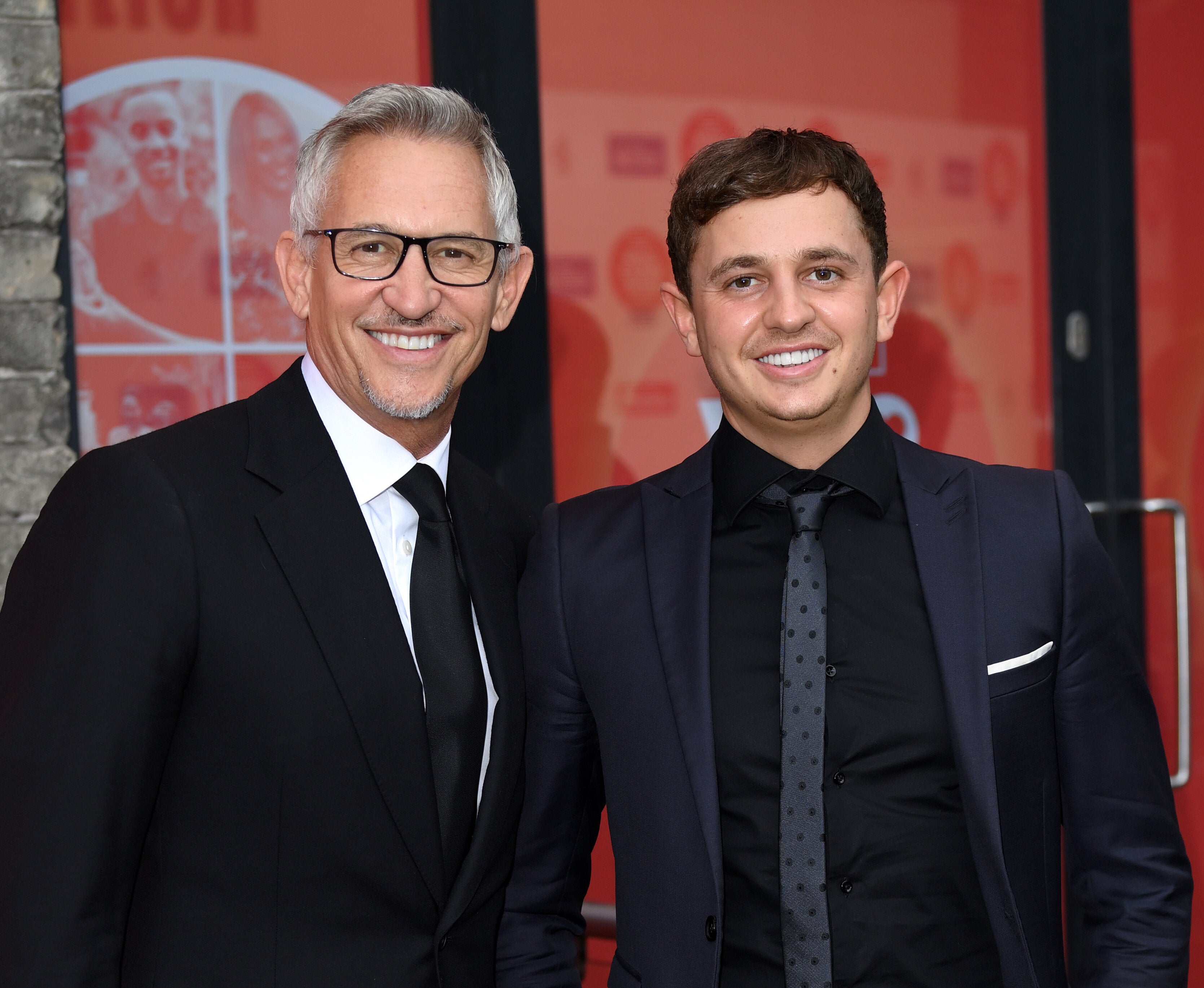
(L-R) Gary Lineker and son George Lineker

Karwai Tang via Getty Images

George Lineker told The Sunday Mirror: “Dad is a good man, a good human, and I’m proud of him for standing by his word. That’s why he was pulled off the show – because he wouldn’t apologise. But he will always speak up for people who don’t have a voice.

“He is passionate about helping refugee charities – he took in two refugees who he is still in touch with and trying to help.

“It means a lot to him to stand up for people whose only hope is to escape a country with only the clothes on their back. That’s why he’s been so firm.

“Will he go back to Match of the Day? I think so – he loves Match of the Day. But he won’t ever back down on his word.”

Saturday’s Match Of The Day aired for only 20 minutes and did not include accompanying commentary or analysis from pundits or even its famous theme tune – instead broadcasting only short highlight clips of the day’s matches.

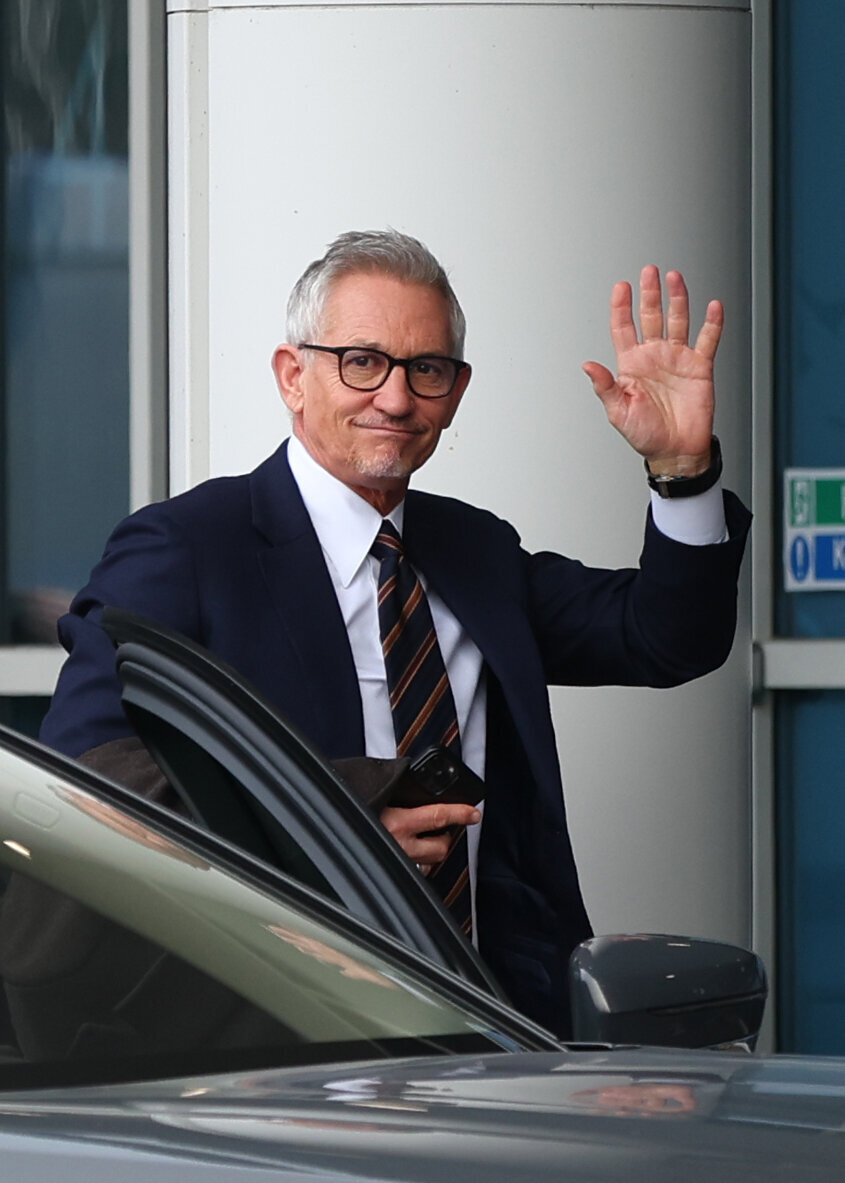
Gary Lineker waves to fans as he arrives prior to the Premier League match between Leicester City and Chelsea FC at The King Power Stadium on March 11, 2023 in Leicester, United Kingdom. (Photo by Marc Atkins/Getty Images)

Marc Atkins via Getty Images

Ahead of the show starting, a continuity announcer said: “Now on BBC One, we’re sorry that we’re unable to show our normal Match Of The Day including commentary tonight. But here now is the best action from today’s Premier League matches.”

Several of the broadcaster’s other football shows were pulled at the last minute on Saturday as more presenters and reporters withdrew, with neither Football Focus nor Final Score airing – while 5 Live’s radio coverage was radically altered throughout the day.

The BBC director-general apologised for the disruption caused to the broadcaster’s sports programming, but confirmed he will not resign over the Lineker impartiality row.

Tim Davie told BBC News in Washington, DC on Saturday: “I’m very sorry for the disruption today. It’s been a difficult day and I’m sorry that audiences have been affected and they haven’t got the programming.

“As a keen sports fan, I know like everyone that to miss programming is a real blow and I am sorry about that.

“We are working very hard to resolve the situation and make sure that we get output back on air.”

The director-general said that he would not go into too much detail about the discussions being had, but that “everyone wants to calmly resolve the situation”.

“I would say Gary Lineker is a superb broadcaster. He’s the best in the business, that’s not for debate,” he added.

“To be clear, success for me is: Gary gets back on air and together we are giving to the audiences that world-class sports coverage which, as I say, I’m sorry we haven’t been able to deliver today.”

Mr Davie also said that he does not feel this is about “left or right” politics, but about the corporation’s ability to balance free speech and impartiality, adding: “We’re fierce champions of democratic debate, free speech, but with that comes the need to create an impartial organisation.”

Asked if he would resign as “there are many people in the UK that simply do not trust you”, Mr Davie said: “Absolutely not.

“I think my job is to serve licence fee payers and deliver a BBC that is really focused on world-class, impartial landmark output – and I look forward to resolving this situation and looking forward to delivering that.”

Share Button