Robots can help improve mental wellbeing at work — as long as they look right

Robots can be useful as mental wellbeing coaches in the workplace — but perception of their effectiveness depends in large part on what the robot looks like.

Researchers from the University of Cambridge carried out a study in a tech consultancy firm using two different robot wellbeing coaches, where 26 employees participated in weekly robot-led wellbeing sessions for four weeks. Although the robots had identical voices, facial expressions, and scripts for the sessions, the robots’ physical appearance affected how participants interacted with it.

Participants who did their wellbeing exercises with a toy-like robot said that they felt more of a connection with their ‘coach’ than participants who worked with a humanoid-like robot. The researchers say that perception of robots is affected by popular culture, where the only limit on what robots can do is the imagination. When faced with a robot in the real world however, it often does not live up to expectations.

Since the toy-like robot looks simpler, participants may have had lower expectations and ended up finding the robot easier to talk connect with. Participants who worked with the humanoid robot found that their expectations didn’t match reality, since the robot was not capable of having interactive conversations.

Despite the differences between expectations and reality, the researchers say that their study shows that robots can be a useful tool to promote mental wellbeing in the workplace. The results will be reported today (15 March) at the ACM/IEEE International Conference on Human-Robot Interaction in Stockholm.

The World Health Organization recommends that employers take action to promote and protect mental wellbeing at work, but the implementation of wellbeing practices is often limited by a lack of resources and personnel. Robots have shown some early promise for helping address this gap, but most studies on robots and wellbeing have been conducted in a laboratory setting.

“We wanted to take the robots out of the lab and study how they might be useful in the real world,” said Dr Micol Spitale, the paper’s first author.

The researchers collaborated with local technology company Cambridge Consultants to design and implement a workplace wellbeing programme using robots. Over the course of four weeks, employees were guided through four different wellbeing exercises by one of two robots: either the QTRobot (QT) or the Misty II robot (Misty).

The QT is a childlike humanoid robot and roughly 90cm tall, while Misty is a 36cm tall toy-like robot. Both robots have screen faces that can be programmed with different facial expressions.

“We interviewed different wellbeing coaches and then we programmed our robots to have a coach-like personality, with high openness and conscientiousness,” said co-author Minja Axelsson. “The robots were programmed to have the same personality, the same facial expressions and the same voice, so the only difference between them was the physical robot form.”

Participants in the experiment were guided through different positive psychology exercises by a robot in an office meeting room. Each session started with the robot asking participants to recall a positive experience or describe something in their lives they were grateful for, and the robot would ask follow-up questions. After the sessions, participants were asked to assess the robot with a questionnaire and an interview. Participants did one session per week for four weeks, and worked with the same robot for each session.

Participants who worked with the toy-like Misty robot reported that they had a better working connection with the robot than participants who worked with the child-like QT robot. Participants also had a more positive perception of Misty overall.

“It could be that since the Misty robot is more toy-like, it matched their expectations,” said Spitale. “But since QT is more humanoid, they expected it to behave like a human, which may be why participants who worked with QT were slightly underwhelmed.”

“The most common response we had from participants was that their expectations of the robot didn’t match with reality,” said Professor Hatice Gunes from Cambridge’s Department of Computer Science and Technology, who led the research. “We programmed the robots with a script, but participants were hoping there would be more interactivity. It’s incredibly difficult to create a robot that’s capable of natural conversation. New developments in large language models could really be beneficial in this respect.”

“Our perceptions of how robots should look or behave might be holding back the uptake of robotics in areas where they can be useful,” said Axelsson.

Although the robots used in the experiment are not as advanced as C-3PO or other fictional robots, participants still said they found the wellbeing exercises helpful, and that they were open to the idea of talking to a robot in future.

“The robot can serve as a physical reminder to commit to the practice of wellbeing exercises,” said Gunes. “And just saying things out loud, even to a robot, can be helpful when you’re trying to improve mental wellbeing.”

The team is now working to enhance the robot coaches’ responsiveness during the coaching practices and interactions.

The research was supported by the Engineering and Physical Sciences Research Council (EPSRC), part of UK Research and Innovation (UKRI). Hatice Gunes is a Staff Fellow of Trinity Hall, Cambridge.

Share Button

Jeffrey Donaldson Says Sunak’s Brexit Deal Needs To Be ‘Changed’ Before DUP Backs It

Rishi Sunak’s Brexit deal needs “re-working and change” before the DUP can support it, the party’s leader Jeffrey Donaldson has declared.

In a major blow for the prime minister, Donaldson said the Windsor Framework did not go far enough to address unionists’ concerns.

The agreement, which Sunak struck with European Commission president Ursula von der Leyen earlier this month, aims to solve the problems caused by the Northern Ireland Protocol signed by Boris Johnson three years ago.

He said it would remove the current customs border in Irish Sea while also giving the UK government an effective veto on new EU laws being imposed on Northern Ireland.

MPs are to be given a Commons vote on the deal, with the DUP’s support being seen as crucial to prevent a major rebellion by Brexiteer Tories.

The DUP’s support for the Framework is also seen as essential for the party to agree to enter a power-sharing government at Stormont with Sinn Fein.

But speaking during a visit to Washington, Donaldson said as it currently stands, his party cannot back it.

In a statement, he said: “It is my current assessment that there remains key areas of concern which require further clarification, reworking and change, as well as seeing further legal text.”

He added: “What is in this Windsor Framework is insufficient. It does not meet all of our requirements, it does not go as far as we need, in terms of our tests and in terms of restoring fully Northern Ireland’s place within the internal market of the United Kingdom.

“So, we need to see the legislative safeguards, we need to see the legislation that is going to ensure the Government honours the commitments it has made.”

Share Button

This Is The Number Of Women Who Actually Orgasm During Sex With Men

Orgasm, if achieved, is a wonderful thing. Everyone can agree that having sex is a very fun activity.

But let’s be real, we all know there is a huge orgasm gap between men and women. But according to new research from Durex, this is not just a little gap, it is a whole damn void because their study has shown that women are having up to four times less orgasms on average than a sexually active man.

Out of a survey of 2000 adults, only 5% women are likely to say they’ve always orgasmed during sex, compared to 20% men. And this number only reduces when considering penetrative sex with 4 in ten (40%) sexually active women versus around 1 in 10 men (12%) saying they never or very rarely achieve orgasm through this activity alone.

Faking orgasms is very common among women, and according to this research, almost half (43%) of the women in the UK have at some point faked an orgasm so as to not hurt their partner’s feelings or just to get it over with.

So what steps can someone take in order to close the orgasm gap? Sex expert Alix Fox provides some tips and advice on how to make sure everyone orgasms.

Foreplay

When it comes to mutual ground in the bedroom, foreplay is key to both sexes in achieving orgasm, says Fox. Don’t rush into penetration immediately. Foreplay should be the main focus in trying to achieve the big O.

Different Approaches

When it comes to varying needs in the bedroom between men and women, experimentation with sex toys is a huge point of difference. Nearly a fifth (19%) of women have cited this as one of the ways they’re most likely to orgasm.

Sex toys can play a very big part in increasing sexual pleasure and get you to orgasm.

Speaking Up and Communication

Everyone seeks pleasure differently. And everyone reaches their climax through different methods. At the end of the day, you know what works best for you, so relay that information to your partner for maximum results — and learn their pleasure points too.

“Ask, listen and learn how your partner likes to be touched. Develop ways to comfortably, constructively talk about sex together, and make it a regular habit, since moods, needs and desires can change over time,” says Fox.

Take That Extra Time

Just because one person has achieved climax doesn’t mean you stop the activity altogether. Make sure you and your partner are both stimulated enough to be satisfied. And take that extra time to make sure everyone gets their happy ending.

Share Button

There’s A Reason This Magic Fitted Bed Sheet Keeps Selling Out

There is no better feeling than putting freshly laundered sheets on your bed, slipping into your cosy pyjamas after a long soak in the bath, and settling down to sleep for the night after a busy week at work.

It’s all the better when those fresh sheets boast a luxe feel, and are easy on the purse strings.

Rise & Fall ticks those boxes, as the brand prides itself on luxury quality products, which have a more affordable price tag than rival brands.

The Luxury Fitted Sheet in particular has proved to be a sell out success shoppers can’t get enough of.

Rise and Fall’s fitted sheet is currently available in two different materials; the Crisp & Cool, as well as the Soft & Smooth fitted sheet.

The Crisp & Cool variation has a 400 thread count, which is ideal for those looking for a lightweight, breathable fabric to prevent sleepers from overheating, especially in the warmer months.

But it’s the Soft & Smooth fitted sheet with a 600 thread count, which has caused quite a stir – in the best way.

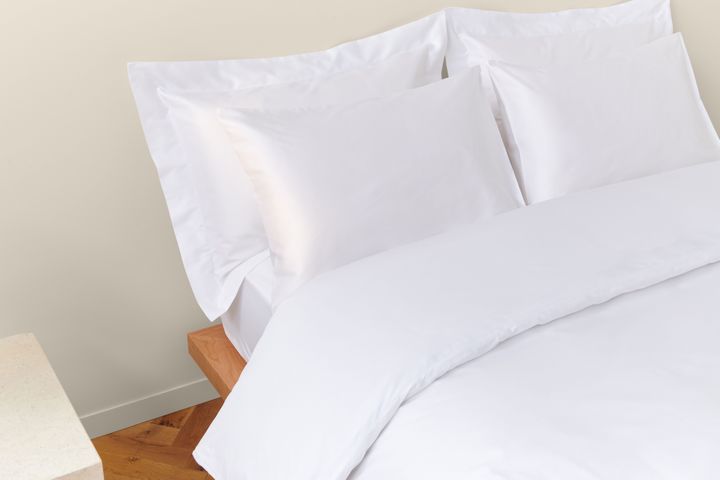
Rise & Fall’s Soft & Smooth Luxury Fitted Sheet is not only silky smooth against your skin, but it is deep enough to fit shallow, deep and extra deep mattresses, so there is no more tugging at one side only for the other to frustratingly ping off.

This ultra luxurious sheet has been woven from the world’s finest extra-long staple cotton fibres using the brand’s go-to four up, one down, sateen technique, which is the secret to creating bedding that is soft to the touch.

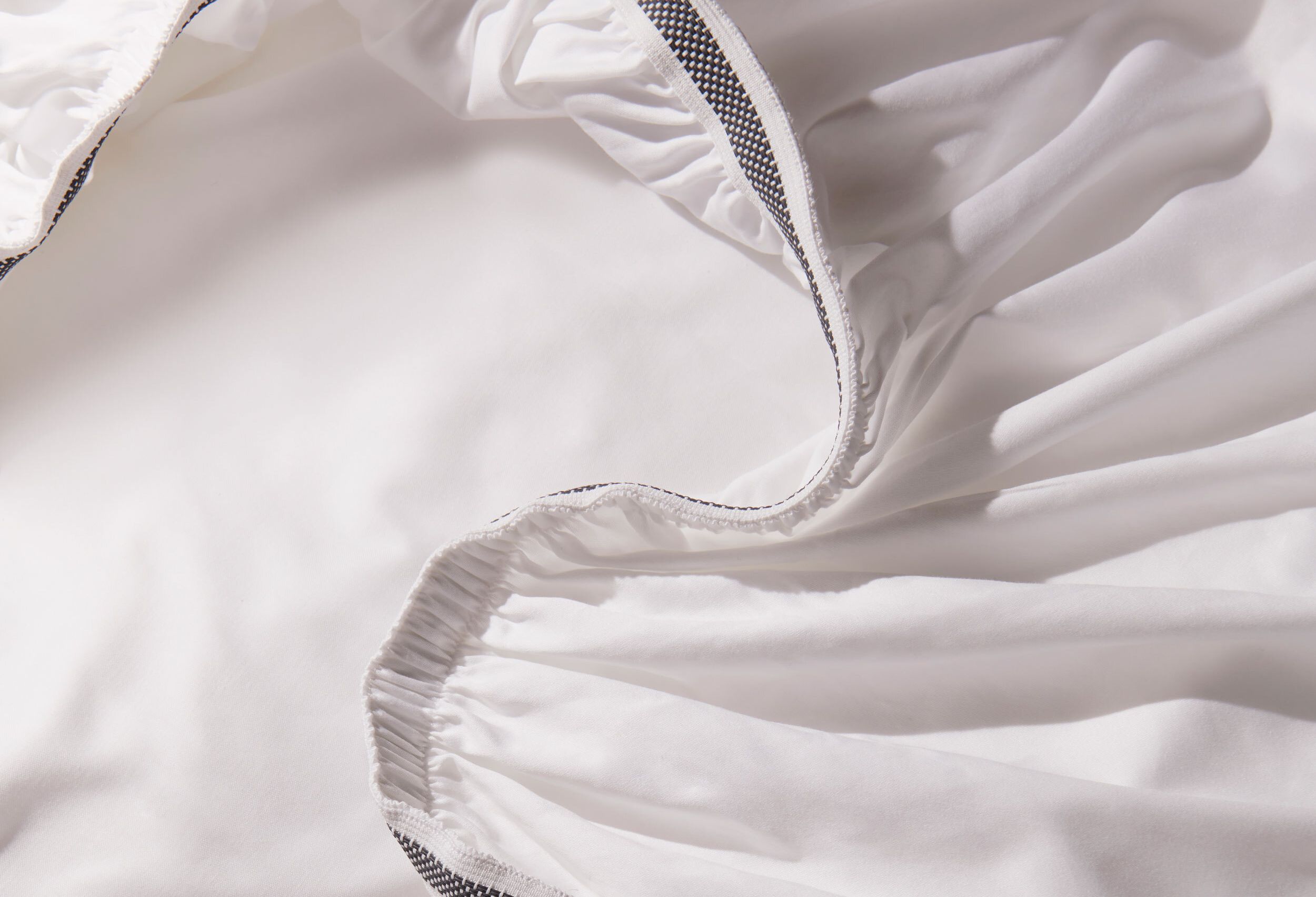
This bedding must-have also features an extra wide elastic hem to prevent the fabric from curling up at the corners, and provides the perfectly snug fit on your mattress.

Rise & Fall’s innovative design also features a label so you know which is the short side of the bed, to save you time when it comes to changing your bedding – a chore nobody enjoys.

The Soft & Smooth fitted sheet comes in three colours, white, warm grey and ivory chalk, which are also available in seven sizes, from single, double, to king size, and emperor, plus many more.

However, stock is selling out fast, especially as there is up to 30% off the grey and ivory chalk colourways.

Though it is unknown how long the sale, or stock, will last for, what we do know is it is the only sheet we want lining our mattresses forever more.

The Rise & Fall Soft & Smooth Luxury Fitted Shift usually retails for £35, but the discount sees the two select colourways slashed to £24.50, which is a bargain not to be missed.

The Soft & Smooth fitted sheet has been recognised as one of Rise & Fall’s bestsellers, as it sold out of the popular sizes in three days, and it has garnered glowing reviews from shoppers.

Customers are head over heels for the fitted sheet, as some have hailed it a “miracle” and “gamechanger”.

One customer gushed: “This sheet actually stays on! It’s a miracle.”

Another glowing review read: “Just perfect, the best fitted cotton sheets I’ve ever had. So soft, cool and luxurious. Great value for money.”

A separate shopper raved: “Beautiful high quality fitted sheet. Love the label to tell you what end to put the sheet, and most importantly the wide elastic that ensures it stays put without sagging.”

The good news doesn’t stop there as the retailer has teased the Fitted Sheet will be launching in new colours, although those details currently remain under wraps.

Interior fanatics, or the house proud shopper, will be pleased to learn there are plenty of other bedding options to shop from the Soft & Smooth range online, including a Luxury Flat Sheet, Luxury Pillow cases, as well as Oxford Luxury Pillow Cases and a Luxury Duvet Cover.

Rise & Fall also sell a range of bedding

Rise & Fall

Rise & Fall also sell a range of bedding

Rise & Fall has also created a bedding bundle, which includes the fitted sheet, duvet cover, as well as two standard size pillowcases, and has been reduced from £75 to £52.50.

The retailer also has an array of duvets, pillows, throws and home scents to shop to transform your bedroom into a hotel-like suite.

The label doesn’t only stock bedding, but an array of womenswear and menswear fashion garments, and a variety of accessories, including hats and scarves, as well as a variety of bags, such as make-up pouches, washbags, handbags, tote bags, and cardholders.

Shoppers are eligible for free delivery on orders over £75, plus free 30-day returns, just in case there is any reason you are not satisfied with your purchase, which we highly doubt.

Share Button

Lucy Letby: Doctor asked for nurse to be taken off shift – court

A doctor raised concerns about nurse Lucy Letby’s presence and the deaths of babies, her trial hears.

Share Button

These Diet Changes Could Slash Your Dementia Risk By A Quarter

Dementia is one of the most emotionally painful things a person can go through. Not just for the person going through it, but also for their family and loved ones.

But what if we told you that you can reduce the risk of dementia by a whole quarter simply by changing your diet a little?

According to a study published in the journal BMC Medicine, eating a Mediterranean diet of nuts, seafood, whole grains and vegetables could lower the risk of dementia by almost a quarter.

The findings of the data suggest that eating plant based foods can have a “protective effect” against dementia regardless of whether you are genetically at risk of getting it.

This research is based on data of over 60,000 individuals from the UK Biobank which is an online database of medical and lifestyle records from more than half a million Britons.

Study joint leadauthor Janice Ranson, who is a senior research fellow at the University of Exeter, said, “The findings from this large population-based study underscore the long-term brain health benefits of consuming a Mediterranean diet, which is rich in fruits, vegetables, whole grains, and healthy fats.”

“The protective effect of this diet against dementia was evident regardless of a person’s genetic risk, and so this is likely to be a beneficial lifestyle choice for people looking to make healthy dietary choices and reduce their risk of dementia,” she added.

The way this study worked was that the researchers scored individuals using two measures for adherence to the Mediterranean diet. They also took into account each individual’s genetic risk for dementia.

Over the course of almost ten years, about 882 people had dementia. But it was found that those who followed the Mediterranean diet lowered their risk of developing the condition by 23% compared to those who ate differently.

Dr. Oliver Shannon, who is the lead author of the study and a lecturer in human nutrition and ageing at Newcastle University, said that finding ways to reduce the risk of dementia is very important for public health.

“Dementia impacts the lives of millions of individuals throughout the world, and there are currently limited options for treating this condition,” he said.

According to the NHS, there is currently no specific cure for dementia. An early diagnosis can slow down the process in some cases, and also help the individual get the right treatment and support.

The researchers hope that this could form the basis of future health strategies if further research confirms their findings, and that it could pave the way for more research and new preventive treatments.

In the meantime, we can always do well to incorporate a Mediterranean diet into our lives. Not only is it very tasty, but also there is an added bonus of having the chance to reduce the risk of dementia.

Share Button

Worcester student nurse could quit due to cost of living

Claire Akaeze says rising costs of food and bills are making it challenging as she studies.

Share Button

Patient safety concerns over Birmingham hospital probe

The University Hospitals Birmingham trust has been described as “mafia-like” by staff.

Share Button

Attracting stem cells and facilitating bone regeneration by adhesive protein

One of the key factors of success in a dental implant is the condition of the periodontium around the implant. A higher long-term success rate of dental implants requires sufficient and healthy alveolar bone. In those cases where lack of alveolar bone renders setting an implant difficult, the bone should be regenerated sufficiently to receive the implant, whether before or during the implant surgery. Development of osteogenic barrier coating material for implants by a Korean research team is expected to improve the success rate of alveolar bone grafting.

Three research teams led by Professor Hyung Joon Cha of the Chemical Engineering Department at Pohang University of Science and Technology (POSTECH), Professor Yun Kee Jo of the School of Convergence at Kyungpook National University (KNU), and Professor Sang Ho Jun of the Department of Oral and Maxillofacial Surgery at Korea University Anam Hospital together developed an osteogenic barrier coating material for dental implants that prevents the invasion of soft tissue cells, attracts osteo-progenitor cells including bone stem cells, and sustainably releases the loaded bone morphogenetic protein-2 (BMP-2), significantly facilitating bone regeneration.

GBR is widely used in dental implant placement. It maintains the space for bones to grow and prevents cells other than osteogenic cells, such as fibroblasts, from populating the bone defect sites, allowing the bone to grow without interference by non-osteogenic cells. However, the GBR approach is still less likely to be successful and requires longer treatment time for those patients with insufficient bone quantity and quality. Depending on the configurations of defect sites, preventing the invasion of the non-osteogenic cells by using barrier membranes alone is not enough to significantly facilitate the bone regeneration.

The joint research team first loaded BMP-2 on top of the bioengineered material where RGD peptide, cell recognitive motif that is capable of attracting cells, is fused with mussel adhesive protein (MAP) that maintains strong adhesiveness in a wet environment. The team then coated the titanium mesh (Ti-mesh) membrane with it. According to the research findings, the coated barrier membrane exhibited cell occlusivity where fibroblasts could not permeate the membrane. The team also found that it induced a high level of bone differentiation in a short period of time inside the membrane by means of high growth of mesenchymal stem cells and release of BMP-2.

Application of the developed MAP-based barrier coating for guided bone regeneration to a titanium membrane in a rat calvarial defect model showed that the coating roughly doubled the speed of bone tissue regeneration.

Professor Hyung Joon Cha who led the research said, “This research was conducted based on long-term research cooperation of the joint research team in the area of bone regeneration for implant placement. Its findings revealed the possibility of improving the success rate of implant treatment regardless of the bone condition.” He added that the research findings could also be applied to regenerate a variety of hard tissues.

The research findings were published in the online edition of the Bioengineering & Translational Medicine, a distinguished journal in the field of bioengineering and regenerative medicine. The study was conducted as a part of the Dentistry Technology R&D Project under the Korea Health Technology R&D Project funded by the Ministry of Health & Welfare, the High Value-added Food Technology Development Program funded by the Ministry of Agriculture, Food & Rural Affairs, and the BK21 Four Program by the National Research Foundation of Korea.

Share Button

Thousands of native plants are unphotographed, and citizen scientists can help fill the gaps

Scientists have documented plant species for centuries to help us understand and protect the incredible diversity of flora in our world. But according to new research, many have never actually been photographed in their natural habitats — and that’s a problem.

Researchers from UNSW Sydney and the Australian Institute of Botanical Science, part of the Royal Botanic Gardens and Domain Trust, surveyed 33 major online databases of plant photographs to examine the photographic record of Australian plant species. The findings, published in New Phytologist, reveal out of 21,077 native Australian vascular plant species, almost 20 per cent lack a verifiable photograph.

Lead author of the study and UNSW Science PhD student Thomas Mesaglio says Australia is one of the richest areas in the world for native species.

“It was surprising to see how many plant species had just line drawings, illustrations, paintings, or even no media at all,” Mr Mesaglio says.

Dr Hervé Sauquet, co-author of the study and Senior Research Scientist at the Australian Institute of Botanical Science, is based at the National Herbarium of New South Wales.

“All species of plants ultimately rely on specimens in herbarium collections for their identification,” Dr Sauquet says. “Yet, even in this digital age where most herbarium specimens have been scanned and are accessible on the web, photos of live plants in the wild remain in critical need.”

Senior author of the study from UNSW Science Associate Professor Will Cornwell says a lack of detailed photos can have real consequences. Many plant species that are difficult to identify in the wild may go extinct if scientists cannot properly identify them with the help of photos.

“We had assumed every plant species would have simply been photographed by someone, somewhere, throughout history. But it turns out this isn’t the case,” says A/Prof. Cornwell.

“This is where citizen scientists can come in and help us fill this gap with their photos.”

Gaps in the photographic record

Photographs can help botanists and taxonomists who work with plant specimens by preserving characteristics like flower colour that get lost over time in their samples. They can also show additional features, such as the orientation of leaves or bark appearance, and add ecological context.

“Having a comprehensive photographic set helps us to be confident in our identifications,” Mr Mesaglio says. “Particularly when it is practically challenging to collect and preserve the entire plant, photos complement the physical voucher by showing the soil type, the habitat it’s growing in, and other species growing alongside it.”

But it turns out not all plant groups are photographed equally. Just as some animals receive less attention than others, there might also be a bias against less charismatic plants.

The study found the most well-photographed plant groups tend to be shrubs or trees with more noticeable or spectacular features, such as colourful flowers. Banksia, for example, is one of only two Australian plant genera with more than 40 species to have a complete photographic record. Meanwhile, the family with the most significant photo deficit was Poaceae — commonly known as grasses — with 343 unphotographed species.

“We noticed a charisma deficit, so the species that tend to be harder to see are the ones missing out,” Mr Mesaglio says. “They may have innocuous or pale-looking flowers or be smaller and harder to spot grasses, sedges and herbs.”

Geography also affected the photographic record. While most species across the south-eastern states of Australia have comprehensive records, Western Australia had the largest void, with 52 per cent of all unphotographed species found there.

“The primary ‘hotspots’ for unphotographed Australian plants are areas with high plant diversity, but the environments are rugged and often difficult to access, particularly by road,” Mr Mesaglio says. “But it means there’s an exciting opportunity to visit these locations because we might capture something that has never before been photographed.”

Activating citizen scientist snaps

It’s one thing to have comprehensive photographic records for professional scientists to use in identification guides. But when the plant world is under threat from multiple fronts, including habitat clearing and climate change, photos can help engage the public in plant science.

“People can engage with, sympathise with, and get much more excited about plants with photographs, which is vital when our natural environments are more at risk than ever,” Mr Mesaglio says.

“Because digital photography is so accessible now, anyone can also help make a meaningful contribution to science using the camera in their pocket.”

Using a platform like iNaturalist, keen citizen scientists can have their snaps identified by experts and share the data with aggregators like the Atlas of Living Australia and the Global Biodiversity Information Facility to be used in research and conservation.

“Since April last year, we’ve identified nearly 10 per cent of those previously unphotographed species thanks to members of the public uploading their photographs and experts who’ve kindly identified them,” Mr Mesaglio says. “There could be many more in personal collections or behind paywalls just waiting to be shared.”

The researchers recommend a standardised system for scientific plant photography be developed, starting with a requirement in the International Code of Nomenclature for Plants to include at least one field photograph where possible in new species descriptions. They also suggest all new species descriptions be published as Open Access in searchable databases with Creative Commons licensing to maximise their usage.

“We also suspect more photos exist, but they’re hidden away on social media or behind scientific paywalls that aren’t accessible, discoverable, or searchable,” Mr Mesaglio says.

“Of the species with photographs, many have a single photo. We not only want to capture those unrepresented species but also continue building the photographic record for all species.

“Doing so will help us identify, monitor and conserve our native species for generations to come.”

Share Button