Greater gender equality helps both women and men live longer

The first global study to investigate how gender equality may be associated with life expectancy has found that both women and men live longer as it improves.

However, variations between countries grouped into regions according to socioeconomic development and geographic proximity suggest that while mainly benefitting women’s lives and health at first, progress in gender equality helps men to live longer too, eventually narrowing the gender gap in life expectancy.

Lead author Dr Cat Pinho-Gomes, Honorary Research Fellow at The George Institute for Global Health, UK in partnership with Imperial College London, said the results — published in the lead up to International Women’s Day — suggest that addressing longstanding gender inequality and empowering women might help extend longevity for both women and men.

“Many of the factors that determine how long you will live — like working and living conditions, exposure to pollution, access to health care, education, income, and social support — are layered with gender differences around the world,” she said.

“As countries make greater progress towards gender equality and women are afforded the opportunity to participate more fully in in political, economic, and social life, the whole of society reaps the rewards.”

According to the latest report by the World Economic Forum, global events such as the rising cost of living, the COVID-19 pandemic, the climate emergency and large-scale conflict and displacement are stalling progress towards gender parity. This may, in turn, jeopardise socioeconomic development and improvement in living and working conditions, curbing the gains in life expectancy that have occurred over the past decades.

To investigate whether gender equality was associated with life expectancy (LE) for women and men and assess the gender gap in life expectancy across the globe, the researchers used a modified global gender gap index (mGGGI), based on the index developed by the World Economic Forum (WEF), and applied it across 156 countries between 2010 and 2021.

The WEF’s Global Gender Gap Index benchmarks the current state and evolution of gender parity across four key dimensions (Economic Participation and Opportunity, Educational Attainment, Health and Survival, and Political Empowerment). For this study, the health dimension was excluded because it includes healthy life expectancy, which was the subject of this study.

Among the three dimensions included in this study (i.e., political, economic, and educational), gender equality in education had the strongest association with longer LE for both women and men.

“This suggests investing in education is paramount, particularly in low- and middle-income countries, where many girls are still denied access to education and resources are limited,” added Dr Pinho-Gomes.

“Even high-income countries — where substantial progress has been made to address gender inequalities in recent years — investing in gender equality may still benefit life expectancy, particularly for men. This study confirmed what we had already seen for countries in the EU using a different index, reinforcing the validity of our findings.”

“The weaker association between gender equality in the political domain and the gender gap in LE raises concerns about how gender equality is being implemented by political systems worldwide,” she said.

“As we’ve seen from the recent resignations of high-profile female politicians, women still experience significant challenges in this field, including discrimination, balancing private, family and political life, gaining support from political parties, and securing campaign funding.”

Overall, in 2021, each ten percent increase in the mGGGI was associated with a 4.3-month increase in women’s LE and a 3.5-month increase in men’s LE, leading to an 8-month wider gender gap, but there was considerable variation between geographical regions.

“Our study has important implications for policy makers across the globe, particularly as the world gradually recovers from the myriad shocks caused by the COVID-19 pandemic, which had a gendered impact across multiple domains of life,” added Dr Pinho-Gomes.

“This International Women’s Day, let’s not forget that the evidence demonstrates that enhancing women’s representation across multiple sectors contributes to wealthier and, hence, healthier societies for all.”


Share Button

Microscopic chalk discs in oceans play a key role in earth’s carbon cycle by propagating viruses

A Rutgers-led team of scientists studying virus-host interactions of a globally abundant, armor-plated marine algae, Emiliania huxleyi, has found that the circular, chalk plates the algae produce can act as catalysts for viral infection, which has vast consequences for trillions of microscopic oceanic creatures and the global carbon cycle.

“In a drop of seawater, there will be about 1,000 to 10,000 E. huxleyi cells, and about 10 million viruses,” said Kay Bidle, a professor in the Department of Marine and Coastal Sciences at Rutgers School of Environmental and Biological Sciences (SEBS) and a senior author on the study. “They’re all in a sort of arms race against each other and we are studying it to see how it plays out and impacts Earth’s carbon cycle.”

Reporting in Science Advances, the researchers said they discovered, through observations both in the ocean and in the laboratory, that the chalk (calcium carbonate) plates, called coccoliths, are a previously unrealized central player in viral infections that can collapse phytoplankton blooms the size of some countries within weeks.

“Coccoliths can act as catalysts for death, delivering viruses directly to algae cells for successful infection,” said Christopher Johns, a doctoral student in the Department of Marine and Coastal Sciences at SEBS and lead author on the study.

E. huxleyi is a one-celled species of phytoplankton, which, like trees, performs photosynthesis. In the case of phytoplankton, they convert carbon dioxide dissolved in ocean water into organic compounds, and at the same time produce oxygen.

“The phytoplankton in the oceans contribute about half of Earth’s oxygen, with the other half coming from land plants,” Bidle said. “Every other breath you take is from phytoplankton.”

E. huxleyi is well-known for its ability to biomineralize calcium carbonate, similar to corals, by producing coccoliths, which are arranged on the cell surface to form an armored layer. These coccoliths are produced and then shed into the surrounding seawater in a continuous cycle.

For years, the function of these coccoliths has been poorly understood, according to Bidle. Researchers believed the chalk armor existed in part to protect phytoplankton from getting infected by viruses. And the discarded, free coccoliths were commonly thought of as passively drifting planktonic particles with little biological or ecological roles.

But in experiments conducted in laboratories on the Cook campus at Rutgers University-New Brunswick, Johns and other team members observed that the expelled coccoliths can find their way back to the E. huxleyi cells, reattach, and at the same time ferry viral particles, facilitating infection. This ability to propagate and catalyze infection is one unexpected role of the coccoliths with important potential ecosystem outcomes.

The discovery also has an important connection to climate change and the Earth’s carbon cycle, Bidle said. Infected E. huxleyi cells produce a sticky glue that can help aggregate particles into what is called “marine snow.” When marine snow sinks to the deep ocean, it helps to sequester and bury carbon, removing it from the atmosphere for centuries to millennia. Coccoliths are important in this process because they are heavier than seawater and help make particles sink faster and more rapidly into the deep ocean.

By assisting in the death of the phytoplankton, as well as in marine snow formation and sinking, the coccolith biominerals can ultimately have a positive impact on the removal of carbon dioxide from the upper ocean and atmosphere, Bidle said.

“This means the coccoliths facilitate the process of sequestering or sinking carbon into the deep ocean for thousands of years, making them important players in balancing the Earth’s carbon cycle,” Bidle said.

Other Rutgers researchers on the study include Associate Professor Heidi Fuchs; Karen Grace Bondoc-Naumovitz, a former postdoctoral fellow now at the University of Exeter in England; and Alexandra Matthews, a former undergraduate student, all within the Department of Marine and Coastal Sciences.

Researchers from the U.S. Department of Energy’s Oak Ridge National Laboratory, the University of California-Santa Barbara, and the University of North Carolina-Wilmington also were involved in the study.

Share Button

Age of first exposure to tackle football and years played associated with less white matter in brain

Chronic traumatic encephalopathy (CTE) is not the only problem football players should be aware of. Long careers in American football are linked to less white matter in the brain and associated with problems with impulsive behavior and thinking according to a new study from the Boston University CTE Center. This finding is independent of whether football players had chronic traumatic encephalopathy (CTE).

CTE is a progressive neurodegenerative disease frequently found in contact sports athletes. However, many former contact sports athletes suffer from thinking problems and impulsive behavior in the absence of CTE, or with very mild CTE. This new study suggests that a separate type of brain damage, which can appear earlier than CTE, may underlie some of these symptoms.

“Damage to the white matter may help explain why football players appear more likely to develop cognitive and behavioral problems later in life, even in the absence of CTE,” said corresponding author Thor Stein, MD, PhD, a neuropathologist at VA Boston Healthcare System and assistant professor of pathology and laboratory medicine at Boston University Chobanian & Avedisian School of Medicine.

The researchers studied the brains of 205 deceased American football players donated to the Veterans Affairs-Boston University-Concussion Legacy Foundation (VA-BU-CLF) Brain Bank and measured levels of myelin, a component of white matter that covers, protects and speeds up the connections in the brain. They then interviewed family members on measures of cognition and impulsivity and then compared how career length and age of beginning tackle football related to levels of myelin, and how myelin levels related to cognition and impulsivity. In addition to more years of football played, the researchers found that starting tackle football at a younger age was also related to more white matter loss, independent of career length.

“These results suggest that existing tests that measure white matter injury during life, including imaging and blood tests, may help to clarify potential causes of changes in behavior and cognition in former contact sport athletes. We can also use these tests to better understand how repeated hits to the head from football and other sports lead to long term injury to the white matter,” said co-author Michael L. Alosco, PhD, associate professor of neurology.

The researchers hope these findings help reinforce the idea that more needs to be done to protect the brains of athletes, especially children, from repeated hits to the head.

These finding appear online in the journal Brain Communications.

This work was supported by grant funding from: NIA (AG057902, AG06234, RF1AG054156), NINDS (U54NS115266, K23NS102399, RF1NS122854), National Institute of Aging Boston University AD Center (P30AG072978); the United States Department of Veterans Affairs, Veterans Health Administration, BLRD Merit Award (I01BX005161); the Nick and Lynn Buoniconti Foundation, and BU-CTSI Grant Number 1UL1TR001430. The views, opinions and/or findings contained in this article are those of the authors and should not be construed as an official Veterans Affairs or Department of Defense position, policy or decision, unless so designated by other official documentation. Funders did not have a role in the design and conduct of the study; collection, management, analysis, and interpretation of the data; preparation, review, or approval of the manuscript; or decision to submit the manuscript for publication.

Share Button

Spain Holiday Warning After Infection Outbreak Reported In Ibiza

UK tourists looking to travel to Spain in the coming months need to be aware of an outbreak of dengue fever in Ibiza.

The Spanish government has warned that cases of the virus, known as both dengue or dengue fever, transmitted by mosquitos, may spread at a higher rate during the busier summer months.

It comes after six German tourists were infected in Ibiza between May and November 2022. Health officials are warning there is a “moderate” risk people could catch it this summer.

The Spanish government thinks that an outbreak may have been spread by holidaymaker from Mexico who only developed symptoms upon arrival.

Most of the time, the infection is not too serious and can go away on its own.

Still, Spain’s ministry of health have made it clear that they want all holidaymakers to be aware of the potential infection.

The officials said in a statement: ”One of the potential vectors of dengue is the Aedes albopictus mosquito, present throughout the area, the Spanish Mediterranean and the Balearic Islands and also in some areas of the interior and north of the country.

“After learning about the cases, the authorities of the Balearic Islands have planned actions such as pertinent surveillance and vector control and also communication and information to the public, to be carried out before and during the start of the vector activity season.”

What are the symptoms of dengue fever?

The NHS website explains that symptoms start to show around four to 10 days after someone is bitten by an infected mosquito.

The symptoms are similar to flu:

  • A high temperature
  • Severe headache
  • Pain behind the eyes
  • Muscle and joint pain
  • Feeling or being sick
  • Swollen glands
  • A blotchy rash of flat or slightly raised spots

Dengue fever can also be deadly to the vulnerable, with more severe symptoms emerging a few days after the person first falls ill.

This can include repeated vomiting, bleeding gums or nose, severe stomach pain, fast breathing, extreme tiredness, being unable to relax, blood in vomit or your poo.

Key facts about catching dengue

The type of mosquito who transmits the virus tends to bite during the daytime.

You cannot get it from another person, and it is not found in the UK.

But in Spain and other parts of southern Europe like Croatia, France, Italy, Portugal and Madeira, you can get dengue between spring and November, when the weather is warmer.

It is very common in parts of Africa, Asia, Central and South America, Caribbean, Pacific islands and parts of North America.

Share Button

Boss Of Wagner Mercenary Group Launches Fresh Attack On Moscow

The head of the mercenary Wagner Group has suggested that Russia is setting them up for failure in Ukraine.

Yevgeny Prigozhin said ammunition promised to his troops – some of whom were recruited directly from prison to join the war – has not arrived.

He said that was affecting the Wagner Group’s ability to help Russia hold on to the key city of Bakhmut.

His comments come just weeks after he accused Russian military chiefs of “treason”.

Prigozhin said that orders were signed on February 22 for the group, which is fighting alongside Russian forces, to be sent fresh ammunition the following day. However, most of it never arrived.

In a video uploaded at the weekend, Prigozhin said the lack of ammunition could be “ordinary bureaucracy or a betrayal”.

According to the BBC, he said: “If we step back, we will go down in history as the people who took the main step to lose the war.

“And this is precisely the problem with the [ammunition shortage]. This is not my opinion, but that of ordinary fighters.

“What if they [the Russian authorities] want to set us up, saying that we are scoundrels – and that’s why they are not giving us ammunition, not giving us weapons, and not letting us replenish our personnel, including [recruiting] prisoners?”

He went on to insist that without his group, Russia’s war in Ukraine would be a failure.

“If Wagner PMC [private military company] were to now retreat from Bakhmut, then the entire front – which PMC Wagner today is cementing – would crumble,” he said.

Who are the Wagner Group?

The Wagner private military company (also known as Wagner PMC) really took off in 2014.

It was the same year that Russia had seized the Ukrainian peninsula of Crimea and separatists in the Donbas region of Ukraine started to push back against Kyiv.

Headed up and financed by Prigozhin, the covert group of mercenaries began showing up to support the Russian troops in unmarked green uniforms.

At the time, Wagner was so unknown they were nicknamed “little green men”.

Since then, it has grown exponentially, taking on thousands of soldiers who can come straight from elite backgrounds or prison.

Private military contractors are forbidden in Russia, so the whole group works outside of the country’s law.

That means this is a covert group of significant military force and political influence which – according to Vox – makes money by serving Moscow, and exploiting natural commodities in target countries.

Even Prigozhin denied any link to the group until September 2022 when he admitted he founded it.

Prigozhin is also an associate of Vladimir Putin, and was previously nicknamed “Putin’s chef” because of his expanse of catering companies which catered to the Kremlin.

Share Button

NHS consultants could strike says British Medical Association

The union’s consultative ballot shows support for walkouts in England in pay and pensions dispute.

Share Button

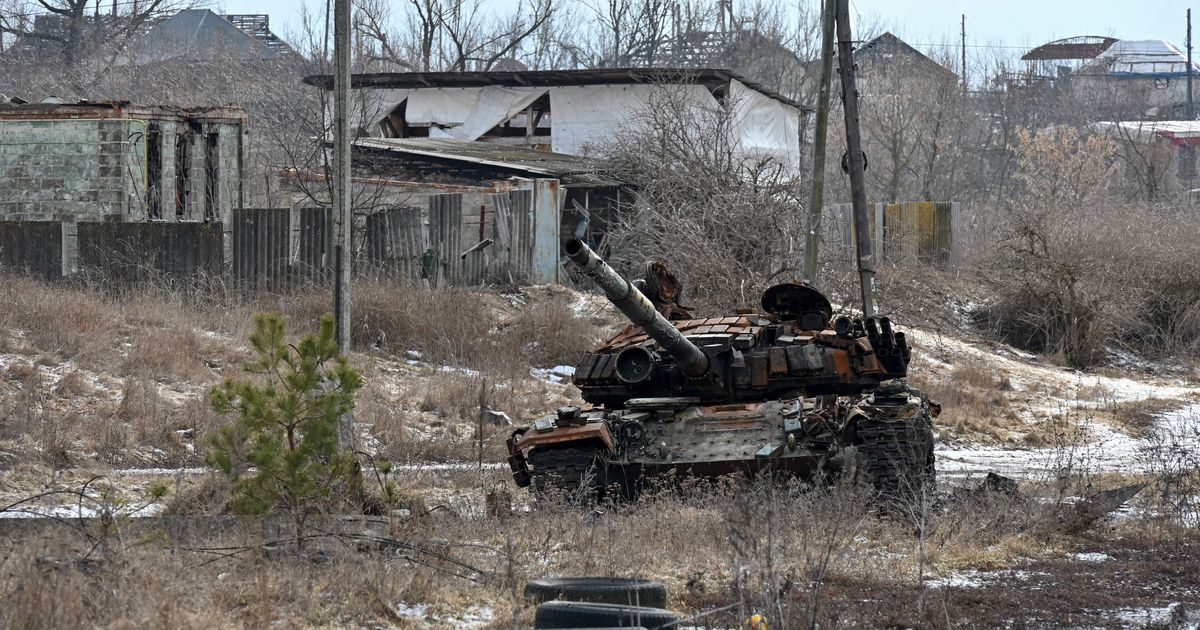
Russia Forced To Use 60-Year-Old Tanks In Ukraine Due To Heavy Losses, Says UK

Russia is being forced to use 60-year-old tanks because of the heavy losses it has sustained in the Ukraine war.

According to the UK’s Ministry of Defence (MoD), the “vintage” T-62 vehicles have been brought out of storage and re-purposed so they can be sent into battle.

Armoured personnel carriers dating back to 1954 have also been deployed by Russia, the MoD said in its latest intelligence update.

It emerged yesterday that Russian reservists are being sent to war armed with shovels.

“The Russian military has continued to respond to heavy armoured vehicle losses by deploying 60-year-old T-62 main battle tanks (MBT),” the MoD said.

“There is a realistic possibility that even units of the 1st Guards Tank Army, supposedly Russia’s premier tank force, will be re-equipped with T-62s to make up for previous losses.”

The update went on: “In recent days, Russian BTR-50 armoured personnel carriers, first fielded in 1954, have also been identified deployed in Ukraine for the first time.

“Since summer 2022, approximately 800 T-62s have been taken from storage and some have received upgraded sighting systems which will highly likely improve their effectiveness at night.

“However, both these vintage vehicle types will present many vulnerabilities on the modern battlefield, including the absence of modern explosive reactive armour.”

In their update yesterday, the MoD said Russian mobilised reservists were “ordered to assault a Ukrainian concrete strong point armed with only ‘firearms and shovels’”.

One reservist described being “neither physically nor psychologically” prepared for the brutality of arm-to-arm combat.

The MoD said the shovels were likely MPL-50 “entrenching tools being employed for hand-to-hand combat”.

“Little changed since it was designed in 1869, its continued use as a weapon highlights the brutal and low-tech fighting which has come to characterise much of the war,” the intelligence update said.

Share Button

Mum’s warning after uterine cancer mistaken for periods

Kelly Pendry’s symptoms were initially dismissed as normal post-pregnancy periods.

Share Button

Mothers denied gas and air in labour say their births were traumatic

Women say their labours were traumatic at hospitals that have banned gas and air amid safety concerns.

Share Button

The patients who gave up waiting on the NHS

Long waits for surgery mean more people are using savings or loans to pay for private treatment.

Share Button