Before global warming, was the Earth cooling down or heating up?

Accurate climate models play a critical role in climate science and policy, helping to inform policy- and decision-makers throughout the world as they consider ways to slow the deadly effects of a warming planet and to adapt to changes already in progress.

To test their accuracy, models are programmed to simulate past climate to see if they agree with the geologic evidence. The model simulations can conflict with the evidence. How can we know which is correct?

A review article published today in Nature addresses this conflict between models and evidence, known as the Holocene global temperature conundrum. Lead author Darrell Kaufman, a Regents’ professor in the School of Earth and Sustainability, and University of Arizona postdoctoral researcher Ellie Broadman, a co-author who worked on this study while earning her Ph.D. at NAU, analyzed a broad swath of available data from the last 12,000 years to break down the conundrum. The study builds on work Kaufman did that was included in the latest major climate report by the Intergovernmental Panel on Climate Change (IPCC) and looks at whether the global average temperature 6,500 years ago was warmer, as indicated by proxy evidence from natural archives of past climate information, or colder, as simulated by models, in comparison to the late 19th century, when the Industrial Revolution led to a significant increase in human-caused warming.

This comprehensive assessment concludes that the global average temperature about 6,500 years ago was likely warmer and was followed by a multi-millennial cooling trend that ended in the 1800s. But, they cautioned, uncertainty still exists despite recent studies that claimed to have resolved the conundrum.

“Quantifying the average temperature of the earth during the past, when some places were warming while others were cooling, is challenging, and more research is needed to firmly resolve the conundrum,” Kaufman said. “But tracing changes in global average temperature is important because it’s the same metric used to gauge the march of human-caused warming and to identify internationally negotiated targets to limit it. In particular, our review revealed how surprisingly little we know about slow-moving climate variability, including forces now set into motion by humans that will play out as sea level rises and permafrost thaws over coming millennia.”

What we know

We know more about the climate of the Holocene, which began after the last major ice age ended 12,000 years ago, than any other multi-millennial period. There are published studies from a variety of natural archives that store information about historical changes that occurred in the atmosphere, oceans, cryosphere and on land; studies that look at the forces that drove past climate changes, such as Earth’s orbit, solar irradiance, volcanic eruptions and greenhouse gases; and climate model simulations that translate those forces into changing global temperatures. All these types of studies were included in this review.

The challenge up to now has been that our two significant lines of evidence point in opposite directions. Paleo-environmental “proxy” data, which includes evidence from oceans, lakes, and other natural archives, point to a peak global average temperature about 6,500 years ago and then a global cooling trend until humans started burning fossil fuels. Climate models generally show global average temperatures increasing in the last 6,500 years.

If the proxy data are correct, that points to deficiencies in the models and specifically suggests that climate feedbacks that can amplify global warming are underrepresented. If the climate models are correct, then the tools for reconstructing paleotemperatures need to be sharpened.

We also know that, whether the numbers trend up or down, the change in global average temperature in the past 6,500 years has been gradual—probably less than 1 degree Celsius (1.8 degrees Fahrenheit). This is less than the warming already measured in the last 100 years, most of which humans have caused. However, because global temperature change of any magnitude is significant, especially in response to changing greenhouse gases, knowing whether temperatures were higher or lower 6,500 years ago is important to our knowledge of the climate system and improving forecasts of future climate.

What we don’t know

This study highlighted uncertainties in the climate models. If the authors’ preferred interpretation—that recent global warming was preceded by 6,500 years of global cooling—is correct, then scientists’ understanding of natural climate forcings and feedbacks, and how they are represented in models, needs improvement. If they’re incorrect, then scientists need to improve their understanding of the temperature signal in proxy records and further develop analytical tools to capture these trends on a global scale.

Attempting to resolve the Holocene global temperature conundrum has been a priority for climate scientists in the last decade; Broadman remembers reading the initial paper on this topic when she started her Ph.D. in 2016. All the studies since have added to the understanding of this issue, which gets scientists in the field closer to a comprehensive understanding. Recent studies on this topic have tried adjusting proxy data to account for their presumed weaknesses, inserting plausible forcings into climate models and blending proxy data with climate-model output, all arriving at different conclusions about the cause of the conundrum. This review takes a step back to revisit the issue with a comprehensive global-scale assessment, showing that we don’t yet know the solution to this conundrum.

Developing widely applicable methods of quantifying past temperature is a high priority for climate scientists already. For example, Kaufman’s lab is testing the use of chemical reactions involving amino acids preserved in lake sediment as a new method for studying past temperature changes. Combined with new radiocarbon dating technology from the Arizona Climate and Ecosystem lab at NAU, this technique could help determine whether global warming reversed a long-term cooling trend.

Why it matters

Broadman, whose work includes a focus on science communication, created the figures that accompany the research. This is a critical way of communicating hard-to-understand results to audiences—and in climate science, the audiences are diverse and include educators, policymakers, nonprofits and scientists throughout the world.

“One interesting takeaway is that our findings demonstrate the impact that regional changes can have on global average temperature. Environmental changes in some regions of the Earth, like declining Arctic sea ice or changing vegetation cover in what are now vast deserts, can cause feedbacks that influence the planet as a whole,” Broadman said. “With current global warming, we already see some regions changing very quickly. Our work highlights that some of those regional changes and feedbacks are really important to understand and capture in climate models.”

Additionally, Kaufman said, accurately reconstructing the details of past temperature change offers insights into climate’s response to various causes of both natural and anthropogenic climate change. The responses serve as benchmarks to test how well climate models simulate the Earth’s climate system.

“Climate models are the only source of detailed quantitative climate predictions, so their fidelity is critical for planning the most effective strategies to mitigate and adapt to climate change,” he said. “Our review suggests that climate models are underestimating important climate feedbacks that can amplify global warming.”


Share Button

Microbes play a key role in unleashing ‘forever chemicals’ from recycled-waste fertilizer

“Forever chemicals” are everywhere — water, soil, crops, animals, the blood of 97% of Americans — researchers from Drexel University’s College of Engineering are trying to figure out how they got there. Their recent findings suggest that the microbes that help break down biodegradable materials and other waste are likely complicit in the release of the notorious per- and polyfluoroalkyl substances (PFAS) into the environment.

In a paper published in the Royal Society of Chemistry journal Environmental Science Processes & Impacts, the group showed how PFAS — chemicals that had been widely used in water, heat and stain-resistant products and have been linked to serious health problems — can leach out of fertilizer made from recycled waste with the help of microbial decomposition. The finding could help to explain how PFAS accumulates in the soil, crops and groundwater in farmland across the country.

“Because it is not currently possible to eliminate PFAS from the environment, it’s important to understand everything we can about how it is able to persist and accumulate so broadly in the natural world,” said co-author Asa Lewis, PhD, who led the research as a doctoral student at Drexel along with environmental engineers from Temple University. “Our work shows how microbial weathering fits into the PFAS dissemination pathway from biosolids.”

According to the Environmental Protection Agency, about half of all sewage waste in the U.S. — about 4.5 million metric tons — is treated and converted to a sludge, called biosolid waste. About half of that goes through further treatment to remove biological and chemical contaminants and is converted into a fertilizer product. For the last 50 years, this fertilizer has been used throughout the country on farmland, residential gardens and landscaping.

But research in the last year raised concerns about this widespread use when it revealed that PFAS can persist in biosolid fertilizer, despite the treatment process.

“We know that microbes exist in biosolid sludge even after the stabilization treatment process and given the role they play in the decomposition of organic compounds, such as fats, protein, and polysaccharide residuals in the biosolids, we wanted to examine how microbial weathering of these organic compounds can impact PFAS leaching potential from biosolids over time because it PFAS compounds are thought to stick to these compounds,” said Christopher Sales, PhD, an associate professor in the College of Engineering and a co-author of the study.

To do it, the team collected biosolid samples that had undergone one of three types of treatment — aerobic digestion, anaerobic digestion or composting — at wastewater recycling and reuse facilities. The content of each sample was tested to determine the initial level of organic matter, proteins and lipids and PFAS concentration in these different types of biosolids. These samples were then placed in an environmentally controlled chamber for three months to look for indicators of microbial activity, especially degradation of organics, lipids and proteins, and sought to see how this microbial activity affected how much PFAS would partition from the biosolids into water.

The researchers found that the samples with the highest level of microbial activity also demonstrated the highest level of PFAS partitioning — an indicator that this biosolid sludge would be more susceptible to PFAS leaching.

The results demonstrated this increase in PFAS partitioning over the three months, especially in the first 10 days of the experiment, is likely due to the microbes breaking down proteins and lipids in the biosolid, which allows the PFAS to spread, or partition, as water passes through.

“This work provides evidence that microbial weathering processes that lead to degradation of organic matter and biopolymers — as indicated by lipase activity, protease activity, and oxygen consumption rate, as well as changes in lipid, protein, and organic content — can impact PFAS partitioning and increase leaching potential in biosolids,” the authors wrote.

The team noted that the results likely implicate microbes in the process of PFAS leaching from biosolids after they are land-applied, but further research is needed to confirm how they are transported through the soils to surface waters, like rivers and lakes, groundwaters and how they bioaccumulate in crops and animals that might graze where biosolids are applied. In addition, the rate of biosolid weathering in nature might be much different than their lab study considering the role that rainfall, solar irradiation, and physical disturbances impact soil weathering would play outdoors.

The team contends that in order for agencies like the EPA to provide accurate guidance on PFAS risk and acceptable levels of contamination, understanding the path of “forever chemicals” is critical information.

“This research provides evidence that PFAS can leach from biosolids across different stabilization methods in wastewater treatment,” Lewis said. “And it provides more support that regulation or advanced treatment in wastewater treatment plants is needed to reduce impacts to the environment.”

Share Button

How the fastest fish hunts its prey

To say studying sailfish is challenging is an understatement. These fish, often described as the “fastest fish in the world,” exhibit some remarkable traits as they make their way through the oceans in search of their next meal.

And little had been known about how they did what they did when hunting by themselves — until now.

Thanks to researchers at NSU’s Guy Harvey Research Institute (GHRI) who designed a novel electronic tag package incorporating high-tech sensors and a video camera, we now have for the first time, a detailed view of exactly how these fish behave and hunt once they are on their own and out of view of the surface. This research was carried out offshore of one of the premier fishing locations in the world, Tropic Star Lodge, in southwest Panama.

“Most of the day they dive back and forth between the surface and the thermocline layer, where the water gets cold,” said Ryan Logan, the lead author of the study and a doctoral candidate and research associate at NSU’s GHRI. “The thermocline can concentrate prey that don’t want to enter the cold water, so it looks like the sailfish might be using this to its advantage.”

The new research study just published in Scientific Reports originally set out to determine how long it took the sailfish to recover after being released by a recreational fisher, the answer to which you can find in another study conducted by the authors. But after the fish had recovered, the video cameras continued to roll, picking up some never-before-seen footage of hunting behavior.

Sailfish are known for their distinctive large dorsal fins and elongated front-end bill, which gives them a built-in sword-like weapon for hunting. These open ocean wanderers can travel both by themselves, or in groups. Sailfish have been observed to hunt in groups on schooling fishes, using their bill in a slash, stun, and eat the baitfish sequence of actions.

This type of hunting by sailfish has been observed several times by wildlife photographers because it often occurs at the surface of the ocean, where it is easily accessible to human eyes.

However, when sailfish are not engaged in these cooperative group hunting events, they are thought to live a mostly solitary lifestyle. Sailfish have some other pretty unique features that separates them from many other groups of fish. For example, they can keep their eyes and brain warmer than the surrounding water, which gives them an advantage over their prey when hunting in colder or dimly lit water. But because of this, it’s assumed that they burn a lot of calories throughout the day, so one could assume that they must also need to eat in between those group hunting events, although this had never been documented.

While this new video footage provides a unique perspective on the daily lives of sailfish, researcher caution that most of isn’t that exciting — not exactly the kind of footage that makes it to Instagram or TikTok.

“Most of what you see in the videos is just a lot of blue water,” said Logan, describing the open ocean habitat of these fish. “But when I saw the sailfish start to swim really fast toward the surface, I knew something was up.”

The video shows a 100-pound sailfish ascending fast to the surface from nearly 200 feet deep, and vigorously chasing a small tuna once it reaches the surface. The sailfish makes several attempts to catch the little tuna, twisting and turning, speeding up and slowing down, often breaking the surface of the water during each attack. In the end, it looks like the sailfish got what it was after, returning to a normal, calm swimming behavior.

Logan said that these findings change what we know about the daily lives of sailfish.

“Because you can’t keep a sailfish in captivity, we know surprisingly little about their basic biology,” he said. “For instance, how much food do they need on a daily basis to survive?”

These are questions that this research is helping to answer. The team of researchers used the video footage, along with other swimming information collected by the high-resolution tag, to estimate how much energy the sailfish burned throughout the day, and how much energy it gained back by consuming the tuna, an energy-rich prey item.

“Based on our estimations, this sailfish needs roughly half of a tuna like this per day to meet energetic demands,” said Logan.

While this research took place in Panama, sport fishing is a huge business around the world, especially in the state NSU’s GHRI calls home — Florida. Recent numbers show that fishing is an $11.5 billion dollar industry in Florida, supporting approximately 100,000 jobs.

“This research improves our understanding of the hidden lives of these majestic, ecologically and economically very important fishes,” said Mahmood Shivji, Ph.D., a co-author of the study and Director of NSU’s GHRI. “Such knowledge is essential to help us better protect the health of these fish and their prey to have a sustainable sportfish industry for many years to come.”

Video: https://youtu.be/ouVnskumc2Y

Share Button

Nearly 250,000 potential donors yet to give blood

Staff at the UK’s largest blood processing centre near Bristol are urging people to book in now.

Share Button

Should I Be Worried If My Cold Lasts Longer Than 2 Weeks?

The common cold can be pretty uncomfortable. If you have one, you are likely experiencing a combo of miserable symptoms like a sore throat, stuffy nose and body aches that can feel like they go on forever.

Although many of us managed to avoid some rough bugs in the last few years due to restrictions like masking and social distancing, that is no longer the case. More and more people are getting sick with non-COVID illnesses that sometimes stretch on for weeks.

“Colds usually last three to ten days, but in some instances, you may be experiencing symptoms for three to four weeks,” said Dr. R. Peter Manes, an otolaryngologist at Yale Medicine.

While it is totally normal for a cold to hang on longer than two weeks, there are some things you should be aware of to make sure the prolonged symptoms aren’t a sign of something more serious. Here’s what to know if your sickness just won’t go away:

First, test to make sure your cold is not a sign of another illness

“COVID-19, influenza and respiratory syncytial virus (RSV) all spread in similar ways and have symptoms that overlap with those of the common cold,” said Dr. John Swartzberg, a clinical professor emeritus at the University of California, Berkeley’s School of Public Health.

By the time people reach their teen years, they have a sense of what a typical cold feels like, Manes said. However, the symptoms can be conflated with other illnesses like COVID. It’s always best to test to see what you’ve got.

While most people are familiar with at-home COVID tests, there’s also an option to request at-home kits where you send your sample off to a lab to test for the flu and RSV along with COVID-19. You can also visit your doctor, who can run the tests for you.

Pay attention to your symptoms

If you’ve ruled out other infections but your symptoms are progressively getting worse, this could be unrelated to your cold, experts said.

For instance, symptoms like prolonged shortness of breath, wheezing or chest pain are not associated with a cold. “These could be a sign of an asthma attack, pneumonia, or in the case of chest pain, even a heart attack,” Manes said. If you have any of these signs, it is important to not dismiss them and to get medical attention immediately.

Even though the common cold is caused by viruses, another possibility is that you could be having a bacterial infection ― like pneumonia or sinusitis ― following your viral infection as the body can be transiently weakened by a cold, said Dr. Marwan Azar, an infectious diseases physician at Yale Medicine.

Individuals who are immunocompromised are likely to be predisposed to a secondary bacterial infection after going through a cold. See a physician if you have any associated symptoms of a bacterial infection, such as a cough with thick phlegm, significant facial pain or swelling, Azar recommended.

Pay attention to your symptoms and how they progress when you're sick.

MixMedia via Getty Images

Pay attention to your symptoms and how they progress when you’re sick.

A long cold could be because of lingering inflammation

“If you have ongoing cold symptoms, such as a recurring cough or an irritated throat for longer than two weeks, it’s generally not because of a persistent infection but due to consequences of lingering inflammation from a cleared infection, specifically postnasal drip,” Azar said.

Postnasal drip occurs when your body produces mucus in the nasal and sinus cavities during a head cold and it drips down the back of your throat, leading to a tickle that prompts coughing. It takes time for your immune system to flush out all the mucus, so you may experience lasting congestion for a couple of days or even a week after the virus is no longer in your system.

This can get worse at night as the mucus can drip down more easily in a horizontal position, Azar said.

You also may not be giving yourself enough time to recover

Your symptoms may not go away if you’re not giving them a chance to resolve. Adhering to your normal, busy schedule ― one filled with long work hours, housework, exercise or social activities ― can prolong your symptoms. Make sure you’re adequately resting, hydrating, getting enough sleep and more.

If that’s a struggle for you, find one thing you can cross off your to-do list, like nixing your weekly workouts or forgoing a few chores for an extra hour of sleep. You can also try over-the-counter medications to help abate your symptoms so you can give yourself the best chance to recover.

See your doctor ASAP if you’re still not improving

If you’re treating your cold properly and your symptoms haven’t improved after three weeks, see a doctor.

Symptoms like wheezing with shortness of breath, lingering high fever, severe sore throat, and a cough that brings up considerable mucus, can be a sign of something serious if experienced for an extended period of time, so it’s important to get medical attention, Swartzberg said.

Your physician will be able to order tests for other illnesses (if you haven’t tested already) and conduct a physical exam to understand the severity of your symptoms. If left untreated, your symptoms can cause further complications and infection, so you’ll want to have it checked out.

Share Button

Scammers Are Using The Energy Price Crisis To Sell Dodgy Heaters

If you’ve had your eye on a brand new budget heater, you might want to check whether its low cost is actually too good to be true.

Why? According to one safety charity, the cost of living crisis is being used to sell dangerous heaters by online retailers.

Electrical Safety First found all three heaters it bought via links within online ads – branded Keilini, HeatPal and InstaHeat – posed a serious risk of electric shock, with mains plugs not meeting UK safety standards.

The heaters were tested by the charity after seeing ads that claimed they would help Brits save on their energy bills.

Two of the heaters had very poorly-made plugs there was a risk of the pins breaking off when plugged into a socket, putting the user at risk of an electric shock.

The Keilini heater had no UK plug whatsoever, instead being fitted with an EU mains plug and a highly dangerous, substandard UK travel adaptor with no fuse, which creates a fire risk.

Not just that – all three heaters were missing safety standard CE marks.

“Claims made about safety found on adverts for these heaters are highly misleading. We urge shoppers to stick to reputable high street stores or go directly to their online websites to ensure the product you’re purchasing is safe,” Lesley Rudd, Electrical Safety First chief executive.

“Consumers are handing over their hard-earned cash and in exchange receiving a product that puts their safety at risk, Rudd added.

The charity has reported its findings to the Government’s Office for Product Safety and Standards and the Advertising Standards Authority (ASA).

Last month, the ASA banned four advertisements for electric mini-heaters for misleadingly suggesting they could provide cheaper heating than gas and save householders money.

The ads, for the InstaHeat, Keilini, Heater Pro and Heater Pro X, all claimed they were a cheaper alternative to gas central heating and could rapidly warm a room.

Share Button

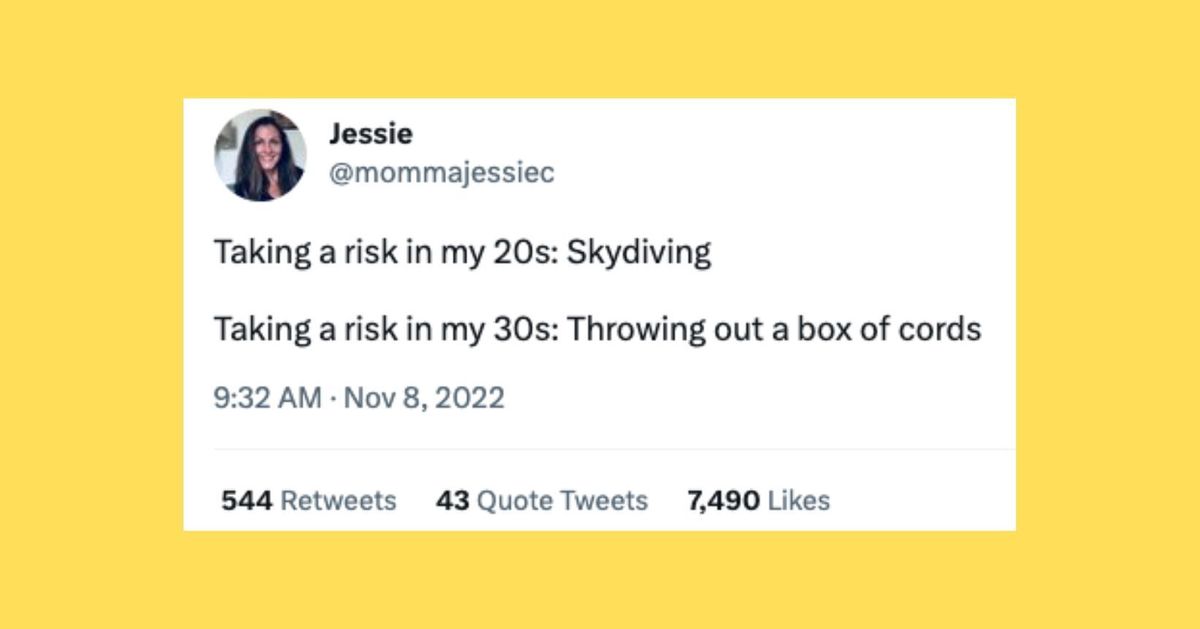
Funny Tweets That Sum Up Your 20s vs. Your 30s

Every decade of life comes with its own highs and lows. Still, sometimes the contrast between those experiences couldn’t feel more jarring.

This is especially true for the formative years of your 20s and 30s. Over time, many of the funny folks on Twitter have shared musings about the difference between those two decades ― from the changes in how they choose to spend weekends to their overall approach to life, love and everything in between.

Below, we’ve rounded up 35 relatable tweets about life in your 20s vs. your 30s.

Share Button

Nicola Sturgeon Resigns As Scottish First Minister Saying It’s Been A ‘Privilege’

Nicola Sturgeon has resigned as Scotland’s first minister after more than eight years in the job.

The Scottish National Party leader said she will step down after her successor is elected.

Sturgeon made the announcement at a press conference in Edinburgh on Wednesday morning saying she had been “wrestling” with the question for some weeks.

“Part of serving well would be to know, almost instinctively, when the time is right to make way for someone else,” Sturgeon said.

“In my head and in my heart I know that time is now. That it is right for me, for my party and for the country.”

Sturgeon has been first minister since November 2014, when she took over from Alex Salmond following the independence referendum.

She has been the country’s longest-serving first minister.

The news came as a surprise after Sturgeon insisted just three weeks ago she was “nowhere near” ready to quit as Scotland’s first minister.

Sturgeon also told the BBC last month she would “like to think” she would be the leader to take Scotland out of the UK.

However, BBC chief political correspondent Nick Eardley reported a source close to her saying: “She’s had enough.”

Sturgeon has recently been embroiled in a row over her government’s attempt to make it easier for people to legally change gender.

The plans have now been blocked by Westminster but triggered a leadership crisis.

Internal dissent, almost unheard of in the SNP, broke out over Sturgeon’s handling of the affair.

Voters also started to make clear their dissatisfaction after a YouGov poll showed Sturgeon’s approval ratings had plummeted to negative territory.

However, during her speech Sturgeon said her decision to resign was “not a reaction to short-term pressures”.

“This decision comes from a deeper and longer-term assessment,” she said.

Pressed on the row surrounding transgender prisoners, Sturgeon insisted: “No, that issue wasn’t the final straw”.

Sturgeon also confirmed she was “not leaving politics”, adding that she will continue to fight for Scottish independence.

Alison Thewliss, the SNP MP for Glasgow Central and the party’s home affairs spokesperson, said she was “gutted”.

She tweeted: “Absolutely gutted about this. Nicola has been an incredible leader.”

SNP MP Stewart McDonald described Sturgeon as “the finest public servant of the devolution age”.

“Nicola Sturgeon is the finest public servant of the devolution age,” the MP for Glasgow South tweeted.

“Her public service, personal resilience and commitment to Scotland is unmatched, and she has served our party unlike anyone else. She will be an enormous loss as first minister and SNP leader. Thank you!”

Share Button

Bristol family face ‘race against time’ to save blind boy’s hearing

A family fear a 10-year-old may slip into a world of “silent darkness” if his hearing loss worsens.

Share Button

The UK’s most expensive drug saved one sister, but it is too late for the other

A toddler becomes the first to be treated by the NHS with a new gene therapy costing £2.875m.

Share Button