Early recommendations could be issued if evidence highlights patient safety risks, the chair says.


Early recommendations could be issued if evidence highlights patient safety risks, the chair says.
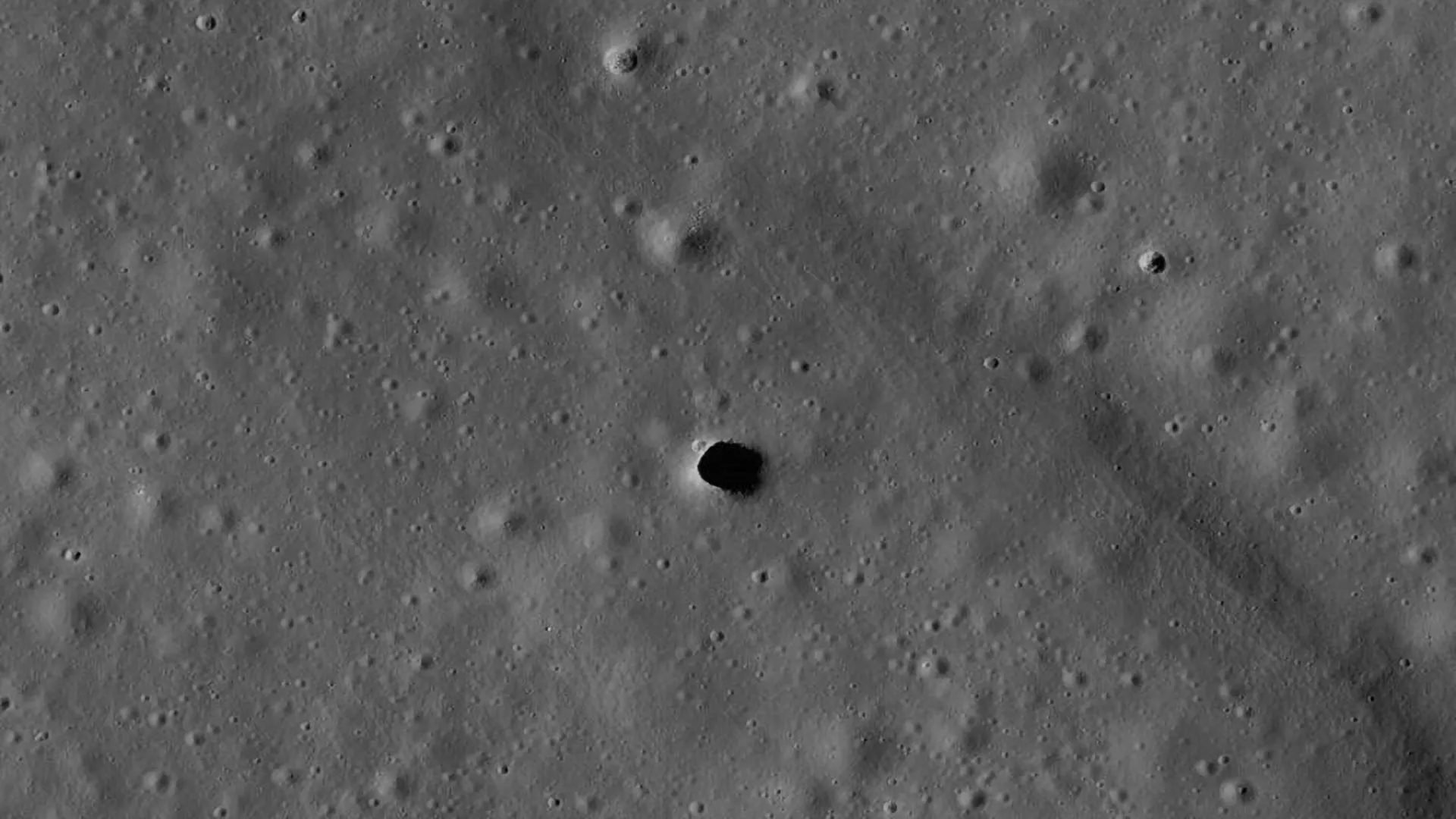
NASA has chosen a proposal led by the Planetary Science Institute to determine whether a potentially large cave stretches underground from the opening of a pit on the Moon. If such a cavern exists, it could eventually offer astronauts natural protection from radiation and the dramatic temperature changes experienced on the lunar surface.
The project will receive funding through NASA’s Payloads and Research Investigations on the Surface of the Moon (PRISM) program. PRISM sends scientific instruments to the lunar surface aboard spacecraft supplied by providers participating in the Commercial Lunar Payloads Services (CLPS) initiative.
GIMLI Will Probe Beneath the Moon
The selected project, known as the Geophysical Instruments for Marius Lunar pit Investigation, or GIMLI, is led by PSI Associate Director and Senior Scientist Than Putzig. PSI is working with Honeybee Robotics, which will construct much of the mission’s equipment and instrumentation. The instruments will travel aboard a lander and rover supplied through the CLPS initiative. PSI’s work will also be conducted in partnership with the Norwegian Space Agency.
“GIMLI represents the type of ambitious planetary science that PSI was built to pursue,” said PSI Director and CEO Amanda Hendrix. “Than and his team are taking a scientific question we’ve been studying from orbit and have developed a way to investigate it directly on the Moon. We’re excited to have PSI leading this effort and to be partnering with NASA and Honeybee Robotics to learn more about the Moon and its volcanic past.”
Scientists studying the Moon from orbit have found compelling evidence that caves and lava tubes could be hidden beneath its surface. GIMLI will concentrate on the Marius Hill Pit (MHP), a large opening located within one of the Moon’s most volcanically varied regions. Like other pits identified on the Moon, MHP could provide an entrance into underground structures created by ancient volcanic activity.
Rather than relying only on observations from above, GIMLI will give researchers an opportunity to examine MHP directly from the lunar surface.
Radar and Seismic Sensors Will Search for a Lava Tube
“It’s long been a desire of mine to reintroduce intentional active-source seismic methods to planetary science, as it has essentially not been done since the Apollo astronauts conducted the first seismic surveys on the Moon,” shared Putzig. “Combining that method with ground-penetrating radar and gravity measurements makes it all the more exciting, as these methods together will allow us to get a much better understanding of subsurface properties — including the anticipated detection of a lava tube extending away from the Marius Hills pit.”
To investigate what lies underground, GIMLI will combine ground penetrating radar, seismic sensors, and a gravimeter. Cameras will also photograph the lunar surface and the exposed walls of the pit. Used together, these instruments will search for a possible underground void extending from MHP and, if one is detected, help scientists estimate its dimensions.
Honeybee Robotics, a Blue Origin company, will be PSI’s commercial partner on the project. The company will provide project management services and construct instrumentation for the active source seismic system, the gravimeter, and the cameras. Honeybee Robotics will also help integrate the scientific instruments onto the lander and rover. Along with PSI, it will lead instrument operations after the spacecraft reaches the lunar surface.
Even No Cave Would Reveal New Lunar Geology
The mission could still produce important discoveries even if researchers find no cave or lava tube. Its measurements could help address another major question: How did the Marius Hill Pit form?
By examining the material surrounding and beneath MHP, scientists could gain new clues about the pit’s origin as well as the geology and volcanic history of the wider region.
The team also plans to study more than the possible underground structure. The surrounding area has experienced a long history of volcanic activity, and the walls of MHP expose layers of regolith and lava flows that normally remain buried. Examining these layers could show how lava once moved across and beneath the lunar landscape and whether individual eruptions were separated by long intervals.
Lunar pits are valuable not only because their walls expose otherwise hidden geology. Any underground spaces connected to them could also preserve evidence of the volcanic processes that helped shape the Moon.
A Window Into the Moon’s Volcanic Past
“Confirming a substantial lava tube would give us an insight into how volcanism operated on the Moon,” explained Gareth Morgan, PSI Senior Scientist and Deputy Principal Investigator on the GIMLI program. “Lava tubes are a common feature of basaltic volcanism on Earth, so identifying them on the Moon means we could use knowledge of such terrestrial caves to better understand lunar history.”
In addition to PSI and Honeybee Robotics, the GIMLI team includes Co-Investigators from Boise State University, Johns Hopkins University, the Lunar and Planetary Institute, and the University of Oslo. The Norwegian Space Agency will provide the ground-penetrating radar.
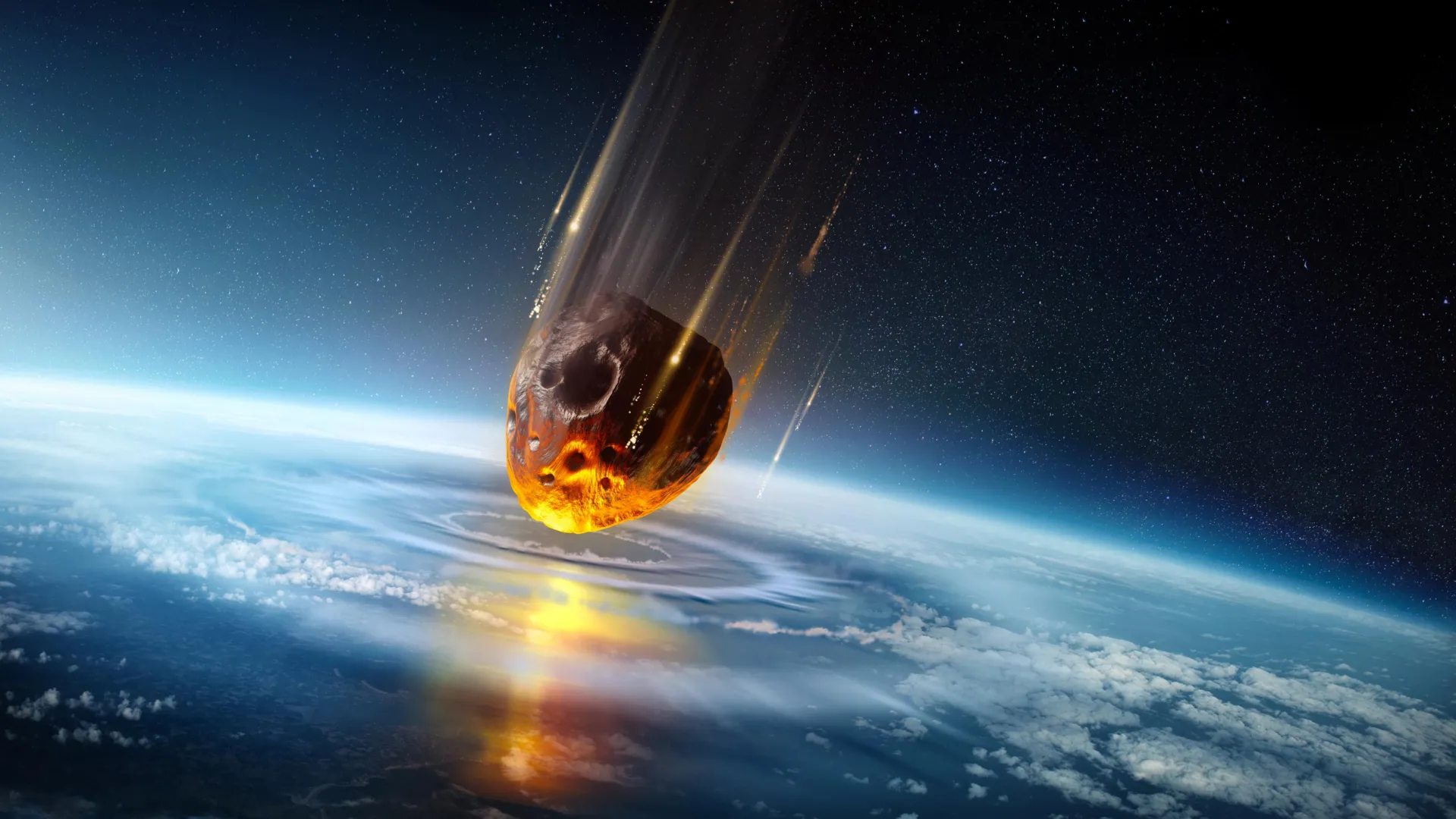
Researchers at The University of Texas at Austin have revised a key piece of Oklahoma’s geologic history, with possible implications for how scientists interpret major events in the history of life on Earth.
Beneath the town of Ames, Oklahoma, lies a meteor impact structure that stretches for miles underground. Layers of sediment now cover the crater, but it remains significant both scientifically and economically. The Ames impact structure is also a major producer of oil and gas.
A Crater Long Linked to an Ancient Meteor Event
For years, the Ames crater was thought to belong to a cluster of major meteor impacts across North America dating to roughly 467.5 million years ago. That period is known as the Ordovician Meteor Event.
Because so many impact structures appear to date from around the same time, some researchers have proposed that Earth may once have been surrounded by a Saturn-like ring of asteroid debris during the Middle Ordovician.
New work from UT researchers now shows that the Ames impact does not belong to that episode.
By dating zircon crystals taken from granite altered by the impact, the team determined that the meteorite struck about 370 million years ago during the Late Devonian. That makes the crater nearly 100 million years younger than previously believed.
“No matter what technique we used, it was coming back to this younger signal,” said lead author Elizabeth Catlos, associate professor at UT’s Department of Earth and Planetary Sciences.
The research was published in July in Meteoritics & Planetary Science.
Why the Earlier Date Was Misleading
Before this study, the Ames impact had only been dated using biological evidence. Researchers had found teeth from an ancient eel-like animal called a conodont preserved in the rock. Those fossils came from organisms that lived during the older Ordovician period.
But Catlos said the teeth were probably already millions of years old by the time the asteroid struck. The impact likely churned up older material and mixed the fossils into the rocks while still preserving them.
The zircon dating provides a very different timeline. It shows that the Ames crater could not have formed during the Ordovician Meteor Event.
Instead, its new age places it close to the Frasnian-Famennian mass extinction event, which occurred about 372 million years ago and wiped out a large proportion of marine life on Earth.
Tiny Zircon Crystals Preserve the Impact
Danny Stockli, dean of the Jackson School of Geosciences and a co-author of the study, said zircon U-Pb dating offers one of the most accurate ways to determine when events occurred deep in Earth’s past.
Zircon crystals can also preserve microscopic structures created by the intense pressures generated during an impact.
“These small crystals allow us to go back in time and learn about the major changes to Earth’s ancient landscapes,” Stockli said. “It would be great to do this for more of the meteor impact sites across the continent so we could get a more accurate timeline for these major events.”
To confirm that the zircons had actually been affected by the meteor strike, the team worked with NASA to image the crystals using cathodoluminescence and electron backscatter diffraction.
When zircon experiences the extreme conditions of an impact, it recrystallizes in a distinctive way. Those changes can be detected with these imaging techniques, allowing researchers to verify that the crystals recorded the collision itself.
A New Piece of a Mass Extinction Puzzle
According to Catlos, establishing more precise dates for mass extinctions and other major events is essential for understanding how Earth has changed over time.
One key question is whether extinction events were triggered primarily by forces from space, such as meteor impacts, or by processes within Earth, including episodes of massive volcanic activity.
“With this research, we’re basically taking a major pawn out of the Ordovician Meteor Event and dumping it into the Frasnian-Famennian event, and saying, ‘This is where this impact belongs,'” she said.
The project was initiated by former Jackson School of Geosciences graduate student Andrew Parisi, who graduated in 2018 and has since passed away. Parisi traveled to Oklahoma to obtain the Ames rock core from the Oklahoma Geological Survey, extracted zircon crystals from the material, and helped determine their ages.
Co-author Michael Brookfield, an affiliated researcher at the school, also passed away before the paper was published.
Research Professor Sean Gulick and Professor Emeritus Mark Cloos at the Jackson School also contributed to the research.
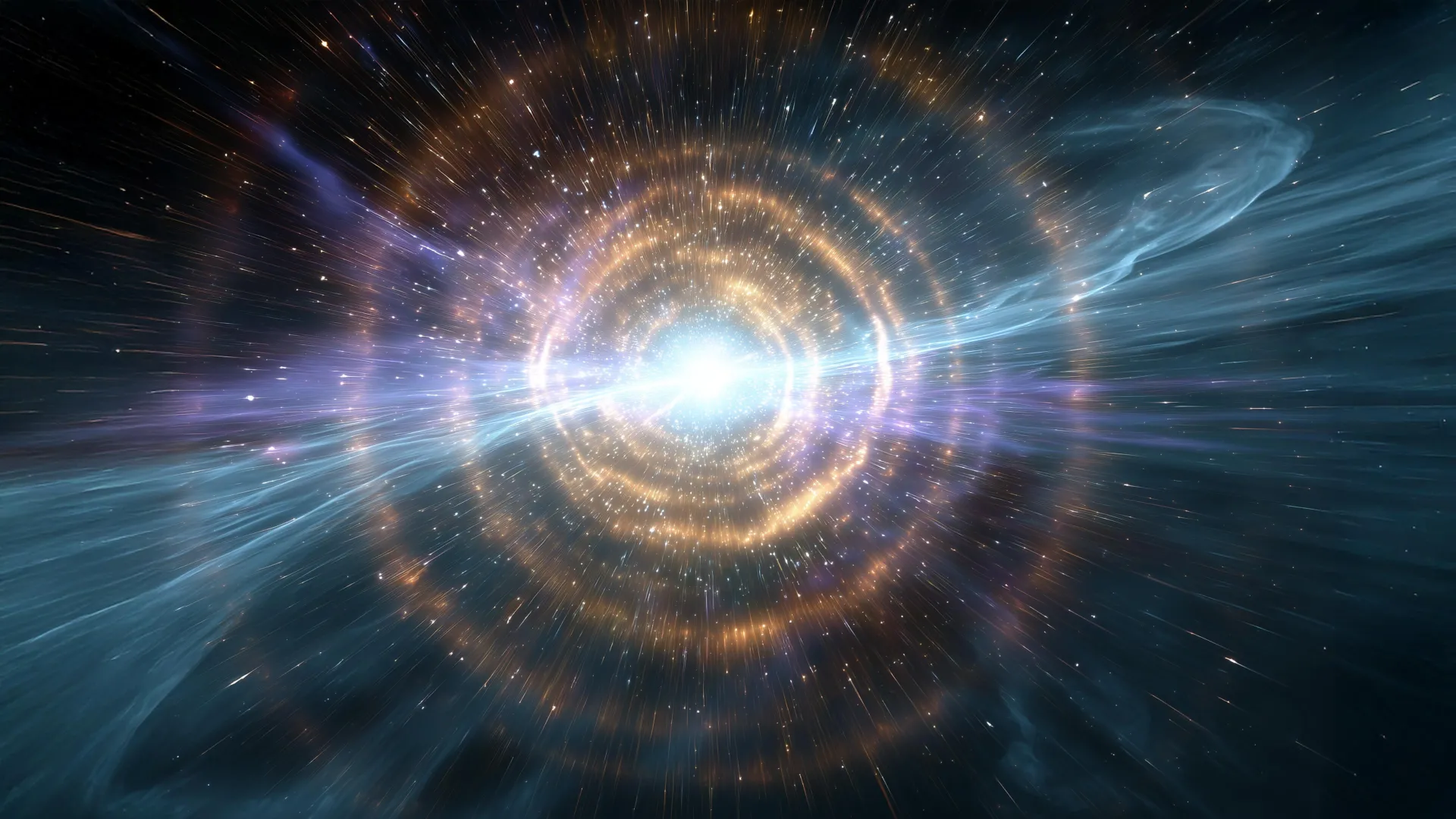
It’s well established that the universe is expanding, but there’s serious disagreement among scientists over how fast it’s happening.
Two of our best ways of measuring the cosmic expansion rate, the Hubble constant, give answers that are stubbornly at odds. This presents a major problem in modern cosmology known as the Hubble tension.
However, we wondered if an idea originally proposed to solve another cosmic mystery — the origin of cosmic magnetic fields — could help us unlock the mystery of the Hubble tension.
Our recently published research explores whether extremely weak magnetic fields left over from the earliest moments after the Big Bang might help us unpack the Hubble tension, while offering a glimpse into physics at energies far beyond anything achievable on Earth.
Astronomers use the Hubble constant as a measure of how fast the universe is expanding. It is named after the American astronomer Edwin Hubble who first discovered that the universe is expanding.
There are two conceptually different approaches to measuring the Hubble constant. One is indirect, based on predictions of our cosmological model tuned to match the patterns in the cosmic microwave background, the faint afterglow of the Big Bang.
Telescopes such as the Planck Space Telescope have measured tiny fluctuations in this ancient light, predicting a Hubble constant of about 67 kilometers per second per megaparsec (km/s/Mpc). A parsec is a unit of distance used in astronomy equal to about 3.26 light years, or 30.9 trillion kilometers. A megaparsec is one million parsecs.
The second method is more direct, similar to the one used by Hubble in the 1920s when he first demonstrated that the universe is expanding.
It measures how fast distant galaxies are moving away from our home galaxy, the Milky Way, by observing the brightness of supernovae explosions in these far away galaxies.
Type Ia supernovae are known to be “standard candles” because we know that their luminosity is the same wherever they are. That means we can judge the distance to them from how dim they appear to us.
To determine their intrinsic brightness, astronomers use other standard candles, such as Cepheid stars, in the galaxies nearby. These observations, which use the Hubble and James Webb space telescopes, give a higher value of around 73 km/s/Mpc.
This difference between the two measurements is called the Hubble tension. The difference between 67 and 73 may seem small, but it is statistically highly significant. If both methods are correct, then our standard model of cosmology must be missing something important.
Magnetic fields are everywhere in the universe. Planets and stars generate their own fields, but gaps in our understanding emerge when we attempt to explain the much larger scale magnetic fields threading galaxies and clusters, and possibly even cosmic voids.
One long-studied possibility is that magnetism first arose in the very early universe, long before the first stars or galaxies formed. These so-called primordial magnetic fields have been studied for decades, and searching for their imprints in the cosmic microwave background and other data offers a way to probe the early universe and the extreme energies that would have generated these fields.
In 2011, two of us (Karsten and Tom) pointed out that primordial magnetic fields would influence recombination — when electrons and protons first combined to form neutral hydrogen — and the universe turned from opaque to transparent. The first light able to travel freely from that moment on is what we now observe as the cosmic microwave background.
If present, primordial magnetic fields would speed up recombination by pushing and pulling on charged particles, making matter slightly clumpy. Where particles are more crowded, they are more likely to meet and form hydrogen.
Shifting the moment when the universe becomes transparent changes the size of the observed patterns in the cosmic microwave background. This effectively alters the cosmic ruler used to measure distances and, in turn, the value of the Hubble constant inferred from the model, helping to ease the Hubble tension. Two of us (Karsten and Levon) demonstrated this effect in 2020 using a simplified model of recombination.
In our new paper, we used the first full three-dimensional simulations of the primordial plasma with magnetic fields embedded in it, tracking how hydrogen forms.
We used the hydrogen formation history found through these simulations to compute predictions for how cosmic microwave background should appear if there were primordial magnetic fields, and tested these predictions against observations of the background.
The cosmic microwave background is extraordinarily sensitive to changes in recombination. If primordial magnetic fields altered it in a way that disagreed with observations, the idea could be ruled out. Instead, the data showed that our proposal remains viable.
Across multiple combinations of datasets, we find a consistent, mild preference for primordial magnetic fields, ranging from about 1.5 to three standard deviations. This is not yet a discovery, but a meaningful hint that they exist.
Equally important, the field strengths favored by the data, about five to 10 pico-Gauss today, are close to what would be needed for galaxy and cluster magnetic fields to originate from primordial seeds alone. A pico-Gauss is a unit used to measure the strength of magnetic fields.
Aside from helping ease the Hubble tension, if primordial magnetic fields are confirmed, they would open a new window into how the universe was when it was only split seconds old, perhaps offering a glimpse into important events such as the Big Bang itself.
Our results show that the proposal survives the most detailed test available today and provides clear targets for future observations. Over the next several years, we will learn whether tiny magnetic fields from the dawn of time helped shape the universe we see today and whether they hold the key to resolving the Hubble tension.

Researchers at the University of Liverpool have completed what they describe as the longest and most comprehensive randomized controlled trial to date examining non-nutritive sweetened (NNS) soft drinks.
Non-nutritive sweeteners are low-calorie or calorie-free sugar substitutes commonly used in foods and beverages. The 104-week study found that NNS beverages, including diet soft drinks, performed similarly to water when it came to long-term weight management.
Professor Jo Harrold, Dean of Psychology at the University of Liverpool, led the peer-reviewed research with Professor Jason Halford, Professor, Biological Psychology & Health Behaviours at the University of Leeds (formerly of the University of Liverpool). The study was funded by the American Beverage Association. According to the researchers, the study team operated independently from the funder and retained full control over the analysis and reporting of the results.
Diet Drinks Compared With Water Over Two Years
The findings, published in the British Journal of Nutrition, provide long-term clinical evidence on beverages containing aspartame, acesulfame potassium (acesulfame-K), and sucralose. Researchers found that these drinks were comparable to water in supporting both weight loss and long-term weight maintenance.
The SWITCH trial included 493 adults with overweight or obesity who took part in a structured behavioral weight management program. Participants were randomly assigned to drink either water or commercially available diet beverages each day. The amounts of sweeteners consumed remained well within established European Food Safety Authority (EFSA) safety thresholds.
Overall, the results did not support concerns that NNS beverages interfere with appetite regulation or cause long-term metabolic harm.
Weight Loss and Metabolic Health
Key findings included:
Findings Add to the Sweetener Debate
The results are relevant to recent World Health Organization (WHO) guidance advising against the use of non-sugar sweeteners for weight control because of uncertainty in observational research. The SWITCH trial adds long-term randomized controlled evidence that may help inform future global recommendations.
Professor Joanne Harrold, said: “The University of Liverpool is one of the UK’s leading research-intensive higher education institutions, with a key focus on public health. These latest findings show that concerns about sweeteners disrupting appetite or causing weight gain are not supported when tested in a rigorous, long-term randomized trial. We hope this evidence informs future WHO guidance and public health policy.
The effectS of non-nutritive sWeetened beverages on appetITe during aCtive weigHt loss (SWITCH) trial was developed to address two related questions: how reducing dietary sugar might affect weight management, and whether replacing sugar with non-nutritive sweeteners changes appetite regulation. The newly published results build on earlier findings reported in the International Journal of Obesity in 2023.
Professor Jason Halford, University of Leeds and University of Liverpool, concluded: “This study provides the long-term clinical evidence that has been missing from international discussions. For people trying to manage their weight, non-nutritive sweetened beverages offer an effective alternative to sugar-sweetened drinks — and perform equivalently to water over two years.”
The paper, ‘Effect of non-nutritive sweetened beverages versus water on body weight: long-term results of a randomised controlled trial’, was published in British Journal of Nutrition.
After a fallow year in 2026, Glastonbury is returning next year, with tickets for the event finally set to go on sale on Sunday 4 October.
Famously, the Glasto ticket run is no mean feat. Tickets usually sell out within an hour, as thousands of music fans from around the world battle to secure their spots at Worthy Farm.
Any gig-goer will tell you that the gig-buying trenches are real, and far from getting you hyped for the event, trying to nab a ticket for a highly sought-after show is nothing short of a nightmare.
Advertisement
However, the experts at open-source web broswer Firefox have shared their five expert tips for preparing your browser for the ticket wars ahead of time, giving you the best possible chance of getting Glastonbury tickets.

via Associated Press
Is there anything more frustrating than feeling like you are just about to sort tickets and then your browser needs an update?!
Advertisement
An out-of-date browser is the last thing you want to be dealing with when tickets go live. Check for any browser or system updates well in advance, and restart your device beforehand if needed. This reduces the chance of an unexpected update, restart or compatibility issue interrupting you at the worst possible moment.
When you’re under pressure, even typing out an address can feel like it takes forever. Check the information saved in your browser’s autofill ahead of time and make sure names, addresses and other relevant details are accurate. It can save you from frantic typing – or spotting an old address just as you’re trying to complete your purchase.
It’s tempting to open tab after tab in the hope that one will magically get through first, but more isn’t necessarily better. Multiple tabs can quickly become confusing, particularly if the ticketing system uses a queue or session-based process.
Advertisement
Additionally, some websites detect this behaviour and ban you all together which is, needless to say, a nightmare.
Follow the ticket seller’s official guidance and avoid turning your browser into a sea of identical tabs you can’t keep track of.
Before the sale starts, close as many unused tabs as possible. Keeping lots of tabs open can use up system memory, particularly if you’re also running other applications in the background – the last thing you want when you’re trying to secure a ticket.
Advertisement
Don’t wait until tickets are live to discover you’ve forgotten an important password. Check ahead of time that you can access any accounts you’ll need and have the necessary details to hand.
Worthy Farm will be reopening its doors on Wednesday 23 June 2027, with the main events lasting until Sunday 27.
General admission tickets will go on sale at 9am on Sunday 4 October.

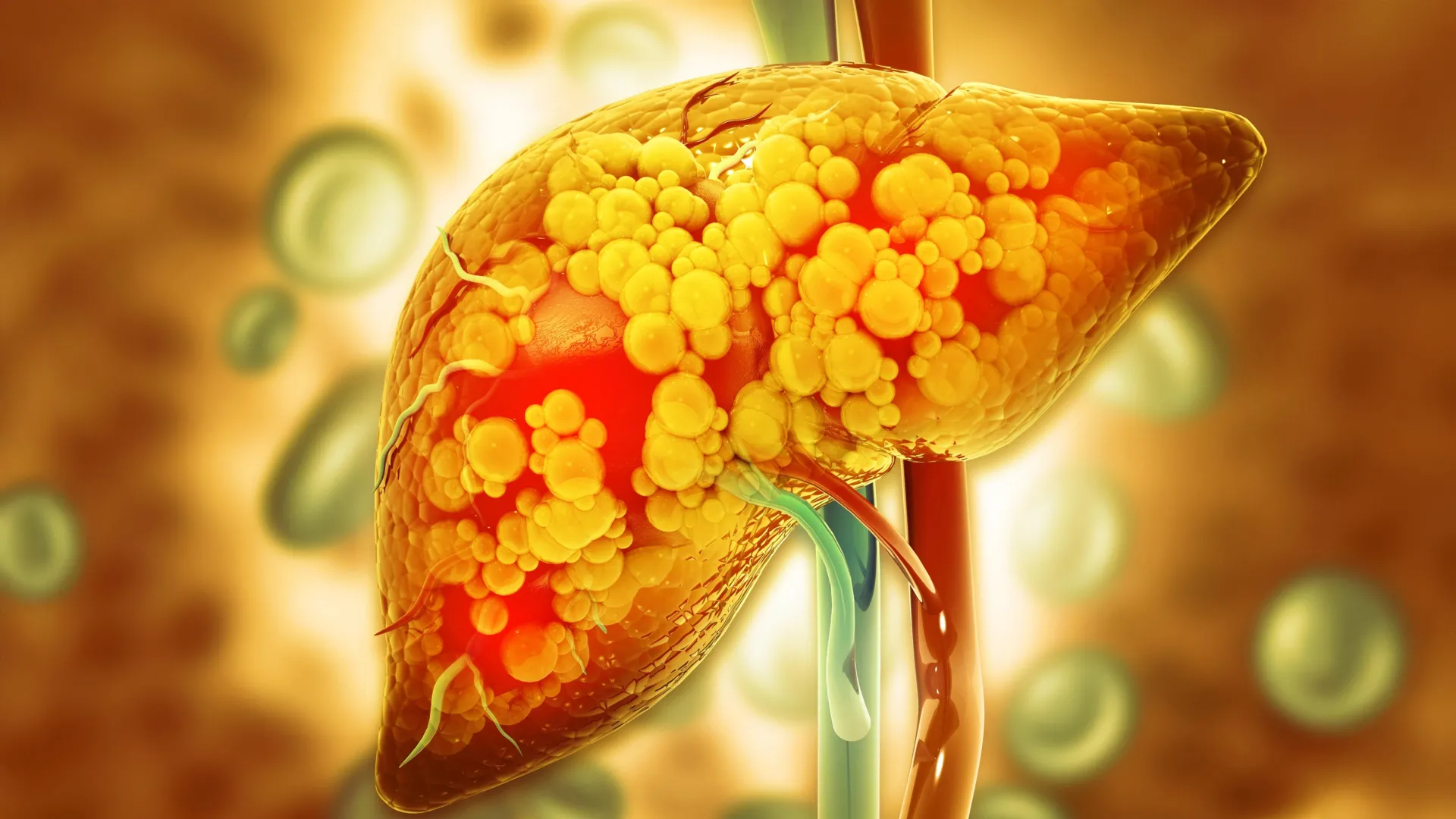
Researchers co-led by Cedars-Sinai Health Sciences University have identified an enzyme that may help protect the liver from the damage that can occur as the most common form of liver disease becomes more severe. The findings, from a preclinical study published in Nature Metabolism, could eventually support new strategies for preventing serious liver injury and progression toward liver failure.
An estimated 100 million people in the U.S. have metabolic dysfunction-associated steatotic liver disease (MASLD), formerly called nonalcoholic fatty liver disease, according to the American Liver Foundation. Roughly 20% to 25% of those affected go on to develop metabolic dysfunction-associated steatohepatitis (MASH), a more serious form of the condition in which excess liver fat is accompanied by inflammation, cell injury and scarring.
Why MASH Is Difficult to Treat
Current care mainly centers on lifestyle changes and efforts to limit additional liver damage. Although medications are available, treatment options are still limited, and there is currently no cure for MASH.
Earlier research has suggested that damaged mitochondria, the structures that produce energy for cells, may contribute to the development and progression of MASH. In the new multicenter study, Cedars-Sinai researchers found that levels of an enzyme called UBE2N decline in liver cells as the disease becomes more advanced.
“The UBE2N enzyme appears to protect the liver from the inflammation and damage associated with MASH by helping remove damaged mitochondria and supporting the breakdown of fat,” said Ekihiro Seki, MD, PhD, professor of Medicine and Biomedical Sciences at Cedars-Sinai and co-corresponding author of the study. “When levels of the enzyme fell, we saw more damaged cells and injury to the liver.”
Restoring UBE2N Reduced Liver Damage in Mice
The researchers then restored UBE2N to normal levels in the livers of laboratory mice. After doing so, they observed reductions in fat accumulation, inflammation and scarring.
Those results suggest that UBE2N could become a potential treatment target for preventing MASLD from advancing to MASH.
“The identification of this enzyme’s role in regulating mitochondria in the liver is an important advance in understanding steatotic liver disease,” said Shelly Lu, MD, the Women’s Guild Chair in Gastroenterology and director of the Karsh Division of Gastroenterology and Hepatology at Cedars-Sinai. “Future studies can test whether enhancing this protective pathway can complement existing treatments, identify patients most likely to benefit and lead to new therapeutic approaches for preventing advanced disease.”
Additional Cedars-Sinai authors include Michitaka Matsuda, So Yeon Kim, Takashi Tsuchiya and Yoon Seok Roh.
Additional authors include: Feng Wang, Jin Lee, Jeong-Su Park, Meizhou Huang, Hwan Ma, Guoyan Sui, Zixiong Zhou, Xufeng Wu, Haram Lee, Soohwan Oh, Hanseul Park, Key-Hwan Lim, Chun-Woong Park, Sang-Bae Han, Jin Tae Hong and Michael Karin.
Funding: This work was supported by the National Research Foundation of Korea (grant nos. RS-2025-02273102 and RS-2025-02603096), Regional Innovation System & Education (RISE) programme of Chungbuk (grant no. 2025-RISE-11-014-03), the Pinnacle Research Award of American Association for the Study of Liver Diseases (AASLD, to J.L.), the San Diego Digestive Diseases Research Center (SDDRC) Pilot/Feasibility Grant (NIDDK P30 DK120515, to J.L.), the National Institutes of Health (grant nos. R01DK085252, R01DK138591 and R01CA301632) and the National Natural Science Foundation of China (grant no. 82404726).
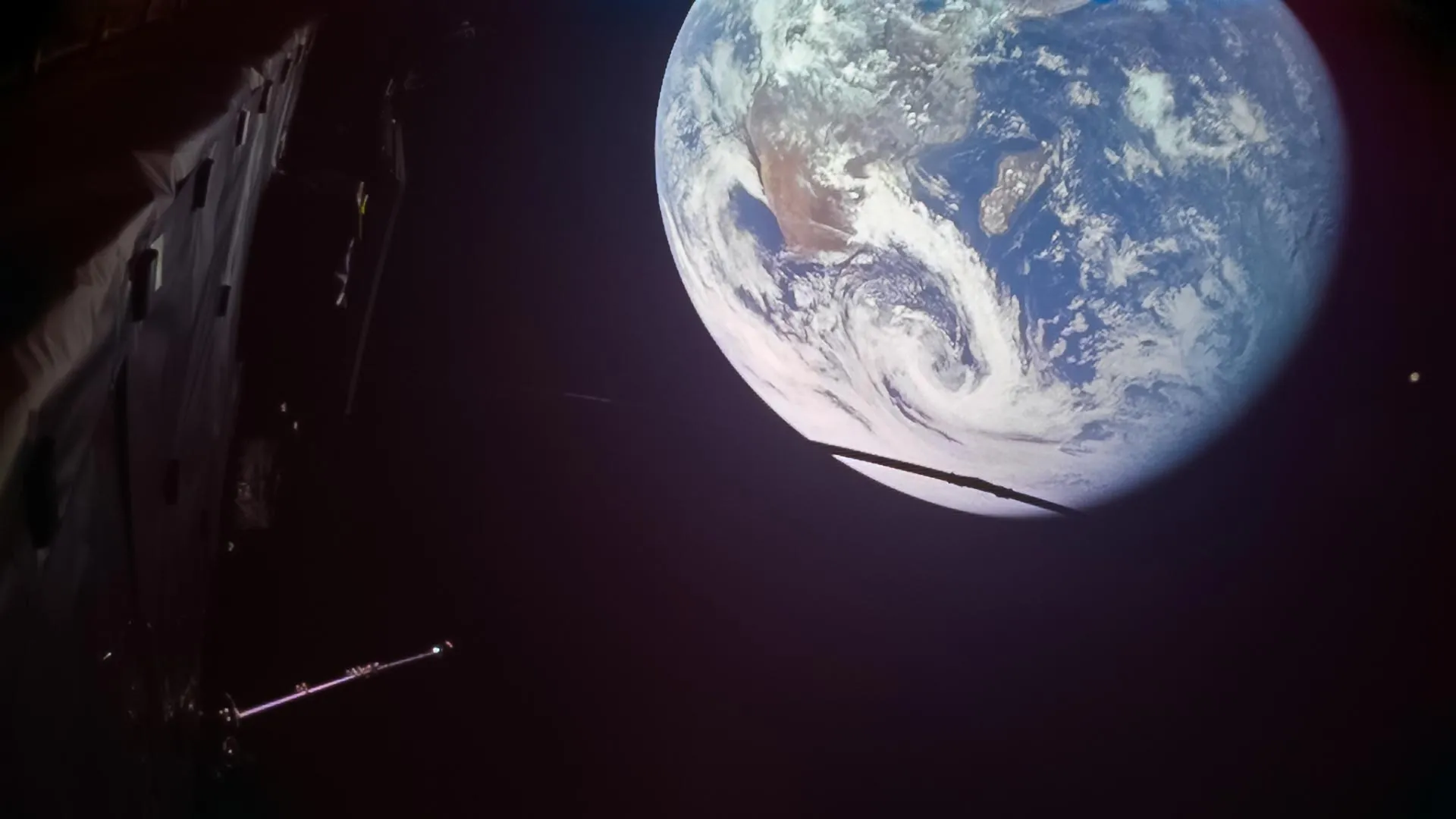
The European Space Agency’s Jupiter Icy Moons Explorer (Juice) made a close pass by Earth on September 28, skimming the outer reaches of the atmosphere and using our planet’s gravity to reshape its path toward Jupiter while consuming very little fuel.
The carefully planned gravity assist changed Juice’s direction by 20° relative to its previous trajectory and increased its speed by 3.5 km/s. During the four weeks leading up to the encounter, mission controllers needed to make only one small course correction (out of six opportunities set aside) to place the spacecraft on the precise approach needed to take full advantage of Earth’s gravity.
Controllers began monitoring Juice particularly closely on August 17 and will continue that intensive tracking through October 10.
Juice Makes a Close Pass Over Earth
Juice reached its closest point to Earth at 13:45 CEST (11:45 UTC) on September 28. At that moment, the spacecraft passed just 8640 km above the Indian Ocean while taking a sequence of images with its onboard monitoring cameras.
“The flyby required ultra-precise navigation in real time. Thanks to our very careful planning, we used only a small amount of the propellant reserved for this flyby,” says Angela Dietz, Juice’s Spacecraft Operations Manager. “This gives us more to use at Jupiter to carry out observations of the planet’s icy moons.”
Preserving that fuel is especially valuable because Juice will eventually need it while carrying out its ambitious scientific campaign around Jupiter and its moons.
Earth Becomes a Test Site for Juice
Changing the spacecraft’s trajectory was the primary purpose of the flyby, but the encounter also gave the mission team a valuable chance to test Juice’s science instruments using a real planetary target.
This was the third such opportunity during the mission. The first came during Juice’s 2024 lunar-Earth gravity assist, followed by the spacecraft’s 2025 observations of Comet 3I/ATLAS.
Teams from ESA’s spacecraft operations, science operations and technical centers spent months coordinating with the outside groups responsible for Juice’s 10 scientific instruments. Their goal was to carefully schedule when each instrument could operate and extract as much science and calibration time as possible from the spacecraft’s limited resources.
“Juice’s journey to Jupiter provides only a few opportunities to calibrate and validate the instruments under well-understood environmental conditions,” explains Juice project scientist Claire Vallat, who led the effort.
“Given the limited time available and operational constraints, instrument activities sometimes have to be prioritized, for example when Juice was in Earth’s shadow this morning, and relying on battery power alone. During this flyby, calibration activities were prioritized based on their relevance to preparing the instruments for their work at Jupiter, while also considering whether an opportunity is unique or can be scheduled later in the journey.”
Preparing for Jupiter’s Icy Moons
Although the Earth encounter required extensive preparation, it is relatively simple compared with what awaits Juice at Jupiter. The spacecraft is scheduled to carry out 35 flybys of the giant planet’s large moons Ganymede, Callisto and Europa.
Planning for those encounters began years in advance. For the Europa flybys, discussions about how the instruments will operate began about 10 years ago and will continue until Juice finally passes the moon in the early 2030s.
Earth therefore serves as an important rehearsal. Scientists can use the flyby to calibrate the instruments, learn how they behave once they are operating in space (where they always work a little differently to on Earth!), and refine the tools that will later be used to analyze the data.
The encounters with Jupiter’s icy moons will be much more scientifically demanding. By then, Juice will need to be ready to capture as much high-quality information as possible during each precious flyby.
Juice Explores Earth’s Magnetic Tail
The spacecraft also spent several days traveling through Earth’s magnetotail, the long extension of Earth’s magnetic field that stretches away from the Sun.
That gave Juice an opportunity to measure magnetic fields and electrically charged particles far from Earth. At the same time, the European-Chinese Smile mission has been observing the northern lights while measuring magnetic fields and particles much closer to the planet.
Combining measurements from Juice and Smile could give scientists a rare way to link activity deep in Earth’s magnetotail with events occurring around the planet’s polar regions.
Scientists expect to release images and spectra from some of Juice’s instruments in the coming weeks, once the data have reached Earth and instrument teams have had time to evaluate them. Among the anticipated results are high-resolution images of Earth and the Moon taken by JANUS, Juice’s scientific camera.
Juice Will Return to Earth One More Time
Juice is not finished with Earth yet.
In January 2029, the spacecraft will return for a third and final flyby of our planet. That encounter will place Juice on the final trajectory needed to reach Jupiter in 2031.
About Juice
ESA’s Jupiter Icy Moons Explorer, ‘Juice’, is humankind’s next bold mission to the outer Solar System. It will make detailed observations of gas giant Jupiter and its three large ocean-bearing moons – Ganymede, Callisto and Europa. This ambitious mission will characterise these moons with a powerful suite of remote sensing, geophysical and in situ instruments to discover more about these compelling destinations as potential habitats for past or present life.
Juice will monitor Jupiter’s complex magnetic, radiation and plasma environment in depth and its interplay with the moons, studying the Jupiter system as an archetype for gas giant systems across the Universe.
Juice launched on an Ariane 5 from Europe’s Spaceport in Kourou in April 2023. It has an eight-year cruise with flybys of Earth and Venus to slingshot it to Jupiter. It will make 35 flybys of the three large moons while orbiting Jupiter, before changing orbits to Ganymede.
Though I think Victorian novelist Elizabeth Gaskell deserves more love, I have to concede she’s not exactly obscure: her work was on my university curriculum, and her novel North & South was even adapted by the BBC.
But after picking up my first Dorothy Whipple book recently, I had my first true “how have I never heard of her?” double-take. That’s not just because of how much I enjoyed her writing, but also because she used to be a bestseller – and is now all but forgotten.
Born in 1893 in Blackburn, Lancashire, she was the daughter of an architect.
She finished the first of her eight successful novels in 1927, when she was 34. But Dr Cynthia Johnston, a Senior Lecturer in the History of the Book at the School of Advanced Study, University of London who is working on a biography of the interwar writer, said she’d caught the writing bug early.
Advertisement
Aged just 12, she started publishing work in The Blackburn Telegraph under its “children’s corner”.
Two of her “immensely popular” novels (They Knew Mr Knight and They Were Sisters) got turned into feature films, and many were Book Society Choices or Recommendations.
This success came even though she lacked some of the social connections her contemporaries made in universities like Oxford.
Advertisement
Partner in Austen publishing firm, John Murray, Ronald Barnes, the Third Lord Gorrell, helped to secure her success: he published her second book High Wages, after rejections, and suggested she was quite like Austen.
This book was one of her many hits. Dorothy’s last novel, Someone At A Distance, however, was somewhat critically ignored.

Amy Glover / HuffPost UK
Advertisement
Her titles are:
Speaking to HuffPost UK, Dr Johnston said: “I find her subjects and writing to be compelling and realistic. She has the elusive quality of ‘umputdownableness’, although she always said she was much better at character than plot.
“She is certainly ‘proto-feminist’, and her contemporary readers certainly recognised that in her writing. Readers identified with her characters; there is a realism to the novels that may have led readers both male and female to feel that these books spoke to their lived experiences.”
Advertisement
My first Whipple book, A Stranger at a Distance, was filled with the domestic politics and wry humour I loved as a long-time Austen reader. It was also more explicit about the work of running a house: it is clear who does all the planning and hard graft, and who sacrifices in a nuclear family.
Whipple “has a following (which apparently includes Queen Camilla), but I would argue that she is largely ‘forgotten’ by those who aren’t part of the Persephone catchment, as lovely as those readers are,” Dr Johnston added.
Publisher Persephone Books has released multiple editions of the author’s work (it’s how both Dr Johnston and I first encountered the writer).
Advertisement
Perhaps it’s time she was more widely recognised.
“Last year I gave a talk then held a discussion with sixth formers at Blackburn Central Library (where Whipple was from),” Dr Johnston recalled.
“We read a few of the short stories, and they absolutely loved them. So many of the female readers identified with [the] feelings of the young protagonists. I thought it was such a shame that this author, who still spoke so strongly to modern teenage readers, should be unknown to them, especially in her hometown.”
I’m already a huge fan, and can’t wait to get stuck into more of her novels.
If you’re wondering where to begin, the professor said: “I would start at the very beginning and read all eight novels, but not too quickly!
Advertisement
“My favourite is probably Greenbanks, but They Were Sisters is an astonishing proto-feminist work”.
Wherever you start, we doubt you’ll be able to stop.



My friend has been frustrated lately about the emotional labour she has to carry every day in her relationship by reminding her partner to stay connected with his friends and maintain his social life – and she isn’t the first person I’ve heard this from.
A lot of my friends have confided in the past about how they’re tired of being a nanny for their male partner’s social life.
There’s actually a word for this – it’s called “mankeeping”. The term describes the invisible emotional and organisational labour partners can take on to help their male partners maintain friendships and social lives.
Advertisement
It can be as simple as reminding him to text a friend, suggesting plans or organising the social calendar.
Steven, the boyfriend of one of my frustrated friends, has seen this dynamic play out in his own relationship as well as among his own friends. He told me that one friend’s wife recently messaged him to arrange a visit after the couple had welcomed twins. Steven and his friend had been talking about getting together for months, but somehow the plan never quite materialised.
“We had mentioned it to each other and said we’d probably ask our partners but it never really came into fruition,” he said.
Advertisement
It was only when his friend’s wife reached out and told him that “his friend would really appreciate a visit” that Steven actually made it happen.
Steven’s girlfriend is equally perplexed as to why a woman had to step in to get it done. “This is ridiculous! They need to be nanny-ed for their social life,” she said.

Janina Steinmetz via Getty Images
Advertisement
Victoria Wren, a BACP-accredited therapist from BetterHelp, an online therapy platform, said these patterns become particularly clear in the stories she hears from clients after major life changes.
She said many people only discover how robust their friendships are when they suddenly need them, whether after leaving a long-term relationship or receiving difficult health news.
One of the clients she remembers was a man who had lost his wife. In the aftermath, he was dealing with the challenge of rebuilding his social life as an adult. He joined a pilgrimage walking group.
Advertisement
“He came to feel he was part of a community of walkers, some of whom he had walked with and spent time getting to know and others he was yet to meet,” she said. The feeling of warmth and connection stayed with him between walks. “He felt he had found a tribe of like-minded people, and this helped sustain him in his day-to-day life, where the rawness of grief was still very present.”
She has also heard from clients who feel isolated after the end of a long-term relationship, only to realise that their former partner had been an important link connecting them to their wider social world. The lesson, she said, is that men need to actively invest in the friendships they want to be able to rely on.
Laurence Houde, a men’s dating and relationship coach, has seen how easily a relationship can become a man’s entire social world.
Advertisement
One recent client, she said, had a “strong tendency to people-please in relationships and put the woman he was with on a pedestal. He had spent so much time prioritising his ex and the relationship that, when it ended, he realised he had lost himself along the way.” His relationship had slowly become his life without him realising it.
Houde has also seen the more direct version of mankeeping. In one case, a woman became “the social organiser for the couple. She was the one arranging dinners with his friends, planning parties, reminding him to call people and sometimes having to push him to go see his own friends.” Without really intending to, she was maintaining parts of his social life for him.
Licensed psychotherapist Jack Worthy, a faculty member with Gestalt Associates in New York, has seen this dynamic play out with men in his practice, particularly when relationships end and they realise which friendships they have allowed to lapse.
Advertisement
“I have seen guys finish a breakup and realise they’ve neglected their close friendships and over-indexed on their girl’s friend group,” he said.
Worthy connects this dynamic to what he calls “overfunctioning”, when one partner takes responsibility for managing another adult’s life, and cautions that it can become unpaid relationship labour.
“Say your partner begins to neglect his health. He eats like shit. Stops exercising. Sleep schedule goes to hell. It’s encouraging to say, ‘Hey, you’re normally so careful with your body. But you haven’t been to the gym this month. Are you all right?’ It’s another to sign up your partner for exercise classes, cook his meals, throw away his snacks. In the second scenario, you’re taking responsibility for his life,” Worthy said.
Advertisement
To avoid finding yourself in the same situation, Wren suggests treating friendship as something that needs its own care and attention.
“Friendships can be built at any stage in life through consistent intention, attention and effort,” she said. That can be as simple as reaching out to someone you trust and suggesting a coffee or a walk. She also recommends asking yourself, “Who could I feel comfortable calling if I was genuinely struggling?” The answer can reveal the difference between a social circle and a support network.

