Matthew Lillard Says Quentin Tarantino Jibes Felt Like A ‘Punch In The Mouth’

Matthew Lillard has admitted he had a profound reaction to the support he received after Quentin Tarantino’s recent disparaging comments about him.

Late last year, during an interview on The Bret Easton Ellis Podcast, Tarantino said he didn’t “care for” Lillard, as well as taking shots at fellow actors Paul Dano and Owen Wilson.

Talking to People magazine, the Scream actor joked that the outpouring of love he received in the wake of the controversial interview made him feel like he was going to his own funeral.

“It felt like I had died and was in heaven watching everyone send out their RIP tweets,” he explained, adding that the likes of George Clooney and Superman director James Gunn had “been really generous” by sticking up for him and “telling me how much they loved me and liked my work”.

“I mean, it was really nice being a part of your own wake, sort of sitting there living through all the nice things people say after you die,” the Scooby-Doo star quipped.

He admitted that Tarantino’s remarks were especially painful because he had previously been a big fan of the Pulp Fiction director, and would “love” to work with him in the future.

Quentin Tarantino
Quentin Tarantino

Jordan Strauss/Invision/AP

“I think he’s a lovely filmmaker, and to just sort of get punched in the mouth was kind of a bummer,” he admitted.

Lillard first addressed Tarantino’s comments in December during an appearance at GalaxyCon in Ohio.

Reflecting on what had been said, Lillard admitted his feelings had been hurt, and that it “fucking [sucked]” that the One Upon A Time In Hollywood director had aired his negative views.

“You wouldn’t say that to Tom Cruise. You wouldn’t say that to somebody who’s a top-line actor in Hollywood,” he said.

While Paul Dano never commented publicly on Tarantino calling him the “weakest fucking actor in SAG,” he did admit the many comments defending him were “nice”.

“I was also incredibly grateful that the world spoke up for me so I didn’t have to,” Dano told Variety earlier this year.

Share Button

GPs told to guarantee same-day appointments for urgent cases

New contract will require patients in England to be given immediate appointment if needed.

Share Button

BBC Confirms Second Racist Slur Was Edited Out Of Its Baftas Coverage

The BBC has confirmed that a second racist slur was edited out of Sunday night’s Baftas broadcast, after the corporation has faced widespread backlash over its coverage of this year’s event.

In the last two days, the BBC has come under fire over the decision to include an uncensored slur in this year’s Baftas broadcast, which aired on a two-hour time delay.

Early on in the ceremony, Tourette’s campaigner John Davidson shouted the N-word after experiencing an involuntary tic while Sinners actor Michael B Jordan and Delroy Lindo were presenting an award.

This backlash was then exacerbated by the news that an acceptance speech by filmmaker Akinola Davies Jr had been edited to remove a message of solidarity with Palestine from the broadcast.

Eventually, on Monday afternoon, the BBC issued an apology, and confirmed that the use of the N-word was being removed from the version of the Baftas streaming on its iPlayer service.

Tourette's advocate John Davidson at the 2026 Baftas
Tourette’s advocate John Davidson at the 2026 Baftas

Anthony Harvey/Shutterstock

The following afternoon, BBC News reported that a second slur had been successfully removed from the broadcast ahead of time, which a BBC spokesperson confirmed to be the case in an internal memo shared with HuffPost UK.

This memo, sent by the BBC’s chief content officer Kate Phillips, reads: “I’m so sorry that a racial slur was not edited out of our broadcast. We understand how distressing this was.

“Award attendees were pre-warned about the possibility of involuntary verbal tics associated with Tourette Syndrome at the start of the show, and Alan Cumming addressed it during the broadcast. Of course, this doesn’t lessen the impact and upset.

“The edit team removed another racial slur from the broadcast. This one was aired in error and we would never have knowingly allowed this to be broadcast. We take full responsibility for what happened. When I was made aware it was audible on iPlayer, I asked for it to be taken down.”

A BBC rep also reiterated to HuffPost UK: “Some viewers may have heard strong and offensive language during the BAFTA Film Awards. This arose from involuntary verbal tics associated with Tourette syndrome, and as explained during the ceremony it was not intentional.

“We apologise that this was not edited out prior to broadcast and it has been removed from BBC iPlayer.”

Michael B Jordan and Delroy Lindo on stage at the 2026 Baftas

Stuart Wilson via Getty Images for BAFTA

BBC News has claimed that the reason producers did not edit out the original slur was because they were working from a truck, and therefore missed the moment when it happened in the room, though this remains unconfirmed by Bafta and the broadcaster itself.

Meanwhile, after Delroy Lindo expressed his disappointment at the way Bafta handled the incident, a spokesperson issued a lengthy apology taking “full responsibility” for what transpired.

John also released a statement of his own, saying: “I am, and always have been, deeply mortified if anyone considers my involuntary tics to be intentional or to carry any meaning.”

Share Button

Something strange is happening in the Milky Way’s magnetic field

For generations, scientists have studied the stars and planets to better understand how our galaxy works. Now, Dr. Jo-Anne Brown, PhD, is focused on charting something we cannot see at all: the Milky Way’s magnetic field.

“Without a magnetic field, the galaxy would collapse in on itself due to gravity,” says Brown, a professor in the Department of Physics and Astronomy at the University of Calgary.

“We need to know what the magnetic field of the galaxy looks like now, so we can create accurate models that predict how it will evolve.”

New Milky Way Magnetic Field Data and Models

This month, Brown and her colleagues published two new studies in The Astrophysical Journal and The Astrophysical Journal Supplement Series. Together, the papers introduce a complete dataset that astronomers around the world can use, along with a new model designed to improve understanding of how the Milky Way’s magnetic field developed over time.

To gather the data, the team relied on a new radio telescope at the Dominion Radio Astrophysical Observatory in B.C., a National Research Council Canada facility. The instrument allowed them to scan the northern sky at multiple radio frequencies, offering a detailed look at the structure of the galaxy’s magnetic field.

“The broad coverage really lets you get at the details about the magnetic field structure,” says Dr. Anna Ordog, PhD, lead author of the first study.

The result is a high quality, wide ranging dataset collected as part of the Global Magneto-Ionic Medium Survey (GMIMS), an international effort to chart the Milky Way’s magnetic field.

Tracking Faraday Rotation Across the Galaxy

The researchers measured a phenomenon known as Faraday rotation to trace the magnetic field. This effect occurs when radio waves pass through regions filled with electrons and magnetic fields, causing the waves to shift.

“You can think of it like refraction. A straw in a glass of water looks bent because of how light interacts with matter,” says Rebecca Booth, a PhD candidate working with Brown and lead author of the second study. “Faraday rotation is a similar concept, but it’s electrons and magnetic fields in space interacting with radio waves.”

By analyzing these subtle changes in radio signals, the team was able to map how the magnetic field is arranged across vast stretches of the galaxy.

A Diagonal Magnetic Reversal in the Sagittarius Arm

In the second study, Booth focused on a striking feature within the Milky Way known as the Sagittarius Arm, where the magnetic field runs in the opposite direction compared to the rest of the galaxy.

“If you could look at the galaxy from above, the overall magnetic field is going clockwise,” says Brown. “But, in the Sagittarius Arm, it’s going counterclockwise. We didn’t understand how the transition occurred. Then one day, Anna brought in some data, and I went, ‘O.M.G., the reversal’s diagonal!'”

Building on Ordog’s findings, Booth used the newly assembled dataset to construct a three dimensional model explaining this reversal.

“My work presents a new three-dimensional model for the magnetic field reversal. From Earth, this would appear as the diagonal that we observe in the data,” Booth explains.

Share Button

Can solar storms trigger earthquakes? Scientists propose surprising link

Scientists at Kyoto University have developed a theoretical model examining whether disturbances in the ionosphere could apply electrostatic forces deep within the Earth’s crust. Under certain conditions, these forces might contribute to the start of large earthquakes.

The research is not designed to forecast earthquakes. Instead, it outlines a possible physical mechanism showing how shifts in ionospheric charge levels — triggered by intense solar activity such as solar flares — might interact with already weakened areas of the crust and influence how fractures develop.

How the Ionosphere Could Affect Fault Zones

In this model, cracked regions of the crust are thought to contain water at extremely high temperatures and pressures, possibly in a supercritical state. Electrically, these fractured zones may act like capacitors. They are coupled both to the Earth’s surface and to the lower ionosphere, creating a vast electrostatic system that links the ground to the upper atmosphere.

When solar activity surges, electron density in the ionosphere can rise significantly. This can produce a negatively charged layer in the lower ionosphere. Through capacitive coupling, that charge may generate intense electric fields inside microscopic voids within fractured rock. The resulting electrostatic pressure could approach levels similar to tidal or gravitational stresses that are already known to influence fault stability.

According to the team’s calculations, ionospheric disturbances tied to major solar flares — involving increases in total electron content of several tens of TEC units — might create electrostatic pressures of several megapascals within these crustal voids.

Ionospheric Anomalies Observed Before Major Quakes

Unusual ionospheric behavior has often been detected before powerful earthquakes. Observations have included spikes in electron density, drops in ionospheric altitude, and slower propagation of medium-scale traveling ionospheric disturbances. Traditionally, scientists have interpreted these changes as effects caused by stress building up inside the crust.

This new framework offers an additional perspective. It suggests a two way interaction in which processes inside the Earth can influence the ionosphere, while ionospheric disturbances may also send feedback forces back down into the crust. The model connects space weather and seismic activity without claiming that solar activity directly causes earthquakes.

Solar Activity and the 2024 Noto Peninsula Earthquake

The researchers point to recent major earthquakes in Japan, including the 2024 Noto Peninsula earthquake, as events that occurred shortly after periods of intense solar flare activity. They stress that this timing does not prove cause and effect. However, it aligns with the idea that ionospheric disturbances could act as a contributing factor when faults are already close to failure.

Rethinking Earthquakes Beyond Internal Forces

By drawing on plasma physics, atmospheric science, and geophysics, this approach expands the traditional view that earthquakes are driven solely by forces inside the planet. The findings indicate that tracking ionospheric conditions alongside underground measurements could improve understanding of how earthquakes begin and how seismic risk is assessed.

Future work will combine high-resolution GNSS-based ionospheric tomography with detailed space weather data. The goal is to determine when and how ionospheric disturbances might exert meaningful electrostatic effects on the Earth’s crust.

Share Button

190-million-year-old “Sword Dragon” fossil rewrites ichthyosaur history

A remarkably complete skeleton uncovered along the UK’s Jurassic Coast has been identified as a previously unknown species of ichthyosaur — a group of prehistoric marine reptiles that once dominated the world’s oceans.

The dolphin-sized creature, named Xiphodracon goldencapensis and nicknamed the “Sword Dragon of Dorset,” is the only known specimen of its species. Its discovery helps close a major gap in the fossil record and offers new insight into ichthyosaur evolution.

For more than two centuries, the Jurassic Coast has yielded thousands of ichthyosaur fossils, ever since pioneering fossil hunter Mary Anning began making historic finds there. However, this marks the first new genus of Early Jurassic ichthyosaur described from the region in more than 100 years.

Exceptionally Preserved 190-Million-Year-Old Fossil

The fossil was found near Golden Cap in 2001 by Dorset collector Chris Moore. Preserved in nearly perfect three-dimensional detail, the skeleton includes a skull with a huge eye socket and an elongated, sword-like snout. Researchers estimate the animal measured about three meters long and likely fed on fish and squid. There may even be traces of its final meal preserved within the remains. It is thought to be the most complete prehistoric reptile ever discovered from the Pliensbachian period.

The research was carried out by an international team of paleontologists led by ichthyosaur specialist Dr. Dean Lomax, an Honorary Research Fellow at The University of Manchester and an 1851 Research Fellow at the University of Bristol. Their findings appear in the journal Papers in Palaeontology.

Dr. Lomax said: “I remember seeing the skeleton for the first time in 2016. Back then, I knew it was unusual, but I did not expect it to play such a pivotal role in helping to fill a gap in our understanding of a complex faunal turnover during the Pliensbachian. This time is pretty crucial for ichthyosaurs as several families went extinct and new families emerged, yet Xiphodracon is something you might call a “missing piece of the ichthyosaur puzzle.” It is more closely related to species in the later Early Jurassic (in the Toarcian), and its discovery helps pinpoint when the faunal turnover occurred, being much earlier than expected.”

Solving an Evolutionary Mystery

After it was collected in 2001, the skeleton was acquired by the Royal Ontario Museum in Canada, where it joined one of the world’s largest ichthyosaur collections. Despite its importance, it had remained unstudied until now.

Ichthyosaurs from the Pliensbachian (193-184 million years ago) are extremely rare, making this specimen especially valuable. Scientists have long known that ichthyosaur species before and after this time period were very different from one another, even though they occupied similar ecological roles.

Co-author Professor Judy Massare of the State University of NY at Brockport explained: “Thousands of complete or nearly complete ichthyosaur skeletons are known from strata before and after the Pliensbachian. The two faunas are quite distinct, with no species in common, even though the overall ecology is similar. Clearly, a major change in species diversity occurred sometime in the Pliensbachian. Xiphodracon helps to determine when the change occurred, but we still don’t know why.”

Evidence of Injury and a Violent End

The skeleton also provides clues about the challenges of life in Jurassic seas. According to co-author Dr. Erin Maxwell of the State Museum of Natural History Stuttgart, several limb bones and teeth show abnormalities that suggest the animal suffered serious injury or illness while it was alive. The skull also appears to bear bite marks from a much larger predator — likely another large ichthyosaur — which may have caused its death.

Dr. Maxwell said: “This skeleton provides critical information for understanding ichthyosaur evolution, but also contributes to our understanding of what life must have been like in the Jurassic seas of Britain. The limb bones and teeth are malformed in such a way that points to serious injury or disease while the animal was still alive, and the skull appears to have been bitten by a large predator — likely another much larger species of ichthyosaur — giving us a cause of death for this individual. Life in the Mesozoic oceans was a dangerous prospect.”

Unique Features and a Fitting Name

Researchers identified several anatomical traits in Xiphodracon that have never been documented in any other ichthyosaur. One of the most unusual features is a distinctive bone near the nostril (called a lacrimal) that includes prong-like projections.

Dr. Lomax, author of the recent book “The Secret Lives of Dinosaurs,” said: “One of the coolest things about identifying a new species is that you get to name it! We opted for Xiphodracon because of the long, sword-like snout (xipho from Greek xiphos for sword) and dracon (Greek and Latin for dragon) in reference to ichthyosaurs being referred to as “sea dragons” for over 200 years.”

The study was published in the international journal Papers in Palaeontology. The fossil is expected to go on public display at the Royal Ontario Museum in Toronto, Canada.

Share Button

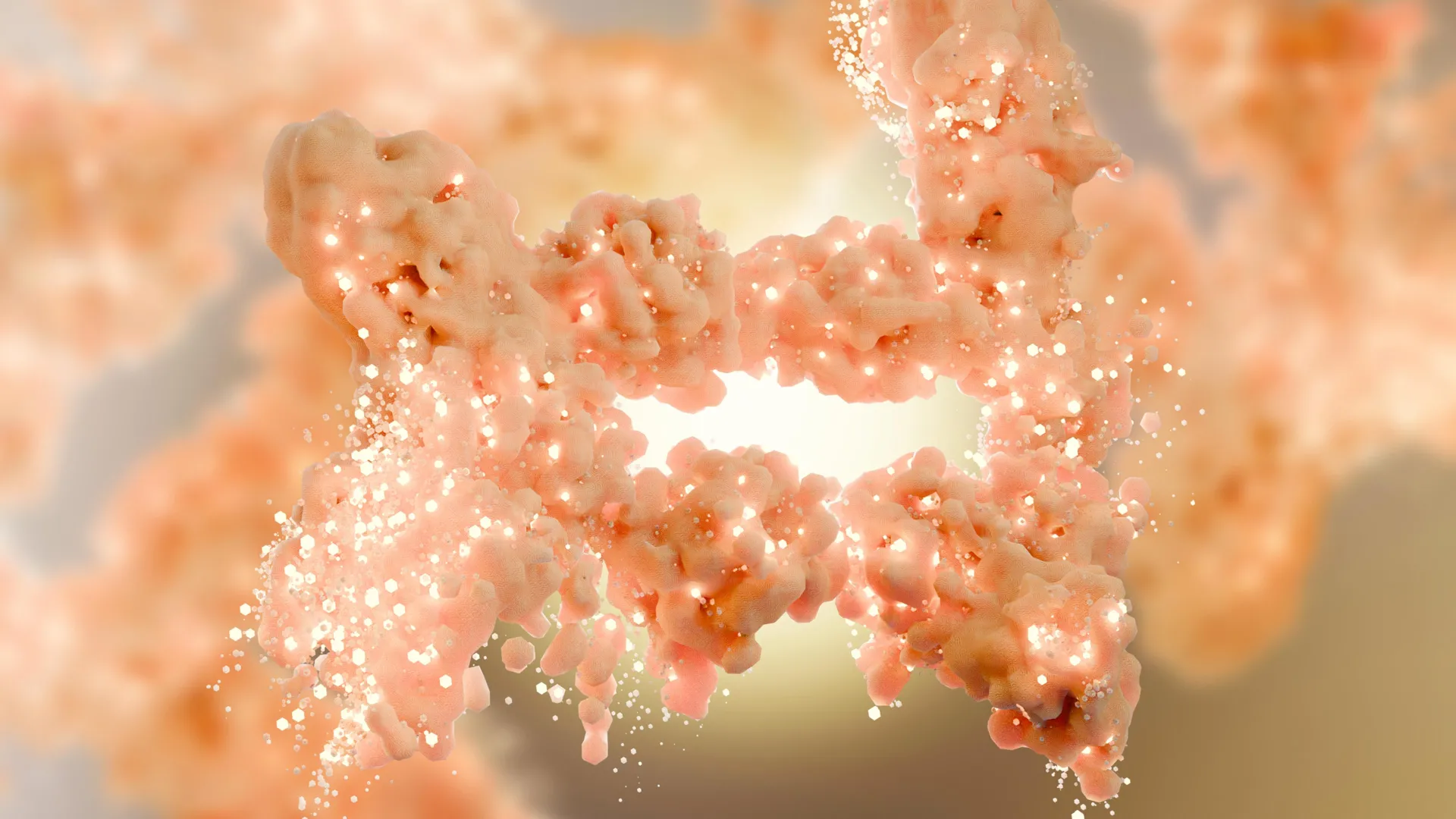
Do Exosomes Live Up To Their Anti-Aging Claims? Here’s What Dermatologists Say.

If you’re on the lookout for the latest skin care ingredient that can smooth and plump your complexion, you’ve probably seen influencers talking about exosomes, which claim to offer a wealth of anti-aging benefits. But before you buy into the hype, have you really thought about what they are, and whether they’re effective?

Exosomes are tiny, naturally occurring vesicles that skin and other types of cells release. They transport bioactive molecules (think: peptides, fats and proteins) to other cells, explained Dr. Jacob Beer, a dermatologist at Beer Dermatology in West Palm Beach, Florida.

There are dozens of serums, creams and other skin care products, some selling for hundreds of dollars, that contain exosomes, and medical spas often incorporate them into procedures like microneedling and laser treatments. But it’s important to note that exosomes are not approved by the Food and Drug Administration for cosmetic use.

Getty Images

Exosomes are a misunderstood skin care trend, though, since their behavior varies widely depending on their source and what they’re transporting, according to the experts we spoke to.

Still, exosomes “show promise” for skin rejuvenation, Beer said. “It’s important to just remember that not all exosomes are the same, not all preparations are the same, and some formulations have more data than others.”

Here’s what to know about exosomes and their potential benefits and risks.

What are exosomes, exactly?

Think of exosomes as tiny “message bubbles that cells send to each other,” explained Dr. Jennifer Holman, a dermatologist with U.S. Dermatology Partners Tyler in Texas. The bubbles contain instructions (in the form of proteins, growth signals and genetic material) that “tell cells how they should behave.”

They can be derived from different sources, such as platelets, stem cells, fat or plants, and carry “biologically active messenger cargo,” such as proteins, lipids or signaling molecules, added Dr. Krishna Vyas, a plastic surgeon in New York City. Those instructions can potentially influence inflammation, repair, recovery and regeneration in the “recipient cells.”

The skin benefits of exosomes.

Some exosomes have been studied more than others, and much of the research has involved small patient samples or hasn’t been done on human subjects, Beer said.

“Not all exosomes are created equal, as they don’t contain the same instructions,” Holman said, so their effectiveness depends on what’s inside the bubble.

Take platelet-derived exosomes, for example. Platelets are cells that are drawn to areas of injury and help the body heal. Holman said platelet-derived exosomes are tiny and combine with or dissolve in fats, so they can be applied topically and tell the skin to heal itself.

Some studies have shown that exosomes applied topically can lead to “collagen production, repair of elastin and new elastin production, decreased inflammation and redness, and speeds post procedural healing time,” Holman said.

Vyas noted: “These effects are thought to occur through regulation of inflammatory pathways and activation of fibroblasts, the cells responsible for collagen and elastin synthesis.”

Exosomes are also sometimes applied to the skin after microneedling, a treatment that uses tiny needles to treat acne scars, wrinkles and sagging skin. Vyas said this approach may enhance the topical penetration of exosomes. While this is an off-label use and potentially risky, a small study suggests that pairing exosomes and microneedling could reduce pore size and improve skin texture.

However, since there are no long-term, randomized clinical trials on exosomes, Vyas said their benefits should be considered “as promising but not conclusively established.”

Are exosomes safe?

Redness and irritation are commonly reported side effects of topical exosomes, Beer said. Those usually go away once you stop using the products.

However, when exosomes are administered with microneedling or injected into the skin (which is done in some medical spas), “all bets are off,” Beer said. There are cases of patients developing scars, discoloration, mycobacterial infections, or an immune response known as a granuloma.

“The greater concern lies in uncertainty surrounding long-term safety, repeated use and product consistency,” Vyas said.

Since exosomes are derived from different sources, there’s a lot of variability in products that makes quality control, reproducibility and safety challenging, he added. Exosomes aren’t FDA-approved for medical or cosmetic use in the U.S. So there’s no universal quality standard for products containing them, Holman said.

“Exosomes can be sold under cosmetic regulations as long as they are not making therapeutic claims,” Holman said.

Should you use exosomes?

Serums and moisturizers containing exosomes for topical use are mostly safe, Beer said.

Still, it’s difficult to know what type of exosome products contain or how they’re sourced because they’re not subject to the FDA’s labeling requirements, Vyas said. Some may make exaggerated claims about the product’s benefits, Holman noted. In South Korea, officials recently started prohibiting the term “exosomes” as a cosmetic advertising term to prevent misleading claims.

However, when it comes to injecting exosomes or pairing them with microneedling, Beer said, “I avoid that like the plague.”

Many providers don’t understand what exosomes are, the data behind them, or what can go wrong with their use (such as infections or immune reactions), Beer added. “I counsel my patients to avoid injecting or microneedling exosomes until we have better data because, however expensive the treatment was, it will likely be much more to correct it later.”

Complications from these procedures could mean numerous laser treatments to treat discoloration and scarring, for example, he noted.

Because of the variability of products, lack of transparency, and limited scientific data, Vyas said, “Exosome-based aesthetic products should be considered investigational rather than established therapies.”

Share Button

GPs to get £3,000 bonus to maximise weight loss drug prescriptions

Bid to improve access to Mounjaro in England, but experts warn eligibility still tightly restricted.

Share Button

First British baby born using transplanted womb from dead donor

Grace Bell, who was born without a viable womb, says her little boy is “simply a miracle”.

Share Button

If You Sleep In The ‘Flamingo Position,’ We Have News For You

When you wake up in the middle of the night, do you find that you’re sleeping on your stomach or your side? Or do you consistently wind up on your back with the sole of one foot tucked against the calf of your other leg?

If so, you sleep like a flamingo. And if you’re on TikTok or Instagram, you might come across an influencer claiming this sleep position signals you’re stressed out or carry pain in your hips.

While this sleep position isn’t inherently dangerous – and, in fact, may be most comfortable for your body – it may suggest you need some extra support in certain cases, said Laura Nolan, a psychotherapist who specialises in somatic therapy. Here’s what to know.

Why do people end up in the “flamingo position”?

Nolan said she most commonly sees people sleeping this way when they have hypermobility, a condition in which joints stretch beyond their typical range of motion. Many people with joint hypermobility syndrome experience loose joints, joint instability and chronic pain.

“Hypermobility is linked to neurodivergence and many of the neurodivergent adults I work with report sleeping in more unconventional ways, including in the flamingo posture as well as with clenched fists or T. rex hands,” she said.

Sleeping in the flamingo position may be a habit acquired through experience and repetition. Or perhaps you wind up in this position because of chronic pain or a physical injury, Nolan added.

It’s also possible that consistently sleeping in this position – which could be unstable for some – could further strain your joints or even result in muscle stiffness, she explained. “Our bodies are complex,” she noted.

The flamingo position doesn’t immediately mean you are hurting your joints

The flamingo position isn’t an automatic red flag. Nolan said it’s entirely possible that this position is simply a cosy way for you to sleep. “It can be normal and healthy to sleep in the flamingo position,” she explained.

Jade Wu, a board-certified sleep psychologist, similarly said we naturally sleep in positions that are most comfortable to us. “Often being in this position simply shows that someone feels most comfortable doing it,” she added.

In fact, if you’re on your side with a leg up – a variation of side sleeping – the flamingo position may lower your risk of sleep apnoea and other breathing problems, Wu noted.

As a somatic psychotherapist, Nolan is more curious about what feels good about sleeping in this position rather than assuming you have “stuck stress” in the body or that something is wrong.

How to find a comfortable (and safe) sleeping position

Nolan encourages people to have a relaxed, easeful approach to sleeping. “Having too much scrutiny over how you sleep, including by thinking you are sleeping wrong or engaging in sleep perfectionism, will likely worsen sleep quality for those with existing issues,” she said.

Unless an orthopaedic health care provider or another physician has advised you to stop sleeping like a flamingo to avoid putting pressure on certain joints, there’s no need to stop, according to Wu.

Rather than forcing or training yourself to sleep in certain positions, get creative about how you can support your body while you snooze, Nolan advised.

For example, if you tend to sleep like a flamingo, consider adding a pillow underneath your knees. If you’re more of a T. rex sleeper, consider holding something in your hands, like a stuffed animal or pillow. “Be creative,” Nolan said.

If you feel stressed at bedtime, carve out some time to unwind – by practicing yoga, mindfulness or deep breathing – after dinner. Another technique Nolan recommends is progressive muscle relaxation, which involves tensing then relaxing various muscle groups. As you move between body parts, notice how each one feels.

“Remind yourself that stress is not all bad and we have many easy and quick ways of completing the stress response,” Nolan said.

Share Button