Sexual health clinics are still open for business but doctors urge patience over appointments.


Sexual health clinics are still open for business but doctors urge patience over appointments.
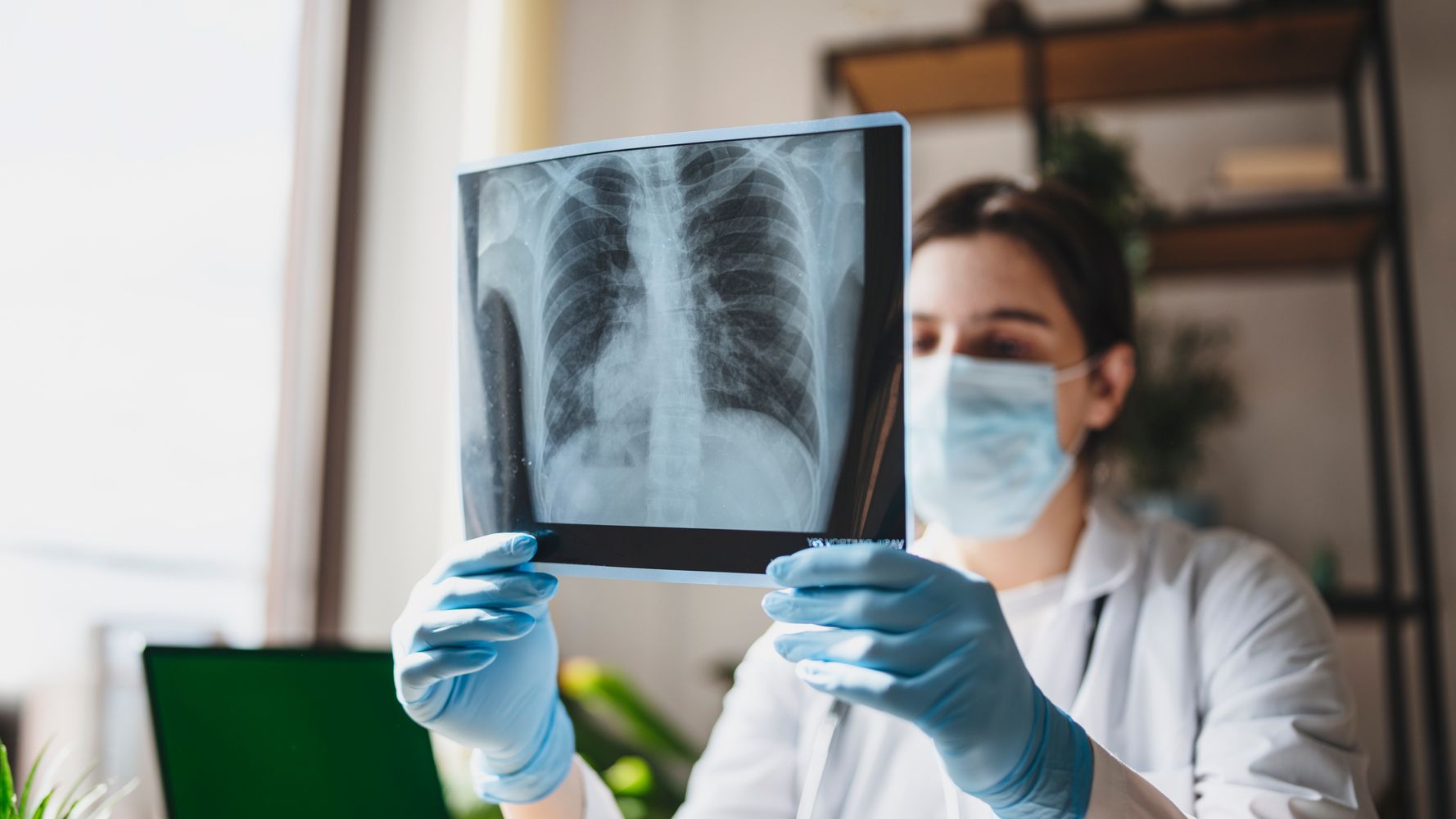
Covid affects the heart, lungs and kidneys, according to two new studies, and the impacts could last long after the initial infection has passed.
The first study was carried out in 10 intensive care units across Scotland and examined 121 critically ill patients who were receiving treatment on ventilators due to the impact of coronavirus on their system.
Advertisement
One in three of the patients in the study showed evidence of abnormalities in the right side of the heart – the area that pumps blood to the lungs, researchers found.
Nearly half (47%) of ventilated patients in the study died because of Covid-19, a figure comparable to national and international death rates.
Advertisement
“A combination of factors create the perfect storm for Covid-19 to damage the right side of your heart, which ultimately can cause death,” Dr Philip McCall, lead author of the study and consultant in Cardiothoracic Anaesthesia and Intensive Care at NHS Golden Jubilee, said.
Experts at the NHS Golden Jubilee University National Hospital in Clydebank, West Dunbartonshire, said that the findings could play a vital role in not only saving the lives of Covid-19 patients, but for the care of potentially fatal heart and lung issues generally, as well as helping prepare for any possible future pandemic.
Advertisement
Dr Ben Shelley, chief investigator of the study and consultant in Anaesthesia and Intensive Care at the NHS Golden Jubilee, said: “The study has revealed that there is no doubt Covid-19 affects the heart and has a major impact on outcomes for the patient.
“However, now that we know this actually happens, and have a better understanding of how it affects people, we can plan for the future and put in place new care plans and treatments to help combat this.”
In another study published in the journal Nature Medicine, researchers analysed the outcomes of 159 people hospitalised with Covid between May 2020 and March 2021.
“Our study provides objective evidence of abnormalities at one to two months post-Covid and these findings tie in with persisting symptoms at that time and the likelihood of ongoing health needs one year later,” Prof Colin Berry, of the University of Glasgow, which led the CISCO-19 (Cardiac imaging in Sars coronavirus disease-19) study said.
Advertisement
People who had been hospitalised with Covid showed several abnormalities, including in results from imaging of the heart, lungs and kidneys, the study found.
One in eight of those who were hospitalised for Covid were most likely to have myocarditis, or heart inflammation, experts said. Healthcare workers with acute kidney injury was more likely to have myocarditis as well as those with more severe disease requiring invasive ventilation.
Additionally, people who have been hospitalised with Covid were more likely to need outpatient secondary care or be referred for long Covid, with death and re-hospitalisations also much higher in this group.
Although both studies focussed on patients who experienced severe Covid infection, the results have helped scientists learn about the wide ranging impacts of the virus. Researchers say the findings also serve as a reminder for the general population to stay vigilant about Covid.
Prof Berry added: “Even fit, healthy individuals can suffer severe Covid-19 illness and to avoid this, members of the public should take up the offer of vaccination.”
Noel Gallagher has revealed he needed stitches and was “covered in blood” after getting accidentally headbutted by Manchester City player Ruben Dias’ dad.
The Oasis star was in the stands at the Etihad Stadium on Sunday afternoon to watch Manchester City score three goals in five minutes to secure the Premier League trophy.
Advertisement
The musician and lifelong City fan was celebrating with the fans before getting caught by Ruben’s dad during the chaotic celebrations.
Sharing the story on talkSPORT, he said: “So as the third goal goes in, right, there is absolute bedlam, as you can imagine, in the stadium. Where we sit, Reuben Diaz’s family are in the box, a couple of boxes up.
Advertisement
“So I’m jumping around like an idiot, passing my 11-year-old son around like the Premier League trophy, everyone is lifting him up.
“I turn around and Rúben Dias’ dad runs straight into me, headbutts me while I’m on the floor covered in blood. I don’t see the last two minutes I’ve got to get taken down by the St John Ambulance and had to get stitched up. I’ve got stitches in my top lip, I’ve got two black eyes.”
Advertisement
Noel says he bumped into the winning team’s manager Pep Gaurdiola following the incident, who asked what had happened to his face.
“As I’m going down the corridor Pep’s running up crying and we kind of hug each other and he says, ‘What’s up with your face?’ And I was like, ‘Go see the players, nothing to do with me’.
“And if you’ve seen me today, I look like I’ve just arrived home from the 80s, from Elland Road. I look like I’ve had my head smashed in. It’s unbelievable.
“A lot of City fans are asking, ‘You alright? What’s happened?’ And I said – ‘You’ll never guess!’”
Advertisement

Dave J Hogan via Getty Images
Noel added that despite his own injuries, Rúben Dias’ dad came out of the exchange without a mark on him.
“He’s a big bear of a man – he almost knocked my teeth out.
“But as days go at the Etihad that’s got to be up there with the best.”


Parents say they are “horrified” that similar warnings have been issued after four deaths.

Engineers at UC Riverside are the first to report selective breakdown of a particularly stubborn class of PFAS called fluorinated carboxylic acids (FCAs) by common microorganisms.
Under anaerobic conditions, a carbon-carbon double bond is crucial for the shattering the ultra-strong carbon-fluorine bond by microbial communities. While breaking the carbon-carbon bond does not completely degrade the molecule, the resulting products could be relayed to other microorganisms for defluorination under in aerobic conditions.
The achievement builds upon prior work by the same researchers, who were the first to report successful microbial defluorination of a fully fluorinated PFAS structure by replacing carbon-fluorine bonds with carbon-hydrogen bonds.
Per- and polyfluoroalkyl substances, or PFAS, are a group of over 9,000 chemicals used in countless industrial processes and commercial products since the 1940s. As a result, PFAS have found their way into the water cycle and are now found in virtually every water source. These chemicals contain a bond between fluorine and carbon atoms that is the strongest single bond known, rendering PFAS non-biodegradable and resistant to conventional water treatment methods. They wind up in the tissues of organisms, including humans, where they have been associated with some types of cancer, thyroid and liver problems, and likely other, still poorly understood, health problems.
In an earlier paper, Yujie Men, an assistant professor of chemical and environmental engineering, and her colleagues reported using anaerobic microbial communities often used for dechlorination to degrade two specific PFAS, including one fully fluorinated, or perfluorinated, structure.
The new paper takes this research a step further by showing that the point of entry for the anaerobic microbes was a double bond between carbon atoms located next to the carboxyl group of the FCA molecules. Trifluoromethyl branches on the double bond could further enhance the biodegradability.
Microbes capable of doing this type of defluorination are not rare. Using activated sludge — microbial communities commonly used in wastewater treatment facilities to break down and remove organic matter — and an anaerobic condition, the researchers successfully repeated their earlier experiment with more structurally similar PFAS.
“Currently biocatalysts that can do defluorination of perfluorinated compounds like PFOA are very rare. We still know very little about which microbes or enzymes can do the defluorination of PFAS in general and how,” said Men. “Our work is at the leading edge of finding this information.”
Even when scientists figure out ways to break the initial carbon-fluorine bond in perfluorinated compounds, their work isn’t done because the molecules are likely broken down into other molecules that could also be harmful. Successful remediation of PFAS-contaminated environments requires initial breakdown of the PFAS parent molecule followed by complete degradation of the secondary molecules.
One recent study by the Men group demonstrated that activated sludge communities were able to completely degrade the secondary molecule from chemical degradation of one type of perfluorinated chemical via a process known as cometabolism. Their new study further implies that simply through the cooperation among different microbial groups, such as anaerobic and aerobic bacteria, deeper defluorination could also be achieved for certain perfluorinated chemicals.
Story Source:
Materials provided by University of California – Riverside. Original written by Holly Ober. Note: Content may be edited for style and length.

More than a third of the world’s population lives in drylands, areas that experience significant water shortages. Scientists and engineers at The University of Texas at Austin have developed a solution that could help people in these areas access clean drinking water.
The team developed a low-cost gel film made of abundant materials that can pull water from the air in even the driest climates. The materials that facilitate this reaction cost a mere $2 per kilogram, and a single kilogram can produce more than 6 liters of water per day in areas with less than 15% relative humidity and 13 liters in areas with up to 30% relative humidity.
The research builds on previous breakthroughs from the team, including the ability to pull water out of the atmosphere and the application of that technology to create self-watering soil. However, these technologies were designed for relatively high-humidity environments.
“This new work is about practical solutions that people can use to get water in the hottest, driest places on Earth,” said Guihua Yu, professor of materials science and mechanical engineering in the Cockrell School of Engineering’s Walker Department of Mechanical Engineering. “This could allow millions of people without consistent access to drinking water to have simple, water generating devices at home that they can easily operate.”
The new paper appears in Nature Communications.
The researchers used renewable cellulose and a common kitchen ingredient, konjac gum, as a main hydrophilic (attracted to water) skeleton. The open-pore structure of gum speeds the moisture-capturing process. Another designed component, thermo-responsive cellulose with hydrophobic (resistant to water) interaction when heated, helps release the collected water immediately so that overall energy input to produce water is minimized.
Other attempts at pulling water from desert air are typically energy-intensive and do not produce much. And although 6 liters does not sound like much, the researchers say that creating thicker films or absorbent beds or arrays with optimization could drastically increase the amount of water they yield.
The reaction itself is a simple one, the researchers said, which reduces the challenges of scaling it up and achieving mass usage.
“This is not something you need an advanced degree to use,” said Youhong “Nancy” Guo, the lead author on the paper and a former doctoral student in Yu’s lab, now a postdoctoral researcher at the Massachusetts Institute of Technology. “It’s straightforward enough that anyone can make it at home if they have the materials.”
The film is flexible and can be molded into a variety of shapes and sizes, depending on the need of the user. Making the film requires only the gel precursor, which includes all the relevant ingredients poured into a mold.
“The gel takes 2 minutes to set simply. Then, it just needs to be freeze-dried, and it can be peeled off the mold and used immediately after that,” said Weixin Guan, a doctoral student on Yu’s team and a lead researcher of the work.
The research was funded by the U.S. Department of Defense’s Defense Advanced Research Projects Agency (DARPA), and drinking water for soldiers in arid climates is a big part of the project. However, the researchers also envision this as something that people could someday buy at a hardware store and use in their homes because of the simplicity.
Yu directed the project. Guo and Guan co-led experimental efforts on synthesis, characterization of the samples and device demonstration. Other team members are Chuxin Lei, Hengyi Lu and Wen Shi.
Story Source:
Materials provided by University of Texas at Austin. Note: Content may be edited for style and length.

From building software to designing cars, engineers grapple with complex design situations every day. ‘Optimizing a technical system, whether it’s making it more usable or energy-efficient, is a very hard problem!’ says Antti Oulasvirta, professor of electrical engineering at Aalto University and the Finnish Center for Artificial Intelligence. Designers often rely on a mix of intuition, experience and trial and error to guide them. Besides being inefficient, this process can lead to ‘design fixation’, homing in on familiar solutions while new avenues go unexplored. A ‘manual’ approach also won’t scale to larger design problems and relies a lot on individual skill.
Oulasvirta and colleagues tested an alternative, computer-assisted method that uses an algorithm to search through a design space, the set of possible solutions given multi-dimensional inputs and constraints for a particular design issue. They hypothesized that a guided approach could yield better designs by scanning a broader swath of solutions and balancing out human inexperience and design fixation.
Along with collaborators from the University of Cambridge, the researchers set out to compare the traditional and assisted approaches to design, using virtual reality as their laboratory. They employed Bayesian optimization, a machine learning technique that both explores the design space and steers towards promising solutions. ‘We put a Bayesian optimizer in the loop with a human, who would try a combination of parameters. The optimizer then suggests some other values, and they proceed in a feedback loop. This is great for designing virtual reality interaction techniques,’ explains Oulasvirta. ‘What we didn’t know until now is how the user experiences this kind of optimization-driven design approach.’
To find out, Oulasvirta’s team asked 40 novice designers to take part in their virtual reality experiment. The subjects had to find the best settings for mapping the location of their real hand holding a vibrating controller to the virtual hand seen in the headset. Half of these designers were free to follow their own instincts in the process, and the other half were given optimizer-selected designs to evaluate. Both groups had to choose three final designs that would best capture accuracy and speed in the 3D virtual reality interaction task. Finally, subjects reported how confident and satisfied they were with the experience and how in control they felt over the process and the final designs.
The results were clear-cut: ‘Objectively, the optimizer helped designers find better solutions, but designers did not like being hand-held and commanded. It destroyed their creativity and sense of agency,’ reports Oulasvirta. The optimizer-led process allowed designers to explore more of the design space compared with the manual approach, leading to more diverse design solutions. The designers who worked with the optimizer also reported less mental demand and effort in the experiment. By contrast, this group also scored lower on expressiveness, agency and ownership, compared with the designers who did the experiment without a computer assistant.
‘There is definitely a trade-off,’ says Oulasvirta. ‘With the optimizer, designers came up with better designs and covered a more extensive set of solutions with less effort. On the other hand, their creativity and sense of ownership of the outcomes was reduced.’ These results are instructive for the development of AI that assists humans in decision-making. Oulasvirta suggests that people need to be engaged in tasks such as assisted design so they retain a sense of control, don’t get bored, and receive more insight into how a Bayesian optimizer or other AI is actually working. ‘We’ve seen that inexperienced designers especially can benefit from an AI boost when engaging in our design experiment,’ says Oulasvirta. ‘Our goal is that optimization becomes truly interactive without compromising human agency.’
This paper was selected for an honourable mention at the ACM CHI Conference on Human Factors in Computing Systems in May 2022.
Story Source:
Materials provided by Aalto University. Note: Content may be edited for style and length.
It brings the total number of infections to 57, say UK health officials.
The government will investigate if North East Ambulance Service withheld details of patient deaths.
Other trusts start similar initiatives over fears staff are struggling with rising prices.
