Scientist uncovers clues to aging in mitochondria

Many age-related diseases share a common feature: the mitochondria of cells begin to malfunction. While the cause is not known, Buck Institute scientists have discovered a new mechanism of how mitochondria start to go wrong, which opens new doors for researchers to explore how to begin to fix the problem.

“Now that we have this different hypothesis of why mitochondrial dysfunction happens during aging and age-related diseases, we open a completely different way to think about, measure, mitigate and reverse that process,” said Buck Fellow Chuankai (Kai) Zhou, PhD, who is the senior author of a study published in the March 2 issue of eLife, a leading journal on biomedical research established by the Howard Hughes Medical Institute, Max Planck Society, and Wellcome Trust.

Mitochondria are commonly referred to as the “powerhouse” of the cell, as the bean-shaped structures provide the units of energy that every cell needs to function. They are involved in many critical processes, including immune response, inflammation, and metabolism.

Dysfunction of the mitochondria is implicated in most chronic diseases, said Zhou, including neurodegenerative disorders, cardiovascular diseases, cancer, diabetes, and obesity. A growing body of evidence indicates that this dysfunction contributes to aging in general.

Zhou’s team wanted to explore the contributions of “mitochondrial biogenesis” to the dysfunction of mitochondria during aging. Mitochondrial biogenesis is the cellular process that produces new mitochondria. It determines both the quality and quantity of mitochondria in cells, both of which decline during normal aging. In the past couple decades, scientists already described two major steps of mitochondrial biogenesis: the transcriptional activation of mitochondrial protein in the cellular nucleus in response to nutrient/metabolic signals and the import of these newly synthesized mitochondrial proteins from cytosol into mitochondria. However, it was unclear how these two steps of mitochondrial biogenesis coordinate with each other to streamline the synthesis and import of mitochondria proteins. Zhou’s team found that a conserved receptor molecule on the surface of mitochondria called Tom70 might be responsible for coordinating these two steps by regulating the transcriptional activity of mitochondrial proteins inside nucleus.

Tom70 is previously known to facilitate the import of newly synthesized mitochondrial proteins. However, Zhou noted, the amount of protein created must be fine-tuned to meet the needs and import capacity of the mitochondria but not overshoot production such that excess accumulates within the cell, which damages cells and can kill them.

In the current study, his team used yeast as the model to test whether Tom70 regulates mitochondrial biogenesis by coordinating the intricate balance between the production of proteins destined for the mitochondria and the rate that these proteins can be escorted into the mitochondria. They found that it did. Similar regulatory function of Tom70 is conserved in fruit flies.

The two processes of communication about needs and uptake into the mitochondria had not been previously linked. “Our research finding that the molecule Tom70 is coordinating both aspects bridges two separate fields of study,” said Zhou.

Interestingly, they found that Tom70 declines during aging, which is associated with reduced mitochondrial biogenesis. Similar reductions of Tom70 were observed previously in aged fruit flies and rats. The team went on to show that increasing the level of Tom70 in yeast delayed mitochondrial dysfunction and increased lifespan. This finding ties in with what was known for more than a decade, that increasing Tom70 can protect human cells against some chronic diseases, such as cardiovascular disease, but the mechanistic details were not known about why this occurred. “We discovered a new function for this protein and we provide a mechanism of how Tom70 can do good things to the cell,” said Zhou.

Zhou said he can envision a number of ways in which this understanding can point to new directions in aging research. For example, the Tom70 pathway is linked to the lifespan increases seen with caloric restriction. “Additionally, if our hypothesis proves to be true, it will naturally lead to products, such as supplements or drugs. It just takes time,” he said.

For himself, Zhou said he plans to dive deeper into yeast genetics to uncover the specifics of the mechanism, such as how Tom70 communicates with the nucleus. “That is the beauty of basic research, it really gives you something to explore that did not exist before,” he said. “We are excited about translation, but we are even more excited about something brand new, that no one knew about before.”


Share Button

Study reveals imaging approach with potential to detect lung cancer earlier, at the cellular level

Researchers at the Abramson Cancer Center at the University of Pennsylvania have found a way to identify lung cancer at the cellular level in real time during a biopsy, offering promise in the ability to detect the disease earlier and with more confidence. The findings, which build on previous Penn research, demonstrate that an imaging agent detected via guided technology during biopsies in real time can effectively light up cancer cells that may have been too small to detect using existing technology. Based on the more easily identifiable presence of fluorescent cancer cells generated by the new imaging approach, five non-expert raters diagnosed the malignant or non-malignant tissue biopsies with 96 percent accuracy and made no false negatives on the 20 human biopsy specimens they reviewed. The research is published this week in Nature Communications.

The Penn teamexamined human cancer cells from patientswho had a history of smoking. Researchers took the cancer cells and grew them with the normal cells in the laboratory to see how small a quantity of cell could be detected. Then, with an investigational imaging agent, Cytalux™ (pafolacianine) injection, paired with Cellvizio®, a probe and needle-based imaging platform, they discovered that integrating the technologies allowed researchers to detect cancer at the cellular level in real time during biopsy in various preclinical models, including in culture, small animal models, and human tissue from patients undergoing surgery for lung cancer as part of an ongoing clinical trial. The researchers call the new technology NIR-nCLE, as it combines the cancer-targeted near-infrared (NIR) tracer with a needle-based confocal laser endomicroscopy (nCLE) system, which is modified to detect the NIR signal.

Biopsies of suspicious tissue are not always effective, because many times the concerning nodules may be too small to see and to remove for further testing. Not only does this leave many patients and physicians uncertain about whether cancer is present, it requires the need for additional biopsies and radiological surveillance until the nodule is big enough to see for removal and evaluation via a histopathologic evaluation, which can take several days to complete. Current medical technology does not provide real-time diagnostic information during biopsy.

Methods like NIR-nCLE, which aim to find these microscopic nodules, can offer greater precision in the identification and, later, removal of cancer cells.

“The emerging ability to light up a single cell that may be invisible to the eye provides great opportunity to give patients the best chance at an early diagnosis before cancer spreads,” said Gregory T. Kennedy, MD,a resident in General Surgery at Penn. “This unique approach has the potential to improve the information we get from biopsies and it may increase our chances of identifying cancer early.”

According to the Centers for Disease Control and Prevention (CDC), lung cancer is the third most common cancer in the United States, and more people — both men and women — die from this cancer than any other type. More than 236,000 patients are diagnosed with the disease each year, and more than 130,000 people die of it annually.

“This research shines a light on the possibility of being able to more accurately identify and diagnose lesions that could be cancerous, even those that are very small and may evade our typical diagnostic capabilities,” said Sunil Singhal, MD, Chief of the Division of Thoracic Surgery, the William Maul Measey Associate Professor in Surgical Research, and director of the Center for Precision Surgery at the Abramson Cancer Center at Penn. “The quest to diagnose lung cancer in earlier stages is a centerpiece of our research, since early detection is so closely connected to chances for successful treatment.”

The researchers hope this approach can be used to help with earlier diagnosis of other cancer types. Penn investigators and industry partners have pioneered additional targeted imaging technologies for lung, brain, breast, sarcoma, head and neck, and urinary tract cancers. The U.S. Food and Drug Administration (FDA) recently approved Cytalux for use in adult patients with ovarian cancer as an add on during surgery to identify cancerous lesions.

The Center for Precision Surgery and researchers from its half-dozen affiliated labs have developed several other targeted imaging technologies since its founding in 2015. The Penn physicians and researchers have tested these approaches in clinical studies involving more than 1,200 patients at Penn to date.

In the new study, Cytalux, made by On Target Laboratories, was detected using Cellvizio®, the real-time in vivo cellular imaging platform from Mauna Kea Technologies.

This study was funded by the National Cancer Institute (F32 CA254210-01, R01 CA193556), the American Philosophical Society Daland Fellowship in Clinical Investigation, a Thoracic Surgery Foundation Resident Research Scholarship, and the Pennsylvania Health Research Formula Fund.

Share Button

Scientists develop and monitor two approaches to fix blood vessel abnormalities that make tumors difficult to treat

Tumors send out signals that impair normal blood flow, which makes them hard to treat with every type of cancer treatment, including radiation and chemo-, targeted and immunotherapy. Impaired blood supply creates an environment low in oxygen levels — hypoxia — that causes the tumors to take on aggressive characteristics and become immuno-suppressed. To address this challenge, a team led by researchers at Massachusetts General Hospital (MGH) developed two approaches to repair tumor blood vessels and improve their function. Also, by devising a method to assess the effects of these approaches and testing it in a study published in Clinical Cancer Research, a journal of the American Association for Cancer Research, the investigators found that each approach may help to restore blood flow to enhance chemotherapy’s access to cancer cells and alleviate hypoxia, and combining them may be especially effective.

The scientists’ assessment method involves measuring oxygen levels as an indicator of the extent of hypoxia and abnormal blood flow within tumors. “This study reports the development and application of a novel microscopy system with unique characteristics,” says senior author Rakesh K. Jain, PhD, director of the E.L. Steele Laboratories for Tumor Biology at MGH and the Andrew Werk Cook Professor of Radiation Oncology at Harvard Medical School. “First, this system is capable of imaging oxygen concentration both within cells and throughout large volumes of tumor tissue in relation to blood vessels, which carry the oxygen. Second, this system can image oxygen concentration in tumor tissues over time so that changes in oxygenation can be observed during therapy.”

Jain and his colleagues used their microscopy system to examine the effects of their two approaches to repair tumor blood vessel abnormalities that reduce blood flow: one using an antiangiogenic therapy that targets a pathway affecting blood vessel formation and a second that involves what are called angiotensin system inhibitors, which can alleviate the compressive forces generated by growing tumors that collapse tumor blood vessels. Losartan, a drug approved to treat high blood pressure, is an example of an angiotensin system inhibitor.

“Our microscopy analyses revealed that although each approach alleviated hypoxia in tumors, the effects were mixed — for example, having different results depending on the tumor type and dose,” says co-lead author John D. Martin, PhD, who was a PhD student in the Steele Labs during this study and is now a research scientist at Nanocarrier Co., Ltd. in Tokyo. Complementary blood vessel changes in response to the two approaches suggest the potential of combining them to create a more powerful effect.

“Understanding hypoxia in tumors — and how antiangiogenic therapy and losartan affect hypoxia — has implications for disease progression and treatment resistance,” says co-lead author Ryan Lanning, MD, PhD, who was a PhD student in the Steele Labs during this study and is now an assistant professor at the University of Colorado School of Medicine. “Antiangiogenic therapy is used as the standard of care in certain settings of lung, kidney, liver, and endometrial cancers in combination with chemo- and immunotherapy. Similarly, losartan is under clinical investigation with chemo-radiation and immunotherapy in pancreatic cancer in a multi-institutional clinical trial led by our MGH collaborators.”

The study’s co-authors include Vikash P. Chauhan, Margaret R. Martin, Ahmed S. Mousa, Walid S. Kamoun, Hee-Sun Han, Hang Lee, Triantafyllos Stylianopoulos, Moungi G. Bawendi, Dan G. Duda, Edward B. Brown, Timothy P. Padera, and Dai Fukumura.

This work was supported by the U.S. National Cancer Institute, the Department of Defense, Jane’s Trust Foundation, the Niles Albright Research Foundation, the National Foundation for Cancer Research, the Ludwig Center at Harvard, and the Rullo Family.

Story Source:

Materials provided by Massachusetts General Hospital. Note: Content may be edited for style and length.

Share Button

Monkeypox: Two more people infected to take total to nine in UK

The virus doesn’t usually spread easily and the risk to the UK population is low, officials say.

Share Button

The bitter fight over abortion clinic protests

Four years after the first buffer zone outside a clinic only two more have followed in England.

Share Button

Labour To Force Vote On Emergency Budget As Inflation Hits ‘Worrying’ 40-Year High

Labour is set to force a vote on an emergency budget to help ease the cost of living crisis today after inflation hit a 40-year high.

Official figures showed the inflation rate increased to 9 per cent in the 12 months to April, up from 7 per cent in March.

Shadow chancellor Rachel Reeves said the announcement would be “a huge worry for families already stretched”.

It means the cost of living in the UK has increased at its fastest rate since 1982 as soaring energy bills put millions of households under pressure.

Reeves said: “We can’t wait any longer for action from this out of touch government.

“Today, Labour force a vote for an emergency budget and for a plan for growth. The Tories must back it.”

The figures, revealed by the Office for National Statistics (ONS) on Wednesday morning, will add to pressure faced by households to cut back on bills and everyday spending.

A large portion of the rise was due to the price cap on energy bills, which was hiked by 54 per cent for the average household at the start of the month.

Higher fuel and food prices, driven by the Ukraine war, are also pushing the cost of living up, with inflation expected to continue to rise this year.

Grant Fitzner, chief economist at the Office for National Statistics, said: “Inflation rose steeply in April, driven by the sharp climb in electricity and gas prices as the higher price cap came into effect.

“Around three-quarters of the increase in the annual rate this month came from utility bills.”

Chancellor Rishi Sunak said that inflation was hitting countries around the world and pointed to energy prices as a main culprit.

“We cannot protect people completely from these global challenges but are providing significant support where we can, and stand ready to take further action,” he said.

Lib Dem leader Ed Davey called for an emergency VAT cut to “slash prices” at the till and fuel pump.

“The warning lights are all flashing red and Boris Johnson hasn’t a second to lose,” he added.

Meanwhile, the British Chambers of Commerce warned that “unprecedented” inflation could spark a recession later in the year.

Think tank Resolution Foundation said the government “must” provide further targeted support for lower income families at the “sharp end” of the crisis.

Share Button

Pirates Of The Caribbean Producer Reveals Johnny Depp’s Future With Franchise

The rum and presumably Jack Sparrow will be gone when the next Pirates of the Caribbean film sets sail for cinema screens.

Producer Jerry Bruckheimer, who’s steered the franchise into a multibillion-dollar earner for Disney with Johnny Depp at the centre, recently addressed the controversial actor’s future amid his ongoing $50 million defamation trial against ex-wife Amber Heard.

When asked whether Depp might ever return to his role as the legendary swashbuckler in a recent interview with The Sunday Times, Bruckheimer said, Not at this point. The future is yet to be decided.

Instead, Bruckheimer and company are in talks with Margot Robbie to star in a separate project based in the same universe with the producer teasing, “We are developing two Pirates scripts — one with her, one without.”

Johnny Depp
Johnny Depp

Axelle/Bauer-Griffin via Getty Images

Depp — who starred as Sparrow in five Pirates of the Caribbean films, with the most recent instalment, Dead Men Tell No Tales, arriving in 2017 — has said that Heard’s allegations of abuse against him ruined his career.

The Aquaman star has accused the actor of physically and sexually assaulting her on multiple occasions during their brief marriage, which she alluded to in a 2018 Washington Post op-ed that’s now at the centre of the former couple’s trial. Depp, meanwhile, has also claimed he was the victim of spousal abuse. Both have denied each other’s claims.

In court earlier this month, Depp testified that days after Heard published the piece Disney effectively “cut ties” with him, per Variety. His agent also claimed in court that the actor lost out on a $22.5 million payday for a potential sixth instalment of the Pirates franchise.

But Depp has previously stated that he would never play Sparrow again.

In an exchange with the actor, Heard’s attorney asked whether it was true that “nothing on this earth would get you to go back and work” with Disney on a new film in the franchise, according to Variety.

“That is true,” Depp replied, seemingly putting the nail in the coffin for his future with the franchise.

As for Robbie’s Pirates film, the female-fronted project is reportedly a “wholly original story with new characters,” according to The Hollywood Reporter. Bruckheimer is once again set to produce the film with a script from Birds Of Prey scribe Christina Hodson.

Share Button

Half of new nurses and midwives come from abroad

International recruitment hits record high with nurse leaders warning about sustainability of trend.

Share Button

This 5-Minute Core Workout Will Improve Your Balance

You’re reading Move, the nudge we need to get active, however makes us happiest and healthiest.

Do you have atrocious balance? Your core might be to blame. So this week, we’re delivering a five-minute workout that helps to improve both.

The quick, equipment-free routine has been written by Fiona Hawker at Curves, a fitness community designed specifically for women.

It’ll help improve your balance, whether you’re constantly wobbling during yoga classes or find it impossible to do a basic quad stretch on one leg.

“Balance exercises are especially important as you age because your
proprioception (your ability to know where you are in space) gets worse as you age,” says Hawker. “Improving balance is also excellent for posture – it teaches you’re the static and dynamic positions that are natural to your human form.”

Add these moves to the end of your next workout or try them while you’re waiting for the kettle to boil. They really are that simple.

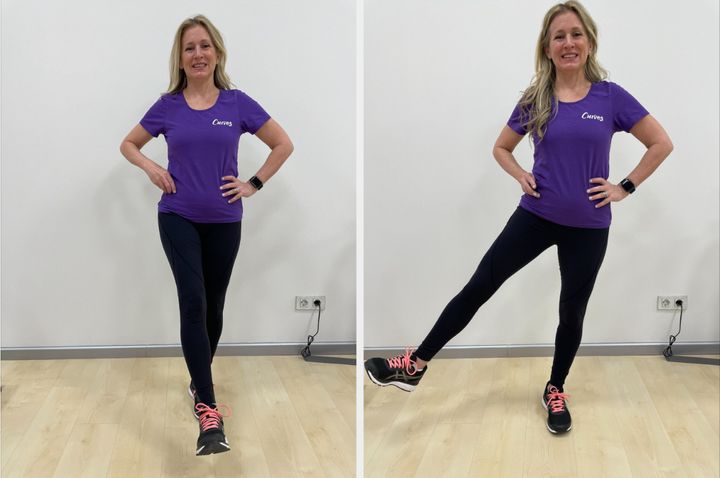
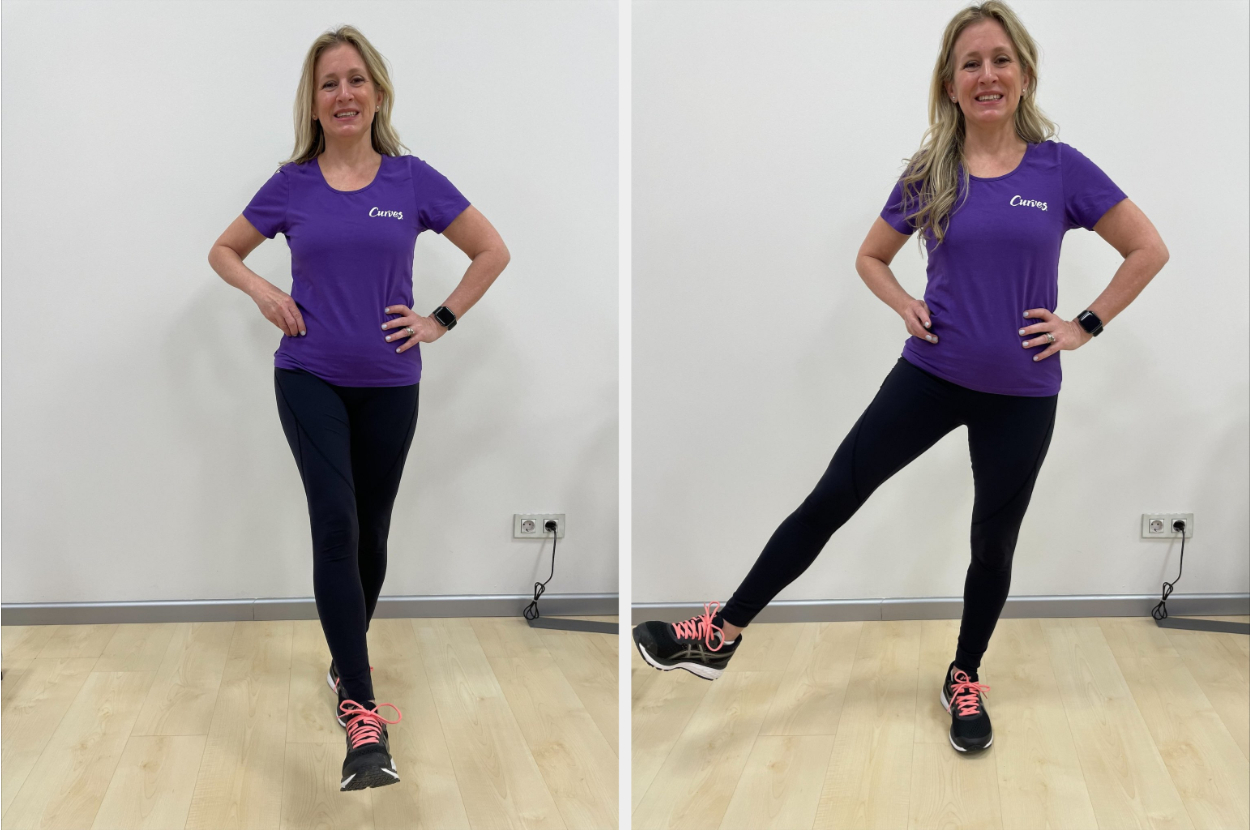
1. Leg swing

Stand with your feet together and your hands on your hips. Transfer your weight to your right leg and slowly swing your left leg out to the side as high as you can comfortable without leaning to the side. Maintain your balance by keeping your core tight, swing your leg back slowly and with control to cross slightly in front of your supporting leg and repeat. Keep your torso upright and facing forwards. This is a great exercise for the muscles in your inner and outer thighs, hamstrings, quadriceps, abdominals and hip flexors. Do this for 30 seconds then change legs and do the same on the other side.

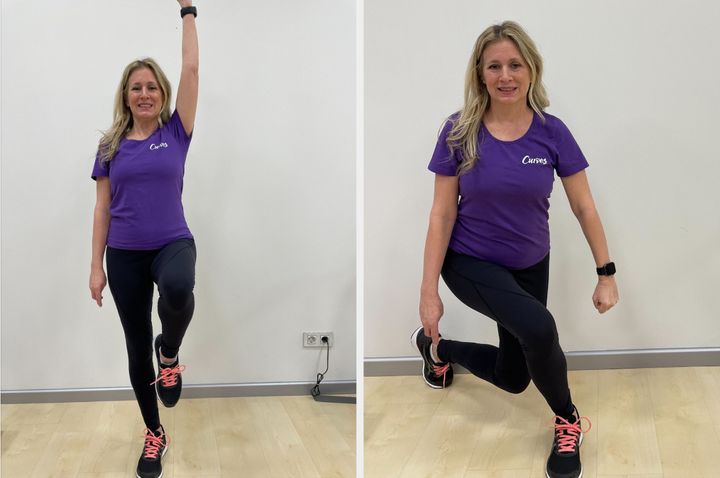
2. Statue of liberty

Start with your feet about hip width apart. Raise your left arm straight up and raise your left leg up to 90 then take your left foot down and crossed behind you dropping your knee to the floor and bringing your arm to your side. Perform this exercise slowly to focus on balance and keep your chest facing forwards. This is a great exercise for your abdominals, hip flexors, glutes, hamstrings and quadriceps. Do this for 30 seconds then change legs and do the same on the other side

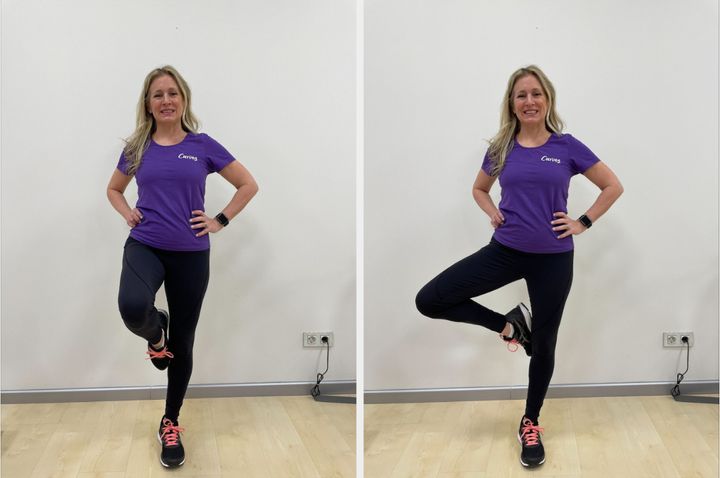
3. Single leg rotation

Stand on one leg with your hands on your hips and place the other foot against your knee or upper calf. Rotate your knee out to the side as far as you can without twisting the hips. Keep your hips and torso facing forwards then bring the knee back to the front. Perform this exercise slowly and with control. This is a great exercise for your abdominals, hip flexors and glutes. Do this for 30 seconds then change legs and do the same on the other side.

4. Standing side stretch

Start with your feet together and cross one foot over in front of the other keeping the feet close together, flat on the floor and pointing forwards. Raise both arms straight up and bend to the same side as your front foot. Keep your core tight and your back aligned so that you are not leaning forwards or backwards. Look up slightly towards your hands. This is a great exercise for your trapezius, deltoids, rhomboids, triceps, obliques, abdominals and hip flexors.

5. Balance table

Start on the floor with your hands stacked below your shoulders and your knees stacked below your hips. Extend your opposite arm and leg out until you form a straight line from your finger tips to your toes, hold for a couple of seconds then return to the start position and extend the other arm and leg out. Look at point on the floor between your hands. Keep your core in tight and be careful not to extend your leg out higher than your shoulder. This is great for your abdominals and lower back strength as well as improving flexibility in your shoulders, and hips. Do this exercise for 30 seconds.

6. Forearm plank

Support your weight on your forearms with your elbows stacked under your shoulders and your legs extended out behind you on your toes. Keep your head in a neutral position so its not hanging down or raised above your shoulders. Pull your core in tight and keep your hips down so your abs are engaged but not sagging as this puts pressure on your lower back until you create a straight line from your head down to your heels. This is a great exercise for your abdominals, obliques, your back, shoulders, triceps, glutes and hamstrings. Hold this position for 30 seconds and don’t forget to breathe!

Move celebrates exercise in all its forms, with accessible features encouraging you to add movement into your day – because it’s not just good for the body, but the mind, too. We get it: workouts can be a bit of a slog, but there are ways you can move more without dreading it. Whether you love hikes, bike rides, YouTube workouts or hula hoop routines, exercise should be something to enjoy.

HuffPost UK / Rebecca Zisser

Share Button

New material can ‘capture toxic pollutants from air’

Researchers at University of Limerick, Ireland have developed a new material that has the ability to capture toxic chemicals from the air.

The material is capable of capturing trace amounts of benzene, a toxic pollutant, from the air and crucially use less energy than existing materials to do so, according to the researchers.

The sponge-like porous material could revolutionise the search for clean air and have a significant impact in the battle against climate change, the researchers believe.

Professor Michael Zaworotko, Bernal Chair of Crystal Engineering and Science Foundation of Ireland Research Professor at University of Limerick’s Bernal Institute, and colleagues developed the new material, with findings reported in the prestigious Nature Materials journal.

Volatile organic compounds (VOCs) including benzene are a class of toxic pollutants that cause severe environmental and health issues. Developing technologies to remove benzene from air at trace concentrations and doing it with a low energy footprint are both challenges that have not been overcome until now.

“A family of porous materials — like sponge — have been developed to capture benzene vapour from polluted air and produce a clean air stream for a long working time,” explained Professor Zaworotko.

“These materials could be regenerated easily under mild heating, making them candidates for air purification and environmental remediation.

“Our materials can do much better in both sensitivity and working time than traditional materials.”

Professor Zaworotko and Dr Xiang-Jing Kong from the Department of Chemical Sciences at UL, along with colleagues from leading universities in China, developed the new porous material which has such strong affinity for benzene that it captures the toxic chemical even when present at just 1 part in 100,000.

This material resembles Swiss cheese because it is full of holes and it is these holes that attract the benzene molecules, according to the researchers.

In terms of energy, because the capture process is based upon physical rather than chemical bonding, the energy footprint of capture and release is much lower than previous generations of materials.

“Breaking up gas mixtures is hard to do. This is especially true for the minor components that comprise air, which include carbon dioxide and water. The properties of our new material show that breaking up is no longer hard to do for benzene,” explained Professor Zaworotko.

Earlier work from Professor Zaworotko’s lab resulted in leading materials for carbon capture and water harvesting. The water harvesting material has such favourable properties for capturing and releasing water from the atmosphere that is already being used in dehumidification systems.

Dr Xiang-Jing Kong explained: “Based on smart design, our materials do well in addressing challenges of both technical and social relevance, such as trace benzene removal from air. This is hard for conventional materials, and thus highlights the charm of porous materials.”

Overall, these results suggest that a new generation of bespoke porous materials of the type invented at UL can enable a general approach to the capture of toxic chemicals from air.

“Aromatic isomers are difficult to separate in their mixtures with traditional methods, which are always energy-intensive,” Dr Xiang-Jing Kong explained.

“This research opened up possibilities to design porous materials for efficient separation of these chemicals with low energy input as well as removal of other trace pollutants from air.”

The study was funded by the European Research Council and Science Foundation Ireland.

Story Source:

Materials provided by University of Limerick. Note: Content may be edited for style and length.

Share Button