WellnessMaster

Get The Latest News on Holistic Wellness

WellnessMaster

Study gives animal testing alternatives a confidence boost

As part of a government effort to reduce animal testing, researchers at the National Institute of Standards and Technology (NIST) have worked with the Consumer Product Safety Commission (CPSC) and Inotiv Inc. to produce a new protocol for screening skin allergens. The method is potentially cheaper and faster than animal testing, while maintaining a similar performance.

The researchers built upon on an existing method, improving its efficiency, accessibility and quality controls. Using the new animal-free protocol, they evaluated 92 chemicals and found that their results agreed with those of a common animal test method for 77% of the compounds. The results, published today in Toxics, increase confidence in the new method’s measurements, potentially paving a route to standardization, which could both increase international trade and reduce animal testing.

Many governing bodies, including the European Union and certain U.S. states, have recently banned the sale of animal-tested cosmetics. However, animal testing is still required in some parts of the world to assess the safety of cosmetics. With regulations varying by region, it has become challenging for certain products to gain approval across the board.

Some animal-free methods of screening for skin allergens do exist, but their widespread adoption has been stymied by several limitations. For example, the direct peptide reactivity assay (DPRA) requires costly equipment that can only test a handful of samples at a time. The DPRA can be slow as well. To attain statistically meaningful conclusions about a test compound, testers would need to repeat the assay’s multiday process multiple times.

The low sample size per test also reduces opportunity for control samples that would allow researchers to identify and minimize factors that may vary between samples and skew measurements.

To increase confidence in animal-free tests and promote their adoption, several federal agencies, coordinated by a standing committee of the National Institute of Environmental Health Sciences, are assessing the reliability of new, promising methods. The CPSC, a member agency of the committee, has partnered with NIST to evaluate a method much faster than the DPRA, known as the electrophilic allergen screening assay (EASA).

The EASA can be used to determine how reactive a chemical would be with human skin proteins, that is, how likely it would be to cause an allergic response. No actual proteins, or the amino acids they are made from, are present in the test. Instead, the researchers use two probe molecules, 4-nitrobenzenethiol (NBT) and pyridoxylamine (PDA), which, when reacting with other chemicals, undergo changes that can be detected optically.

“The two molecules are like surrogates for the amino acids cysteine and lysine,” said Elijah Petersen, a NIST research scientist and lead author of the paper. “If a test compound binds to NBT and PDA, it is likely to also bind to the proteins in the skin, which is the first step of many adverse reactions.”

Although the initial version of EASA showed promise, the NIST and CPSC researchers found it shared weaknesses with the DPRA, Petersen said. The type of instruments needed to run the original EASA method typically only hold up to eight samples at a time and are not readily available to most biological labs.

Petersen and colleagues reconfigured EASA so that 96 samples could be analyzed in a single run using plastic well plates and instruments called plate readers — two ubiquitous items in biological labs.

With up to 96 wells to work with, the researchers redesigned the protocol so that many control wells could be tested alongside wells containing test compounds. The controls would allow researchers to find out whether factors such as the solvent used, air bubbles in samples or the optical properties of the test compounds interfered with their measurements.

“In this one assay, we have much of the information we need to understand the sources of variability,” Petersen said. “I think we really capture more and have more confidence compared to other methods.”

To validate their redesigned protocol, the researchers used the new EASA to analyze 92 test compounds. Most of the chemicals had been assessed in previously published studies on mice through a standard test called the local lymph node assay (LLNA).

They found that the LLNA and EASA results agreed 77% of the time on which chemicals were allergens and which ones were not. Individual EASA tests were completed within a day, while LLNA tests require at least five days, Petersen said.

The new EASA also performed similarly to the DPRA, while testing samples at a higher rate and with more accessible equipment.

This work provides a robust methodology for evaluating the safety of cosmetics without animals. With further validation, the EASA could become a viable candidate for standardization and eventual adoption by regulatory bodies, according to Petersen.

“This study could support testing of commercial products, because we’re going to have a really good method that’s cheaper, faster, better quality,” Petersen said. “I think it could also help raise the quality of in vitro test systems in general if people adopt our approach of adding extensive process controls.”


Share Button

Timing of heart surgery crucial, research shows

Valve replacement heart surgery should be performed earlier than conventionally thought for people with aortic stenosis — according to new research from the University of East Anglia.

The condition is one of the most common and serious valve disease problems, caused by a narrowing of the aortic valve opening.

Once patients develop symptoms such as breathlessness, chest pains or blackouts then guidelines recommend replacing the narrowed valve. But many patients with aortic stenosis do not have symptoms even when they have severe narrowing of the valve and are thus not eligible for valve replacement.

New research published today shows that these patients would benefit by undergoing a valve replacement — before they suffer irreversible heart muscle damage.

Lead researcher Prof Vassilios Vassiliou, from UEA’s Norwich Medical School, said: “The heart has four valves, which allow the blood to flow in one direction efficiently. With increasing age, one of the valves, the aortic valve, becomes increasingly narrowed or ‘stenosed’.

“A lot of patients with severe aortic stenosis do not have symptoms and therefore are not eligible for valve replacement according to the current guidelines.

“For these patients without symptoms, the guidelines suggest a ‘watchful waiting’ approach and intervention is recommended only when they show symptoms or develop pump failure.

“We wanted to know if it would be better to perform surgery and replace the valve sooner rather than later.”

The research team carried out a systematic review and meta-analysis, comparing early intervention versus conservative management in patients with asymptomatic severe aortic stenosis.

They then analysed data from all the available studies which involved a total of 3798 patients, out of which 302 were included in the two largest randomised controlled trials and 3496 in the observational studies.

Prof Vassiliou said: “We found that early intervention, before patients have symptoms, is associated with lower risk of death and hospitalisation for heart failure.

“By the time the patients develop symptoms, there has likely been irreversible damage to the muscle of the heart. This in turn may preclude a worse prognosis and adverse outcomes even after successful intervention.

“The timing of aortic valve intervention is crucial.

“We hope that our findings may herald the beginning of a change in the management of aortic stenosis patients, enabling the intervention to take place more commonly whilst the patients are asymptomatic.

“Ongoing trials investigating this high-risk population are anticipated to shed more light into the matter and in the identification of the optimal time of intervention,” he added.

The research was carried out in collaboration with the University of Cambridge, the University of Edinburgh, the Norfolk and Norwich University Hospital, West Suffolk Hospital, the Royal Brompton and Harefield Hospitals, Imperial College London, and the University of Leicester. It was partly funded by the Wellcome Trust.

Story Source:

Materials provided by University of East Anglia. Note: Content may be edited for style and length.

Share Button

Charlie King: TOWIE star describes body dysmorphia ‘turmoil’

The former reality star appeared before the Health and Social Care Committee to discuss body image.

Share Button

Monkeypox Is Spreading In The UK Through Unusual Means. Should We Be Worried?

Covid concerns may have subsided and though they’re far from gone, now another virus, Monkeypox, has been making headlines.

Here’s what you need to know.

What is Monkeypox?

Monkeypox is a rare viral infection that typically does not spread easily between humans. It’s comparable to smallpox but milder, less infectious, and less deadly.

Most people recover within a week and the virus disappears on its own, prompting no long-term health effects. However, a more severe illness can occur in a few people.

The virus usually spreads through close contact with an infected person, although there’s a low risk of transmission among humans.

The symptoms include:

  • Fever

  • Headache

  • Muscle aches

  • Backache

  • Swollen lymph nodes

  • Chills

  • Exhaustion.

A rash can start too, usually on the face at first before moving to other parts of the body including the genitals. This rash then goes through different changes and can transform to look like chickenpox or syphilis before scabbing. The scabs then fall off, although it can leave a scar behind.

People without symptoms are not considered infectious.

How many cases have there been?

Three cases in London and another in north east of England have just been detected by the UK Health Security Agency (UKHSA), bringing the total up to seven confirmed cases all diagnosed between May 6 and 15.

By May 19, a further two cases had been confirmed by the UKHSA, one in London and another elsewhere in the south east of England.

Those needing urgent care were treated in specialist disease units in hospital, although they were all found to have the West African strain, which is much milder compared to the Central African.

So, why are people concerned?

These four new cases do not have known connections with the previous cases announced earlier in May, although investigations are underway to understand the links between them.

All four individuals were infected in London. They also all self-identify as gay, bisexual or other men who have sex with men.

There’s currently no link to travel abroad to places where monkeypox is currently endemic, meaning the medical community is still uncertain where the individuals picked up the virus.

Chief medical adviser for UKHSA, Dr Susan Hopkins, said that this is “rare and unusual”, and has prompted the health agency to look into monkeypox transmission in the community.

“We are particularly urging men who are gay and bisexual to be aware of any unusual rashes or lesions and to contact a sexual health service without delay.

“We are contacting any potential close contacts of the cases to provide health information and advice,” she added.

The UKHSA’s director of clinical and emerging infections Dr Colin Brown also noted: “While investigations remain ongoing to determine the source of infection, it is important to emphasise it does not spread easily between people and requires close personal contact with an infected symptomatic person.

“The overall risk to the general public remains very low.”

The World Health Organisation (WHO) is now looking into how the virus is circulating and the risk it poses to both endemic and non-endemic country.

They also predicted that case numbers and the number of countries monkeypox is in will rise.

How is it usually transmitted?

The infection is usually picked up from infected animals in rainforests. Minor outbreaks usually occur in West and Central Africa, but transmission is low because it can only happen through direct contact with lesions or respiratory sections.

Infectious disease epidemiologist Mateo Prochazka explained on Twitter just why the new findings were so surprising.

He wrote: “Close contact between two people (such as during sex) could also facilitate transmission – but this has never been described before.”

He continued: “What is even more bizarre is finding cases that appear to have acquired the infection via sexual contact. This is a novel route of transmission that will have implications for outbreak response and control.”

He also pointed out that work is ongoing, especially when it comes to protecting health workers, a sexual health service response and preventing an increase in stigma and inequalities.

Is this the first time it’s been identified in the UK?

No – three people were diagnosed in September 2018 and an additional person was named in December 2019 after flying back from Nigeria. Another three cases were reported from within the same family in May and June 2021, after the person who initially caught it travelled back from Nigeria.

Share Button

Jake Daniels Receives Wave Of Support From Footballers And LGBTQ+ Stars After Coming Out As Gay

Blackpool FC player Jake Daniels has received a wave of support since coming out as gay.

On Monday afternoon, the 17-year-old spoke his truth in a statement published on his club’s official website.

He said: “I’ve hated lying my whole life and feeling the need to change to fit in. I want to be a role model myself by doing this.

“There are people out there in the same space as me that may not feel comfortable revealing their sexuality. I just want to tell them that you don’t have to change who you are, or how you should be, just to fit in. You being you, and being happy, is what matters most.”

Since speaking out, Jake has received countless positive messages, including from his peers in the football world.

Former footballer Ian Wright also retweeted a message sending “move love” to Jake and saying his coming out “will also mean so much to so many and help to normalise something that should absolutely be normal”.

The Football Association issued a statement saying: “Football is a game for all, with diversity at its heart, and this is a hugely positive step as we strive to build an inclusive game that we can all be proud of.

“We are with you and hope your story will help to give people across the game the strength and encouragement to be their true self.”

Meanwhile, a host of public figures from the LGBTQ+ community have also voiced their support for Jake.

Jake is the only current openly gay male professional player in the UK, and the first male professional footballer to come out publicly since the late Justin Fashanu 32 years ago.

Speaking to Sky News, he said: “I have been thinking for a long time about how I want to do it, when I want to do it. I know now is the time. I am ready to be myself, be free and be confident with it all.

“I feel like I am ready to tell people my story. I want people to know the real me.”

Jake praised his team for being “absolutely amazing” after he came out to them, saying his teammates have “all been so supportive and everyone has had my back”, adding that his captain had told him he was “so proud” of him.

“Their reaction has been brilliant. It’s the best thing I could have asked for,” he added.

Blackpool Football Club went on to say they had worked closely with the LGBTQ+ charity Stonewall and “the relevant footballing organisations to support Jake” in his coming out.

Share Button

Piers Morgan Uncensored Guest Brands Host A ‘C***’ Live On Air

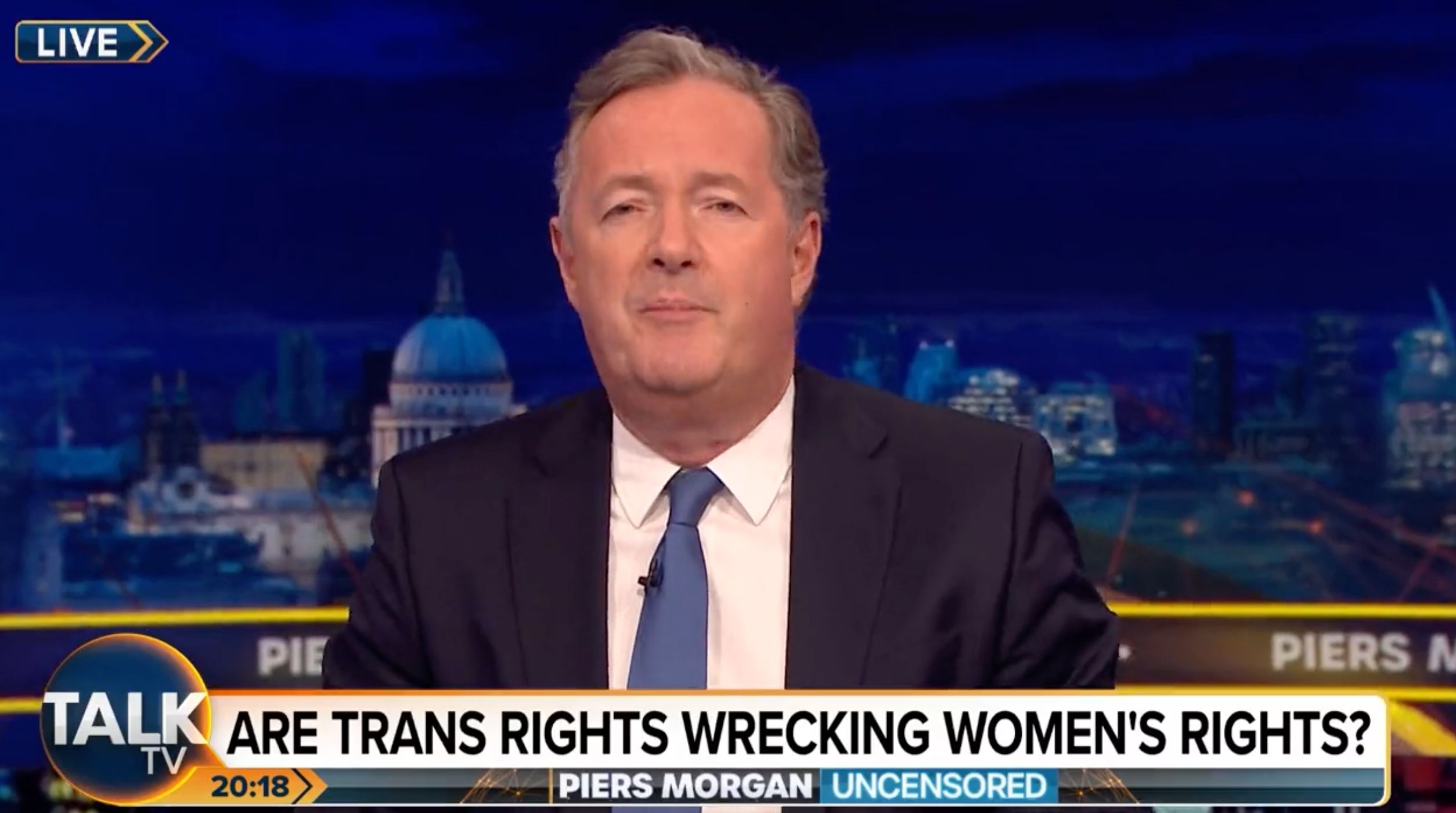
Piers Morgan Uncensored more than lived up to its name during Monday night’s episode, when a guest dropped a C-bomb live on air.

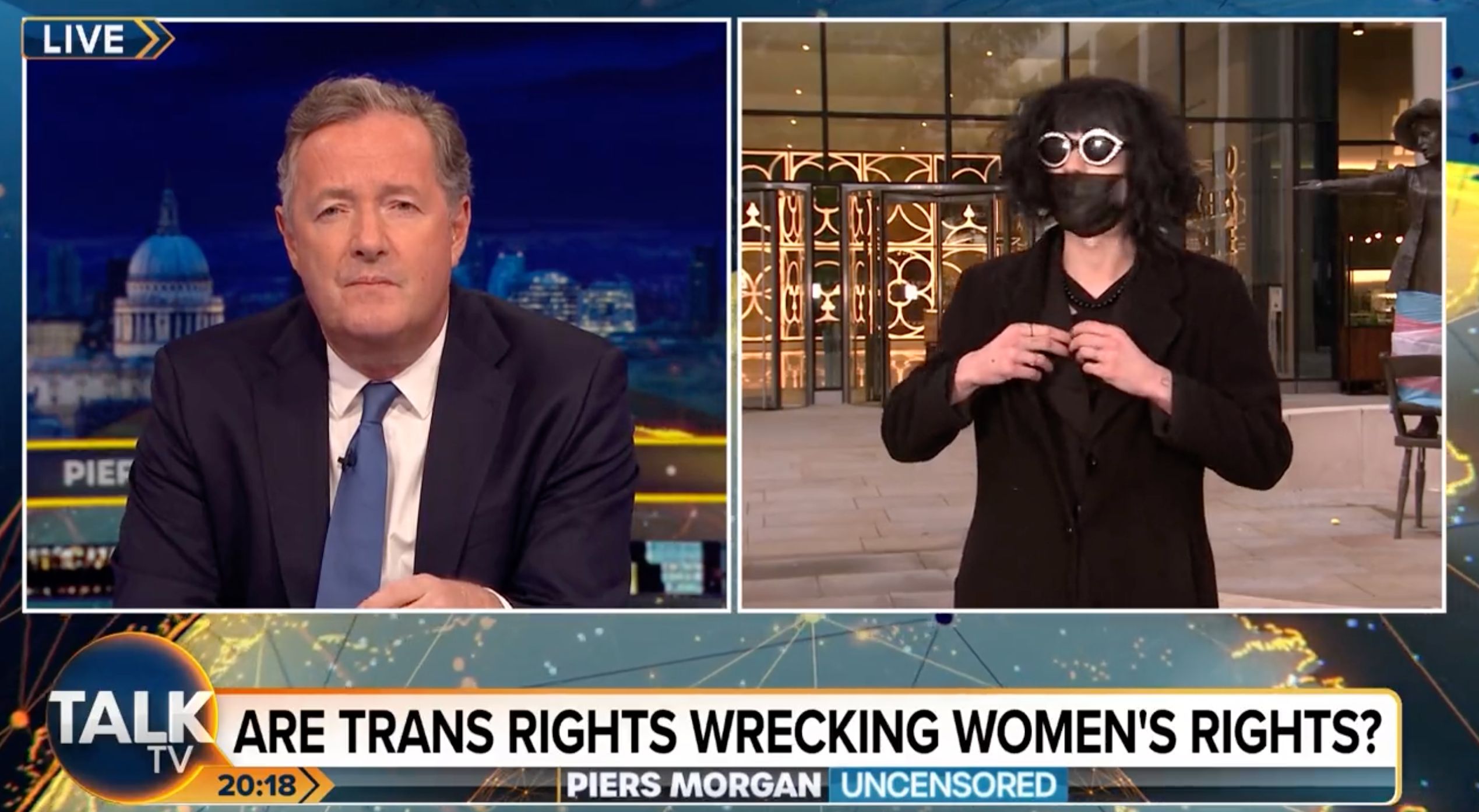
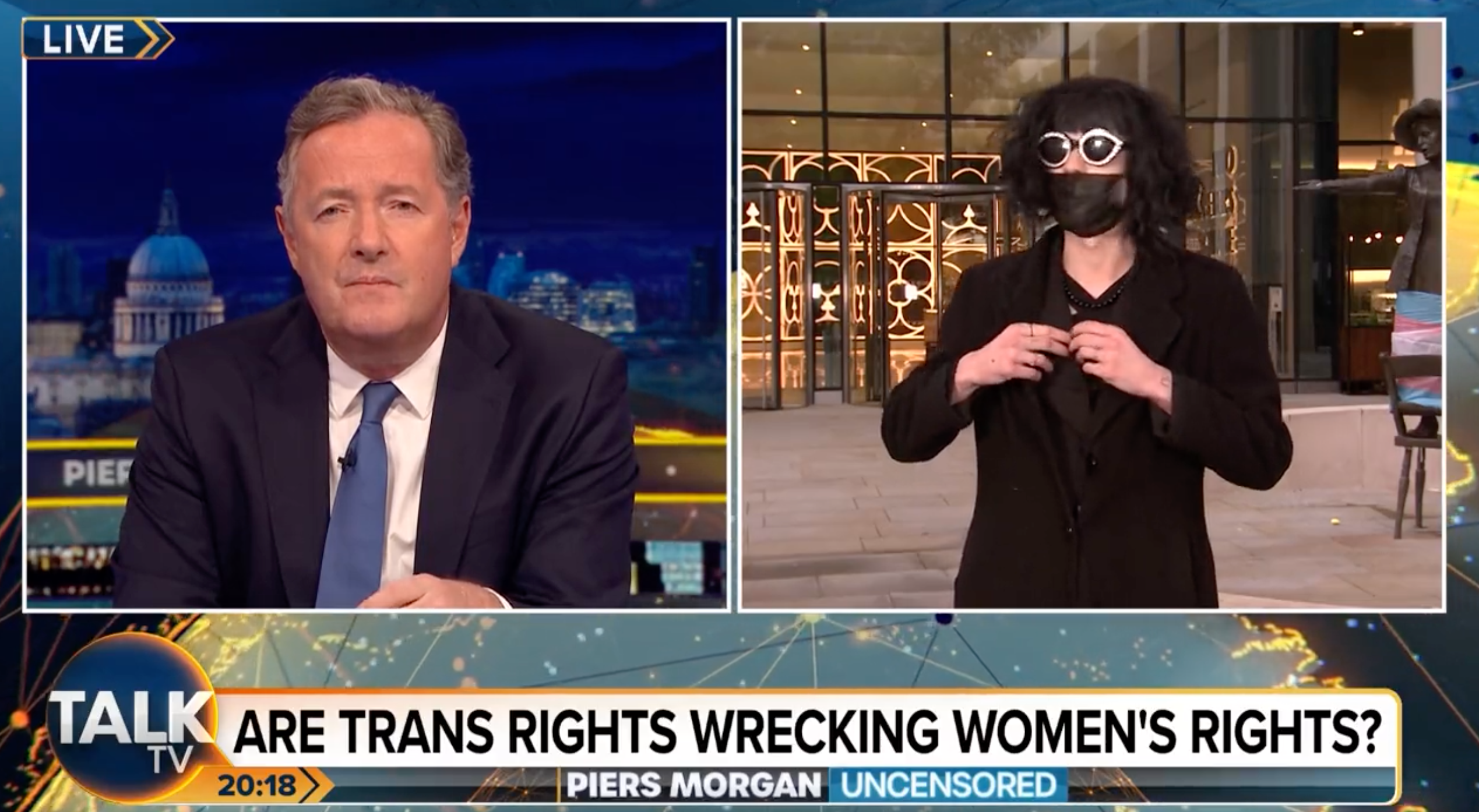
During the latest instalment of Piers’ topical Talk TV show, he spoke with “Jame” a protester at a trans rights demonstration organised by the activist group Trans Rise Up.

Jame wore a wig, sunglasses and face mask to obscure their true identity, with the former daytime star beginning the conversation by insisting he had “always supported trans rights to fairness and equality and I mean that sincerely”.

“That’s bullshit, bro,” his guest then suggested, with Piers responding: “You can say ‘bullshit, bro’ and you’re entitled to. It’s an uncensored show and you’ve just proven it.”

Jame then reminded the host that after a previous discussion about gender identity, the host had mockingly changed his Twitter profile picture to what Piers described at the time as a “two-spirit penguin”.

As the conversation continued, Piers apologised to viewers for Jame’s language, before stating his “issue” with trans women being allowed to compete alongside cisgender athletes in women’s sport.

“I think it’s very unfair that trans women should be competing against women born to female biological bodies,” he said, before Jame urged him to “shut up, bro”.

“Do you understand that a majority of women athletes do not give a shit about trans women in sports?” Jame asked.

Piers then said: “You can’t just call everyone who disagrees with you transphobic. If you keep swearing I’ll have to cut you off.”

The interview then culminated in Piers asking Jame what their issue was with his position, with the guest beginning to take off their mic, saying: “I don’t really know. I’m going to leave the interview, now. I kind of only came on here because I thought it would be kind of funny. But I wanted to say, ‘you’re a c***’.”

Jame ended the exchange by telling Piers they thought he was a "c***"
Jame ended the exchange by telling Piers they thought he was a “c***”

Responding to the jibe, Piers branded Jame a “complete idiot” and “very unpleasant piece of work”.

After apologising to viewers again later in the show, Piers added: “It’s a shame. I wanted to have a rational, sensible debate. They didn’t, so that’s it. They won’t be back on and we move on.”

Piers Morgan Uncensored launched last month with a much-publicised interview with former US president Donald Trump.

However, since then, reports have claimed that viewing figures for Piers’ show have taken a nosedive since its debut, with other programmes on Talk TV reportedly recording no audience at all at some points.

Piers previously tweeted: “Linear TV [is] increasingly irrelevant [compared] to total eyeball potential for a global show like this, especially with younger viewers who don’t really watch TV any more.”

This somewhat contradicts what the divisive broadcaster repeatedly used to say during his tenure on Good Morning Britain, when he would often goad BBC rival Dan Walker over their respective ratings.

Share Button

I may not have long to live but I want three children

Ewan Bowlby, 27, was diagnosed with a brain tumour but plans to get married and start a family.

Share Button

Obesity strategy delay immoral, shallow and weak – ex-Tory leader

Lord Hague says the government is “shallow” and “politically weak” for delaying plans to curb obesity.

Share Button

Breast cancer ‘metal detector’ recommended to NHS

The new gadget can help surgeons find and remove cancer that has spread from the breast, say experts.

Share Button

Shave better to reduce ingrown hairs

An ingrown hair happens when a shaved or tweezed hair grows back into the skin. You might have pain and itching. You also might notice skin darkening, small, round or pus-filled bumps. This common problem is especially likely if you have tightly curled hair. These shaving tips can help: 1. Use a lubricating shave cream or gel. 2. Use a sharp razor. 3. Shave in the direction of hair growth. 4. Don’t pull your skin taut while shaving.

May 17, 2022

See more In-depth

.

Share Button
✕
smartphone

FREE
VIEW