How you start your day can set the tone for everything that follows.
Even if you don’t consider yourself a morning person, there are easy, small steps you can do as soon as you wake up that can make a big difference in your mood and stress levels as your workday gets underway.
Advertisement
Here are some of the things productivity experts say they do to get weekday mornings off to a good start. Their answers were lightly edited for clarity and length.
I drink a glass of cold water.
“Every morning, I start my day with a big glass of ice water. Although it’s tempting to head straight for the coffee, when you start your day with ice water you’re rehydrating yourself after seven to nine hours of fasting.
“Rehydrating with ice water helps me feel more alert, and supposedly there are benefits like jump-starting your metabolism and helping you flush out toxins. To make this morning step a no-brainer — especially because I am not a morning person — I fill up an insulated tumbler with ice water and place it on my nightstand before bed. When I wake up, it’s right there and ready for me without having to make my way to the kitchen to fill a glass. Once I’ve had my glass of water, I enjoy a delicious cup of that life-giving coffee.” — Anna Dearmon Kornick, a time management coach and host of the “It’s About Time” podcast
Advertisement
I do a breathing exercise to get centered.
“As a night owl, the early morning club is not for me. These three simple habits have been helpful for me for many years now: daily affirmation, meditation and gratitude journaling. Once awake, I silently say a positive affirmation. Usually, it is ‘I am calm. Breathe.’ But, if I [know I’m going to be speaking publicly that day], the affirmation could be ‘I am confident.’
“Then, meditation or a breathing exercise follows to deepen the positive affirmation. It takes 10 minutes, but if I do not have time, I would just do a one-minute breathing exercise. I love doing ‘4-2-4,’ which is inhaling for four seconds, holding for two seconds and exhaling for four seconds. It helps the body relax and focus.
“Finally, my gratitude journal helps me set the intention for the day because I write three things that I do to make my day great.” — Samphy Y, productivity coach
Advertisement
I meditate, then review my schedule.
“I meditate and journal every morning before I begin work. This helps me relax and prepare for the day to come. I then review my schedule for the day and week, making note of work sessions, upcoming meetings and appointments. Lastly, I create a short list of my daily to-dos.” — Rashelle Isip, productivity consultant
I decide how I want my day to end.
“Start the day by setting your own finish line. We live in a world where work never ends. There’s always more you can do: another idea to explore, another request to consider, another step to take in that ongoing project, another lead to follow up, article to read or social media post to comment on.
“So in a world where work never ends, it’s up to us to define our own finish lines. What’s on my agenda? What does success look like today? What’s most important? How do I want to show up today? When we check in with ourselves first, we can set our own finish lines for the day, and we can celebrate when we cross it. Our brains find this much more rewarding, and are less prone to being tempted by other distractions that might derail us.” —Grace Marshall, productivity coach and author of “How To Be Really Productive: Achieving Clarity and Getting Results in a World Where Work Never Ends”
I write down my daily goals.
“The first thing I do after praying is write in a goal-setting journal. I write my daily goals, review my weekly and monthly goals and even set a few new ones.
“This is actually a newer ritual for me. It’s more holistic. Previously, I did very pedantic productivity things like ‘writing a to-do list’ only, but incorporating my prayer and affirmative work also helps me take [care] of my person.” — Lindsey Holmes, productivity consultant and CEO of Usable Tech Co.
I read and write to get in a creative headspace.
“I spend the first 90 minutes of my morning getting kids up and ready for school. But once I’m at my desk, I make sure to do two things: I read and I write a little in my ‘free writing file.’
Advertisement
“This year I’m reading through all the works of Shakespeare, so I read 3-4 pages in my collected works of Shakespeare. Last year I read through ‘War and Peace’ one chapter a day; there are 361 chapters. Then my experimental writing this year is about a single day in a character’s life, stretched over 365 bite-sized entries. So I write one of those (100-200 words). Both help me start the day in a creative space.” — Laura Vanderkam, a time management expert and author of the forthcoming book “Tranquility by Tuesday: 9 Ways to Calm the Chaos and Make Time for What Matters”
I do a spiritual practice.
“For the past 10 years, I’ve started my morning with the spiritual practice of Bible reading and prayer. I wake up before my kids, pour a cup of strong coffee, and spend about 30 minutes on my most important relationship — the one I have with God.
“Of course, not everyone’s spiritual practices look the same. But I’ve found that starting the day by caring for my soul helps me to remain peaceful and grounded when life gets hectic. It also helps me to start my day on my own terms. For the first 45 minutes that I’m awake, I don’t have to react to my kids, my clients or anyone else’s agenda. It helps me remember that, as a human being, I’m not defined by how much I get done.” — Katie Wussow, a business coach for creatives and host of “The Game Changer” podcast
I do something that brings me pleasure before starting work.
“For several years, I’d wake up and scroll social media apps, which is a horrible way to start the day. Finally, I just moved my apps off my home screen so I no longer opened them out of muscle memory, and, since my intention with opening Twitter first thing was to catch up on the news, I’d simply … open a proper news app instead.
“Once I’ve read the news and am a bit more awake, I pivot to the real nice way to start my day: doing a crossword puzzle (and, now, Wordle!). It’s a nice, gentle way to start the day that has nothing to do with productivity — these days, I don’t even make a to-do list until I officially start working — and everything to do with introducing a little pleasure into my morning routine.
“After the crossword, I putter around with coffee and podcasts and maybe even some knitting and/or ‘Real Housewives.’ Basically, I treat my mornings as my own time, free of the stress of work emails or too many Twitter takes, or even just limited to the most functional tasks like showering or taking the dog out, which allows me to start my actual workday in a focused and relaxed place.” — Rachel Wilkerson Miller, Vox senior editor and author of “Dot Journaling — A Practical Guide”
You’re reading Life-Work Balance, a series aiming to redirect our total devotion to work into prioritising our personal lives.
Finding a quiet toilet cubicle, a vacant conference room, or any corner of the office or work floor you can privately sob. Sound familiar?
Advertisement
Crying at work isn’t an alien experience for many of us. And since the pandemic, those who have been propelled to the WFH environment can weep away without shame and the judgemental glances of their co-workers.
It can be a cathartic experience, to let out your work frustrations and stresses before carrying on with your responsibilities. You might even have an open policy at work where all sentiments are welcome.
Advertisement
While it’s good to let your emotions out and express yourself, we must also ponder the question – should our work places be making us cry?
It’s no secret that employment, no matter in which form, is stressful and occupies much of our thoughts. But our employment isn’t supposed to dominate our emotion in the way it does.
Advertisement
Work under capitalism has terrorised our emotion – we’re forced to constantly be switched on, available, regulate our feelings on demand (think how often we have to suppress anger, indignation, sadness at work and put on a face), and offer ourselves as capital toward businesses much more successful than we as workers are.
So when it feels like we’re hamsters on a never-ending wheel, with the bills and responsibilities mounting on us, with little room to breathe, it’s easy for our emotions to overspill and reach breaking point – often ending in tears.
Lucy*, 43, from Northampton, can relate all too well to this. “In my 20s and 30s, I cried a lot at work, for various reasons. I was figuring out who I was and my work place often wanted me to be someone that just wasn’t my personality. I ended up in tears because my work kept expecting me to be more assertive and forceful, which is the opposite of who I am.”
But Lucy had to keep her feelings private because, she says: “I think they would have seen crying as a weakness or unprofessional and unbusinesslike.
Advertisement
“Our workplaces just expect us to navigate our own emotion without any effort to remedy any ill feelings.”
But, Lucy admits, it does also depend on your profession. “Some are better than others with helping people. My workplace also provided a certain number of therapy sessions per issue you were having but I don’t think a lot of people even knew about it.”
Similarly, for Nora*, 29, a deputy lighting director at a theatre in London, not only has her job left her weeping in the past, she doubts little would change if bosses were aware of the toll they had on her.
She tells HuffPost: “My work place made me cry because of severe lack of resources and time and constant pressure to complete goals by an unmovable deadline under adverse circumstances. I was regularly working 60hr+ weeks with minimal breaks, high levels of physics and mental work and increasing demands of productivity.”
Like many of us, Nora kept her feelings hidden.
“I didn’t let work see me cry, instead I removed myself to a private location. If they had seen I think they would have responded well emotionally, i.e being initially caring and empathetic but fundamentally no actual structural or practical changes would be made.”
The experience has left Nora with little belief in workplaces to care genuinely about their employee’s wellbeing.
“I think workplaces put on a show, in most cases even earnestly, of supporting our emotions and mental health but in practice don’t actually have any infrastructure or ability to back these up,” she says.
“Most middle management are not themselves emotionally equipped or trained to deal with mental health or emotional breakdowns and yet are expected to solve problems usually caused by industry wide issues created and perpetuated by those at the highest level.”
So why is work so emotionally charged and how can we have a better grip on our emotions?
Advertisement
Well, it’s due to the nature of work itself and not a personal failing, says wellbeing psychologist Dannielle Haig.
“The workplace can be highly charged emotionally due to the fact there are numbers of humans grouped together in an environment that can be highly pressured with difficult interactions, personality differences and deadlines and so on,” she says.
“You become so emotionally exhausted that you’re vulnerable to external stressors and can no longer control your emotions. This is a sign that you need to take a break, you need some recovery time where you are investing in yourself and allowing your emotional batteries to recharge.”
But emotions arise from somewhere. You might consider addressing the stimulus – is it a difficult boss, a toxic environment?
Haig adds: “If you are feeling resentment for example, then it is time to build your boundaries and to start saying no to others and yes to yourself. If you’re feeling anger, then it’s a signal for you to remove yourself from the situation and once calm, to approach a situation from a different angle. The more you lean into your emotions and get curious about them rather than just allowing them to happen or trying to stop them, the more emotionally agile you’ll become.”
In an ever precarious job market, compounded with the cost of living crisis, most of of us are hyperaware of our earnings and employability, we might even be willing to put up with mistreatment, regardless of its emotional and mental cost.
But we’re also protected by labour rights and, in most places, a nascent understanding of work place harms and toxicity.
If we’re left in constant tears, it’s okay to question our employers, table open discussions, speak to HR, and try to change the environment, instead of toiling away to our own detriment, emotionally and physically.
*Names have been changed.
HuffPost UK/ Isabella Carapella
Life-Work Balance questions the status quo of work culture, its mental and physical impacts, and radically reimagines how we can change it to work for us.
Here’s something few of us are brave enough to admit about long-term relationships: We don’t always end up with our first choice.
Sometimes, we settle for “second best” ― and usually, that’s OK.
Advertisement
Technically, we’re all someone’s “second choice,” at least if your partner ever had an ex whom they intended to be with long term. Yes, that means you may be your current S.O.’s second choice without realizing it. (Sorry for waking up and choosing chaos with this article!)
That slightly uncomfortable relationship subtext was made explicit in the most recent season of “Love Is Blind,” Netflix’s notoriously messy dating show where singles meet through a wall, fall in love and propose without ever seeing each other.
One of the couples, Jarrette and Iyanna, became engaged after Jarrette failed to secure a “yes” from his first choice, a contestant named Mallory. (Bear in mind, he had an easy chemistry with both women, arguably to an equal degree.)
After sitting with the fact that her would-be fiancé had basically proposed to another woman before proposing to her, Iyanna said “yes.” (She’d also gotten reassurance from Jarrette that what he felt for her was genuine.)
Advertisement
Iyanna and Jarrette were one of the few couples whose storyline ended in marriage, and a year later, they certainly seem to be happy and in love, at least going by their recent interviews, the reunion show and their many loved-up Instagram posts.
Still, many fans of the show felt discomfited by how it all played out.
“IYANNA, DON’T BE A SECOND CHOICE,” tweeted “Never Have I Ever” actor Maitreyi Ramakrishnan. “STAND YOUR GROUND.”
Advertisement
Others pointed out that there was actually something hyperrealistic about the reality show romance. (A reality show giving us realism? Since when!?)
“As much as I dislike Jarret [sic] not picking my Iyanna first, people forget that in reality some of us are actually someone else’s second choice, we just don’t know,” writer Dami “Oloni” Olonisakin tweeted, to a refrain of “sad but trues.”
The problem with ‘The One’
Why are so many of us icked out by the idea that people will end up with their “alternate picks”? (Outside of the fact that the language of “second choices,” “backup plans” and “alternate picks” is, admittedly, pretty icky.)
Maybe it’s because we’re eternally, hopelessly, wedded to our belief in soul mates. Personally, I think the sooner you disabuse yourself of the idea that you have exactly onesoul mate wandering the Earth looking for you, the sooner you can date with clear eyes and intention and actually find a decent person.
There’s not just The One. There’s The Ones ― people who, with enough physical chemistry and mutual effort, could be perfect, loving, long-term partners for each of us. (Singles especially should embrace the plurality of The Ones ― the odds are in your favor!)
Kate Stoddard, a marriage and family therapist at Wellspace SF, agrees that people’s ideas about soul mates set them back.
“I think this ancient narrative of ‘the one’ ― or ‘first choice,’ if we wanted to put it in those terms ― can be really problematic to modern couples,” she told me. “It’s also why people feel uncomfortable about second choices.”
“‘The One’ presumes that there is one person that can fulfill the heart’s desire, and we will ‘just know’ when we meet them, when really, there’s a lot that goes into how we select our partners,” she said.
We have to look for physical attraction, of course, but also an intellectual and emotional connection. Then there’s the considerably less sexy stuff: logistical things like family values, political/religious compatibility and for some folks, socioeconomic status.
Advertisement
“The One” isn’t always the one who can provide you with emotional stability in the long run. Those first-round picks aren’t always the most stable, especially if you grew up in a household with emotionally unavailable or fragile parents. It’s all too common to mirror that in young adulthood by seeking out emotionally unavailable partners.
“If you haven’t assessed and addressed early wounds, you may look for a partner that repeats a generational pattern,” said Akua K. Boateng, a psychotherapist and owner of Boateng Consulting. “If this is true, your first choice could be more harm than good even if you’re passionate about them. Your second choice may be more stable.”
As one man said in a viral Twitter thread about second choices in 2018, “My greatest loves didn’t necessarily go hand in hand with being the best relationships.”
If anything, shows like “Love Is Blind” and even “The Bachelor,” for all its myriad problems, have demonstrated how complicated it is to figure out the most compatible partner for you, said Samantha Burns, a millennial dating coach and author of “Done With Dating: 7 Steps to Finding Your Person.”
“It’s hard to decide who you love or want ‘the most’ because people make us feel different ways and elicit different versions of us, and those feelings are constantly changing, intensifying or decreasing,” she said.
If your first choice is unavailable ― emotionally unavailable, geographically, or in any other way ― or doesn’t bring out the best in you, there’s nothing inherently wrong with choosing someone of quality who is available to you. You just need to be willing to leave person No. 1 in the past.
“Choosing someone else who is available doesn’t mean you’re ‘settling,’” Stoddard said.
<img class="img-sized__img portrait" loading="lazy" alt="Generally speaking, there's nothing wrong with choosing someone else who is available to you if that person possesses all the qualities you’re looking for in a long-term partner, Stoddard said.” width=”720″ height=”720″ src=”https://www.wellnessmaster.com/wp-content/uploads/2022/04/people-marrying-their-second-choice-is-more-common-than-you-think-3.jpg”>
CSA-Printstock via Getty Images
Generally speaking, there’s nothing wrong with choosing someone else who is available to you if that person possesses all the qualities you’re looking for in a long-term partner, Stoddard said.
People who married their ‘second choice’ sound off
Peter, a 33-year-old construction worker, certainly doesn’t feel like he “settled” with his wife of five years, Ann.
The proverbial “one that got away” for him was his high school sweetheart, Sharon. The two met at a bowling tournament in eighth grade. Over strikes and spares, they hit it off almost instantly.
Advertisement
“Back then, we were talking daily, at night into the wee hours of the a.m.,” Peter, who like others in this story, asked to use his first name only to protect his privacy. “We just got each other.”
Unfortunately, college got in the way of their early-aughts romance: Sharon was headed off to a school in North Carolina while Peter went to Rutgers in New Jersey.
Even 500 miles away, Sharon kept her spell-like hold on Peter.
“Like, even when we knew we weren’t going to be together and that life changes, I could never fully unclasp from her grasp even if I wanted to,” he said. “She knew the vulnerabilities of me that I never let anyone know for a long time.”
At some point in his freshman year of college, Peter knew he’d have to distance himself from Sharon or he’d never be able to find someone else or even fully enjoy college life. He wrote her one final email and cut off all contact.
After allowing himself a period of “healing” ― “at the time my idea of healing was the whole, ‘the best way to get over someone is to get under someone else,’” Peter joked ― he ended up meeting Ann, his future wife.
The relationships he formed with both women couldn’t be more different.
Sharon “will forever be part of who I am,” Peter said, but the relationship was untenable. It didn’t have legs, and not just because of the physical distance. Young and in love (and more than a little naive), Peter relied on Sharon and their relationship as his sole source of happiness.
“Maybe I was just a sucker in love but she could tell me to jump and I’d ask ‘how high?’” he said. “I was a people pleaser when I was young. After that and seeing how I put so much of my happiness in the hands of someone else, I refused to do that ever again.”
With Ann, he’s self-contained and happy on his own, but even happier in her company ― the gold stamp of a solid, healthy relationship.
Advertisement
“We are the yin to each other’s yangs,” he said. “We complement each other so well, and we feed off each other’s energies. But we also recognize our individualities and understand that at the end of the day, the only person responsible for your happiness is yourself. Ann taught me that and I’m so grateful.”
“When people threw the words marriage or a family with Ann, I never flinched or got anxious. I had a sense of calm flowing through me. That’s how I knew.”
– Peter, a 33-year-old construction worker who technically married his second choice
There’s a common belief, famously referenced in an episode of “Sex and the City,” that men will marry whoever is around once they decide to settle down ― but that wasn’t the case for Peter.
The marriage had nothing to do with happenstance, timing or distance: Nothing like “Ann was there and Sharon wasn’t.”
“It wasn’t even that I wanted to get married, actually,” Peter said. “It was more that I wanted to spend the rest of my life with Ann.”
“When people threw the words marriage or a family with Ann, I never flinched or got anxious,” he added. “I had a sense of calm flowing through me. That’s how I knew.” (And if you’re curious, Ann knows about Sharon.)
Others are less sentimental about ending up with their second choice, like Aether, 30, a married woman who gave up on her first choice after they shared a chaotic whirlwind romance.
“My ex is honestly someone I find to be ineligible for marriage with anyone — especially with myself,” she told HuffPost. “The attraction was one of a series of trauma bonds. I’ll just say it’s easier to control your enemy when you’re sleeping with them.”
After some relationship missteps ― Mr. Ineligible For Marriage being a big misstep ― Aether realized that what she wanted most in a partner is someone who’s “reasonable and rational.”
“And in this world, we seldom find such people,” she said.
“While we wouldn’t have a marriage based on true love, we would have friendship, mutual respect, and had similar values for raising a family. So, in the end I suppose I threw in the towel so to speak and settled.”
– Jason, a 48-year-old hydrologic engineer
Of course, not everyone feels at peace about not ending up with their first choice. Jason, a 48-year-old hydrologic engineer, still wonders what might have been if he’d pursued the co-worker he fell deeply in love with at his summer job in college.
Jason, who asked to use a pseudonym, sensed that the woman, Jennifer, also had a crush on him, but nothing ever happened between them. The timing was always off ― one of them was always coupled up when the other was single.
After college, Jason relocated to another state and threw himself into his career and pursuing a graduate degree. He put his love life on the back burner, though in that decade of singledom, he dated a friend on and off. The friend tried to push a relationship on him, but Jason never felt that same heady rush of feelings for her like he did for Jennifer.
Still, his mid-30s were approaching, and he wanted to be a dad. His friend was also eager to start a family.
Advertisement
“I thought she would be a great mother,” Jason said. “While we wouldn’t have a marriage based on true love, we would have friendship, mutual respect, and had similar values for raising a family. So, in the end I suppose I threw in the towel, so to speak, and settled.”
Fourteen years into marriage ― tough years filled with a miscarriage and his wife’s cancer scare, but also happy ones thanks in large part to their adopted son ― Jason still regrets having settled.
“My wife and I rarely fight or argue and don’t appear miserable but I’m not really happy and I don’t think she is either,” he said. “It’s like a type of purgatory for a relationship; more of a business partnership.”
He still thinks about Jennifer, whom his wife doesn’t know about ― at least not as a concrete person with a name. Jason suspects that his wife knows he “settled for her.”
He and Jennifer sporadically kept in touch, even after she married someone else. One year, when Jennifer was in the same town for a work conference, they decided to meet up.
“In the end, she confessed that she had settled as well,” Jason said. “Turns out she had always felt the same. Tragic we both now have marriages and families. Not that I would have ultimately made the cut, but I still wondered what if.”
CSA Images via Getty Images
“I caution against quickly jumping into a relationship after a breakup or if you’re still pining for someone,” said Sarah Spencer Northey, a marriage and family therapist based in Washington, D.C.
How to make sure your ‘second choice’ is the best choice, according to a marriage therapist
Obviously, there’s a spectrum of outcomes when you marry your runner-up: You could be entirely fulfilled and in love like Peter, indifferent to your circumstances like Aether, or disheartened and openly questioning like Jason.
If you’re questioning your decision, it may mean that you didn’t give yourself adequate time to heal from your first choice’s rejection, said Sarah Spencer Northey, a marriage and family therapist based in Washington, D.C.
“I caution against quickly jumping into a relationship after a breakup or if you’re still pining for someone,” she told HuffPost.
Advertisement
“I try to normalize for clients that there are two big stages to getting over an ex,” she said. “One: getting over an ex to a point where you feel stable on your own, and two: getting over an ex to the point where you feel stable in a relationship with another person.”
That said, the therapist thinks it’s unrealistic to tell someone to remain single until they’re 100% over their ex: “Can you ever be 100% over someone who was a big part of your life?”
For most folks, feeling as though you “settled” with a successive partner is a fleeting feeling, Spencer Northey said.
“It’s important not to feed into the idea that the person you end up with is your ‘second choice,’” she said. “When things get tough in your current relationship, it’s easy to idealize the ex as the one you should really be with, but that is seldom the case. ‘The one that got away,’ got away for a reason.”
Ultimately, making it work with the person you love now boils down to two things: actively choosing them and reassuring yourself that relationships can last if both people prioritize each other and put in the work.
In time, your second choice naturally becomes your first choice, your best choice, hopefully for the rest of your life if that kind of monogamy is what you’re after.
That’s what happened for happily married Peter, though he admits he’s not a “what-if” type of person.
“I keep my focus on my relationship and marriage more than thinking about the past,” he explained.
In the end, he said, “I think I did get my first choice because the woman I married is the only woman I ever associated the word ‘marriage’ with. With Ann, I’m happy, fulfilled and content, even if she wasn’t my initial ‘first choice.’”
New research published in Diabetologia (the journal of the European Association for the Study of Diabetes [EASD]) finds that the consumption of healthy plant-based foods, including fruits, vegetables, nuts, coffee, and legumes, is associated with a lower risk of developing type 2 diabetes (T2D) in generally healthy people and support their role in diabetes prevention.
The study was conducted by Professor Frank Hu and colleagues at the Department of Nutrition, Harvard T.H. Chan School of Public Health, Boston, MA, USA, and aimed to identify the metabolite profiles related to different plant-based diets and investigate possible associations between those profiles and the risk of developing T2D.
A metabolite is a substance used or produced by the chemical processes in a living organism and includes the vast number of compounds found in different foods as well as the complex variety of molecules created as those compounds are broken down and transformed for use by the body. Differences in the chemical makeup of foods means that an individual’s diet should be reflected in their metabolite profile. Recent technological advances in the field of high-throughput metabolomics profiling have ushered in a new era of nutritional research. Metabolomics is defined as the comprehensive analysis and identification of all the different metabolites present within a biological sample.
Over 90% of diabetes cases are the type 2 form, and the condition poses a major threat to health around the world. Global prevalence of the disease in adults has more than tripled in less than two decades, with cases increasing from around 150 million in 2000 to over 450 million in 2019 and projected to rise to around 700 million in 2045.
The global health burden of T2D is further increased by the numerous complications arising from the disease, both macrovascular, such as cardiovascular disease, and microvascular, which damage the kidneys, the eyes, and the nervous system. The diabetes epidemic is primarily caused by unhealthy diets, having overweight or obesity, genetic predisposition, and other lifestyle factors such as a lack of exercise. Plant-based diets, especially healthy ones rich in high quality foods such as whole grains, fruits, and vegetables, have been associated with a lower risk of developing T2D but the underlying mechanisms involved are not fully understood.
The team conducted an analysis of blood plasma samples and dietary intake of 10,684 participants from three prospective cohorts (Nurses’ Health Study, Nurses’ Health Study II and Health Professionals Follow-up Study). Participants were predominantly white, middle-aged (mean age 54 years), and with a mean body mass index (BMI) of 25.6kg/m2.
advertisement
Study participants completed food frequency questionnaires (FFQs) which were scored according to their adherence to three plant-based diets: an overall Plant-based Diet Index (PDI), a healthy Plant-based Diet Index (hPDI), and an Unhealthy Plant-Based Diet Index (uPDI). Diet indices were based on that individual’s intake of 18 food groups: healthy plant foods (whole grains, fruits, vegetables, nuts, legumes, vegetable oils, and tea/coffee); unhealthy plant foods (refined grains, fruit juices, potatoes, sugar-sweetened beverages, and sweets/desserts); and animal foods (animal fats, dairy, eggs, fish/seafood, meat, and miscellaneous animal-based foods). The team distinguished between healthy and unhealthy plant foods according to their association with T2D, cardiovascular disease, certain cancers, and other conditions, including obesity and high blood pressure.
The researchers tested blood samples taken back in late 1980s and 1990s in the early phase of the three studies mentioned above to create metabolite profile scores for the participants, and any cases of incident T2D during the follow-up period of the study were recorded. Analyses of these data together with the diet index scores enabled the team to find any correlations between metabolite profile, diet index, and T2D risk.
The study found that compared with participants who did not develop T2D, those who were diagnosed with the disease during follow-up had a lower intake of healthy plant-based foods, as well as lower scores for PDI and hPDI. In addition, they had a higher average BMI, and were more likely to have high blood pressure and cholesterol levels, use blood pressure and cholesterol drugs, have a family history of diabetes, and be less physically active.
The metabolomics data revealed that plant-based diets were associated with unique multi-metabolite profiles, and that these patterns differed significantly between the healthy and unhealthy plant-based diets. In addition, metabolite profile scores for both the overall plant-based diet and the healthy plant-based diet were inversely associated with incident T2D in a generally healthy population, independent of BMI, and other diabetes risk factors, while no association was observed for the unhealthy plant-based diet. As a result, higher metabolite profile scores for PDI and hPDI indicated both closer adherence to those diets and having a lower risk of developing T2D.
Further analysis revealed that after adjusting for levels of trigonelline, hippurate, isoleucine, a small set of triacyglycerols (TAGs), and several other intermediate metabolites, the association between plant-based diets and T2D largely disappeared, suggesting that they might play a key role in linking those diets to incident diabetes. Trigonelline, for example, is found in coffee and has demonstrated beneficial effects on insulin resistance in animal studies, while higher levels of hippurate are associated with better glycaemic control, enhanced insulin secretion and lower risk of T2D. The team suggest that these metabolites could be investigated further and may provide mechanistic explanations of how plant-based diets can have a beneficial effect on T2D risk.
Professor Hu explains: “While it is difficult to tease out the contributions of individual foods because they were analysed together as a pattern, individual metabolites from consumption of polyphenol-rich plant foods like fruits, vegetables, coffee, and legumes are all closely linked to healthy plant-based diet and lower risk of diabetes.”
The authors conclude: “Our findings support the beneficial role of healthy plant-based diets in diabetes prevention and provide new insights for future investigation…our findings regarding the intermediate metabolites are at the moment intriguing but further studies are needed to confirm their causal role in the associations of plant-based diets and the risk of developing type 2 diabetes.”
Since they only collected blood samples at one point in time, the authors also believe that long-term repeated metabolomics data are needed to understand how dietary changes relate to changes in metabolome, thereby influencing T2D risk.
Lately there’s been this recurring TV commercial that my husband, Chris, and I find particularly distressing. It’s for a diabetes drug. The ad begins with a son coming home for a visit after leaving for college. He observes the way his father has turned his focus to old hobbies and is developing some new, healthier habits, implying that using this drug opens space in your life for other things besides managing your Type 2 diabetes.
The 60-second spot cycles through scenes of the father — a somewhat hefty, gray-haired man — working out, preparing salads (while his wife flashes their son an approving look), tinkering with his car’s engine and fishing on a scenic lake. The wife, a woman with a nondescript, practical haircut (also fully gray) and mom jeans (definitively not the trendy ones that my 19-year-old daughter wears), hovers on the periphery.
Advertisement
Our distress is rooted in the implication that this man and this woman supposedly represent people at our stage of life: parents with a child who has just left for college (our daughter began this fall), adjusting to the empty nest, rediscovering old pastimes and trying out new ones. Every time we see it — and if we happen to be watching the nightly news or one of the early morning shows, we see it a lot — one of us inevitably has to ask, “Do I really seem that old?”
“No way,” the other reassures. “There’s no way that couple is our age.” An unsure silence usually follows. It’s weighted with all the denials that want to confidently claim our hold on youth and vitality but are struggling to take shape and leave our mouths. Even if the actors in the ad are miscast age-wise (and I really want to believe they are), a nagging feeling tugs at the edge of my consciousness and leaves me doubting. Maybe that commercial is more about us than we care to admit.
This week, I turn 50.
I’d like to say that I am embracing this milestone birthday with boundless grace and gratitude. But honestly? I’m dragging my heels more than a little bit as the looming finish line of my 40s approaches and I teeter on the brink of becoming officially “middle-aged” (which statistically actually happened when I turned 40, since the average life expectancy for women in the U.S. is 81).
Advertisement
The author and her husband, Chris, at a beach in Maine in 2021.
Courtesy of Melanie Brooks
“You are only as old as you feel, right?” a friend (still living blissfully in her mid-40s) quipped recently in an effort to reassure me that turning 50 is no big deal. It didn’t work. “If that’s true,” I responded, “I’m in big trouble.”
Because here’s the thing: I do feel old. In. So. Many. Ways.
Take, for example, my left foot. It hurts. Regularly. Especially when I wake up in the middle of the night to pee (don’t even get me started on this epic betrayal by my bladder). The first step out of bed genuinely feels like the floor is made of spikes. I move through the darkness to the bathroom in an off-balance hobble reminiscent of a drunken sailor. It’s not pretty. A recent trip to the podiatrist revealed that the plantar fasciitis I had surgery for in my 30s has returned along with a half-inch heel spur. It might eventually mean more surgical intervention, but for the time being it means consistent use of a bulky stretching boot, Advil and sensible (translate that to ugly) shoes.
My foot issue wouldn’t be overly concerning if it weren’t for the fact that I’m supposed to be training for a half-marathon at the end of May — an ill-conceived venture instigated by my oldest brother (who might also be pushing back against the realities of his age; he’s 53, FYI) that I grudgingly agreed to because of my lifelong FOMO and not being able to stand the thought of my three brothers accomplishing it without me.
Advertisement
My foot, coupled with the gathering aches in my joints, the extra pounds assembling at my waistline (and other places I didn’t even know you could gain weight) that are more determined to stay than I am to fight them off, and an expectation (based on empirical data from the last few years of trying to regain my exercise momentum that includes two broken kneecaps and a stress fracture in my hip) that at any moment something is inevitably going to break down, have me strongly doubting the possibility of running that race, let alone making it up the stairs.
So, this very-soon-to-be-50 body — with its taunting night sweats forecasting menopause, mysteriously appearing spots and wrinkles, and obnoxious sagging flesh — is making me feel old. But it’s not just the physical. There’s also the fact that my firstborn (the culprit in the creation of that sagging flesh) is about to turn 22. How is it possible that I have a 22-year-old? Chris and I got married when we were 22. There’s no way that this kid of mine, who I still partly see as the 4-pound premature baby I could hold in the palm of my hand, is possibly ready for anything so grown up. And yet, whether that’s true or not, he does have a serious girlfriend and is about to apply to graduate school.
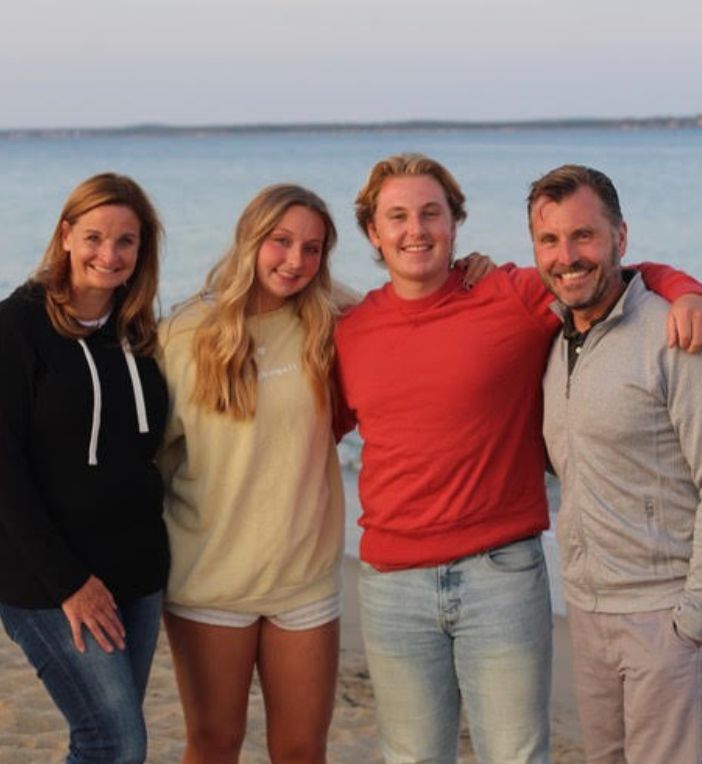
The author with her husband, Chris, daughter, Lily, and son, Will, at a beach in Maine in 2021.
Courtesy of Melanie Brooks
Despite my sincere efforts to stay relevant and keep up with the interests and outlooks of my own Gen Z kids and the college students I teach, some recent interactions have exposed the grim reality that I have not. Here’s a sampling:
I made a “Schitt’s Creek” reference in my class the other day, and my students offered me their best blank stares. “Nobody has watched ‘Schitt’s Creek’? Come on! ‘Ew, David’? ‘Best wishes, Warmest regards’?” I exclaimed. One guy dutifully raised his hand. “My mom loves that show,” he said.
Aware of its cult-like following, I convinced my 19-year-old daughter (who’d binged the series) to watch the first episode of HBO’s “Euphoria” with me while she was home for spring break. It was a mistake. She’d prepared me for the sexual content and substance abuse. But as I watched the teenage characters face one traumatic experience after another, I couldn’t stop myself from repeating, “Where are their parents?” and felt a burgeoning anxiety for the well-being of all teenagers the world over. “I can’t do it,” I told Lily, peeling my fingers away from my eyes, when she asked if I wanted to watch the second episode. We turned on “Grey’s Anatomy” instead.
I once saw a T-shirt that said, “You know you are getting old when you open your mouth and your mother comes out.” Well, last week, when I spent 10 minutes engaged in a sanctimonious conversation on a walk with a friend about Rhianna’s sheer black maternity dress over a lacy bra and panties and nothing else! that she wore to the Dior Show during Paris Fashion Week, I heard myself say, “I mean, really, can that even be called a dress?” and there my mother was.
Today I experienced a disproportionate surge of excitement when I managed to guess the day’s Wordle on my second try (and I came precariously close to posting it on Facebook).
When I turned 40, I didn’t feel old. There wasn’t time. I was teaching a full load of classes, and I’d started a master’s program in creative writing with lofty literary goals keeping me focused. My children were 12 and 9, and I was looking ahead to the business of middle school and high school. My work and the kids’ activities and year-round sports — baseball, soccer, gymnastics, basketball, track and field, lacrosse — were the guardrails that kept my schedule full, productive and moving in a defined direction.
Now, 10 years later, my kids are both in college and where all that scheduled activity used to live is wide-open space. Unlike Drug Commercial Man who has apparently pounced on the chance to re-create himself as he’s entered his new stage of life, I feel stalled. I’m approaching this sixth decade without a map, and a languishing sense of uncertainty has latched on and won’t let go.
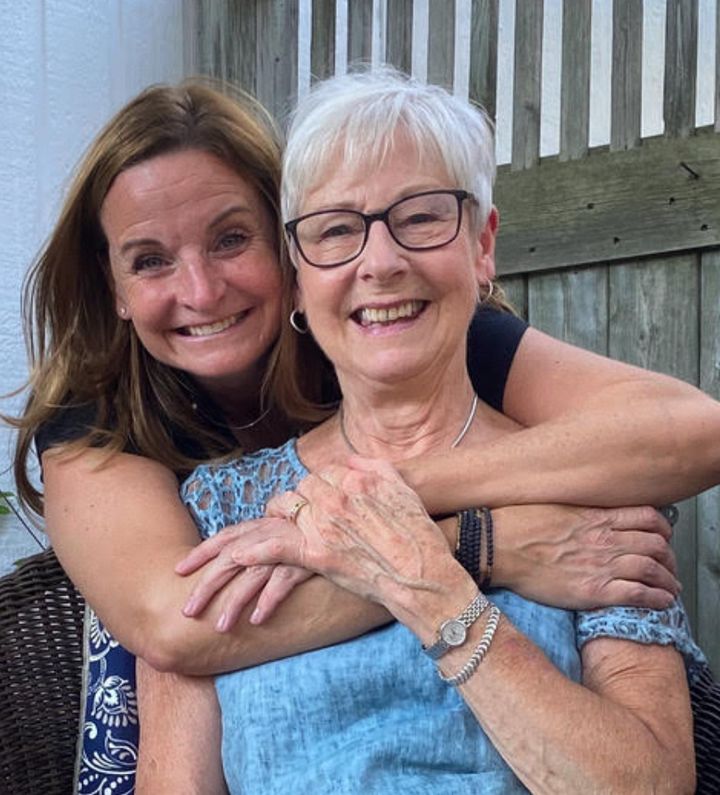
The author and her mom during their first visit in 18 months (because of the pandemic) in July 2021 in Kingston, Ontario, Canada.
Courtesy of Melanie Brooks
It doesn’t help that I’m turning 50 at a time when the whole world seems to be experiencing an existential crisis. There are layers of collective and individual trauma that have emerged from the ongoing effects of the COVID-19 pandemic, the war in Ukraine and the sobering forecasts from global climate researchers that have us all feeling a generalized sense of unease. But as I try to wrap my head around the mounting dread accompanying my birthday and what comes next, I recognize there is more to it than that.
My dad died when he was 53. He’d lived with an incurable illness for close to 10 years, and though reaching his 50th birthday was an achievement none of us had allowed ourselves to envision after his diagnosis, it felt less of a celebration and more of a step closer to the end (which, as it turned out, it was). My mom was 52 when he died. She and my father had dated since she was 14 years old. The grief of losing him derailed her natural transition to midlife, and she spent a good part of the next two decades trying in various ways to reinvent herself and fill the void. Now 78, she’s reached a graceful and settled rhythm, one definitely worth striving for when I reach that age. But in terms of role models for how to lean into my current moment or portraits of “flourishing 50s,” neither my father’s nor mother’s trajectories offered much guidance.
The truth is, I’m scared. I’m scared that I’m 50 and I haven’t done enough. I’m scared that I’m 50 and I don’t know what to do now. And I’m scared that before I can unravel these fears and grab onto a tangible thread of direction, time is going to run out.
Positive thinking, and oftentimes my therapist, tell me to wrap my arms around my fears, pull them close and listen to their wise whispers. My thinking, on the other hand, tells me to grab a handful of chocolate chips, hide under a weighted blanket and ignore my fears for as long as I can.
Advertisement
My immediate challenge, since there’s only so much fulfillment I can garner from the chocolate chips before self-loathing about the chocolate chips sets in, is to find some sort of middle ground. Maybe I don’t have to go as far as fully embracing the things that scare me, but I can at least acknowledge them, give them a little space inside all of this new wide-open space I have and stop trying to run from them (which, currently, doesn’t have the outlook of being all that successful anyway — see previous commentary on my left foot).
With a milestone birthday at hand, the author is ready to acknowledge her fears.
Courtesy of Melanie Brooks
Maybe it’s not so much about suddenly re-creating myself in a way that’ll make my kids feel compelled to do voice-over narration about their new and improved mother when they come home from college, but instead it’s about taking the pressure off, easing my way in and reminding myself who I already am. And even though I’m clearly not all that secure about her, there’s one thing I do know about 50-year-old me for certain: She’s not yet surrendering to the exterior cues prescribing mom jeans and a practical haircut for women her age, no matter what portrait that drug commercial paints of who I’m supposed to be.
Melanie Brooks is the author of “Writing Hard Stories: Celebrated Memoirists Who Shaped Art From Trauma” (Beacon Press, 2017). She teaches professional writing at Northeastern University and narrative medicine in the MFA program at Bay Path University in Massachusetts and creative writing at Nashua Community College in New Hampshire. She is completing a memoir called “A Hard Silence” about the lasting effect of living with the 10-year secret of her father’s HIV before his death in 1995. She lives in New Hampshire with her husband, two children (when they are home from college) and two Labs.
Do you have a compelling personal story you’d like to see published on HuffPost? Find out what we’re looking for here and send us a pitch!
Britain will support Ukraine “for as long as it takes”, Boris Johnson has vowed during a surprise visit to the war-ravaged country.
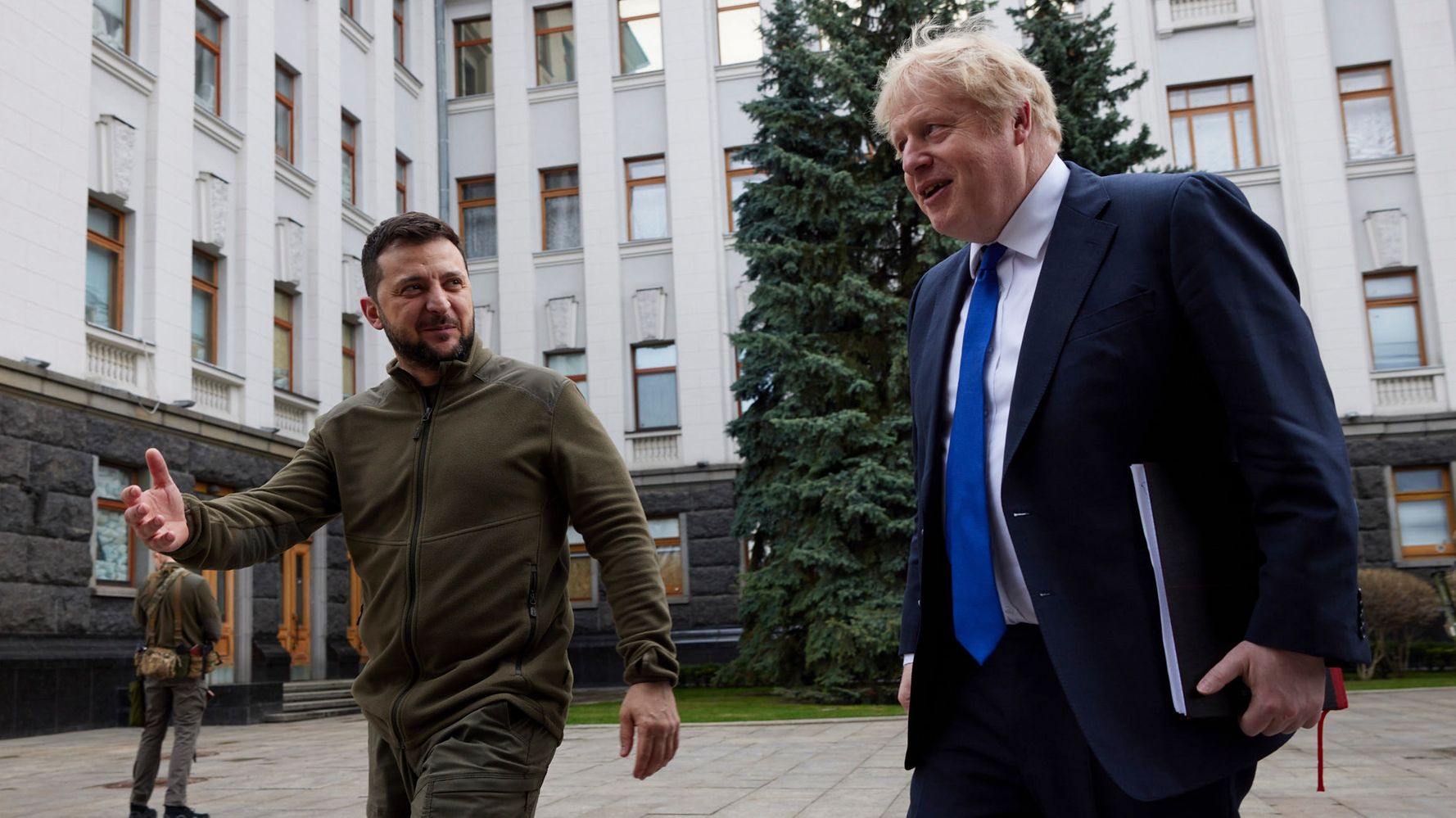
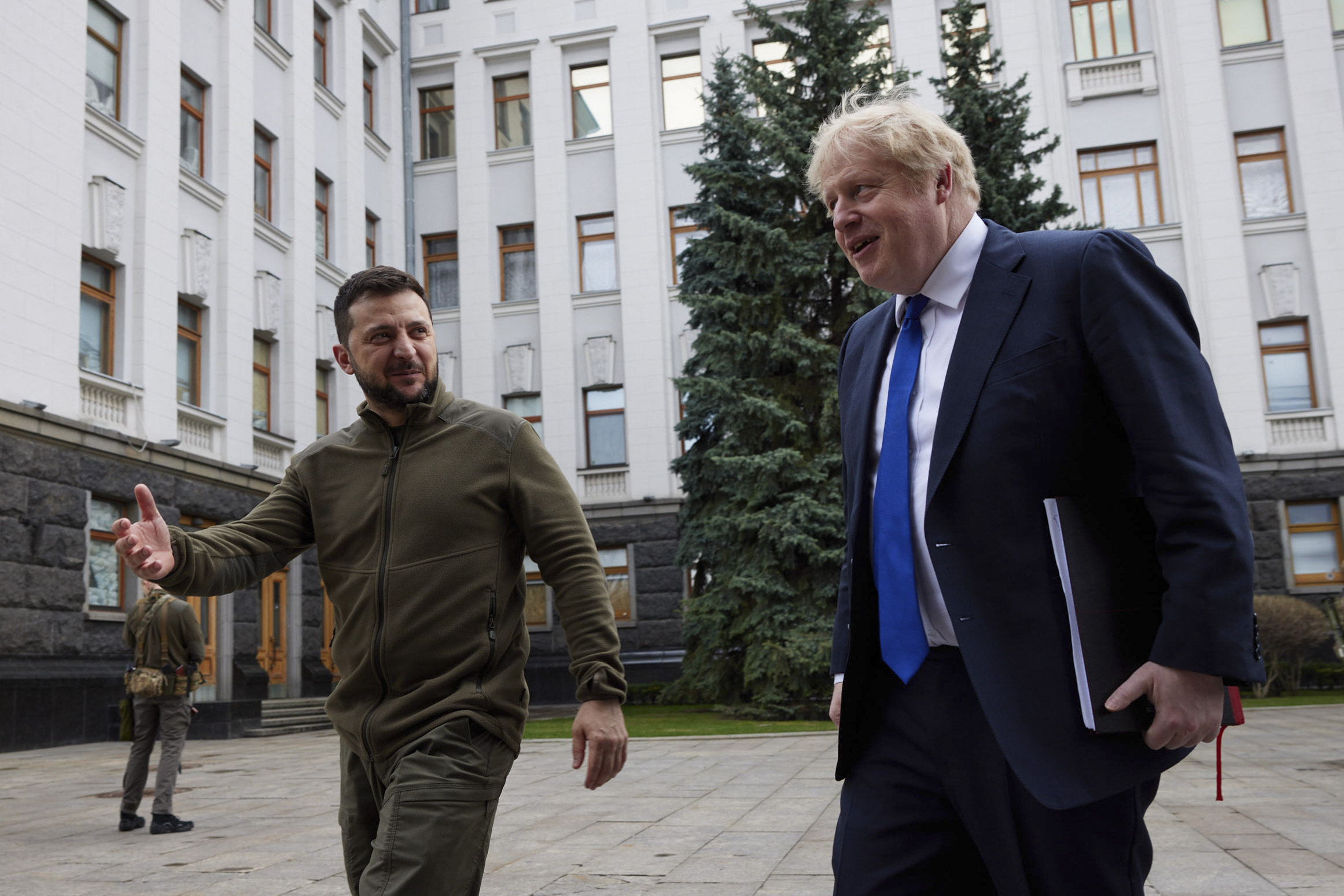
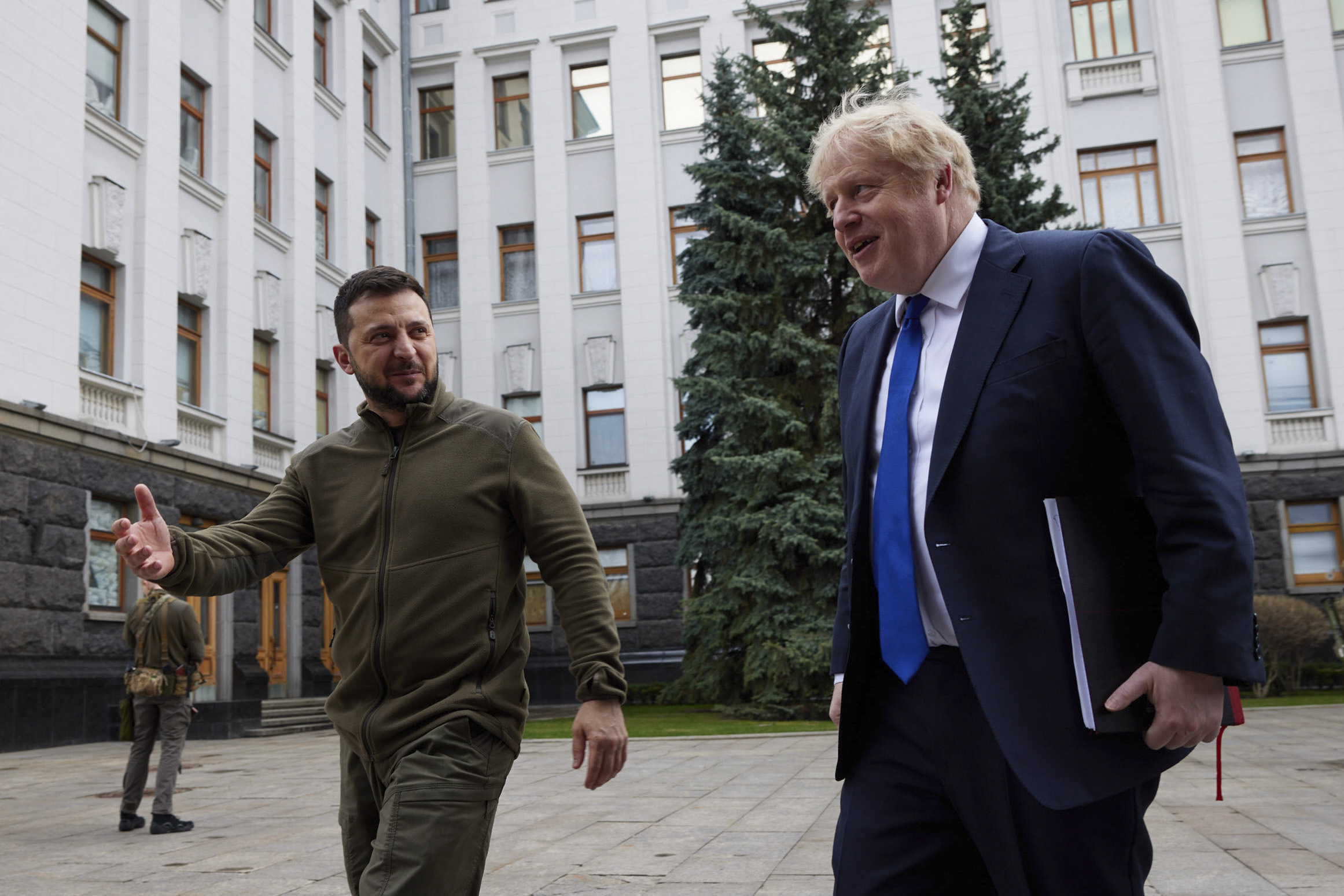
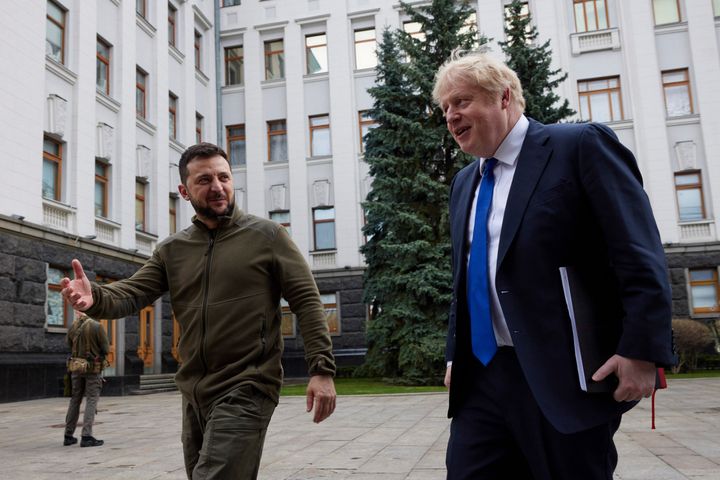
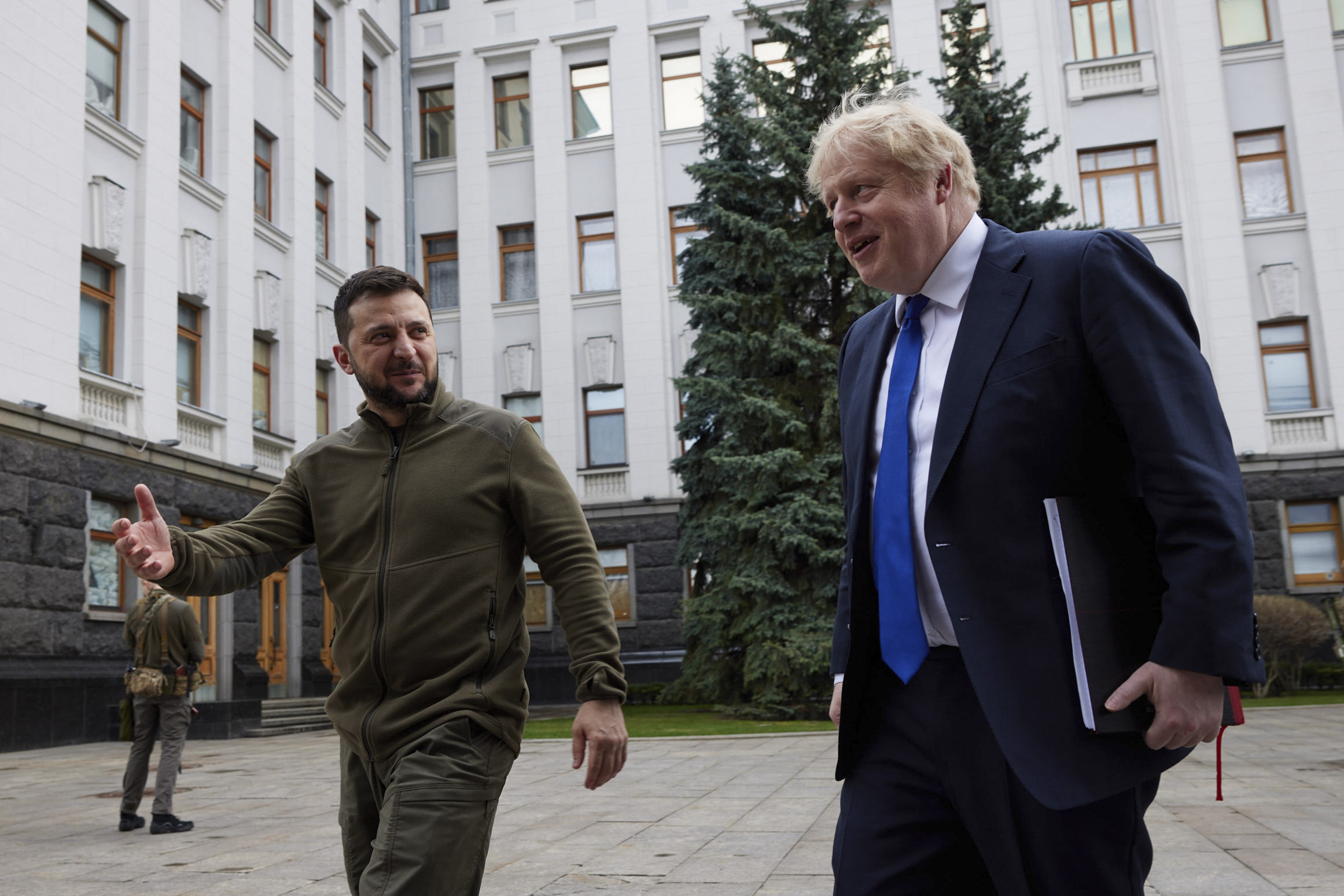
The prime minister spoke to ordinary Ukrainians as he walked around the capital city Kyiv with president Volodymyr Zelenskyy.
Advertisement
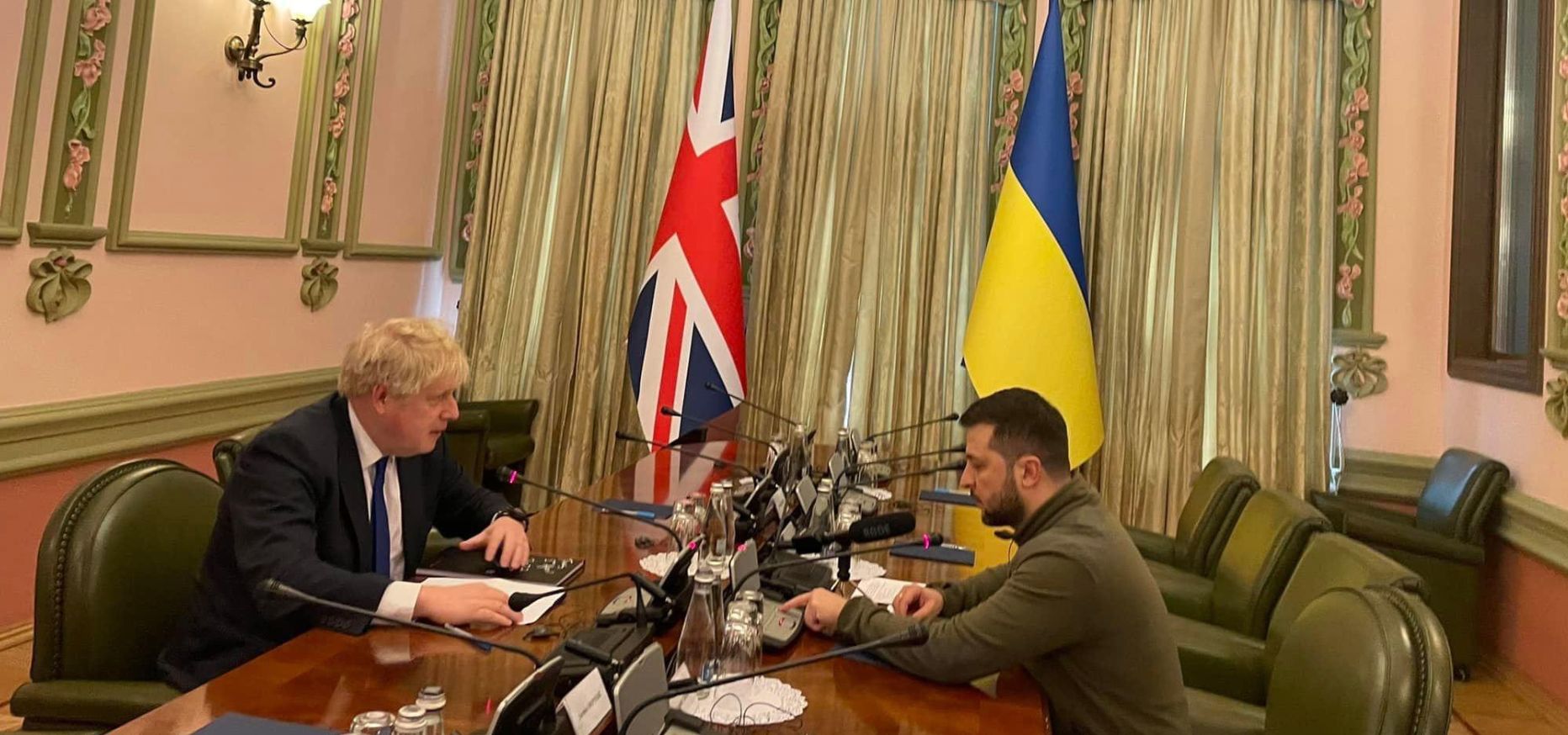
Johnson held talks with his opposite number after flying in to Ukraine on an unannounced visit amid tight security.
A video was later posted on Twitter showing the two leaders walking through the centre of Kyiv.
Advertisement
At one point, a local man expresses his gratitude to the PM for the support the UK has provided to Ukraine since Russia’s invasion began on February 24.
In response, Johnson said: “It’s nice to meet you and it’s been our privilege to help. You have a remarkable president, Mr Zelensky, who’s done an outstanding job and we simply wish to keep supporting the people of Ukraine for as long as it takes.”
Advertisement
At a handshake distance. @BorisJohnson and @ZelenskyyUa walked through the center of Kyiv and talked to ordinary Kyivans. This is what democracy looks like. This is what courage looks like. This is what true friendship between peoples and between nations looks like. pic.twitter.com/ZcdL6NqNp2
Appearing alongside Zelenskyy in a recorded broadcast clip, Johnson said the West would continue to “ratchet up” sanctions on Moscow as he praised the courage of the Ukrainian resistance.
“I think that the Ukrainians have shown the courage of a lion, and you Volodymyr have given the roar of that lion,” he said.
“The UK and others (will) supply the equipment, the technology, the know-how, the intelligence, so that Ukraine will never be invaded again.
“So Ukraine is so fortified and protected – that Ukraine can never be bullied again. Never be blackmailed again. Never be threatened in the same way again.”
Advertisement
The Ukrainian president said: “I am very grateful for this visit. It is very important at this very difficult and turbulent time for our country.
“You came here and we are especially grateful for this to happen. This is a true reflection of the decisive and significant support for Ukraine from the United Kingdom and we will always remember that.”
It was also announced that the UK has agreed to provide Ukraine with 120 armoured vehicles and new anti-ship missile systems.
That is on top of the £100 million worth of high-grade military equipment announced yesterday, including more Starstreak anti-aircraft missiles, another 800 anti-tank missiles, and high-tech loitering munitions for precision strikes.
The UK is also guaranteeing £385m in World Bank lending to Ukraine, taking its total loan guarantee to up to $1 billion.
Boris Johnson has flown to Kyiv for “surprise” talks with Ukrainian president Volodymyr Zelenskyy.
Downing Street said the prime minister made the unannounced trip “in a show of solidarity with the Ukrainian people”.
Advertisement
The lightning visit was revealed in a tweet by the Ukrainian embassy in London, which showed Johnson holding talks with Zelensky.
Above the picture was a winking emoji and “surprise”.
Advertisement
The trip had been shrouded in secrecy due to security concerns.
Afterwards, it was announced that the UK has agreed to provide Ukraine with 120 armoured vehicles and new anti-ship missile systems.
Advertisement
That is on top of the £100 million worth of high-grade military equipment announced yesterday, including more Starstreak anti-aircraft missiles, another 800 anti-tank missiles, and high-tech loitering munitions for precision strikes.
The UK is also guaranteeing £385m in World Bank lending to Ukraine, taking its total loan guarantee to up to $1 billion.
The PM said: “It is a privilege to be able to travel to Ukraine and meet President Zelenskyy in person in Kyiv today.
“Ukraine has defied the odds and pushed back Russian forces from the gates of Kyiv, achieving the greatest feat of arms of the 21st century.
Advertisement
“It is because of President Zelenskyy’s resolute leadership and the invincible heroism and courage of the Ukrainian people that Putin’s monstrous aims are being thwarted.
“I made clear today that the United Kingdom stands unwaveringly with them in this ongoing fight, and we are in it for the long run.
“We are stepping up our own military and economic support and convening a global alliance to bring this tragedy to an end, and ensure Ukraine survives and thrives as a free and sovereign nation.”
A Downing Street spokesperson said: “The prime minister has travelled to Ukraine to meet President Zelenskyy in person, in a show of solidarity with the Ukrainian people.
“They will discuss the UK’s long term support to Ukraine and the PM will set out a new package of financial and military aid.”
It is the first time the prime minister has visited Ukraine since the Russian invasion on February 24.
Boris Johnson meets Volodymyr Zelensky in Kyiv
No10 Downing Street
Number 10 later issued a picture appearing to show the two leaders on a walkabout in Kyiv.
The BBC reported that in a Facebook post, Andriy Sybiha, deputy head of the Ukrainian president’s office said: “The UK is the leader in defence support for Ukraine. The leader in the anti-war coalition. The leader in sanctions against the Russian aggressor.”
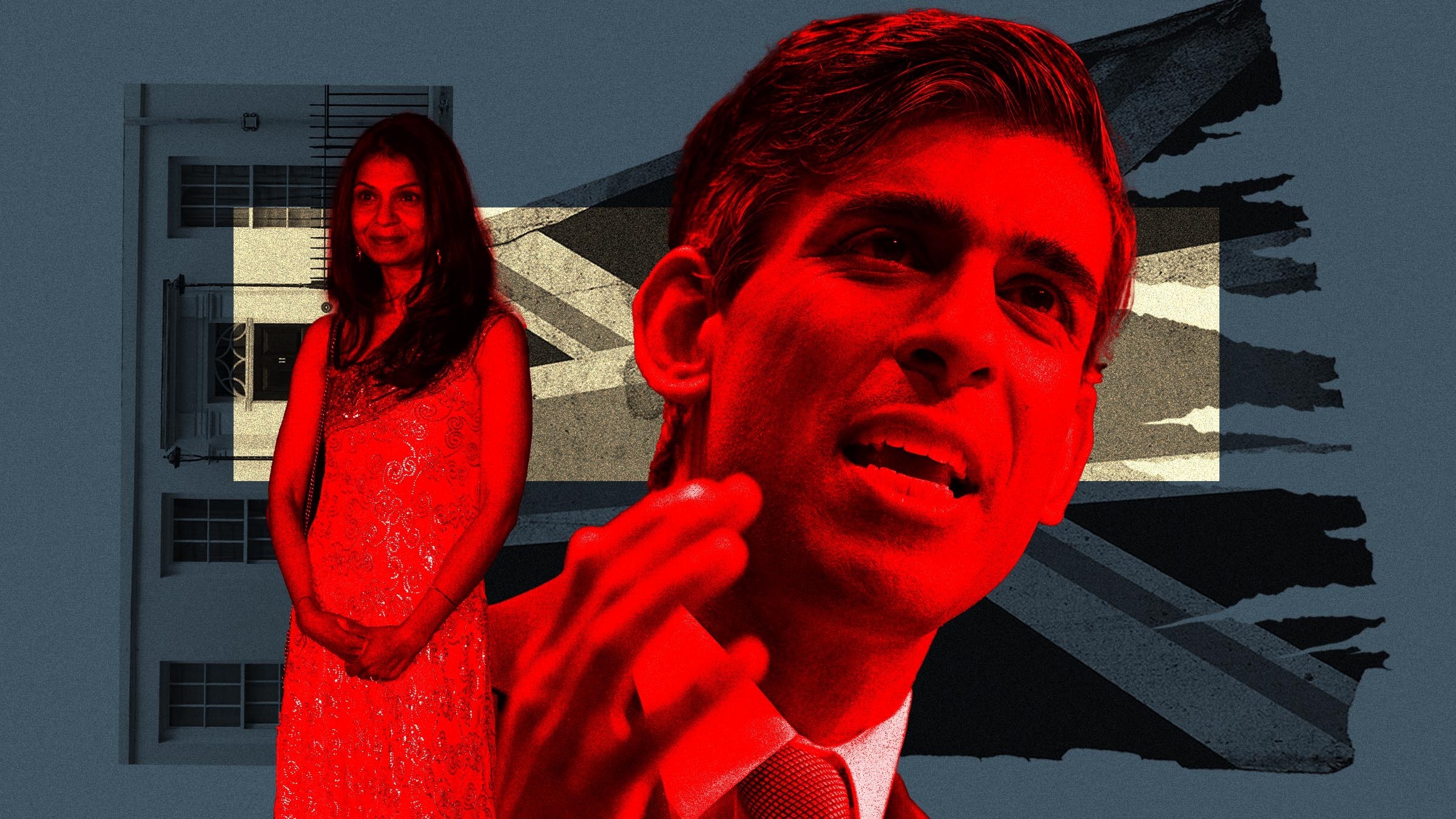
At his peak, Rishi Sunak was the most popular politician in the country.
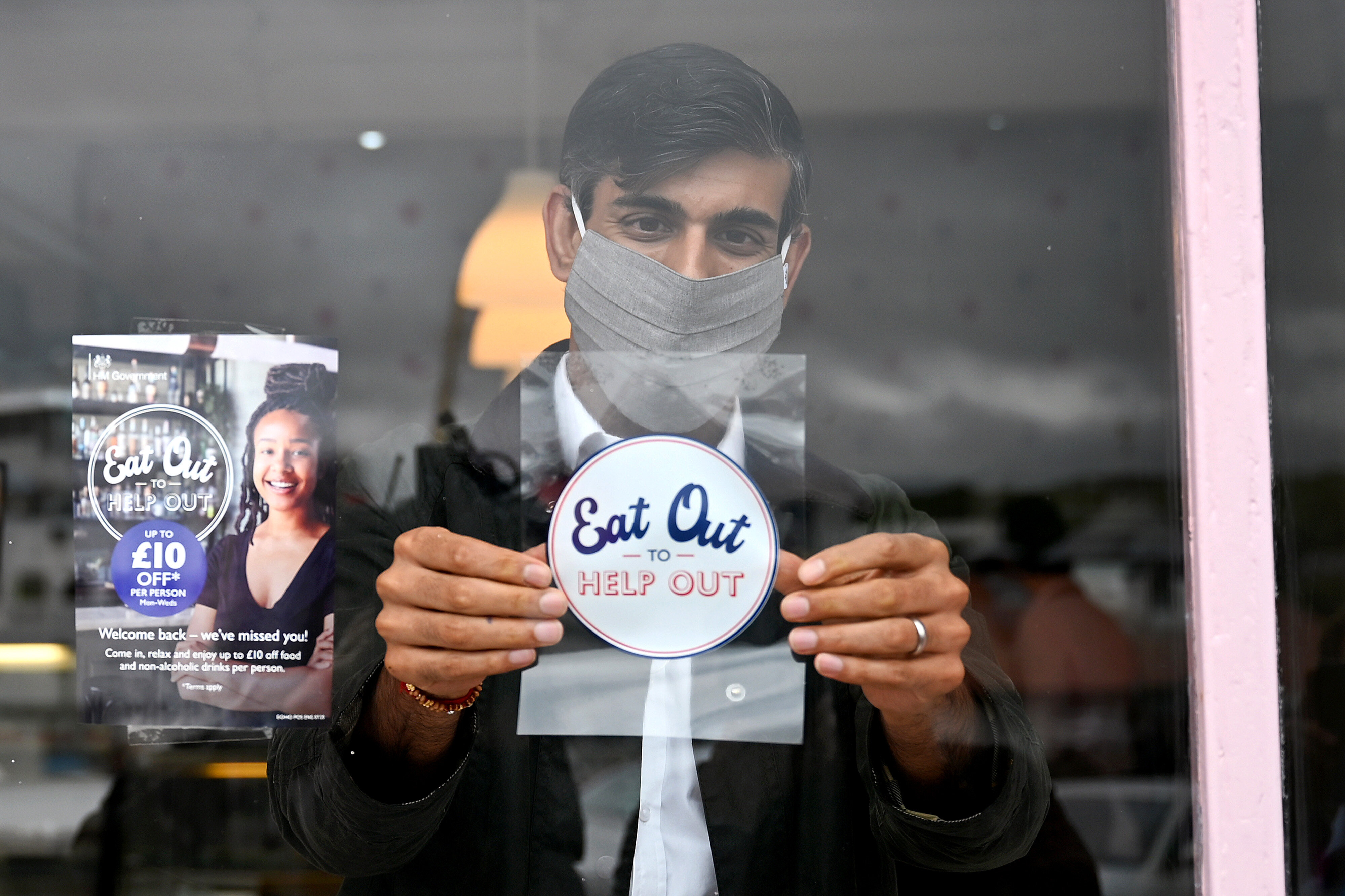
It was a reputation forged after the “crisis chancellor” rose to the challenge of the Covid pandemic — splashing billions on furlough and business support and later the “eat out to help out” scheme to keep the hospitality sector afloat.
Advertisement
Now, the image of Sunak as a sympathetic chancellor who is in touch with the needs of ordinary people appears to be in tatters — and the same could be said of his ambitions to succeed Boris Johnson as prime minister.
Although she was forced into a screeching U-turn on Friday night, the damage to her husband’s reputation was already done.
Meanwhile, the chancellor himself was also hit by claims in the Independent that he has been listed as a beneficiary of tax haven trusts linked to Murty in the British Virgin Islands and Cayman Islands.
Advertisement
Pat McFadden, Labour’s shadow chief secretary to the Treasury, said the allegations were “extremely serious”.
“We need full transparency about this and the other stories about the chancellor emerging over the past 24 hours,” he said.
Murty always paid UK tax on any income she earned here, but under the non-dom arrangement, domestic rates did not apply to the vast majority of her foreign wealth, derived from her stake in her father’s Indian company Infosys.
It reinforced the already damaging perception that it’s “one rule for them, one for the rest of us”.
Advertisement
Reports suggest that Murty’s non-dom status, which is perfectly legal, may have allowed her to avoid millions in tax.
Given the fact that her husband has just increased national insurance contributions for working people during the worst cost-of-living crisis in decades, the timing of the revelations could hardly have been worse.
Following Murty’s U-turn, one Labour insider said: “Rishi Sunak has realised that being a total hypocrite doesn’t wash with the British public.”
One former minister admitted to HuffPost UK that the stories emerging about Sunak had put him in “a lot of trouble”.
“It looks like a coordinated campaign and that there will be more to come. Also, there’s not much support being expressed for him publicly.”
Discussing the chancellor’s leadership prospects a few weeks ago, one senior Tory backbencher said that while they liked Sunak, he was not a “political operator” like the foreign secretary, Liz Truss, and questioned whether he had any allies in the Conservative party.
“Who are his allies? I don’t know who they are.”
<img class="img-sized__img landscape" loading="lazy" alt="Chancellor of the Exchequer Rishi Sunak alongside his wife Akshata Murthy.” width=”720″ height=”553″ src=”https://www.wellnessmaster.com/wp-content/uploads/2022/04/hes-in-trouble-have-rishi-sunaks-tax-controversies-ended-his-leadership-hopes-3.jpg”>
Chancellor of the Exchequer Rishi Sunak alongside his wife Akshata Murthy.
Ian West via PA Wire/PA Images
Another Conservative said that while the chancellor may be feeling the pain now, it was only just the beginning.
“Everyone is talking about the cost of living,” one Labour source said.
“It’s a massive issue. Rising bills, rising taxes, the cost of food and fuel — the cost of petrol is in the minds of most people you speak to. They can tell you the price they last paid to the half penny.
Advertisement
“The Tories are of course making the chancellor the scapegoat: rule number one in the current Tory party is protect Johnson.
“But voters don’t seem to blame Sunak when you speak to them. They blame the government.
“They know there’s a stink but it’s from a steady and constant flow not from one single burst pipe.”
He claimed the couple were the victim of “unpleasant smears” and that those responsible were wrong to target her as a “private citizen”.
“She has had her own career,” he said. “She has her own investments and is paying the taxes that she owes in the UK.
“She is 100 per cent doing everything this country asks of her.”
Some of Sunak’s colleagues rallied to his defence, also suspecting he is the victim of an orchestrated campaign to undermine his credibility.
Alec Shelbrooke, who represents a constituency in Yorkshire, said it was “disgraceful that the chancellor’s wife should change her life, just because of her husband’s job”.
“She hasn’t done anything illegal, she has followed the law, but people are trying to say she should be subservient to her husband’s choices — any feminist attacking her, needs to find a dictionary.
Advertisement
“It’s nasty politics at all levels and its fundamentally sexist. The people attacking are, at best, confused on feminism and inconsistent on tax policy.
“Good smear campaign for them, but vacuous politics.
“Rishi has my full support.”
Another backbencher said: “I think this is quite smeary — Labour looked at non-dom when they were in power and decided to keep it with a fee, which we then jacked up when we were in charge.
But they added: “Notwithstanding that, it’s still politically damaging for him.”
<img class="img-sized__img landscape" loading="lazy" alt="Rishi Sunak places an "eat out to help out" sticker in the window of a business during a visit to Rothesay on the Isle of Bute, Scotland.” width=”720″ height=”479″ src=”https://www.wellnessmaster.com/wp-content/uploads/2022/04/hes-in-trouble-have-rishi-sunaks-tax-controversies-ended-his-leadership-hopes-4.jpg”>
Rishi Sunak places an “eat out to help out” sticker in the window of a business during a visit to Rothesay on the Isle of Bute, Scotland.
Jeff J Mitchell – PA Images via Getty Images
What is also worrying for Sunak is the confirmation that he held a US green card for the first 18 months of his role as chancellor.
Green card holders must pay US tax on their worldwide income and declare the US as their permanent residence.
Sunak’s spokeswoman said: “Upon his first trip to the US in a government capacity as chancellor, he discussed the appropriate course of action with the US authorities,” she said.
“At that point it was considered best to return his green card, which he did immediately.
Advertisement
“All laws and rules have been followed and full taxes have been paid where required in the duration he held his green card.”
For some Tories this is where the real danger lies.
Asked whether the constant drip of revelations meant it was all over for Sunak, one former Cabinet minister said: “For his leadership ambitions, certainly, and probably for his current job. The green card stuff is incredible.”
A backbencher added: “Not over non-dom, but if this green card stuff is true, then I expect it is over for him. Probably even as an MP.”
At a press conference on Friday, the prime minister was repeatedly dogged by questions on Sunak’s tax affairs.
Asked whether he was behind the briefings, the prime minister said: “If there are such briefings they are not coming from us in No 10 and heaven knows where they are coming from.”
“I think that Rishi is doing an absolutely outstanding job.”
The question now is whether Sunak can make that case himself to a weary, cash-strapped public who are feeling the pinch like never before.