Astronomers just found a giant planet that shouldn’t exist

Star TOI-6894 is just like many in our galaxy, a small red dwarf, and only ~20% of the mass of our Sun. Like many small stars, it is not expected to provide suitable conditions for the formation and hosting of a large planet.

However, as published today in Nature Astronomy, an international team of astronomers have found the unmistakable signature of a giant planet, called TOI-6894b, orbiting this tiny star.

This system has been discovered as part of a large-scale investigation of TESS (Transiting Exoplanet Survey Satellite) data, looking for giant planets around low-mass stars, led by Dr. Edward Bryant, who completed this work at The University of Warwick and at UCL’s Mullard Space Science Laboratory.

Dr. Edward Bryant, Warwick Astrophysics Prize Fellow and first author said: “I was very excited by this discovery. I originally searched through TESS observations of more than 91,000 low-mass red-dwarf stars looking for giant planets.

“Then, using observations taken with one of the world’s largest telescopes, ESO’s VLT, I discovered TOI-6894b, a giant planet transiting the lowest mass star known to date to host such a planet. We did not expect planets like TOI-6894b to be able to form around stars this low-mass. This discovery will be a cornerstone for understanding the extremes of giant planet formation.”

The planet (TOI-6894b) is a low-density gas giant with a radius a little larger than Saturn’s but with only ~50% of Saturn’s mass. The star (TOI-6894) is the lowest mass star to have a transiting giant planet discovered to date and is just 60% the size of the next smallest star to host such a planet.

Dr. Daniel Bayliss, Associate Professor at The University of Warwick said: “Most stars in our Galaxy are actually small stars exactly like this, with low masses and previously thought to not be able to host gas giant planets. So, the fact that this star hosts a giant planet has big implications for the total number of giant planets we estimate exist in our Galaxy.”

A Challenge to the Leading Theory

Dr Vincent Van Eylen, from UCL’s Mullard Space Science Laboratory, said: “It’s an intriguing discovery. We don’t really understand how a star with so little mass can form such a massive planet! This is one of the goals of the search for more exoplanets. By finding planetary systems different from our solar system, we can test our models and better understand how our own solar system formed.”

The most widely held theory of planet formation is called the core accretion theory. A planetary core forms first through accretion (gradual accumulation of material) and as the core becomes more massive, it eventually attracts gases that form an atmosphere. It then gets massive enough to enter a runaway gas accretion process to become a gas giant.

In this theory, the formation of gas giants is harder around low-mass stars because the amount of gas and dust in a protoplanetary disc around the star (the raw material of planet formation) is too limited to allow a massive enough core to form, and the runaway process to occur.

Yet the existence of TOI-6894b (a giant planet orbiting an extremely low-mass star) suggests this model cannot be completely accurate and alternative theories are needed.

Edward added: “Given the mass of the planet, TOI-6894b could have formed through an intermediate core-accretion process, in which a protoplanet forms and steadily accretes gas without the core becoming massive enough for runaway gas accretion.

“Alternatively, it could have formed because of a gravitationally unstable disc. In some cases, the disc surrounding the star will become unstable due to the gravitational force it exerts on itself. These discs can then fragment, with the gas and dust collapsing to form a planet.”

But the team found that neither theory could completely explain the formation of TOI-6894b from the available data, which leaves the origin of this giant planet as an open question for now.

Atmospheric Answers

One avenue to shed light on the mystery of TOI-6894b’s formation is a detailed atmospheric analysis. By measuring the distribution of material within the planet, astronomers can determine the size and structure of the planet’s core, which can tell us whether TOI-6894b formed via accretion or via an unstable disc.

This is not the only interesting feature of TOI-6894b’s atmosphere; it is unusually cold for a gas giant. Most of the gas giants found by exoplanet hunters are hot Jupiters, massive gas giants with temperatures of ~1000-2000 Kelvin. TOI-6894b, by comparison, is just 420 Kelvin. The cool temperature alongside other features of this planet, such as the very deep transits, makes it one of the most promising giant planets for astronomers to characterise with a cool atmosphere.

Professor Amaury Triaud, University of Birmingham, co-author, and member of the SPECULOOS collaboration said: “Based on the stellar irradiation of TOI-6894b, we expect the atmosphere is dominated by methane chemistry, which is exceedingly rare to identify. Temperatures are low enough that atmospheric observations could even show us ammonia, which would be the first time it is found in an exoplanet atmosphere.

“TOI-6894b likely presents a benchmark exoplanet for the study of methane-dominated atmospheres and the best ‘laboratory’ to study a planetary atmosphere containing carbon, nitrogen, and oxygen outside the Solar System.”

The atmosphere of TOI-6894b is already scheduled to be observed by the James Webb Space Telescope (JWST) within the next 12 months. This should allow astronomers to determine which, if either, of the possible theories can explain the formation of this unexpected planet.

Co-author Dr. Andrés Jordán, researcher at the Millennium Institute of Astrophysics and professor at Adolfo Ibáñez University, said: “This system provides a new challenge for models of planet formation, and it offers a very interesting target for follow-up observations to characterize its atmosphere.

“This discovery is the result of a systematic program we have been carrying out for several years from Chile and the UK. Our efforts have allowed us to contribute significantly to a better understanding of how often small stars can form giant planets, and we are providing prime targets for follow-up with space-based platforms.”

Share Button

Scientists found the brain glitch that makes you think you’re still hungry

Researchers identify “meal memory” neurons in laboratory rats that could explain why forgetting lunch leads to overeating.

Scientists have discovered a specific group of brain cells that create memories of meals, encoding not just what food was eaten but when it was eaten. The findings, published today in Nature Communications, could explain why people with memory problems often overeat and why forgetting about a recent meal can trigger excessive hunger and lead to disordered eating.

During eating, neurons in the ventral hippocampus region of the brain become active and form what the team of researchers call “meal engrams” — specialized memory traces that store information about the experience of food consumption. While scientists have long studied engrams for their role in storing memories and other experiences in the brain, the new study identified engrams dedicated to meal experiences.

“An engram is the physical trace that a memory leaves behind in the brain,” said Scott Kanoski, professor of biological sciences at the USC Dornsife College of Letters, Arts and Sciences and corresponding author of the study. “Meal engrams function like sophisticated biological databases that store multiple types of information such as where you were eating, as well as the time that you ate.”

Distracted eating implications

The discovery has immediate relevance for understanding human eating disorders. Patients with memory impairments, such as those with dementia or brain injuries that affect memory formation, may often consume multiple meals in quick succession because they cannot remember eating.

Furthermore, distracted eating — such as mindlessly snacking while watching television or scrolling on a phone — may impair meal memories and contribute to overconsumption.

Based on the experiment’s findings, meal engrams are formed during brief pauses between bites when the brain of laboratory rats naturally survey the eating environment. These moments of awareness allow specialized hippocampal neurons to integrate multiple streams of information.

Kanoski said it can be assumed a human’s brain would undergo a similar phenomenon. When someone’s attention is focused elsewhere — on phone or television screens — these critical encoding moments are compromised. “The brain fails to properly catalog the meal experience,” said Lea Decarie-Spain, postdoctoral scholar at USC Dornsife and the study’s first author, “leading to weak or incomplete meal engrams.”

Mechanism of ‘meal memories’

The research team used advanced neuroscience techniques to observe the brain activity of laboratory rats as they ate, providing the first real-time view of how meal memories form.

The meal memory neurons are distinct from brain cells involved in other types of memory formation. When researchers selectively destroyed these neurons, lab rats showed impaired memory for food locations but retained normal spatial memory for non-food-related tasks, indicating a specialized system dedicated to meal-related information processing. The study revealed that meal memory neurons communicate with the lateral hypothalamus, a brain region long known to control hunger and eating behavior. When this hippocampus-hypothalamus connection was blocked, the lab rats overate and could not remember where meals were consumed.

Eating management implications

Kanoski said the findings could eventually inform new clinical approaches for treating obesity and weight management. Current weight management strategies often focus on restricting food intake or increasing exercise, but the new research suggests that enhancing meal memory formation could be equally important.

“We’re finally beginning to understand that remembering what and when you ate is just as crucial for healthy eating as the food choices themselves,” Kanoski said.

In addition to Kanoski, other study authors include Lea Decarie-Spain, Cindy Gu, Logan Tierno Lauer, Alicia E. Kao, Iris Deng, Molly E. Klug, Alice I. Waldow, Ashyah Hewage Galbokke, Olivia Moody, Kristen N. Donohue, Keshav S. Subramanian, Serena X. Gao, Alexander G. Bashaw and Jessica J. Rea of USC; and Samar N. Chehimi, Richard C. Crist, Benjamin C. Reiner and Matthew R. Hayes from the University of Pennsylvania’s Perelman School of Medicine; and Mingxin Yang and Guillaume de Lartigue from the Monell Chemical Senses Center; and Kevin P. Myers from the Department of Psychology at Bucknell University.

The study was supported by a Quebec Research Funds Postdoctoral Fellowship (315201), an Alzheimer’s Association Research Fellowship (AARFD-22-972811), a National Science Foundation Graduate Research Fellowship (DK105155), and a National Institute of Diabetes and Digestive and Kidney Diseases grant (K104897).

Share Button

This “Healthy” Fat May Secretly Be Fueling Obesity

Eating a high-fat diet containing a large amount of oleic acid – a type of fatty acid commonly found in olive oil – could drive obesity more than other types of dietary fats, according to a study published in the journal Cell Reports.

The study found that oleic acid, a monounsaturated fat associated with obesity, causes the body to make more fat cells. By boosting a signaling protein called AKT2 and reducing the activity of a regulating protein called LXR, high levels of oleic acid resulted in faster growth of the precursor cells that form new fat cells.

“We know that the types of fat that people eat have changed during the obesity epidemic. We wanted to know whether simply overeating a diet rich in fat causes obesity, or whether the composition of these fatty acids that make up the oils in the diet is important. Do specific fat molecules trigger responses in the cells?” said Michael Rudolph, Ph.D., assistant professor of biochemistry and physiology at the University of Oklahoma College of Medicine and member of OU Health Harold Hamm Diabetes Center.

Rudolph and his team, including Matthew Rodeheffer, Ph.D., of Yale University School of Medicine and other collaborators at Yale and New York University School of Medicine, fed mice a variety of specialized diets enriched in specific individual fatty acids, including those found in coconut oil, peanut oil, milk, lard and soybean oil. Oleic acid was the only one that caused the precursor cells that give rise to fat cells to proliferate more than other fatty acids.

“You can think of the fat cells as an army,” Rudolph said. “When you give oleic acid, it initially increases the number of ‘fat cell soldiers’ in the army, which creates a larger capacity to store excess dietary nutrients. Over time, if the excess nutrients overtake the number of fat cells, obesity can occur, which can then lead to cardiovascular disease or diabetes if not controlled.”

Unfortunately, it’s not quite so easy to isolate different fatty acids in a human diet. People generally consume a complex mixture if they have cream in their coffee, a salad for lunch and meat and pasta for dinner. However, Rudolph said, there are increasing levels of oleic acid in the food supply, particularly when access to food variety is limited and fast food is an affordable option.

“I think the take-home message is moderation and to consume fats from a variety of different sources,” he said. “Relatively balanced levels of oleic acid seem to be beneficial, but higher and prolonged levels may be detrimental. If someone is at risk for heart disease, high levels of oleic acid may not be a good idea.”

Share Button

Menstrual tracking app users cautioned about risks

Women deserve better than to have their menstrual data treated as consumer data, say researchers.

Share Button

Rachel Reeves Announces £39 Billion Housing Boost As She Vows To ‘Renew’ Britain

Rachel Reeves will announce plans to spend nearly £40 billion building affordable homes in a bid to solve the UK’s housing crisis.

The chancellor will outline details of the cash boost in the spending review on Wednesday.

It will be seen as a major victory for Angela Rayner, the deputy PM and housing secretary, who has been locked in a battle with the Treasury for more funding for her department.

Under the plans, £39bn will be spent over the next 10 years on a social and affordable homes programme, which works out at £3.9bn a year.

The last five-year programme, which comes to an end in 2026, was worth £11.5bn, or £2.3bn a year.

A government source said: “The government is investing in Britain’s renewal, so working people are better off.

“We’re turning the tide against the unacceptable housing crisis in this country with the biggest boost to social and affordable housing investment in a generation, delivering on our commitment to get Britain building.”

Reeves will confirm plans to spend billions on new transport links in the north and Midlands, and fund the completion of a new nuclear power station at Sizewell C.

The NHS and Ministry of Defence are expected to be the big winners in the financial settlement, with other departments facing real terms cuts to their budgets as Reeves tries to balance the nation’s books.

The chancellor will tell MPs: “This government is renewing Britain, but I know too many people in too many parts of the country are yet to feel it.

“My task – and the purpose of this Spending Review – is to change that.

“To ensure that renewal is felt in people’s everyday lives, their jobs, their communities.

“So that people can see a doctor when when they need one, know that they are secure at work and feel safe on their local high street.

“The priorities in this Spending Review are the priorities of working people. To invest in our country’s security, health and economy so working people all over our country are better off.

That is what this Spending Review will deliver.”

She will add: “I have made my choices. In place of chaos, I choose stability. In place of decline, I choose investment. In place of retreat, I choose national renewal.

“These are my choices. These are this Government’s choices. These are the British people’s choices.”

Share Button

Cervical screening invites to change in England

Invitations be sent out by the NHS every five years instead of every three for women aged 25-49 in England, if they have a negative test.

Share Button

MPs set to vote on decriminalising abortion in England and Wales

Women would never be prosecuted for terminating a pregnancy under proposed new laws.

Share Button

UK Gardeners Urged To Put Garlic In Plant Water ‘Til October

Though slugs are rarely welcome in a gardener’s backyard, the Royal Horticultural Society have not classified them as “pests” for years now.

That’s partly because less than a quarter of the species in the UK actually eat your plants, while all of the maligned molluscs provide a food source for the UK’s shrinking bird population.

For these reasons, British gardeners have been discouraged from using pellets to deter the critters.

Other methods, like placing a halved orange or melon skin in your garden or conducting torchlit searches at night, can remove them from vulnerable saplings without killing all of them off indiscriminately.

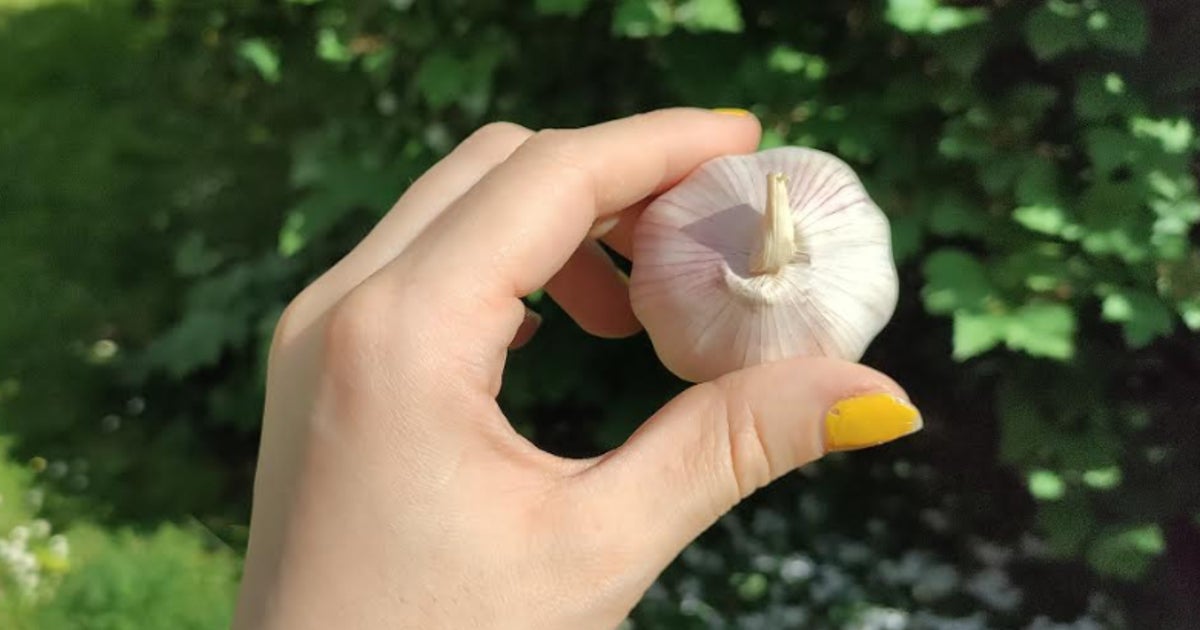
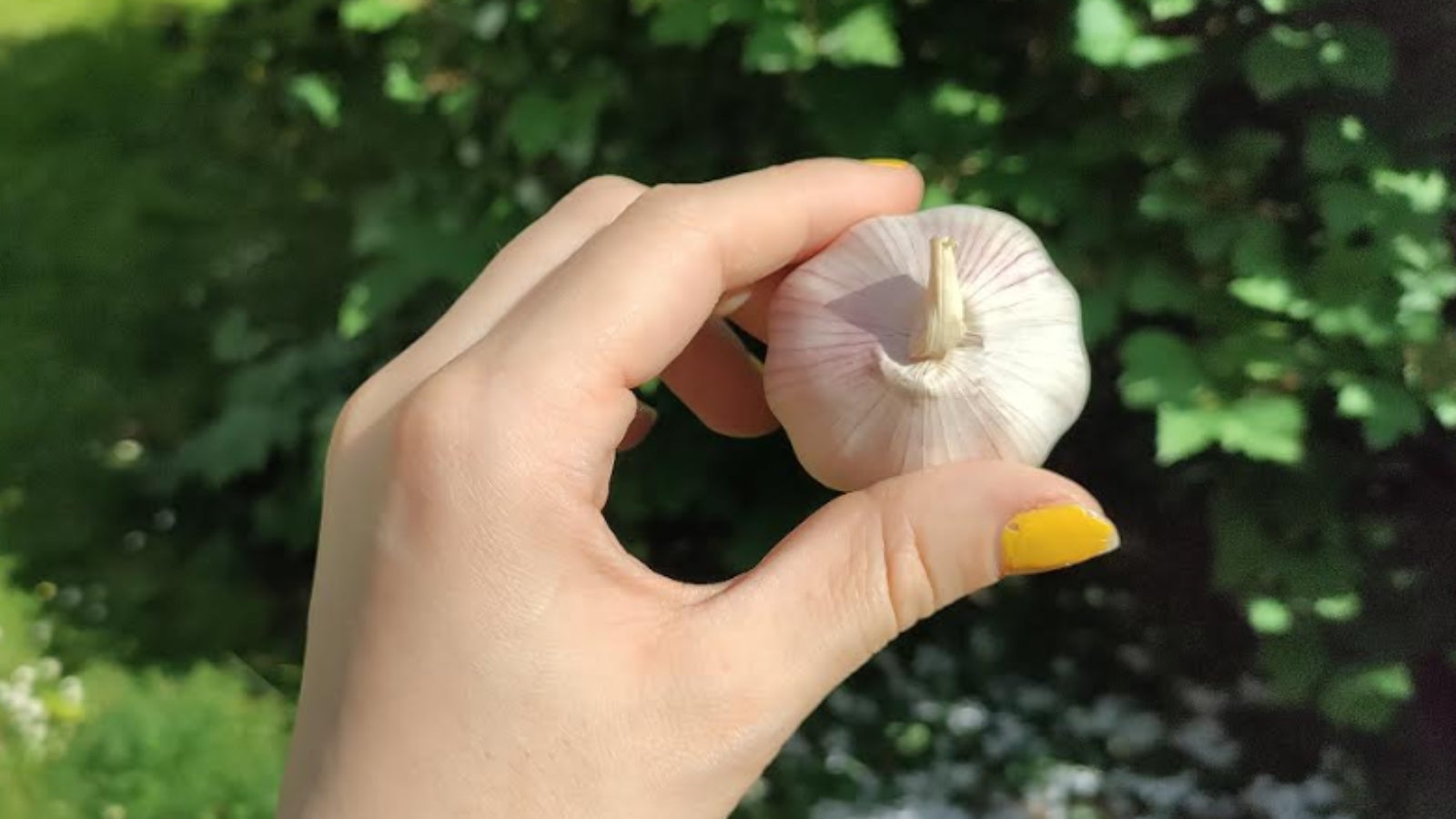
And, as BBC Gardeners’ World writes, a bulb of garlic can help too.

Garlic water can repel slugs

According to the publication, “A home-made garlic spray can be effective in deterring slugs and snails from your plants” if applied regularly.

Allicin, a compound in garlic, both helps to repel and, sometimes, kill slugs and snails, botanist James Wong wrote for The Guardian.

For that reason, he says, you should only apply it to the most vulnerable plants (young seedlings and tender-stemmed plants count).

To make the garlic water concentrate, Gardeners’ World writes, boil one bulb of garlic per litre of water (they did two bulbs and two litres) until they’re soft.

James Wong, meanwhile, recommends blending a bulb of garlic with 1L of water, letting the liquid sit for ten minutes before straining “for the chemical reaction that creates allicin to complete.”

James uses his blitzed, rather than cooked, garlic water as-is, but Gardeners’ World dilutes two tablespoons of their boiled concentrate per 5L of water.

Whichever method you choose, you can spray it on affected plants “just as night begins to fall.”

How much should I apply, and how often?

For targeted slug and snail management, you should apply it “liberally.”

Gardeners’ World says you should spray or water with it once a week or after rain.

Specialist growers Sienna Hosta agree: they say we should water our plants with the stuff once weekly from February ’til October, when slugs are more active.

We should reapply it more often after heavy rainfall.

Share Button

UK Government Sanctions Two Israeli Ministers Over ‘Extremist’ Gaza Comments

The UK government has sanctioned two Israeli ministers for inciting “extremist violence and serious abuses of Palestinian human rights”.

Itamar Ben-Gvir and Bezalel Smotrich will be subject to a travel ban and asset freeze under the measures announced by Britain alongside Australia, Canada, New Zealand and Norway.

The move has been condemned by the Israeli government, which said it was “outrageous”.

Both men belong to right-wing parties which help to prop up Israeli prime minister Benjamin Netanyahu’s fragile coalition government.

Smotrich has campaigned against allowing aid into Gaza, and also supported the expansion of Israeli settlements in the West Bank, which are considered illegal under international law.

Ben-Gvir has called for Gaza’s people to be resettled from the territory.

In a joint statement with the foreign ministers of Australia, Canada, New Zealand and Norway, foreign secretary David Lammy said: “We are steadfastly committed to the two-state solution and will continue to work with our partners towards its implementation.

“It is the only way to guarantee security and dignity for Israelis and Palestinians and ensure long term stability in the region, but it is imperilled by extremist settler violence and settlement expansion.

“Itamar Ben-Gvir and Bezalel Smotrich have incited extremist violence and serious abuses of Palestinian human rights. These actions are not acceptable. This is why we have taken action now – to hold those responsible to account.

“We will strive to achieve an immediate ceasefire in Gaza, the immediate release of the remaining hostages by Hamas which can have no future role in the governance of Gaza, a surge in aid and a path to a two-state solution.”

A No.10 spokesman said: “These sanctions apply to the individuals in their personal capacities, not their ministries and departments.

“Ben-Gvir and Smotrich do not speak for all Israeli people … and have a long history of dangerous extremist and inflammatory views.

“As the Israeli ambassador to the UK has said in recent interviews, their statements in their ministerial capacities do not even represent government policy.

“Their agenda and actions undermine the interests of Israeli people, including security, many Israelis see this.

“So, today, with our international partners, we have announced measures against those ministers in a personal capacity.”

In a statement, the Israeli government said: “It is outrageous that elected representatives and members of the government are subjected to these kind of measures.”

Share Button

What a dinosaur ate 100 million years ago—Preserved in a fossilized time capsule

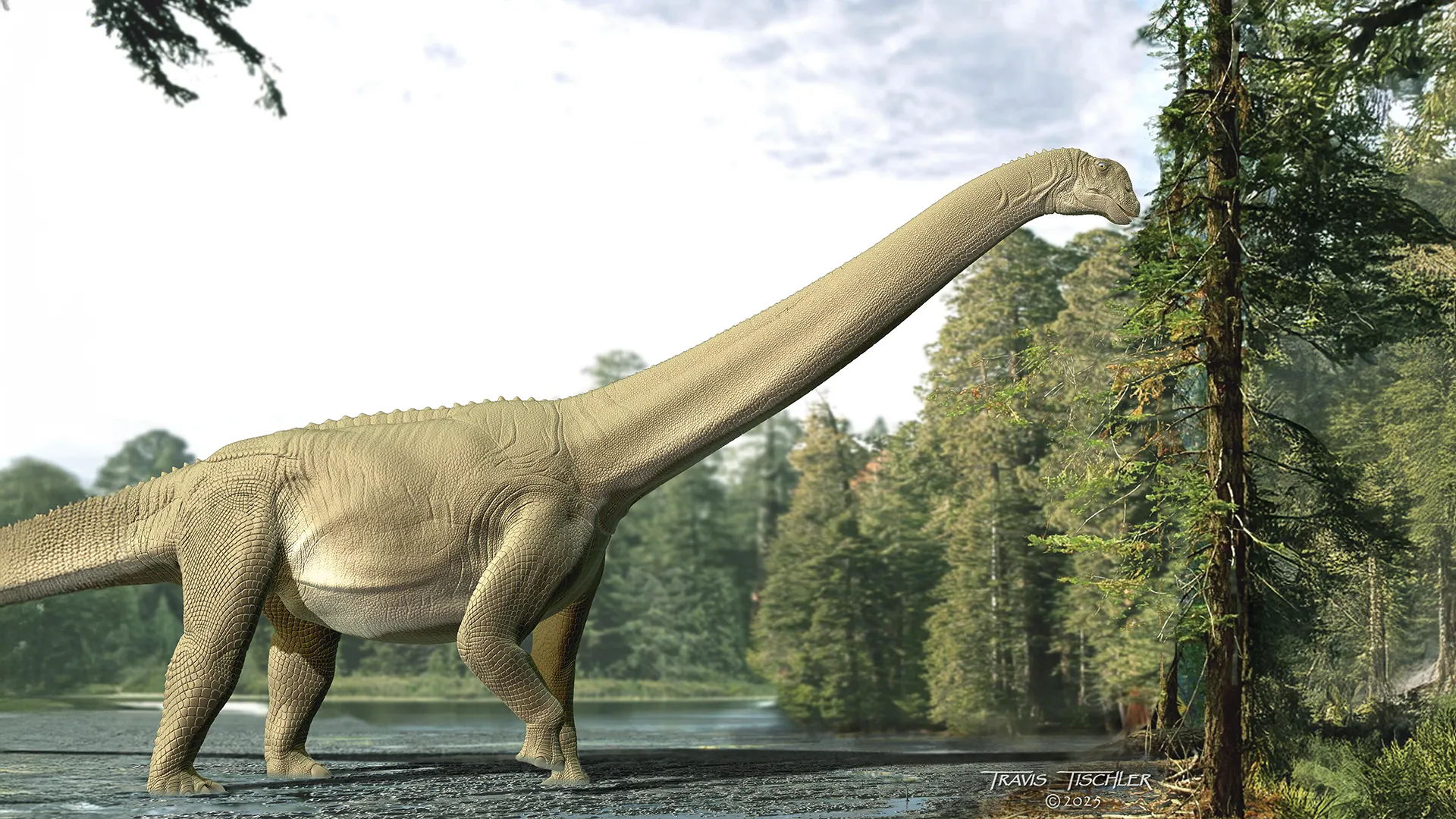
Plant fossils found in the abdomen of a sauropod support the long-standing hypothesis that these dinosaurs were herbivores, finds a study published on June 9 in the Cell Press journal Current Biology. The dinosaur, which was alive an estimated 94 to 101 million years ago, ate a variety of plants and relied almost entirely on its gut microbes for digestion.

“No genuine sauropod gut contents had ever been found anywhere before, despite sauropods being known from fossils found on every continent and despite the group being known to span at least 130 million years of time,” says lead author Stephen Poropat of Curtin University. “This finding confirms several hypotheses about the sauropod diet that had been made based on studies of their anatomy and comparisons with modern-day animals.”

Knowledge of the diet of dinosaurs is critical for understanding their biology and the role they played in ancient ecosystems, say the researchers. However, very few dinosaur fossils have been found with cololites, or preserved gut contents. Sauropod cololites have remained particularly elusive, even though these dinosaurs may have been the most ecologically impactful terrestrial herbivores worldwide throughout much of the Jurassic and Cretaceous periods, given their gigantic sizes. Due to this lack of direct evidence when it comes to diet, the specifics of sauropod herbivory — including the plant taxa they ate — have been largely inferred based on anatomical features such as tooth wear, jaw morphology, and neck length.

In the summer of 2017, the staff and volunteers at the Australian Age of Dinosaurs Museum of Natural History were excavating a relatively complete subadult skeleton of the sauropod Diamantinasaurus matildae from the mid-Cretaceous period, which was found in the Winton Formation of Queensland, Australia. During this process, they noticed an unusual, fractured rock layer that appeared to contain the sauropod’s cololite, which consisted of many well-preserved plant fossils.

Analysis of the plant specimens within the cololite showed that sauropods likely only engaged in minimal oral processing of their food, relying instead on fermentation and their gut microbiota for digestion. The cololite consisted of a variety of plants, including foliage from conifers (cone-bearing seed plants), seed-fern fruiting bodies (plant structures that hold seeds), and leaves from angiosperms (flowering plants), indicating that Diamantinasaurus was an indiscriminate, bulk feeder.

“The plants within show evidence of having been severed, possibly bitten, but have not been chewed, supporting the hypothesis of bulk feeding in sauropods,” says Poropat.

The researchers also found chemical biomarkers of both angiosperms and gymnosperms — a group of woody, seed-producing plants that include conifers. “This implies that at least some sauropods were not selective feeders, instead eating whatever plants they could reach and safely process,” Poropat says. “These findings largely corroborate past ideas regarding the enormous influence that sauropods must have had on ecosystems worldwide during the Mesozoic Era.”

Although it was not unexpected that the gut contents provided support for sauropod herbivory and bulk feeding, Poropat was surprised to find angiosperms in the dinosaur’s gut. “Angiosperms became approximately as diverse as conifers in Australia around 100 to 95 million years ago, when this sauropod was alive,” he says. “This suggests that sauropods had successfully adapted to eat flowering plants within 40 million years of the first evidence of the presence of these plants in the fossil record.”

Based on these findings, the team suggests that Diamantinasaurus likely fed on both low- and high-growing plants, at least before adulthood. As hatchlings, sauropods could only access plants found close to the ground, but as they grew, so did their viable dietary options. In addition, the prevalence of small shoots, bracts, and seed pods in the cololite implies that subadult Diamantinasaurus targeted new growth portions of conifers and seed ferns, which are easier to digest.

According to the authors, the strategy of indiscriminate bulk feeding seems to have served sauropods well for 130 million years and might have enabled their success and longevity as a clade. Despite the importance of this discovery, Poropat pointed out a few caveats.

“The primary limitation of this study is that the sauropod gut contents we describe constitute a single data point,” he explains. “These gut contents only tell us about the last meal or several meals of a single subadult sauropod individual,” says Poropat. “We don’t know if the plants preserved in our sauropod represent its typical diet or the diet of a stressed animal. We also don’t know how indicative the plants in the gut contents are of juvenile or adult sauropods, since ours is a subadult, and we don’t know how seasonality might have affected this sauropod’s diet.”

This research was supported by funding from the Australian Research Council.

Share Button