Scientists uncover why “stealth” volcanoes stay silent until eruption

When volcanoes are preparing to erupt, scientists rely on typical signs to warn people living nearby: deformation of the ground and earthquakes, caused by underground chambers filling up with magma and volcanic gas. But some volcanoes, called ‘stealthy’ volcanoes, don’t give obvious warning signs. Now scientists studying Veniaminof, Alaska, have developed a model which could explain and predict stealthy eruptions.

“Despite major advances in monitoring, some volcanoes erupt with little or no detectable precursors, significantly increasing the risk to nearby populations,” said Dr Yuyu Li of the University of Illinois, lead author of the study in Frontiers in Earth Science. “Some of these volcanoes are located near major air routes or close to communities: examples include Popocatépetl and Colima in Mexico, Merapi in Indonesia, Galeras in Colombia, and Stromboli in Italy.

“Our work helps explain how this happens, by identifying the key internal conditions — such as low magma supply and warm host rock — that make eruptions stealthy.”

Warning signs

Veniaminof is an ice-clad volcano in the Aleutian Arc of Alaska. It’s carefully monitored, but only two of its 13 eruptions since 1993 have been preceded by enough signs to alert observing scientists. In fact, a 2021 eruption wasn’t caught until three days after it had started.

“Veniaminof is a case study in how a volcano can appear quiet while still being primed to erupt,” said Li. “It is one of the most active volcanoes in Alaska. In recent decades, it has produced several VEI 3 eruptions — moderate-sized explosive events that can send ash up to 15 km high, disrupt air traffic, and pose regional hazards to nearby communities and infrastructure — often without clear warning signs.”

To understand Veniaminof better, the scientists used monitoring data over three summer seasons immediately before the 2018 stealthy eruption, which produced only ambiguous warning signs immediately before it happened. They created a model of the volcano’s behavior in different conditions which would change the impact of a filling magma reservoir on the ground above: six potential volumes of magma reservoir, a range of magma flow rates and reservoir depths, and three shapes of reservoir. They then compared the models to the data to see which matched best, and which conditions produced eruptions, stealthy or otherwise.

Volcano by the numbers

They found that a high flow of magma into a chamber increases the deformation of the ground and the likelihood of an eruption. If magma is flowing quickly into a large chamber, an eruption may not occur, but if one does the ground will deform enough to warn scientists first. Similarly, a high flow of magma into a small chamber is likely to produce an eruption, but not a stealthy one. Stealthy eruptions become likely when a low flow of magma enters a relatively small chamber. Compared to observational data, the results suggest that Veniaminof has a small magma chamber and a low flow of magma.

The model also suggests that different conditions could produce different warning signs. Magma flowing into larger, flatter chambers may cause minimal earthquakes, while smaller, more elongated chambers may produce little deformation of the ground. But stealthy eruptions only happen when all the conditions are in place — the right magma flow and the right chamber size, shape, and depth.

However, when the scientists added temperature to their model, they found that if magma is consistently present over time so that the rock of the chamber is warm, size and shape matters less. If the rock is warm, it’s less likely to fail in ways that cause detectable earthquakes or deformation of the ground when magma flows into the chamber, increasing the likelihood of a stealthy eruption.

What next?

“To mitigate the impact of these potential surprise eruptions, we need to integrate high-precision instruments like borehole tiltmeters and strainmeters and fiber optic sensing, as well as newer approaches such as infrasound and gas emission monitoring,” said Li. “Machine learning has also shown promise in detecting subtle changes in volcanic behavior, especially in earthquake signal picking.”

At Veniaminof, taking measures to improve the coverage of satellite monitoring and adding tiltmeters and strainmeters could improve the rate of detection. In the meantime, scientists now know which volcanoes they need to watch most closely: volcanoes with small, warm reservoirs and slow magma flows.

“Combining these models with real-time observations represents a promising direction for improving volcano forecasting,” said Li. “In the future, this approach can enable improved monitoring for these stealthy systems, ultimately leading to more effective responses to protect nearby communities.”


Share Button

Sharper than lightning: Oxford’s one-in-6. 7-million quantum breakthrough

Physicists at the University of Oxford have set a new global benchmark for the accuracy of controlling a single quantum bit, achieving the lowest-ever error rate for a quantum logic operation — just 0.000015%, or one error in 6.7 million operations. This record-breaking result represents nearly an order of magnitude improvement over the previous benchmark, set by the same research group a decade ago.

To put the result in perspective: a person is more likely to be struck by lightning in a given year (1 in 1.2 million) than for one of Oxford’s quantum logic gates to make a mistake.

The findings, published in Physical Review Letters, are a major advance towards having robust and useful quantum computers.

“As far as we are aware, this is the most accurate qubit operation ever recorded anywhere in the world,” said Professor David Lucas, co-author on the paper, from the University of Oxford’s Department of Physics. “It is an important step toward building practical quantum computers that can tackle real-world problems.”

To perform useful calculations on a quantum computer, millions of operations will need to be run across many qubits. This means that if the error rate is too high, the final result of the calculation will be meaningless. Although error correction can be used to fix mistakes, this comes at the cost of requiring many more qubits. By reducing the error, the new method reduces the number of qubits required and consequently the cost and size of the quantum computer itself.

Co-lead author Molly Smith (Graduate Student, Department of Physics, University of Oxford), said: “By drastically reducing the chance of error, this work significantly reduces the infrastructure required for error correction, opening the way for future quantum computers to be smaller, faster, and more efficient. Precise control of qubits will also be useful for other quantum technologies such as clocks and quantum sensors.”

This unprecedented level of precision was achieved using a trapped calcium ion as the qubit (quantum bit). These are a natural choice to store quantum information due to their long lifetime and their robustness. Unlike the conventional approach, which uses lasers, the Oxford team controlled the quantum state of the calcium ions using electronic (microwave) signals.

This method offers greater stability than laser control and also has other benefits for building a practical quantum computer. For instance, electronic control is much cheaper and more robust than lasers, and easier to integrate in ion trapping chips. Furthermore, the experiment was conducted at room temperature and without magnetic shielding, thus simplifying the technical requirements for a working quantum computer.

The previous best single-qubit error rate, also achieved by the Oxford team, in 2014, was 1 in 1 million. The group’s expertise led to the launch of the spinout company Oxford Ionics in 2019, which has become an established leader in high-performance trapped-ion qubit platforms.

Whilst this record-breaking result marks a major milestone, the research team caution that it is part of a larger challenge. Quantum computing requires both single- and two-qubit gates to function together. Currently, two-qubit gates still have significantly higher error rates — around 1 in 2000 in the best demonstrations to date — so reducing these will be crucial to building fully fault-tolerant quantum machines.

The experiments were carried out at the University of Oxford’s Department of Physics by Molly Smith, Aaron Leu, Dr Mario Gely and Professor David Lucas, together with a visiting researcher, Dr Koichiro Miyanishi, from the University of Osaka’s Centre for Quantum Information and Quantum Biology.

The Oxford scientists are part of the UK Quantum Computing and Simulation (QCS) Hub, which was a part of the ongoing UK National Quantum Technologies Programme.

Share Button

‘There was nothing hopeless about Alice’ – family on fight for truth

The family of a woman who died in mental health care speak about their fight to hold staff accountable.

Share Button

We quit our jobs, sold our home twice and spent 10 years fighting for the truth

A NHS trust and hospital manager have been found guilty of health and safety failings over the death of Alice Figueiredo.

Share Button

RFK Jr sacks entire US vaccine committee

The US health secretary, a vaccine sceptic who has been criticised by health experts, said the panel was ‘plagued’ with conflicts of interest.

Share Button

Rachel Reeves Agrees To Spend £14 Billion On New Nuclear Plant

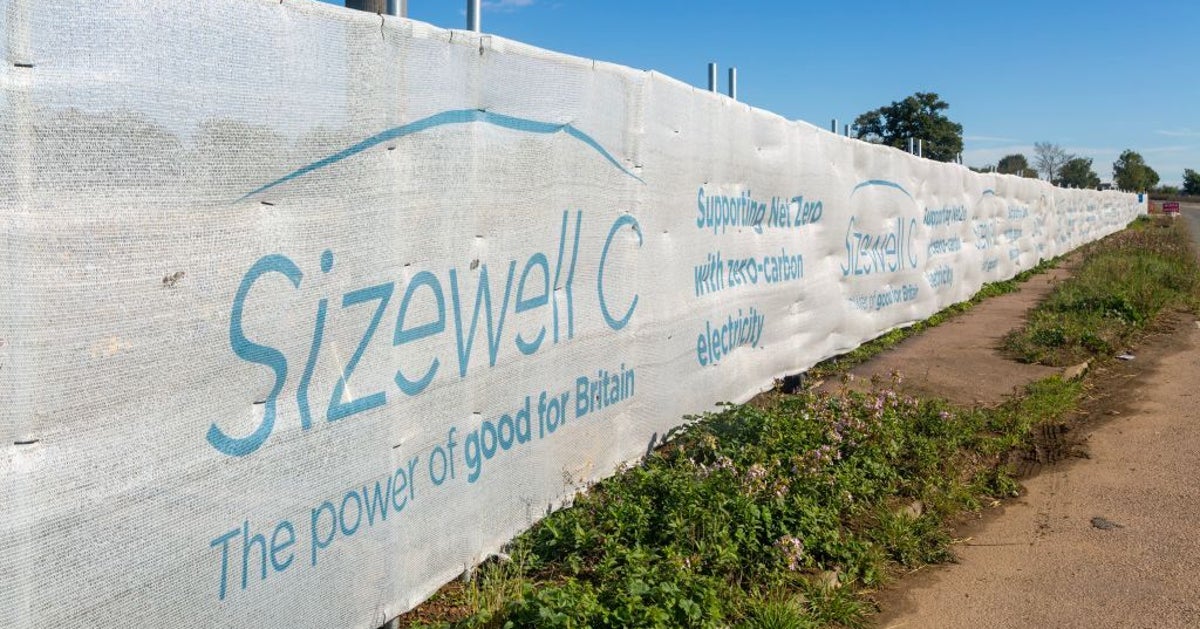
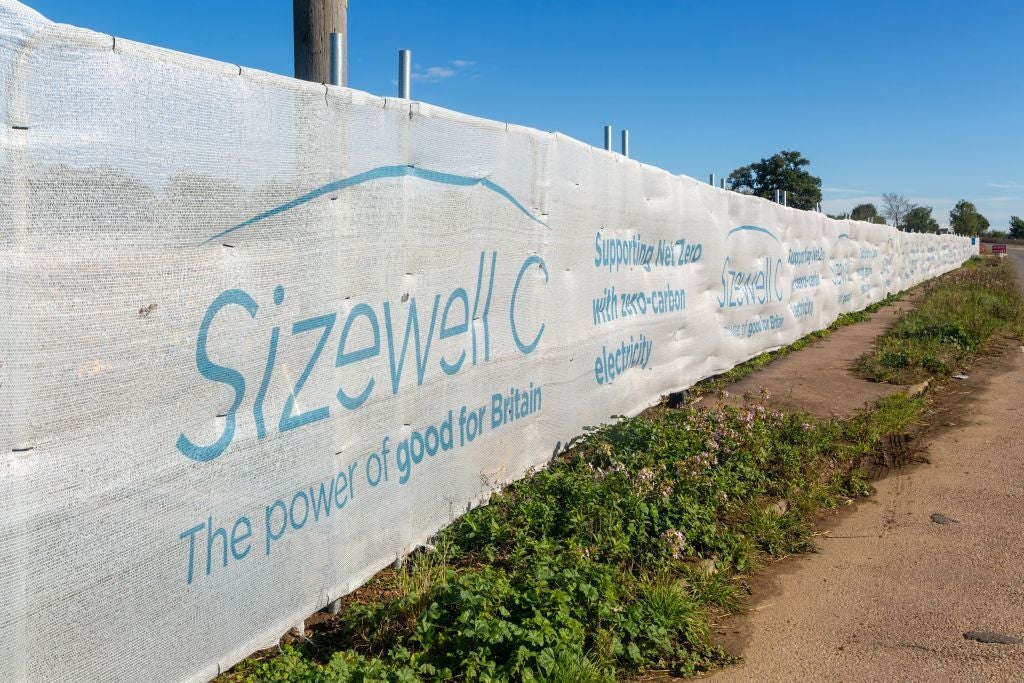
Rachel Reeves has agreed to spend £14 billion of taxpayers’ money on a nuclear plant at Sizewell C.

The chancellor will announce the move, which is part of her spending review, at the GMB Congress on Tuesday.

It is expected to create 10,000 jobs, including 1,500 apprenticeships.

Energy secretary Ed Miliband said the project, which will be the first new nuclear plant to open in the UK since 1995, will help to usher in “a golden age of clean energy abundance”.

Sizewell C was one of eight potential sites for new nuclear plants identified in 2009, when Miliband was last energy secretary.

However, the project was never completed during 14 years of Tory government.

It is expected that the plant will come on stream in the 2030s.

Reeves said the announcement showed that Labour was “investing in Britian’s renewal”.

“We are creating thousands of jobs, kickstarting economic growth and putting more money people’s pockets,” she said.

Miliband said: “We will not accept the status quo of failing to invest in the future and energy insecurity for our country.

“We need new nuclear to deliver a golden age of clean energy abundance, because that is the only way to protect family finances, take back control of our energy, and tackle the climate crisis.

“This is the government’s clean energy mission in action – investing in lower bills and good jobs for energy security.”

The Hinkley Point C nuclear plant, in Somerset, is under construction and is expected to produce enough power for about six million homes when it opens, but that may not be until 2031.

The government is also due to confirm one of Europe’s first small modular reactor programmes and will invest £2.5 billion over five years in fusion energy research as part of plans to boost the UK’s nuclear industry.

GMB regional secretary Warren Kenny said: “Nuclear power is essential for clean, affordable, and reliable energy – without new nuclear, there can be no net zero.

“Sizewell C will provide thousands of good, skilled, unionised jobs and we look forward to working closely with the Government and Sizewell C to help secure a greener future for this country’s energy sector.”

But Alison Downes of the ‘Stop Sizewell C’ group said ministers had not “come clean” about the full cost of the project, which the group have previously estimated could be some £40 billion.

“There still appears to be no final investment decision for Sizewell C, but £14.2 billion in taxpayers’ funding, a decision we condemn and firmly believe the government will come to regret,” she said.

Share Button

The Rudest Things You Can Do In A Lift

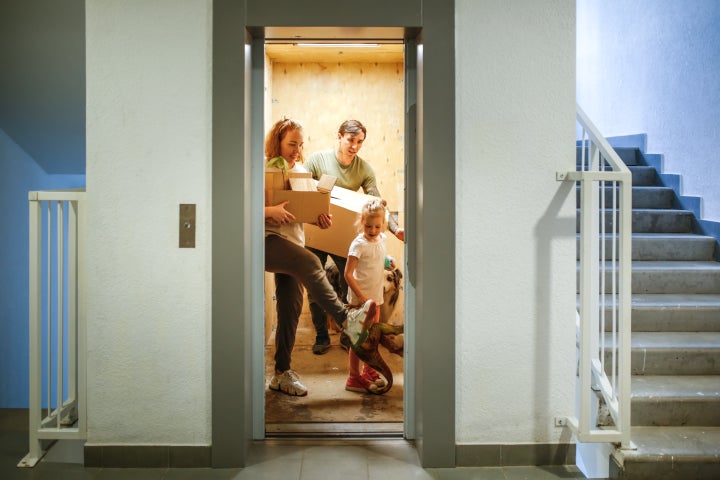
There are few places more ripe with the opportunity for awkwardness and even downright rude behaviour than lifts. They’re small, often crowded and require you to be mere inches from complete strangers.

When it comes to how to act in a lift, experts told HuffPost that you have to remember that they’re public spaces.

“People tend to forget that lifts are still public shared spaces,” said Tami Claytor, the owner of Always Appropriate Image and Etiquette Consulting.

“It’s not that you’re already in your office and you can close the door, or in your apartment and you can close the door — you’re still in a public space, and people should conduct themselves accordingly.”

“You have to observe and respect that public space just like you would someone’s home or a hotel lobby, and you must be respectful of the property itself [and] assume that there are eyes on you because there might be a camera up in the top corner,” said Diane Gottsman, a national etiquette expert and founder of the Protocol School of Texas.

Most people don’t get into a lift with the goal of being rude, but there are some common behaviours that are off-putting to your fellow lift riders.

Below, etiquette experts share the elevator no-nos that irk them most:

Not holding the door for someone else

There’s no excuse not to hold the door for someone who is coming up behind you to also get on the lift, experts told HuffPost.

While it’s rude to let the door slam in anyone’s face, Claytor added that it’s particularly rude if the person who’s walking behind you is elderly, uses medical equipment such as a walker, or has a stroller.

“There’s a gentleman who lives in my building who never holds the lift for anyone, and when my mother was alive, she used a walker, and he would not just wait a few seconds for her to catch up to him, he would just let the door close in her face,” Claytor noted.

Conversely, it’s also rude to hold the elevator door too long

You also shouldn’t hold a lift door too long and hold up other people’s day.

“Let’s say you’re traveling with a friend or a partner … and they are running just a little bit behind, but you’ve got to go, and you’re in a hurry, so you want to hold that lift door for them, even though they’re not even there yet,” said Gottsman.

“So, you’re kind of waiting, waiting, waiting, because it’s rush hour, it’s time to get out … so, you’re holding it because your friend is not quite ready with a suitcase,” Gottsman noted. “You have to let it go. You can’t hold up that elevator car while waiting for someone who’s not there.”

You can go downstairs without them, or get off tand wait for them, but you can’t just hold the door for someone who isn’t ready.

More, you shouldn’t hold a lift door open to finish a conversation with someone who isn’t actually getting on, Claytor said. Maybe you’re leaving the office and getting in a few last-minute words with your colleague before going home.

“Have you ever been in a situation where someone’s holding the lift, they’re inside or outside the lift, and they’re holding a conversation with someone? And so now you’re stuck, you’re trapped on this lift, and people are holding a conversation,” Claytor said.

You should either get off the lift and continue the conversation, or get on and end it, she added.

Not facing forward

You shouldn’t face backwards in a lift, said Gottsman. Once you’re in an lift you should face forward — so, face the door, once you’re inside.

“Even though it’s a public space, we still feel as if we need to have some privacy in that space,” Gottsman said. “You don’t want someone staring at you.”

Natalia Lebedinskaia via Getty Images

Pushing into a crowded lift

“We’ve all experienced it, every single one of us … the door opens, you’re in the lift being crushed already, and then there are three people standing there, or one person, and they’ll say, ‘Oh, is there a room for me?’” Gottsman said. “You clearly know there’s no room for you. We are sardines in this little can.”

Nonetheless, they squeeze into the lift “and no one wants to say anything because everyone wants to be polite, but it is so crowded that you can’t breathe,” said Gottsman.

“And just think of potentially, what could happen if that lift gets stuck, and then what are you going to do?” she said.

Overcrowding a lift is a big faux pas, and you should read the room before stepping in, Gottsman said. If there’s no room to fit comfortably, wait 20 seconds for the next elevator.

Not covering your mouth when you cough and sneeze

While it’s never OK to just cough or sneeze out in the open, it’s especially rude in a space that isn’t even six feet across.

If you’re on a lift and you cough or sneeze, it’s important that you cover your mouth — otherwise it’s really rude to the other passengers, Claytor noted.

No one wants to be sneezed or coughed on by a stranger.

Talking on speakerphone

Lifts aren’t exactly mobile phone friendly — service is often spotty and no one wants to hear you yammer away, anyway.

“I would prefer if people would pause their [phone] conversations until they got to their personal space, but if you absolutely have to continue this conversation, definitely do not use speakerphone,” said Claytor.

“No one else on the lift wants to hear your conversation,” she said.

Plus, you don’t know who may know the person you’re talking to on the phone, Gottsman added.

“A client of mine had a personal experience where they were on the lift and someone on the phone was talking about them on speaker. So, the person in the lift didn’t know them, but they were talking about that person,” explained Gottsman.

Shoving people out of the way to get off the lift

If you’re in the back of a crowded elevator and need to get off, you shouldn’t just push your way forward, Gottsman noted.

Instead, you should speak up and say something like, “Excuse me, this is my floor,” Gottsman said.

“Let them know. Don’t just try and push through,” she said.

People should move to the side to let you off, Gottsman added. “You’ve got to get out so you can let other people out, and then you can get back in and hold that door for yourself and for them,” Gottsman said.

Wearing too much cologne or perfume

A lift is a supremely small space. No one wants to be in a tiny, enclosed space with someone who just dosed themselves in fragrance, and forcing someone to stand directly next to you after you put on lots of cologne or perfume is rude, both experts told HuffPost.

This doesn’t mean that you can’t wear a fragrance, but you should be mindful of how much you put on if you know you have to get into an elevator.

“Just be mindful that scents linger,” Gottsman said.

When it comes to being your best self in a lift (or any public space, for that matter), Claytor has some advice: “At its very fundamental level, etiquette is about thinking of others before you think of yourself.”

So, instead of disregarding those around you by letting the door slam in their face or pushing off a crowded lift, think about how that may make others feel.

“I like to tell people … just slow down for a moment. Don’t always be in such a rush, and just observe the world around you, and that will make you a more conscientious person,” Claytor said.

Share Button

Martha doctor’s failings ‘particularly grave’

A medical tribunal has found a senior doctor’s failings amounted to gross negligence and misconduct.

Share Button

Restrict shop-bought baby food, government tells parents

Avoid relying on food pouches for everyday meals, says NHS website for first time.

Share Button

Zia Yusuf Says Reform Would Deport All Illegal Immigrants – But Nigel Farage Has Said That’s ‘Impossible’

Reform UK’s former chairman has said the party would deport all illegal immigrants, despite Nigel Farage previously saying it was “impossible”.

Zia Yusuf made the pledge in his first broadcast interview since returning to a senior role in the party.

He stunned Westminster by resigning as chairman on Thursday, only to return to the fold 48 hours later. Yusuf is now heading up Reform’s equivalent of Elon Musk’s Department of Government Efficiency (DOGE).

On Radio 4′s Today programme this morning, he said: “Reform will deport every illegal immigrant in this country.

“I want to be crystal clear about what my position is, and Reform UK’s position is, which is we will deport everybody who is here in this country illegally, which is roughly about 1.2 million people.”

But that put him at odds with Farage, who last year declared that mass deportations could not be done.

Asked by GB News if he supported removing all illegal immigrants, he said: “It’s impossible to do. Literally impossible to do.

“For us, at the moment, it’s a political impossibility.”

Asked if it was his ambition to be able to do it, Farage replied: “No. So it’s pointless even going there.

“It’s a political impossibility, we simply can’t do it.”

Share Button