NHS trusts “try to stop” coroners issuing Prevention of Future Death reports, an inquiry hears.


NHS trusts “try to stop” coroners issuing Prevention of Future Death reports, an inquiry hears.
Many are from the most deprived areas, and a significant number are neurodivergent or have other health conditions, a study says.
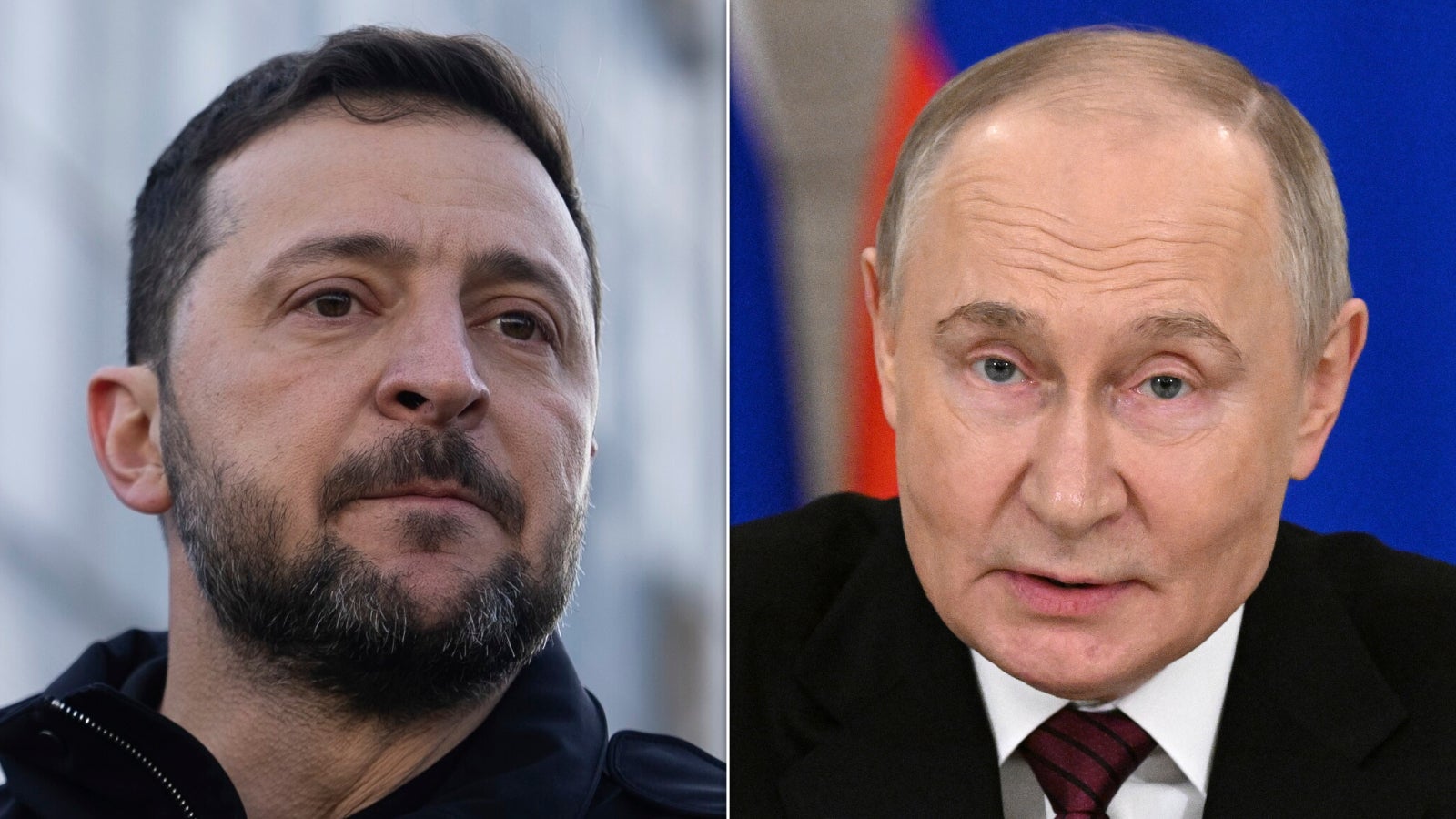
A Russian politician has condemned Volodymyr Zelenskyy’s recent promise to wait for Vladimir Putin for peace talks in Istanbul.
After his Russian counterpart offered to “resume negotiations” on ending the Ukraine war in Turkey last week, the Ukrainian president agreed – as long as there was a “full and lasting ceasefire”.
Advertisement
Writing on X, Zelenskyy said: “We await a full and lasting ceasefire, starting from tomorrow, to provide the necessary basis for diplomacy. There is no point in prolonging the killings. And I will be waiting or Putin in Turkey on Thursday. Personally. I hope that this time the Russians will not look excuses.”
The Kremlin has not directly responded to the Ukrainian president’s remarks but a Russian senator dismissed them altogether on Monday.
Speaking to Rossiya-24 TV broadcast, the federation council’s deputy speaker, Konstantin Kosachev, said: “It’s pure theatrics, a total farce.
Advertisement
“That’s not how high high-level meetings are arranged, especially given the seriousness of the situation.”
The senator claimed this would be an “impromptu” meeting and that is not the way to conduct such important negotiations.
He said: “Zelenskyy should known this from his own bitter experience, when he came unprepared to his meeting with President Trump in the White House in February, ending in a complete fiasco for him.”
Advertisement
The Ukrainian president was actually very prepared for his meeting in the White House in February, but he had to cut the visit short after Trump and his vice-president JD Vance berated him in front of the press.
At the time Trump was much more aligned with the Kremlin but he has since improved his relationship with Kyiv, and has even questioned if Putin really does want to stop the war.
Even though it was the Russian president who suggested further peace talks in Istanbul on Thursday, Kosachev claimed Zelensky is trying to “turn the tables” on Russia so he can call Putin uncooperative.
Advertisement
The senior Russian politician continued: “Zelensky does not need a meeting with the Russian president now. He should be afraid of meeting with him. And I am sure that he is afraid, because, as Mr Trump rightly says, he holds no cards. It is true, and Zelensky is in a terrible situation.”
Meanwhile, the Kremlin spokesperson Dmitry Peskov just told reporters that Putin is serious about peace talks.
He said: “We are committed to a serious search for ways of a long-term peaceful settlement.
“This approach, aimed precisely at finding a real diplomatic solution to the Ukrainian crisis, eliminating the root causes of the conflict and establishing lasting peace, has met with understanding and support from the leaders of many countries.”
Advertisement
He cut off any further questions by saying: “That’s all. I’ve said everything I could about this story.”

Cheating isn’t just limited to romantic partners, experts say – “financial infidelity,” or lying about or concealing money-related issues, can sting just as much.
It can take the form of fibbing about debt, secret spending, and even lying about your secret wealth.
Advertisement
It seems Redditor u/Hexylpuff is going through the latter struggle.
Writing to r/AITAH (Am I The Asshole Here), the 31-year-old asked: “AITAH for finding out I’ve been unknowingly paying rent to my husband and his mom for TWO YEARS?”
So, we spoke to William “Bill” London, a divorce attorney and partner at Kimura London & White LLP, about how to talk money with your spouse.
Advertisement
The original poster (OP) says she married her husband “Brian” two years ago.
The pair moved into a flat supposedly rented at a discount from a “family friend” after their wedding, and have always split bills evenly. This includes both rent and utilities.
For the poster, this costs about £530 a month (admittedly an amazing deal for a rental).
But OP says that at a barbecue recently, she overheard her mother-in-law say, “It’s nice getting rent from Brian’s place” and “how smart they were to keep it in the family.”
On confronting her husband, OP says she found out her mother-in-law owned the flat and that Brian’s name is also on the papers.
Advertisement
“He never told me. Just let me keep paying rent for two years like a clueless roommate,” she shares.
Apparently, he never told her because “she never asked.” Her husband said she was “overreacting” because the “rent” was so reasonable.
But the poster feels blindsided, saying, “It’s not just the money, it’s the secrecy.”
She ends: “I told him I won’t keep paying until we talk about a fair setup. Now he’s acting like I’m the problem.”
Advertisement
London tells HuffPost UK that financial strain ends more marriages than most of us realise.
“While every couple sets their own financial boundaries, I believe that in a marriage – especially one involving shared expenses – full financial transparency is not just healthy, it’s essential,” he adds.
In this case, the lawyer thinks that, “When a partner consciously misrepresents important fiscal information to the other, as by pretending to have non-existent housing costs, it crosses the line from privacy to deception.”
This can destroy the trust needed for a healthy marriage, he continues.
“Married couples are expected to be transparent about important financial information,” he advises.
“This doesn’t mean total merging of their finances or the disclosure of all trivial expenses, but hiding ownership of a mortgage-free property and asking a spouse to share in imaginary financial burdens is manipulative behaviour needing a direct confrontation.”
Advertisement
In other words, OP hit the nail on the head when she said the money isn’t the main issue – it’s about respect, trust, and honesty.

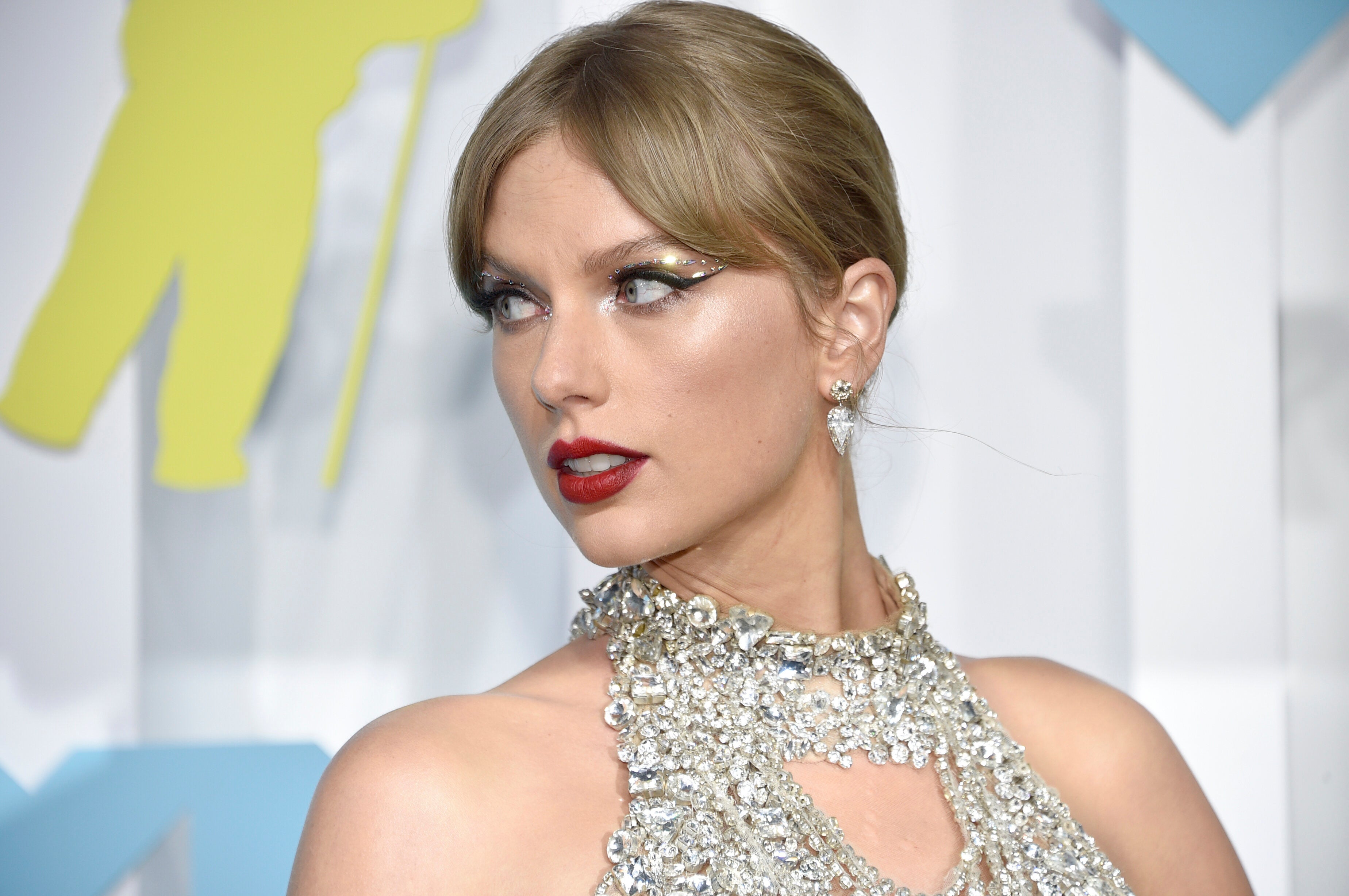
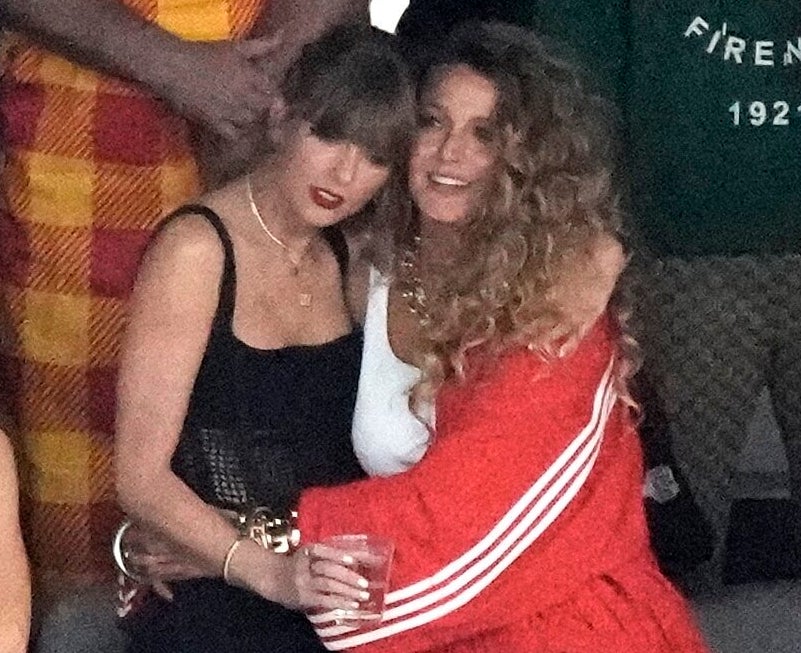
Taylor Swift has been keeping a low profile as of late since the end of her Eras Tour at the end of last year – but she’s been forced to speak out after being dragged into one of the most talked-about news stories of the last few months.
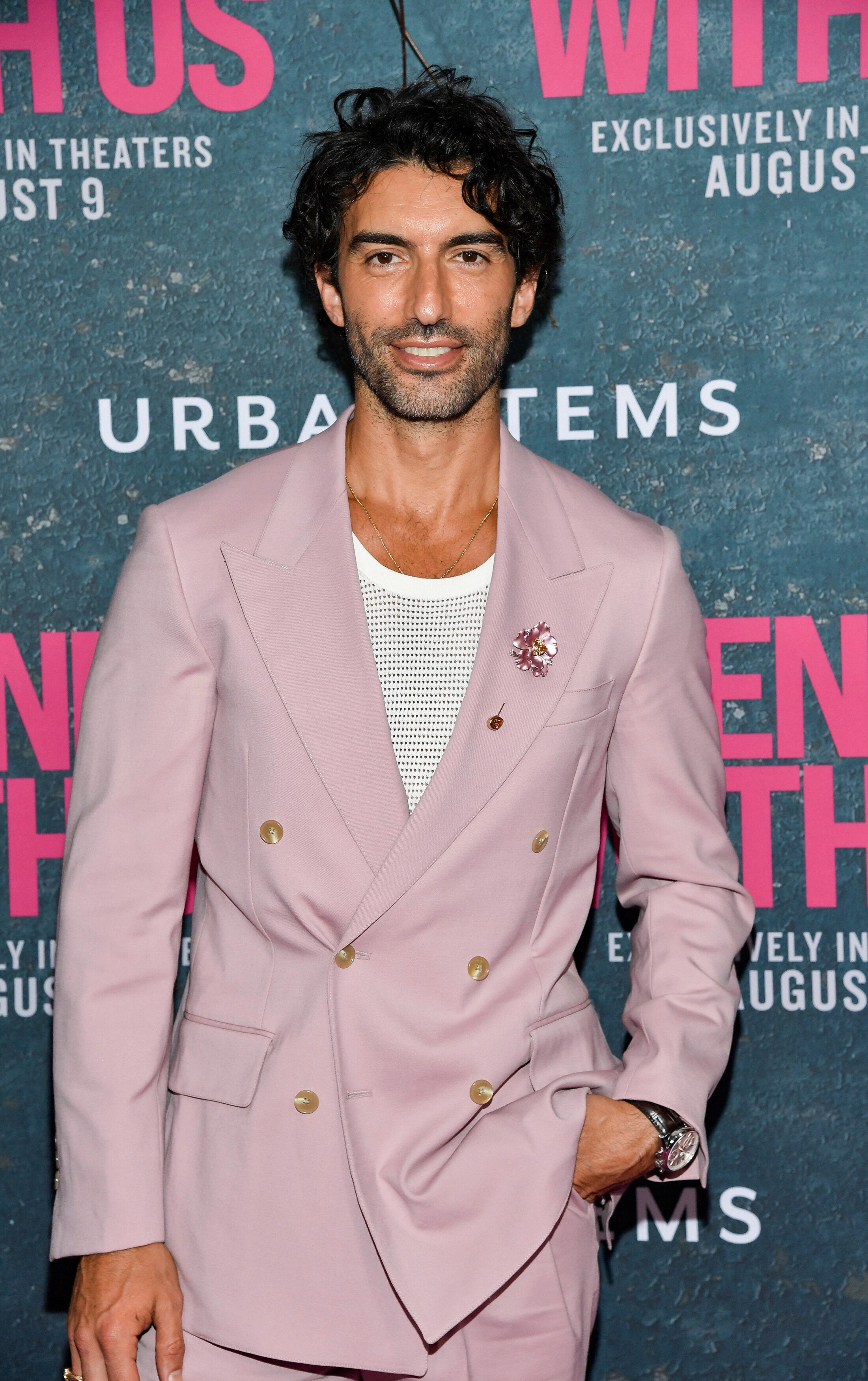
Over the weekend, the Anti-Hero singer’s team issued a frustrated statement, lamenting that the Grammy winner had somehow become embroiled in the very public legal drama surrounding her friend, Blake Lively, and the Gossip Girl alum’s former director and It Ends With Us co-star Justin Baldoni.
Advertisement
But what exactly is going on between the two Hollywood stars – and how is Taylor involved? Get yourself a cup of tea and allow us to bring you up to speed…
Frankly, we could be here all day with this one, so we’ll try and keep this short.
Last year, both actors starred in the big-screen adaptation of the novel It Ends With Us, which Justin also directed.
Advertisement

via Associated Press
Around the film’s summer release, people began to suspect there had been some behind-the-scenes drama after it was spotted that none of the cast followed Justin back on Instagram, with the film’s leads also not posing for any pictures together or doing joint interviews while promoting the movie.
Towards the end of last year, Blake then filed a legal complaint against Justin and his production company, accusing him of sexual harassment on the set of their film, and a subsequent effort to deliberately “destroy” her reputation.
Advertisement
He responded weeks later with a lawsuit of his own, accusing Blake, her husband Ryan Reynolds and her publicist of defamation and extortion.
The matter is expected to go to trial in March 2026, though a judge claimed earlier this year that this court date could be moved earlier were the legal teams on both sides able to follow court rules about public statements, which are in place to ensure as fair a trial as possible.
On Friday, Deadline broke the story that a week earlier, Taylor – a long-time friend of both Blake and her famous husband Ryan – had been hit with a subpoena from Justin’s legal team earlier this week.
Advertisement

via Associated Press
It Ends With Us features a scene soundtracked by Taylor’s Folklore cut My Tears Ricochet, but aside from that, she was in no way linked with the movie.
Blake’s team later issued a statement to Deadline, accusing Justin and his team of trying to “turn a case of sexual harassment and retaliation into entertainment for the tabloids”.
Advertisement
“This is a very serious legal matter, not Barnum & Bailey’s Circus,” Blake’s team said. “The defendants continue to publicly intimidate, bully, shame and attack women’s rights and reputations. Including in the past month seeking to strike down ‘for all’, a powerful California victims’ rights law, calling it ‘unconstitutional.’
“The disturbing actions by a billionaire, men who made their careers as ‘female allies’ and their team continue to show their true colours.”
Back in January, Justin had also filed a legal complaint claiming that Taylor was one of the public figures (alongside Blake’s husband Ryan Reynolds) who had pressured him into accepting rewrites suggested by Blake on the It Ends With Us script.
Advertisement

via Associated Press
A spokesperson for Taylor told Hello! magazine on Friday evening: “Taylor Swift never set foot on the set of this movie, she was not involved in any casting or creative decisions, she did not score the film, she never saw an edit or made any notes on the film, she did not even see It Ends With Us until weeks after its public release, and was travelling around the globe during 2023 and 2024 headlining the biggest tour in history.
“The connection Taylor had to this film was permitting the use of one song, My Tears Ricochet. Given that her involvement was licensing a song for the film, which 19 other artists also did, this document subpoena is designed to use Taylor Swift’s name to draw public interest by creating tabloid clickbait instead of focusing on the facts of the case.”
Advertisement
Neither party has spoken out directly, but it’s worth pointing out that reports have been circulating suggesting that their friendship has cooled long before this latest development.
In February, the Daily Mail noted that Taylor had not invited Blake to join her to watch boyfriend Travis Kelce play at the 2025 Super Bowl, citing an anonymous “source” who claimed the singer “wants nothing to do with this trial and court case”.
A day later, the same outlet claimed that Blake was happy laying low until the drama involving Justin Baldoni blew over, quoting another “source” who said the A Simple Favour actor was happy to not be included so as not to “overshadow” Taylor and Travis’ big night.
Advertisement
Just three weeks ago, People magazine published a story suggesting the two women’s friendship was “weathering the storm” when Taylor was first named in a complaint filed by Justin Baldoni’s January complaint.
People’s own “source” said Taylor was initially “really hurt by this situation” but that they had been able to “recover from this and put it all behind them”.
Since the latest update, the Daily Mail published a new piece suggesting that Taylor felt “exploited” by her friend – though it’s important to note that she has said nothing publicly to indicate that this is the case.
Advertisement
HuffPost UK has contacted Taylor Swift’s team for comment.
Blake’s team were also complimentary about Taylor in their initial response to the subpoena, describing her as a “woman who has given a voice to millions the world over”.



University of Colorado Boulder astrophysicist Jeremy Darling is pursuing a new way of measuring the universe’s gravitational wave background — the constant flow of waves that churn through the cosmos, warping the very fabric of space and time.
The research, published in The Astrophysical Journal Letters, could one day help to unlock some of the universe’s deepest mysteries, including how gravity works at its most fundamental level.
“There is a lot we can learn from getting these precise measurements of gravitational waves,” said Darling, professor in the Department of Astrophysical and Planetary Sciences. “Different flavors of gravity could lead to lots of different kinds of gravitational waves.”
To understand how such waves work, it helps to picture Earth as a small buoy bobbing in a stormy ocean.
Darling explained that, throughout the history of the universe, countless supermassive black holes have engaged in a volatile dance: These behemoths spiral around each other faster and faster until they crash together. Scientists suspect that the resulting collisions are so powerful they, literally, generate ripples that spread out into the universe.
This background noise washes over our planet all the time, although you’d never know it. The kinds of gravitational waves that Darling seeks to measure tend to be very slow, passing our planet over the course of years to decades.
In 2023, a team of scientists belonging to the NANOGrav collaboration achieved a coup by measuring that cosmic wave pool. The group recorded how the universe’s gravitational wave background stretched and squeezed spacetime, affecting the light coming to Earth from celestial objects known as pulsars, which act somewhat like cosmic clocks.
But those detailed measurements only captured how gravitational waves move in a single direction — akin to waves flowing directly toward and away from a shoreline. Darling, in contrast, wants to see how gravitational waves also move from side-to-side and up and down compared to Earth.
In his latest study, the astrophysicist got help from another class of celestial objects: quasars, or unusually bright, supermassive black holes sitting at the centers of galaxies. Darling searches for signals from gravitational waves by precisely measuring how quasars move compared to each other in the sky. He hasn’t spotted those signals yet, but that could change as more data become available.
“Gravitational waves operate in three dimensions,” Darling said. “They stretch and squeeze spacetime along our line of sight, but they also cause objects to appear to move back and forth in the sky.”
Galaxies in motion
The research drills down on the notoriously tricky task of studying how celestial objects move, a field known as astrometry.
Darling explained that quasars rest millions of light-years or more from Earth. As the glow from these objects speeds toward Earth, it doesn’t necessarily proceed in a straight line. Instead, passing gravitational waves will deflect that light, almost like a baseball pitcher throwing a curve ball.
Those quasars aren’t actually moving in space, but from Earth, they might look like they are — a sort of cosmic wiggling happening all around us.
“If you lived for millions of years, and you could actually observe these incredibly tiny motions, you’d see these quasars wiggling back and forth,” Darling said.
Or that’s the theory. In practice, scientists have struggled to observe those wiggles. In part, that’s because these motions are hard to observe, requiring a precision 10 times greater than it would take to watch a human fingernail growing on the moon from Earth. But our planet is also moving through space. Our planet orbits the sun at a speed of roughly 67,000 miles per hour, and the sun itself is hurtling through space at a blistering 850,000 miles per hour.
Detecting the signal from gravitational waves, in other words, requires disentangling Earth’s own motion from the apparent motion of quasars. To begin that process, Darling drew on data from the European Space Agency’s Gaia satellite. Since Gaia’s launch in 2013, its science team has released observations of more than a million quasars over about three years.
Darling took those observations, split the quasars into pairs, then carefully measured how those pairs moved relative to each other.
His findings aren’t detailed enough yet to prove that gravitational waves are making quasars wiggle. But, Darling said, it’s an important search — unraveling the physics of gravitational waves, for example, could help scientists understand how galaxies evolve in our universe and help them test fundamental assumptions about gravity.
The astrophysicist could get some help in that pursuit soon. In 2026, the Gaia team plans to release five-and-a-half more years of quasar observations, providing a new trove of data that might just reveal the secrets of the universe’s gravitational wave background.
“If we can see millions of quasars, then maybe we can find these signals buried in that very large dataset,” he said.

From a small California winery to a large-scale energy project in China, floating photovoltaics — or “floatovoltaics” — are gaining in popularity. Commonly installed over artificial water bodies, from irrigation ponds and reservoirs to wastewater treatment plants, floating solar projects can maximize space for producing clean energy while sparing natural lands.
But where there is water, there are waterbirds. Little is known about the impacts — positive or negative — floating solar projects may have on birds and other wildlife. A paper from the University of California, Davis, published in the journal Nature Water, is among the first to outline key considerations to better align renewable energy and biodiversity goals.
Birds face many threats — from habitat loss and climate change to pollution and avian influenza — and many populations are in decline.
“That’s why it’s so important to understand how waterbirds are going to respond to floating solar and if there is the possibility for conservation concessions at new floating solar facilities,” said corresponding author Elliott Steele, a postdoctoral scholar with the UC Davis Wild Energy Center within the Energy and Efficiency Institute. “We want to advance clean energy while promoting healthy, functional environments. Achieving this balance requires that we rigorously study and understand how wildlife responds to floating solar so we can ensure that negative impacts are avoided and potential ecological benefits are realized.”
Five considerations
Drawing from their scientific field observations of birds interacting with floating PV systems, the authors examined various ways such systems could impact birds, and vice versa. They concluded that future research on FPV-waterbirds interactions should examine:
“Our team has been documenting such a diversity of bird behavior with floating PV, so we immediately knew this was a very important interaction, especially given the precipitous decline in waterbird numbers globally,” said senior author and UC Davis Professor Rebecca R. Hernandez, director of the UC Davis Wild Energy Center. “Humans are also responding to waterbirds on floating PV, sometimes with deterrence. We leveraged our team’s expertise in ecology and energy system science to identify risks and solution pathways such that waterbirds and floating PV can coexist.”
Critical threshold of development
The Wild Energy Center is conducting research to begin to answer some of those questions. During their field work, the authors have seen black-crowned night herons resting on a floating solar structure before dawn, double-breasted cormorants jockeying for a favorable site, black phoebes nesting under panels, and more.
They note that while many types of wildlife use artificial water bodies, the authors focused on waterbirds because they interact above and below floating solar panels and are easy to observe.
So far, the scientists have observed mostly positive waterbird interactions with floating solar and additional benefits for people. For example, a farm that installs floating solar over an irrigation pond can save water by reducing evaporation, as well as produce clean energy without taking up cropland. Yet more research is required to fully understand the risks and benefits of introducing a large, relatively new technology into an aquatic environment.
“There are some things we wished we’d known before other kinds of renewable energy were developed,” said coauthor Emma Forester, a Ph.D. candidate with the UC Davis Land, Air and Water Resources department and the Wild Energy Center. “While we’re at this critical threshold of renewable energy development, we want to put more thought into the design that can benefit birds and other wildlife as we go forward.”
Additional coauthors include Alexander Cagle and Jocelyn Rodriguez of UC Davis, Tara Conkling and Todd Katzner of U.S. Geological Survey, Sandor Kelly of University of Central Florida, Giles Exley and Alona Armstrong of Lancaster University, and Giulia Pasquale and Miriam Lucia Vincenza Di Blasi of Innovation of Enel Green Power in Italy.
The study was funded by the UC Office of the President’s California Climate Action Seed Grant, Enel Green Power, U.S. Department of Energy, U.S. Bureau of Land Management and U.S. Geological Survey.

Researchers have discovered how to block cells dying, in a finding that could lead to new treatments for neurodegenerative conditions like Parkinson’s and Alzheimer’s.
The team at WEHI in Melbourne, Australia, have identified a small molecule that can selectively block cell death.
Published in Science Advances, the findings lay the groundwork for next-generation neuroprotective drugs for degenerative conditions, which currently have no cure or treatments to stop their progression.
At a glance
Researchers have discovered how to block cell death, an important first step towards slowing neurodegenerative conditions.
The study from team at WEHI, including researchers from the Parkinson’s Disease Research Centre, has revealed new insight into the mechanisms behind cell death and how it is controlled.
The discovery was made possible through the advanced screening technologies of the National Drug Discovery Centre.
A new hope in the fight against degenerative conditions
Millions of cells are programmed to die in our bodies every day. But excessive cell death can cause degenerative conditions including Parkinson’s disease and Alzheimer’s disease, with the premature death of brain cells a cause of symptoms in these diseases.
Professor Grant Dewson, co-corresponding author and head of the WEHI Parkinson’s Disease Research Centre, said: “Currently there are no treatments that prevent neurons from dying to slow the progression of Parkinson’s. Any drugs that could be able to do this could be game changing.”
The new study aimed to find new chemicals that block cell death and could be useful to treat degenerative diseases in the future.
To identify novel small molecules, the team worked with researchers in the National Drug Discovery Centre, headquartered at WEHI.
A high-throughput screen of over 100,000 chemical compounds identified one that was effective at stopping cells from dying, by interfering with a well-understood cell death protein.
Co-corresponding author Professor Guillaume Lessene said: “We were thrilled to find a small molecule that targets a killer protein called BAX and stops it working.
“While not the case in most cells, in neurons turning off BAX alone may be sufficient to limit cell death.”
Building on decades of pioneering cell death research
The new research builds on decades of world-leading WEHI discoveries in cell death. A pioneering discovery at WEHI in 1988 of a protein that stopped programmed cell death sparked huge interest in the field, and has since led to a new drug to treat cancer.
While drugs that trigger cell death are transforming treatment of certain cancers, the development of cell death blockers — that could be similarly game-changing for neurodegenerative conditions — has proven challenging.
The new molecule targets a killer protein called BAX which kills cells by damaging mitochondria, the powerhouse of cells.
Lead author and Dewson Lab researcher Kaiming Li said: “For the first time we could keep BAX away from mitochondria and keep cells alive using this molecule.
“This could pave the way for next-generation cell death inhibitors to combat degenerative conditions.”
The study demonstrates the potential to identify drugs that block cell death and may open a new avenue to find much-needed disease-modifying drugs for neurodegenerative conditions such as Parkinson’s and Alzheimer’s.
The WEHI Parkinson’s Disease Research Centre is focusing on its expertise in cell death, ubiquitin signalling, mitochondria and inflammation in the hunt for disease-modifying therapies for Parkinson’s.
By using a multidisciplinary approach to build understanding of the mechanisms behind the disease, the centre hopes to accelerate the discovery of drugs to stop disease progression, transforming the lives of those living with the condition.
The new research was supported by the Bodhi Education Fund and the National Health and Medical Research Council.
Many care workers say it is a rewarding job, so the task is how to get more people in the UK to apply.
The England fly-half will be at the University of Surrey promoting a new set of wellbeing exercises.
