GPs are deeply divided over assisted dying with personal beliefs shaping their views, BBC research reveals.


GPs are deeply divided over assisted dying with personal beliefs shaping their views, BBC research reveals.
Cross-party group of MPs say move is causing uncertainty at time when NHS is under huge pressure.

The Traitors bosses have finally confirmed the line-up for the show’s first ever celebrity outing.
The 19 contestants on the line-up are:
Now, one question we’ve always had about the proposed Celebrity Traitors is exactly how seriously the famous contestants would be taking the game, if there wasn’t a cash prize on the line.
However, it’s now been revealed that the famous Traitors and Faithfuls will be playing the game in the hopes of winning a share of a potential £100K cash prize for a charity of their choice – all under the watchful (and heavily made up) eye of Claudia Winkleman.
Claudia said: “We’re incredibly lucky these brilliant people have said yes. I’d love to say we’ll take it easy on them and they’ll just wander round the castle and eat toast for a couple of weeks but that would be a lie.”
A specific airdate is yet to be confirmed, although Celebrity Traitors will air on the BBC in the autumn, ahead of the regular series’ return in its usual January timeslot.



About 15 per cent of all couples of reproductive age are involuntarily childless. A major reason why so many need assisted reproduction is that nowadays more and more people are putting off starting a family.
“This is a global trend that is expected to increase in the coming years. In Europe alone, one million IVF treatments are carried out each year; in Sweden, the corresponding number is 25,000,” says Yvonne Lundberg Giwercman, professor at Lund University who led the research. She has been researching fertility in both men and women for many years.
IVF treatment involves stimulating the woman’s ovaries to mature many eggs, which are then retrieved and fertilised with sperm in the laboratory before being returned to the uterus. There are two different types of hormone treatments to choose from for egg maturation: biological or synthetic. But the powerful hormone therapy also carries the risk of serious side effects, sometimes requiring women to go into intensive care — and many attempts at IVF fail. In Sweden, the government subsidises up to three IVF cycles.
“There is an over-reliance on IVF treatments. Around 75 per cent of all attempts fail and up to 20 per cent of women experience side effects, some serious enough to require emergency treatment. The choice of hormone therapy is a contributing factor, and a major challenge is that healthcare today to some extent has to guess which treatment is best for the woman,” says Ida Hjelmér, PhD and laboratory researcher at Lund University and first author of the study.
To find out who responds best to which hormone treatment, the researchers turned to genetics. A total of 1,466 women undergoing IVF treatment at the Reproductive Medicine Centre at Skåne University Hospital in Malmö, Sweden were included in the study. Women with endometriosis or polycystic ovary syndrome (PCOS) were excluded. Of the 1,466 women, 475 were randomised to two different hormone treatments while the rest were controls. One candidate gene that is involved in fertilisation by mediating the action of follicle-stimulating hormone (FSH), which is known to play an important role in egg maturation, was of particular interest and mapped by gene sequencing.
The study identified that women with a particular variant of the FSH receptor (FSHR) gene that mediates the action of the hormone responded best to the biological hormone treatment, while others benefited from receiving the synthetic type of hormone. By knowing the woman’s genetic profile in advance, we can increase the number of successful pregnancies, says Yvonne Lundberg Giwercman.
“We see an increase in the number of pregnancies and a relative number of 38% more babies born among women who received hormone therapy that matched their gene variation compared with those who did not. This means that for every 1,000 women undergoing IVF treatment, the equivalent of four more school classes are born: 110 more babies,” says Yvonne Lundberg Giwercman.
But mapping genes is costly and takes time. That is why the researchers have now developed a simple oral swab test, which within an hour shows which hormone therapy is most suitable. The result can be seen with the naked eye as a pink or yellow coulour.
The researchers have applied for a patent for the test, set up the company Dx4Life AB and are supported in the process by LU Innovation, LU Ventures and the SmiLe Incubator with a view to commercialising the product.
“Our hope is that this will reduce the risk of suffering for women, increase the number of successful treatments and cut costs for taxpayers. Our goal is for the test to be available by the start of 2026,” says Yvonne Lundberg Giwercman, who is also the CEO of the company that developed the oral swab test.

Sustainably produced, biodegradable materials are an important focus of modern materials science. However, when working natural materials such as cellulose, lignin or chitin, researchers face a trade-off. Although these substances are biodegradable in their pure form, they are often not ideal when it comes to performance. Chemical processing steps can be used to make them stronger, more resistant or more supple — but in doing so, their sustainability is often compromised.
Empa researchers from the Cellulose and Wood Materials laboratory have now developed a bio-based material that cleverly avoids this compromise. Not only is it completely biodegradable, it is also tear-resistant and has versatile functional properties. All this with minimal processing steps and without chemicals — you can even eat it. Its secret: It’s alive.
Optimized by nature
As the basis for their novel material, the researchers used the mycelium of the split-gill mushroom, a widespread edible fungus that grows on dead wood. Mycelia are root-like filamentous fungal structures that are already being actively researched as potential sources of materials. Normally, the mycelial fibers — known as hyphae — are cleaned and, if necessary, chemically processed, which brings about the above-mentioned trade-off between performance and sustainability.
The Empa researchers chose a different approach. Instead of treating the mycelium, they use it as a whole. As it grows, the fungus not only forms hyphae, but also a so-called extracellular matrix: a network of various fiber-like macromolecules, proteins and other biological substances that the living cells secrete. “The fungus uses this extracellular matrix to give itself structure and other functional properties. Why shouldn’t we do the same?” explains Empa researcher Ashutosh Sinha. “Nature has already developed an optimized system,” adds Gustav Nyström, head of the Cellulose and Wood Materials lab.
With a bit of additional optimization, the researchers gave nature a helping hand. From the enormous genetic diversity of the split-gill, they selected a strain that produces particularly high levels of two specific macromolecules: the long-chain polysaccharide schizophyllan and the soap-like protein hydrophobin. Due to their structure, hydrophobins collect at interfaces between polar and apolar liquids, for example water and oil. Schizophyllan is a nanofiber: less than a nanometer thick, but more than a thousand times as long. Together, these two biomolecules give the living mycelium material properties that make it suitable for a wide range of applications.
A living emulsifier
The researchers demonstrated the versatility of their material in the laboratory. In their study, which was published recently in the journal Advanced Materials, they showcased two possible applications for the living material: a plastic-like film and an emulsion. Emulsions are mixtures of two or more liquids that normally do not mix. All you have to do to see an example is open the fridge: Milk, salad dressing or mayonnaise are all emulsions. And various cosmetics, paints and varnishes also take the form of emulsions.
One challenge is to stabilize such mixtures so that they do not separate into the individual liquids over time. This is where the living mycelium shows its strengths: Both the schizophyllan fibers and the hydrophobins act as emulsifiers. And the fungus keeps releasing more of these molecules. “This is probably the only type of emulsion that becomes more stable over time,” says Sinha. Both the fungal filaments themselves and their extracellular molecules are completely non-toxic, biologically compatible and edible — the split-gill mushroom is routinely eaten in many parts of the world. “Its use as an emulsifier in the cosmetics and food industry is therefore particularly interesting,” says Nyström.
From compost bags to batteries
The living fungal network is also suitable for classic material applications. In a second experiment, the researchers manufactured the mycelium into thin films. The extracellular matrix with its long schizophyllan fibers gives the material very good tensile strength, which can be further enhanced by targeted alignment of the fungal and polysaccharide fibers within it.
“We combine the proven methods for processing fiber-based materials with the emerging field of living materials,” explains Nyström. Sinha adds: “Our mycelium is a living fiber composite, so to speak.” The researchers can control the fungal material’s properties by changing the conditions under which the fungus grows. It would also be conceivable to use other fungal strains or species that produce other functional macromolecules.
Working with the living material also presents certain challenges. “Biodegradable materials always react to their environment,” says Nyström. “We want to find applications where this interaction is not a hindrance but maybe even an advantage.” However, its biodegradability is only part of the story for the mycelium. It is also a biodegrader: The split-gill mushrooms can actively decompose wood and other plant materials. Sinha sees another potential application here: “Instead of compostable plastic bags, it could be used to make bags that compost the organic waste themselves,” says the researcher.
There are also promising applications for the mycelium in the field of sustainable electronics. For example, the fungal material shows a reversible reaction to moisture and could be used to produce biodegradable moisture sensors. Another application that Nyström’s team is currently working on combines the living material with two other research projects from the Cellulose and Wood Materials laboratory: the fungal biobattery and the paper battery. “We want to produce a compact, biodegradable battery whose electrodes consist of a living ‘fungal paper’,” says Sinha.

In order for trees to grow, they need to control their water balance meticulously. A study by the University of Basel shows how trees react to drought — and revises previous perceptions.
Plants have small pores on the underside of their leaves, known as stomata. When the sun rises, these pores open and the plants absorb carbon dioxide (CO2) from the atmosphere, which they need, in addition to sunlight and water, for photosynthesis. At the same time, water evaporates through the open stomata; for a tree, this may be several hundred liters per day.
When water is scarce, plants can close their stomata and thus prevent it from evaporating too much water. The fact that plants have this protective mechanism at their disposal is nothing new. Until now, however, it has not been clear when this closure occurs and what the trigger was.Researchers at the Department of Environmental Sciences at the University of Basel have provided new findings in the scientific journal Nature Plants. Most of the measurement data comes from the University of Basel’s forest laboratory in Hölstein, in the canton of Basel-Landschaft, where a crane makes it possible to study processes in the crowns of mature trees.
A balancing act within the canopy
The evaporation of water through the stomata is a passive process during CO2 absorption. Water loss is therefore the price a plant pays for photosynthesis. By closing the stomata, it can stop evaporation, but then it cannot photosynthesize.
“When it comes to plants, researchers have traditionally focused on photosynthesis. So it was previously assumed that trees treated this process as a priority and therefore kept the stomata open for as long as possible to absorb CO2, only closing them when there was no other option,” explains study leader Professor Ansgar Kahmen.
When water evaporates through the stomata, negative pressure is created within the cells and the xylem (i.e. the woody tissue that transports water up from the roots). This suction pulls water up from the roots, via the xylem, into the growth layer of the trunk and into the tree crown. There it replaces the water that has been released into the atmosphere.
Preventing the system from collapsing
It usually takes trees all night to replace the water lost during the day. During this time, the stomata are closed and the plant cells fill up with water. This creates the turgor pressure on the cell walls that is necessary for the elongation growth of the cells. Trees therefore grow at night.
If the soil is dry, there is no water to fully replenish their water reserves. As a result, the water saturation in the cells is too low and the turgor pressure remains low. This inhibits tree growth even in intermediately dry conditions. With increasing levels of drought, the suction in the cells and vascular pathways becomes stronger and stronger until at some point the water columns in the woody tissue break. This results in air bubbles, known as embolisms. “When this happens, irreparable damage occurs, the water transport system collapses and the plant eventually dies,” says Ansgar Kahmen.
Water supply in the tree is key
It used to be assumed that, in order to maintain photosynthesis for as long as possible, trees would close their stomata only shortly before the onset of these embolisms. The new study now shows that the stomata remain closed at an earlier point in time, namely when water absorption at night has become difficult. “For the first time, we were able to show that a tree does not even open its stomata in the morning if it cannot absorb enough water overnight,” says Kahmen. This means that the tree forgoes photosynthesis in favor of growth.
According to Kahmen, this prioritization makes sense: If the plant stops growing due to a shortage of water, then, no matter how much photosynthesis it carries out, it will not be able to use the resulting products. “So the aim is not to optimize photosynthesis and maintain it for as long as possible, but to use the products of photosynthesis as efficiently as possible for growth,” says the plant physiologist.
Carbon cycle and climate models
The findings could also influence calculations relating to carbon sequestration by forests. When the stomata are open for shorter periods during drought than previously expected, the trees absorb less carbon dioxide from the atmosphere. “Climate models that assume a certain growth in carbon storage volume would therefore have to be adapted,” says lead author Richard L. Peters, a former postdoc at the University of Basel and now professor at the Technical University of Munich. Particularly in the context of climate change, which is leading to warmer and, above all, drier summers in countries including Switzerland, carbon uptake could change more dramatically than previously assumed.
“What is remarkable is that our early stomatal closure observations apply to all tree species, whether deciduous or coniferous. How well a tree species copes with drought therefore cannot be solely determined by the process of stomata closure” says Peters.

A senior official in Donald Trump’s government has said claims that Israel is blocking food from entering Gaza are “fake news” as he clashed with a BBC journalist.
Sebastian Gorka, the US president’s senior director for counter-terrorism, insisted that a “simply gargantuan amount of food” had entered the territory during the ongoing conflict.
Advertisement
He also repeatedly threatened to end the interview on Radio 4′s World At One as he was questioned by presenter Sarah Montague.
The clash came after Philippe Lazzarini, the commissioner-general of the UN Relief and Works Agency (UNRWA), told the BBC: “Starvation is spreading, people are exhausted, people are hungry.
“We can expect that in the coming weeks if no aid is coming in, that people will not die because of the bombardment, but they will die because of the lack of food. This is the weaponisation of humanitarian aid.”
Advertisement
But Gorka said: “I wouldn’t listen to anyone who represents UNRWA. UNRWA is utterly morally corrupt and politically. It’s workers have been found to be actually working with the terrorists and helping to kill innocent individuals simply because they are Jewish.
“If you look at the math of the simply gargantuan amount of food that Israel has allowed into Gaza, which would feed multiples of the residents who live there, you have to ask yourself ‘so where is that food really going?’
“So what’s happening in Gaza is the result of the mass slaughter of innocent men, women and children in the greatest loss of Jewish life since the end of the Holocaust, and Israel has every right to do what it’s doing so it will never happen again.”
Advertisement
Montague pointed out that UNRWA has more than 30,000 staff, of which nine were found to have “questions to answer and have been removed” over their alleged links to Hamas.
Gorka then interrupted her to say: “That is nine too many. That is the real story. The real story isn’t fake news about starvation. The real story is UNRWA working in league with the terrorists.”
Asked if there would be “a problem with baby formula going into Gaza”, the Trump official replied: “I’m not going to talk about this. It’s garbage, it’s rubbish.
Advertisement
“There are factors more food going into Gaza than physically can be eaten by the putative population.”
As Montague tried to ask another question, Gorka said: “You’re interrupting me again. I will terminate this interview, OK? If you persist in talking about fake news about starvation in Gaza we are done, we are finished.”
The presenter then asked him: “Do we accept that no food has gone into Gaza in the last two months?”
Gorka replied: “I’m not going to talk about this garbage fake news. If you ask me one more question about it we are done.”
Advertisement
He went on to accuse Montague of repeating “state propaganda” and added: “If you want to ask me about the incredible things President Trump is doing in the Middle East… I’m prepared to do so. I’m not going to countenance your propaganda.”
Later in the same interview, Gorka also went on an extraordinary rant after being asked about Trump’s willingness to accept a $400 million luxury jet from Qatar.
The president has come under fire after it emerged the plane could serve as Trump’s new Air Force One.
Advertisement
Trump has defended the move, declaring that it’d be “stupid” for him to pass on the aircraft and claiming it wouldn’t be a “gift” for him but to the US’ Department of Defence.
Critics have since pointed to a clause in the US constitution prohibiting officials from accepting gifts from “any King, Prince, or foreign State” without congressional approval.
Montague asked Gorka: “Is there a problem with this, because it doesn’t look like it’s draining the swamp?”
Advertisement
Gorka replied: “Do you ever have pangs of conscience that you are so utterly and completely biased that all you can do is give in to your Trump derangement syndrome?
“Have you ever once said anything positive about President Trump or not knelt at the altar of left-wing ideology?”

Treating patients with a drug before surgery greatly reduced the chances of the cancer coming back, a small trial found.
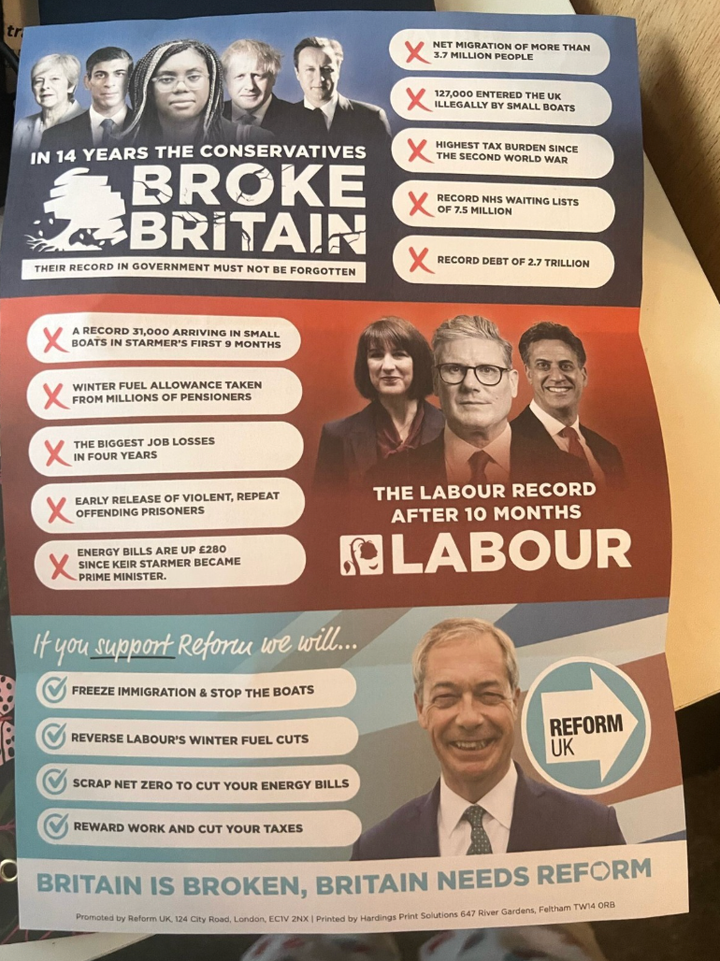
Nigel Farage has been mocked after Reform UK left Liz Truss off a list of Tory leaders who “broke Britain”.
The former prime minister, who only last 49 days in office, was conspicuous by her absence from a Reform election leaflet seen by HuffPost UK.
Advertisement
The pamphlet shows pictures of former Conservative PMs Theresa May, Rishi Sunak, Boris Johnson and David Cameron, as well as current leader Kemi Badenoch.
Underneath it says: “In 14 years, the Conservatives broke Britain. Their record in government must not be forgotten.”
Advertisement
But Truss’s omission from the line-up has raised eyebrows, especially since Farage famously praised the disastrous mini-Budget in 2022 which crashed the economy and ended her premiership.
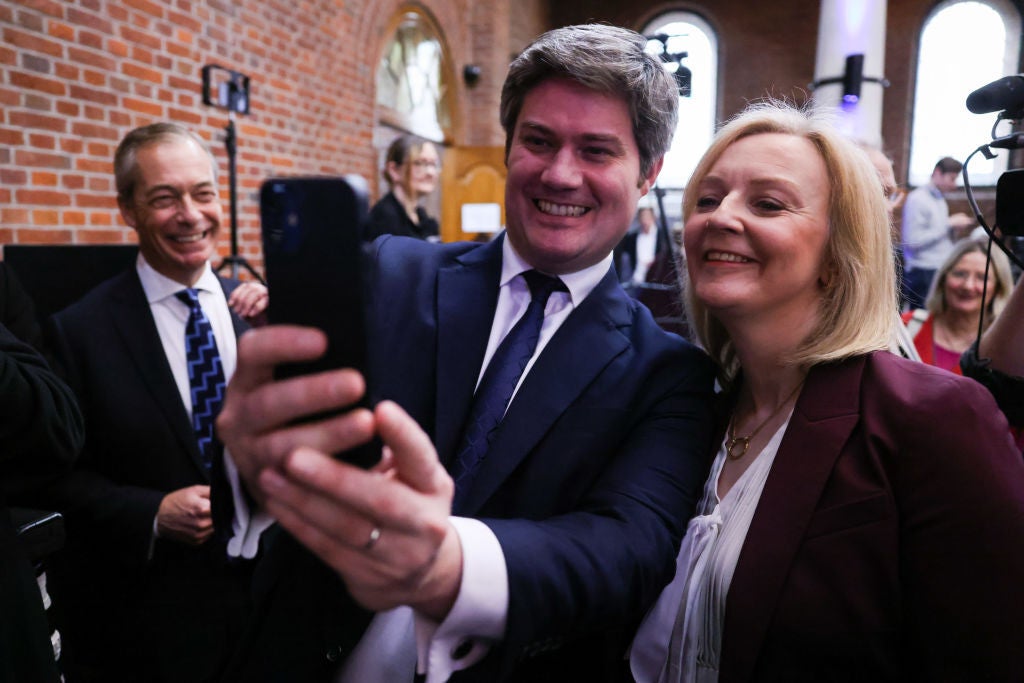
Farage was also roasted by Keir Starmer last month amid reports that Truss was advising Reform UK.
Meanwhile, a Reform UK “manifesto” published by Farage in the Daily Mail last Saturday also drew unfavourable comparisons with Truss’s time in office.
Advertisement
Mike Tapp, the Labour MP for Dover and Deal said: “It beggars belief that Nigel Farage is letting Liz Truss off scot-free on his leaflets.
“As he parades his new Truss-style unfunded ‘manifesto’, it appears he’s forgotten her disastrous mini-Budget crashed the economy and sent people’s mortgages soaring.
“Perhaps Nigel Farage thinks her time in office was a success. He’s copying her approach to economic vandalism, and backing her record. That’s a kick in the teeth for people still paying the price for her reckless time in office.
Advertisement
“The toxic Truss-Farage partnership would need nothing short of a disaster for Britain.”
Reform UK has been contacted for comment.

NHS trusts “try to stop” coroners issuing Prevention of Future Death reports, an inquiry hears.
