Linzagolix will only be available for patients whose previous medical or surgical treatments have been unsuccessful.


Linzagolix will only be available for patients whose previous medical or surgical treatments have been unsuccessful.
The Lampard Inquiry is examining the deaths of more than 2,000 mental health patients in Essex.
Stacey, from Leeds, underwent robotic surgery after one of her kidneys failed due to the condition.
The event includes family activities aimed at promoting creativity and well-being.
King Charles gives a personal message to others facing the anxiety of a cancer diagnosis.
Jersey Health Minister Tom Binet defended his record on women’s health at a meeting.

AI generated essays don’t yet live up to the efforts of real students – according to new research from the University of East Anglia (UK).
A new study published today compared the work of 145 real students with essays generated by ChatGPT.
While the AI essays were found to be impressively coherent and grammatically sound, they fell short in one crucial area – they lacked a personal touch.
As the line between human and machine writing continues to blur, the study underlines the importance of fostering critical literacy and ethical awareness in the digital age.
It is hoped that the findings could help educators spot cheating in schools, colleges and universities worldwide by recognising machine-generated essays..
Prof Ken Hyland, from UEA’s School of Education and Lifelong Learning, said: “Since its public release, ChatGPT has created considerable anxiety among teachers worried that students will use it to write their assignments.
“The fear is that ChatGPT and other AI writing tools potentially facilitate cheating and may weaken core literacy and critical thinking skills. This is especially the case as we don’t yet have tools to reliably detect AI-created texts.
“In response to these concerns, we wanted to see how closely AI can mimic human essay writing, particularly focusing on how writers engage with readers.”
The research team analysed 145 essays written by real university students and another 145 generated by ChatGPT.
“We were particularly interested in looking at what we called ‘engagement markers’ like questions and personal commentary,” said Prof Hyland.
“We found that the essays written by real students consistently featured a rich array of engagement strategies, making them more interactive and persuasive.
“They were full of rhetorical questions, personal asides, and direct appeals to the reader – all techniques that enhance clarity, connection, and produce a strong argument.
“The ChatGPT essays on the other hand, while linguistically fluent were more impersonal. The AI essays mimicked academic writing conventions but they were unable to inject text with a personal touch or to demonstrate a clear stance.
“They tended to avoid questions and limited personal commentary. Overall, they were less engaging, less persuasive, and there was no strong perspective on a topic.
“This reflects the nature of its training data and statistical learning methods, which prioritise coherence over conversational nuance,” he added.
Despite its shortcomings, the study does not dismiss the role of AI in the classroom.
Instead, the researchers say that tools like ChatGPT should be used as teaching aids rather than shortcuts.
“When students come to school, college or university, we’re not just teaching them how to write, we’re teaching them how to think – and that’s something no algorithm can replicate,” added Prof Hyland.
This study was led by UEA in collaboration with Prof Kevin Jiang of Jilin University, China.
‘Does ChatGPT write like a student? Engagement markers in argumentative essays’ is published in the journal Written Communication.
ENDS
A trial for a waste needle bin in a Belfast city centre car park will be voted on at council on Thursday.
Here’s an easy-going video about Conscious Growth Club Year 9 to give you a sense of the vibes and direction of the club and to invite you to join us inside. It’s only about 12 minutes, so please give it a watch now because I’m taking it offline when the enrollment ends.
CGC is our core inner self-development circle. It began in 2017 and has been going strong and evolving beautifully ever since. We only open for new members to join us during one short interval each year, always during the last week of April, and this is it! So please check it out and make the correct decision for you by midnight Pacific Time on May 1st. This is our only enrollment period for 2025, so our next opening won’t be till April 2026.
After you watch the video, read through the Conscious Growth Club invite page to see if you’re a match. It’s definitely not for everyone, but for the right people, CGC is a powerful long-term source of growth fuel and support. It transforms self-development from a solo effort to a team effort.
This is a fabulous year to join CGC because we’re having our first-ever CGC in-person gathering during this new CGC year, so we’ll all get to connect in person together for 4 days in Las Vegas in April 2026. I’m really looking forward to that!
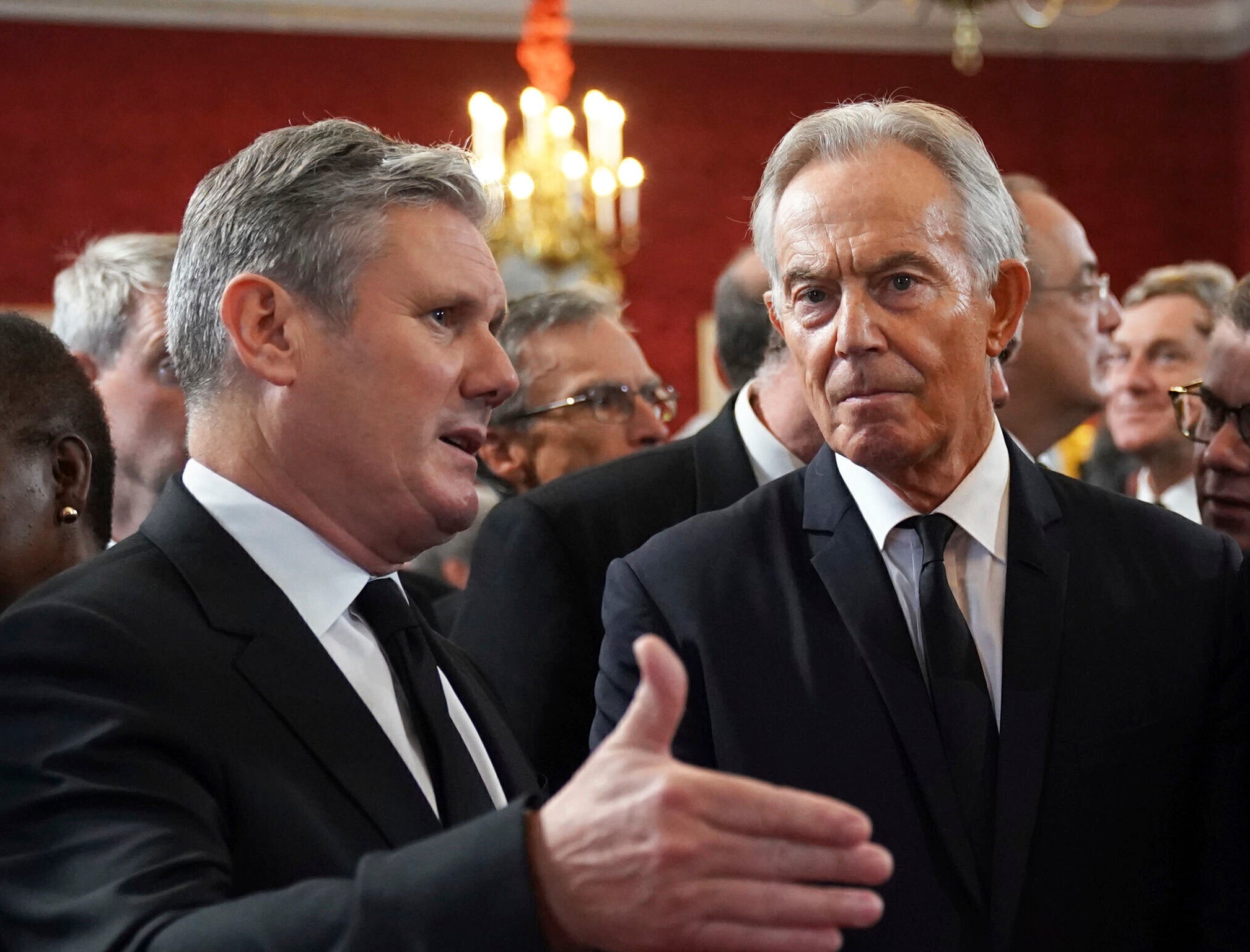
Tony Blair sent a shockwave though Labour circles this morning after he appeared to criticise the push to achieve net zero by 2050.
In a foreword to a report by the Tony Blair Institute, the former prime minister said political leaders know that the debate around the policy “has become irrational”.
Advertisement
He also said that the government’s plan to phase out fossil fuels is “doomed to fail”, in what was seen as a dig at Downing Street’s flagship policy to reduce net carbon emissions to zero in the next 25 years.
Keir Starmer is known for sharing many values with New Labour and has taken advice from his predecessor, meaning Blair’s words were a major blow to No.10.
The Tony Blair Institute quickly tried to downplay the split, and claimed the current government has the “right” approach – but it was too late.
Advertisement
The damage was already done, and the story swept through the country, and even secured a mention in PMQs.
Here’s a look at why Blair’s comments completely missed their mark.

via Associated Press
Although Blair himself has emphasised the importance of addressing the climate crisis, his words appeared to validate concerns from climate sceptics.
Advertisement
For instance, Reform UK’s deputy leader Richard Tice told ITV’s Good Morning Britain that the party has “newfound fans like Tony Blair” who agree with their anti-net zero policy – although he admitted he was “teasing”.
DUP MP Sammy Wilson adopted the same tone in PMQs when he told Starmer his net zero policy “is not only bad, it is mad” – and claimed even Blair agrees.
Of course, Blair’s former political secretary John McTernan suggested the opposite to Times Radio, saying the ex-PM was just explaining “grievance is the energy source for populist movements”.
Advertisement
He claimed that he was encouraging politicians to engage with “people’s feelings” to deter support for groups like Reform UK – not that Blair was against net zero altogether.
While the former PM might be winning backing from Labour’s opponents, those affiliated with the party said otherwise.
Unite the Union issued a firm warning that Blair’s net zero intervention must be a wake up call for government.
Advertisement
General secretary Sharon Graham said: “Unite is not against net zero but it will not be achieved without serious investment in new jobs.
“Unite has warned time after time, that all the rhetoric about a joined up industrial strategy and future jobs must be backed up with serious investment that actually delivers. What is Labour waiting for? The time to act is now.
“If they fail to do this, then Labour cannot expect workers to support their net zero plan.”
To make matters worse, Blair’s intervention came just before local elections in 23 councils and the Runcorn by-election – the current government’s first big test since it won a landslide in July.
Advertisement
Blair’s remarks were also criticised for being “misleading” amid the already hotly-contested climate debate.
An organisation which promotes debate on climate policy, the Energy and Climate Intelligence Unit said: “Given the clarification the TBI has had to issue, this seems like a bizarre case of naivety on how parts of the media and politicians might misinterpret some of the statements in the foreword.”
The Blair government’s former climate guru, Nicholas Stern – now chair of the Grantham Research Institute – called Blair’s report “muddled and misleading”.
Advertisement
“The UK’s leadership on climate change, particularly the elimination of coal from its power sector, is providing an influential example to other countries,” Stern continued.
“So, too, its climate change legislation and its Climate Change Committee. If the UK wobbles on its route to net zero, other countries may become less committed. The UK matters.”
Stern, who launched a landmark report on climate change in 2006 under Blair’s government, found the costs of inaction outweigh the costs of action.
Advertisement

via Associated Press
He warned that the report “downplays the science in its absence of a sense of urgency and the lack of appreciation of the need for the world to achieve net zero as soon as possible”.
Meanwhile, Bob Ward, policy and communications director at the Grantham Research Institute on climate change at the London School of Economics and Political Science, said: “This report provides weak analysis and the wrong solutions. It fails to recognise that the longer it takes to reach net zero emissions in the UK and around the world, the more that households and businesses will suffer from growing impacts of climate change.”
Advertisement
He added that the challenge is to “accelerate the transition away from fossil fuels, not to slow down”.
Helen Clarkson, CEO of Climate Group, said the report set up a “false binary” between climate strategies of either phasing out fossil fuels or investing in new low-cardon technologies.
And even the Social Market Foundation’s Theo Betram – a former special adviser to Blair – wrote on X that his old boss had “got it wrong on net zero” and his words “has only served to help populist opponents” of the policy.
Advertisement
There also appears to be limited public support for Blair’s take.
A recent YouGov poll found 61% of people either strongly support or somewhat support the government’s commitment to cut carbon emissions to net zero by 2050.
Then there’s the fact that Blair’s intervention overshadowed fresh warnings from the government’s climate watchdog, too.
The Climate Change Committee – the statutory adviser on the issue to the government – published a report today calling for Downing Street to go further and faster on climate action, particularly with flood defences.
Advertisement
Chair Lady Brown said: “We are seeing no change in activity from the new government, despite the fact that… it’s clear to the public that the current approach just isn’t working.
“The country is at risk, people are at risk, and there is not enough being done.”
Brown also warned that there were already too many cuts to flood defences, adding: “I can’t be clear enough about our message: we cannot wait to take action.”
But Blair’s remarks overshadowed her points on the environment.
As she later told BBC Radio 4′s Today programme: “My concern is that people might take away a message from that report that we should do adaptation instead of mitigation, and that is absolutely the wrong message.
Advertisement
“We need to do adaptation, because even if we get to net zero by mid-century, there’s still a huge amount of climate change to come, and we need to be ready for that. But we can’t adapt to everything.”