Analysing DNA in saliva can identify men at the greatest risk of prostate cancer


Analysing DNA in saliva can identify men at the greatest risk of prostate cancer

An international team of agronomists is calling for a new approach to estimate crop yield potential and gaps — information that is critical in planning how to meet growing food demand.
University of Nebraska-Lincoln researchers made major contributions to the study, published online April 8 in the journal Nature Food.
“We are in a race to feed the world and to try to feed the population with the available agricultural land that we have,” said Patricio Grassini, Sunkist Distinguished Professor of Agronomy and one of the paper’s authors.
To do so requires estimates that predict both yield potential, as determined by weather and soil properties, and yield gaps, which is the difference between yield potential and current farm yields, which indicates the room that exists to increase food production on existing cropland. Those estimates are essential in making investments in agricultural research and development, both from public and private sources.
At issue is how best to compile those estimates.
In the Nature Food paper, a team that includes scientists from Nebraska and three other institutions calls into question the statistical methods now widely used. In addition to Grassini, Husker authors of the study included Fatima Tenorio, Fernando Aramburu Merlos and Juan Rattalino Edreira, research assistant professors of agronomy.
In the United States, for example, current statistical models tend to rely too heavily on best-case scenarios — the most productive counties with the most fertile soils in a year with the most favorable weather, Grassini said. The methods also extrapolate a single yield potential across large regions with a wide diversity of climates and soils that likely would produce a similarly wide range in yield potential.
“Therefore, if you use that year as a reference, you are going to be overestimating your production potential because the best county with the best soils in the best year doesn’t really represent your average climate or your most typical soil across the state,” Grassini said.
But in other parts of the world — Africa, for example — these models might underestimate crop yield. There, farmers may have limited access to inputs compared to producers in other areas, thus attaining yields far below what the climate can support.
This statistical approach also leads to conflicting results, with production potential estimates almost doubling from one method to another. Grassini said this approach — driven mostly by geographers and statisticians, not agronomists — has been largely accepted, and more rigorous analysis is needed.
The research team’s conclusions are explained in the paper, titled “Statistical approaches are inadequate for accurate estimation of yield potential and gaps at regional level.”
The study compared estimates of yield potential and yield gaps of major U.S. rainfed crops — corn, soybeans and wheat — derived from four statistical models against those derived from a “bottom-up” spatial scaling approach based on robust crop modeling and local weather and soil data, such as the Global Yield Gap and Water Productivity Atlas developed at Nebraska.
Process-based crop models used in this study have been rigorously validated for their capacity to estimate yield potential based on experimental data from well-managed crops grown across a wide range of environments. This bottom-up approach, which better incorporates long-term data and regional variations, is clearly superior, the team found.
“I expect some controversy,” Grassini said of the team’s conclusions challenging the conventional wisdom.
The approach recommended by the team should better capture yield gaps, which “can help identify regions with largest room to increase crop production, which, in turn provides a basis to orient agricultural research and development programs.”
“This is a call to set the record straight because if we are going to use this information to inform policy and our investments, we better make sure that the information is sound and has been validated,” Grassini said.
Additional team members included Romulo Lollato, associate professor of agronomy, Kansas State University; Sotirios Archontoulis, professor of agronomy, Iowa State University; and Antoine Couëdel, who completed his postdoctoral research at Nebraska and is a researcher at the French Agricultural Research Centre for International Development, France.

Keir Starmer has warned that it is not “enough” for the UK to secure “any” US trade deal in a bid to get reduced tariffs, as the global economic turmoil rumbles on.
Donald Trump announced global tariffs on foreign goods going into the US on April 2.
The UK was hit with only the “base rate” 10% tax on its imports, but it came on top of the global levy of 25% on cars and steel products.
Advertisement
Still, the Labour government have avoided publicly condemning the dramatic move from the White House.
Starmer is hoping to secure a trade deal with the US before May 1, which – ideally – would see the UK secure exemptions to the tariffs in exchange for some British concessions.
If the deal is not across the line by the end of the month, Starmer has warned he may look to issue reciprocal tariffs on the States.
Advertisement
Speaking on Wednesday, ITV News’ Robert Peston asked the prime minister just what he wanted out of the tariff chaos.
He said: “Do we have to have 10% forever, you know, you’re obviously keen to get the 25% on cars and steel down, but is the 10% permanent?”
“Look, I don’t know,” Starmer replied.
“We are negotiating and we hope to improve the situation, but what I mean by this is that simply thinking that any change in the rates or any deals is going to be enough, to my mind is wrong.
Advertisement
“Because just as we’ve done with defence and security, where we’ve recognised it’s a changing world, we’ve got to step up and act differently.
“In that case with defence spend, coordinating better across Europe, so too with trade and the economy.”
While emphasising this is not a “passing phase” the world is going through, he also refused to call on Trump to reduce the 104% levy on China.
Advertisement
He said: “I’m not going to engage in diplomacy through the media, but I mean I’ve been clear that throughout that a trade war is in nobody’s interest.”
Peston tried again, and asked: “For America, this looks like a Liz Truss-style financial crisis.
“The price that America pays to borrow is soaring and we’ve been infected.
“I don’t know if you’ve been told this, but the government’s borrowing costs are now the highest since 1998. He’s harming us. Surely you’ve got to say to him, ‘stop, change course’.”
But Starmer still refused to make any public statement against Trump’s economic policy.
He also told ITV News he would not follow Truss’s example of “putting to one side rules and institutions, checks and balances” by changing the government’s own fiscal rules.
Advertisement
When Labour got into office, chancellor Rachel Reeves promised she would not borrow for day-to-day spending.
Despite the growing pressure on the struggling British economy, he said these are still “ironclad” ideas.
He added: “Those fiscal rules are foundational to the stability that we brought to our economy, so we go ahead in that calm way, obviously we’re talking to the US to see what we can do to mitigate the situation.”
Advertisement
Starmer said it was important to be “calm” and “pragmatic”, focus on “turbocharging” the UK economy and “talking to other world leaders about lowering trade barriers across the world”.
He rejected any suggestion the public spending may have to be cut again or taxes may have to rise in the autumn as a result of the struggling markets.
“I don’t accept the proposition that it’s inevitable things will happen in six months’ time,” the PM said.
Advertisement

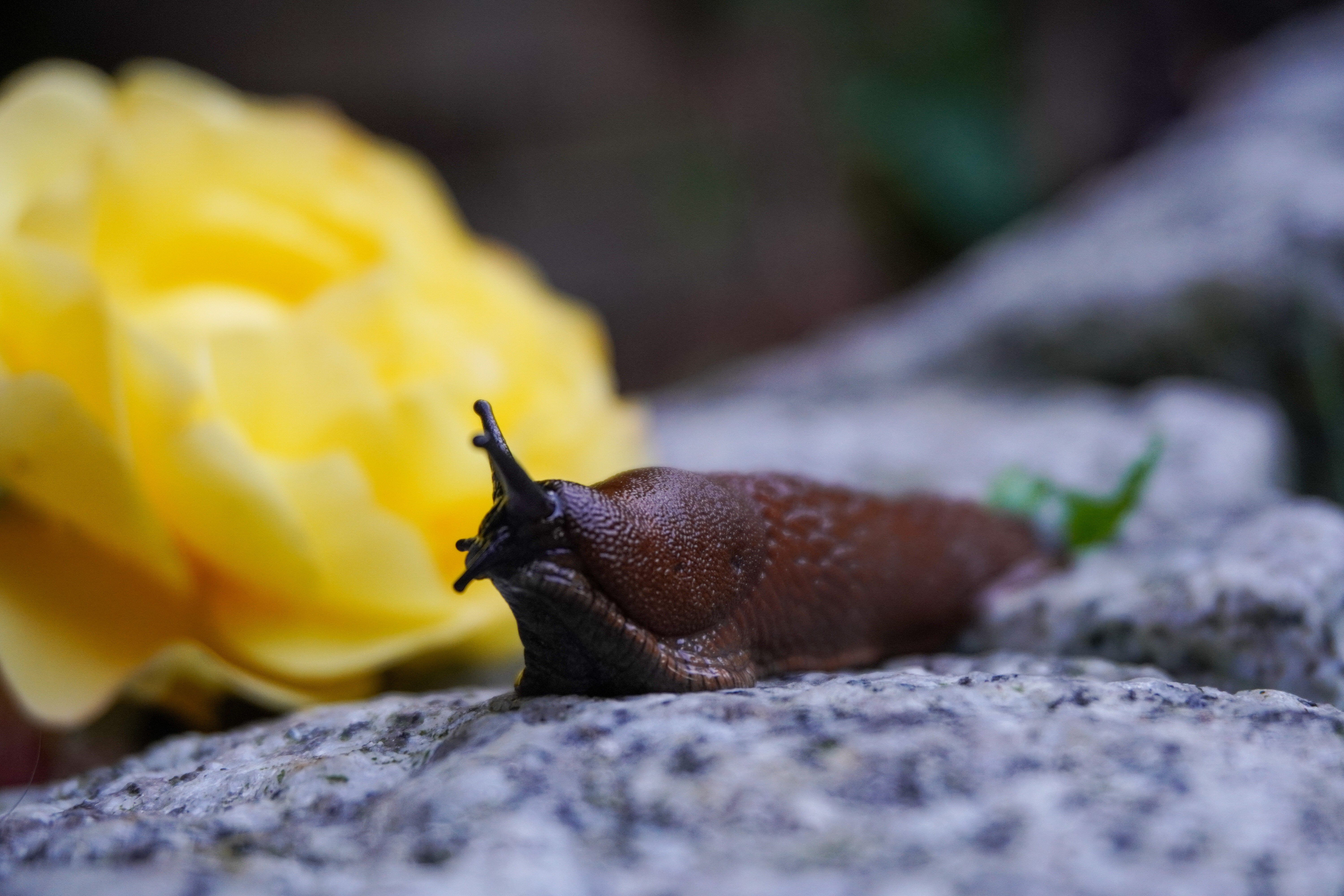
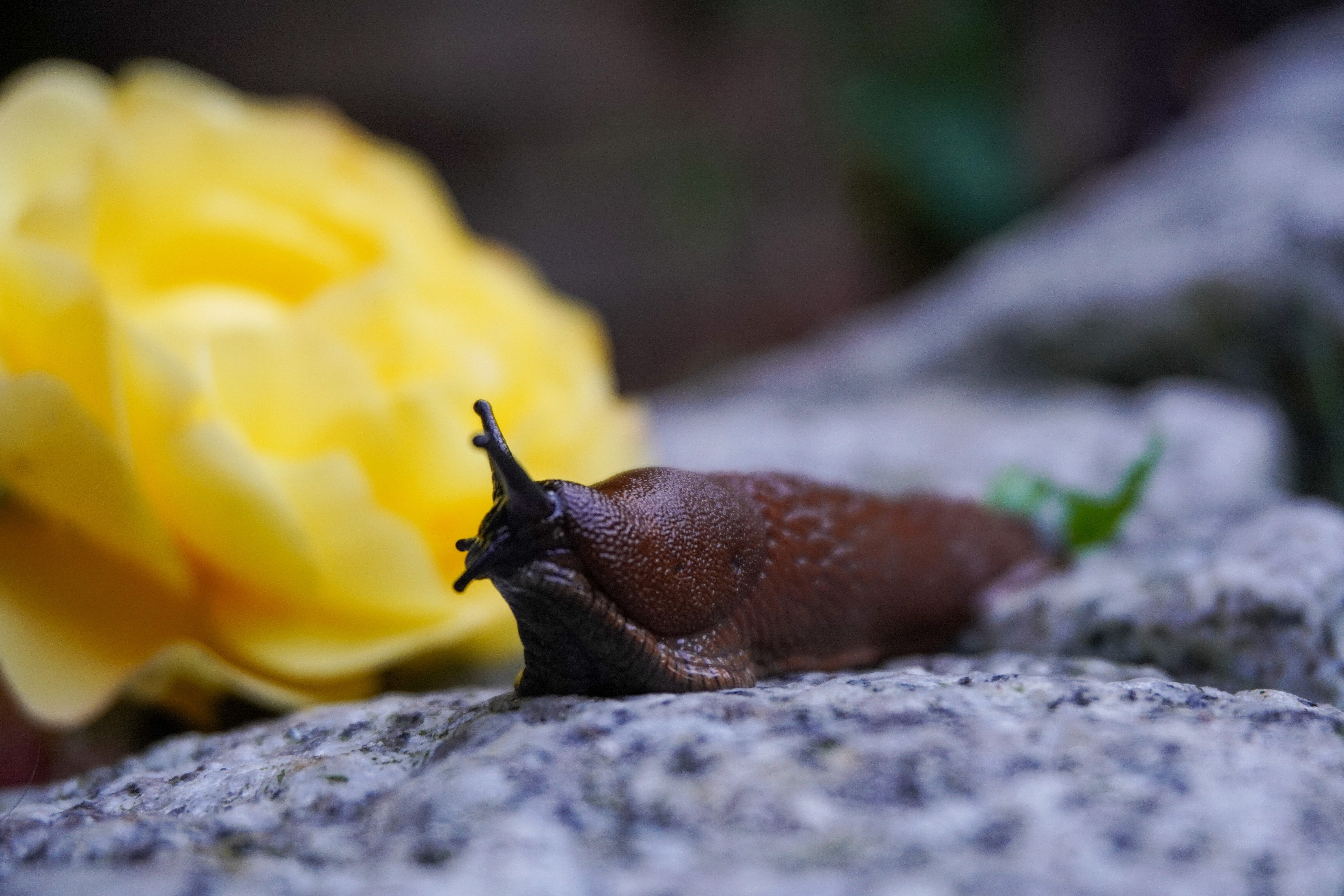
There are no two ways about it: some slugs can be disastrous for your garden. Between eating your veggies, boring holes in your hydrangeas, and even tunnelling into your tubers (yes, really), the legless leaf-lovers have historically been the enemy of the common British gardener.
Of course, we now know that slugs have their part to play in the ecosystem (even if you wish they didn’t play it so close to your radishes). They’re a vital food source for Britain’s rapidly-decreasing bird population; they do a great job at composting; and they help the overall biodiversity and ecological balance of your lawn (never a bad thing).
Advertisement
Cruelty-free hacks to remove slugs from your garden include putting a scooped-out melon in your yard overnight for the critters before removing the beast-filled rinds the next morning.
And while we love that hack, it seems there’s another, easier trick to keep your veggies slug-free – and it also helps with everything from scaring off birds to keeping deer away and even creating sunboxes.
Simple aluminium foil, it turns out, is the gardener’s best friend. So we thought we’d share some of its many uses:
Advertisement
Herbicides can be harsher on your garden’s health than they are to the pests you want to target. “If you’ve got children, if you’ve got pets, you shouldn’t be using chemicals. But what’s worse is if you are using chemicals, you’re killing our pollinators, which we need for food production. I am very much against any chemicals and herbicides being used,” gardening expert Arthur Parkinson told HuffPost UK.
Thankfully, adding a bit of foil to your plants won’t kill off any all-important pollinators – it’ll just inhibit some slugs and other unwanted garden guests. “Reflective mulches repel invading insect populations,” the University of California shared.
And when it comes to slugs, the foil uses roughly the same logic as copper tape – “the metal causes a reaction with their mucusy bodies that they really don’t like,” Metro said.
Advertisement
Simply place some sheets of foil around the base of your plants for pest-repelling magic.
If you’re worried your plants aren’t getting enough light, a little foil can go a long way. “Using aluminium foil can help you double the sun your indoor plants receive,” House Digest revealed.
This is because “its reflective properties will work as a mirror and reflect the light from the window to every niche and cranny of your indoor plants,” meaning you won’t have to turn your potted plants around as often to ensure every side gets as much light.
And they’re not just for indoor plants – “they also work to grow any seedlings indoors and help new plants from the nursery grow straighter and stronger.”
Advertisement
You can either assemble a tinfoil-lined box yourself using foil, tape, and cardboard.
Though it’s not really a good idea to scare off birds if they’re not causing a problem, under severe conditions, you can banish any unwanted birds by wrapping foil on or around your most-pecked plants. “Birds don’t like the feel of the foil under their beaks and will stay away,” Northwest says.
The trick also works for peckish deer, who HowStuffWorks says hate the shiny stuff. They advise wrapping foil around the stem of any deer-demolished plants: “The foil should at least be as high as your waist because deer are very adept (at) feeding on plants that are shorter than they are. This foil force field can also deter other pesky nibblers like mice and rabbits,” they say.
Well, I’m off to the kitchen…
The US president vows “major” tariffs on imported medicines – raising fears of an increase in costs for Americans.
Black Mirror season seven is set to hit Netflix soon (April 10).
You might associate creator Charlie Brooker with the series – but he’s also worked on other shows like the BBC series Weekly Wipe, which included reviews of TV shows, news events, and games.
It showed how much of a telly fan the writer and executive producer really is, which makes his admission to The Hollywood Reporter, that he “hasn’t let himself” watch a hit show, pretty notable.
Advertisement

“There’s certainly a show I haven’t watched that’s made me jealous,” he revealed.
“People keep telling me to watch Severance, and I haven’t let myself do it because they also say to me, ‘Oh, you’ll love it. It’s a bit Black Mirror-y, but it’s much better.’”
The Apple TV+ hit, which involves people who have “severed” their minds to cut their working selves off from their out-of-hours consciousness, certainly shares the Netflix show’s eerie sci-fi feel – but Charlie need not be jealous.
Advertisement
Not least because Severance’s creator, Dan Erickson, told The New York Times in 2022 that a 2014 Black Mirror episode actually inspired a Severance plot.

Erickson said that White Christmas, an episode in which characters are trapped in an eternal loop (not unlike Severance’s ‘innies’), left him feeling “so cold and afraid after seeing that, this devastating idea of having to experience this endless solitude”.
Advertisement
He added that this is linked to the season one scene in which Helly R tries to escape the severed floor.
“It’s this nightmare of running out a door and then you’re just running back in, and you realise you’re truly stuck in this liminal space with this kind of nightmare logic,” he said.



Inquiry chair is acting amid grave concerns over payouts to victims after final report was published last year.
BBC News found the forum, which has thousands of members, is linked to at least 50 deaths in the UK.

About 66 million years ago, an asteroid slammed into the planet, wiping out all non-avian dinosaurs and about 70% of all marine species.
But the crater it left behind in the Gulf of Mexico was a literal hotbed for life enriching the overlying ocean for at least 700,000 years, according to research published today in Nature Communications.
Scientists have discovered that a hydrothermal system created by the asteroid impact may have helped marine life flourish at the impact site by generating and circulating nutrients in the crater environment.
“After the asteroid impact, the Gulf of Mexico records an ecological recovery process that is quite different from that of the global ocean, as continuous hydrothermal activity has created a unique marine environment,” said the study’s lead author Honami Sato, an assistant professor at Japan’s Kyushu University.
Sean Gulick, a research professor at The University of Texas at Austin’s Jackson School of Geosciences, is a co-author on the study. In 2016, he co-led a scientific drilling expedition to the impact site, which is called Chicxulub, that recovered core samples from the crater.
The study is the latest discovery to come from research on the 829 meters of core retrieved by the international team of researchers.
Previous research already determined that life returned to the site of the crater within a matter of years. The new study presents evidence that a hydrothermal system created by the asteroid impact and its melt sheet buried beneath the seafloor likely played a role in its recovery and sustenance for hundreds of thousands of years.
“We are increasingly learning about the importance of impact-generated hydrothermal systems for life,” Gulick said. “This paper is a step forward in showing the potential of an impact event to affect the overlying ocean for hundreds of thousands of years.”
The research hinges on a chemical element called osmium. A particular ratio of osmium is associated with asteroid materials. The researchers found evidence that osmium from the asteroid buried kilometers beneath the impact crater was continuously released in the Gulf of Mexico due to submarine hydrothermal activity.
In other words, as hot water moved beneath the seafloor and up toward the surface, so did traces of the asteroid. As the hydrothermal fluid cooled over time, the asteroid traces exited the water and precipitated into sediment. The researchers analyzed the sediment, which was brought to the surface in the core samples, and used it to determine the extent of the hydrothermal system and how long the enrichment of osmium lasted.
The researchers also found that as the hydrothermal system ceased releasing osmium from the asteroid, the types of marine life living at the crater site changed. They found that when the hydrothermal system was releasing this osmium, the type of plankton found living in the environment were associated with high-nutrient environments. When the osmium returned to pre-impact levels, the plankton were associated with low-nutrient environments.
This finding indicates that the ecosystem was no longer being sustained by the nutrients from the hydrothermal system being released into the overlying ocean. However, beneath the seafloor the hydrothermal system continued to persist for many millions of years; it just became ever more deeply buried by millions of years of sedimentation.
“This study reveals that impact cratering events, while primarily destructive, can in some cases also lead to significant hydrothermal activity,” said co-author Steven Goderis, a research professor at the Vrije Universiteit Brussel, in Belgium. “In the case of Chicxulub, this process played a vital role in the rapid recovery of marine ecosystems.”
With the demise of the dinosaurs, the Chicxulub impact is well known for its link to causing mass extinction. Gulick said that this research is important because it shows that this impact can be a catalyst for life, too. At the UT Center for Planetary Systems Habitability, Gulick is leading research on whether large impacts elsewhere in the solar system could help generate conditions that could sustain life on other planets or moons.
The science team included researchers from Kyushu University; the University of Texas at Austin’s Jackson School of Geosciences’ Department of Earth and Planetary Sciences and Institute for Geophysics; the Japan Agency for Marine-Earth Science and Technology; Vrije Universiteit Brussel, Belgium; Institute of Science Tokyo; Universidad de Zaragoza, Zaragoza, Spain; Universitat de Barcelona, Barcelona, Spain; and Imperial College London.

When it comes to upgrading electrical and broadband infrastructure, new research from the University of Massachusetts Amherst shows that a “dig once” approach is nearly 40% more cost effective than replacing them separately. The study also found that the greatest benefit comes from proactively undergrounding lines that are currently above ground, even if lines haven’t reached the end of their usefulness.
Co-undergrounding is the practice of burying both electric and broadband internet lines together. “One main benefit from undergrounding both electric and broadband together for us was cost saving that we can have from co-deployment of those utility lines,” says Mahsa Arabi, lead study author and an ELEVATE research fellow in the UMass Amherst Energy Transition Institute (ETI). This cost savings makes it feasible for even smaller towns in Massachusetts to make undergrounding upgrades. Using computational modeling across a variety of infrastructure upgrade scenarios, the researchers found that co-undergrounding is 39% more cost-effective than separately burying electrical and broadband wires.
One of the study authors, Erin Baker, faculty director of ETI and distinguished professor in the College of Engineering at UMass Amherst, explains that co-undergrounding wires is becoming more salient to decision makers who are focusing on the efficiency of infrastructure. “Instead of tearing up the road to do this and then a year later tear it up to do that, let’s think about doing it together,” she says.
The researchers also asked: how aggressively should towns pivot to putting lines underground? Should they wait until lines have reached the end of their lifespan and then replace as needed, or proactively move forward?
To answer this, the researchers defined three overarching considerations: the cost of converting lines from above ground to underground, the cost of outages and the hours of outages that can be avoided if lines are underground.
To quantify these factors, the researchers created a nuanced computational model. “A big driver of this whole thing is the cost,” adds Jimi Oke, director of NARS Lab, assistant professor of civil and environmental engineering and principal investigator of the study. “In previous studies, people just used estimates based on average values, but we essentially try to model the dependency of the cost on things like the soil composition, the network type or the other land use variables,” he says.
Using the town of Shrewsbury, Massachusetts as a case study, the team found that the most cost-effective solution is to be aggressively proactive in co-undergrounding and replacing existing infrastructure, as long as it can be confirmed that undergrounding wires reduces outages by at least 50%.
Over 40 years, the cost of an aggressive co-undergrounding strategy in Shrewsbury would be $45.4 million, but the benefit from avoiding outages is $55.1 million. This considers factors like spoiled food, damaged home appliances, missed remote work hours and increased use of backup power sources. For a power outage, the costs are estimated to be $10 per person per hour, $205 per business per hour and $15,000 per industrial customer per hour. In Massachusetts, the average outage duration per customer per year, for both broadband and electricity, is estimated to be 1.38 hours. The researchers also took into consideration an additional benefit of $1.5 million in increased property values from the aesthetic improvement of eliminating overhead lines.
Altogether, this created a net benefit of $11.3 million.
The strategy with the second-highest net benefit was to aggressively convert just the electrical wires from above ground to underground. While this is a less expensive strategy, the savings were notably diminished, for a net benefit that was five times lower than the co-undergrounding strategy. All other strategies, including moderately paced conversions, had a negative net benefit.
One of the biggest remaining question marks is determining exactly how many outages will be prevented by undergrounding. “There’s kind of an intuitive thing [that undergrounding will reduce outages], but there is kind of mixed information about exactly how much because there are outages for a lot of different reasons,” explains Baker. “It means for [undergrounding to be worthwhile] half the outages have to be caused by basically something weather induced. If more than half of your outages are caused by the plant breaking down, then you shouldn’t underground anything. But the moment it flips over and it becomes good enough to do something, it means you want to be fully aggressive.”
Storms aren’t the only causes of outages, says Oke, pointing to California wildfires. California utilities will institute planned outages in order to prevent additional fires, but putting wires underground could prevent the initial fire (and therefore the outage). Consider the 2018 Camp Fire in Northern California — the most destructive wildfire in the state’s history. This fire was caused when a worn-out metal hook on a transmission tower failed, allowing a live line to fall and hit a transmission tower.
“We need to have a framework and a set of regulations that encourages utilities and towns to think strategically,” says Baker. She hopes that their findings can help decision makers do just this.
The team hopes that future research will quantify the impacts of co-undergrounding across a variety of geographic locations and scenarios. Other relevant future directions include investigating alternative underground routing options, and other potential outage mitigation strategies.
