WellnessMaster

Get The Latest News on Holistic Wellness

WellnessMaster

The Coronavirus R Rate Has Risen This Week

The UK’s Covid R rate has risen to between 0.7 and 0.9, scientists advising the government have said.

It represents an increase after R was estimated to be between 0.6 and 0.9 last week, and suggests coronavirus is spreading slightly more than it was previously.

R measures the number of people, on average, that each sick person will infect.

If R is greater than 1 the epidemic is generally seen to be growing; if R is less than 1 the epidemic is shrinking.

The estimate was published on Friday and provided by the Scientific Advisory Group for Emergencies (Sage) and the Department for Health and Social Care.

Separately, official figures showed the number of people with Covid-19 in homes across England continues to fall.
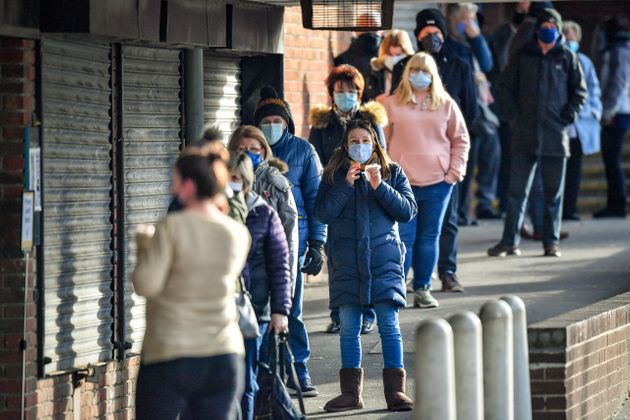
Ben Birchall/PA Images

People wait in line for a coronavirus test at a surge test centre, set up in a library, to provide additional community testing following the identification of a mutated variant in the Bristol and south Gloucestershire area

Figures from the Office for National Statistics (ONS) estimate that around one in 220 people in private households in England had Covid-19 between February 21 and 27 – the equivalent of 248,100 people.

The figure is down from around one in 145, or 373,700 people, for the period February 13 to 19, and is the lowest figure since the week to October 1 when it was one in 240.

However, the number of people infected in England is still high when compared to last summer. In the week to August 25, around one in 2,000 people had coronavirus.

The ONS said the percentage of people testing positive for Covid-19 in the latest figures had decreased in all regions except for north-east England, the East Midlands and eastern England, where it said the trend was uncertain. 

In Wales, the latest estimate was one in 285, down from 205, and in Northern Ireland it was one in 325, down from one in 195.

The estimate for Scotland for the week to February 27 was around one in 335 people, down from one in 225.

The latest data is based on swab tests from 684,875 people in the UK, regardless of whether they had symptoms, and does not include hospitals and care homes.

It comes after a government scientific adviser said society will need to learn to live with a “substantial” number of Covid-19 deaths.

Professor Andrew Hayward, who sits on Sage, said the number of deaths will continue to drop as vaccination kicks in, and death rates could begin to look more like those for flu.

Other experts, including Professor Paul Hunter, from the University of East Anglia, have said the UK can expect a wave of deaths next winter, mostly among the unvaccinated and those for whom vaccines do not provide total protection.

Prof Hayward told Times Radio: “I think given the societal trade-offs, we are going to have to live with a degree of mortality that will be substantial.

“I think it will get less over time as more people get vaccinated, and as more people get immune, and I do believe that we’ve been through the worst of this.”
Share Button

Search For Missing UK Case Of Brazil Covid Variant Narrowed To 379 Households

The search for the unidentified person who has tested positive for the Brazilian variant of Covid in the UK has been narrowed to 379 households in the south east of England.

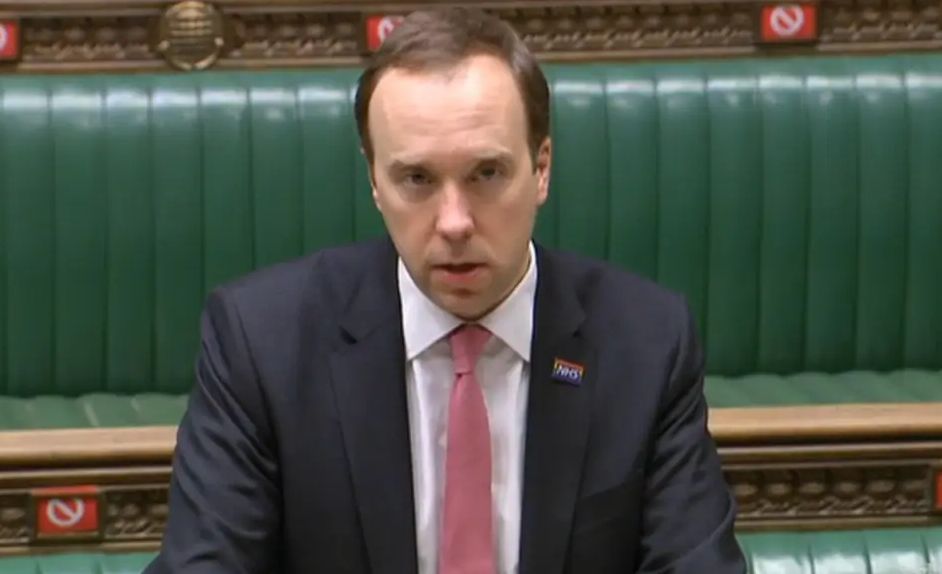
Speaking in the Commons on Tuesday, Matt Hancock said the government was contacting “each one”.

Six cases of the variant, known as P1, have been found in England and Scotland.

But on Monday health officials announced they were still hunting for the identity of one of the six.

Hancock said: “We know that five of these six people quarantined at home as they were legally required to do.”

“Unfortunately one of these six cases completed a test but didn’t successfully complete the contact details. Incidents like this are rare and only occur in around 0.1% of tests.”

The health secretary told MPs: “We’ve identified the batch of home test kits in question, our search has narrowed from the whole country down to 379 households in the south-east of England and we’re contacting each one.

“We’re grateful that a number of potential cases have come forward following the call that we put out over the weekend.”

Hancock said the current vaccines being rolled out had not yet been studied against the P1 variant.

“We’re working to understand what impact it might have, but we do know that this variant has caused significant challenges in Brazil,” he said.

“We’re doing all we can to stop the spread of this new variant in the UK, to analyse its effects and to develop an updated vaccine that works on all these variants of concern and protect the progress that we’ve made as a nation.”

He added: “We have no information to suggest the variant has spread further.”

Share Button

Boris Johnson Says Tough Border Controls Introduced ‘As Fast As We Could’

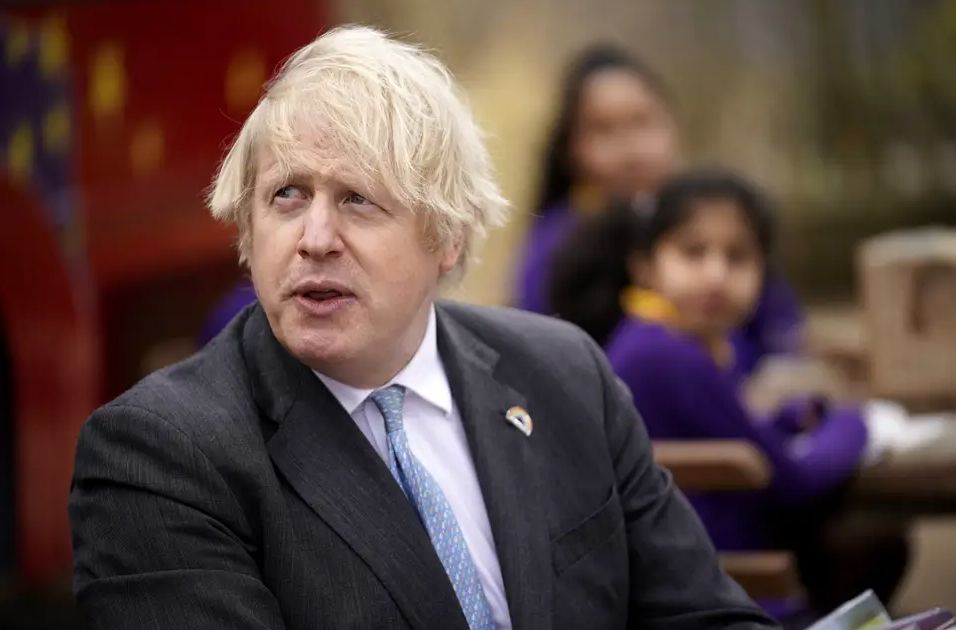
Boris Johnson has said he moved “as fast as we could” to impose strict border controls, as health officials hunt for a person in the UK infected with a Brazil variant of Covid.

The prime minister said the government’s hotel quarantine programme, introduced on February 15, was “a very tough regime”.

The variant, known as P1, was first identified on January 10 in people arriving in Japan from Brazil and is thought to have originated in the Brazilian city of Manaus.

On January 14 the government banned travel to the UK from Brazil and other South American countries.

British nationals were still allowed to return but had to isolate for 10 days at home.

On January 27, the government announced plans to force arrivals from a “red list” of 33 countries, including Brazil, to quarantine in hotels.

But it did not come into force until 19 days later.

Public Health England (PHE) has found six UK cases of the P1 variant in the UK.

But one of the infected people, who was thought to have been tested on February 12 or 13, has yet to be identified. 

Asked on Monday if the government had been too slow to implement quarantine hotel measures. Johnson said: “I don’t think so, we moved as fast as we could to get that going.

“It’s a very tough regime. You come here, you immediately get transported to a hotel where you are kept for 10 days, 11 days.

“You have to test on day two, you have to test on day eight, and it’s designed to stop the spread of new variants while we continue to roll out the vaccination programme.

“We don’t have any reason at the present time to think that our vaccines are ineffective against these new variants of all types.”

The prime minister said PHE did not think the cases of the variant were a “threat to the wider public”.

Nick Thomas Symonds, Labour’s shadow home secretary, said the situation showed “unforgivable incompetence” from the government. 

“Despite being warned time and time again, they have failed to act to protect our borders against emerging Covid variants and could put at risk the gains from the vaccine,” he said.

“People will be appalled to hear someone with the Brazilian variant cannot be identified, raising questions about how many others may have been missed by quarantine measures.

“There is no excuse for continuing to ignore Labour’s call for a comprehensive hotel quarantine system.”

Labour has demanded a blanket approach that would see all arrivals placed into hotel quarantine, not just those from a limited number of countries.

MPs were told last week that only 1% of people arriving in the UK every day are required to isolate in hotels

Share Button

Here’s What The Coronavirus R Rate Is Near You

The UK’s Covid R rate has remained between 0.6 and 0.9, scientists advising the government have said. 

R measures the number of people, on average, that each sick person will infect.

If R is greater than 1 the epidemic is generally seen to be growing; if R is less than 1 the epidemic is shrinking.

The estimate, published on Friday and provided by the Scientific Advisory Group for Emergencies (Sage) and the Department for Health and Social Care, is the same as last week.

Here’s what the R rate is in each region

In England as a whole, the R rate is 0.7 to 0.9, while regionally it is as follows:

East of England – 0.6 to 0.8 (last week 0.6 to 0.8)

London – 0.6 to 0.8 (0.6 to 0.8) 

Midlands – 0.7 to 0.9 (0.6 to 0.9) 

North-east and Yorkshire – 0.7 to 0.9 (0.7 to 1.0)

North-west – 0.7 to 0.9 (0.6 to 0.9)

South-east – 0.7 to 0.9 (0.6 to 0.8)

South-west – 0.6 to 0.8 (0.6 to 0.9)

In Scotland the latest figures estimate the R rate is between 0.7 and 0.9, the same as last week.  

In Wales the R rate has also remained the same, estimated to be between 0.7 and 0.9. 

And in Northern Ireland it is estimated to be between 0.8 and 1.5. 

It comes as the government announced it would accept the recommendation from its scientific advisers that the next phase of the vaccine rollout should continue to be based on age.

The Joint Committee on Vaccination and Immunisation (JCVI) said the under-50s should be give priority in this order:

  • All those aged 40-49 years
  • All those aged 30-39 years
  • All those aged 18-29 years

It rejected demands that key workers, such as teachers, be bumped up the list irrespective of age.

The JCVI said targeting occupational groups would be more complex to deliver and could slow down the vaccine programme, leaving some more vulnerable people at higher risk unvaccinated for longer. 

The latest official figures show 18,691,835 people have so far been offered at least one dose of a vaccine.

Share Button

Exclusive: Government Blocking Covid Families’ Access To Justice Using Threat Of Costs

The government has been accused of using money as a way of blocking access to justice for bereaved Covid families.

Human rights lawyer Elkan Abrahamson says the government is using punitive costs orders to stymie the ability of thousands of grieving families to fight for a public inquiry into the handling of the pandemic.

“They’re opposing everyone who’s raising these issues and saying: ‘You’re going to have to pay us a fortune in costs if you lose,’” he said.

“They’re using money as a way of blocking access to justice. That’s what it boils down to.”

Abrahamson, who is head of major inquiries at Broudie Jackson Canter law firm, is acting for Covid-19 Bereaved Families for Justice in bringing legal action against the government.

The group of about 2,500 families is launching judicial review proceedings to try to compel the government to hold a public inquiry.

But before doing so they have been forced to raise substantial sums of money to cover the legal costs they could be forced to pay the government if the action is not successful.

Abrahamson said the government had refused to waive costs when asked by the campaign, but had also declined to tell the group how much it could seek to claim.

Covid-19 Bereaved Families for Justice began fundraising and has now got enough money to continue with its bid, which is expected to progress in the near future.

A separate case has shown the significant risks of bringing such legal challenges.

Earlier this month, the government asked for costs of up to £1m in a case brought by the Good Law Project for a judicial review over the award of contracts for personal protective equipment.

The action meant the small, not-for-profit organisation, which is funded by donations from the public, could have been liable for “eye-watering” costs if it lost the case.

“We cannot bear this kind of existential risk,” said Jolyon Maugham QC, director of Good Law Project.

The group applied to the High Court for a cost capping order to restrict the legal costs of both sides, which was granted on February 24.

It had asked for a cap of £100,000 but instead the order was granted at £250,000.

“If we lose the case, we are liable to pay a quarter of a million pounds to government, as well as needing to cover our own legal costs,” said Maugham. 

“Despite huge support from members of the public, generous individuals and organisations, we are still short.”  

Abrahamson said one compelling reason for holding a public inquiry into the pandemic is that the option of pursuing inquest proceedings has been effectively closed off to most families in relation to Covid-19 deaths.

“The coroners are very, very reluctant to actually look into anything more,” he said. “The guidance says if there’s an individual failing you can point to that leads to someone getting Covid, maybe they could look at it, but if it’s a generic failing, you can’t look at it.”

Deaths in relation to care home failings, failure to provide PPE, failings in the 111 system and delays in lockdown all fall outside this remit.

“The chief coroner has said there will be a [public] inquiry, but there isn’t one, that’s the problem,” said Abrahamson.

His firm is dealing with about 150 clients who want inquests to be held into the deaths of their loved ones.

But only five or six of these have actually moved forward to pre-inquest hearings, Abrahamson said.

HuffPost UK has approached the Cabinet Office for comment.

Share Button

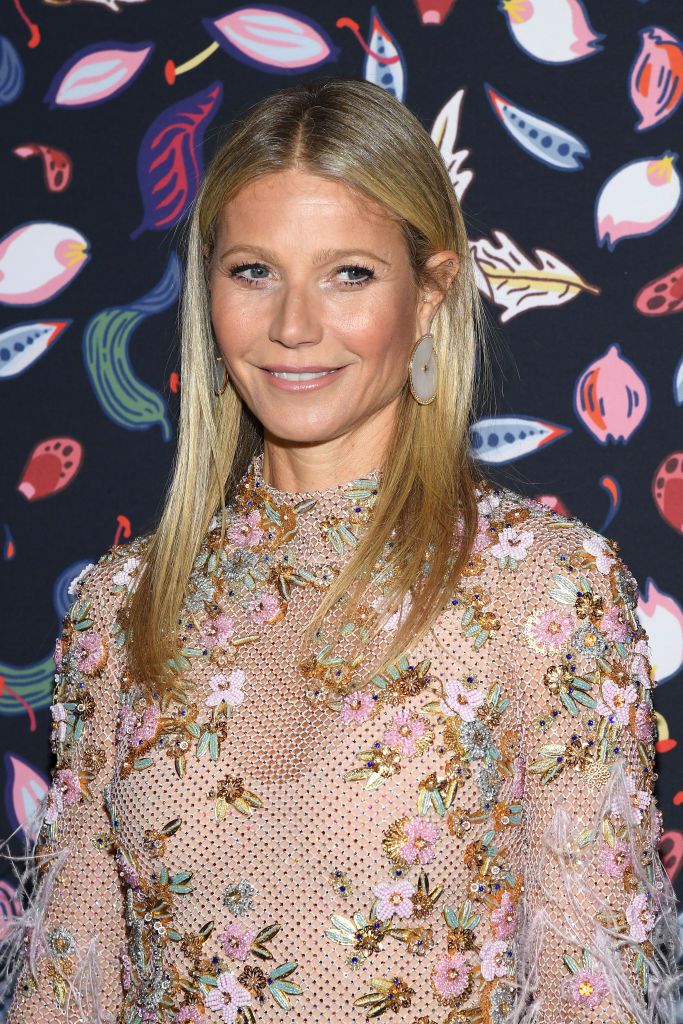
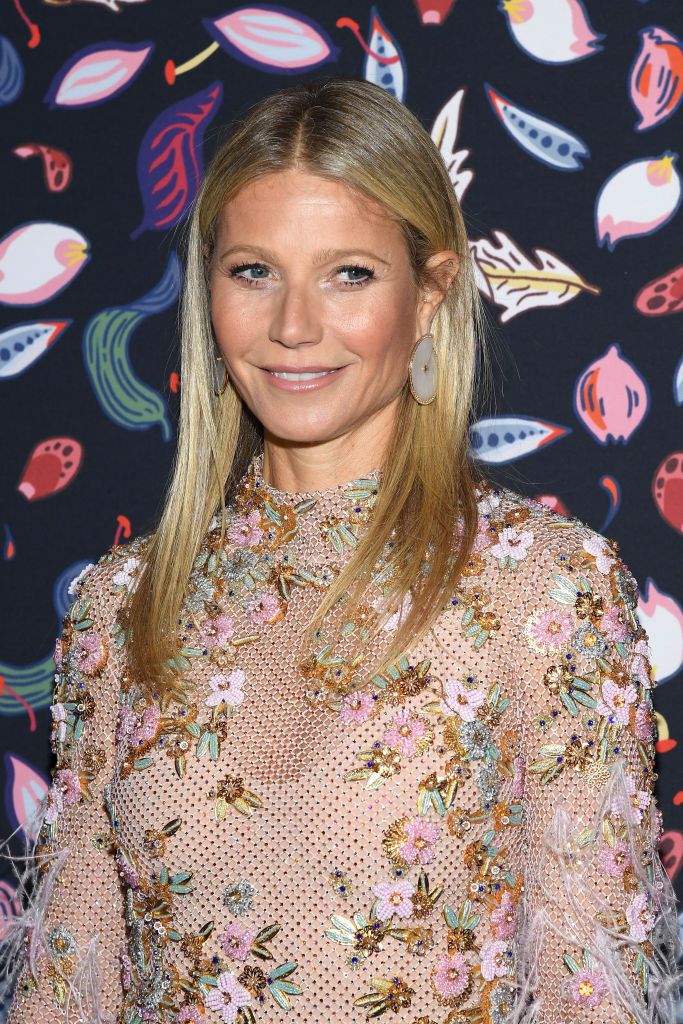
Gwyneth Paltrow’s Methods For Treating Long Covid Called Out By NHS Medical Director

A NHS medical director has criticised Gwyneth Paltrow after she revealed her methods for tackling the long Covid symptoms she has been suffering from since contracting the disease last year.

Earlier this month, the Oscar-winning actor-turned lifestyle guru revealed she had tested positive for coronavirus early on in the pandemic

She went on to disclose that she had been left with “long-tail fatigue and brain fog” and “high levels of inflammation” in her body.

The 48-year-old has since embarked on a “keto and plant-based” regime, with no sugar and alcohol, and fasts until 11am every day.

But Professor Stephen Powis, national medical director for the NHS in England, said that “serious science” should be applied and “influencers” have a responsibility after name-checking Gwyneth.

“Like the virus, misinformation carries across borders and it mutates and it evolves,” he told PA.

“So I think YouTube and other social media platforms have a real responsibility and opportunity here.

“In the last few days I see Gwyneth Paltrow is unfortunately suffering from the effects of Covid.

“We wish her well, but some of the solutions she’s recommending are really not the solutions we’d recommend in the NHS.

“We need to take long Covid seriously and apply serious science. All influencers who use social media have a duty of responsibility and a duty of care around that.”

Writing on her blog on her Goop website last month, the Hollywood star wrote: “So I turned to one of the smartest experts I know in this space, the functional medicine practitioner Dr. Will Cole. After he saw all my labs, he explained that this was a case where the road to healing was going to be longer than usual.”

Gwynnie being Gwynnie, the post then saw her discuss detoxing and other healing methods (including infrared saunas), which you can read more about on her website.

A number of Gwyneth’s A-list peers have spoken out about their own personal experiences of Covid-19, including Tom Hanks, who was among the first public figures to speak out about testing positive for the disease in March 2020.

Hugh Grant also shared recently that he believes he had Covid last February, stating: “It started as just a very strange syndrome where I kept breaking into a terrible sweat. It was like a poncho of sweat, embarrassing really.

“Then my eyeballs felt about three sizes too big and this feeling as though an enormous man was sitting on my chest.”

Share Button

Only 1% Of UK Arrivals Are Being Made To Quarantine In Hotels

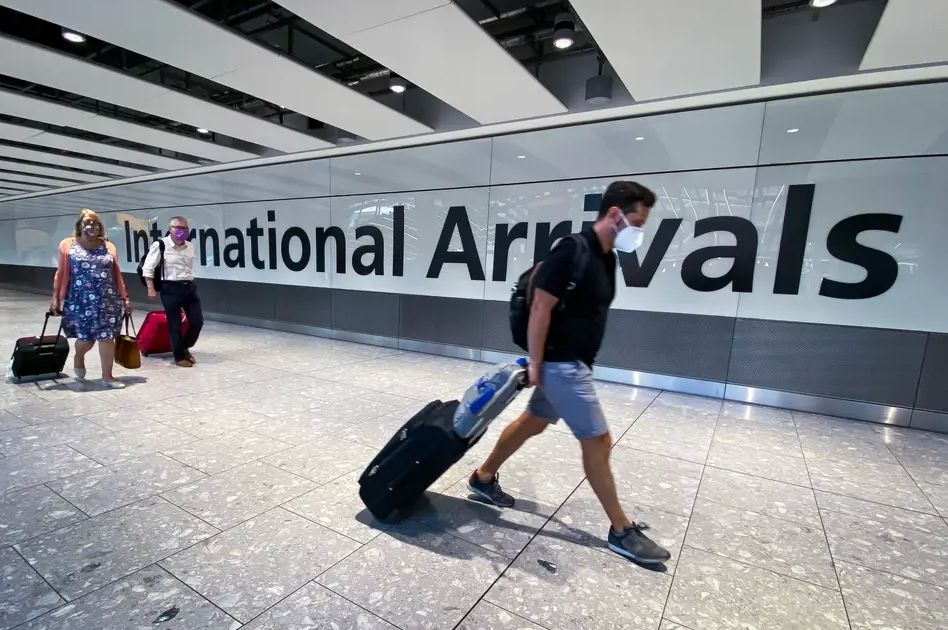
Only 1% of people arriving in the UK every day are required to quarantine in government-approved hotels, the Border Force director has revealed.

Speaking to the Commons home affairs committee on Wednesday, Paul Lincoln said “about” 14,000 or 15,000 people were coming into the country per day, which was “95% down” on the usual number for this time of year.

From February 15, people arriving from 33 “red list” countries including Portugal and South Africa have had to spend 10 days in isolation in hotels.

Lincoln said on average 150 people per day were being placed into the facilities.

Arrivals who are not required to quarantine in hotels must self-isolate at home. Lincoln told MPs the compliance with home isolation was “at least 85%”.

Amid concerns about new variants of Covid being imported into the UK, the Border Force director said the number of people arriving with coronavirus was “substantially lower” than 0.5% of the domestic case rate.

But Lincoln was unable to give a precise figure, saying Public Health England (PHE) would be publishing the number “in due course”.

Committee chair and Labour MP Yvette Cooper said the figures showed there was a “very leaky system” of quarantine.

Under England’s current national lockdown, international travel is illegal apart from in some limited circumstances.

But Boris Johnson’s roadmap for lifting the restrictions, announced on Monday, could see international travel could start as early as May 17.

It would need to be approved by a new “Global Travel Taskforce” that is being set up by the government to assess the risk of importing new variants of the virus from overseas.

Priti Patel, the home secretary, told the committee on Tuesday it was “far too early” for people to book holidays abroad.

Share Button

Ending Lockdown Too Fast Risks New Covid Variants Emerging, Top Scientist Warns

ASSOCIATED PRESS

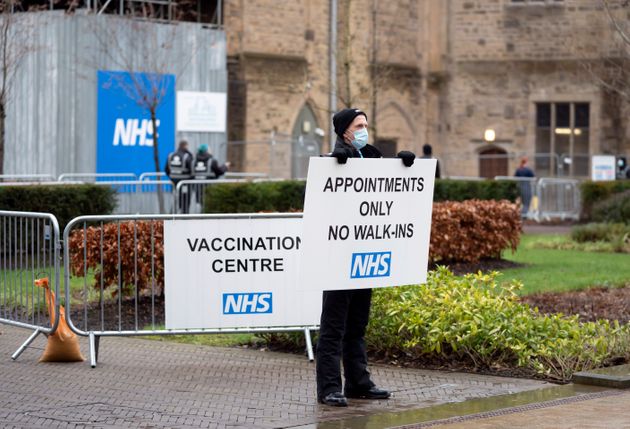
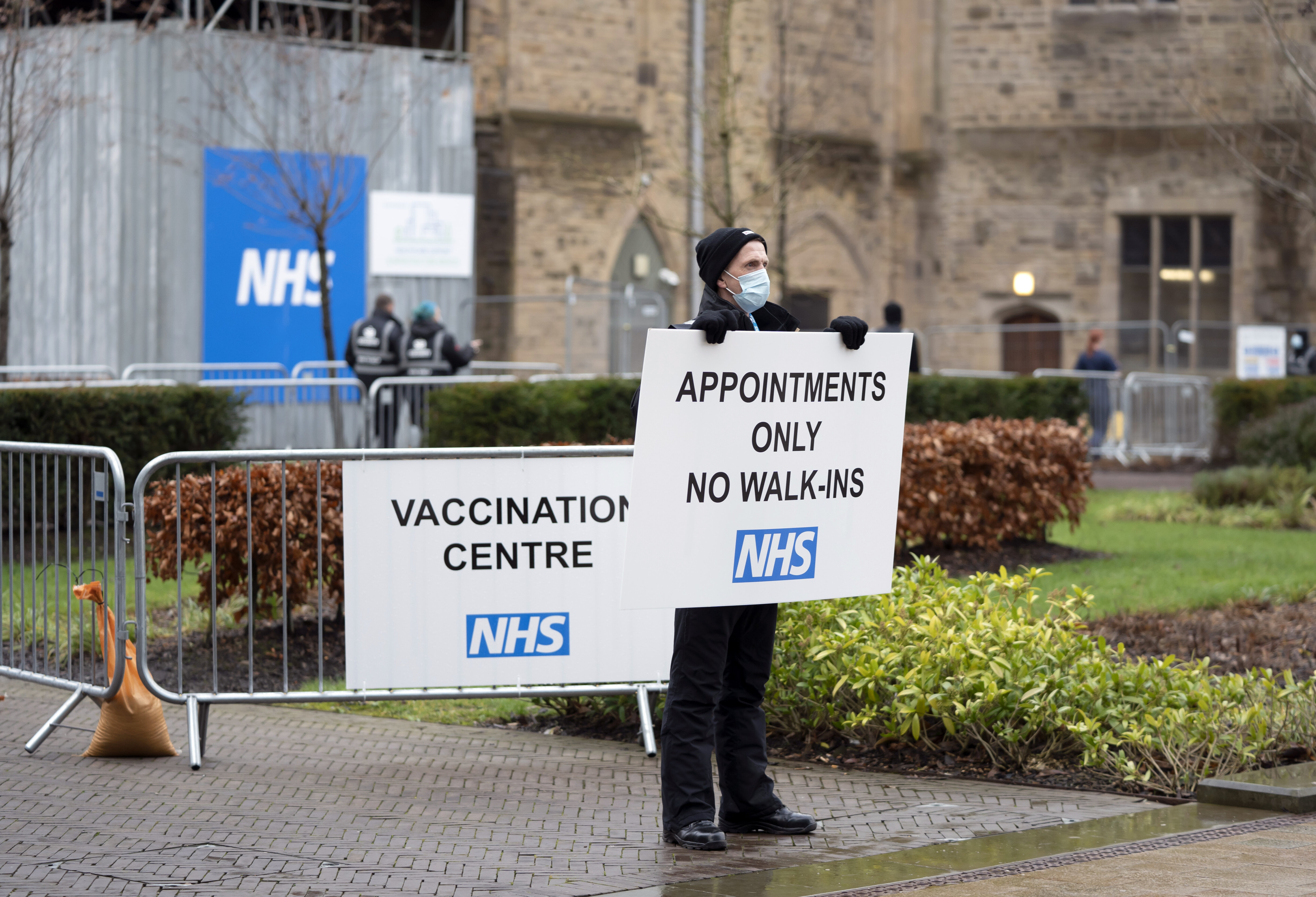
A security guard holds a sign at Blackburn Cathedral, which is being used as a mass vaccination center during the coronavirus outbreak in Blackburn. 

Ending Covid lockdown restrictions too swiftly could run the risk of new vaccine-resistant variants taking hold, top expert Sarah Gilbert has said. 

Speaking to MPs on Wednesday, Oxford University’s professor of vaccinology also warned relaxing restrictions too quickly could boost transmission of the virus. 

It comes after Boris Johnson this week revealed his roadmap out of lockdown, with a pledge to end all social distancing by June 21. 

Gilbert has urged caution, however, telling the Commons’ science and technology committee: “To make sure that we have the lowest chance possible of new variants arising we need to prevent the virus from transmitting between people and we’re now doing that very effectively with the vaccines.”

She added: “We cannot allow only the vaccines to do all the work of protecting the population, while at the current time in the UK we still have relatively high levels of transmission.

“And there is a danger that if measures are lifted too quickly that transmission could increase, and that puts us at a greater risk of selection of new variants that are not so well effectively neutralised by the virus.

“It wouldn’t be all or nothing but it could be a significant change, and we want to minimise the chances of that happening as much as we possibly can.”

Anthony Harnden, deputy chair of the Joint Committee on Vaccination and Immunisation (JCVI) agreed “it’s really, really important that we don’t rush this”. 

He said: “I refer back to my original answer about vaccination not being the only way out pandemic.

PA

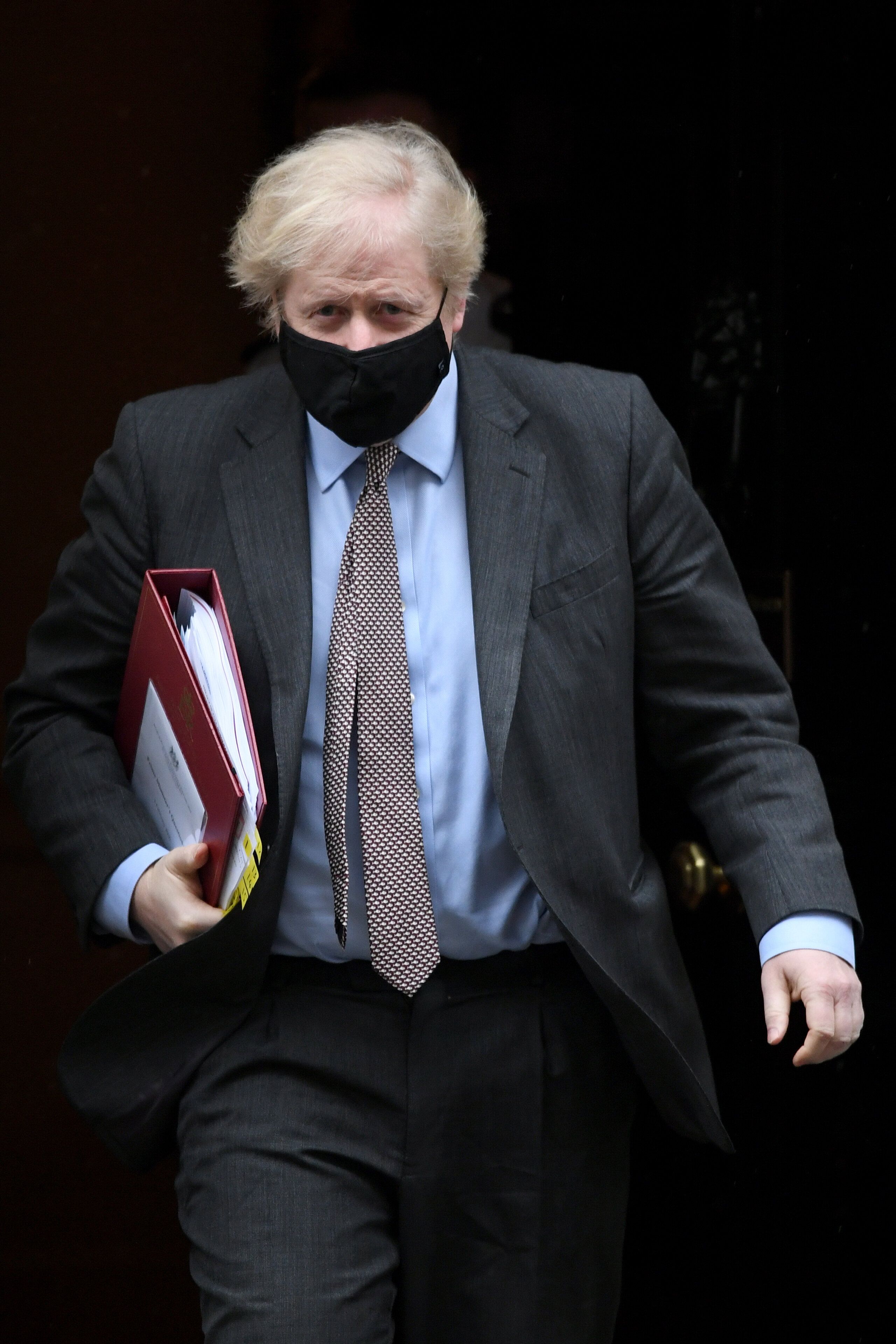
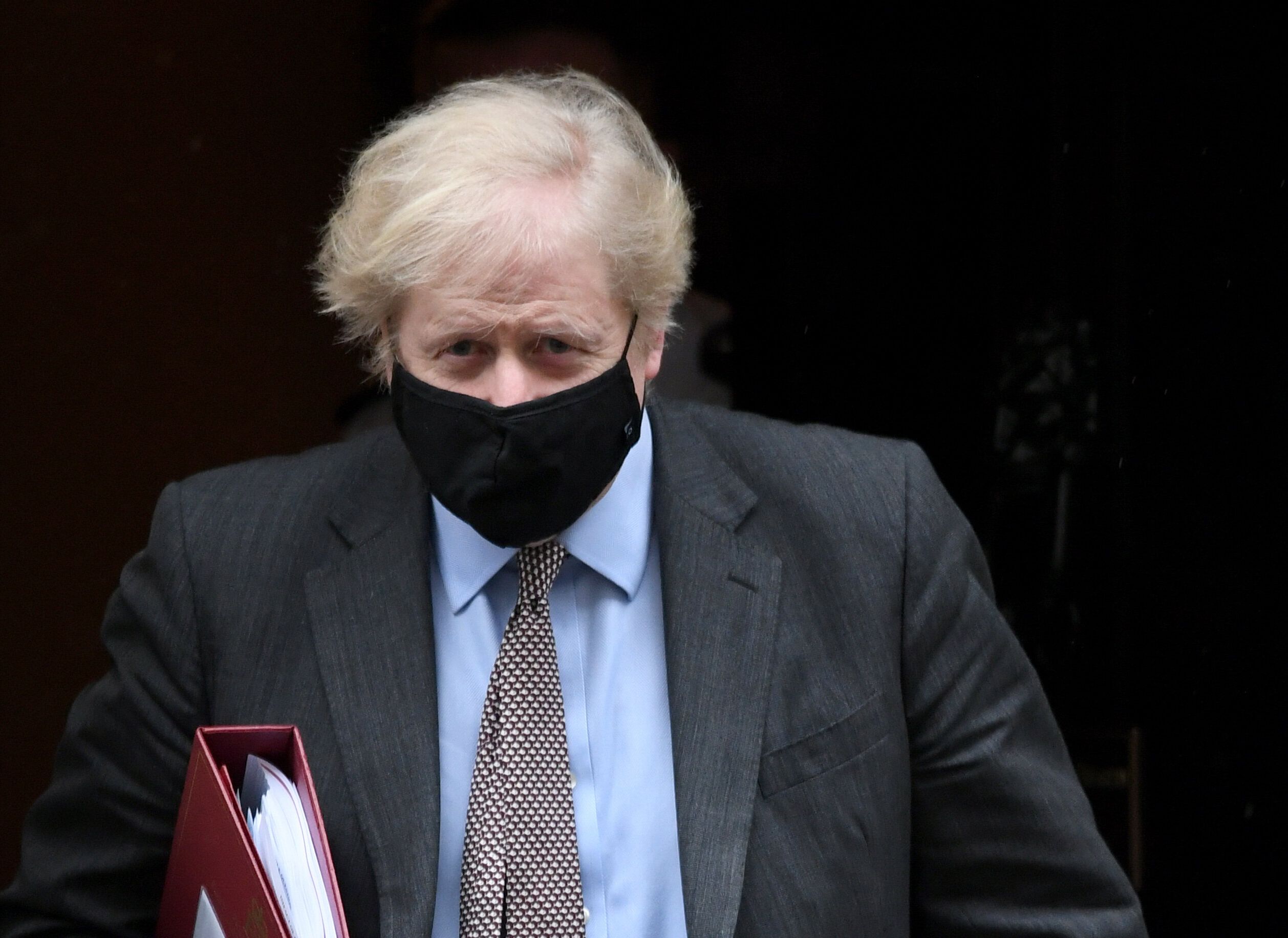
Prime minister Boris Johnson leaves 10 Downing Street

“We must go slowly, and the reason is because we want to keep transmission down and we want to keep infection rates down. And if we don’t, we will lose all the benefits of those vaccines that we’ve acquired and in the last few months because we will get the environment for new variant strains to emerge and have ‘vaccine escape’. So it’s really, really important that we don’t rush this.”

Schools are scheduled to reopen on March 8, followed by relaxations of some social distancing measures later in the month. 

Non-essential shops, pubs, restaurants, hairdressers and gyms will reopen no earlier than April 12 in the prime minister’s phased plan.

Johnson is under pressure from backbench Tory MPs in the Covid Recovery Group, who have been demanding the government speeds up the plan. 

The PM has argued, however, that England is taking a “cautious but irreversible” path out of lockdown. 

Scientists are still examining new data about how effective the vaccines are in reducing transmission and hospitalisations. 

Philip Dormitzer, vice president and chief scientific officer of viral vaccines at Pfizer, said the company believes its vaccine will protect against the variants seen to date.

He told the committee: “From real world effectiveness data, both UK and in Israel where the UK variant is common, we’re starting to get our first direct evidence, and we are seeing protection against the UK variant that is equivalent to the protection we saw in controlled trials before that variant was circulating.

“For other variants at this point we have to rely more on laboratory data, and the laboratory data thus far, I would say are quite reassuring.

“We do see with the South African variant some reduction in the level of neutralisation.

“So yes these mutations can reduce the level of neutralisation, but they do not reduce the level of neutralisation anywhere near as low as neutralisation that was observed at the time that people were protected in the trial.

“So we think it is likely that the vaccine will protect against the variants that we have seen to date, but the way to be sure is of course the real world data because laboratory measures of immunity cannot be translated directly to known protection –  that requires actually observing protection in the field.”

Share Button

Vaccine Passports For Pubs And Theatres To Be Reviewed

Boris Johnson has said Michael Gove will lead a government review into the possible use of vaccine passports for entry into venues such as pubs and theatres.

The prime minister said Gove, the Cabinet Office minister, would ask for the “best scientific, moral, philosophical, ethical viewpoints” before reaching a conclusion.

But speaking to broadcasters on Tuesday, the day after unveiling his roadmap for ending England’s lockdown, Johnson said there were “deep and complex” ethical issues involved in introducing domestic vaccine passports.

“We’ve never thought in terms of having something that you have to show to go to a pub or a theatre,” he said.

“We can’t be discriminatory against people who for whatever reason can’t have the vaccine, there might be medical reasons why people can’t have a vaccine.”

He said when it came to foreign travel there was “no question” a lot of countries would demand proof people had received a Covid vaccine before being allowed entry.

“It’s going to come on the international stage whatever,” he said.

In December, Gove ruled out the introduction of vaccine passports. “I certainly am not planning to introduce any vaccine passports, and I don’t know anyone else in government who is,” he told Sky News.

Asked if there was a possibility they could be introduced, he added: “No.”

Johnson also said on Tuesday he was “very optimistic” that he will be able to ease all the restrictions by the June 21 target date.

But he said “nothing can be guaranteed” and warned the date could slip if people were not “prudent and continue to follow the guidance in each stage”.

“Some people will say that we’re going to be going too fast, some people will say we’re going too slow,” he added.

“I think the balance is right, I think it is a cautious but irreversible approach, which is exactly what people want to see.”

The relaxing of rules is heavily dependent on the progress of the vaccination programme. 

Matt Hancock, the health secretary, told BBC Radio 4′s Today programme the government is working “incredibly hard” to ensure as many people as possible receive a jab.

“We want to see that vaccine uptake go as high as possible. But it’s absolutely on all of us to come forward and get the vaccine. It’s the right thing to do,” he said.

Share Button

Britain Must Send Covid Vaccines To Poorer Countries Now, World Trade Organisation Warns

.bf-toaster { z-index: 10000001; position: fixed; color: #000000; bottom: 0; left: 0; right: 0; background-color: #f3f3f3; padding: 31px 20px 16px 20px; box-shadow: 0 -3px 5px 0 rgba(0, 0, 0, 0.24); display: flex; align-items: center; justify-content: center; } .bf-toaster__link { color: #000000; text-decoration: underline; } .bf-toaster–hidden { display: none; } .bf-toaster__inner { flex: 1 1; display: flex; flex-direction: column; } .bf-toaster__close { background-image: url(https://modulous.huffpost.com/2021/01/14/1610654944-bf-toaster-close.png); position: absolute; top: 23px; right: 23px; background-size: 18px 18px; width: 18px; height: 18px; cursor: pointer; } .bf-toaster__text { display: flex; flex-direction: column; font-family: ProximaNova; font-size: 14px; line-height: 20px; text-align: left; max-width: calc(100% – 40px); } @media (min-width: 415px) { .bf-toaster__text { font-size: 16px; line-height: 1.25; } } @media (min-width: 768px) { .bf-toaster { padding: 25px; } .bf-toaster__close { position: initial; } .bf-toaster__inner { flex-direction: row; align-items: center; justify-content: space-between; max-width: 1140px; position: relative; } } @media (min-width: 1040px) { .bf-toaster__text { flex-direction: row; } }

#topnav_margin_btm { margin: 0 !important; }

NEWS

20/02/2021 10:03 GMT

75% of vaccines administered so far have been shared between just 10 countries.

Britain must send Covid vaccines to poorer countries now instead of waiting until it has a surplus, the new head of the World Trade Organisation (WTO) has warned.

Ngozi Okonjo-Iweala urged the government to act now as it is “in the interest” of rich countries as well as poor countries to have “equitable access”.

Boris Johnson pledged to donate the majority of the UK’s surplus vaccines to poorer nations in the lead-up to Friday’s virtual G7 meeting.

He told world leaders that there is “no point in us vaccinating our individual populations – we’ve got to make sure the whole world is vaccinated because this is a global pandemic”.

But Okonjo-Iweala told BBC Radio 4’s Today programme on Saturday that while the move was “welcome”, there should not be a delay.

She said: “I don’t think we should wait to get surplus when other people have been served. I think that any donations that are coming must come now.

“The reason is very simple. It’s in the interest of rich countries as well as poor countries to have equitable access.”

G7 leaders said in a joint statement released after the virtual summit on Friday that they have raised their overall commitment to the Covax scheme – which aims to accelerated efforts towards equitable access to Covid vaccines –  to $7.5bn (£5.3bn).

The United Nations secretary general Antonio Guterres on Friday called on wealthier countries to share Covid vaccines with poorer countries, warning that a failure to do so could come back to haunt them.

“The risk is, if we vaccinate only the developed countries and we let the virus spread in the developing world, the virus will mutate. The mutating will be more dangerous, but also more able to resist vaccines,” he said during a virtual meeting at the Munich Security Conference.

Guterres said that 75 percent of the vaccines distributed so far have been shared amongst 10 countries, describing the present situation as “chaotic” – highlighting the fact that 130 countries worldwide still haven’t received a single dose.  

Conversations

.follow-us__body::before { background-color: #0dbe98; } .follow-us .newsletter-signup input[type=”submit”] { color: #0dbe98; }


Share Button
smartphone

FREE
VIEW