Laura Winham, 41, was found dead in her flat in Woking by her mother and brother in May 2021.


Laura Winham, 41, was found dead in her flat in Woking by her mother and brother in May 2021.
Isabella Rossellini will follow her Oscar-nominated performance in Conclave with a role in a new historical drama.
On Wednesday afternoon, it was revealed that the Italian actor will join Dame Joan Collins in The Bitter End, an upcoming film about the final years of Wallis Simpson.
Advertisement
Dame Joan told The Guardian in 2023 that the movie would tell “the true story of the last years of the Duchess of Windsor after the Duke dies”, claiming that Simpson “was abused by this woman who took her over and took away her objects, her money, and left her practically destitute”.
In the film, the Dynasty legend will play Wallis Simpson, while Isabella will portray Suzanne Blum, described in a press release as “the formidable French lawyer and confidante of Wallis Simpson, who at the hands of Blum found herself ensnared in a menacing grip of obsession and coercive control”.

via Associated Press
Advertisement
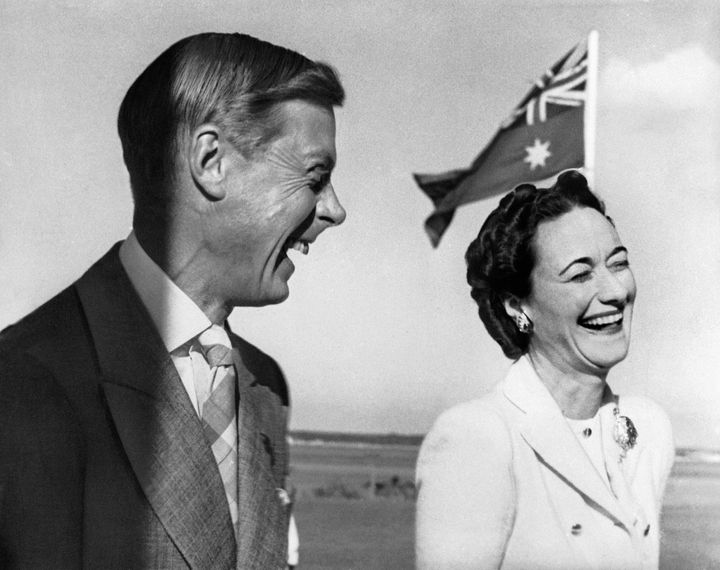
Wallis Simpson married King Edward VIII 1937, after he abdicated from the throne so they could tie the knot.
After the pair visited Germany that same year without the proper approval, they were accused of being Nazi sympathisers, and Simpson spent much of the rest of her life in exile, particularly after the former monarch’s death in 1972.
Simpson’s final years were marred by several health issues, and she eventually died in 1986 at the age of 89.
Advertisement
via Associated Press
Dame Joan previously said of the movie: “First of all [Simpson is] full of pep and she’s got her young acolytes around her, then bit by bit she is destroyed by circumstances.
“It’s a very good script and it’s a great part for me. I’ve always been fascinated by Wallis, because I think she was unfairly treated.”
Advertisement
Wallis Simpson has recently been played by Lia Williams in The Crown and Oscar nominee Andrea Riseborough in Madonna’s film about the couple, W.E.



We’ve recently written at HuffPost UK about how to spot the signs of autism in adult women and young girls.
Autism diagnoses in the UK have risen; alongside that, more and more adults have received treatment for attention deficit hyperactivity disorder (ADHD).
Advertisement
Still, ADHD UK says over 80% of cases go undiagnosed. That’s partly because, a 2014 paper says, people often get treated for conditions associated with ADHD (like oppositional defiance disorder and depression), but not ADHD itself.
Additionally, ADHD “was, until recently, erroneously perceived as only present in young people, with little or no impact later in life,” according to a review of literature on the topic, despite persisting into adulthood in roughly a third to two-thirds of cases.
So, we reached out to Dr Mikki Lee Elembaby, a Manhattan-based psychologist from Clarity Therapy NYC, who specialises in autism and ADHD assessment, to find out how to tell “regular” disorganisation from ADHD in adults.
Advertisement
It can be hard to draw a distinction between non-clinical disorganisation and ADHD, the expert told HuffPost UK, “because disorganisation can look different for different people and manifest differently in various areas of life”.
It may affect how tidy people’s homes are, how focused they can stay in conversation, how well they can stick to routines, and how often they lose things.
But two signs that distinguish one from the other, the psychologist told us, are:
“One key sign to look for is the level of disorganisation,” Dr Elembaby advised.
“If it’s chronic and pervasive, meaning it persists despite your best efforts and significantly impacts your work, relationships, or daily life, it could be a sign of ADHD.”
Advertisement
Signs of ADHD may appear in disorganised people, the expert told us, but ADHD is “a pattern of persistent struggles with attention, impulse control, and self-regulation across multiple areas of life”.
That means it involves a series of concurrent symptoms, including:
“To meet the clinical criteria for ADHD, these symptoms must show up in multiple settings, like work, school, and home, and have been present before age 12 (even if they weren’t obvious at the time, especially in girls),” Dr Elembaby said.
Advertisement
The assessor says it’s time to speak to an expert if “your attentional challenges are negatively impacting your quality of life and if you are experiencing a pattern of difficulties with organisation and time management, attention and focus, impulse control, emotional regulation, or work, school, or home responsibilities”.
The NHS says your GP might refer you for an assessment if they think you have ADHD.
The health service adds that while ADHD diagnosis is trickier for adults because not all professionals agree on what counts as an adult case, they say that sometimes “an adult may be diagnosed with ADHD if they have 5 or more of the symptoms of inattentiveness, or 5 or more of hyperactivity and impulsiveness, listed in diagnostic criteria for children with ADHD”.

Did you know scientists weren’t sure why pee is yellow until 2024?
Yup ― they had some idea the hue came from a substance called urobilin, but had no clue how that colour-enhancing acid ended up in our urine.
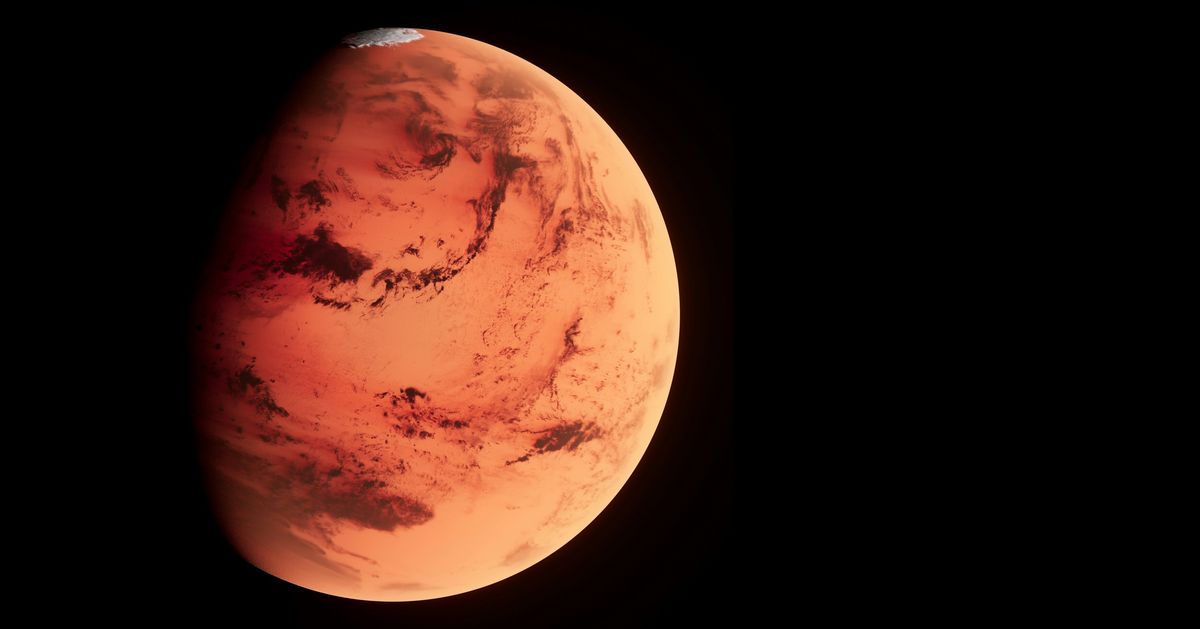
It seems Mars is another such chromatic case. Until recently, scientists had theories which would explain the planet’s rust-red hue ― they thought a dry, powdery substance called hematite coated our neighbours’ surface.
Advertisement
But a paper published in Nature Communications yesterday suggests that the iron oxide mineral isn’t actually responsible for Mars’ scarlet haze.
It’s still down to iron-based sources, researchers from Brown University and the University of Bernsuggest ― that would explain its rusty look.
But they think that ferrihydrite, rather than hematite, could be the main mineral.
That matters because it implies the climate on Mars is more wet, and potentially more habitable, than previously thought, NASA says.
Advertisement
Unlike hematite, ferrihydrite (catch the “hydr-” in its name) needs cool water to form.
It also needs a lower temperature than the one which researchers previously thought was present on Mars.
Dr Adam Valantinas, the study’s lead author, said: “The fundamental question of why Mars is red has been considered for hundreds if not for thousands of years.”
And while they’re not the first team to suggest that ferrihydrite might be to blame, they can “better test this using observational data and novel laboratory methods” than their predecessors.
Advertisement
“These new findings point to a potentially habitable past on Mars,” Dr Geronimo Villanueva, the study’s co-author, shared.
No. The researchers only think ferrihydrite is why Mars is red, and though they used very advanced technology to observe and model the planet’s surface, it’s still unproven.
“What’s even more important… is the return of the samples from Mars that are being collected right now by the Perseverance rover,” Dr Jack Mustard, co-author of the study, said.
“When we get those back, we can actually check and see if this is right.”
Scientists in Aberdeen say the scanner could make an extraordinary difference to diagnosis and treatment.
A devastating side effect made Weronkia Somerville lose 14 years of her life, and then she discovered she had to go through it again.

On May 6, 1954, Roger Bannister pushed through the finishing tape at Iffley Road track in Oxford, England, and collapsed into the arms of friends after becoming the first human to run a mile in less than four minutes.
“It was the running equivalent to summiting Mount Everest for the first time,” said University of Colorado Boulder Integrative Physiology Professor Rodger Kram. “Prior to Bannister, it was considered impossible — beyond the limits of human physiology.”
Seven decades later, a female runner has yet to follow in Bannister’s footsteps, and some have questioned whether it’s possible. A new study published this week by Kram and his colleagues suggests that with the right strategically timed and placed pacers, the answer is yes — and Kenyan Olympian Faith Kipyegon is on the brink of doing it.
“We found that if everything went right, under a couple of different drafting scenarios, she could break the 4-minute barrier,” said co-author Shalaya Kipp, an Olympic middle-distance runner who earned her master’s degree in Kram’s lab. “It’s extremely exciting that we are now talking about, and studying, the limits of female human performance, too.”
From ‘Breaking 2’ to ‘Breaking 4’
In 2016, Kram’s lab calculated what was required for a man to break the fabled two-hour marathon barrier.
He and his students determined that, along with intense training, state-of-the-art shoes and an ideal course and weather conditions, drafting — running behind or in front of another runner to reduce air resistance — was key.
Informed in part by their research, Nike hosted the Breaking2 Project in May 2017 to create those conditions for Kenyan marathoner Eliud Kipchoge. Kipchoge narrowly missed his goal that day but nailed it in a similarly staged race in Vienna in 2019.
Four years later, Kram watched with interest as Kenyan runner Faith Kipyegon crushed records for the women’s 1,500 meter, the 5,000 meter and the mile — all in less than two months, while raising her daughter.
When Kipyegon smashed the mile world record for women with a time of four minutes, 7.64 seconds, she was just over 3% away from breaking the 4-minute-mile, noted Kram. Coincidentally, when his team first started doing their research, the marathon world record holder was about 3% shy of a two-hour marathon.
Kram and his former students, now spread out at research institutions around the world, reconvened — this time to explore the limits of female human performance.
The power of drafting
Run alone, even on a still day, and air molecules bump into you as you move through them, slowing you down. Run in the shadow of a pacer or, better yet, with runners in front and back, and you use less energy.
“The runner in front is literally pushing the air molecules out of the way,” said Kram.
At a four-minute-mile pace, a runner of Kipyegon’s size must overcome a surprisingly large air resistance force — about 2% of her body weight. The team previously determined that completely eliminating that force would reduce the energy required by about 12%, allowing her to run even faster.
“Anyone from top elite to lower-level runners can benefit from adopting the optimal drafting formation for as much of their race as they can,” said Edson Soares da Silva, first author on the new paper.
For instance, da Silva calculated that a 125-pound, 5-foot-7 female runner who typically runs about a 3:35-minute marathon could improve her time by as much as five minutes.
A magic number
For the new study, the team pored over video of Kipyegon’s record 1-mile finish in Monaco.
The conditions were ideal, but her pacers ran too fast at first, said Kram, letting the gap between them and her widen. By the last lap, her pacers had dropped out and she was on her own.
Ideally, he said, one female pacer would be perfectly spaced in front, another in back, for the first half mile; then another fresh-legged pair would step in to take their place at the half-mile point. Collectively, previous research suggests, they could cut air resistance by 76%. Using that value, the team calculated her projected finish time: Remarkably, 3:59.37 — the same time Bannister hit in 1954.
Inspiring scientists and runners
Kipp, now a postdoctoral researcher at the Mayo Clinic, stresses that their study, like many in the field, was based on previous studies that excluded women.
The authors hope that their paper will help spark more interest in studying the physiology of female athletes and inspire interest in female track and field.
They recently sent a copy of the paper to Kipyegon, her coaches and her sponsors at Nike, floating the idea of another staged race, similar to Breaking2.
“Hopefully,” the last line of the paper reads, “Ms. Kipyegon can test our prediction on the track.”

New Curtin University research has revealed how massive ancient glaciers acted like giant bulldozers, reshaping Earth’s surface and paving the way for complex life to flourish.
By chemically analysing crystals in ancient rocks, the researchers discovered that as glaciers carved through the landscape, they scraped deep into the Earth’s crust, releasing key minerals that altered ocean chemistry.
This process had a profound impact on our planet’s composition, creating conditions that allowed complex life to evolve.
Lead author Professor Chris Kirkland from the Timescales of Mineral Systems Group within Curtin’s Frontier Institute for Geoscience Solutions said the study provides valuable insights into how Earth’s natural systems are deeply interconnected.
“When these giant ice sheets melted, they triggered enormous floods that flushed minerals and their chemicals, including uranium, into the oceans,” Professor Kirkland said.
“This influx of elements changed ocean chemistry, at a time when more complex life was starting to evolve.
“This study highlights how Earth’s land, oceans, atmosphere and climate are intimately connected- where even ancient glacial activity set off chemical chain reactions that reshaped the planet.”
Professor Kirkland said the study also offered a new perspective on modern climate change, showing how past shifts in Earth’s climate triggered large-scale environmental transformations.
“This research is a stark reminder that while Earth itself will endure, the conditions that make it habitable can change dramatically,” Professor Kirkland said.
“These ancient climate shifts demonstrate that environmental changes, whether natural or human-driven, have profound and lasting impacts.
“Understanding these past events can help us better predict how today’s climate changes might reshape our world.”
The research was conducted in collaboration with the University of Portsmouth and St. Francis Xavier University, Canada.
Covid inquiry says hearings into the firm, led by Michelle Mone’s husband, must be held in closed session.

New observations of 2024 YR4 conducted with the European Southern Observatory’s Very Large Telescope (ESO’s VLT) and facilities around the world have all but ruled out an impact of the asteroid with our planet. The asteroid has been closely monitored in the past couple of months as its odds of impacting Earth in 2032 rose to around 3%, the highest impact probability ever reached for a sizable asteroid. After the latest observations, the odds of impact dropped to nearly zero.
The asteroid 2024 YR4, estimated to be about 40 to 90 metres in diameter, was discovered in late December last year on an orbit that could cause it to collide with Earth on 22 December 2032. Because of its size and likelihood of impact, the asteroid quickly rose to the top of the European Space Agency’s (ESA) risk list, a catalogue of all space rocks with any chance of impacting Earth.
ESO’s VLT was used to observe 2024 YR4 in mid-January, giving astronomers the crucial data they needed to more precisely calculate its orbit. Combined with data from other observatories, the very precise measurements from the VLT improved our knowledge of the asteroid’s orbit, leading to an impact probability exceeding 1% — a key threshold to trigger disaster mitigation. More observations were triggered and the International Asteroid Warning Network issued a potential asteroid impact notification, alerting planetary defence groups, including the Space Mission Planning Advisory Group, about the possible impact.
With multiple telescopes around the world observing the asteroid, and astronomers modelling its orbit, the impact probability rose to around 3% on 18 February, the highest impact probability ever recorded for an asteroid larger than 30 metres. However, just the next day, new observations made with ESO’s VLT cut the impact risk in half.
This rise and fall of the asteroid’s impact probability follows an expected and understood pattern. To know where the asteroid will be in 2032, astronomers extrapolate from the small bit of the orbit measured thus far. ESO Astronomer Olivier Hainaut makes an analogy: “Because of the uncertainties, the orbit of the asteroid is like the beam of a flashlight: getting broader and broader and fuzzier in the distance. As we observe more, the beam becomes sharper and narrower. Earth was getting more illuminated by this beam: the probability of impact increased.”
The new VLT observations, together with data from other observatories, have allowed astronomers to constrain the orbit enough to all but rule out an impact with Earth in 2032. “The narrower beam is now moving away from Earth,” Hainaut says. At the time of writing, the impact probability reported by ESA’s Near-Earth Objects Coordination Centre is around 0.001% and the asteroid no longer tops ESA’s risk list.
As 2024 YR4 is moving away from Earth, it has become increasingly faint and difficult to observe it with all but the largest telescopes. ESO’s VLT has been instrumental in observations of this asteroid because of its mirror size and superb sensitivity, as well as the excellent dark skies at ESO’s Paranal Observatory in Chile, where the telescope is located. This makes it ideal to track faint objects such as 2024 YR4 and other potentially dangerous asteroids.
Unfortunately, the same Paranal’s pristine dark skies that made these crucial measurements possible are currently under threat by the industrial megaproject INNA by AES Andes, a subsidiary of the US power company AES Corporation. The project is planned to cover an area similar in size to that of a small city and be located, at the closest point, about 11 km from the VLT. Due to its size and proximity, INNA would have devastating effects on the quality of the skies at Paranal, especially due to light pollution from its industrial facilities. With a brighter sky, telescopes like the VLT will lose their ability to detect some of the faintest cosmic targets.
Hainaut warns: “With that brighter sky, the VLT would lose the faint 2024 YR4 about one month earlier, which would make a huge difference in our capability to predict an impact, and prepare mitigation measures to protect Earth.”
