A lightweight flexible alloy for extreme temperatures

Researchers at Tohoku University have developed a groundbreaking titanium-aluminum (Ti-Al)-based superelastic alloy. This new material is not only lightweight but also strong, offering the unique superelastic capability to function across a broad temperature range — from as low as -269°C, the temperature of liquid helium, to +127°C, which is above the boiling point of water. This discovery holds significant potential for a variety of applications, including those in space exploration and medical technology.

Sheng Xu, an Assistant Professor at Tohoku University’s Frontier Research Institute for Interdisciplinary Sciences, emphasized the importance of the alloy’s wide operational temperature range. “This alloy is the first of its kind to maintain superelasticity at such an extreme range of temperatures while remaining lightweight and strong, which opens up a variety of practical applications that were not possible before. The alloy’s properties make it ideal for future space missions, such as creating superelastic tires for lunar rovers to navigate the extreme temperature fluctuations on the Moon’s surface.”

The alloy’s flexibility at extremely low temperatures makes it a promising material for applications in the forthcoming Hydrogen Society and various other industries. Of course, the alloy can be used in everyday applications requiring flexibility, such as medical devices like stents.

Currently, most shape-memory alloys — materials capable of regaining their original shape after force is removed — are limited to specific temperature ranges. The new Ti-Al-based alloy overcomes this limitation, offering wide applicability in fields that require materials with exceptional strength and flexibility, from space exploration to everyday medical tools.

The research team employed advanced techniques such as rational alloy design and precise microstructure control. By using phase diagrams, the researchers were able to select alloy components and their proportions. Additionally, they optimized processing and heat treatment methods to achieve the desired material properties.

The implications of this study extend beyond immediate practical applications. “This discovery not only sets a new standard for superelastic materials but also introduces new principles for material design, which will undoubtedly inspire further breakthroughs in materials science,” Xu added.

Details of the breakthrough were published in the journal Nature on February 26, 2025.

Share Button

Nurse left out of tea round given £41,000 payout

Susan Hamilton wins her case for unfair constructive dismissal against a south London NHS Trust.

Share Button

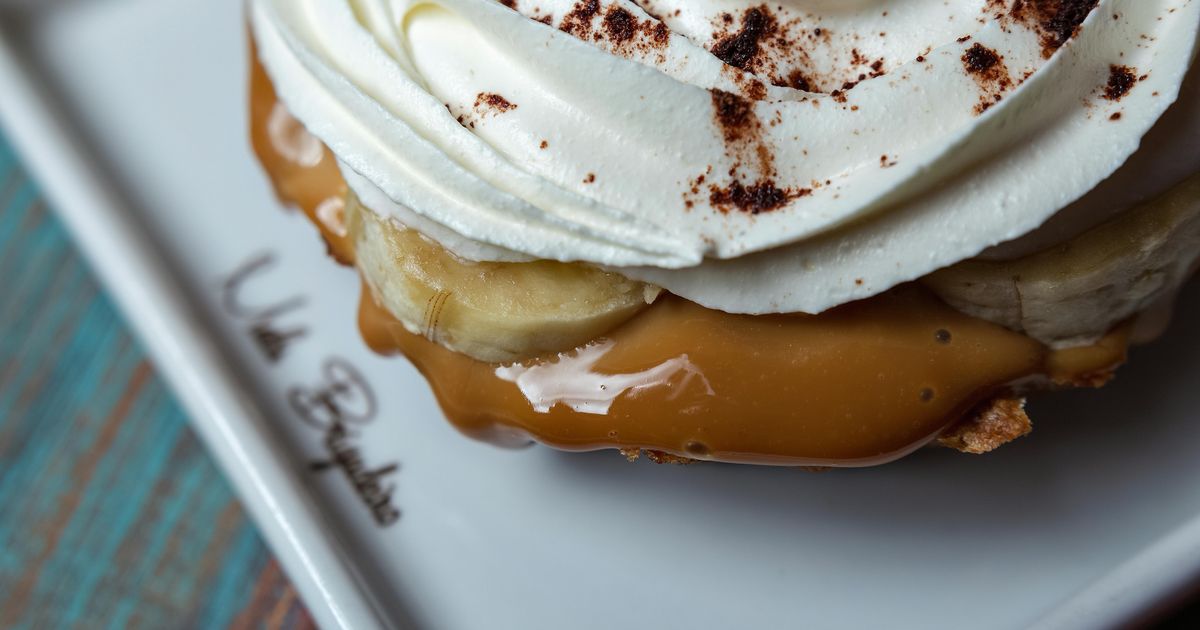
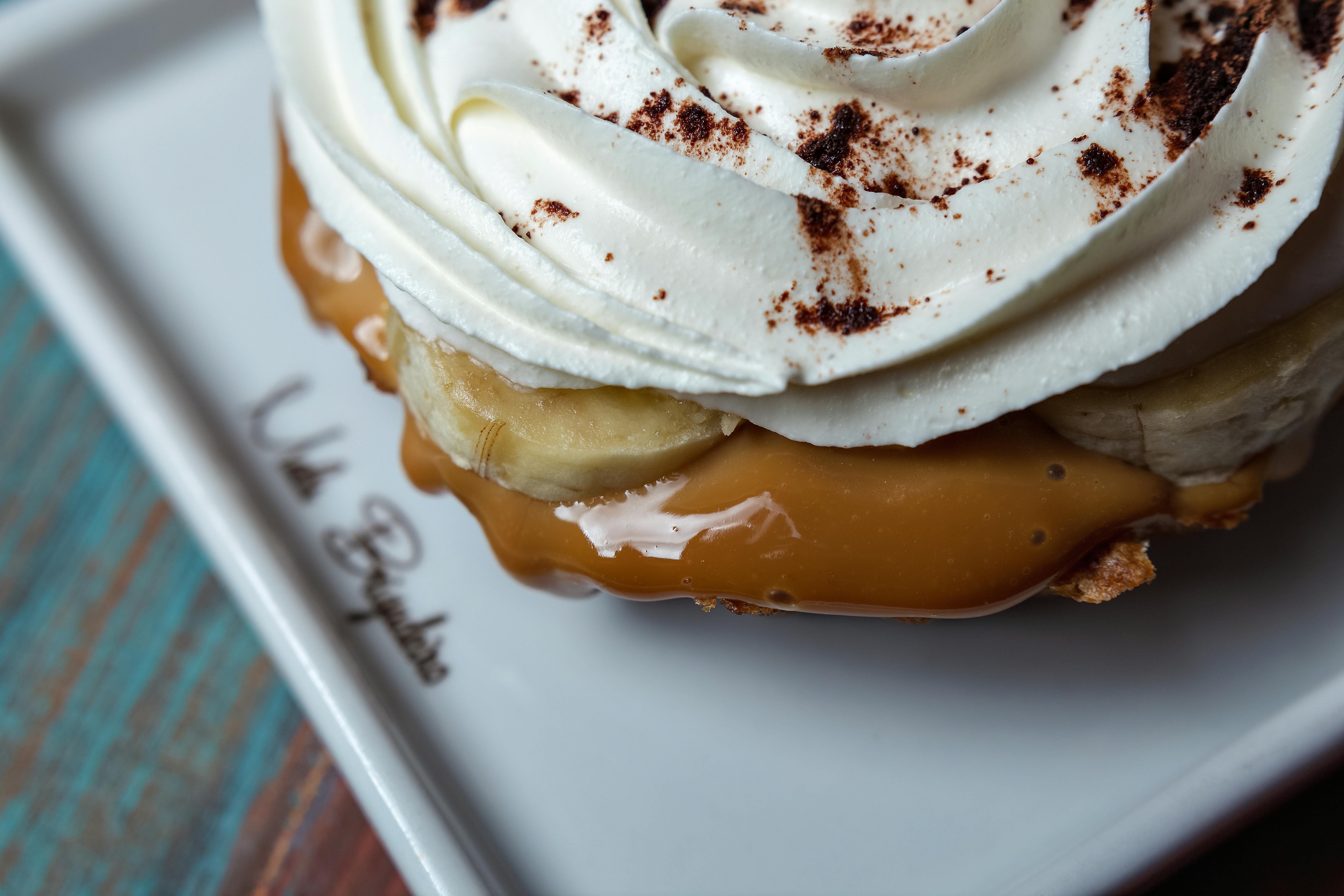
Mary Berry’s No-Bake Banoffee Pie Recipe Is So Simple That I’ll Never Make It Another Way

Sometimes, you get hit with a very specific craving. For a while there, I had a hankering for sour cream and chive pretzels. No idea why — it’s not like they’re something that I have often.

Now, though, now I am craving the delectable, moreish joys of a banoffee pie. Sweet, soft, and with a lovely silky finish to it… I actually can’t think of anything I want more in this moment.

Thankfully, I don’t need to wait too long to tuck into this coveted dessert as the cake queen herself Mary Berry has a banoffee pie recipe that is so simple that it doesn’t even require baking.

Marry Berry’s banoffee pie recipe

As featured on her BBC One series Classic Mary Berry, this recipe requires:

  • around 10 digestive biscuits
  • butter
  • muscovado sugar
  • condensed milk
  • vanilla extract
  • double cream
  • bananas
  • dark chocolate or cocoa powder

Additionally, she advises, if you’d like to make a salted caramel version, you only need a teaspoon of sea salt. Yum.

The base can be made up to a day in advance and to make it, Mary advises doing the following: “Crush the biscuits to fine crumbs and melt the butter over a low heat.

“Pour both into a bowl and mix to combine. Spoon into the base of the tin and press down with the back of a spoon until level. Place in the fridge for 15 minutes

The banana and cream should be made on the day and left for around an hour to set in the fridge.

The toffee is the only really tricky part of the recipe, requiring precision and focus. For that, you heat butter and sugar together and stir over a low heat until combined. Then you add the condensed milk and bring to the boil, stirring for a few minutes.

However, if you over-boil it, it will become grainy and more like fudge, which is not the vibe.

If you’re also ready to treat yourself to this delicious pie, you can view the full recipe here.

Share Button

UK Ambassador Joins Dozens Who Reveal What They Really Think Of Russia With 1 Clear Move

The UK’s ambassador to the United Nations walked out of the room when Russia’s delegate was addressing its Human Rights Council on Wednesday.

Simon Manley joined dozens of other ambassadors in protesting Vladimir Putin’s representative’s speech during a session which was meant to mark the third anniversary of Russia’s brutal invasion of Ukraine.

Manley, who walked out of the room as soon as the speech started, later explained that their actions came down to Kyiv’s exclusion from early peace talks between Russia and the US last week in Saudi Arabia.

According to Reuters, the delegate said: “Our support for Ukraine is iron-clad. We want to see a just and enduring peace in line with the UN charter. Ukraine has to be at the negotiating table.”

Speaking outside the room where Russia’s ambassador was speaking, France’s Jerome Bonnafont said: “If we let slide what happened with Ukraine without reacting…we would open the door to a disintegration of fundamental principles on which the UN was founded.”

The Washington delegate did not join those protesting because they had not turned up to the session at all, following US president Donald Trump’s decision to pull the States out of the Human Rights Council earlier this month.

Speaking to those still in the room, Russia’s deputy foreign minister Sergey Vershinin bizarrely accused Ukraine of a “flagrant violation of fundamental human rights”.

“Securing human rights and freedoms is incompatible with double standards,” he added, claiming Kyiv was guilty of Russophobia.

Actually, there is an international arrest warrant out for the Russian president over his alleged war crimes including the forced deportation of Ukrainian children.

Ukraine’s deputy foreign affairs minister Mariana Betsa then slammed Moscow for violating international law, adding: “The aggressor should be punished, aggression should not be rewarded.”

This incident comes after the US voted with Russia twice at the UN security council this week.

The States first voted against a European-drafted resolution condemning Russia’s war on Ukraine, joining Russia, North Korea and Belarus who opposed the resolution.

The States then put forward a different resolution which takes a neutral stance on the conflict, and includes no criticism of Russia.

Since his re-election, Trump has turned US policy towards Ukraine completely on its head.

While pushing for a quick end to the war, the US president is much more sympathetic towards Vladimir Putin than his predecessor Joe Biden.

He has signalled Ukraine may have to cede occupied territory to Russia in exchange for peace, while also blaming Kyiv for starting the war and falsely calling the country’s democratically elected president a dictator.

Meanwhile, prime minister Keir Starmer is in Washington DC today, trying to secure “security guarantees” from Trump for Europe – although Trump has already rejected the idea.

Share Button

The Oscars Goodie Bags Have A $1 Million Change This Year

Don’t get us wrong; the main point of the Oscars is obviously to celebrate the talent of its nominees (who include Cynthia Erivo, Timothée Chalamet, and Demi Moore this year).

But let’s be real here ― we reckon the event’s iconic goodie bags, whose contents are regularly valued in the hundreds of thousands of dollars, are a pretty big draw for the celeb crowd, too.

This year, marketing company Distinctive Assets is in charge of their “Everyone Wins” Oscars bags, which will go to all 25 top acting and directing nominees.

But according to a press release from the company, LA’s devastating wildfires have made a million-dollar difference to the usual offerings.

“While our gifts may be famous for being fun and fabulous, they also serve as a means to elevate small businesses, minority-owned brands, female entrepreneurs and companies that give back,” the company’s founder, Lash Fary, said.

“This year, on the heels of the historically tragic LA fires, we have found even more ways that our celebrity swag can do good in our community.”

In practice, that means this year’s Oscars goodie bag will include a membership to disaster recovery charity Bright Harbor, who is offering $1 million worth of services to those affected by the fires.

Builders Maison Contractors have offered their renovation services too.

“Whether they pamper themselves or share these bountiful gifts as a care package for a friend who may have recently lost their home, we give these gifts not based on the recipients’ need but out of a desire to brighten someone’s day and to acknowledge a job well done,” Lash shared.

Also included in the bag this year are:

  • Miage’s full skincare line
  • A selection of L’Oréal Paris cosmetics and hair care
  • A four-night villa stay at JOALI Maldives or JOALI BEING
  • A five-night wellness retreat at Santani in Sri Lanka
  • Nomatic’s Travel Pack and Check-In Classic suitcase
  • A 20-piece luxury gift box of lip products from Petty Pout
  • Film-inspired merch and gift card from Alamo Drafthouse Cinema
  • AncestryDNA kit with a 3-month World Explorer membership and VIP Family History Experience
  • ArtLipo body contouring with Dr Thomas Su
  • BAGCEIT portable purse seat
  • Beboe luxury cannabis products
  • Blanc par rouGe gourmet maple products
  • Boos Block cutting board by John Boos
  • Bored Rebel “L.A. Strong” graphic undershirt
  • Brook37 The Atelier premium tea gift box
  • Cate Brown Studio sustainable luxury dog wear and toss pillows
  • Five-star Barcelona hotel stay at Cotton House Hotel
  • The World’s Finest Pocket Square from Daniel Ashley Co.
  • Danucera’s cult-favorite D22 Tonic
  • Dogwalkers cannabis pre-rolls
  • EATABLE gourmet popcorn
  • Chilean wine from Frontera Wines
  • One-year Function Health membership
  • Gammn reimagined backgammon set
  • Greens First greens powder
  • Greenworks 2-in-1 Cordless Standing Light Kit
  • Helight NASA-inspired red light sleep therapy device
  • IERIAS NAMA Sacred Glow Skincare Ritual
  • ILIA Beauty’s skin-centric brushes and makeup
  • INSTYTUTUM result-driven Swiss skincare
  • A Journey of Iceland: From Darkness to Light immersive coffee table book
  • Karma Nuts air-roasted cashews
  • Eyewear from KITS Eyecare
  • Kloth eco-friendly face towel
  • Krovblit Fine Art framed mini resin print
  • Mermaid Cove ocean-inspired skincare
  • Neue Theory probiotic protein powders and Digest + Debloat supplement
  • OMGIGI LA Strong bracelets and Jewelry Bar experience
  • 1MD Nutrition’s VisionMD “Vision for Tomorrow” gift box
  • Overnight Travel Bags vegan leather passport wallet
  • A year’s supply of Oxygenetix breathable foundation and concealer
  • Partake Bodycare Luxury Bath Soak
  • PETA’s custom “Let Monkeys Swing Free!” portable hammock
  • Posh Pretzels chocolate-covered pretzels
  • RYTHM cannabis
  • Tanner romance novel by Samantha Skye
  • Sattaché eco-friendly luxury shoe bag
  • Señorita THC-infused non-alcoholic margaritas
  • Shinery Jewelry Wash and Radiance Towelettes
  • Shrinkage: Manhood, Marriage and the Tumor that Tried to Kill Me by Bryan Bishop
  • Skanties “anti-shapewear/2
  • Suko Stones by MB Saku Hana candle holder
  • The Heart Company vegan heart-crafted perfume collection
  • The Souled Store pop-culture t-shirts
  • 3D Virtual Wellness Retreat
  • TruFru chocolate-covered freeze-dried raspberries
  • VEDI cruelty-free lipstick
  • Hollywood Star Cookie Suites from Windy City Sweets
Share Button

‘You’ll Never Forget Just One Shoe!’: Flight Attendant’s Trick To Stop Losing Things On Holiday

Visiting Paris gave me a greater appreciation for reliable public transport, a really well-made coffee and stunning European architecture.

In return, I gave Paris a brand-new pair of ankle boots, a book, and an unread copy of Cosmopolitan magazine. What can I say? I never really was that great at gift-giving.

Seriously though, I can’t tell you how many times I’ve left behind something important when travelling and it is really starting to frustrate me. RIP to those boots, several scarves in New York and the strappy top I swanned around Berlin in.

I do take some comfort in knowing that I’m not alone. According to the holiday experts at eShores, 80% of people lose, forget or have something stolen when they go on holiday.

Thankfully, a flight attendant shared her secret to never losing important items abroad

In a TikTok video, a British Airways flight attendant revealed that she has a slightly strange technique for ensuring that she never loses anything particularly important – like documents, purses, passports, etc., – abroad again and honestly… she’s on to something.

The flight attendant, Zoe, says in the video: “When I have my passports or anything valuable, when I put them in the safe, what I always do is, I always put one of my crew shoes in the safe because I would never forget anything I’ve put in there.”

Many people in the comments agreed with her, with one adding: “I always put my belt and tie in the safe! Will never forget anything I hope!”

Zoe also helpfully assured that even as a cabin crew member, she has also lost things abroad and that’s actually what resulted in a colleague telling her this handy tip.

She added: “You’ll never forget just one shoe!”

Here’s hoping.

Share Button

Health chiefs warn of potential second norovirus wave

A different strain of the winter vomiting virus is now on the rise, UK health experts say.

Share Button

Drug may prevent some migraine attacks in children and teens

For children and teens living with migraine, there may be a new preventive treatment, according to a preliminary study released today, February 26, 2025, that will be presented at the American Academy of Neurology’s 77th Annual Meeting taking place April 5-9, 2025, in San Diego and online. Researchers found the drug zonisamide, which has been used to treat seizures, may reduce migraine days in this age group. This study does not prove that zonisamide reduces migraine days; it only shows an association.

“Migraine disease is debilitating and can lead to kids having to miss school and other activities,” said author Anisa Kelley, MD, of Northwestern University Feinberg School of Medicine in Chicago. “Currently, there is only one FDA-approved migraine preventative medication for this age group. Our results are encouraging, showing zonisamide may be another option for reducing migraine attacks.”

For the study, researchers reviewed health records at one institution. They identified 256 children and teens who had been diagnosed with migraine and prescribed preventative zonisamide. Of these participants, 28% had difficult-to-treat migraine, which was defined as having migraine disease unsuccessfully treated with two or more previous medications. Researchers documented the number of headache days per month for each participant both before and after starting zonisamide.

They then divided participants into three subgroups based on how long they took the medication before a follow-up visit with a physician. The first group followed up in the first month, the second group within two to six months and the third group, after six months.

For all participants, the median number of headache days per month reduced from 18 to six at the first follow-up visit. When comparing between the groups, the subgroup that followed up within two to six months had the largest reduction with a median decrease of six headache days per month. Kelley noted that the data suggested the drug was most effective after at least two months of use.

The data also suggested that the drug was effective for both those with difficult-to-treat migraine disease and those without.

“It’s very exciting that we may have an effective way to treat difficult migraine disease in children and teens, however it’s important to note that our study did have limitations,” said Kelley. “For instance, our study did not compare people taking the medication to people who did not take the medication. Future studies are needed with control groups to confirm our results.”

This study was funded by Stanley Manne Children’s Research Institute at Ann & Robert H. Lurie Children’s Hospital of Chicago.

Share Button

A springtail-like jumping robot

Springtails, smallbugs often found crawling through leaf litter and garden soil, are expert jumpers. Inspired by these hopping hexapods, roboticists in theHarvard John A. Paulson School of Engineering and Applied Sciences (SEAS) have made a walking, jumping robot that pushes the boundaries of what small robots can do.

Published in Science Robotics, the research glimpses a future where nimble microrobots can crawl through tiny spaces, skitter across dangerous ground, and sense their environments without human intervention.

The new Harvard robot was created in the lab of Robert J. Wood, the Harry Lewis and Marlyn McGrath Professor of Engineering and Applied Sciences at SEAS. It is a modification of the Harvard Ambulatory Microrobot (HAMR), a microrobotic platform originally modeled after the dexterous, hard-to-kill cockroach. Now, HAMR is outfitted with a robotic furcula — the forked, tail-like appendage tucked under a springtail’s body that it pushes off the ground to send it Simone Biles-ing into the air.

“Springtails are interesting as inspiration, given their ubiquity, both spatially and temporally across evolutionary scales,” Wood said. “They have this unique mechanism that involves rapid contact with the ground, like a quick punch, to transfer momentum and initiate the jump.”

To go airborne, the robot uses what’s called latch-mediated spring actuation, in which potential energy is stored in an elastic element — the furcula — that can be deployed in milliseconds like a catapult. This physical phenomenon is found time and again in nature, not just in springtails: from the flicking tongue of a chameleon to the prey-killing appendage of a mantis shrimp.

Wood’s team previously created amantis shrimp-inspired punching robot. “It seemed natural to try to explore the use of a similar mechanism, along with insights from springtail jumps, for small jumping robots,” Wood said.

The springtail’s furcula is also elegantly simple, composed of just two or three linked units. “I think that simplicity is what initially charmed me into exploring this type of solution,” said first author and former SEAS research fellow Francisco Ramirez Serrano.

The team used streamlined microfabrication workflows pioneered in the Wood lab to develop the palm-sized, paper clip-light robot that can walk, jump, climb, strike, and even scoop up objects.

The robot demonstrates some of the longest and highest jumps of any existing robot relative to body length; its best performance is 1.4 meters, or 23 times its length. By contrast, a similar robot can jump twice as far but outweighs the Harvard robot by 20 times.

“Existing microrobots that move on flat terrain and jump do not possess nearly the agility that our platform does,” Serrano said.

The team incorporated detailed computer simulations into the design of the robot to help it land optimally every time, precisely controlling for the lengths of its linkages, the amount of energy stored in them, and the orientation of the robot before takeoff.

Packing all manner of athletic abilities into one lightweight robot has the team excited for a future where robots like theirs could traverse places humans can’t or shouldn’t.

“Walking provides a precise and efficient locomotion mode but is limited in terms of obstacle traversal,” Wood said. “Jumping can get over obstacles but is less controlled. The combination of the two modes can be effective for navigating natural and unstructured environments.”

The research was supported by the U.S. Army Research Office under grant No. W911NF1510358.

Share Button

Adsorptive regolith on Mars soaks up water, researchers reveal

Mars, the next frontier in space exploration, still poses many questions for scientists. The planet was once more hospitable, characterized by a warm and wet climate with liquid oceans. But today Mars is cold and dry, with most water now located below the surface. Understanding how much water is stored offers critical information for energy exploration, as well as life sustainability on the planet.

A research group from Tohoku University has helped shed light on this by improving an existing Mars climate model. The enhanced model accommodates the various properties of Martian regolith, or the loose deposits of solid rock that comprise Martian soil.

Mirai Kobayashi says current models fail to account for the fact that laboratory experiments have demonstrated that the water-holding capacity of the regolith is strongly influenced by its adsorption coefficient.

“Models to date that estimate the distribution of surface and subsurface water on Mars assume that its regolith properties are uniform. This contrasts with observations made by orbiters and landers, which suggest that Martian regolith has globally non-uniform physical properties.”

The model estimated Mars’s subsurface water distribution down to 2 meters from the surface. Like a sponge, highly absorptive regolith in Mars’s mid- and low latitudes retains substantial amounts of absorbed water. Some of this water, the findings showed, remains on the surface of the regolith as stable adsorbed water.

The study also showed that the soil on Mars could keep ice near the surface in the middle and lower areas because water vapor moves more slowly there. This means the soil helps trap water for a long time by slowing down how water vapor spreads, which is important for understanding the change in water on Mars over time.

“Our study stresses the importance of incorporating absorption and inhomogeneity of Martian regolith in forecasting Mars’s surface water,” says Takeshi Kuroda, who led the team alongside Kobayashi, Arihiro Kamada and Naoki Terada. “The model can also be used to study how water on Mars has changed, and how it may have moved deeper underground near the planet’s mantle.”

With several Mars exploration missions underway, including the Japan-led Martian Moons eXploration (MMX) and the international Mars Ice Mapper (MIM) projects, the model is expected to complement further studies that can lead to subsurface water maps of Mars.

Share Button