Has Your Alcohol Tolerance Changed With Age? Or Could It Actually Be Perimenopause?

“My ability to tolerate alcohol, even in small doses, dramatically declined,” Dr. Mary Claire Haver, an OB-GYN and author of “The New Menopause,” wrote in a pinned Instagram post, listing what “shocked” her about her own menopause.

Emma Bardwell, a registered nutritionist who focuses on menopause and perimenopause, said something similar on Instagram recently: “Alcohol and menopause. Not a great mix if we’re all honest, but often a crutch we use to numb the overwhelm.”

Conversations about menopause and alcohol seem to be popping up on social media more lately. But doctors say their patients have been mentioning it for years — saying things like they suddenly feel tipsy after a single drink in their 40s and 50s or that alcohol generally makes them feel lousy.

“This is not something new,” said Dr. Lauren Streicher, a professor of obstetrics and gynaecology at Northwestern University, and host of Dr. Streicher’s Inside Information: The Menopause Podcast. “I’ve been doing this for decades, and women have often said to me, ‘Boy, I just can’t drink anymore. It makes my hot flashes worse. I’m already sleeping terribly. It makes my sleep worse.’”

While Streicher said there’s “probably a connection” between alcohol tolerance and perimenopause and menopause, it hasn’t been well studied.

Still, you might be curious about that connection if you’ve reached your 40s and noticed alcohol hits a little differently. Here’s what women’s health experts want you to know.

Is it ageing or perimenopause?

Menopause is a normal part of the aging process for women and refers to the stage when menstrual periods end, and they can no longer get pregnant, according to the National Institute on Aging. The average age of menopause is 51, but perimenopause typically starts eight to 10 years beforehand.

During perimenopause, your levels of the hormone oestrogen start to decline, and this can bring symptoms like hot flashes, low libido, irregular periods, vaginal dryness, mood changes and problems sleeping.

Some also report changes in their alcohol tolerance. But this is likely more age-related than menopause-related, said Dr. Monica Christmas, an associate professor of obstetrics and gynaecology, and director of the menopause program at the University of Chicago Medicine and associate medical director of the Menopause Society.

Both men and women lose muscle mass as they age, and the amount of fat in the body increases. Fatty tissue doesn’t retain as much water. So when you drink, the concentration of alcohol in your bloodstream becomes more concentrated, Christmas said.

Your liver also doesn’t metabolise alcohol as efficiently and quickly as you get older since your levels of enzymes that break down alcohol also start to decline, she said. Women have lower levels of these enzymes to start with and tend to have less body mass than men, so they naturally process alcohol differently — especially when they get older.

Another factor is that liver function may be impacted by oestrogen, Streicher said. Theoretically, lower oestrogen levels could get in the way of metabolising alcohol, but she noted that this hasn’t been well studied.

Because of these changes, you might feel the effects of alcohol more quickly than you used to or feel hungover even when you didn’t drink much, said Dr. Madeline Dick-Biascoechea, an OB-GYN and director of the Menopause Program at the University of Maryland Medical Center. As your alcohol metabolism changes, “You will have increasing effects of alcohol per volume that you drink as you age,” she said.

How alcohol affects perimenopause and menopause symptoms.

Many women report drinking more alcohol to deal with their menopause symptoms, including hot flashes, mood shifts and sleep disruptions, research shows. However, alcohol can actually make them worse.

Alcohol can worsen many symptoms women experience with perimenopause and menopause, including anxiety, depression, lack of motivation and a loss of interest in activities.

SimpleImages via Getty Images

Alcohol can worsen many symptoms women experience with perimenopause and menopause, including anxiety, depression, lack of motivation and a loss of interest in activities.

Shifting hormones can disrupt the body’s ability to regulate temperature. Your blood vessels dilate when you drink alcohol, and this could trigger hot flashes and night sweats, Christmas said.

About half of menopausal women report difficulty sleeping. Sipping a glass of wine in the evenings might make you feel relaxed and sleepy, but it can actually disrupt your quality of sleep, Streicher said.

Many women also experience anxiety, depression, lack of motivation and a loss of interest in activities during menopause — and as a depressant, alcohol can make these mental health challenges worse, Christmas said.

“Drinking alcohol during the time when we’re already experiencing these natural changes related to hormonal fluctuation, alcohol can exacerbate them,” she said. “And so, that also may feel like an intolerance.”

Keep in mind, though, that everyone experiences perimenopause and menopause differently — some women have no symptoms, while others experience them intensely, Christmas added, and not all women notice changes in how alcohol affects them.

What to do if your alcohol tolerance seems to be changing.

Pay attention to how much you’re drinking as you reach perimenopause and menopause, Dick-Biascoechea said. Not only can it potentially worsen symptoms, it could raise your risk for other health conditions.

A 2025 report by the Office of the Surgeon General said that consuming alcohol can raise your risk for breast, colorectal, throat, mouth, voice box, oesophageal and liver cancer. Excessive alcohol intake has also been linked to dementia, osteoporosis and cardiovascular disease.

Dick-Biascoechea said women should have no more than one drink per day or seven per week. According to the National Institute on Alcohol and Alcohol Abuse, one standard drink equals 5 ounces of wine, 12 ounces of beer, and 1.5 ounces of distilled spirits.

If you’re drinking more than that, she suggested cutting back, and if that’s a struggle, talk to your doctor for help. Resources are also available at FindTreatment.gov.

Even when you drink in moderation, sip more water with your beer, wine or cocktails, Christmas said. Also, make sure to consume alcohol on a full stomach.

Drinking is “not a solution for your menopause symptoms, and it’s going to have an enormous impact on your overall health,” said Streicher, who asks patients about their alcohol intake when they bring up menopause symptoms.

She added that there are safe, effective solutions for addressing perimenopause and menopause symptoms. This might include hormone therapy, treatments for vaginal dryness, sleep problems or mental health issues, and lifestyle recommendations, according to the Cleveland Clinic.

Streicher recommended seeking out a menopause practitioner for help — and added that not all doctors are experienced with menopause or perimenopause. The Menopause Society offers an online tool to help you find an expert in your area.

Ultimately, menopause is a normal stage of life, Dick-Biascoechea said. “But, being normal doesn’t mean that it’s easy. It’s a lot of changes … and keeping yourself as healthy as possible will make this transition better and successful.”

Share Button

Kellogg’s Say Their New Cereal Never Gets Soggy, So I Tested It At 5, 10, 20, And 30 Minutes

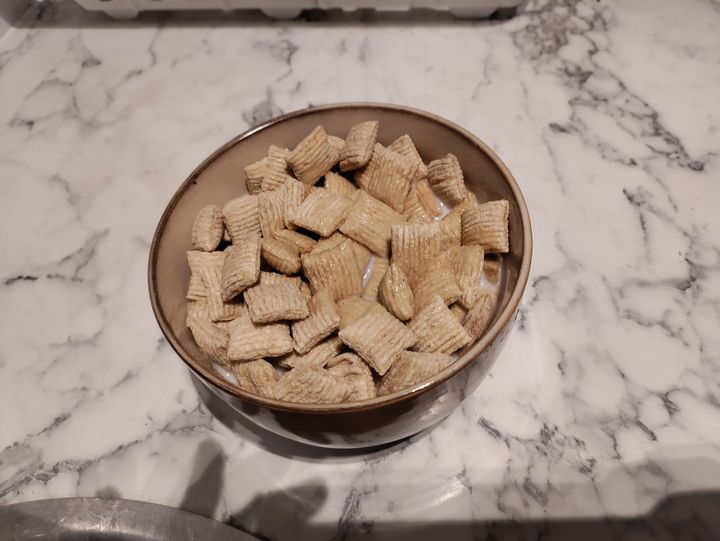
Recently, Kellogg’s released an all-new brand of cereal ― Oaties, available in plain and chocolate flavours ― which carried a Willy Wonka-unmeltable-ice-cream-level claim.

“Each bowl,” the company asserted, “is filled with crispy, crunchy
pillows of wholegrain oats that have been lovingly crafted to stay crunchy in milk.”

Apparently, food scientists spent months achieving the miraculous bite. The product’s tagline ― “it’s crunch time!” ― doubles down on the sog-free promise.

This, I told myself, was a case for the emptiest journalistic minds of our generation (mine). So, I thought I’d get my hands on a box, cover its contents in milk, and try it at five, 10, 15, 20, and 30-minute intervals.

And, because I take my duty seriously, let me start off with proof I really, really dunked those bad boys:

The writer dunking all the cereal which had floated to the top of the bowl under the milk with a spoon

Amy Glover / HuffPost UK

The writer dunking all the cereal which had floated to the top of the bowl under the milk with a spoon

You’re welcome.

1) After five minutes

A bowl of the Oaties cereal after 5 minutes

Amy Glover / HuffPost UK

A bowl of the Oaties cereal after 5 minutes

I left the bowl of submerged cereal on the side for five minutes.

I’ll be honest ― approaching the abandoned bowl made me arrogant. “Aha!” I thought. “Those are definitely some softer outsides.”

That was true ― the first half-millimetre of the cereal had expanded and softened after a five-minute lactose jacuzzi.

But that was all. A bite revealed that the real crunchiness of this cereal lies in its centre ― there was almost no give in the rest of the pillows.

I was confused but intrigued.

2) After 10 minutes

The same cereal bowl after ten minutes

Amy Glover / HuffPost UK

The same cereal bowl after ten minutes

I was pretty surprised to note that the topmost cereals, despite my previous dunking, had remained mostly dry at this stage.

Not much to report at the ten-minute mark; a note I took in my phone read: “exactly the same as five minutes.”

Anticlimactic, but consistent.

3) After 20 minutes

The same bowl of cereal after 20 minutes

Amy Glover / HuffPost UK

The same bowl of cereal after 20 minutes

At this point, I did start to notice (and taste) a difference in texture.

About a fifth of the outside layer of the cereal was soft now, and they looked fuzzier and lumpier in the milk.

But lo and behold ― the middle part was still strong and crunchy (more on that later).

I started to wonder how these shells became so impermeable. An incredulous peek at the ingredients list returned nothing suspicious ― just oat, corn, and wheat flour with sugars and fortifiers.

4) After 30 minutes

The same bowl of cereal after half an hour

Amy Glover / HuffPost UK

The same bowl of cereal after half an hour

The most-dunked pillows in the bowl had definitely become softer on their outsides, even including their corners (which had more or less all stayed stiff ’til now).

But if you look at the bowl, you’ll see the outermost layer still remained unsoaked. And even a bite of the “soggiest” centre pices revealed a bone-dry, still-crunchy inside.

The cross-section of an Oatie cereal that had soaked for 30 minutes in milk reveals that while its outer layer is soft, the inside is hard and crunchy

Amy Glover / HuffPost UK

The cross-section of an Oatie cereal that had soaked for 30 minutes in milk reveals that while its outer layer is soft, the inside is hard and crunchy

I do not know how it’s done (though I’m on the case).

Nor do I (plot twist) particularly like crunchy cereals ― I love soggy ones.

But if you’re in the firm camp, we were pretty surprised by how well these (literally and figuratively) held up.

Share Button

‘There could be no NHS dentists in two years’

Dentists say NHS contracts are becoming more challenging to fulfil and they need to hand them back.

Share Button

Global action needed to solve the medical oxygen crisis

Targets for universal access, national roadmaps and more affordable and accessible care are vital to help fill the medical oxygen gap affecting more than half of the world’s population, according to a new global report.

The Lancet Global Health Commission report details for the first time how future investment in strengthening medical oxygen systems could have a huge impact by saving millions of lives and improving pandemic preparedness.

Almost 400 million children and adults require medical oxygen every year. More than five billion people, 60 per cent of the world’s population, don’t have access to safe and affordable medical oxygen services.

The Commission, co-chaired by Makerere University in Uganda, the International Centre for Diarrheal Disease Research (icddr,b) in Bangladesh, Murdoch Children’s Research Institute (MCRI) in Australia, Karolinska Institute in Sweden and the Every Breath Counts Coalition in the US was launched in 2022 against the backdrop of the COVID-19 pandemic. The Commission was tasked with submitting actionable recommendations for governments, industry, global health agencies, donors and the healthcare workforce.

MCRI Dr Hamish Graham said the COVID-19 pandemic had put a spotlight on the longstanding global inequities in accessing medical oxygen.

“Oxygen is required at every level of the healthcare system for children and adults with a wide range of acute and chronic conditions,” he said. Previous efforts, including the major investments in response to the COVID-19 pandemic, largely focused on the delivery of equipment to produce more oxygen, neglecting the supporting systems and people required to ensure it was distributed, maintained, and used safely and effectively.”

Dr Graham said channelling investments into national oxygen plans and bolstering health systems, including wider use of pulse oximeters (a small device that measures how much oxygen is in the blood), would help solve the medical oxygen crisis.

“We urgently need to make high-quality, pulse oximeters more affordable and widely accessible,” he said. Pulse oximeters are available in 54 per cent of general and 83 per cent of tertiary hospitals in low- and middle-income countries, with frequent shortages and equipment breakdowns.

“Concerningly, in these countries the devices are performed for only 20 per cent of patients presenting to general hospitals and almost never for those at primary healthcare facilities. We see the greatest inequities in small and rural government health facilities and across Sub-Saharan Africa.”

Dr Graham said the importance of medical oxygen must also be recognised and integrated into broader national strategies and pandemic preparedness and response planning.

“Governments should bring together public and private sector partners with a stake in medical oxygen delivery, including health, education, industry, energy and transport to design a system and set up a governance structure that supports the new Global Oxygen Alliance (GO2AL) and replenishing The Global Fund with a strong oxygen access mandate,” he said.

Key findings from the report published in The Lancet Global Health include:

  • The global need for medical oxygen is high. Every year, 374 million children and adults need medical oxygen, including 364 million patients with acute medical and surgical conditions and nine million patients with long-term oxygen needs due to chronic obstructive pulmonary disease.
  • Global access to oxygen is highly inequitable with huge gaps in coverage despite pandemic-related investments. Less than one in three people in low- and middle-income countries who need oxygen for acute medical or surgical conditions receives it.
  • Costs to fill the oxygen gap are large but represent a highly cost-effective investment that will have wide reaching impacts. Closing the large acute medical and surgical oxygen access gap in low- and middle-income countries requires an additional $US6.8 billion annually.
  • National Medical Oxygen Plans are essential to facilitate investment and effectively coordinate service delivery. Less than 30 countries have developed National Oxygen Plans to date but all governments are encouraged to have one by 2030.
  • Oxygen systems must be designed to suit the context, include operational costs, and be affordable to all patients. There is no one-size-fits-all national medical oxygen system. Governments should define priorities and optimise their systems to suit local conditions.
  • Pulse oximetry is the gateway to safe, quality, affordable oxygen care and needs to be integrated in clinical guidelines, education and all levels of the healthcare system. Pulse oximetry measures should be routinely assessed in patients at all levels of health care.
  • A need for closer collaboration between the medical oxygen industry, national governments and global health agencies. Companies should adopt specific oxygen access targets and publish progress while global health agencies should regularly assess oxygen industry progress similar to how the pharmaceutical industry operates.
  • Accurate and timely data on oxygen systems is essential for effective decision making and oxygen service access. New toolssuch as the 10 Oxygen Coverage Indicators and a national Access to Medical Oxygen Scorecard (ATMO2S) would help governments to both plan their national oxygen systems and report progress implementing the WHO Oxygen Resolution.

The report comes after it was announced MCRI would partner with 12 countries in the Pacific and Southeast Asia under a $10 million initiative to improve child and adolescent health across the region.

The Australian Government has awarded MCRI a strategic grant as part of its Partnerships for a Healthy Region Initiative.

The three-year funding will be used to establish the ReALiSE program — the Regional Alliance for Learning in Systems for Equitable Child and Adolescent Health — which will strengthen resilience in public health systems and engage with youth leaders and local communities to improve the health of all young people.

Share Button

Sweet taste receptors in the heart: A new pathway for cardiac regulation

In a surprising discovery, scientists have found that the heart possesses “sweet taste” receptors, similar to those on our tongues, and that stimulating these receptors with sweet substances can modulate the heartbeat. This research opens new avenues for understanding heart function and potentially for developing novel treatments for heart failure.

While taste receptors are traditionally associated with the tongue and our ability to perceive flavors, recent studies have shown that these receptors exist in other parts of the body, where they likely play different roles. This new study is the first to identify specific “sweet taste” receptors, known as TAS1R2 and TAS1R3, on the surface of heart muscle cells. The work will be presented at the 69th Biophysical Society Annual Meeting, to be held February 15 — 19, 2025 in Los Angeles.

The new research found that these receptors are not just present on heart muscle, but also functional. When the researchers stimulated these receptors in both human and mouse heart cells using aspartame, a common artificial sweetener, they observed a significant increase in the force of heart muscle contraction and accelerated calcium handling — key processes for a healthy heartbeat.

“After you eat a meal, it’s been shown that your heart rate and blood pressure actually are increasing,” said Micah Yoder, a graduate student in the lab of Jonathan Kirk at Loyola University Chicago. “Previously, this was thought to be a neural axis that’s being signaled. But we’re proposing a more direct consequence, where we have a spike in our blood sugar after eating a meal, and that’s binding to these sweet taste receptors on the heart muscle cells, causing a difference in the heartbeat,” he added.

Intriguingly, the researchers also found that these receptors are more abundant in the hearts of patients with heart failure, suggesting a possible link to disease. Further investigation revealed that stimulating the receptors triggers a cascade of molecular events within the heart cells, involving key proteins that control calcium flow and muscle contraction.

“During heart failure, the heart is changing its energetic landscape and prioritizing glucose uptake and glucose usage. So, it’s possible that during this energetic change, the heart might need to change its nutrient sensing abilities to accommodate this switch,” Yoder explained.

Additionally, their research may explain why high consumption of artificially sweetened beverages is linked to arrhythmogenesis, or an irregular heartbeat. Not only are these sweet taste receptors particularly stimulated by artificial sweeteners like aspartame, Yoder noted, he found that overstimulation of these sweet taste receptors lead to a an increase in arrhythmic like behavior in the heart cells.

But further research is needed to fully understand the long-term effects of stimulating these receptors in the heart as well as how these receptors might be targeted to strengthen the heart in the case of heart failure.

Share Button

Near-complete skull discovery reveals ‘top apex’, leopard-sized ‘fearsome’ carnivore

A rare discovery of a nearly complete skull in the Egyptian desert has led scientists to the “dream” revelation of a new 30-million-year-old species of the ancient apex predatory carnivore, Hyaenodonta.

Bearing sharp teeth and powerful jaw muscles, suggesting a strong bite, the newly-identified ‘Bastetodon’ was a leopard-sized “fearsome” mammal. It would have been at the top of all carnivores and the food chain when our own monkey-like ancestors were evolving.

Findings, published in the peer-reviewed Journal of Vertebrate Paleontology, detail how this ferocious creature would have likely preyed on primates, early hippos, early elephants, and hyraxes in the lush forest of Fayum, Egypt, which is now home to a desert.

Describing the discovery, palaeontologist and lead author Shorouq Al-Ashqar, from Mansoura University and the American University in Cairo, says: “For days, the team meticulously excavated layers of rock dating back around 30 million years.

“Just as we were about to conclude our work, a team member spotted something remarkable — a set of large teeth sticking out of the ground. His excited shout brought the team together, marking the beginning of an extraordinary discovery: a nearly complete skull of an ancient apex carnivore, a dream for any vertebrate paleontologist.”

Bastetodon belongs to a species in an extinct group of carnivorous mammals called hyaenodonts. Hyaenodonts evolved long before modern-day carnivores such as cats, dogs, and hyenas. These predators with hyena-like teeth hunted in African ecosystems after the extinction of the dinosaurs.

The team — who go under the title ‘Sallam Lab’ — named the specimenafter the cat-headed ancient Egyptian goddess Bastet, who symbolized protection, pleasure, and good health. The name acknowledges the region where the specimen was found, famous for its fossils and Ancient Egyptian artifacts. The name is also a nod to the short, cat-like snout and teeth of this fearsome, leopard-sized carnivore (“-odon” means “tooth”).

Its skull was unearthed on Sallam Lab’s expedition to the Fayum Depression, an area where digs reveal an important time window into about 15 million years of evolutionary history of mammals in Africa. This timespan not only captures the transition from the Eocene’s global warming to the Oligocene’s global cooling, but also reveals how these climate shifts played a crucial role in shaping ecosystems that we still see today.

Beyond just a new ancient creature discovery, the finding of Bastetodon has already allowed the research team to reevaluate a group of lion-sized hyaenodonts that was discovered in the rocks of the Fayum over 120 years ago. In their paper the team also construct the genus Sekhmetops to describe this century-old material and to honor Sekhmet, the lion-headed goddess of wrath and war in ancient Egyptian mythology (“-ops” means “face”). In 1904, Sekhmetops was placed within a European group of hyaenodonts. The team demonstrated Bastetodon and Sekhmetops both belonged to a group of hyaenodonts that actually originated in Africa. In ancient Egypt, Bastet was often associated with Sekhmet, making the two genera scientifically and symbolically connected.

The study demonstrates the relatives of Bastetodon and Sekhmetops spread from Africa in multiple waves, eventually making it to Asia, Europe, India, and North America. By 18 million years ago, some relatives of these hyaenodonts were among the largest mammalian meat-eaters to ever walk the planet.

However, cataclysmic changes in global climate and tectonic changes in Africa opened the continent to the relatives of modern cats, dogs, and hyenas. As environments and prey changed, the specialized, carnivorous hyaenodonts diminished in diversity, finally going extinct and leaving our primate relatives to face a new set of antagonists.

“The discovery of Bastetodon is a significant achievement in understanding the diversity and evolution of hyaenodonts and their global distribution,” Shorouq adds.

“We are eager to continue our research to unravel the intricate relationships between these ancient predators and their environments over time and across continents.”

Concluding, co-author Dr. Matt Borths, Curator of Fossils at the Duke Lemur Center Museum of Natural History at Duke University in Durham, North Carolina, says: “The Fayum is one of the most important fossil areas in Africa. Without it, we would know very little about the origins of African ecosystems and the evolution of African mammals like elephants, primates, and hyaenodonts. Paleontologists have been working in the Fayum for over a century, but the Sallam Lab demonstrated there is more to discover in this remarkable region.”

Share Button

Sky News Presenter Makes Painfully Obvious Point As Tories Slam Labour’s Defence Budget

Sky News presenter Wilfred Frost called out a Tory MP for criticising the government’s defence spending today.

Keir Starmer is facing additional pressure on national security as Donald Trump is pushing to secure a peace deal between Russia and Ukraine.

The UK has already said it would send peacekeeping troops to protect Ukraine if an agreement was reached – but that declaration has only exacerbated existing concerns over the lack of investment in defence.

Labour has also promised to hike defence spending from its current rate of 2.3% of GDP to 2.5% although it is yet to offer a clear timeline.

But, when shadow national security minister Alicia Kearns slammed the prime minister for not increasing investment in the sector sooner this morning on Sky News, she received a bleak reminder.

The MP began by claiming Starmer’s “priority today should be to talk about defence spending” – something she said should have in place “since July”.

But presenter Frost quickly hit back: “I mean, you’re trying to criticise the state of defence spending, [seven] months into their government when this is a long-term issue after 14 years in power.”

After almost a decade and a half of Conservative government, defence spending in real terms fell to £53.9bn during their last full year in power, 2023-24.

That’s less than the last full year Labour was last in power, 2009-10, when defence spending was at £57.1bn.

But Kearns hit back: “I’ve always been very clear. I was critical of my own government, but the reality is 2.3% of defence is what we’ve been spending, that is a good amount, and we’ve been investing in the right equipment.”

She added: “But what I’m saying is, since July, a decision was made to side with the Treasury to not give the increase in defence spending we need to continue to replenish stocks, replenishing stocks should be the priority.”

She said that was necessary in case the UK needed to provide peacekeepers to Ukraine.

“I will continue to stand with Ukraine, but I will continue to speak out as I have done from the moment I was elected, to make sure we defend our security,” Kearns said.

The Conservative Party leader Kemi Badenoch also criticised Labour’s defence spending today.

Speaking at the Alliance for Responsible Citizenship conference, she said: “Failing to spend more on defence isn’t peace-making, it is weakness, and it only emboldens their threats to democracy and global stability.”

<div class="js-react-hydrator" data-component-name="Twitter" data-component-id="9710" data-component-props="{"itemType":"rich","index":20,"contentIndexByType":1,"contentListType":"embed","code":"

Here’s Alicia Kearns(Tory MP) complaining that the govt haven’t increased defence spending since July.

Wilfred Frost: You’re trying to criticise the state of defence spending, 6 months into their govt, when this is a long-term issue after 14 years in power? pic.twitter.com/o5FJTXsW4u

— Haggis_UK 🇬🇧 🇪🇺 (@Haggis_UK) February 17, 2025

","type":"rich","meta":{"author":"Haggis_UK 🇬🇧 🇪🇺","author_url":"https://twitter.com/Haggis_UK","cache_age":86400,"description":"Here’s Alicia Kearns(Tory MP) complaining that the govt haven’t increased defence spending since July. Wilfred Frost: You’re trying to criticise the state of defence spending, 6 months into their govt, when this is a long-term issue after 14 years in power? pic.twitter.com/o5FJTXsW4u— Haggis_UK 🇬🇧 🇪🇺 (@Haggis_UK) February 17, 2025\n\n\n","options":{"_hide_media":{"label":"Hide photos, videos, and cards","value":false},"_maxwidth":{"label":"Adjust width","placeholder":"220-550, in px","value":""},"_theme":{"value":"","values":{"dark":"Use dark theme"}}},"provider_name":"Twitter","thumbnail_height":544,"thumbnail_url":"https://pbs.twimg.com/ext_tw_video_thumb/1891407836736851969/pu/img/ZAJrJY1G-hc8517Y.jpg:large","thumbnail_width":864,"title":"Haggis_UK 🇬🇧 🇪🇺 on Twitter / X","type":"rich","url":"https://twitter.com/Haggis_UK/status/1891407905406046523","version":"1.0"},"flags":[],"enhancements":{},"fullBleed":false,"options":{"theme":"news","device":"desktop","editionInfo":{"id":"uk","name":"U.K.","link":"https://www.huffingtonpost.co.uk","locale":"en_GB"},"originalEdition":"uk","isMapi":false,"isAmp":false,"isAdsFree":false,"isVideoEntry":false,"isEntry":true,"isMt":false,"entryId":"67b322fee4b0cd020cc29138","entryPermalink":"https://www.huffingtonpost.co.uk/entry/sky-presenter-slams-tories-over-criticism-of-defence-budget_uk_67b322fee4b0cd020cc29138","entryTagsList":"conservative-party,defence,alicia-kearns","sectionSlug":"politics","deptSlug":null,"sectionRedirectUrl":null,"subcategories":"","isWide":false,"headerOverride":null,"noVideoAds":false,"disableFloat":false,"isNative":false,"commercialVideo":{"provider":"custom","site_and_category":"uk.politics","package":null},"isHighline":false,"vidibleConfigValues":{"cid":"60afc140cf94592c45d7390c","disabledWithMapiEntries":false,"overrides":{"all":"60b8e525cdd90620331baaf4"},"whitelisted":["56c5f12ee4b03a39c93c9439","56c6056ee4b01f2b7e1b5f35","59bfee7f9e451049f87f550b","5acccbaac269d609ef44c529","570278d2e4b070ff77b98217","57027b4be4b070ff77b98d5c","56fe95c4e4b0041c4242016b","570279cfe4b06d08e3629954","5ba9e8821c2e65639162ccf1","5bcd9904821576674bc55ced","5d076ca127f25f504327c72e","5b35266b158f855373e28256","5ebac2e8abddfb04f877dff2","60b8e525cdd90620331baaf4","60b64354b171b7444beaff4d","60d0d8e09340d7032ad0fb1a","60d0d90f9340d7032ad0fbeb","60d0d9949340d7032ad0fed3","60d0d9f99340d7032ad10113","60d0daa69340d7032ad104cf","60d0de02b627221e9d819408"],"playlists":{"default":"57bc306888d2ff1a7f6b5579","news":"56c6dbcee4b04edee8beb49c","politics":"56c6dbcee4b04edee8beb49c","entertainment":"56c6e7f2e4b0983aa64c60fc","tech":"56c6f70ae4b043c5bdcaebf9","parents":"56cc65c2e4b0239099455b42","lifestyle":"56cc66a9e4b01f81ef94e98c"},"playerUpdates":{"56c6056ee4b01f2b7e1b5f35":"60b8e525cdd90620331baaf4","56c5f12ee4b03a39c93c9439":"60d0d8e09340d7032ad0fb1a","59bfee7f9e451049f87f550b":"60d0d90f9340d7032ad0fbeb","5acccbaac269d609ef44c529":"60d0d9949340d7032ad0fed3","5bcd9904821576674bc55ced":"60d0d9f99340d7032ad10113","5d076ca127f25f504327c72e":"60d0daa69340d7032ad104cf","5ebac2e8abddfb04f877dff2":"60d0de02b627221e9d819408"}},"connatixConfigValues":{"defaultPlayer":"8b034f64-513c-4987-b16f-42d6008f7feb","clickToPlayPlayer":"5a777b9b-81fe-41a6-8302-59e9953ee8a2","videoPagePlayer":"19654b65-409c-4b38-90db-80cbdea02cf4"},"topConnatixThumnbailSrc":"data:image/png;base64,iVBORw0KGgoAAAANSUhEUgAAAAEAAAABCAQAAAC1HAwCAAAAC0lEQVR42mNkYAAAAAYAAjCB0C8AAAAASUVORK5CYII=","customAmpComponents":[],"ampAssetsUrl":"https://amp.assets.huffpost.com","videoTraits":null,"positionInUnitCounts":{"buzz_head":{"count":0},"buzz_body":{"count":0},"buzz_bottom":{"count":0}},"positionInSubUnitCounts":{"article_body":{"count":14},"blog_summary":{"count":0},"before_you_go_content":{"count":0}},"connatixCountsHelper":{"count":0},"buzzfeedTracking":{"context_page_id":"67b322fee4b0cd020cc29138","context_page_type":"buzz","destination":"huffpost","mode":"desktop","page_edition":"en-uk"},"tags":[{"name":"conservative party","slug":"conservative-party","links":{"relativeLink":"news/conservative-party","permalink":"https://www.huffingtonpost.co.uk/news/conservative-party","mobileWebLink":"https://www.huffingtonpost.co.uk/news/conservative-party"},"relegenceId":3696340,"section":{"title":"Politics","slug":"politics"},"topic":{"title":"Conservative Party","slug":"conservative-party","overridesSectionLabel":false},"url":"https://www.huffingtonpost.co.uk/news/conservative-party/"},{"name":"defence","slug":"defence","links":{"relativeLink":"news/defence","permalink":"https://www.huffingtonpost.co.uk/news/defence","mobileWebLink":"https://www.huffingtonpost.co.uk/news/defence"},"url":"https://www.huffingtonpost.co.uk/news/defence/"},{"name":"Alicia Kearns","slug":"alicia-kearns","links":{"relativeLink":"news/alicia-kearns","permalink":"https://www.huffingtonpost.co.uk/news/alicia-kearns","mobileWebLink":"https://www.huffingtonpost.co.uk/news/alicia-kearns"},"url":"https://www.huffingtonpost.co.uk/news/alicia-kearns/"}],"isLiveblogLive":null,"isLiveblog":false,"cetUnit":"buzz_body","bodyAds":["

\r\n\r\n HPGam.cmd.push(function(){\r\n\t\treturn HPGam.render(\"inline-1\", \"entry_paragraph_1\", false, false);\r\n });\r\n\r\n","

\r\n\r\n HPGam.cmd.push(function(){\r\n\t\treturn HPGam.render(\"inline\", \"entry_paragraph_2\", false, false);\r\n });\r\n\r\n","

\r\n\r\n HPGam.cmd.push(function(){\r\n\t\treturn HPGam.render(\"inline-2\", \"entry_paragraph_3\", false, false);\r\n });\r\n\r\n","

\r\n\r\n HPGam.cmd.push(function(){\r\n\t\treturn HPGam.render(\"inline-infinite\", \"repeating_dynamic_display\", false, false);\r\n });\r\n\r\n"],"adCount":0},"isCollectionEmbed":false}”>

Here’s Alicia Kearns(Tory MP) complaining that the govt haven’t increased defence spending since July.

Wilfred Frost: You’re trying to criticise the state of defence spending, 6 months into their govt, when this is a long-term issue after 14 years in power? pic.twitter.com/o5FJTXsW4u

— Haggis_UK 🇬🇧 🇪🇺 (@Haggis_UK) February 17, 2025

Kearns also said we “all have to worry” Trump will let Ukraine down.

Speaking to Times Radio, she said: “I think we all have to worry because the world has let down Ukraine consistently throughout its history. I mean, whether it was Yalta, whether it’s the last of years, whether it’s when Georgia was invaded.

“I was in Ukraine ten days before the renewed illegal invasion almost three years ago. And I sat there as German and French ambassadors told me that our intelligence assessments were absolutely wrong and that Putin wasn’t going to invade.

“We always seem to take Putin at his word and we always underestimate Ukrainians. I don’t understand how we keep repeating the same mistakes.”

Share Button