The review into cervical screening at the Southern Health Trust was triggered when the diagnoses of three women were investigated.


The review into cervical screening at the Southern Health Trust was triggered when the diagnoses of three women were investigated.

Ultra-high energy cosmic rays, which emerge in extreme astrophysical environments — like the roiling environments near black holes and neutron stars — have far more energy than the energetic particles that emerge from our sun. In fact, the particles that make up these streams of energy have around 10 million times the energy of particles accelerated in the most extreme particle environment on earth, the human-made Large Hadron Collider.
Where does all that energy come from? For many years, scientists believed it came from shocks that occur in extreme astrophysical environments — when, for example, a star explodes before forming a black hole, causing a huge explosion that kicks up particles.
That theory was plausible, but, according to new research published this week in The Astrophysical Journal Letters, the observations are better explained by a different mechanism. The source of the cosmic rays’ energy, the researchers found, is more likely magnetic turbulence. The paper’s authors found that magnetic fields in these environments tangle and turn, rapidly accelerating particles and sharply increasing their energy up to an abrupt cutoff.
“These findings help solve enduring questions that are of great interest to both astrophysicists and particle physicists about how these cosmic rays get their energy,” said Luca Comisso, associate research scientist in the Columbia Astrophysics Lab, and one of the paper’s authors.
The paper complements research published last year by Comisso and collaborators on the sun’s energetic particles, which they also found emerge from magnetic fields in the sun’s corona. In that paper, Comisso and his colleagues discovered ways to better predict where those energetic particles would emerge.
Ultra-high energy cosmic rays are orders of magnitude more powerful than the sun’s energetic particles: They can reach up to 1020 electron volts, whereas particles from the Sun can reach up to 1010 electron volts, a 10-order-of-magnitude difference. (To give an idea of this vast difference in scale, consider the difference in weight between a grain of rice with a mass of about 0.05 grams and a 500-ton Airbus A380, the world’s largest passenger aircraft.) “It’s interesting that these two extremely different environments share something in common: their magnetic fields are highly tangled and this tangled nature is crucial for energizing particles,” Comisso said.
“Remarkably, the data on ultra-high energy cosmic rays clearly prefers the predictions of magnetic turbulence over those of shock acceleration. This is a real breakthrough for the field,” said Glennys R. Farrar, an author on the paper and professor of physics at New York University.
The research was supported by the National Science Foundation.

The genome of a once-endangered songbird shows extensive signs of inbreeding, according to a new study by Penn State researchers. Because inbreeding can negatively impact survival and reproduction, the results could guide continuing conservation efforts for Kirtland’s warblers, whose populations still rely on extensive management. The new study, published Dec. 9 in the journalEvolutionary Applications, also suggests how genetic information about inbreeding could be used when considering the removal of species from the endangered species list.
Kirtland’s warblers have also been known as jack pine warblers, as their breeding habitat is limited to young jack-pine forests in Michigan. The species nearly went extinct in the 1970s due to threatened habitat and the population decline was exacerbated by brown-headed cowbirds, who lay their eggs in the nests of other bird species — including warblers — and divert resources away from their chicks. Kirtland’s warblers were classified as endangered under the Endangered Species Act of 1973. Thanks to intensive, targeted management over several decades, Kirtland’s warbler populations have recovered. The species was “delisted” — no longer considered endangered — in 2019, though management efforts remain critical to their survival, according to the researchers.
“When any population goes through a period when few breeding individuals are present, called a ‘bottleneck,’ there is always a chance of inbreeding, which can lead to reduced survival of future generations,” said Anna María Calderón, graduate student in biology in the Penn State Eberly College of Science and first author of the paper. “The 2019 decision to delist Kirtland’s warblers referenced a study that did not find strong evidence of inbreeding, but the tests available at the time were not very high resolution. We used updated sequencing technology to get a clearer picture of the genetic diversity and potential for inbreeding among these songbirds.”
Like other animals, birds receive one copy of their genome from each parent. Some genetic variants can have negative impacts on an animal’s survival or reproductive success. The likelihood of receiving the same potentially damaging variant from both parents increases with inbreeding, when genetically similar individuals mate.
Previous tests of genetic diversity — such as those referenced in the delisting decision — often focus on a small set of specific markers on the genome called microsatellites, which only provide part of the picture. However, advancements in sequencing technology now allow inexpensive analysis of the entire genome from multiple individuals.
“If you think of the genome as a movie of the blueprint of life, then using microsatellites is like trying to get the plot from half a dozen snapshots, while sequencing the entire genome is like watching an entire 4K-resolution film,” said David Toews, Louis Martarano Career Development Professor of Biology at Penn State and co-leader of the research team. “There’s so much more information to be obtained from sequencing the entire genome, and modern technology has made that analysis possible.”
The researchers sequenced the whole genome of Kirtland’s warblers and, as a point of comparison, they also sequenced whole genomes of two closely related species whose populations have remained large and stable, Hooded warblers and American redstarts. The team specifically looked at a measure of inbreeding called “runs of homozygosity.”
A given spot on the genome is called homozygous when the genetic information obtained from an animal’s maternal parent is the same as the information obtained from its paternal parent. Runs of homozygosity (ROH) are long, connected stretches of homozygosity, sometimes millions of letters of the genetic alphabet in length. Particularly long ROH indicate that the individuals who carry them are products of recent inbreeding, when genetically similar individuals mated and were thus more likely to pass on the same genetic information. Fewer and shorter stretches indicate that an individual’s parents are more distantly related.
“Runs of homozygosity give us a unique look into the past and can be an indicator of the genomic health of the population,” said Zachary Szpiech, assistant professor of biology at Penn State and the other co-leader of the research team. “For example, long ROH have been associated with how well other species survive in their first year. ROH can also flag potentially damaging genetic variants, which may be useful when considering the conservation of the bird.”
The researchers found exceptionally long ROH in Kirtland’s warblers, indicating very recent inbreeding that had not previously been identified in this species. Additionally, they found many small to medium-sized ROH in Kirtland’s warblers, while the two closely related species had almost none.
“The contrast between Kirtland’s warblers and their closest related species, which haven’t undergone any population bottlenecks, couldn’t be more stark,” Toews said. “We found no evidence of inbreeding whatsoever in Hooded warblers or American redstarts, and in comparison, the level of inbreeding for the Kirtland’s warblers is almost off the charts. We also found a high frequency of potentially damaging genetic variants. This gives us a clear picture of how the demographic history of songbirds can shape their genetic diversity.”
The researchers noted that the Kirtland’s warblers they sampled did not appear to have any physical deformities. However, they said that inbreeding could manifest during the stages of life they did not observe, for example during development or the energy-intensive task of migration, or impact aspects of their reproductive success, such as how many eggs they lay or how many hatch. According to Toews, continued monitoring of these birds to clarify the impacts of inbreeding will be critical to future conservation efforts.
“An open question in this species has been whether the population of Kirtland’s warblers has always been small, or if it was once large and crashed,” Calderón said. “We can actually use ROH to look into the past, using rates of recombination — one way genomes can swap information around — to estimate when certain combinations of genetic information appeared. From this, we can see that most of the DNA segments within the short ROH in these birds originated between 1874 and 1954, mostly before known bottlenecks. This suggests that Kirtland’s warblers may have always had small population sizes. This makes sense given the high specificity of these birds to young jack-pine forests.”
Comparing these results with information about the distribution and abundance of the species, which has been collected since the 1940s, can provide insight into the events that shaped the genomes of these birds. For example, the researchers dated the origin of many DNA segments within long ROH between 1940 to 1981. This is consistent with a sudden population collapse beginning in the early 1940s, as this bottleneck would result in more, longer ROH. The researchers also plan to sequence the genomes of museum samples, including birds collected as early as the late 1800s, to provide additional context around genetically important events.
“Although Kirtland’s warblers are celebrated as a conservation success story, they are highly inbred and have a high frequency of potentially damaging genetic variants that could impact their ability to persist,” Calderón said. “Our work serves as an important example of how measures of genetic health may tell a different story than simple population numbers. Both need to be considered when assessing a population’s recovery and when making conservation decisions.”
In addition to Calderón, Toews and Szpiech, the research team also includes Andrew Wood, a research technologist in Toews’ lab at the time of the research and now a postdoctoral researcher at the University of Minnesota.
Funding from the U.S. National Science Foundation Division of Environmental Biology, the Penn State Huck Institutes of the Life Sciences and the Penn State Eberly College of Science supported this research.

Researchers at the UChicago Pritzker School of Molecular Engineering (UChicago PME) have realized a new design for a superconducting quantum processor, aiming at a potential architecture for the large-scale, durable devices the quantum revolution demands.
Unlike the typical quantum chip design that lays the information-processing qubits onto a 2-D grid, the team from the Cleland Lab has designed a modular quantum processor comprising a reconfigurable router as a central hub. This enables any two qubits to connect and entangle, where in the older system, qubits can only talk to the qubits physically nearest to them.
“A quantum computer won’t necessarily compete with a classical computer in things like memory size or CPU size,” said UChicago PME Prof. Andrew Cleland. “Instead, they take advantage of a fundamentally different scaling: Doubling a classical computer’s computational power requires twice as big a CPU, or twice the clock speed. Doubling a quantum computer only requires one additional qubit.”
Taking inspiration from classical computers, the design clusters qubits around a central router, similar to how PCs talk to each other through a central network hub. Quantum “switches” can connect and disconnect any qubit within a few nanoseconds, enabling high-fidelity quantum gates and the generation of quantum entanglement, a fundamental resource for quantum computing and communication.
“In principle there’s no limit to the number of qubits that can connect via the routers,” said UChicago PME PhD candidate Xuntao Wu. “You can connect more qubits if you want more processing power, as long as they fit in a certain footprint.”
Wu is the first author of a new paper published in Physical Review X that describes this new way of connecting superconducting qubits. The researchers’ new quantum chip is flexible, scalable and as modular as the chips in cellphones and laptops.
“Imagine you have a classical computer that has a motherboard integrating lots of different components, like your CPU or GPU, memory and other elements,” said Wu. “Part of our goal is to transfer this concept to the quantum realm.”
Size and Noise
Quantum computers are highly advanced yet delicate devices with the potential to transform fields such as telecommunications, healthcare, clean energy, and cryptography. Two things must happen before quantum computers can tackle these global problems to their fullest potential.
First, they must be scaled to large enough size with flexible operability.
“This scaling can offer solutions to computational problems that a classical computer simply cannot hope to solve, like factoring huge numbers and thereby cracking encryption codes,” Cleland said.
Second, they must be fault-tolerant, able to perform massive calculations with few errors, ideally surpassing the processing power of current state-of-the-art classical computers. The superconducting qubit platform, under development here, is one promising approach to building a quantum computer.
“A typical superconducting processor chip is a square shape with all the quantum bits fabricated on that. It’s a solid-state system on a planar structure,” said co-author Haoxiong Yan, who graduated from UChicago PME in the spring and now works as a quantum engineer for Applied Materials. “If you can imagine a 2-D array, like a square lattice, that’s the topology of typical superconducting quantum processors.”
Limitations in Typical Design
This typical design causes several limitations.
First, putting qubits on a grid means each qubit can only interact with, at most, four other qubits — its immediate neighbors to the north, south, east and west. Greater qubit connectivity usually enables a more powerful processor with respect to both flexibility and component overhead, but the four-neighbor limit is generally considered inherent to the planar design. This means for practical quantum computing applications, scaling the device using brutal force will likely result in unrealistic resource requirements.
Second, the nearest-neighbor connections will in turn limit the classes of quantum dynamics that can be implemented as well as the extent of parallelism the processor is able to execute.
Finally, if all qubits are fabricated on the same planar substrate, then this poses a significant challenge to the fabrication yield, as even a small number of failed devices means the processor won’t work.
“To undertake practical quantum computing, we need millions or even billions of qubits and we need to make everything perfectly,” Yan said.
Rethinking the Chip
To work around these issues, the team retouched the design of the quantum processor. The processor is designed to be modular, in a way that different components can be pre-selected before being mounted onto the processor motherboard.
The team’s next steps are working on ways to scale up the quantum processor to more qubits, find novel protocols for expanding the processor’s capabilities, and, potentially, find ways to link router-connected qubit clusters the way supercomputers link their component processors.
They’re also looking to expand the distance over which they can entangle qubits.
“Right now, the coupling range is sort of medium-range, on the order of millimeters,” Wu said. “So if we’re trying to think of ways to connect remote qubits, then we must explore new ways to integrate other kind of technologies with our current setup.”
Funding: Devices and experiments were supported by the Army Research Office and Laboratory for Physical Sciences (ARO Grant No. W911NF2310077) and by the Air Force Office of Scientific Research (AFOSR Grant No. FA9550-20-1-0270)

While this is said to be the happiest time of year, with many of us putting up our Christmas decorations and enjoying a festive night out or two, it doesn’t quite have the same magic for those in poverty.
In fact, the latest government figures show that 159,380 children across England are spending this winter in temporary accommodation – the highest number on record.
Advertisement
A figure that is a 15% increase on last year.
Housing charity Shelter says: “The figures also show that there are 9,550 families with children stuck in B&Bs and hostels. Government rules say families should only be put in B&B accommodation as a last resort and only for a maximum of six weeks.
“B&Bs and hostels are considered some of the worst type of temporary accommodation as families are often cramped into one room, forced to share kitchens and bathrooms with strangers and where children have no space to play and are unable to have friends over.”
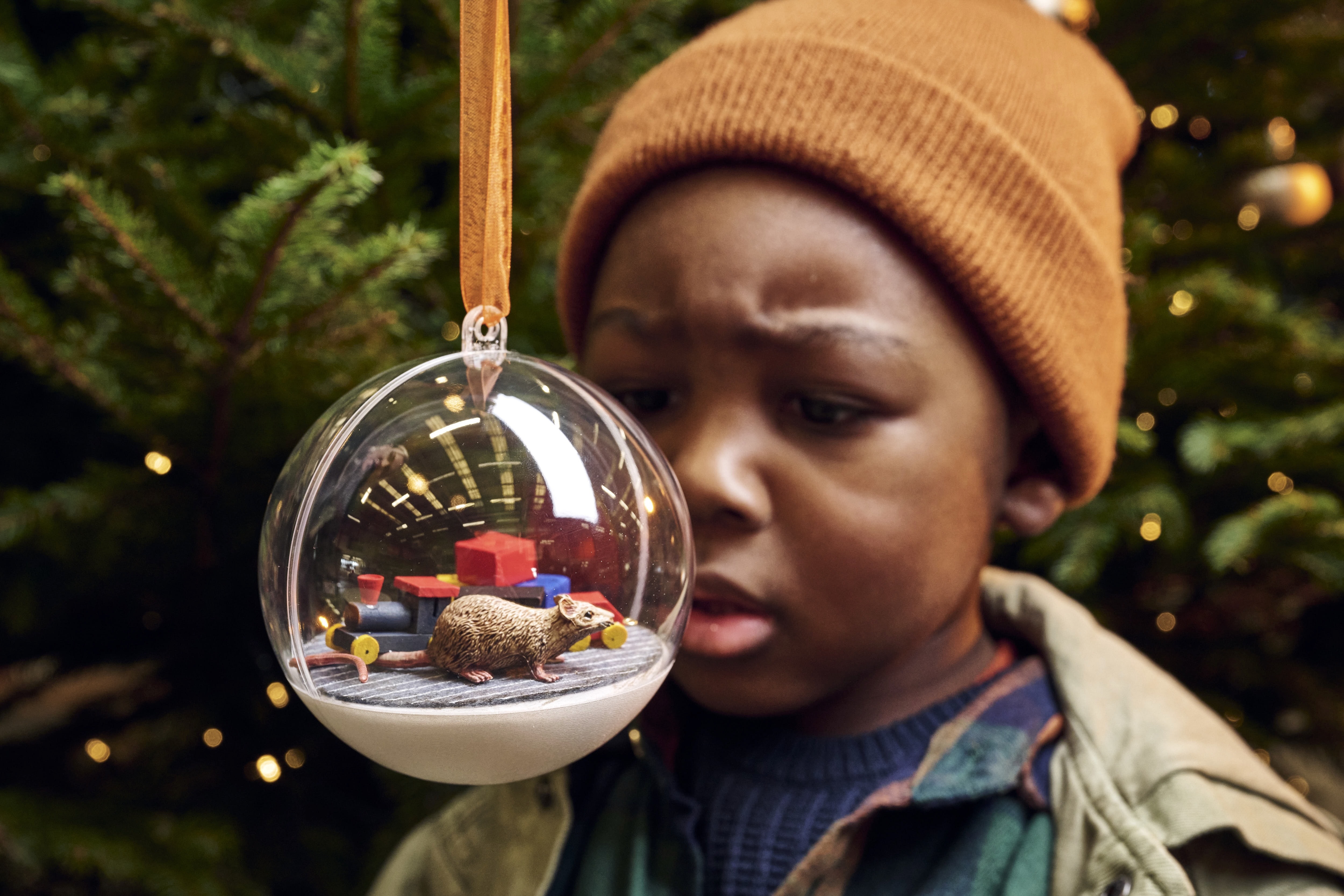
As part of Shelter’s collaboration with B&Q, people who have stayed in temporary accommodation shared their stories, which inspired a range of charity baubles.
Lauren, who was made homeless with her three sons says: “It was one room with one double bed and two single beds. It had a tiny fridge freezer, which kept defrosting and you couldn’t really store anything in it, and a microwave which was absolutely filthy, and we didn’t use”
Advertisement
Aimee and her two young children faced similar issues of cleanliness in their hotel room. She explains: “On the day we moved in we found old chips and ketchup stuck to the windowsill. They had cockroaches, mice, beetles, bedbugs and a bee infestation. The water came out of the tap a dirty colour and the toilet backed up.”
Sam and his family were actually placed in a flat but it was overrun with rodents and wasn’t fit to live in. He says: “We’ve got mice. We’ve got rats in the ceiling – running, fighting in the middle of the night. We had no electricity for two weeks, had no shower for about a month. It feels like I’m in a prison sometimes.”
Shelter’s ‘Living in Limbo’ report surveyed over 1,000 people living in temporary accommodation.
The report found that a devastating four in 10 reported problems with damp, mould or condensation, over a third had issues with insect or animal infestations and over half of parents say that living in temporary accommodation has harmed their child’s health.
Polly Neate, Chief Executive of Shelter, says: “It is utterly unacceptable that so many families will spend the festive season homeless and trapped in overcrowded, damp, unsafe temporary accommodation.
“Sky high private rents combined with a dire shortage of genuinely affordable social homes has caused homelessness to spiral and sadly it’s children who are paying the price. Too many are growing up sharing beds with siblings, in one-room hostels infested with cockroaches, bedbugs, and rats, in conditions that harm their health and futures.”
Advertisement
To find your nearest B&Q to purchase your tree and help donate towards B&Q and Shelter’s shared mission, visit their website.
We hope you love the products we recommend! All of them were independently selected by our editors. Just so you know, HuffPost UK may collect a share of sales or other compensation from the links on this page if you decide to shop from them. Oh, and FYI — prices are accurate and items in stock as of time of publication.
As Christmas draws near, I’ve been feeling the panic pretty much anyone who’s hosted a big dinner has experienced ― how am I meant to cook everything I need to when I’ve only got one oven?
Advertisement
Don’t get me wrong, I love my slow cooker (where I’m planning to make some spiced apple red cabbage on the day), and I’m not completely against steamed veggies.
But with Yorkies, stuffing, pigs in blankets, roast parsnips, spuds, and some kind of fowl in the mix, I genuinely started to lose sleep over how it was all going to come together.
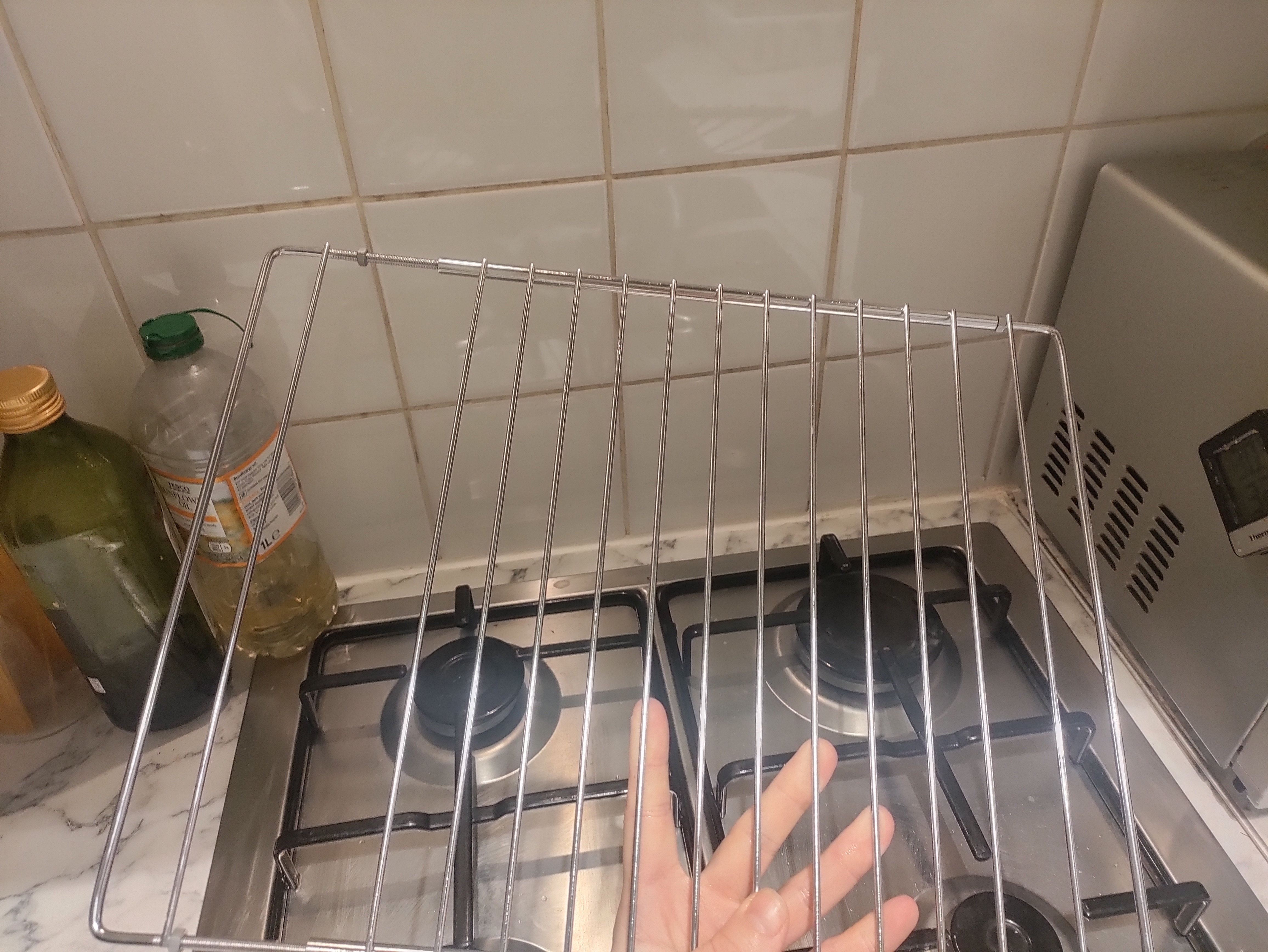
That was, of course, before I spotted this £12 universal oven rack from Amazon, which instantly made all my fears look ridiculous.
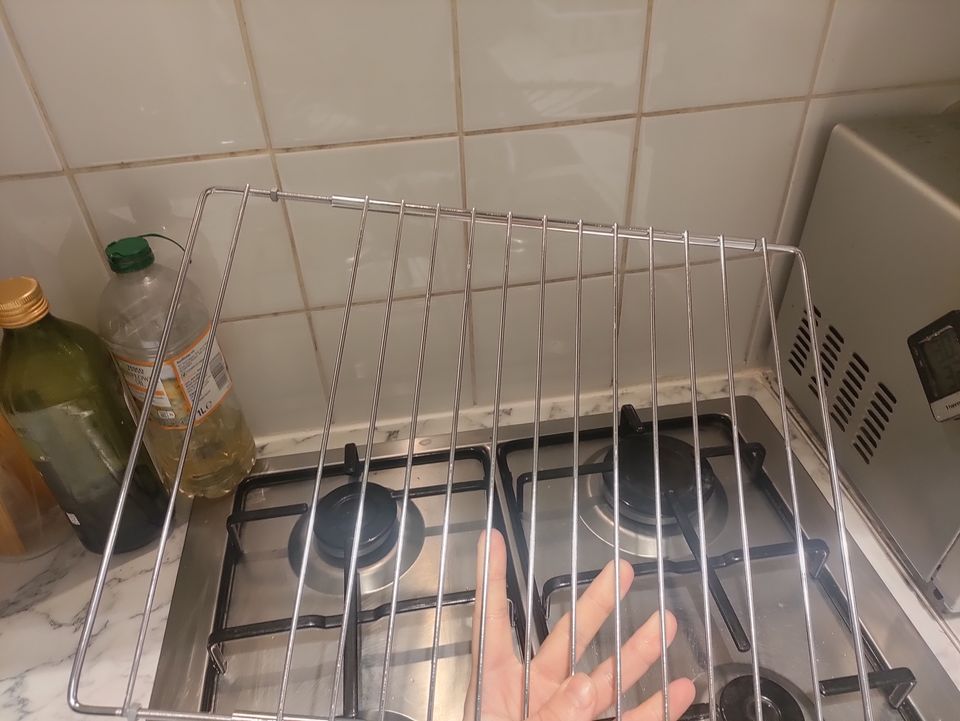
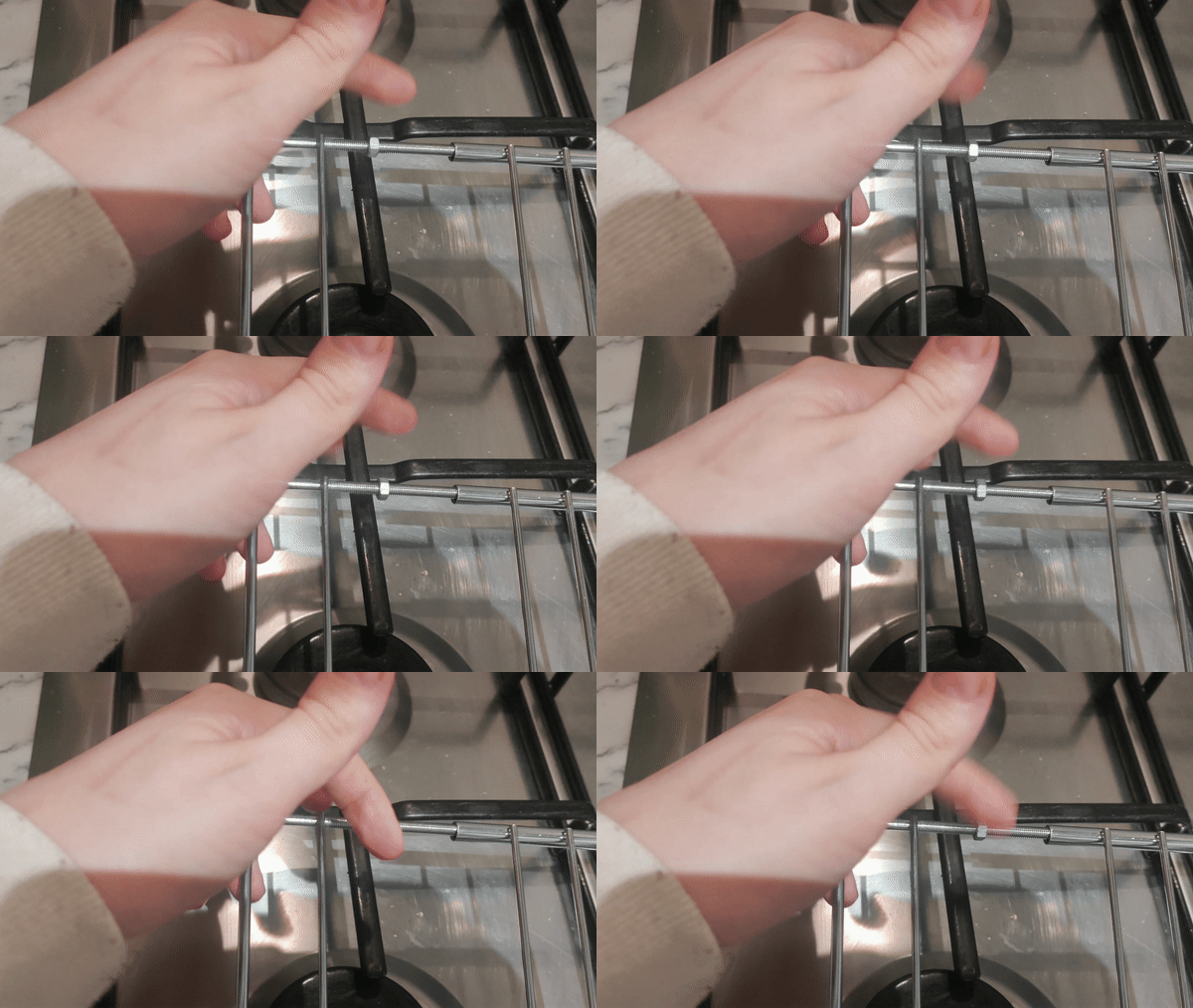
It’s got adjustable arms that you can tighten or loosen with the bolts attached to both sides of the rack.
Advertisement
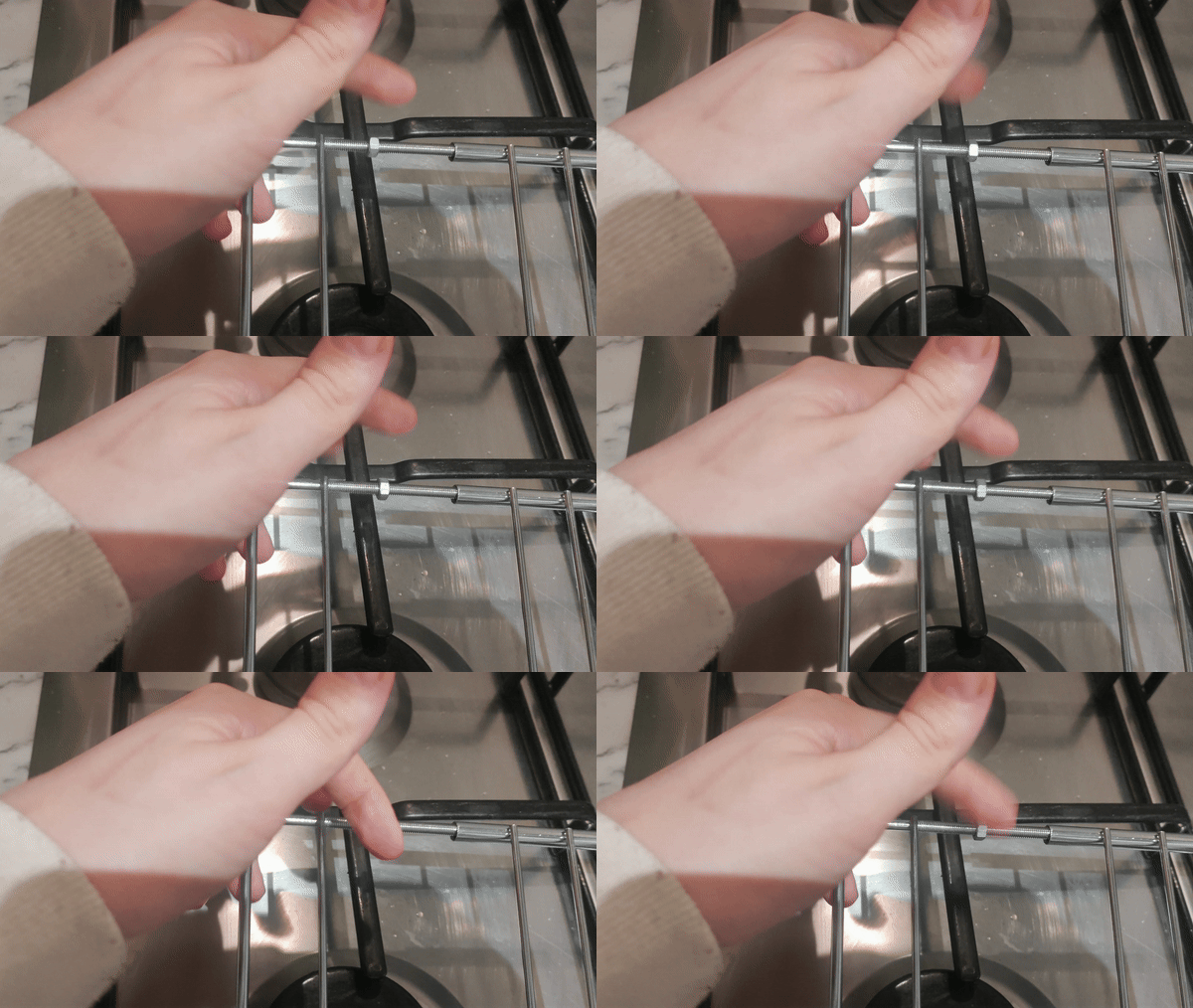
You don’t need any tools to tighten or loosen it ― a simple twist with your thumb and forefinger is more than enough.
It extends from 36cm to 59cm, making it perfect for most ovens (it only took about a minute to make it fit mine).
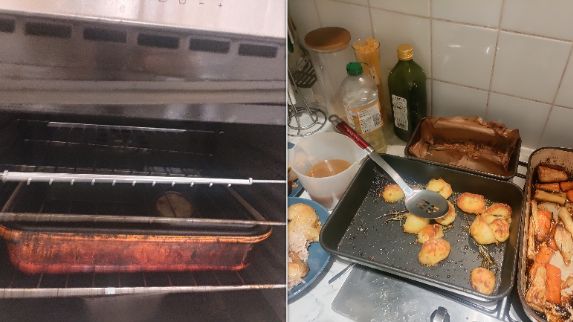
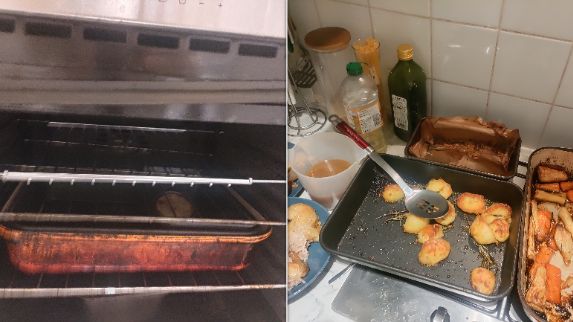
After I’d fitted it into my oven, my first step was to try a dry run of the Crimbo dinner (basically, I did a roast).
I’ll be honest; I was worried there wouldn’t be enough height in my oven to properly accommodate everything I wanted to include, but by placing the top and bottom racks at the highest and lowest ridges respectively, I got away with a lot more than I thought I would.
So it’s pretty safe to say I’m sold on the addition ― you can nab your own here, if you like.


Ministers are trying to restore relations with their civil servants after comments by Keir Starmer caused fury last week, HuffPost UK can reveal.
In a major speech, the prime minister claimed too many in Whitehall “are comfortable in the tepid bath of managed decline”.
Advertisement
He said they had “forgotten, to paraphrase JFK, that you choose change, not because it’s easy, but because it’s hard”.
That prompted Dave Penman, general secretary of civil servants’ union the FDA, to write to the PM accusing him of a “Trumpian” attack on his members.
A Whitehall source told HuffPost UK that senior ministers are “doing the rounds to show love” in their departments in an attempt to repair the damage caused by the prime minister’s comments.
One civil service source said: “We’re tired of being criticised in public and thanked in private – that’s what happened with the last government.”
Advertisement
In a further attempt at improving relations with officials, Starmer today wrote a letter to civil servants thanking them for their efforts.
He said: “From my time as Director of Public Prosecutions, I know first-hand just how fortunate this country is to have a civil service that is admired across the world.
“I saw it every day, I depended on it every day, I was proud to be part of it every day. And from all I have seen during my first five months as prime minister, my appreciation for your service to this country has only grown.”
But responding to the PM’s letter, Dave Penman said it did not go far enough.
He said: “I’m sure civil servants will welcome the message from the prime minister, recognising the challenges the civil service faces as it strives to deliver the government’s agenda and their shared desire to deliver better public services.
“But he needs to to go further. As minister for the civil service, the prime minister should not underestimate the damage his remarks last week made.
Advertisement
“If he is to deliver his vision for change, he needs to inspire, not denigrate the civil service.”

A family whose autistic son died after being taken to a mental health unit raise concerns.
“Serious failings” are found at the NHS trust that treated Nottingham attacker Valdo Calocane.

A new study from UC San Diego’s Comparative Cognition Lab shows that dogs trained to use soundboards to “talk” are capable of making two-word button combinations that go beyond random behavior or simple imitation of their owners. Published in the journal Scientific Reports from Springer Nature, the study analyzed data from 152 dogs over 21 months, capturing more than 260,000 button presses — 195,000 of which were made by the dogs themselves.
“This is the first scientific study to analyze how dogs actually use soundboards,” said lead researcher Federico Rossano, associate professor of cognitive science at UC San Diego and director of the Comparative Cognition Lab. “The findings reveal that dogs are pressing buttons purposefully to express their desires and needs, not just imitating their owners. When dogs combine two buttons, these sequences are not random but instead seem to reflect specific requests.”
The study observed that the buttons most commonly used were related to essential needs, with words such as “outside,” “treat,” “play,” and “potty.” Notably, combinations like “outside” + “potty” or “food” + “water” were used in meaningful ways, occurring more frequently than expected by chance.
For dog owners, this research offers a new way to better understand their pets’ needs. “While dogs already communicate some of these needs,” Rossano said, “soundboards could allow for more precise communication. Instead of barking or scratching at the door, a dog may be able to tell you exactly what it wants, even combining concepts like ‘outside’ and ‘park’ or ‘beach.’ This could improve companionship and strengthen the bond between dogs and their owners.”
Data was collected via the FluentPet mobile app, where owners logged their dogs’ button presses in real time. The research team selected 152 dogs with over 200 logged button presses each to analyze patterns of use. Advanced statistical methods, including computer simulations, were used to determine whether button combinations were random, imitative, or truly intentional. The results showed that multi-button presses occurred in patterns significantly different from random chance, supporting the idea of deliberate communication.
The researchers also compared dogs’ button presses to those of their owners and found that dogs were not simply imitating human behavior. For instance, buttons like “I love you” were far less frequently pressed by dogs than by their people.
While the study provides evidence of intentional two-button combinations, the researchers aim to go further. Future investigations will explore whether dogs can use buttons to refer to the past or future — such as a missing toy — or combine buttons creatively to communicate concepts for which they lack specific words.
“We want to know if dogs can use these soundboards to express ideas beyond their immediate needs, like absent objects, past experiences, or future events,” Rossano said. “If they can, it would drastically change how we think about animal intelligence and communication.”
Rossano’s co-authors on the study are Amalia P. M. Bastos, now at Johns Hopkins University; Zachary N. Houghton, now at UC Davis; and Lucas Naranjo with CleverPet, Inc. Bastos’ work on the study was supported in part by Johns Hopkins’ Provost’s Postdoctoral Fellowship Program. While Bastos and Houghton have previously served as consultants to CleverPet, and Naranjo currently works for the company, which manufactures the FluentPet mobile app and soundboard devices, the research design and analysis were conducted independently.
