Sewage surveillance proves powerful in combating antimicrobial resistance

Waterborne diseases affect over 7 million people in the U.S. every year, according to the Centers for Disease Control and Prevention, and cost our health care system over $3 billion. But they don’t impact all people equally.

A campuswide collaboration is using sewage surveillance as a vital strategy in the fight against diseases that spread through the water such as legionella and shigella. The ones that are most difficult to combat are diseases with antimicrobial resistance, which means they are able to survive against antibiotics that are intended to kill them.

A recent paper in Nature Water offers an encouraging insight: Monitoring sewage for antimicrobial resistance indicators is proving to be more efficient and more comprehensive than testing individuals. This approach not only detects antimicrobial resistance more effectively but also reveals its connection to socioeconomic factors, which are often key drivers of the spread of resistance.

The team is collaborating across Virginia Tech with experts such as Leigh-Anne Krometis in biological systems engineering and Alasdair Cohen and Julia Gohlke in population health sciences to focus on serving rural communities where the issues are most acute.

Globally, low-to middle-income communities bear the brunt of infectious diseases and the challenges of antimicrobial resistance. Sewage surveillance could be a game changer in addressing these disparities. This method not only captures a snapshot of antimicrobial resistance at the community level, but also reveals how socioeconomic factors drive the issue.

The National Science Foundation Research Traineeship focuses on advancing sewage surveillance to combat antimicrobial resistance. The work is integral to broader efforts led by Vikesland and the Fralin Life Sciences Institute program for technology enabled environmental surveillance and control to sense and monitor waterborne health threats.

The study analyzed data from 275 human fecal samples across 23 countries and 234 urban sewage samples from 62 countries to investigate antibiotic resistance gene levels. Socio-economic data, including health and governance indicators from World Bank databases, were incorporated to explore links between antibiotic resistance genes and socio-economic factors. The group utilized machine learning to assess antibiotic resistance gene abundance in relation to socio-economic factors, revealing significant correlations. Statistical methods supported the finding that within country antibiotic resistance gene variation was lower than between countries.

Big picture, the team’s findings show sewage surveillance is emerging as a powerful tool in the fight against antimicrobial resistance. It even has the potential to protect vulnerable communities more effectively.

Share Button

How plants evolved multiple ways to override genetic instructions

Biologists at Washington University in St. Louis have discovered the origin of a curious duplication that gives plants multiple ways to override instructions that are coded into their DNA. This research could help scientists exploit a plant’s existing systems to favor traits that make it more resilient to environmental changes, like heat or drought stress.

The study led by Xuehua Zhong, a professor of biology in Arts & Sciences, was published Nov. 6 in Science Advances.

Zhong’s new research focuses on DNA methylation, a normal biological process in living cells wherein small chemical groups called methyl groups are added to DNA. This activity controls which genes are turned on and off, which in turn affects different traits — including how organisms respond to their environments.

Part of this job involves silencing, or turning off, certain snippets of DNA that move around within an organism’s genome. These so-called jumping genes, or transposons, can cause damage if not controlled. The entire process is regulated by enzymes, but mammals and plants have developed different enzymes to add methyl groups.

“Mammals only have two major enzymes that add methyl groups in one DNA context, but plants actually have multiple enzymes that do that in three DNA contexts,” said Zhong, who is the Dean’s Distinguished Professorial Scholar and program director for plant and microbial biosciences at WashU. “This is the focus of our study. The question is — why do plants need extra methylation enzymes?”

Looking forward, Zhong’s research could pave the way for innovations in agriculture by improving crop resilience. “Certain genes or combinations of genes are contributing to certain features or traits,” Zhong explained. “If we find precisely how they are regulated, then we can find a way to innovate our technology for crop improvement.”

Evolving differernt functions

The new study is centered around two enzymes specifically found in plants: CMT3 and CMT2. Both enzymes are responsible for adding methyl groups to DNA, but CMT3 specializes in the parts of DNA called the CHG sequences, while CMT2 specializes in different parts called CHH sequences. Despite their functional differences, both enzymes are a part of the same chromomethylase (CMT) family, which evolved through duplication events that provide plants with additional copies of genetic information.

Using a common model plant called Arabidopsis thaliana, or thale cress, Zhong and her team investigated how these duplicated enzymes evolved different functions over time. They discovered that somewhere along the evolutionary timeline, CMT2 lost its ability to methylate CHG sequences. This is because it’s missing an important amino acid called arginine.

“Arginine is special because it has charge,” said Jia Gwee, a graduate student in biology and co-first author of the study. “In a cell, it’s positively charged and thus can form hydrogen bonds or other chemical interactions with, for example, the negatively charged DNA.”

However, CMT2 has a different amino acid — valine. “Valine is not charged, so it is unable to recognize the CHG context like CMT3. That’s what we think contributes to the differences between the two enzymes,” said Gwee, winner of the Dean’s Award for Graduate Research Excellence in Arts & Sciences.

To confirm this evolutionary change, the Zhong lab used a mutation to switch arginine back into CMT2. As they expected, CMT2 was able to perform both CHG and CHH methylation. This suggests that CMT2 was originally a duplicate of CMT3, a backup system to help lighten the load as DNA became more complex: “But instead of simply copying the original function, it developed something new,” Zhong explained.

This research also provided insights about CMT2’s unique structure. The enzyme has a long, flexible N-terminal that controls its own protein stability. “This is one of the ways plants evolved for genome stability and to fight environmental stresses,” Zhong said. This feature may explain why CMT2 evolved in plants growing in such a wide variety of conditions worldwide.

Much of the data for this study came from the 1001 Genomes Project, which aims to discover whole-genome sequence variation in A. thaliana strains from around the globe.

“We’re going beyond laboratory conditions,” Zhong said. “We’re looking at all of the wild accessions in plants using this larger data set.” She believes part of the reason A. thaliana has evolved to thrive despite environmental stresses is because of the diversification that happens during the methylation process, including those jumping transposons: “One jump might help species deal with harsh environmental conditions.”

Share Button

6 Historic Victories From The 2024 Election

The 2024 election brought some historic victories for the country on Tuesday, which will see Congress welcome its first openly trans member and the Senate its first Korean American.

Here are some of the groundbreaking candidates elected on Tuesday:

It’s the first time in history two Black women will serve together in the Senate. It’s also the first time Delaware will have a female senator.

Rep. Lisa Blunt Rochester (D-Del.) and Maryland Democrat Angela Alsobrooks are projected to win their Senate races and will become the first two Black women to serve in the chamber simultaneously.

"From the bottom of my heart, I thank each and every Marylander. To serve this state, my home, is the honor of a lifetime," Angela Alsobrooks wrote on social media after her Senate victory.
“From the bottom of my heart, I thank each and every Marylander. To serve this state, my home, is the honor of a lifetime,” Angela Alsobrooks wrote on social media after her Senate victory.

Andrew Harnik/Getty Images

Individually, their victories are historic: Blunt Rochester is the first woman and the first Black person to win a Senate seat in Delaware, and Alsobrooks is the first Black person to win in Maryland.

“From the bottom of my heard, Delaware, thank you,” Blunt Rochester wrote on social media.

Only three other Black women have ever served in the chamber.

Andy Kim is elected as first Korean American in the Senate.

Rep. Andy Kim handily won the Senate race in New Jersey. The son of immigrants will become the first Korean American in the chamber and the third-youngest when he heads to Washington in January.

“I believe that the opposite of democracy is apathy, and, by extension, I hope that you see our campaign as a means of being the opposite of that helplessness,” he told supporters late Tuesday.

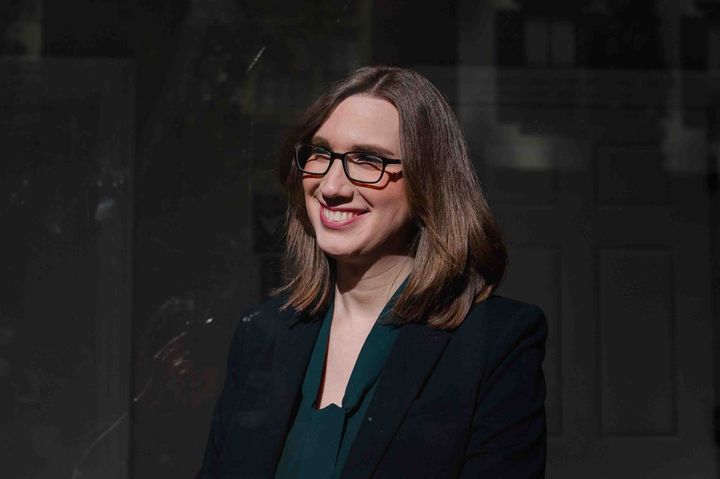
“Delaware has sent the message loud and clear," Sarah McBride said after her victory in a U.S. House race.
“Delaware has sent the message loud and clear,” Sarah McBride said after her victory in a U.S. House race.

Hannah Yoon/Bloomberg via Getty Images

Sarah McBride elected as the first openly trans member of Congress.

Sarah McBride, a progressive who ran on issues affecting workers and families, will become the first openly trans member of Congress. Her tenure in Washington comes amid an effort by Republicans to roll back the rights of LGBTQ+ Americans.

“Delaware has sent the message loud and clear that we must be a country that protects reproductive freedom, that guarantees paid leave and affordable child care for all our families, that ensures that housing and health care are available to everyone and that this is a democracy that is big enough for all of us,” she tweeted on X.

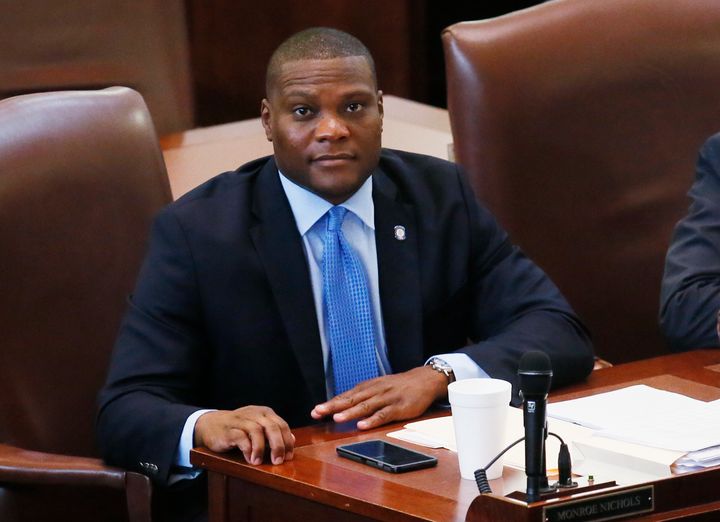
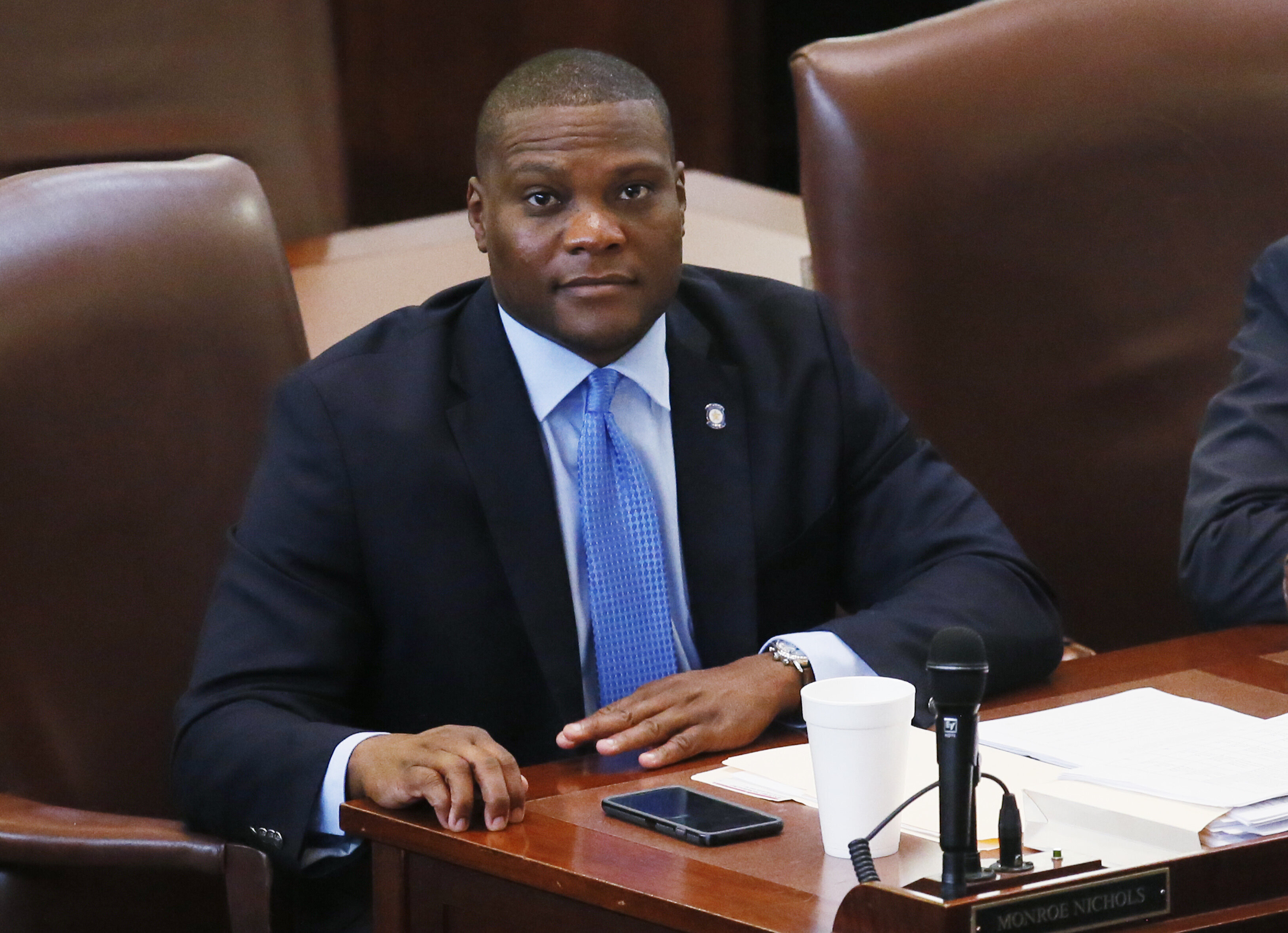
Tulsa, Oklahoma, will have its first Black mayor.

Monroe Nichols, a state representative, won his race to become the mayor of Tulsa, Oklahoma, defeating a longtime Tulsa county commissioner.

“If there is anyone out there who still questions if Tulsa is a place where big things are possible, if there is anybody out there who doubts you can make an impact, tonight you got your answer,” Nichols said in a victory speech, according to the Tulsa World.

“It’s been a long time coming, and tonight, we made history.”

Monroe Nichols, seen in 2017, will become the new mayor of Tulsa, Oklahoma.

(AP Photo/Sue Ogrocki)

Pamela Goodwine will be the first Black woman on the Kentucky Supreme Court.

Pamela Goodwine made history once again on Tuesday after previously becoming the first Black woman in Lexington, Kentucky, to be a district judge and the first Black woman to become a circuit judge in the state. In 2018, she became the first Black woman to serve on the Kentucky Court of Appeals.

She won her election to the state Supreme Court, a victory she called an “honor,” after running a campaign based on “experience, honesty and a commitment to impartiality and the rule of law to protect and serve every citizen.”

Shomari Figures becomes just the fourth Black member sent to Congress from Alabama since Reconstruction.

Shomari Figures handily won his race for Congress, flipping a seat held previously held by Republicans after it was redrawn by a federal court.

“This journey that we are on now, this is the beginning of the work,” Figures told supporters after his victory, according to AL.com. “Today is great. We are grateful that we have the opportunity to sit here today and be elected and be put into a position to go do the work. But now we got to do the work.”

Alabama House member Shomari Figures speaks with reporters in Mobile on Tuesday before becoming the projected winner of Alabama's 2nd Congressional District.
Alabama House member Shomari Figures speaks with reporters in Mobile on Tuesday before becoming the projected winner of Alabama’s 2nd Congressional District.

Kim Chandler/Associated Press

Share Button

5 Reasons Why Donald Trump’s Victory Is A Massive Headache For Keir Starmer

Keir Starmer wasted no time in congratulating Donald Trump on his “historic” victory in the US presidential election.

The former and soon-to-be-again president had not even reached the magic number of 270 electoral college votes before the Downing Street statement arrived.

“As the closest of allies, we stand shoulder to shoulder in defence of our shared values of freedom, democracy and enterprise,” the prime minister declared.

Nevertheless, Starmer and his aides will be well aware of the political jeopardy posed by another Trump presidency.

Here, HuffPost UK looks at the potential problems for the UK government emanating the maverick Republican’s return to the White House.

Economy

For a government which has made growing the economy its number one mission, Trump’s re-election could have serious repercussions.

Goldman Sachs immediately downgraded their forecast for UK economic growth for 2025 from 1.6% to 1.4% on the back of the US result, pointing to Trump’s vow to impose tariffs on goods entering America from abroad.

Such a move would also be extremely damaging for high-value British exports like Scotch whisky.

A spokesperson for the Scotch Whisky Association said: “As prime minister Keir Starmer has said, the UK and US stand shoulder to shoulder and are partners in enterprise.

“To deepen this partnership, the US and UK administrations should agree to maintain the zero-tariff trade of whiskies across the Atlantic.”

While the Biden administration has ruled out as US-UK comprehensive trade agreement, Trump has spoken in the past of his desire to get one done – although he conspicuously failed to do so the last time he was in office.

The price Trump would try to extract in return for a deal – such as allowing hormone-pumped American beef onto British supermarket shelves – may turn out being too high for Starmer to pay.

The PM’s official spokesman would only say: “We already enjoy a thriving economic relationship with the US. There are millions of jobs supported by this relationship, which is worth $1 trillion, and clearly we will be seeking to build on that.”

That may well prove to be easier said than done.

Defence

Trump has made no secret in the past of his desire for America’s Nato allies to spend more money on defence.

On this, at least, it appears that the new US administration could well make common cause with Starmer’s government.

The PM’s spokesman said: “The prime minister agrees that other Nato member states must pull their weight when it comes to defence spending.”

Labour said during the election campaign that they would return defence spending to 2.5% of gross domestic product (GDP) when the financial circumstances allow.

But defence analyst Francis Tusa warned that may not be enough to satisfy Trump, who could call on Nato members to spend 3% of GDP on defence.

Writing on X, he said: “Equivocation/hesitation won’t be an option. If the UK is to retain any influence in Europe and Nato, holding back over defence is an epic fail – no-one will accept the UK holding back.

“This is likely a complete nightmare for Keir Starmer and Rachel Reeves. They have their plans that they wish to pursue, but they face the likelihood that these plans will have to take 2nd/3rd place to defence/foreign relations, and that means that the budget follows.”

Ukraine

Unlike the UK, Trump’s commitment to Ukraine in its war with Russia is less than certain.

He has spoken in the past of being able to end the conflict on day one of his presidency, but that would entail Kyiv having to give up on territory seized by Russia.

Asked whether America’s future stance on Ukraine would affect the UK’s, the PM’s spokesman said: “We have been clear that the UK’s support for UK is, and always will remain, iron-clad.”

However, any weakening of America’s support for Ukraine would have severe implications for its ability to continue defending itself – and pose serious questions as to whether the UK and Kyiv’s other allies remain willing and able to provide it with the military and financial support it needs.

Climate

Trump has made no secret of his disdain for climate change, describing it as a “hoax” and “one of the great scams of all time”.

During his first term in office, he withdrew the US from the Paris climate agreement, while he has also vowed to “drill baby drill” for more oil.

It’s fair to say, therefore, that his views on our warming planet are pretty far apart from those of Starmer and Ed Miliband, the energy and net zero secretary.

Downing Street today tried to put a brave face on things, pointing out that Starmer will travel to the Cop 29 summit in Baku next week to make clear that the UK is ready to assume “global leadership” on tackling climate change.

But without the support of America over the next four years, that fight will become even harder to win.

The Trumps Don’t Like Labour

Despite both Starmer and foreign secretary David Lammy’s attempts to curry favour with the president-elect – the pair held a two-hour dinner with Trump in New York in September – there remains a lot of bad blood.

During the campaign, Donald Trump Jr succinctly explained his family’s views on the UK government when he told ITV: “It’s absolute lunacy what I see going on in the UK right now.

“They’re jailing people for misgendering someone. Honestly it’s disgusting and they should be ashamed of themselves.”

The Trump campaign also accused Labour of “interference” in the election because party activists crossed the Atlantic to campaign for Kamala Harris.

In his statement welcoming Trump’s victory, Starmer said the “UK-US special relationship will continue to prosper on both sides of the Atlantic for years to come”.

But the next four could well turn out to be very rocky indeed.

Share Button

Feeling Helpless After The Election? Here Are 6 Expert Tips To Deal With Stress

Donald Trump has won the 2024 US general election ― and seven in ten Brits think he’s not going to be a great president.

Those watching the election fallout outside of the States may feel an uneasy mix of investment and powerlessness; it must be far worse for Kamala voters in the country.

So we thought we’d reach out to some therapists this National Stress Awareness Day (apt) for advice on how to manage feelings of hopelessness and even despair that people who wanted a different result may be experiencing.

Here’s what they had to say:

Trump’s win “has sent shockwaves around the globe leaving people, US citizens and supporters, friends and family around the world incredibly scared, anxious, confused and let down.”

BACP member, psychotherapist, coach, keynote speaker, and author Bhavna Raithatha told HuffPost UK: “Unfortunately, this has been anything but a natural or normal presidential race. For those now in the crosshairs, life just changed unequivocally.”

The news can be especially challenging for women, minorities and the LGBTQ+ community, the psychotherapist points out.

“There is already fear present for… communities who have been targeted for generations based on their gender, skin colour and sexuality to name a few. Now, with a president who has been given unchecked power to be ‘a dictator just for a day’ by the highest court in the land, we don’t know what will happen,” Bhavna said.

“There is real fear from families about being split apart and deported. Equally, there is great fear from communities often racially profiled who feel they may be targeted by police who will be given unchecked and unrestricted powers,” she added.

It can also be “deeply concerning” to know that a “hate-fuelled,” “divisive” campaign won so many votes, she added.

With all that said, the psychotherapist shared that it’s “natural that today’s outcome will be the source of a great deal of stress and feelings of hopelessness and loss” due to “the grief of lost hope and expectations.”

“If you are affected by the outcome today, take time to process it. Talk it through with friends and family. Speak to your religious leaders. Speak to a therapist or your social network,” Bhavna advised.

“Remember, you are not alone. It is natural to be frightened – these are unprecedented times. Take time to be still and let this moment pass and the dust settle. This isn’t the first time an election has disappointed voters. Look after yourself and check in on friends and loved ones.”

“As a therapist, I have been exposed to people’s fears and concerns related to the US election and what it means to them (even for non-Americans).”

BACP member and psychotherapist Vicky Reynal told HuffPost UK: “People might feel strongly impacted by the election results because ultimately, when the political party we support loses, it might feel like a rejection of our personal values, almost invalidating our way of seeing the world.”

She added: “It may also feel disempowering – not just for those who feel immediately threatened by some of the proposed policies of Trump’s agenda, but also because a party loss can trigger a sense that our group, the one we feel we belong to politically is vulnerable.”

Vicky says you don’t have to ignore feelings of stress, anxiety, panic, hopelessness, or despair.

“I think it’s important to take a step back and acknowledge all the feelings that the election results have evoked. Not just the ‘top level’ disappointment, but also the deeper fears and anxieties it brings up. Leaving room for all the feelings is important,” she told HuffPost UK.

But she adds: “There is still scope in one’s life to advocate for one’s views and beliefs (so plenty of action that you can still take to restore a sense of agency). There are also plenty, plenty of people who hold similar views and wouldn’t invalidate the lens we see the world through.”

For now, Vicky says, you may benefit from distraction.

“At a practical level, now that results are out it might be a good time to ask oneself whether reading what’s in the media is helpful or whether it is unsettling and fuelling the hopelessness,” she advised.

“Curate the sources so what you are exposed to isn’t fatalistic, feeding into your catastrophic (worst case scenario) fears.”

“It might be a good time, if the anxiety is overwhelming to focus on things/activities that you do find calming and soothing (time with loved ones, physical exercise, a hobby).”

If you need professional help, the psychotherapist adds, seek it.

Help and support:

  • Mind, open Monday to Friday, 9am-6pm on 0300 123 3393.
  • Samaritans offers a listening service which is open 24 hours a day, on 116 123 (UK and ROI – this number is FREE to call and will not appear on your phone bill).
  • CALM (the Campaign Against Living Miserably) offer a helpline open 5pm-midnight, 365 days a year, on 0800 58 58 58, and a webchat service.
  • The Mix is a free support service for people under 25. Call 0808 808 4994 or email help@themix.org.uk
  • Rethink Mental Illness offers practical help through its advice line which can be reached on 0808 801 0525 (Monday to Friday 10am-4pm). More info can be found on rethink.org.
Share Button

Bill to ban police cell mental health detentions

The move is part of an overhaul of decades-old mental health legislation in England and Wales.

Share Button

Groundbreaking study provides new evidence of when Earth was slushy

At the end of the last global ice age, the deep-frozen Earth reached a built-in limit of climate change and thawed into a slushy planet.

Results from a Virginia Tech-led study provide the first direct geochemical evidence of the slushy planet — otherwise known as the “plumeworld ocean” era — when sky-high carbon dioxide levels forced the frozen Earth into a massive, rapid melting period.

“Our results have important implications for understanding how Earth’s climate and ocean chemistry changed after the extreme conditions of the last global ice age,” said lead author Tian Gan, a former Virginia Tech postdoctoral researcher. Gan worked with geologist Shuhai Xiao on the study, which was released Nov. 5 in the Proceedings of the National Academy of Sciences journal.

Deep-frozen Earth

The last global ice age took place about 635 million to 650 million years ago, when scientists believe global temperatures dropped and the polar ice caps began to creep around the hemispheres. The growing ice reflected more sunlight away from the Earth, setting off a spiral of plunging temperatures.

“A quarter of the ocean was frozen due to extremely low carbon-dioxide levels,” said Xiao, who recently was inducted into the National Academy of Sciences.

When the surface ocean sealed, a chain of reactions stuttered to a stop:

  • The water cycle locked up. No evaporation and very little rain or snow.
  • Without water, there was a massive slowdown in a carbon-dioxide consuming process called chemical weathering, where rocks erode and disintegrate.
  • Without weathering and erosion, carbon dioxide began to amass in the atmosphere and trap heat.

“It was just a matter of time until the carbon-dioxide levels were high enough to break the pattern of ice,” Xiao said. “When it ended, it probably ended catastrophically.”

Plume world

Suddenly, heat started to build. The ice caps began to recede, and Earth’s climate backpedaled furiously toward the drippy and soupy. Over a mere 10 million years, average global temperatures swung from minus 50 to 120 degrees Fahrenheit (minus 45 to 48 degrees Celsius).

But the ice didn’t melt and remix with seawater at the same time. The research findings paint a very different world than what we can imagine: vast rivers of glacial water rushing like a reverse tsunami from the land into the sea, then pooling on top of extra salty, extra dense ocean water.

The researchers tested this version of the prehistoric world by looking at a set of carbonate rocks that formed as the global ice age was ending.

They analyzed a certain geochemical signature, the relative abundance of lithium isotopes, recorded within the carbonate rocks. According to plumeworld ocean theory, the geochemical signatures of freshwater would be stronger in rocks formed under nearshore meltwater than in the rocks formed offshore, beneath the deep, salty sea — and that’s exactly what the researchers observed.

The findings bring the limit of environmental change into better focus, said Xiao, but they also give researchers additional insight into the frontiers of biology and the resiliency of life under extreme conditions — hot, cold, and slushy.

Study collaborators include:

  • Ben Gill, Virginia Tech associate professor of sedimentary geochemistry
  • Morrison Nolan, former graduate student, now at Denison University
  • Collaborators from the Chinese Academy of Sciences, University of Maryland at College Park, University of Munich in Germany, University of North Carolina at Chapel Hill, and University of Nevada at Las Vegas
Share Button

Ancient immune defense system plays an unexpected role in cancer

Along with defending against pathogens, the body’s innate immune system helps to protect the stability of our genomes in unexpected ways — ways that have important implications for the development of cancer, researchers at Memorial Sloan Kettering Cancer Center (MSK) are discovering.

In a pair of recent papers, scientists in the lab of molecular biologist John Petrini, PhD, showed that innate immune signaling plays a key role in maintaining genome stability during DNA replication. Furthermore, the researchers showed that chronic activation of these immune pathways can contribute to tumor development in a mouse model of breast cancer.

Not only do the findings add vital insights to our understanding of fundamental human biology, says Dr. Petrini, they may also shed new light on tumor initiation and present potential opportunities for new therapies.

“Living organisms have evolved complex pathways to sense, signal, and repair damaged DNA,” he says. “Here we’re learning new things about the role of the innate immune system in responding to that damage — both in the context of cancer and also in human health more generally.”

How Chronic Activation of the Innate Immune System Can Lead to Cancer

The newest paper, led by first author Hexiao Wang, PhD, a postdoctoral fellow in the Petrini Lab, and published in Genes & Development, reveals a connection between innate immune signaling and tumor development in breast tissue. And, Dr. Petrini says, the data suggest that when instability arises in the genome, chronic activation of the innate immune system can greatly increase the chances of developing cancer.

The study focused on a protein complex called the Mre11 complex, which plays a pivotal role in maintaining the stability of the genome by sensing and repairing double-strand breaks in DNA.

To study how problems with the Mre11 complex can lead to cancer, the team manipulated copies of the protein in mammary tissue organoids (miniature lab-grown model organs) and then implanted them into laboratory animals.

When oncogenes (genes known to drive cancer) were activated in these mice, tumors arose about 40% of the time, compared with about 5% in their normal counterparts. And the tumors in the mice with mutant Mre11 organoids were highly aggressive.

The research further showed that the mutant Mre11 led to higher activation of interferon-stimulated genes (ISGs). Interferons are signaling molecules that are released by cells in response to viral infections, immune responses, and other cellular stressors.

They also found that the normally tightly controlled packaging of DNA was improperly accessible in these organoids — making it more likely that genes will get expressed, when they otherwise would be inaccessible for transcription.

“We actually saw differences in the expression of more than 5,600 genes between the two different groups of mice,” Dr. Petrini says.

And strikingly, these profound effects depended on an immune sensor called IFI205.

When the organoids were further manipulated so they would lack IFI205, the packaging of DNA returned almost to normal, and the mice developed cancer at essentially the same rate as normal mice.

“So what we learned is that problems with Mre11 — which can be inherited or develop during life like other mutations — can create an environment where the activation of an oncogene is much more likely to lead to cancer,” Dr. Petrini says. “And that the real lynch pin of this cascade is this innate immune sensor, IFI205, which detects that there’s a problem and starts sending out alarm signals. In other words, when problems with Mre11 occur, chronic activation of this innate immune signaling can significantly contribute to the development of cancer.”

New Understandings Could Pave the Way for Future Treatments

The work builds on a previous study, led by Christopher Wardlaw, PhD, a former senior scientist in the Petrini Lab, that appeared in Nature Communications.

That study focused on the role of the Mre11 complex in maintaining genomic integrity. It found that when the Mre11 complex is inactive or deficient, it results in the accumulation of DNA in the cytoplasm of cells and in the activation of innate immune signaling. This research primarily looked at the involvement of ISG15, a protein made by an interferon-stimulating gene, in protecting against replication stress and promoting genomic stability.

“Together, these studies shed new light on how the Mre11 complex works to protect the genome when cells replicate, and how, when it’s not working properly, it can trigger the innate immune system in ways that can promote cancer,” Dr. Petrini says.

By shedding light on the interrelationships between these complex systems and processes, the researchers hope to identify new strategies to prevent or treat cancer, he adds, such as finding ways to short-circuit the increased DNA accessibility when Mre11 isn’t working properly.

Share Button

How many people still smoke in the UK?

The government wants to create a smoke-free generation and restrict the sale and marketing of vapes.

Share Button

An extra year of education does not protect against brain aging, study finds

Thanks to a ‘natural experiment’ involving 30,000 people, researchers at Radboud university medical center were able to determine very precisely what an extra year of education does to the brain in the long term. To their surprise, they found no effect on brain structure and no protective benefit of additional education against brain aging.

It is well-known that education has many positive effects. People who spend more time in school are generally healthier, smarter, and have better jobs and higher incomes than those with less education. However, whether prolonged education actually causes changes in brain structure over the long term and protects against brain aging, was still unknown.

It is challenging to study this, because alongside education, many other factors influence brain structure, such as the conditions under which someone grows up, DNA traits, and environmental pollution. Nonetheless, researchers Rogier Kievit (PI of the Lifespan Cognitive Dynamics lab) and Nicholas Judd from Radboudumc and the Donders Institute found a unique opportunity to very precisely examine the effects of an extra year of education.

Aging

In 1972, a change in the law in the United Kingdom raised the number of mandatory school years from fifteen to sixteen, while all other circumstances remained constant. This created an interesting ‘natural experiment’, an event not under the control of researchers which divides people into an exposed and unexposed group. Data from approximately 30,000 people who attended school around that time, including MRI scans taken much later (46 years after), is available. This dataset is the world’s largest collection of brain imaging data.

The researchers examined the MRI scans for the structure of various brain regions, but they found no differences between those who attended school longer and those who did not. ‘This surprised us’, says Judd. ‘We know that education is beneficial, and we had expected education to provide protection against brain aging. Aging shows up in all of our MRI measures, for instance we see a decline in total volume, surface area, cortical thickness, and worse water diffusion in the brain. However, the extra year of education appears to have no effect here.’

Brain structure

It’s possible that the brain looked different immediately after the extra year of education, but that wasn’t measured. ‘Maybe education temporarily increases brain size, but it returns to normal later. After all, it has to fit in your head’, explains Kievit. ‘It could be like sports: if you train hard for a year at sixteen, you’ll see a positive effect on your muscles, but fifty years later, that effect is gone.’ It’s also possible that extra education only produces microscopic changes in the brain, which are not visible with MRI.

Both in this study and in other, smaller studies, links have been found between more education and brain benefits. For example, people who receive more education have stronger cognitive abilities, better health, and a higher likelihood of employment. However, this is not visible in brain structure via MRI. Kievit notes: ‘Our study shows that one should be cautious about assigning causation when only a correlation is observed. Although we also see correlations between education and the brain, we see no evidence of this in brain structure.’

Share Button