Millions in the U.S. may rely on groundwater contaminated with PFAS for drinking water supplies

Approximately 71 to 95 million people in the Lower 48 states — more than 20% of the country’s population — may rely on groundwater that contains detectable concentrations of per- and polyfluoroalkyl substances, also known as PFAS, for their drinking water supplies. These findings are according to a U.S Geological Survey study published Oct. 24.

The predictive model results can help members of the public, water suppliers and regulators understand the potential for PFAS contamination, guide future studies and inform strategic planning for water resources.

USGS scientists are the first to report national estimates of PFAS occurrence in untreated groundwater that supplies water to public and private wells. This research also provides the first estimate of the number of people across the country who are potentially affected by PFAS-contaminated groundwater.

Along with a scientific report, the USGS published an interactive, online map so users can see probability estimates of PFAS occurrence. Note that predictive results are intended to be evaluated at state, regional and national scales rather than at individual household levels. Probability estimates are for the presence of PFAS in groundwater and do not account for any subsequent actions taken by states, municipalities or individuals to treat drinking water. The model does not include estimates of PFAS concentrations; testing is the only way to confirm the presence of contaminants.

Exposure to certain PFAS may lead to adverse health risks in people, according to the U.S. Environmental Protection Agency. PFAS are a group of synthetic chemicals used in a wide variety of common applications, from the linings of fast-food boxes and non-stick cookware to fire-fighting foams and other purposes. PFAS are commonly called “forever chemicals” because many of them do not easily break down and can build up over time, making them a concern for drinking water quality.

“This study’s findings indicate widespread PFAS contamination in groundwater that is used for public and private drinking water supplies in the U.S.,” said Andrea Tokranov, USGS research hydrologist and lead author of this study. “This new predictive model can help prioritize areas for future sampling to help ensure people aren’t unknowingly drinking contaminated water. This is especially important for private well users, who may not have information on water quality in their region and may not have the same access to testing and treatment that public water suppliers do.”

The EPA has established legally enforceable levels, called maximum contaminant levels, for six types of PFAS in drinking water. The EPA regulates public water supplies, and some states have additional regulations for drinking water. Some homes use private water supplies, where residents are responsible for the maintenance, testing and treatment of their drinking water. Those interested in treatment processes and testing options can read EPA’s guidance or contact their state officials or water supplier.

The states with the largest populations relying on public water supplies with potentially contaminated groundwater sources are Florida and California. Regarding private wells, Michigan, Florida, North Carolina, Pennsylvania, New York and Ohio have the largest populations relying on potentially contaminated groundwater.

The study also presents data according to population percentage. In Massachusetts, for example, the source water for 86 to 98% of people who rely on groundwater from public water supplies could be contaminated with PFAS. In Connecticut, the source water for 67 to 87% of the people who rely on groundwater from private wells could be affected. Details by state can be seen in the report’s tables S6 through S8.

“To derive these estimates, the team analyzed 1,238 groundwater samples collected by USGS scientists and determined how factors such as urban development and well depth can impact PFAS occurrence,” continued Tokranov. “With that information, a detailed machine learning model was developed and used to identify which geographic areas have a higher likelihood for contamination. That information was combined with existing USGS research on the number of people in a given area who rely on groundwater for drinking water to establish population estimates.”

Scientists present separate estimates for public and private wells because they typically receive water from different groundwater depths. Public wells using groundwater as the primary water source are usually deeper than private wells.

There are more than 12,000 types of PFAS, not all of which can be detected with current tests; the USGS study tested for the presence of 24 common types. The USGS estimates consider the presence of at least one of those 24 types of PFAS. The most frequently detected compounds were perfluorobutane sulfonate known as PFBS, perfluorooctane sulfonate known as PFOS and perfluorooctanoate known as PFOA.

This research provides a broad outlook for the Lower 48 states and presents state-level estimates. Scientists did not look in detail at specific cities or provide estimates for the types of PFAS present or PFAS concentrations.


Share Button

Human actions likely cause insect color change

New Zealand’s native stoneflies have changed colour in response to human-driven environmental changes, new research shows.

Just published in the journal Science, the University of Otago study provides arguably the world’s most clear-cut case of animal evolution in response to change made by humans.

Co-author Professor Jon Waters, of the Department of Zoology, says the stonefly has become a different colour due to recent deforestation.

“In natural forested regions, a native species has evolved ‘warning’ colours that mimic those of a poisonous forest species, to trick predators into thinking they are poisonous too.

“But the removal of forests since humans arrived has removed the poisonous species. As a result, in deforested regions the mimicking species has abandoned this strategy — as there is nothing to mimic — instead evolving into a different colour.”

Scientists have long wondered whether humans are causing evolutionary changes in natural populations.

The most well-known example of evolution caused by humans was the peppered moth population in the United Kingdom, which changed colour in response to industrial pollution in the 1800s.

But Professor Waters says even that case has been considered controversial.

This new study shows how humans have changed the way native species interact.

Co-author Dr Graham McCulloch says humans have disrupted ecological interactions between species that evolved over millions of years, but some of our native species are resilient enough to overcome this.

“This study is important because it shows that, at least for some of our native species, there is the possibility of adapting to the environmental changes caused by humans, even when the change is rapid,” Dr McCulloch says.

“It also shows that independent populations have undergone similar changes in response to deforestation — there have been similar shifts independently in different parts of the species’ range — showing that evolution can be a predictable process.”

Share Button

GPs advise not to ignore scabies symptoms

The itchy rash spreads via physical contact and is highly infectious, the Royal College of GP says.

Share Button

Nigerians are experiencing neuro-long COVID, research finds

For the first time, scientists have found individuals in Nigeria are experiencing neurological manifestations of long COVID — called neuro-long COVID — such as brain fog, mild cognitive impairment, fatigue, sleep problems, headache, sensations of pins and needles, and muscle pain.

The study was a collaboration between scientists at Northwestern Medicine and a Nigerian team of scientists from the University of Lagos and Lagos University Teaching Hospital (LUTH) in Lagos, Nigeria. Of the 2,319 participants, 106 (4.6%) had long COVID with neurologic symptoms, and some were still experiencing symptoms up to two years after their initial episode of COVID-19. Researchers also found patients who were hospitalized for COVID-19 pneumonia reported a higher frequency of long COVID symptoms than those who were not hospitalized and had mild initial COVID-19 (11.5% vs 3.9%, respectively).

The findings were published today, October 24, in the Journal of NeuroVirology.

The findings highlight the need for improved screening, diagnosis and treatment of neuro-long COVID in Nigeria.

“Based on this data, there is hopefully going to be some intervention to alleviate their suffering,” said Dr. Igor Koralnik, chief of neuro-infectious disease and global neurology at Northwestern University Feinberg School of Medicine. “We’ve determined that even in a resource-limited setting where people have many other problems to worry about, we can still perform these studies, find those patients, and diagnose them.”

Scientists from the Nigerian team include neurologist Dr. Njideka U. Okubadejo and infectious disease physician Dr. Iorhen E. Akase, both of the University of Lagos and LUTH.

Koralnik and his team launched the Northwestern Medicine Neuro-COVID-19 Clinic in May 2020 and were soon evaluating a large number of patients who were exhibiting post-COVID neurologic symptoms. They then began researching the disease. In Nigeria, the opposite has happened. People in Nigeria are not aware that long COVID is a disease for which symptomatic treatments are available, and there was a scarcity of post-COVID clinics even during the height of the pandemic.

“This is why we have to start by doing the research to demonstrate the need for diagnosis and clinical care of these patients and advocate for specialized outpatient clinics,” Koralnik said. “If you don’t know that something exists, you can’t treat it.”

Breakdown of neurologic symptoms

The predominant neurologic symptoms among study participants at any time during the disease course included:

  • Difficulty remembering/brain fog (59.4%)
  • Fatigue (55.7%)
  • Sleep problems (32%)
  • Headache (31%)
  • Paresthesia, or numbness and pins and needles (11.3%)
  • Myalgia, or muscle pain (9.4%).

Of the 66 participants with neuro-long COVID who underwent an in-person neurological evaluation and cognitive screening, 16.9% completed the Montreal Cognitive Assessment, a widely used screening assessment for detecting cognitive impairment, and had results consistent with mild cognitive impairment.

Next steps

In a future study, the scientists plan to treat brain fog and cognitive dysfunction in neuro-long COVID patients in Nigeria by applying the same techniques he and his team are currently using in Chicago, Koralnik said.

COVID-19 continues to occur despite vaccination and boosters, and according to an ongoing household pulse study carried out by the National Center for Health Statistics, approximately 14 million adults in the U.S. are currently experiencing long COVID. Long COVID principally affects adults in their prime, affecting their quality of life and ability to work, contributing to profound public health and socio-economic impacts.

Millenia Jimenez who works in the Koralnik laboratory at Northwestern is a co-author on the study.

Share Button

Disposable vapes to be banned from June

Ministers say the Tobacco and Vapes Bill is intended to prevent environmental damage and protect children’s health.

Share Button

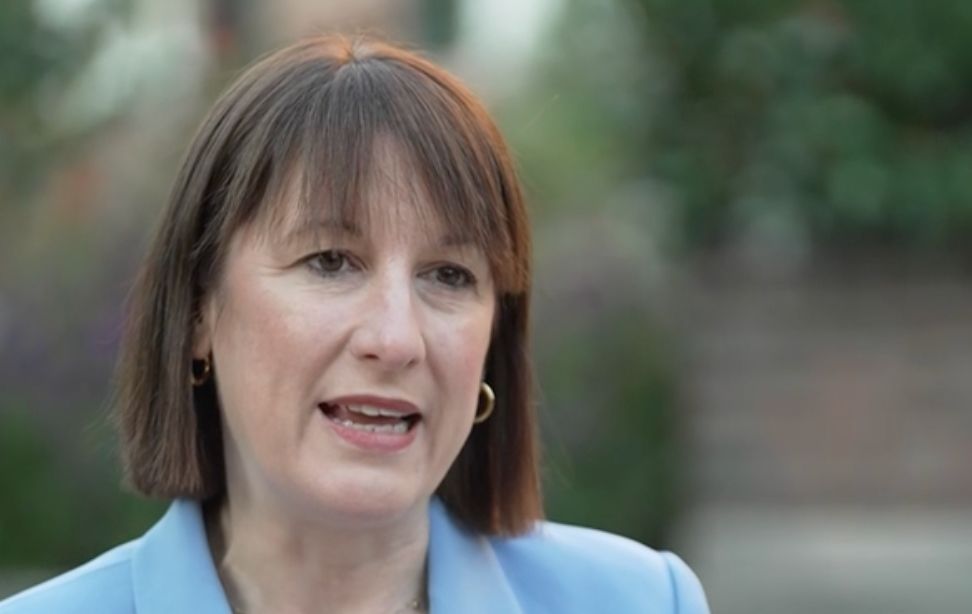
Rachel Reeves Gives Herself Billions To Spend By Changing The Government’s Debt Rules

Rachel Reeves has unveiled plans to spend billions of pounds on the UK’s infrastructure after changing the way the government measures debt.

In a major shift in policy ahead of next week’s Budget, the chancellor said the move would allow her to “begin to fix the NHS and start to rebuild our economy”.

She also confirmed that taxes will go up to fund the government’s day-to-day spending commitments – and that areas like the welfare budget will face cuts.

Labour’s election manifesto promised that debt would be falling as a share of the economy at the end of five years.

By changing the way that government debt is measured, Reeves hopes to release an extra £50 billion to spend on long-term projects.

The chancellor said: “My fiscal rules will do two things. The first and most important: my stability rule will mean that day-to-day spending will be matched by revenues.

“Given the state of the public finances and the need to invest in our public services, this rule will bite hardest.

“Alongside tough decisions on spending and welfare, that means taxes will need to rise to ensure this rule is met. I will always protect working people when I make these choices, while taking a balanced approach.”

She added: “My second fiscal rule, the investment rule, will get debt falling as a proportion of our economy.

“That will make space for increased investment in the fabric of our economy, and ensure we don’t see the falls in public sector investment that were planned under the last government.”

Reeves also told ITV News: “Our second rule, our investment rule, will change the way in which we measure government debt so we take into account our assets, not just the costs of investment.”

But Jeremy Hunt said civil servants had warned him against such a move when he was chancellor because of the risks it posed to economic stability.

He said: “The consistent advice I received from Treasury officials was always that increasing borrowing meant interest rates would be higher for longer – and punish families with mortgages.

“What’s even more remarkable is that the chancellor hasn’t seen fit to announce this major change to the fiscal rules to parliament. The markets are watching.”

A Labour spokesperson said: “Labour will not take any lectures from the Tories on how to run the economy. It was Liz Truss and the Conservatives that crashed the economy, which sent mortgages soaring and left the British people worse off.

“Jeremy Hunt and the Tories should be apologising to country for the economic mess they left – with a £22 billion blackhole in the public finances and public services on their knees.”

“Labour’s Budget will fix the foundations of our economy and deliver the change people voted for.”

Share Button

Putin Finally Addresses Reports He Had ‘Multiple’ Phone Calls With Trump After He Left The White House

Vladimir Putin has finally responded to the international claims he spoke to Donald Trump on multiple occasions after the latter left the Oval Office.

Journalist Bob Woodward claimed in his new book War that, according to a former White House aide, “there have been multiple phone calls between Trump and Putin, maybe as many as seven in the period since Trump left the White House in 2021”.

Trump’s campaign said the claims were completely fabricated. His spokesperson replied: “None of these made up stories by Bob Woodward are true and are the work of a truly demented and deranged man who suffers from a debilitating case of Trump Derangement Syndrome.”

Putin has just replied to Woodward’s claim, which were first reported on October 8, today.

Responding to a reporter’s question at the BRICS conference in Kazan, the Russian president said: “It’s nonsense.”

He continued: “But when Trump says that he wants to put an end to the war in Ukraine, I think that he is sincere.”

The former US president has sparked concerns among Western officials over his stance towards the conflict.

He has repeatedly said he wants the war to end but has refused to say who he wants to win, suggesting he may force Ukraine to cede land to Moscow.

Putin did use the press conference to confirm that he is in contact with the North Korean leader Kim Jong Un, over potentially deploying troops to fight alongside Russia.

Alluding to his defence pact with Pyongyang, he said: “We ratified the treaty on strategic partnership which contains Article 4 and we have never shied away from the fact that North Korea is serious about its commitment to us.

“It’s up to us how we implement Article 4. We are in contact with our North Korean partners.”

According to The Telegraph, he also chuckled when asked about troops already being deployed to fight in Russia, before adding: “The satellite images you spoke of, this is a serious allegation.

“It means that something is happening, but let me tell you one thing, it wasn’t the actions of Russia that led to the escalation in Ukraine.”

It’s widely believed that Moscow invaded Ukraine and tried to seize Kyiv in 2022 in a land grab, although Putin blames NATO’s eastward expansion.

Share Button

‘Nothing Says Over 50’ Like Following This 1 Grammar Rule, Experts Say

Some lament the ‘LOL’ or deride the ‘delulu,’ but I’m not one of them.

I grew up with smartphones and think that, just as the invention of the printing press gave us words like “clique” and “uppercase,” Internet lingo adds something interesting to our vocabulary.

But of course, the web giveth and the web taketh away; some conventions, like the proper letter formatting we learned in school and cursive handwriting, have fallen a little by the wayside.

Whether or not that matters at all is a question of opinion. The same goes for another grammar rule I had no idea hundreds of years of writing brought in, and the computer took out ― double spacing after a full stop.

Why did it change?

According to Thesaurus.com, even the style guide APA, who they call a “staunch defender” of double spaces in general, changed their view on the post-full-stop spacing style in 2019.

“In 2020, Microsoft also struck a major blow to all the double-spacers out there when it officially categorized a double space after a period as a writing mistake in their popular Microsoft Word program,” they add.

Though some attribute the standardisation of double spaces after full stops to typewriters, Thesaurus points out that Bibles dating as far back as 1611 followed the rule.

Both printing presses and typewriters faced a similar problem: typesetting the end of a sentence so that it didn’t crowd out the following one was tricky.

That’s because, former copy editor for the New England Journal of Medicine Jennifer Gonzalez (who “learned to type in 1987 on an IBM Selectric typewriter”) says on her site The Cult Of Pedagogy, “every character was given the exact same amount of space on the page.

“That meant the letter i was given the same amount of space as the letter m, even though it clearly didn’t need it.”

New computer keyboards have something called proportionally spaced fonts, which consider the size of the character when compiling them ― spelling the end of the double space after a full stop.

It’s proved a generational gap

On her site, Gonzalez says “Nothing says over 40 like two spaces after a [full stop].”

Of course, that was written in 2014 ― it’s 50 now, by that logic.

But she adds that it was drilled into some generations’ heads for so long that it can be a very hard habit to let go of ― “We got our papers marked wrong if we didn’t. It takes a long time to unlearn that,” she wrote.

Her copy editing job, which she started in 1999, helped her adapt to the new way, she adds.

Still, it was enough of a common style choice in 2011 to incense a Slate writer, who wrote, “What galls me about two-spacers isn’t just their numbers. It’s their certainty that they’re right.”

For what it’s worth, Thesaurus.com says: “According to every major style guide you’ll find, the rule is a single space after a [full stop] or any other punctuation mark you use to end a sentence.”

“Studies have shown that, beginning with millennials, younger generations widely prefer the single space after a [full stop],” they added. Boomers and Gen X, however, tend to use a double space.

Share Button

Lucy Letby loses bid to appeal against conviction

The former nurse’s bid to challenge her conviction for the attempted murder of a baby is dismissed.

Share Button

UK regulator tells doctors to watch out for obesity injection misuse

It follows reports of a rise in numbers of people who are not obese, becoming very sick.

Share Button