Ultra-sensitive electronic skin modeled after the human brain

Based on joint research with Professor Jaehyuk Lim at the Department of Mechanical Engineering, Jeonbuk National University, Professor Youngu Lee at the Department of Energy Science and Engineering, the Daegu Gyeongbuk Institute of Science & Technology (DGIST; President Kunwoo Lee), has successfully developed an ultra-sensitive pressure sensor for electronic skin modeled after the nervous system in the human brain. This technology is applicable to future devices, including AI-based digital healthcare devices, and is expected to be utilized across various fields, such as transparent displays and wearable devices, due to its transparency and physical flexibility.

Pressure sensors are devices that detect a slight change or force and convert it into signals. They are used in smartphones and healthcare devices to detect touch, heart rate, and muscle movements. Similar to the human skin, the pressure sensor−based electronic skin detects slight pressure, so it is used across many different applications, including wearable devices, medical monitoring devices, and sensory systems for robots. To employ electronic skin for more practical purposes, it is indispensable to go beyond simply detecting pressure and achieve greater sensitivity, transparency, and flexibility. In this context, many studies are being conducted to improve performance.

The research team led by Professor Lee developed a pressure sensor that emulates the way the human brain transmits signals. The brain transmits signals in a complex and quick way as neurons and glial cells work together. Professor Lee’s team created a network of nanoparticles modeled after this structure and designed a pressure sensor sensitive to slight pressure.

The pressure sensor developed in this study is not only highly sensitive but also highly transparent and flexible. It can detect slight changes, such as in the heart rate and finger movements, as well as the pressure of water droplets. Furthermore, it works stably even after 10,000 repeated uses, and its performance does not decline even in hot or humid environments.

Professor Lee at the Department of Energy Science and Engineering, DGIST, said, “Based on this study, we successfully developed a tactile sensor applicable to the next-generation electronic skin with transparency and flexibility. Hopefully, research on the basic mechanism of how the sensor works will continue, leading to the development of artificial tactile sensors that simulate the human skin and the technological development of transparent displays for commercialization.”

This study was conducted jointly by Jiwoo Koo, a PhD program student at the Department of Materials Science and Engineering, Seoul National University; Dr. Jongyoon Kim at the Department of Energy Science and Engineering, DGIST; Dr. Myungseok Ko, Jeonbuk National University; Professor Youngu Lee, DGIST; and Professor Jaehyuk Lim, Jeonbuk National University. In addition, the study was funded by the National Research Foundation of Korea’s Mid-Career Research Project and the Sustainable Solar Energy Use Engineering Research Center Project, and its results were published in the October 2024 issue of the Chemical Engineering Journal, an international journal in the field of chemical engineering.

Share Button

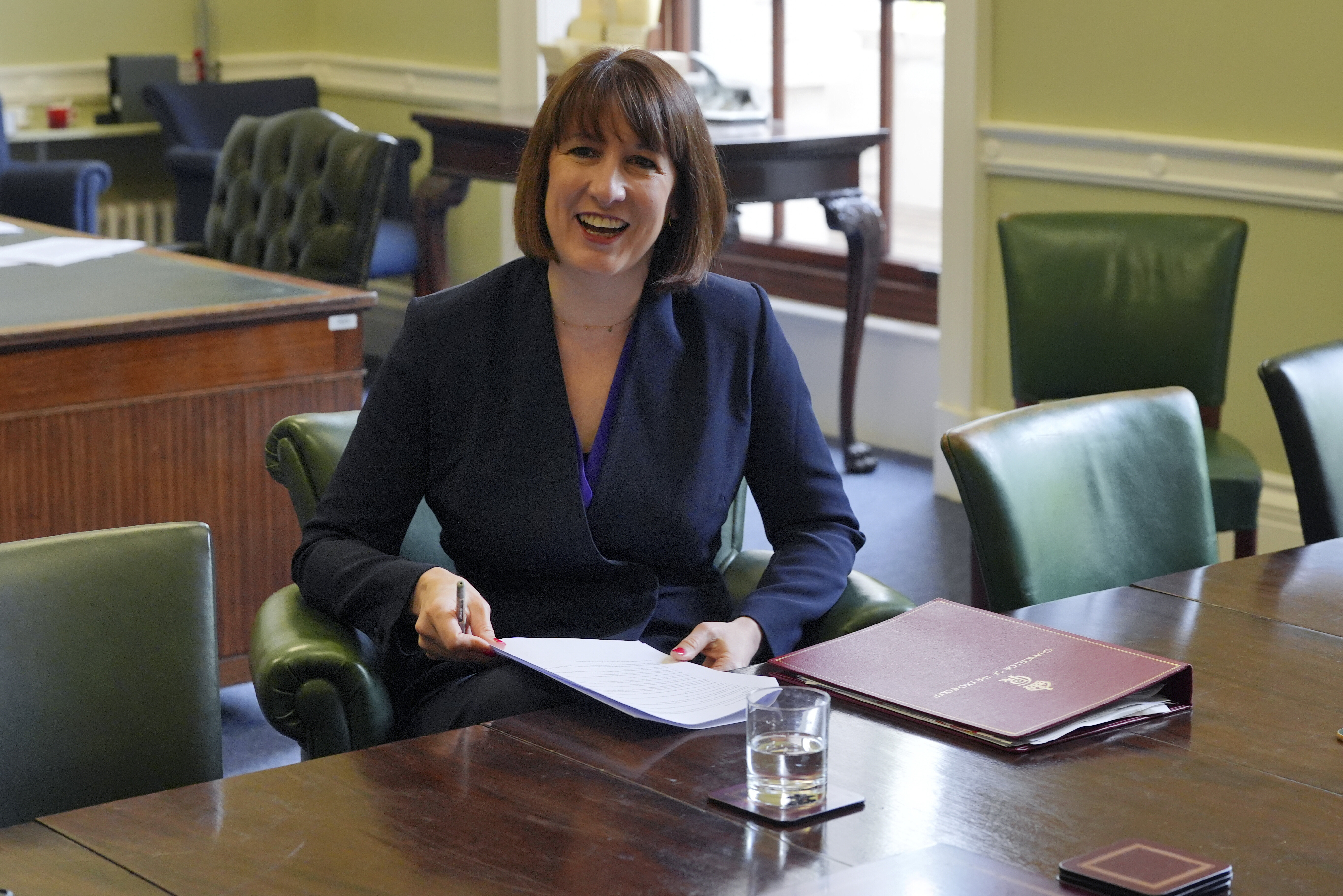
How Brits Are ‘Bracing Themselves’ For The Budget As Rachel Reeves Looks To Raise £40 Billion

It is not an overstatement to say that this week’s Budget is likely to be the most consequential event of this parliament.

Every decision the government makes between now and the next general election, for good or ill, will be influenced in some way by what Rachel Reeves announces at lunchtime on Wednesday. No pressure then, chancellor.

This is what we know so far. The Budget – called ‘Fixing The Foundations To Deliver Change’ – seeks to raise £40 billion, the vast majority of it through tax rises plus some spending cuts, including £3 billion from the welfare bill.

With Labour having promised not to increase taxes on “working people” before the election, income tax, VAT and the employees’ rate of National Insurance are all off-limits.

That means Reeves has her eyes on inheritance tax, capital gains tax, pension allowances and – most controversially – the employers’ rate of NI to help her balance the books.

A Treasury source told HuffPost UK: “We are dealing with the £22 billion hole in the public finances left by the Tories, and it’s worth stressing that is this year, next year, the year after that and the year after that. It’s a huge problem and we’ve got to address it.

“What we are doing is resetting the public finances and putting them on a firmer footing.

“We’re also acutely aware that we were elected on a platform of change. People voted to change things and for things to get a little bit better. So there will be more money for the NHS to cut waiting lists and more money for long-term investments like building schools, roads and other infrastructure.”

To that end, the chancellor announced on Thursday that she is changing the way the government measures debt, thereby allowing her to borrow an extra £50bn while still sticking to her pledge to bring overall debt down.

That money will be ploughed into public services which, Reeves claims, the Tories were planning to starve of the funds they need.

However, a poll carried out by Savanta and seen by HuffPost UK will make for worrying reading for the chancellor as she puts the finishing touches to her Budget speech in No.11 this weekend.

It shows that 48% of voters believe she should prioritise cutting taxes, compared to 43% who would rather see more money for public services.

However, more than half (55%) say it is more important for the government to invest in public services, with 32% saying it should be cut.

Meanwhile, just 20% of people believe the Budget will have a positive impact, with older people particularly gloomy about what it will mean for them – a result, most likely, of the row over the means testing of the winter fuel allowance.

A total of 80% of of over-55s think it will have a negative impact on their finances, compared to just 6% who believe it will be positive.

Those aged between 18 and 34 are more optimistic, however, with 40% thinking the Budget will be positive for them, with 28% taking the opposite view.

Even Labour supporters appear to be dreading Wednesday, with 41% of those who voted for the party in July believing it will be negative for them, compared to 33% who think it will be positive.

Emma Levin, associate director at Savanta, said: “Significant swathes of the electorate are bracing themselves for Labour’s first budget in 15 years.

“In particular older people appear nervous, amid rumours of many wealth taxes rises, compared to a relatively sanguine younger population.

“Concerningly for Rachel Reeves, even Labour voters think the Budget is going to have a negative impact on their lives. This may be exactly the mood music Labour HQ is going for ahead of a ‘painful budget’, but it’s clear the public want investment in public services as a priority.”

Nevertheless, allies of the chancellor remain confident that the measures announced in the Budget will eventually pay off both economically and politically.

One said: “It will be an honest Budget. Rachel will be very clear that we’re not going to be able to fix 14 years of failure in one Budget.

“This is a 10-year project. She’s having to make difficult decisions now to deliver long-term growth and prosperity.”

With the new Tory leader being announced just three days later, senior Labour figures also see the Budget as effectively the start of the next general election campaign.

“It will set out the clear divide for the whole parliament,” one Treasury source told HuffPost UK.

“Do we either do nothing, stick with the status quo, continue with more austerity, more cuts and more decline, or do we change and do things differently, asking those with the broadest shoulders to pay a bit more tax and start investing in long-term projects?

“This is where it will start to get difficult for the Tories.”

Share Button

The 1 Daytime Sign You Need To See A Doctor About Your Sleep

If you struggle to get, or stay, asleep, you might wonder what’s “normal” and what’s genuinely worth worrying about.

The NHS says “A few sleepless nights are usually nothing to worry about, but it can become an issue if a lack of sleep starts to affect your daily life.”

But where exactly is that line meant to be drawn?

Well, according to healthcare provider Mayo Clinic, noticing one dangerous tendency during the day (rather than at night) can be a giveaway.

Which is?

If you’re finding yourself nodding off during important moments of your day, it’s possible you have a sleep disorder, Mayo Clinic says.

“Being very sleepy during the daytime” is a common sign, they write.

“You may fall asleep at times that aren’t typical, such as while driving or while working at your desk.”

The NHS adds that you may also have longer-term sleep issues if you:

  • find it difficult to fall asleep
  • lie awake for long periods at night
  • wake up several times during the night
  • wake up early and be unable to get back to sleep
  • feel down or have a lower mood
  • have difficulty concentrating
  • be more irritable than usual.

“Longer-term sleep problems can affect our relationships and social life, and leave us feeling tired all the time, eating more and not able to do daily tasks,” they add.

What are some common sleep disorders?

Insomnia, sleep apnoea (where you stop breathing for short periods of time throughout the night), restless leg syndrome, night terrors, sleepwalking, and even snoring can all disrupt a good night’s sleep.

“Anyone can have an occasional poor night’s sleep,” the Mayo Clinic says.

“But talk with your doctor or other healthcare professional if you regularly have trouble getting enough sleep, if you don’t feel rested when you wake up or if you feel overly sleepy during the day.”

Share Button

‘A brain tumour the size of a tennis ball came out my eyebrow’

Patient Doreen Adams of Aberdeen says she is grateful for the benefits of the new brain surgery.

Share Button

Millions in the U.S. may rely on groundwater contaminated with PFAS for drinking water supplies

Approximately 71 to 95 million people in the Lower 48 states — more than 20% of the country’s population — may rely on groundwater that contains detectable concentrations of per- and polyfluoroalkyl substances, also known as PFAS, for their drinking water supplies. These findings are according to a U.S Geological Survey study published Oct. 24.

The predictive model results can help members of the public, water suppliers and regulators understand the potential for PFAS contamination, guide future studies and inform strategic planning for water resources.

USGS scientists are the first to report national estimates of PFAS occurrence in untreated groundwater that supplies water to public and private wells. This research also provides the first estimate of the number of people across the country who are potentially affected by PFAS-contaminated groundwater.

Along with a scientific report, the USGS published an interactive, online map so users can see probability estimates of PFAS occurrence. Note that predictive results are intended to be evaluated at state, regional and national scales rather than at individual household levels. Probability estimates are for the presence of PFAS in groundwater and do not account for any subsequent actions taken by states, municipalities or individuals to treat drinking water. The model does not include estimates of PFAS concentrations; testing is the only way to confirm the presence of contaminants.

Exposure to certain PFAS may lead to adverse health risks in people, according to the U.S. Environmental Protection Agency. PFAS are a group of synthetic chemicals used in a wide variety of common applications, from the linings of fast-food boxes and non-stick cookware to fire-fighting foams and other purposes. PFAS are commonly called “forever chemicals” because many of them do not easily break down and can build up over time, making them a concern for drinking water quality.

“This study’s findings indicate widespread PFAS contamination in groundwater that is used for public and private drinking water supplies in the U.S.,” said Andrea Tokranov, USGS research hydrologist and lead author of this study. “This new predictive model can help prioritize areas for future sampling to help ensure people aren’t unknowingly drinking contaminated water. This is especially important for private well users, who may not have information on water quality in their region and may not have the same access to testing and treatment that public water suppliers do.”

The EPA has established legally enforceable levels, called maximum contaminant levels, for six types of PFAS in drinking water. The EPA regulates public water supplies, and some states have additional regulations for drinking water. Some homes use private water supplies, where residents are responsible for the maintenance, testing and treatment of their drinking water. Those interested in treatment processes and testing options can read EPA’s guidance or contact their state officials or water supplier.

The states with the largest populations relying on public water supplies with potentially contaminated groundwater sources are Florida and California. Regarding private wells, Michigan, Florida, North Carolina, Pennsylvania, New York and Ohio have the largest populations relying on potentially contaminated groundwater.

The study also presents data according to population percentage. In Massachusetts, for example, the source water for 86 to 98% of people who rely on groundwater from public water supplies could be contaminated with PFAS. In Connecticut, the source water for 67 to 87% of the people who rely on groundwater from private wells could be affected. Details by state can be seen in the report’s tables S6 through S8.

“To derive these estimates, the team analyzed 1,238 groundwater samples collected by USGS scientists and determined how factors such as urban development and well depth can impact PFAS occurrence,” continued Tokranov. “With that information, a detailed machine learning model was developed and used to identify which geographic areas have a higher likelihood for contamination. That information was combined with existing USGS research on the number of people in a given area who rely on groundwater for drinking water to establish population estimates.”

Scientists present separate estimates for public and private wells because they typically receive water from different groundwater depths. Public wells using groundwater as the primary water source are usually deeper than private wells.

There are more than 12,000 types of PFAS, not all of which can be detected with current tests; the USGS study tested for the presence of 24 common types. The USGS estimates consider the presence of at least one of those 24 types of PFAS. The most frequently detected compounds were perfluorobutane sulfonate known as PFBS, perfluorooctane sulfonate known as PFOS and perfluorooctanoate known as PFOA.

This research provides a broad outlook for the Lower 48 states and presents state-level estimates. Scientists did not look in detail at specific cities or provide estimates for the types of PFAS present or PFAS concentrations.

Share Button

Human actions likely cause insect color change

New Zealand’s native stoneflies have changed colour in response to human-driven environmental changes, new research shows.

Just published in the journal Science, the University of Otago study provides arguably the world’s most clear-cut case of animal evolution in response to change made by humans.

Co-author Professor Jon Waters, of the Department of Zoology, says the stonefly has become a different colour due to recent deforestation.

“In natural forested regions, a native species has evolved ‘warning’ colours that mimic those of a poisonous forest species, to trick predators into thinking they are poisonous too.

“But the removal of forests since humans arrived has removed the poisonous species. As a result, in deforested regions the mimicking species has abandoned this strategy — as there is nothing to mimic — instead evolving into a different colour.”

Scientists have long wondered whether humans are causing evolutionary changes in natural populations.

The most well-known example of evolution caused by humans was the peppered moth population in the United Kingdom, which changed colour in response to industrial pollution in the 1800s.

But Professor Waters says even that case has been considered controversial.

This new study shows how humans have changed the way native species interact.

Co-author Dr Graham McCulloch says humans have disrupted ecological interactions between species that evolved over millions of years, but some of our native species are resilient enough to overcome this.

“This study is important because it shows that, at least for some of our native species, there is the possibility of adapting to the environmental changes caused by humans, even when the change is rapid,” Dr McCulloch says.

“It also shows that independent populations have undergone similar changes in response to deforestation — there have been similar shifts independently in different parts of the species’ range — showing that evolution can be a predictable process.”

Share Button

GPs advise not to ignore scabies symptoms

The itchy rash spreads via physical contact and is highly infectious, the Royal College of GP says.

Share Button

Nigerians are experiencing neuro-long COVID, research finds

For the first time, scientists have found individuals in Nigeria are experiencing neurological manifestations of long COVID — called neuro-long COVID — such as brain fog, mild cognitive impairment, fatigue, sleep problems, headache, sensations of pins and needles, and muscle pain.

The study was a collaboration between scientists at Northwestern Medicine and a Nigerian team of scientists from the University of Lagos and Lagos University Teaching Hospital (LUTH) in Lagos, Nigeria. Of the 2,319 participants, 106 (4.6%) had long COVID with neurologic symptoms, and some were still experiencing symptoms up to two years after their initial episode of COVID-19. Researchers also found patients who were hospitalized for COVID-19 pneumonia reported a higher frequency of long COVID symptoms than those who were not hospitalized and had mild initial COVID-19 (11.5% vs 3.9%, respectively).

The findings were published today, October 24, in the Journal of NeuroVirology.

The findings highlight the need for improved screening, diagnosis and treatment of neuro-long COVID in Nigeria.

“Based on this data, there is hopefully going to be some intervention to alleviate their suffering,” said Dr. Igor Koralnik, chief of neuro-infectious disease and global neurology at Northwestern University Feinberg School of Medicine. “We’ve determined that even in a resource-limited setting where people have many other problems to worry about, we can still perform these studies, find those patients, and diagnose them.”

Scientists from the Nigerian team include neurologist Dr. Njideka U. Okubadejo and infectious disease physician Dr. Iorhen E. Akase, both of the University of Lagos and LUTH.

Koralnik and his team launched the Northwestern Medicine Neuro-COVID-19 Clinic in May 2020 and were soon evaluating a large number of patients who were exhibiting post-COVID neurologic symptoms. They then began researching the disease. In Nigeria, the opposite has happened. People in Nigeria are not aware that long COVID is a disease for which symptomatic treatments are available, and there was a scarcity of post-COVID clinics even during the height of the pandemic.

“This is why we have to start by doing the research to demonstrate the need for diagnosis and clinical care of these patients and advocate for specialized outpatient clinics,” Koralnik said. “If you don’t know that something exists, you can’t treat it.”

Breakdown of neurologic symptoms

The predominant neurologic symptoms among study participants at any time during the disease course included:

  • Difficulty remembering/brain fog (59.4%)
  • Fatigue (55.7%)
  • Sleep problems (32%)
  • Headache (31%)
  • Paresthesia, or numbness and pins and needles (11.3%)
  • Myalgia, or muscle pain (9.4%).

Of the 66 participants with neuro-long COVID who underwent an in-person neurological evaluation and cognitive screening, 16.9% completed the Montreal Cognitive Assessment, a widely used screening assessment for detecting cognitive impairment, and had results consistent with mild cognitive impairment.

Next steps

In a future study, the scientists plan to treat brain fog and cognitive dysfunction in neuro-long COVID patients in Nigeria by applying the same techniques he and his team are currently using in Chicago, Koralnik said.

COVID-19 continues to occur despite vaccination and boosters, and according to an ongoing household pulse study carried out by the National Center for Health Statistics, approximately 14 million adults in the U.S. are currently experiencing long COVID. Long COVID principally affects adults in their prime, affecting their quality of life and ability to work, contributing to profound public health and socio-economic impacts.

Millenia Jimenez who works in the Koralnik laboratory at Northwestern is a co-author on the study.

Share Button

Disposable vapes to be banned from June

Ministers say the Tobacco and Vapes Bill is intended to prevent environmental damage and protect children’s health.

Share Button

Rachel Reeves Gives Herself Billions To Spend By Changing The Government’s Debt Rules

Rachel Reeves has unveiled plans to spend billions of pounds on the UK’s infrastructure after changing the way the government measures debt.

In a major shift in policy ahead of next week’s Budget, the chancellor said the move would allow her to “begin to fix the NHS and start to rebuild our economy”.

She also confirmed that taxes will go up to fund the government’s day-to-day spending commitments – and that areas like the welfare budget will face cuts.

Labour’s election manifesto promised that debt would be falling as a share of the economy at the end of five years.

By changing the way that government debt is measured, Reeves hopes to release an extra £50 billion to spend on long-term projects.

The chancellor said: “My fiscal rules will do two things. The first and most important: my stability rule will mean that day-to-day spending will be matched by revenues.

“Given the state of the public finances and the need to invest in our public services, this rule will bite hardest.

“Alongside tough decisions on spending and welfare, that means taxes will need to rise to ensure this rule is met. I will always protect working people when I make these choices, while taking a balanced approach.”

She added: “My second fiscal rule, the investment rule, will get debt falling as a proportion of our economy.

“That will make space for increased investment in the fabric of our economy, and ensure we don’t see the falls in public sector investment that were planned under the last government.”

Reeves also told ITV News: “Our second rule, our investment rule, will change the way in which we measure government debt so we take into account our assets, not just the costs of investment.”

But Jeremy Hunt said civil servants had warned him against such a move when he was chancellor because of the risks it posed to economic stability.

He said: “The consistent advice I received from Treasury officials was always that increasing borrowing meant interest rates would be higher for longer – and punish families with mortgages.

“What’s even more remarkable is that the chancellor hasn’t seen fit to announce this major change to the fiscal rules to parliament. The markets are watching.”

A Labour spokesperson said: “Labour will not take any lectures from the Tories on how to run the economy. It was Liz Truss and the Conservatives that crashed the economy, which sent mortgages soaring and left the British people worse off.

“Jeremy Hunt and the Tories should be apologising to country for the economic mess they left – with a £22 billion blackhole in the public finances and public services on their knees.”

“Labour’s Budget will fix the foundations of our economy and deliver the change people voted for.”

Share Button