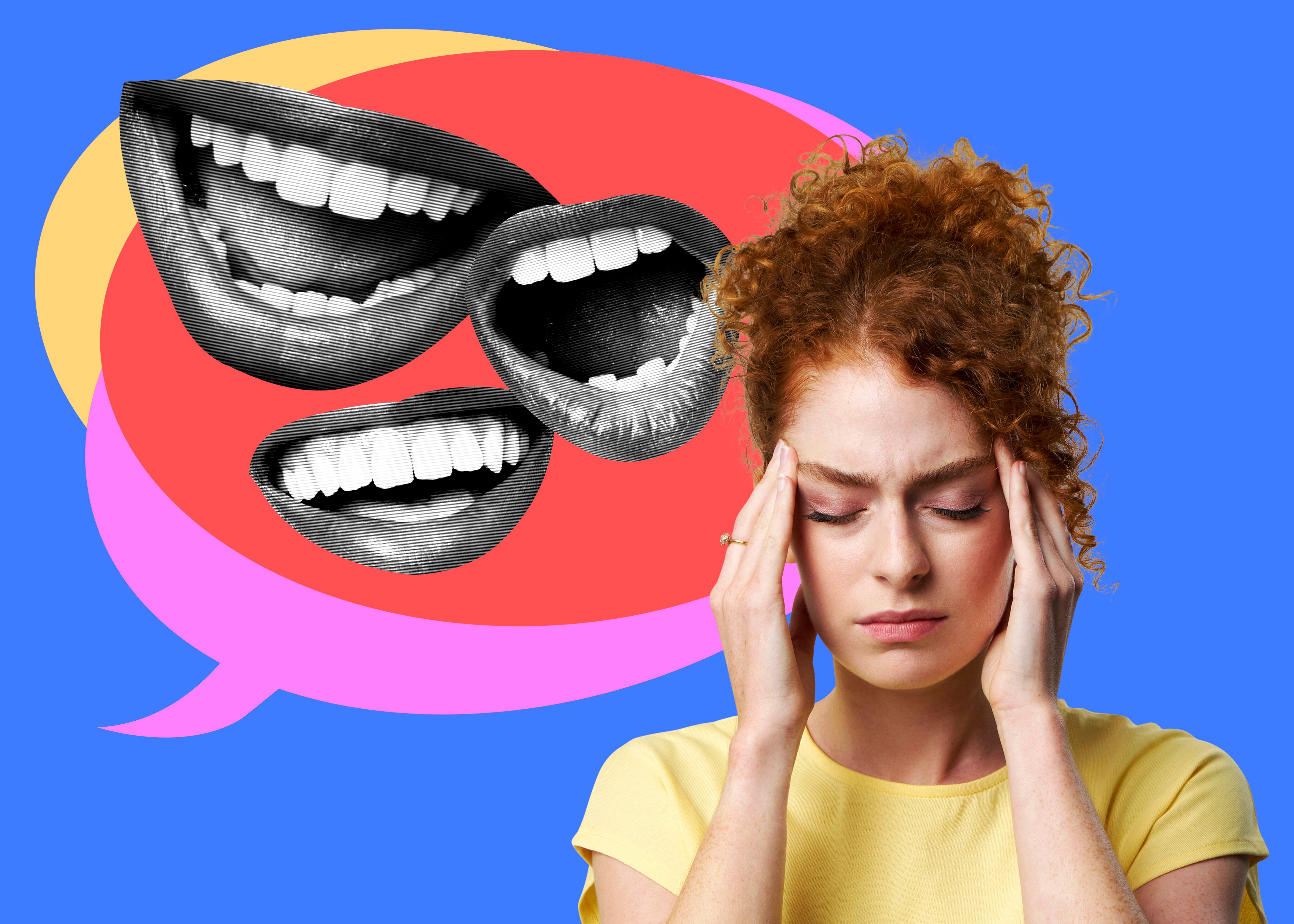
Members Of Gen Z, ‘The Loneliest Generation,’ Share How They Make Friends

According to an Oxfam poll, loneliness doens’t just affect older generations – almost half (47%) of Gen Z, or those born between around 1997-2012, say they often feel lonely.

In fact, according to their data, Gen Z were the loneliest generation of them all.

49% of those asked said the trend was down to a lack of social opportunity. So I was intrigued to read the responses to a post shared to r/GenZ, which asked other forum members to share “How tf to make friends”.

“I barely have any friends, and I commute to college so I don’t get the same social opportunities, and I don’t have a job ATM,” u/Shot_Veterinarian215 wrote.

“And I know lots of people meet online, but how are you supposed to turn that into an actual in-person connection and friendship?”

Here are some of the top responses:

1) “Don’t discount people older than you as potential friends.”

“The coolest people I know have always been older than me. Commonalities transcend generations. You probably have more in common than you realise.

“My most recent community of friends has been older people that I have connected with while regularly going to my local dog park.”

Credit: u/royberry333

2) “All of my friends that I didn’t meet during my education, I met while participating in my hobbies.”

Credit: u/Shyinator

“I’ve found that a large part of friendship is mutual admiration, and it can be as simple as through hobbies,” u/Who_am_i_to_say_so agreed.

3) “You have to talk to people.”

“For an introvert like me, it’s an absolute nightmare, but that’s really what it is. Starting conversations based on small interactions.

“Becoming a regular at places also helps – like gyms, dog parks, and coffee shops. Join clubs, community theatre, sports, a pottery studio, etc. Go to meetups, community events, and free things.

“It comes very naturally to some people, and for others it has to be a very intentional process.”

Credit: u/SeaMollusker

4) “Other than school, I’ve made some amazing friends at my local farmers market of all places.”

5) “I made dozens of friends in the local running community.”

“A few more at wine tastings. A couple I met in the grocery store.”

Share Button

The Job Market Is Tough, So Naturally People Are ‘Lily Padding’

You’re probably sick of hearing about it, but yes, the UK job market is tough right now.

Either you know it because you’re in the process of job hunting, or you’re scared to leave your old-and-unsatisfying job after hearing the horror stories from those applying for hundreds of roles, only to hear back from none.

And now it seems “lily padding” is the latest career trend to come out of this difficult working situation.

What is ‘lily padding’?

“Lily padding” is when you strategically climb the career ladder, focusing on building experience over seeking a higher salary. It’s about supercharging your employability, according to targetjobs.

People who “lily pad” look for temporary roles and use each one to springboard into the next, going for a similar field and role to boost their experience. Almost like becoming an expert at that specific job.

As Forbes puts it: “Rather than climbing rung by rung, they [“lily padders”] move laterally, diagonally, and sometimes across industries altogether, collecting skills and experiences with every leap.”

It’s no coincidence this comes at a time when the security of certain jobs is being questioned, thanks to the rise in popularity of artificial intelligence (AI).

The hope is that after a few career jumps, people could move into a longer term role and have a better chance of going for that higher salary and more senior job title, with a wealth of experience in their back pocket.

“Lily padding” might also suit those who are happy with their salary range and title, and aren’t looking to take on extra responsibility, but want to boost their CV.

The trend is particularly popular among Gen Z candidates, and it’s even helping them to avoid imposter syndrome, said targetjobs. Unlike job hopping, “lily padding” is more targeted and focused on skill-boosting over pay.

It might look like sidestepping from the outside, but this is often more of a planned career game, and while people who sidestep might stay in a job for a number of years, “lily padders” jump more frequently and prioritise temp roles.

While job hopping is usually spurred on by being unhappy in a workplace, “lily padding” is spurred on by wanting to see growth in confidence and skillset, said the job experts.

But it’s important to not play it safe like this for too long – once you’ve mastered the skills you need, move upwards, otherwise staying at the same level might become a bit too comfortable and not that challenging.

Until then, “lily pad” away.

Share Button

Most Gen Z Workers Think The Career Ladder Is Dead

I’d argue that some of the so-called Gen Z working “trends”, like “taskmasking” – looking, but not being, busy – are not so much fads as time-honoured office traditions.

But what might genuinely be unique to the age group is “income stacking,” or the increasing need to secure multiple forms of payment in order to stay afloat.

According to research conducted by a bastion of the gig economy, Fiverr, 54% of Gen Z and Gen Alpha believe traditional employment will become obsolete.

As a result, 67% say they think they’d need to rely on multiple smaller streams of income, rather than one job, to pay the bills.

Why don’t younger people believe in traditional career paths?

Well, part of it may be that entry-level jobs are disappearing, Fiverr says.

And as many careers, even in industries deemed especially “safe” as little as five years ago, become unstable, only 14% say they’d be interested in working for an established company.

That makes traditional paths of employment – ie starting at the “bottom” of a single company, staying there for years, and landing a more senior position – sound less and less likely as the “job hopping” generation enters the workforce.

As Forbes put it, Gen Z are picking the career “lily pad” over the more established, but vanishing, “ladder”.

In fact, the Next Gen Of Work study, which was run with Censuswide and involved over 12,000 young people from all over the world, found that Gen Z and Gen Alpha face “single paycheck panic”.

What is “single paycheck panic”?

Michelle Baltrusitis, Associate Director of Community and Social Impact at Fiverr, said: “Gen Z isn’t rejecting work; they’re redefining it.

“Faced with economic uncertainty, Gen Z is experiencing what we’re calling ‘single-paycheck panic’ – they’re diversifying income streams because relying on one job feels too risky.

“Instead of waiting for stability, they’re betting on themselves by embracing freelancing and building financial resilience as the smarter path forward.”

Share Button

12 Things Millennials Do That Stress Out Gen Zers

Every generation has its quirks. Millennials and Gen Zers may only be a small number of years apart, but culturally, they often feel worlds away.

From the way they communicate to the way they approach work, life and even pop fandoms, their styles can clash ― sometimes in ways that really irritate each other.

We asked Gen Zers to share the millennial behaviours that frustrate and stress them out. Of course, many of these habits vary across individuals within the same generation, but certain tendencies and patterns still emerge. Here’s what they had to say:

1. Ominous Punctuation

“For me, a main millennial ‘ick’ is the dot-dot-dot or period of doom. Getting a ‘Sure…’ or ‘Thanks.’ makes it feel like I’m in trouble.” ― Ethan Hillis, TikTok creator

2. Over-Emphasis On Appearances

“They have a need to make everything aesthetic. Gen Z is very guilty of this as well, however, I think that millennials grew up with the rise of social media. Rather than listening to their favourite artist at a music festival or sharing a drink with friends at brunch, I think they’re more prone to focus on getting a good Instagram or Snapchat story. This just fuels what it means to live vicariously through social media, rather than in the moment.” ― Madeline Kerestman, TikTok creator

3. Passive-Aggressive Lingo

“The passive-aggressive work lingo. ‘Per my last email,’ ‘gentle nudge,’ ‘circling back’ … all of it stresses me out instantly.” ― Hillis

4. Getting Competitive Around Generations

“Making conversations about economic problems millennial vs. Gen Z instead of realising we’re all struggling, and different times had their own unique problems.” ― Ayana Williams, digital marketer

“Why is this a competition? Why are we battling between generations? I feel like millennials are constantly comparing their generation and saying things like, ‘Oh you guys have it so easy. Back in my day …’ I think millennials went through a really difficult period, so they might have a lot of resentment toward our generation. But in reality, I feel like Gen Zers are going through a lot of different challenges that the previous generation didn’t go through too.” ― Lavinia Gabriele, high growth startup manager and member of The Z Suite

5. Lack Of Boundaries

“I’ve noticed that a lot of millennials don’t have a lot of boundaries at work ― whether it’s that your work hours are not well defined and you’re supposed to be on at all times, or it’s asking personal questions. Millennials are a lot more open with their thoughts, and I think it’s a little bit stressful when they ask really personal questions about your life when maybe I don’t want you to know about it.” ― Gabriele

"Millennials are a lot more open with their thoughts, and I think it’s a little bit stressful when they ask really personal questions about your life when maybe I don’t want you to know about it," said Lavinia Gabriele, a gen Z high-growth startup manager.

We Are via Getty Images

“Millennials are a lot more open with their thoughts, and I think it’s a little bit stressful when they ask really personal questions about your life when maybe I don’t want you to know about it,” said Lavinia Gabriele, a gen Z high-growth startup manager.

6. Inability To Relax Until Things Are Fully Completed

“I feel that sometimes there is a very strong hustle culture where millennials feel they are always ‘in the trenches’ and life is about surviving rather than experiencing. Of course, Gen Zers are ambitious as well. But when there’s a big challenge or new project at work, I do observe that the millennials on my team are like, ‘Oh, my god. How do we survive through this?’ ― while the Gen Zs are a bit more relaxed and moving through it. It doesn’t mean we don’t care. We’re still going to power through. And I have friends and cousins who are millennials that tend to get really stressed out about planning certain things. Until the plan has reached a certain stage of being completed, they’re super stressed out.” ― Angel Aileen, member of The Z Suite who works in a tech forward beauty company

7. Withholding Validation And Information

“I think because Gen Zs grew up in a world of social media, we’re conditioned to get dopamine rewards constantly. So at a workplace, how that shows up is if we do work, we really want to feel recognised. Everyone has their different ways of feeling recognised or rewarded. But if they don’t get that, they feel very down. They want to feel seen, so getting a sense of reward or recognition makes a huge difference in the workplace. And millennials don’t necessarily realise that. But I really notice millennials who recognise and appreciate their Gen Z employees have better team dynamics. It’s similar with sharing information because Gen Zers like to see the whole picture of their job. If millennials share the big picture of what we’re all working on, then it’ll feel more like we’re all working toward the same goal and contributing to the puzzle. Gen Zers are happier when they feel a bigger sense of purpose in their work.” ― Aileen

8. Overwhelming Communication

“Slack novels. A whole LinkedIn-style essay in a quick chat app? I can’t.” ― Hillis

“With their communication style over text, they send like a lot of emojis, like a million emojis. And they’ll screenshot a meme and text it to you, instead of sending it to you directly in the app. And then the meme isn’t that funny…” ― Gabriele

9. Assuming Gen Zers Don’t Get References

“Not recognising some of us are Gen Zennials and very much remember late 90s/early 2000s references and going outside to play.” ― Williams

10. The Millennial Pause

“The millennial pause at the start of videos. They can just cut that part out.” ― Williams

11. Work-Life Balance Overload

“They lean a little too far into the ‘work-life balance’ mindset. As a med student myself, I am all about maintaining a ‘work hard, play hard’ mentality. I value hard work and believe that while it’s incredibly important to maintain a healthy balance, it should never be used as a way to do the bare minimum. I think the millennial generation introduced this mentality and took it to another level, which has normalised using ‘boundaries’ as an excuse to cut corners.” ― Kerestman

12. Taylor Swift Obsession

“This is 100% a personal preference, and I know I might get some backlash for this! For some reason, I feel like I associate the millennial generation with the ‘Swiftie’ fanbase. Taylor Swift is iconic and such a talented artist. However, I think her fans take it to an unnecessarily intense level, and I just don’t understand the hype.” ― Kerestman

Answers have been edited and condensed for clarity.

Share Button

Gen Z’s Job Struggles Are ‘Not Remotely Their Fault,’ Uni Founder Says

I have seen headline after headline screaming the bad news: Gen Z (roughly, those born between 1997-2012) are getting fired en masse.

Fortune magazine claims that’s because youths aren’t up to the task; they don’t dress appropriately, set reasonable expectations, show up on time, show enough initiative, or kick off their careers with a can-do attitude, the publication reckons.

The message is repeated across multiple media outlets; young people can’t get, or keep, jobs, and they’re all to blame, we’re told.

So I’ll admit I was relieved to speak to the founder of the London Interdisciplinary School, Ed Fidoe, who said the generation’s workplace woes are “not remotely Gen Z’s fault.”

So what’s going on?

There are a “couple of forces” to consider, the founder told HuffPost UK.

Many organisations aren’t hiring right now, and those that are feel that they can “trim their graduate intake” ― even though they “regret it, sort of four years, five years later,” he said.

Then, there’s “a structural problem, a structural challenge, which is… Gen AI, and the impact it has on graduate jobs,” he added.

Ed shared that “something like 80% [of students] get a 2:1 or a first from Russell Group universities” (it was 87.7% in 2022), meaning internships are crucial if you want to stand out from the crowd.

But the sort of “low-level” research jobs typically given to some interns “could be done very, very easily by the technology that exists.”

“We help broker our students to get internships every year, and… each year, it’s become quite a lot harder to place them,” the founder revealed.

Even where Ed does see some cultural misalignments between young people and the workforce, he still doesn’t think it’s helpful to blame Gen Z.

Though the founder says more and more young people are not given enough “challenges” on things as basic as handing coursework in on time, he states that universities’ failure to prepare students for “the real world” is partly down to an increasingly customer-provider relationship increasingly dear uni fees may encourage.

University courses themselves are rigid too, he pointed out ― “it’s built in that there’s no change in the university sector. And then we send people out into the most volatile work market that we’ve seen in probably 50 years.”

Especially post-pandemic, Ed continued, “if we see lots of layoffs, it’s not actually because it’s Gen Z being lazy. It’s just… that’s just what happened.”

So what can Gen Z, unis, or employers do to make the situation better?

Though he doesn’t think Gen Z are entirely culpable for their lot, Ed does think that universities could do a better job of setting fair expectations for students.

He calls unis “a wonderful place to be able to provide lots of support, but [also] lots of challenges,” exposing young people to “new environments and new ideas and new thinking.

“And… if universities are backing away from that, then again, my generation is doing that generation a disservice, because what it means is they are optimising for their own ease… because people are worried about being sued. But as soon as those students leave, they’re going to enter a workplace, and the workplace is on the whole not going to be conforming to that,” Ed explained.

He adds that in the London Interdisciplinary School, “we want people to have difficult conversations. What we don’t want is people to avoid them.”

But Ed says employers themselves often have a skewed view of what their youngest workers can offer.

Far from being underqualified, he says, some Gen Z may find themselves bored by the realities of work ― a phenomenon that may be exacerbated by employer’s perceptions of young people.

“We hear lots about employers saying that graduates don’t have any of the skills they need for the workplace…pick a list; problem-solving, initiative, communication, teamwork, all the stuff, and they’re deeply ill-prepared,” he says.

He adds: “The thing that’s not talked about very much is that graduates, particularly from… often very intellectually challenging degrees, go into work and go, this is really boring.”

He advises employers to “think a bit harder… about what your students are actually capable of because they are highly capable.”

Think a bit harder about what they could be really outstanding at,” Ed says.

“There will be some things they can be better at than you are currently, and not just technology, right? Which is the sort of lazy perspective.”

Share Button

‘Nothing Says Over 50’ Like Following This 1 Grammar Rule, Experts Say

Some lament the ‘LOL’ or deride the ‘delulu,’ but I’m not one of them.

I grew up with smartphones and think that, just as the invention of the printing press gave us words like “clique” and “uppercase,” Internet lingo adds something interesting to our vocabulary.

But of course, the web giveth and the web taketh away; some conventions, like the proper letter formatting we learned in school and cursive handwriting, have fallen a little by the wayside.

Whether or not that matters at all is a question of opinion. The same goes for another grammar rule I had no idea hundreds of years of writing brought in, and the computer took out ― double spacing after a full stop.

Why did it change?

According to Thesaurus.com, even the style guide APA, who they call a “staunch defender” of double spaces in general, changed their view on the post-full-stop spacing style in 2019.

“In 2020, Microsoft also struck a major blow to all the double-spacers out there when it officially categorized a double space after a period as a writing mistake in their popular Microsoft Word program,” they add.

Though some attribute the standardisation of double spaces after full stops to typewriters, Thesaurus points out that Bibles dating as far back as 1611 followed the rule.

Both printing presses and typewriters faced a similar problem: typesetting the end of a sentence so that it didn’t crowd out the following one was tricky.

That’s because, former copy editor for the New England Journal of Medicine Jennifer Gonzalez (who “learned to type in 1987 on an IBM Selectric typewriter”) says on her site The Cult Of Pedagogy, “every character was given the exact same amount of space on the page.

“That meant the letter i was given the same amount of space as the letter m, even though it clearly didn’t need it.”

New computer keyboards have something called proportionally spaced fonts, which consider the size of the character when compiling them ― spelling the end of the double space after a full stop.

It’s proved a generational gap

On her site, Gonzalez says “Nothing says over 40 like two spaces after a [full stop].”

Of course, that was written in 2014 ― it’s 50 now, by that logic.

But she adds that it was drilled into some generations’ heads for so long that it can be a very hard habit to let go of ― “We got our papers marked wrong if we didn’t. It takes a long time to unlearn that,” she wrote.

Her copy editing job, which she started in 1999, helped her adapt to the new way, she adds.

Still, it was enough of a common style choice in 2011 to incense a Slate writer, who wrote, “What galls me about two-spacers isn’t just their numbers. It’s their certainty that they’re right.”

For what it’s worth, Thesaurus.com says: “According to every major style guide you’ll find, the rule is a single space after a [full stop] or any other punctuation mark you use to end a sentence.”

“Studies have shown that, beginning with millennials, younger generations widely prefer the single space after a [full stop],” they added. Boomers and Gen X, however, tend to use a double space.

Share Button

These 3 Popular Gen Z Terms Have Been Added To The Cambridge Dictionary

If you thought you’d narrowly avoided the fate of saying “how do you do, fellow kids?” a la 30 Rock, the new additions to the Cambridge Dictionary might have you feeling every your age right down to the day.

Around 3,200 new words have been added to the Cambridge Dictionary this year and while that fact alone is unfathomable, three of those words are so deliciously Gen Z that we’re obsessed (and feeling ancient, tbh.)

Additionally, Wendalyn Nichols, Cambridge Dictionary’s publishing manager, said that while language is constantly evolving, these new additions have “staying power”.

The Gen Z terms added to Cambridge Dictionary

The Ick

After the past year, this entry is not all that surprising. The term was originally popularised by Love Island but has since become part of our everyday lexicon with everything from bad dates to bad logos giving us “the ick”.

The dictionary gives an example usage of “the ick” as: “I used to like Kevin, but seeing him in that suit gave me the ick.”

Boop

If you spent your lockdown days glued to Schitt’s Creek and falling in love with character Alexis Rose, “boop” has probably been in your vocabulary for a while now. The dictionary describes it as: “a gentle hit or touch on the nose or head as a joke or to indicate affection.”

Chef’s Kiss

That TV finale was chef’s kiss. That sassy-but-classy response to your ex? Chef’s kiss!

The dictionary describes this as a term used to describe something deemed perfect or excellent.

It also means the movement “in which you put your fingers and thumb together, kiss them, then pull your hand away from your lips”.

Mwah, mwah, that definition is CHEF’S KISS.

Hallucinate gained new meaning in 2023

At the end of 2023 Cambridge Dictionary announced that “hallucinate” was its word of the year, as it had gained a new meaning since the development of artificial intelligence.

The BBC explained: “While the traditional definition is ‘to seem to see, hear, feel, or smell something that does not exist’, it now includes ‘when an artificial intelligence (AI) hallucinates, it produces false information’”

Share Button