Jeannie Ambrose, one of about 1,000 affected patients, says the drug should be made available on the NHS


Jeannie Ambrose, one of about 1,000 affected patients, says the drug should be made available on the NHS
NHS experts report unprecedented demand for the new generation of obesity treatments.

The former members of One Direction – Harry Styles, Louis Tomlinson, Niall Horan, and Zayn Mailk – have issued a joint statement following the death of their bandmate Liam Payne.
The 31-year-old passed away on Wednesday October 16 following a fall from a hotel balcony in Buenos Aires. Tributes have poured in from fellow X Factor contestants, celebrities and fans across the globe following the news.
Advertisement
Now, One Direction themselves have addressed the tragic loss.
In a joint statement, they said: “We’re completely devastated by the news of Liam’s passing. In time, and when everyone is able to, there will be more to say.
“But for now, we will take some time to grieve and process the loss of our brother, who we loved dearly.
“The memories we shared with him will be treasured forever. For now, our thoughts are with his family, his friends, and the fans who loved him alongside us.
“We will miss him terribly. We love you Liam. – Louis, Zayn, Niall and Harry.”
The band met in 2010 after auditioning separately for The X Factor, before being brought together as a band by Simon Cowell. The band went on an indefinite break in 2015, with Liam pursuing a solo career.
Advertisement
Louis Tomlinson has since penned his own personal tribute to his bandmate on Instagram, writing: “His experience from a young age, his perfect pitch, his stage presence, his gift for writing. The list goes on. Thank you for shaping us Liam.
“I want you to know that if Bear ever needs me I will be the Uncle he needs in his life and tell him stories of how amazing his dad was.
“I wish I got a chance to say goodbye and tell you one more time how much I loved you.”


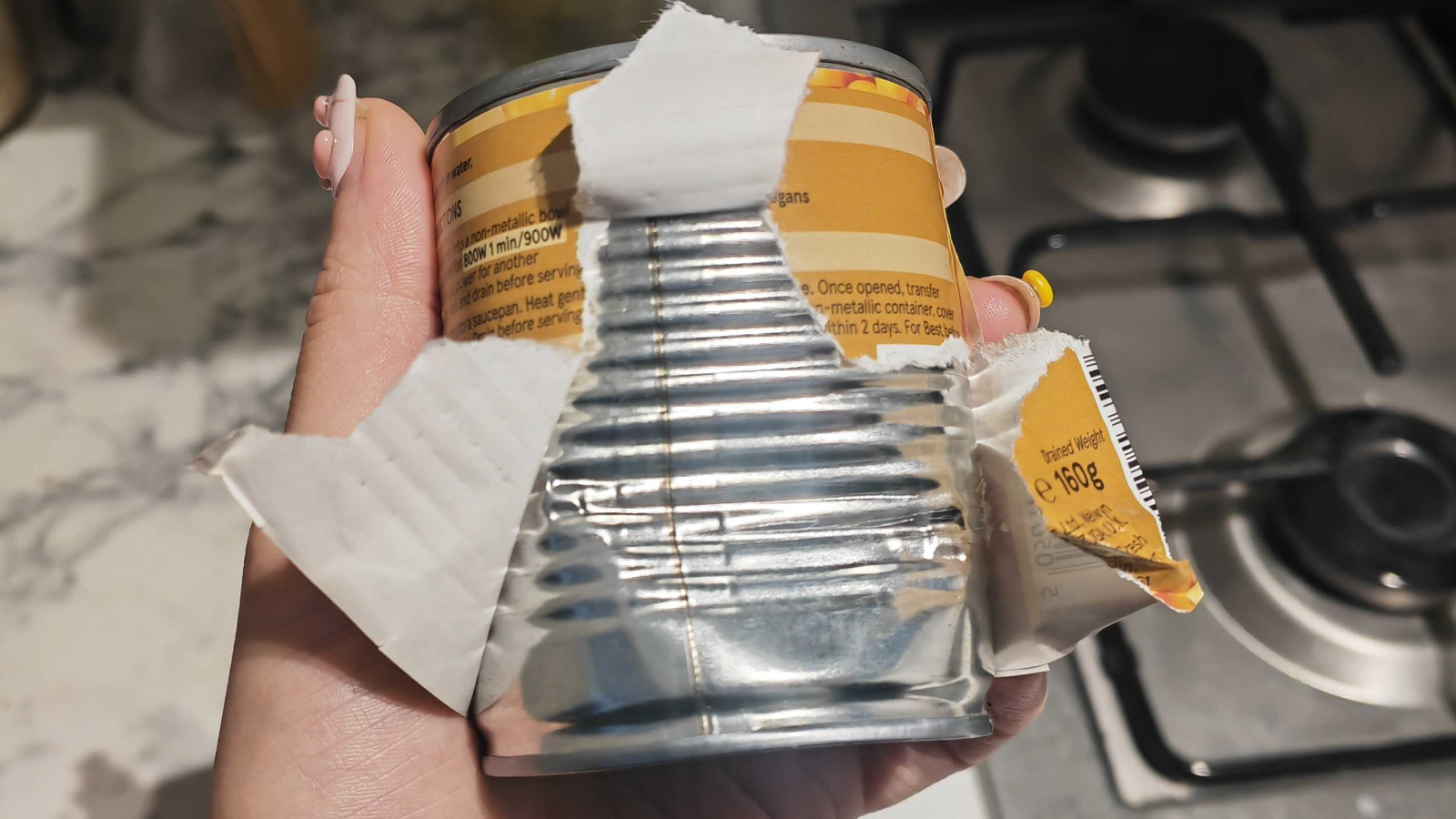
Most of us grew up hearing that dented or chipped cans are no good to eat from, as there’s a higher likelihood that the food’s sterile environment has been ruined.
But being possibly too honest here, my family for one would simply eat them anyway.
According to Dr Karan Rajan, who’s known for dispelling medical myths on TikTok, however, there’s a better way to check when you really have to bin the tin.
Advertisement
“If you have dented cans, here’s what to look for to know if it’s safe,” he began.
You should “look for dents on the side seam” of the tin, the doctor explained.
These are the lines on the can that show where the material has been fused together.
They’re usually hidden by the products’ label “so make sure you peel if off to inspect it carefully,” Dr Rajan advised.
If the dent covers that area of the can, the doctor says we should “throw the can away because it’s likely compromised.”
There’s a higher chance of oxygen, bacteria, and other food-spoiling nasties making their way into the can if its weakest point has been damaged.
A side dent which doesn’t involve the side seam and doesn’t cause a sharp pointy edge is “okay to use,” the doctor shared.
Advertisement
If there’s a sharp edge at the end of your dent, there’s a higher risk a small hole has been created at its point ― meaning the bad stuff has a way in.
Dents which include the top seam of the can (the rim you place your can opener under), dents which make your can look like it’s been crushed, and cans that look like they’re about to explode all mean your tin needs to be thrown away.
“Not every single dented or damaged can needs to be thrown away,” Dr Rajan says.
“But if you find yourself with a dented can and you’re unsure, if in doubt, throw it out.”
The USDA writes: “If a can containing food has a small dent, but is otherwise in good shape, the food should be safe to eat. Discard deeply dented cans.”
“A deep dent is one that you can lay your finger into. Deep dents often have sharp points,” they add.
“A sharp dent on either the top or side seam can damage the seam and allow bacteria to enter the can. Discard any can with a deep dent on any seam.”
Advertisement

Scientists have discovered toxic ‘Forever Chemicals’ present in samples of drinking water from around the world, a new study reveals.
Researchers found 10 ‘target’ PFAS (perfluoroalkyl substances) — chemicals which do not break down in nature — in tap and bottled water available for consumption in major cities in the UK and China. Perfluorooctanoic acid (PFOA) and perfluorooctane sulfonate (PFOS) were detected in over 99% of samples of bottled water sourced from 15 countries around the world.
They observed significant differences in PFAS concentrations between tap water samples from Birmingham, UK, and Shenzhen, China, with Chinese tap water found to have higher concentrations of PFAS compared to UK tap water.
However, the study demonstrates that measures such as boiling and/or activated carbon filtration — typically using a ‘jug’ water filter — can substantially reduce PFAS concentrations in drinking water, with removal rates ranging from 50% to 90% depending on the PFAS and treatment type.
Publishing their findings today (17 October) in ACS ES&T Water, researchers from the University of Birmingham, Southern University of Science and Technology, Shenzhen, and Hainan University, Haikou, reveal a wide range of PFAS contamination for target PFAS, starting at 63% of bottled waters tested.
Co-author Professor Stuart Harrad, from the University of Birmingham, commented: “Our findings highlight the widespread presence of PFAS in drinking water and the effectiveness of simple treatment methods to reduce their levels. Either using a simple water filtration jug or boiling the water removes a substantial proportion of these substances.
“While current PFAS levels in most water samples are not a major health concern, ongoing monitoring and regulation are crucial to protect public health. We provide valuable data on the presence of PFAS in drinking water alongside practical solutions to mitigate consumer exposure via drinking water. This is a significant step towards ensuring safer drinking water for communities worldwide.”
Bottled water from various countries showed varying levels of PFAS, with natural mineral water containing higher concentrations than purified water, but the concentrations were generally below health advisory levels set by regulatory agencies.
Co-author Professor Yi Zheng, from Southern University of Science and Technology, commented: “Increased awareness about the presence of PFAS in both tap and bottled water can lead to more informed choices by consumers, encouraging the use of water purification methods.
Our findings also suggest that the potential health risks of PFAS in drinking water may be influenced by lifestyle and economic conditions, highlighting the need for future research to further explore these factors from a socio-economic perspective.”
Except for comparisons between natural mineral and purified water, the researchers observed no significant difference in target PFAS concentrations between glass and plastic or still and sparkling bottled water.
While concentrations of most individual PFAS were well below corresponding health-based reference values, average PFOS concentrations in tap water samples from Shenzhen, China exceeded the maximum contaminant level (MCL) of 4 ng/L newly promulgated by the US Environmental Protection Agency (USEPA) in 2024.
Researchers purchased 112 bottled water samples from local shops and online supermarkets in the UK and China including 89 still and 23 sparkling waters in either plastic or glass bottles. The samples covered 87 brands with water sources originating from 15 countries in Asia, Europe, North America, and Oceania
They collected 41 tap water samples from homes in Birmingham and the nearby cities of Worcester, Coventry, and Derby — provided by two suppliers: South Staffordshire Water and Seven Trent Water, with a further 14 tap water samples collected from homes in Shenzhen, China.
PFAS are used widely in industry, in fire-fighting foams, and consumer products from waterproof clothing and school uniforms to personal care products because of their water and stain repellent properties. While some have been banned by government regulation, others are still widely used and their toxic effects not yet fully investigated.
The chemicals are already known to enter the body in different ways, for example being breathed in, ingested via food or drinking water, or absorbed through the skin. They are known to cause adverse health effects such as a lowered immune response to vaccination, impaired liver function, decreased birth weight, and increased risk of some cancers.
Some 13m items of HRT were prescribed on the NHS to 2.6m women in England, figures reveal.

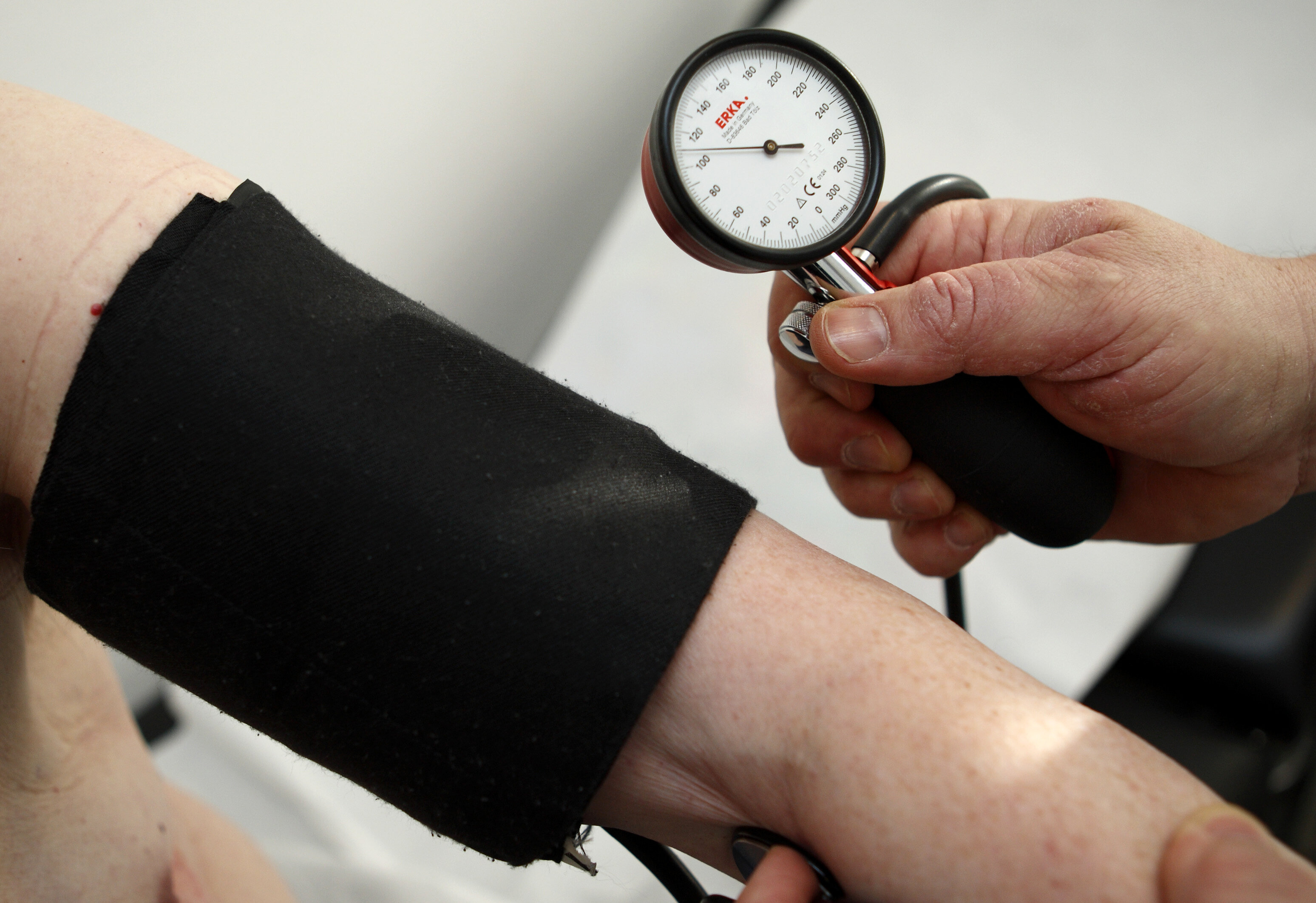
We all hear a lot about blood pressure, but depending on how often you take a trip to your doctor’s, you might not know what yours is.
The term refers to “the strength with which your blood pushes on the sides of your arteries as it’s pumped around your body,” the NHS says (how bad is it that I didn’t know that?).
Advertisement
Low blood pressure isn’t usually a concern, though it can make some of us feel dizzy and sometimes causes fainting.
But high blood pressure “can increase your risk of developing serious problems, such as heart attacks and strokes, if it’s not treated.”
You can get your blood pressure checked using a blood pressure machine (if you’re over 40, you can get this done for free in participating pharmacies).
Once you get those numbers you might be wondering what’s normal for your age ― and according to the Heart Research Institute, “normal blood pressure varies from person to person” and by age and gender.
Advertisement
These are:
According to the National Institute of Aging, “normal” blood pressure levels differ among different age groups because “Your body’s network of blood vessels, known as the vascular system, changes with age.”
“Arteries get stiffer, causing blood pressure to go up,” they add. That’s true even for very health and heart-conscious people.
And “Although the mechanisms responsible for the gender differences in blood pressure control are not clear, there is significant evidence that androgens, such as testosterone, play an important role in gender-associated differences in blood pressure regulation,” a research paper published by the American Heart Association (AHA) says.
The AHA wrote on a separate page that pre-menopausal women tend to have lower blood pressure than men, but added that “after menopause, however, blood pressure increases in women to levels even higher than in men.”
University of Cambridge students have undergone ECGs in memory of undergraduate Clarissa Nicholls.
Researchers hope to see if period pain as a teenager makes chronic pain as an adult more likely.

The singer was reportedly found dead in Buenos Aires after reportedly falling from the third story of a hotel, according to ABC and TMZ.
Alberto Crescenti, the head of the state emergency medical system has said that the circumstances of the singer’s death are being investigated and an autopsy will take place.
Liam was part of One Direction’s original line-up, formed on X Factor in 2010, alongside Zayn Malik, Louis Tomlinson, Niall Horan and Harry Styles. The band went on an indefinite break in 2015, with Liam pursuing a solo career.
He shared a son called Bear with singer Cheryl, who was a judge on X Factor.
This is a developing story. Please check back for updates.