Mathematical proof: Five satellites needed for precise navigation

As a rule, GPS indicates our location with an accuracy of just a few meters. But we have all experienced situations where the possible error increases to a few hundred meters or the indicated location is simply wrong. One reason for this can be the small number of satellites with line-of-sight contact to the navigation device or unfavorable relative alignment of the satellites.

How does GPS work?

GPS satellites are equipped with an extremely accurate atomic clock and know their positions at all times. They continually transmit the time and their location using radio waves. A mobile phone or other navigation device receives these signals from all satellites within their line of sight. The difference between the arrival time at the local clock of the receiver and the transmission time recorded by the satellite clock corresponds to the time taken for the signal to travel from the satellite to the receiver (the “time of flight”). Since radio waves travel at the speed of light, the time of flight determines the distance covered by the signal. The satellite positions and the distances are used to calculate the position of the receiver using a system of equations.

This simplified description does not take into account the fact that the local clock in the receiver is not an atomic clock. If it is inaccurate by just one millionth of a second, the calculated position will be inaccurate by at least 300 meters. The GPS problem is the need for the phone or other navigation device to determine the precise time along with the location — known in the theory of relativity as space-time.

If too few satellites are in the line of sight, the system no longer functions reliably and delivers multiple solutions, in other words several different locations where the receiver could be. This can lead to the situation where a phone indicates an incorrect location or no location at all. Until now the number of satellites needed to obtain unique solutions to the GPS problem has only been conjectured.

Five satellites for a precise location

Mireille Boutin, a professor of discrete algebra and geometry at TU/e and Gregor Kemper, a professor of algorithmic algebra at TUM, have now produced a mathematical proof showing that with five or more satellites, the exact position of the receiver can be uniquely determined in almost all cases. “Although this was a long-standing conjecture, nobody had managed to find a proof. And it was far from simple: We worked on the problem for over a year before we got there,” says Gregor Kemper. At present every location on Earth has sight contact to at least four satellites at all times. “Roughly speaking, with only four satellites, the probability of having a unique solution to the GPS problem appears to be 50 percent. Proving that statement is one of our next projects,” says Kemper. With three or fewer satellites in the line of sight, GPS navigation definitely does not work.

Geometry and uniqueness

The researchers arrived at the proof by characterizing the GPS problem in geometric terms. They found out that the position of the receiver cannot be uniquely determined if the satellites are located on a hyperboloid of revolution of two sheets. This is a curved surface that is open in all directions. Although this result is theoretical, it has the practical benefit of offering a better understanding of inaccuracies in determining positions.

Share Button

Exclusive: Labour Benefit Cap Rebels Warned They Face Fresh Crackdown As Winter Fuel Payment Vote Looms

Seven MPs suspended by Labour could face a fresh crackdown by party bosses if they vote against the government’s decision to means test winter fuel payments, HuffPost UK can reveal.

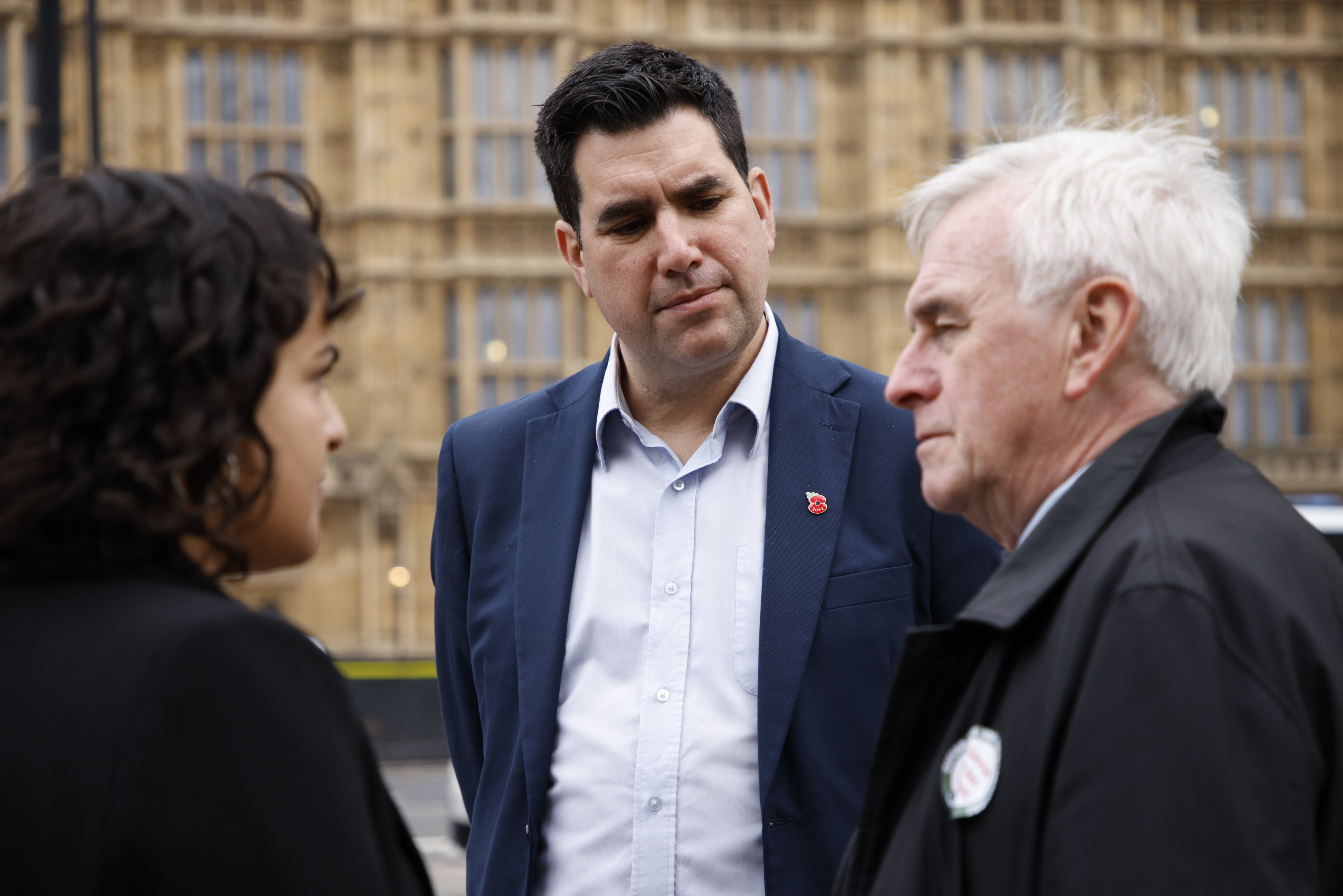
John McDonnell, Richard Burgon, Zarah Sultana, Ian Byrne, Apsana Begum, Imran Hussain and Rebecca Long-Bailey had the party whip taken off them for six months in July after they defied Keir Starmer to back calls for the two child benefit cap to be scrapped.

However, they are still expected to vote with the government while they serve their suspension.

A party source said: “Their suspension letter says they are still expected to follow the Labour whip, which they are sent weekly.”

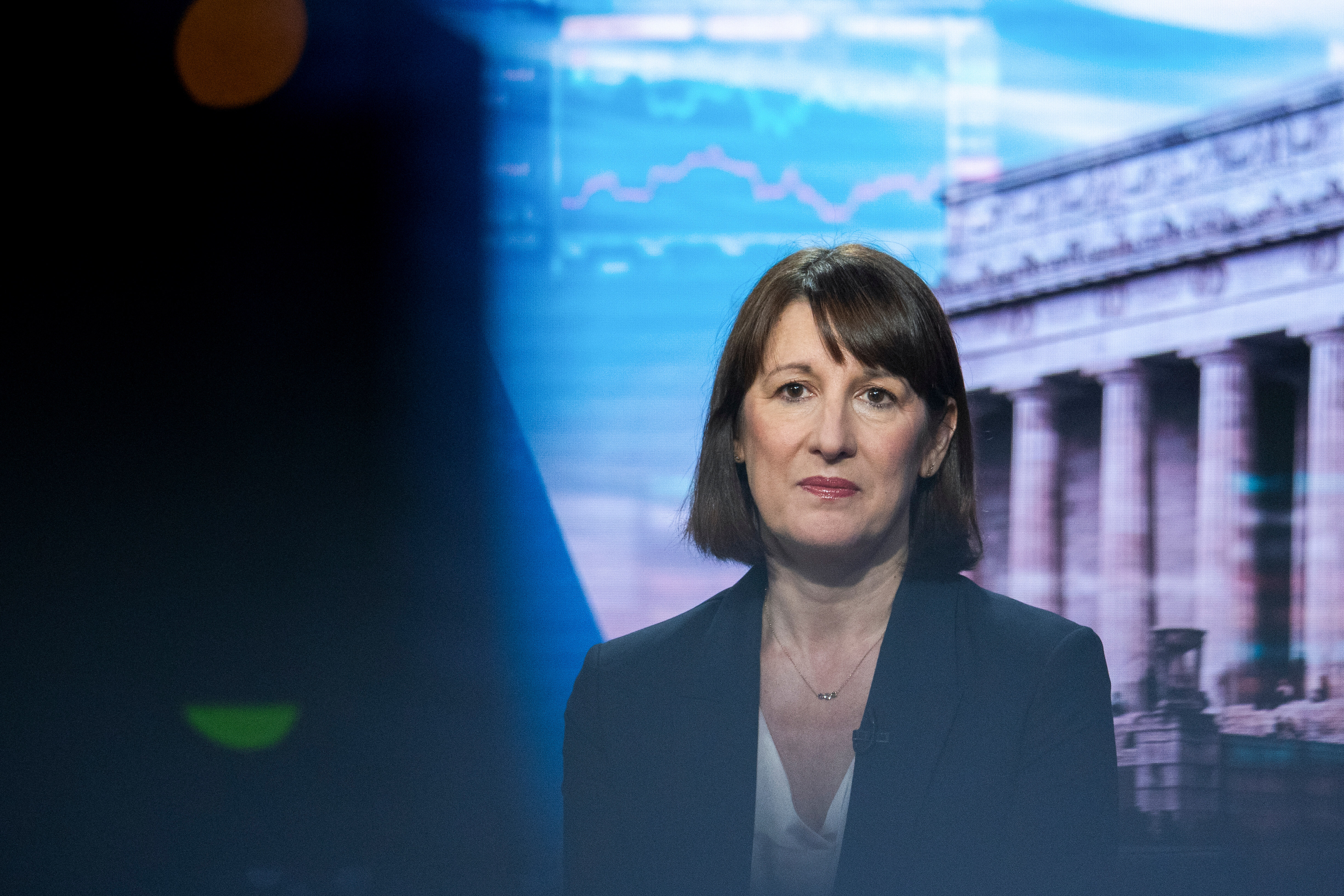
Ministers have agree to a Commons vote next Tuesday on chancellor Rachel Reeves’ controversial decision to remove winter fuel payments from around 10 million pensioners.

Two of the seven rebels – McDonnell and Sultana – have already said they are prepared to vote against the government again unless ministers water down their plans.

Four others – Burgon, Hussain, Byrne and Begum – have also signed a Commons motion calling on ministers to U-turn.

Sultana told HuffPost UK: “I’m planning to vote to keep pensioners out of fuel poverty as I did with voting to lift the two child benefit cap to keep children out of poverty.

“I look forward to the process about the whip concluding in January.”

McDonnell said: “I have told the whips that unless the government comes up with a serious change in its proposal, I will vote against.”

But HuffPost UK has learned that if they do vote against the government, they are unlikely to get the Labour whip back when their current suspension ends in January.

A Labour source said: “It is a shame that some MPs who were only too happy to ride the coat tails of the party’s success at the election are now using the incredibly difficult things we have to do to yet again undermine the government and their colleagues.

“If they are more comfortable hanging out with Jeremy Corbyn and his friends, they should just be honest about it.”

Labour insiders fear as many as 20 of the party’s MPs could rebel on Tuesday, however at this stage there are no plans to take the whip off them.

Share Button

Here’s How Much Of Cinemas’ Income Comes From Popcorn, And I’m Aghast

I take issue with how some Boomers talk about housing; “Just give up brunch and Netflix and you’ll have a home in five years,” they (wrongly) advise younger people.

Well, I stand by my objection, but it seems I’ve become a little out-of-touch on another topic myself.

Maybe it’s because I grew up near one of Ireland’s absolute cheapest cinemas, but I hadn’t quite realised how pricey the five-pound-plus snack has become until I took a rare trip to the big screen recently.

While I followed the scent of freshly popped corn to the counter like a cartoon elephant drawn to a bun, my friend stood aghast ― “There’s no way we’re buying popcorn,” she said.

Looking at its price, I realised why. But how come it’s so dear to begin with?

There is a method to the madness

Researchers at Stanford Graduate School of Business (GSB) and the University of California (UC) wrote a paper stating that, though it’s painful, the prices do make sense.

That’s because, while only 20% of cinemas’ revenue comes from concessions (food, drink, and other non-ticket products), it accounts for a whopping 40% of their revenue.

Confused? I was too ― but it turns out that not all of the ticket revenue goes to the cinema. Instead, they share it with movie distributors.

The Stanford GSB and UC study also found that “die-hard” movie fans, who simply love going to the cinema, proportionally pay more for concessions ― low-traffic weeks, where bums were not hitting theatres’ seats, saw a higher proportion of snack profits than higher-traffic weeks.

That means ticket prices can stay lower, as people other than cinema-or-nothing movie-watchers will be put off by a high upfront fee.

“The argument that pricing secondary goods higher than primary goods can benefit consumers has been circulating for decades, but until now, no one has looked at hard data to see whether it’s true or not,” Wesley Hartmann, associate professor of marketing at Stanford GSB and co-author of the paper, said.

Essentially, your gut instinct is right; food profits bulk up what can be quite meagre ticket profits, especially during low-traffic weeks.

Any other insights?

Yep ― unsurprisingly, people who went to the theatre in groups tended to buy more concessions, as did those who bought their tickets online.

“The fact that the people who show up only for good or popular movies consume a lot less popcorn means that the total they pay is substantially less than that of people who will come to see anything,” Wesley Hartmann said.

“If you want to bring more consumers into the market, you need to keep ticket prices lower to attract them.”

Given that “The average price for a standard UK cinema ticket in 2023 was £7.92” compared to £6.53 in 2013 (per UK Cinema Association and Statista), that seems to have held true.

Popcorn prices, however? Those are now creeping up to the price of the ticket, though to be fair, they’ve always been proportionally pretty pricey.

Share Button

How ‘Distraught’ Labour MPs Plan To Punish Rachel Reeves Over Winter Fuel Payment Cuts

On May 1, Keir Starmer could not have been clearer about his position on whether or not every pensioner should continue to receive the winter fuel payment from the government.

Scrapping it, the then leader of the opposition made clear to the House of Commons, was a very bad thing.

So concerned was he at the prospect of the Tories doing it, he asked Rishi Sunak at PMQs that day: “Will the prime minister now rule out taking pensioners’ winter fuel payments off them to help fund his £46 billion black hole?”

How PM Starmer must now regret that particular line of attack.

Within days of entering government two months ago, chancellor Rachel Reeves decided to means test the hitherto universal benefit, meaning only those on pension credit would continue to receive it, with 10 million OAPs missing out.

Reeves blamed the £22 billion “black hole” in the nation’s finances – that Labour insist they inherited from the Tories – for the need to find savings where they can in order to balance the books.

Nevertheless, it has created a huge political problem for the new government which could result in Starmer suffering his largest backbench rebellion yet.

Under mounting pressure from MPs, Commons leader Lucy Powell announced that a parliamentary vote on the controversial cut will take place on Tuesday.

That is the same Lucy Powell who was sent out onto the airwaves last weekend to suggest that had the Chancellor not take the decision she had, there would have been a run on the pound and the economy would have crashed.

Some in government are baffled that Reeves has chosen to take up to £300 off millions of OAPs – many of them on incomes of barely £11,500 a year – the first signature decision of her time in office.

One senior source told HuffPost UK: “I keep waiting for some sensible person to say ‘right, how do we get out of this hole we’re fallen into on this policy’ as opposed to, for some reason, making it a test of our political and economic credibility.”

Another insider said: “This is a problem on the doorstep, but they have to see it through now.”

So far, 10 Labour MPs have signed a Commons motion calling on the Treasury to think again, but some senior party figures believe as many as 20 could end up rebelling.

That would easily beat the seven rebels who defied the PM and voted to scrap the two-child benefit cap barely a fortnight after the general election – and were stripped of the Labour whip for their trouble.

HuffPost UK understands there are currently no plans to impose the same sanction on any MPs who vote against the government on Tuesday.

Among the signatories to the rebel motion tabled by Labour MP Neil Duncan-Jordan is former shadow cabinet member Rachael Maskell, who told HuffPost UK she and her Labour colleagues were “deeply concerned” at the government’s approach.

“I’ve spoken to so many MPs who are really distraught about these measures,” she said. “Some have literally been in tears at the prospects of their elderly constituents not getting their winter fuel payments.

“I’ve read letters myself and been in tears. One recently widowed constituent told me they are just above the income threshold so they no longer qualify for the payment and are really fearful for the winter. This isn’t about macro-economics, this is about real lives.”

The Treasury has launched a campaign urging the 800,000 pensioners who qualify for pension credit but don’t claim it, to do so.

But Maskell said that even once you have completed the lengthy application form, it takes nine weeks to process the claim.

“To keep old people warm and well they need to have enough money to pay the bills and this needs to be the focus now,” she said. “We have said we will protect the NHS, so we don’t need more old people in hospital beds this winter.

“Old people can’t retain heat, putting them at greater risk of stroke, heart attack and hypothermia. That would put a greater demand on the NHS, and It will be [health secretary] Wes Streeting who will have to stand before the country and explain why – and I don’t want him to have to do that.”

The York Central MP wants the chancellor to delay her plans to cut the winter fuel payment until next year, and use that time to establish a better system for targeting the benefit at those who need it.

Caroline Abrahams, charity director at Age UK, said, “many older people are very frightened about how they will manage this winter” when the payment is removed.

The charity estimates that around one million old people living near the poverty line, but who are not poor enough to receive pension credit, will “really struggle” this winter as a result of the chancellor’s decision.

Abrahams said: “The government is not disputing that millions of pensioners on low and modest incomes will lose their winter fuel payment under their plans and they have no credible answer when asked about the plight of all those whose tiny occupational pensions take them above the pension credit line.

“It is for these reasons that they should pause this policy so it can be fully considered as part of the government spending review in the spring.”

Downing Street sources have told HuffPost UK that the government has no plans to U-turn, or offer any concessions to the rebels, ahead of Tuesday’s vote.

They pointed to the extra £421 million which was announced last week for the household support fund, and the fact that the pensions triple lock means the state pension will increase by £400 each year as proof that the government is acting to help those on the lowest incomes.

A cabinet minister defended the government’s position, and insisted that the chancellor had actually chosen the least worst option.

“We know it’s difficult but we can see how bad the public finances are,” they told HuffPost UK. ”It was pretty clear that there was going to be a major economic shock in the markets had we not taken immediate action on this.

“The choice the Treasury had was to either keep the pension triple lock or means test the winter fuel allowance. That makes it quite an easy choice.

“The politics are tough, but we have to show voters that we’ve been left with this dreadful inheritance and that’s the real difficulty we’ve got. There are no palatable choices here.

“We’re asking the public and the pensioners to give us a bit of time to sort this mess out.”

Nevertheless, Tuesday’s vote promises to be extremely uncomfortable for Starmer and Reeves.

And with a brutal Budget coming at the end of October, the PM seems certain to make good on his promise that “things will get worse before they get better”.

Share Button

Men on sodium valproate told to use contraception

There is a potential, small increased risk of autism and other neurodevelopmental problems, experts say

Share Button

Baby poo study reveals mysteries of newborn guts

Scientists work out which bacteria populate babies guts first – and what it could mean for their health.

Share Button

No quick fix to special-needs pupil failures, parents told

The schools minister promises reform but parents are frustrated with the lack of action.

Share Button

Scientists make tissue of living animals see-through

In a pioneering new study, researchers made the skin on the skulls and abdomens of live mice transparent by applying to the areas a mixture of water and a common yellow food coloring called tartrazine.

Dr. Zihao Ou, assistant professor of physics at The University of Texas at Dallas, is lead author of the study, published in the Sept. 6 print issue of the journal Science.

Living skin is a scattering medium. Like fog, it scatters light, which is why it cannot be seen through.

“We combined the yellow dye, which is a molecule that absorbs most light, especially blue and ultraviolet light, with skin, which is a scattering medium. Individually, these two things block most light from getting through them. But when we put them together, we were able to achieve transparency of the mouse skin,” said Ou, who, with colleagues, conducted the study while he was a postdoctoral researcher at Stanford University before joining the UT Dallas faculty in the School of Natural Sciences and Mathematics in August.

“For those who understand the fundamental physics behind this, it makes sense; but if you aren’t familiar with it, it looks like a magic trick,” Ou said.

The “magic” happens because dissolving the light-absorbing molecules in water changes the solution’s refractive index — a measure of the way a substance bends light — in a way that matches the refractive index of tissue components like lipids. In essence, the dye molecules reduce the degree to which light scatters in the skin tissue, like dissipating a fog bank.

In their experiments with mice, the researchers rubbed the water and dye solution onto the skin of the animals’ skulls and abdomens. Once the dye had completely diffused into the skin, the skin became transparent. The process is reversible by washing off any remaining dye. The dye that has diffused into the skin is metabolized and excreted through urine.

“It takes a few minutes for the transparency to appear,” Ou said. “It’s similar to the way a facial cream or mask works: The time needed depends on how fast the molecules diffuse into the skin.”

Through the transparent skin of the skull, researchers directly observed blood vessels on the surface of the brain. In the abdomen, they observed internal organs and peristalsis, the muscle contractions that move contents through the digestive tract.

The transparent areas take on an orangish color, Ou said. The dye used in the solution is commonly known as FD&C Yellow #5 and is frequently used in orange- or yellow-colored snack chips, candy coating and other foods. The Food and Drug Administration certifies nine color additives — tartrazine is one — for use in foods.

“It’s important that the dye is biocompatible — it’s safe for living organisms,” Ou said. “In addition, it’s very inexpensive and efficient; we don’t need very much of it to work.”

The researchers have not yet tested the process on humans, whose skin is about 10 times thicker than a mouse’s. At this time it is not clear what dosage of the dye or delivery method would be necessary to penetrate the entire thickness, Ou said.

“In human medicine, we currently have ultrasound to look deeper inside the living body,” Ou said. “Many medical diagnosis platforms are very expensive and inaccessible to a broad audience, but platforms based on our tech should not be.”

Ou said one of the first applications of the technique will likely be to improve existing research methods in optical imaging.

“Our research group is mostly academics, so one of the first things we thought of when we saw the results of our experiments was how this might improve biomedical research,” he said. “Optical equipment, like the microscope, is not directly used to study live humans or animals because light can’t go through living tissue. But now that we can make tissue transparent, it will allow us to look at more detailed dynamics. It will completely revolutionize existing optical research in biology.”

In his new Dynamic Bio-imaging Lab at UTD, Ou will continue the research he started with Dr. Guosong Hong, assistant professor of materials science and engineering at Stanford and a corresponding author of the study. Ou said the next steps in the research will include understanding what dosage of the dye molecule might work best in human tissue. In addition, the researchers are experimenting with other molecules, including engineered materials, that could perform more efficiently than tartrazine.

Study authors from Stanford, including co-corresponding author Dr. Mark Brongersma, the Stephen Harris Professor in the Department of Materials Science and Engineering, were funded by grants from federal agencies including the National Institutes of Health, the National Science Foundation and the Air Force Office of Scientific Research. As an interdisciplinary postdoctoral scholar, Ou was supported by the Wu Tsai Neuroscience Institute at Stanford. The researchers have applied for a patent on the technology.

Share Button

The collapse of bat populations led to more than a thousand infant deaths

Bats are considered a natural pesticide, widely relied on by farmers as an alternative to chemical pesticides to protect their crops from insects. But since 2006, many bat populations have collapsed in counties in North America due to an invasive fungus found in the caves bats use during the day and throughout winter that causes what is known as White-Nose Syndrome. A new study in Science uses their sudden collapse to explore whether farmers turned to chemical pesticides, and whether doing so impacts human health. It finds that farmers did increase their pesticide use, leading to more than 1,000 infant deaths.

“Bats have gained a bad reputation as being something to fear, especially after reports of a possible linkage with the origins Covid-19,” says study author Eyal Frank, an assistant professor at the Harris School of Public Policy. “But bats do add value to society in their role as natural pesticides, and this study shows that their decline can be harmful to humans.”

Frank compared the effect of bat die-offs on pesticide use in counties that experienced those bat population declines to counties that were likely unaffected by the wildlife disease. He found that when the bat populations declined, farmers increased their use of pesticides by about 31 percent. Because pesticides have been linked to negative health impacts, Frank next tested to see if the increased use of pesticides corresponded with an increase in infant mortality — a common marker to study the health impacts of environmental pollution. Indeed, when farmers increased their use of pesticides, the infant mortality rate rose by almost 8 percent. This corresponds to an additional 1,334 infant deaths. Or, for every 1 percent increase in pesticides, there was a 0.25 percent increase in the infant mortality rate.

The study also found that pesticides aren’t as good at preventing pests as bats. The quality of the crops likely declined, as farmers’ revenue from crop sales decreased by nearly 29 percent. Combining this revenue loss with the expense of the pesticides, farmers in communities that experienced the bat die-offs lost $26.9 billion dollars between 2006 and 2017. Adding onto those losses the $12.4 billion in damages from infant mortality, the total societal cost from the bat die-offs in these communities amounted to $39.6 billion.

“When bats are no longer there to do their job in controlling insects, the costs to society are very large — but the cost of conserving bat populations is likely smaller,” says Frank. “More broadly, this study shows that wildlife adds value to society, and we need to better understand that value in order to inform policies to protect them.”

Share Button

State-by-state data boosts bird conservation planning

New data summaries from the Cornell Lab of Ornithology’s eBird platform will help state wildlife planners assess the status of bird populations that live in or pass through their state — a crucial tool in protecting species.

A team of data scientists at eBird, the participatory science platform, has packaged summaries covering every bird species, in every state, and made them available online for free. These data summaries will help states prepare their federally required 2025 updates to State Wildlife Action Plans.

“As we began to work more closely with state agencies and regional conservation partnerships, we realized that we needed to significantly increase the accessibility of eBird information for these partners,” said Viviana Ruiz-Gutierrez, assistant director of the Cornell Lab’s Center for Avian Population Studies and the driving force behind development of the state summaries.

“By providing these customized summaries, state agencies don’t have to wrangle with big data and spatial tools. They get data targeted to the area they are responsible for,” said Andrew Stillman, a postdoctoral fellow at the Cornell Lab. “It’s much more efficient, saving them time and money.”

State Wildlife Action Plans are critical to conservation in the United States, Stillman said. The plans must be updated every 10 years and submitted to the U.S. Fish and Wildlife Service for approval. Approval releases funding from the State and Tribal Wildlife Grants program, which is used to proactively conserve birds and other species that make up the biodiversity of each state.

The 2025 updates will mark the second major revision to state wildlife plans since the first plans were completed in 2005. But this is the first time eBird state data summaries will be available to inform the revisions, helping planners easily identify which species are in greatest need of conservation and to set priorities for where and when to take conservation action.

Without year-round weekly bird abundance data from eBird, an important part of the big picture is missing. For example, tundra swans don’t breed in Michigan and are not found there for most of the year. But during two weeks in March, 13% of the global population is migrating through Michigan, making marsh and wetland habitat vital for stopovers during their long journey back to their Arctic breeding grounds.

The state summaries are updated each year with new population numbers from eBird. With the latest August 2024 update, planners can now also see which way bird populations are trending for the entire state: increasing, decreasing or stable; and by how much.

“We’ll continue to refine and update the summaries so states have what they need,” Stillman said. “We’re also looking into expanding this customization for the two dozen Migratory Bird Joint Ventures in the U.S. and Canada. Birds are not known for recognizing human boundaries and joint venture partnerships work across boundaries to conserve birds and the habitats they need, where they need it. The state planners tell us, ‘Keep it coming.'”

Share Button