The choice to not fund Alzheimer’s drug lecanemab caused upset, but it is not a “wonder drug”.


The choice to not fund Alzheimer’s drug lecanemab caused upset, but it is not a “wonder drug”.
The jab given to 67-year-old Janusz Racz may revolutionise how this cancer is treated, say doctors.
Two families believe their loved ones would still be alive if vaccine warnings had been shared.

Inflammation of the abdominal cavity in human fetuses resulting from a perforation of their intestine is likely to be caused by proteins contained in the fetal stool. This is the result of a Kobe University study that establishes a new mouse model allowing research and drug development for a condition that is otherwise difficult to approach.
The fetus’s stool, called the “meconium,” is sterile but nevertheless causes inflammation of the abdominal cavity when it leaks out of the intestine after a perforation. Called “meconium peritonitis,” this is a life-threatening condition for the baby with a mortality rate of 10%-15% in humans, and neither a cause nor a treatment have been established.
The Kobe University pediatrician FUJIOKA Kazumichi and his team therefore decided to replicate the condition in mice. Since the intestinal development of mice and humans is different, the intestine of a newborn mouse pup is equivalent to that of a human fetus after the 12th week of pregnancy, but even so, the mouse pup is too small and fragile to induce the condition through an operation. The research team therefore created a slurry of meconium, which they took from human newborns, and injected it into the abdominal cavity of the pups. They then characterized the resulting condition and compared the pups’ mortality rates in response to different treatments.
Their results, published in the journal Pediatric Research, show that mortality was not influenced by antibiotic treatment, ruling out a bacterial cause. However, when they heat-treated the meconium slurry before injection, which disrupts the natural shapes of proteins, they found a significant reduction in mortality. This indicates that proteins contained in the meconium are responsible for the inflammation and in particular the researchers assume digestive enzymes that are abundant in the meconium to be the culprits.
The Kobe University development has more general implications, too. In a different set of experiments, Fujioka and his team characterized the condition of the mice pups after the meconium slurry administration by analyzing the mice’s biochemical and gene expression profiles. Comparing that to the results of a previously established mouse model, where the pups were injected an extract of intestinal contents of adult mice, they could show that their model results in different symptoms. Believing that their model is thus likely to be specific to meconium-caused inflammation, the researchers argue that it is an apt platform to conduct more research on the condition.
Fujioka and his team hope that their work will enable the search for an effective treatment of the condition, which occurs in about one out of every 35,000 live births. They conclude their paper saying, “As our mouse model is simple and highly reproducible, it can be used in research to elucidate the pathophysiology of meconium peritonitis.”
This research was funded by the Japan Society for the Promotion of Science (grants 18K15710 and 20K08229), the Morinaga Hoshi-kai Foundation, the Kawano Masanori Memorial Public Interest Incorporated Foundation for the Promotion of Pediatrics and the Japan Foundation for Pediatric Research.

Most people — up to 94% of U.S. adults — experience at least some dulling of their senses with age, finding themselves squinting at screens, craving stronger flavors, and missing snatches of conversations more and more frequently. Researchers at the University of Chicago Medicine are looking into how these changes can go beyond mere inconvenience and actually worsen overall mental health in older adults.
“When your senses decline, you can’t experience the world as well,” said Jayant Pinto, MD, a physician and expert in olfactory dysfunction at UChicago Medicine. “You can’t hear colleagues or friends at the dinner table; you can’t discern what’s going on in your environment; you may have a hard time reading or making things out when you’re in your neighborhood. It makes all your cognitive burdens a little harder, and that probably wears you down over time and causes mental health problems.”
Along with Alexander Wang, a medical student at the UChicago Pritzker School of Medicine, Pinto recently led a study examining the prevalence and impact of sensory impairments among older adults. They found that people with sensory disabilities tend to have worse mental health, and that different types of sensory disability were associated with different aspects of mental health.
Revealing associations between perception and emotion
The UChicago researchers analyzed data on sensory function (vision, hearing and sense of smell) and self-reported mental health from nearly 4,000 older adults, collected over 10 years of follow-up as part of the National Social Life, Health & Aging Project. They found that people who had multiple senses impaired experienced more loneliness and had significantly worse self-reported mental health overall, and people with three sensory disabilities were more likely to experience frequent depressive episodes. In analyses that differentiated between the senses, vision impairment was most strongly associated with both loneliness and poor self-rated mental health.
Scientists are still exploring how changes in all five senses can impact people, but the UChicago researchers can already point to many ways sensory decline contributes directly to feelings of loneliness, sadness and boredom.
Older people with vision impairment may have trouble getting out of the house or seeing the faces of their friends and family, and hearing loss can make conversations stilted and frustrating. Even loss of smell can affect someone’s ability to find joy in familiar scents — like a favorite home-cooked meal or a loved one’s signature perfume — and perceive pheromones, which (though not registered consciously) contribute to social dynamics.
“We saw that hearing and vision disability tended to be associated with lower self-rated mental health and feelings of loneliness, but olfactory disability had a weaker association,” Wang said. “This stood out to me because hearing and vision disabilities tend to be much more stigmatized than olfactory disability. This made me reflect on the ways in which social stigma may be driving this worse mental health.”
Caring for one another in an aging society
In the face of that stigma, the researchers say their results highlight the importance of improving access to mental health services and increasing awareness of the connection between sensory loss and mental distress. In particular, understanding how different sensory disabilities impact the long-term mental health of older adults could help healthcare professionals — especially primary care providers, otolaryngologists and ophthalmologists — screen for mental health conditions when they identify sensory loss in their patients, providing opportunities for personalized and timely interventions.
In addition to proactively treating older adults’ mental health, the researchers pointed to steps that can be taken to directly lessen the day-to-day effects of sensory difficulties, which would in turn lessen their negative mental health implications.
“We have an aging society; everybody has a relative who’s getting older and having a harder time in life. It’s a burden for us all to share,” Pinto said. “Lessening the burdens of your aging relatives and friends can have a huge impact on people’s lives, their productivity and their quality of life.”
On a personal level, family members and friends can help by being patient and finding ways to communicate more effectively, such as speaking clearly or using written notes. On a societal level, public policies and community programs can ensure accessibility in public spaces and provide resources that improve quality of life.
Pinto also highlighted a wide range of technologies and medical interventions are available that can help compensate for sensory impairment. For hearing loss, there are cochlear implants, hearing aids and other hearing-assistive devices — which research has indicated could slow cognitive decline in addition to improving quality of life. For vision loss, there are glasses, contacts, cataract surgery and LASIK surgery, along with accommodations like text-to-speech computer programs. Even for the sense of smell, health experts can sometimes help by reducing sinus inflammation or conducting smell training exercises.
“In many cases, we can mitigate sensory difficulties in ways that might actually improve people’s lives, mental health and sense of loneliness — which is a huge epidemic,” Pinto said. “These are simple ways we can intervene to help people and potentially have a huge impact on society.”
Recognizing and destigmatizing sensory disability
The researchers said they intentionally used the word “disability” throughout the paper to underscore the significant impact of sensory impairments on individuals’ lives. This terminology also aligns with efforts to destigmatize these conditions and promote a more inclusive approach to healthcare.
“To some extent, our society already considers decreased sensory function to be a disability: think of the blind and d/Deaf communities,” Wang said. “Like many marginalized communities, the disabled community has historically had a very contentious relationship with the medical field, which can cause distress and limit access to mental health services. With better understanding and compassion, we can strive to improve the care we provide to older adults and disabled patients.”
He said that by framing the data this way, he hopes to encourage more healthcare providers to move away from thinking in terms of the Medical Model of Disability and move towards the Social Model of Disability.
“My understanding is that the Medical Model characterizes disability as something that is ‘deficient’ with a person, thus requiring some sort of ‘fixing’ of the individual,” he explained. “The Social Model characterizes disability as more of an identity, so limitations relating to disability stem from a society’s lack of accessibility and accommodation for disabled people.”
Recognizing sensory impairments as disabilities and acknowledging their impact on mental health are important steps toward more comprehensive and compassionate care. By addressing the medical, social and environmental barriers that exacerbate these impairments, clinicians — and society as a whole — can better support older adults in maintaining their independence.

Formerly known as nonalcoholic steatohepatitis, metabolic dysfunction-associated steatohepatitis (MASH) is an inflammatory disease characterized by liver scarring or fibrosis that progressively impairs liver function.
It is a major risk factor for cirrhosis and liver cancer. And because treatment options are limited, MASH is the second leading cause for liver transplants in the United States after cirrhosis caused by chronic hepatitis C infection.
A better understanding of the pathological processes that drive MASH is critical to creating effective treatments. In a new paper published August 19, 2024 in PNAS, a team of scientists from Sanford Burnham Prebys, the University of California San Diego School of Medicine and elsewhere, describe the complex interplay between diseased liver cells and macrophages — a type of white blood cell whose jobs include killing and removing harmful cells and pathogens and helping to spur normal healing.
Debanjan Dhar, PhD, associate professor in the Cancer Genome and Epigenetics Program at Sanford Burnham Prebys, is senior author of the study. David Brenner, MD, president and CEO of Sanford Burnham Prebys, and Christopher Glass, MD, PhD, professor of cellular and molecular medicine at UC San Diego, are corresponding authors. Souradipta Ganguly, PhD, a postdoctoral research fellow at UC San Diego and Sanford Burnham Prebys, is first author.
The researchers found that the heterogeneous mix of macrophages involved with MASH was different, depending on whether the disease was progressing or regressing. More importantly, they identified specific macrophage subpopulations that are critical for resolving MASH and liver fibrosis in which accumulating scar tissue impairs the organ’s ability to function or repair itself. These fibrotic bands restrict blood flow, imperiling the entire organ.
“In MASH, Kupffer cells (a type of macrophage that resides in the liver) are lost and replaced by four distinct macrophage subpopulations. When the disease is in regression — that is, symptoms or severity are decreasing — two lipid associated macrophage subpopulations are dominant and express TREM2, a cell receptor that regulates cell survival, proliferation and anti-inflammatory responses,” said Brenner.
“MASH regression occurs in the presence if TREM2+ macrophages. They not only restrict the progression of MASH-fibrosis, but effectively slow it and reduce inflammation. The absence of TREM2+ macrophages allows the disease to progress.”
In early and moderate stages, MASH often produces no tell-tale symptoms, which is part of the why it has reached epidemic proportions in the U.S. The American Liver Foundation estimates 80 to 100 million Americans have fatty liver disease which, undiagnosed and untreated, progresses to nonalcoholic steatohepatitis, MASH, cirrhosis, liver cancer and death, often in combination with other conditions, such as obesity.
An estimated 1.5% to 6.5% of U.S. adults have MASH. afflicted by the condition, and roughly 24% of adults have metabolic dysfunction-associated steatotic fatty liver disease, the starting point for MASH, cirrhosis and worse.
“Our findings suggest that lipid associated macrophages that express TREM2 and TREM2 are required both for the emergence of more liquid associated macrophages and for their reparative functions,” said Dhar.
“Effective degradation of scar tissue as a protective mechanism is mediated by TREM2, and the absence of TREM2+ macrophages not only disrupts the liver’s ability to remove fibrotic tissue, but it also harms the entire immune response and healing process.”
Going forward, the scientists say a TREM2 agonist — a drug or substance that mimics the function of TREM2 — might be beneficial for MASH/fibrosis therapy and help spur MASH and fibrosis regression in patients also undergoing lifestyle modification, weight loss or bariatric surgery.
“There is only one approved treatment for MASH, and it was only approved earlier this year,” said Glass. “Any opportunities to expand clinical options that benefit patients need to be thoroughly pursued because liver disease in this country — and around the world — is only getting worse.”
Additional authors on the study include Sara Brin Rosenthal, Kei Ishizuka, Theresa V. Rohm, Naser Khader, Sebastiano Archilei, Jerrold M. Olefsky, Ariel E. Feldstein, Tatiana Kisseleva and Rohit Loomba, all at UC San Diego; Ty D. Troutman, UC San Diego and Cincinnati Children’s Hospital Medical Center, and German Aleman Muench, Yasuyo Sano and Pejman Soroosh, Janssen Research & Development, San Diego.
This study was supported by National Institutes of Health grants to D.D. (R01DK137061, R01DK133930), Altman Clinical and Translational Research Institute (ACTRI — KL2TR001444) and the San Diego Digestive Diseases Research Center (NIH DK120515). It was partially supported by the ACTRI (NIH UL1TR001442). T.K. was supported by NIH grants DK099205, AA028550, DK101737, AA011999, DK120515, AA029019, DK091183; C.K.G by NIH grants DK091183 and HL147835. T.D.T. was supported by NIH grants P30DK063491, T32DK007044, P30DK078392, the American Association for the Study of Liver Diseases (PNC23-216751) and the Center for Inflammation and Tolerance through the Cincinnati Children’s Research Foundation. R.L. received funding support from NCATS (5UL1TR001442), NIDDK (U01DK061734, U01DK130190, R01DK106419, R01DK121378, R01DK124318, P30DK120515), NHLBI (P01HL147835), the John C. Martin Foundation (RP124). J.M.O was supported by the Diabetes Research Center (P30DK063491) and Horton JPI MRA: Obesity and its metabolic complications (20175015). A.E.F was supported by the NIH grant R01DK113592. T.V.R was supported by grants from the Swiss National Science Foundation (P2BSP3_200177) and the Larry L. Hillblom Foundation (2023-D-012-FEL).

We’ve written before at HuffPost UK about what everything from Twix to HobNob and HARIBO really stands for.
We’ve even shared the hidden detail in Twix’s clever branding.
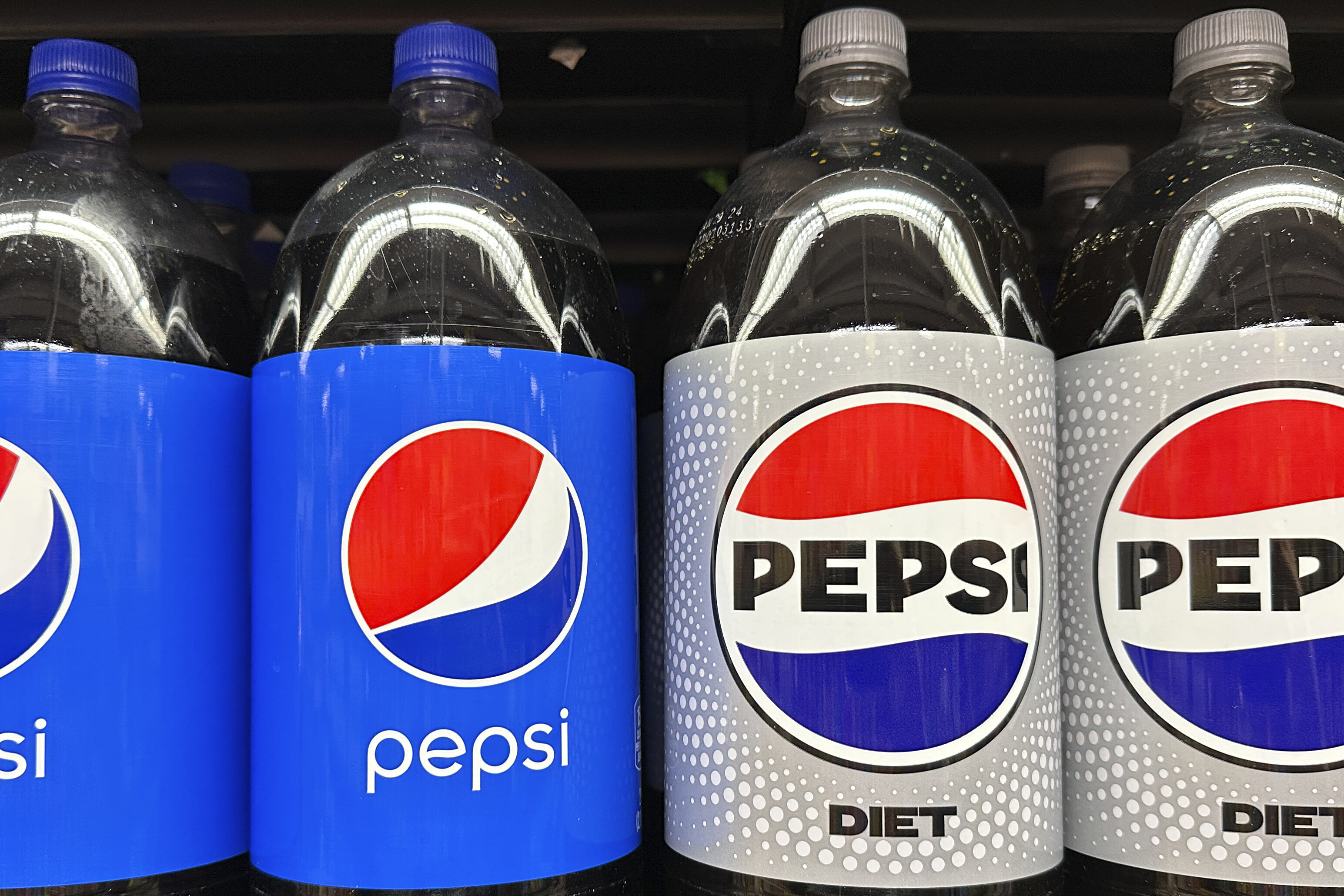
So what about Pepsi, the iconic red, white, and blue-branded soft drink?
Is its moniker some mixture of real, human names (like HARIBO), or a clever portmanteau (like LEGO)?
Is it an acronym or a clever reference (like how the name Marmite sneakily refers to its former cooking and distribution method)?
Advertisement
No, no, no, and no, it seems.
The brand is actually named after indigestion.
I’m as surprised as you are. But then again, I also didn’t know the beverage was originally called “Brad’s Drink.”
Its inventor, Caleb D. Bradham, changed the name in 1898.
Pepsi’s site merely says, “He bought the name ‘Pep Kola’ from a local competitor and changed it to Pepsi-Cola.”
But according to the LA Times, who heard from Dr. Sydnee McElroy and her husband Justin (both hosts of Sawbones: A Marital Tour of Misguided Medicine), the name “derived from dyspepsia (ie, indigestion), which the beverage was supposed to assuage.”
MEL Magazine says the drink’s supposed main ingredient, pepsin, was marketed as a way to get rid of stomach issues.
Advertisement
“A 1902 advertisement that was developed with at least the blessing of Pepsi inventor Caleb Bradham referred to it directly as ‘Pepsi-Cola (The Pepsin Drink),’” they wrote.
Pepsin is an enzyme your stomach makes to help digest proteins in your food.
Though I couldn’t find that specific ad, I did find a 1902 ad that says it “aids digestion” and a 1907 ad that reads ”[Pepsi] is an absolutely pure combination of pepsin ― for the ingestion ― acid phosphate and the juices of fresh fruits.”
However according to Pepsi themselves, “Despite its name and hearsay, pepsin was never an ingredient of Pepsi-Cola.”
Whether it comes from “dyspepsia” or “pepsin” (or perhaps a vague association with both), Pepsi was certainly marketed as a health aid at first.
They were far from alone, though.
Digestives were originally marketed and designed as (you guessed it) digestion aids.
Maltesers were first sold as “energy balls” and used as diet food at first too, with a 1936 ad saying, “made LIGHT for energy… non-fattening.”
Advertisement
It wasn’t just food, either; around the same time, people thought sitting up straight would cure tuberculosis.
What a world…

The BBC has confirmed that Jermaine Jenas has left the broadcaster with immediate effect.
On Thursday afternoon, The Sun was the first to report that the former England midfielder had been dropped from his usual spots on the flagship shows Match Of The Day and The One Show.
The tabloid cited an undisclosed “source” who claimed that the BBC made the decision to fire Jermaine after “complaints were raised” about his behaviour behind the scenes.
Advertisement
A spokesperson has since confirmed: “We can confirm that he is no longer part of our presenting line-up.”
HuffPost UK has also contacted Jermaine Jenas’ team for comment.
Jermaine retired from the world of professional football in 2016, following a knee injury that affected his inability to play the sport, having previously played for Nottingham Forest, Newcastle United, Tottenham Hotspurs and England’s national team.
Following this, he made the move into football punditry, and joined the Match Of The Day team, before becoming a permanent part of the One Show’s rotating group of presenters in 2020.
The Sun’s article pointed out that Jermaine was absent when Match Of The Day returned for a new season over the weekend.
Advertisement
His other TV credits include the reality show Time Crashers, in which famous faces tried out living in different periods from history, Michael McIntyre’s game show The Wheel and the award-winning Apple TV+ sitcom Ted Lasso, in which he made a cameo appearance as himself.
He also fronted a documentary for BBC Three, Teenage Knife Wars, about the prevalence of knife culture among young people, particularly in his home town of Nottingham.



Russian president Vladimir Putin has accused Ukrainian troops of launching the same kind of attack Moscow initiated years ago.
On Thursday, he claimed Ukraine was trying to target Russia’s nuclear power station in Kursk as part of its ongoing incursion in the region.
Advertisement
In a statement shared with the Russian state news agency TASS, Putin said: “Tonight, the enemy attempted to carry out strikes at the nuclear power plant.
“The International Atomic Energy Agency [IAEA] has been notified, they promise to come over themselves and send specialists to assess the situation.
“I hope that they will follow through eventually.”
He offered no clear evidence to back up the allegation and there was no immediate comment from Ukraine, <a href="https://www.huffingtonpost.co.uk/” target=”_blank” class=” js-entry-link cet-internal-link” data-vars-item-name=”Reuters” data-vars-item-type=”text” data-vars-unit-name=”66c73b42e4b0b9c7b3608d11″ data-vars-unit-type=”buzz_body” data-vars-target-content-id=”/%3Casset-code%20id=%2266c74acf24000032008101ee%22%20type=%22image%22%3E%3C/asset-code%3E” data-vars-target-content-type=”feed” data-vars-type=”web_internal_link” data-vars-subunit-name=”article_body” data-vars-subunit-type=”component” data-vars-position-in-subunit=”7″>Reuters reported.
Kursk contains one of the country’s top nuclear power stations.
And on August 6, Ukraine launched an incursion into the country, breaching Russia’s borders for the first time since World War 2.
Advertisement
It now occupies around 1,000 sq km of Russian land.
Russia has reacted furiously, despite occupying 18% of Ukrainian land (109,000 sq km) since invading the country in 2022.
While it’s not yet clear if Ukraine has been targeting the Russian nuclear plant, Moscow actually seized Ukraine’s own nuclear power plant in Zaporizhzhia more than two years ago.
It has since been caught in the crossfire on multiple occasions throughout the war, sparking international concern of a nuclear disaster.
The IAEA chief, Rafael Grossi, is set to visit Kursk soon amid concerns the same fate could hit the Russian nuclear plant, too.
He has acknowledged that the power station is “technically” in the artillery range of Ukraine’s current positions, and said he is taking the possible threat “very seriously”.
Advertisement
He told the Financial Times: “Since there is combat, I’m very concerned.”
The Russian Foreign Ministry warned last week that they believed an attack on Kursk’s nuclear power plant was coming.
According to TASS, spokesperson Maria Zakharova said: “We call on the international organisations – in particular, the United Nations and the IAEA – to immediately state their condemnation of the provocative actions begin prepared by the Kyiv.
“The entire international community must realise the danger, posed by the neo-Nazi Kiev regime for the entire European continent, regime, and to prevent a violation of nuclear and physical security of the Kursk NPP, which may result in a large-scale man-made disaster in Europe.
“Attempts at intimidation and terror against entire regions and the international community in general must be decisively thwarted by joint efforts.”
Russia seized the Zaporizhzhia station despite agreeing to the UN principles that nuclear plants should not be attacked or occupied.
Advertisement

Health assessment body NICE says the benefits “are too small to justify the costs”.
