A study of nearly two million people finds a link with processed meats – but experts say it should not cause panic.


A study of nearly two million people finds a link with processed meats – but experts say it should not cause panic.

University of Queensland researchers have discovered a mechanism in DNA that regulates how disease-causing mutations are inherited.
Dr Anne Hahn and Associate Professor Steven Zuryn from UQ’s Queensland Brain Institute said the findings could provide a promising therapeutic avenue to stop the onset of heritable and age-related diseases.
“Mitochondrial DNA is essential for cell function,” Dr Hahn said.
“But as we age it mutates, contributing to diseases like dementia, cancer and diabetes.
“Our team identified 2 enzymes that regulate a chemical modification — adenine methylation or 6mA — in mitochondrial DNA across various species, including humans.”
“Removing this modification leads to uncontrolled accumulation and inheritance of mutations in the DNA,” Dr Hahn said.
“Our study shows the 6mA modification controls these mutations, suggesting that enhancing levels of 6mA could slow disease progression.”
The concept of epigenetics is an evolving field of research that reveals how environmental factors such as childhood experiences, can influence gene expression.
This challenges the old belief that DNA mutations inevitably lead to disease.
Dr Hahn said the study bridges the gap between genetics and epigenetics.
“It shows how this epigenetic mark guards against disease-causing mutations and ensures the continuity of healthy cells,” she said.
Dr Zuryn said epigenetic modification was not only essential for individual health but also for safeguarding the genetic integrity of future generations.
“Our discovery was largely performed in the model organism C. elegans, and cells grown in a laboratory,” he said.
“The team is now exploring whether similar mechanisms exist in humans and how they might influence disease outcomes.
“This research has vast implications and offers a novel perspective on genetic and epigenetic factors in health and disease.”
As a global emergency is declared over mpox, our health and science correspondent assesses the threat.

In a struggle that probably sounds familiar to dieters everywhere, the less a Caenorhabditis elegans (C. elegans) worm eats, the more slowly it loses fat. Now, scientists at Scripps Research have discovered why: a small molecule produced by the worms’ intestines during fasting travels to the brain to block a fat-burning signal during this time.
Although the exact molecule they identified in the worms has not yet been studied in humans, the new work helps scientists better understand the complex crosstalk between the gut and the brain. It also may shed light on why fasting — not eating for set periods of time — has benefits that are independent from the number of calories a person eats. The new study was published in Nature Communicationson August 11, 2024.
“We’ve found for the first time that fasting is conveying information to the brain beyond just caloric withdrawal,” says Scripps Research Professor of Neuroscience Supriya Srinivasan, PhD, the senior author of the new study. “These findings make me wonder whether there are molecules made in the guts of other animals, including mammals, that explain some of the health outcomes associated with fasting.”
Researchers have long known that the brain controls the production and breakdown of fats in humans, other mammals and model organisms such as C. elegans. In 2017, Srinivasan’s group identified FLP-7, a brain hormone that triggers fat burning in the roundworm’s gut. However, C. elegans do not have sensory nerves in their intestines, so scientists have struggled to pin down the reverse communication pathway: How does the gut signal the brain?
“We knew that altering the metabolic state of the gut could change the properties of neurons in the brain, but it was very mysterious how this actually happened,” says Srinivasan.
In the new work, Srinivasan and her colleagues removed more than 100 signaling molecules from C. elegans intestines, one at a time, and measured their impact on the brain’s production of FLP-7. They found one molecule that had a large effect on FLP-7: a form of insulin known as INS-7. In humans, insulin is most known as the hormone produced by the pancreas that control blood sugar levels. But this insulin molecule was instead being made by gut cells and also impacting fat metabolism via the brain.
“When we first found that this was an insulin, we thought it was paradoxical,” recalls Srinivasan. “Insulin is so well studied in mammals, and there was no precedent for an insulin molecule having this role.”
However, when the group probed how INS-7 was impacting FLP-7-producing brain cells, they found that it was not activating insulin receptors — as all previously discovered insulin molecules do — but by blocking the insulin receptor. In turn, this blockade set off a cascade of other molecular events that eventually made the brain cells stop producing FLP-7.
“INS-7 is basically a signal coming from the intestines that tells the brain not to burn any more fat stores right now because there’s no food coming in,” explains Srinivasan.
Studies have previously shown that periods of fasting can influence the body in a variety of ways, but the mechanisms of those changes have been unclear. The new study points toward one way that an empty gut can signal the brain, which could potentially lead to a variety of health impacts beyond fat.
The new results, Srinivasan says, help explain how the brain and digestive system communicate in both directions to control metabolism based on the availability of food. More research is needed to uncover which specific pathways are involved in new gut-to-brain signals in mammals. Compounds that mimic gut hormones — such as semaglutide, commonly known under brand names such as Ozempic, Wegovy and Rybelus — have recently emerged as popular ways to control obesity and diabetes, so new gut peptides could add to this drug class. Srinivasan is also planning experiments to probe how C. elegans gut cells are triggered to produce INS-7 during fasting and which types of brain cells are affected by the molecule.
This work was supported by funding from the National Institutes of Health (R01 DK124706 and R01 AG056648).

When you get infected with a virus, some of the first weapons your body deploys to fight it were passed down to us from our microbial ancestors billions of years ago. According to new research from The University of Texas at Austin, two key elements of our innate immune system came from a group of microbes called Asgard archaea.
Specifically, viperins and argonautes, two proteins that are known to play important roles in the immune systems of all complex life — from insects to plants to humans — came from the Asgard archaea. Versions of these defense proteins are also present in bacteria, but the versions in complex life forms are most closely related to those in Asgard archaea, according to the new scientific study published in the journal Nature Communications.
This research bolsters the idea that all complex life, called eukaryotes, arose from a symbiotic relationship between bacteria and Asgard archaea.
“It adds more support to the fact that the Asgards are our microbial ancestors,” said Brett Baker, associate professor of integrative biology and marine science and senior author. “It says that not only did eukaryotes get all these rich structural proteins that we’ve seen before in Asgards, now it’s saying that even some of the defense systems in eukaryotes came from Asgards.”
The researchers identified for the first time a large arsenal of defense systems in archaea that were previously known only in bacteria.
When viperins detect foreign DNA, which might indicate a dangerous virus, they edit the DNA so that the cell can no longer make copies of the DNA, which stops the virus from spreading. When argonautes detect foreign DNA, they chop it up, also halting the virus. Additionally, in more complex organisms, argonautes can block the virus from making proteins in a process called RNA silencing.
“Viral infections are one of the evolutionary pressures that we have had since life began, and it is critical to always have some sort of defense,” said Pedro Leão, now an assistant professor at Radboud University in the Netherlands and a recent postdoctoral researcher in Baker’s lab. “When bacteria and archaea discovered tools that worked, they were passed down and are still part of our first line of defense.”
The researchers compared proteins involved in immunity across the tree of life and found many closely related ones. Then they used an AI tool called ColabFold to predict whether ones that had similar amino acid sequences also had similar three-dimensional shapes (aka structures). (It’s the shape of a protein that determines how it functions.) This showed that variations of the viperin protein probably maintained the same structure and function across the tree of life. They then created a kind of family tree, or phylogeny, of these sister amino acid sequences and structures that showed evolutionary relationships.
Finally, the researchers took viperins from Asgard archaea genomes, cloned them into bacteria (so the bacteria would express the proteins), challenged the bacteria with viruses, and showed that Asgard viperins do in fact provide some protection to the modified bacteria. They survived better than bacteria without the immune proteins.
“This research highlights the integral role cellular defenses must have played from the beginning of both prokaryotic and eukaryotic life,” said Emily Aguilar-Pine, a former undergraduate researcher who contributed to the project. “It also inspires questions about how our modern understanding of eukaryotic immunity can benefit from unraveling some of its most ancient origins.”
“It’s undeniable at this point that Asgard archaea contributed a lot to the complexity that we see in eukaryotes today,” Leão said. “So why wouldn’t they also be involved in the origin of the immune system? We have strong evidence now that this is true.”
Other authors, all from UT, are Mary Little, Kathryn Appler, Daphne Sahaya, Kathryn Currie, Ilya Finkelstein and Valerie De Anda.
This work was supported by the Simons and Moore foundations (via the Moore-Simons Project on the Origin of the Eukaryotic Cell) and The Welch Foundation.
We’ve recently shared at HuffPost UK what the stars surrounding the mountain in the Paramount logo may actually mean, as well as why TV shows and movies so rarely show known brand names.
But there’s another movie mystery at the other end of your favourite films, too.
If you look closely after the credits have rolled, you’ll see that the copyright credit is often written in Roman numerals, rather than the regular Arabic numerals we’re all used to.
Advertisement
That’s not a copyright thing ― books, for instance, usually use regular numbers.
So, why does that change once a story gets on screen?

Amy Glover/ Asako Yuzuki / 4th Estate / 20th Century Fox
The “deception theory” of Roman numeral credits suggests that TV and movie studios simply don’t want you to know when their piece of media was first released.
The BBC, for instance, uses the technique. “The convention is not to spell out what year something was made,” the broadcaster wrote on their online news site.
Using Roman numerals means you have to spend a lot of time working out what the date is (or, in the adorable case of this grandmother, Google searching the letters as politely as possible).
Advertisement
That way, you couldn’t tell the age of repeats or older content.
ABC’s 33 WYTV says there’s also the “why change?” theory ― in other words, TV shows and movies have used Roman numerals for their copyright credits for so long that it just feels pointless to change it.
They also suggest that it could have something to do with physical film ― back in the day, numbers could fade into unreadable forms on physical tape, but Roman numerals held their shape better over time.
Researching the reason for the numerals resulted in my seeing many, many disgruntled forum users who hate the quirk.
One Mumsnet member wrote, “it can be frustrating to wait for the credits to roll, only to find that the date appears as a row of Roman numerals which often flash by too quickly to convert them into Arabic (‘ordinary’) numerals.”
A Guardian reader reckoned the technique is used because “most of the audience (unlike Guardian readers of course) will be unable to read them and so will not realise that the film is so old”.
Advertisement
“I’d bet my non-existent house that most people in the UK can definitely NOT read Roman numerals,” a Digital Spy forum member opined.
Whatever the reason, though, I sort of agree with another Digital Spy forum user ― “it looks cool,” they commented.



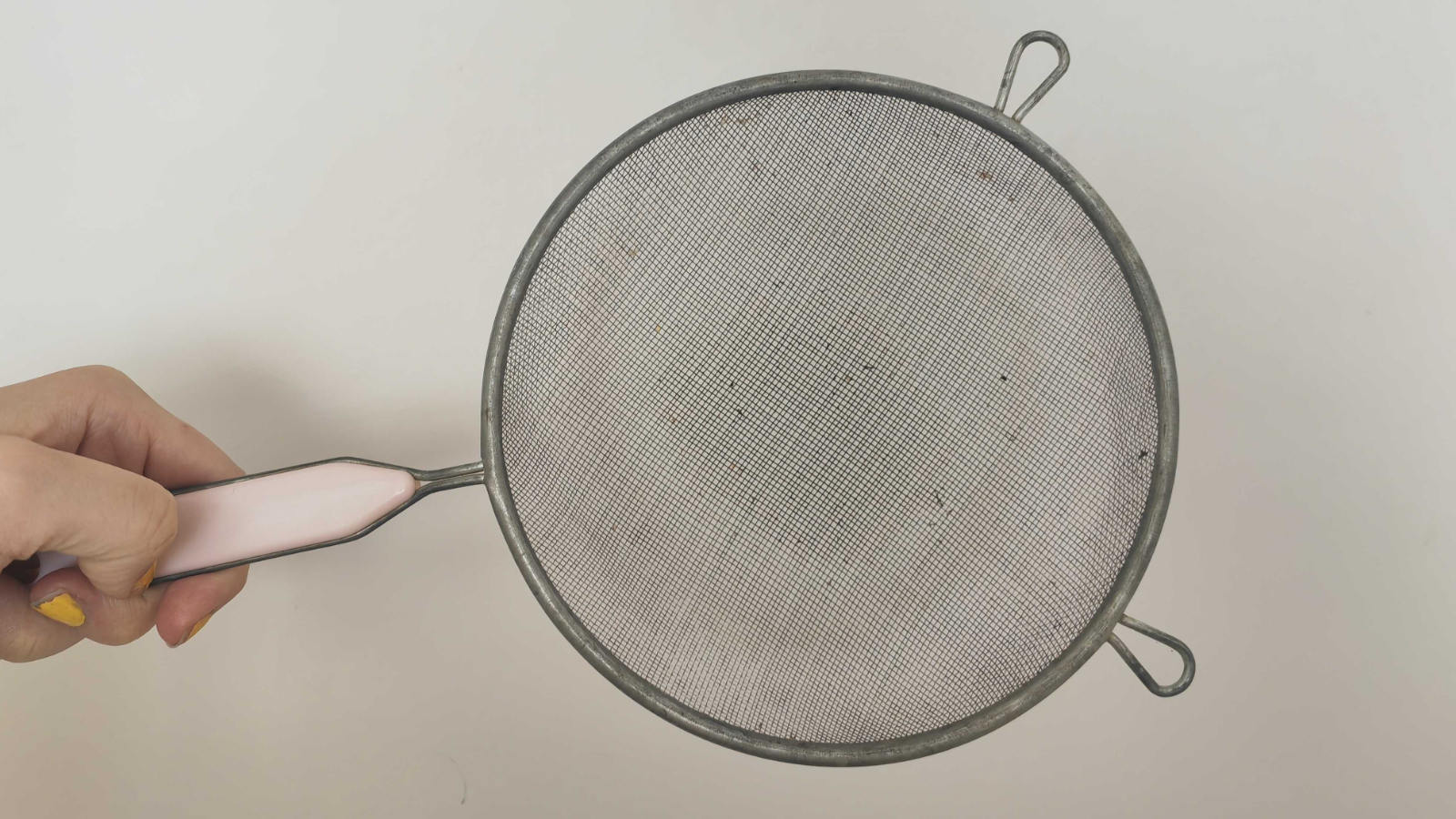
Ah, sieves ― they’d be such a handy tool if they weren’t nigh-on impossible to clean.
As someone who tends to be much kinder to “current me” than I am for “future me,” – I still end up using mine about once a day.
It’s perfect for draining pasta (except for the washing). It’s a great way to ensure no lemon seeds end up in the juice (except for the washing). It’s useful for sifting flour, too, except… well, you get the message.
Advertisement
So you can only imagine how relieved I was to find that taking one simple step immediately after using the tool can prevent an awful lot of stuck-on food.
Food magazine Bon Appétit wrote that whacking the utensil against your sink as soon after using it as possible is really, really helpful.
“As soon as you finish using your sieve, bang it against the sink,” they shared.
“This helps dislodge some of those smaller pieces that haven’t had time to mush up and settle in.”
They add that you should also soak your sieve in very hot, soapy water for 15 minutes “right away.”
A dash of distilled white vinegar added to the mix can make cleaning it even more effective, the publication says.
However, for both methods, speed is key.
Far from it. In a Reddit thread about the cooking conundrum, site users were full of recommendations.
Advertisement
“I turn it upside down in the sink, and use the sprayer to blast the back side. This usually cleans it pretty well,” one Redditor wrote.
Many advised against letting your sieve rest after use, even for a minute ― more people than I’d expected knew about the “banging it against the sink” trick too (am I the only one this is news to?).
Yet another person suggested using a toothbrush if the debris gets really dire (Bon Appétit reccomends this too).
With all the resentment I’ve built up to that accursed mesh, hitting it against the sink should be easy…

Sabrina Carpenter fans’ imaginations are running wild after the Espresso singer appeared to tease a mysterious new collaboration.
The chart-topping star – who is currently gearing up for the release of her new album Short N’ Sweet on Friday – shared a series of pictures on Instagram on Wednesday morning, alongside the caption: “Taste me!”
Advertisement
One snap in particular has really captured fans’ attention, showing the singer from behind, standing next to a dark-haired female figure.
It didn’t take long for fans to put two and two together and reach the conclusion that Sabrina will be teasing a new collaboration, or at least an interesting co-star in her next music video.
And speculation is already rife about who it could be.
Advertisement
Other names in the frame include Grammy nominee Lana Del Rey, Water singer Tyla or woman of the moment Chappell Roan, whose hit Good Luck, Babe! Sabrina previously covered in Radio 1’s Live Lounge…
Advertisement
Advertisement
Meanwhile, another popular theory has suggested that Sabrina might have recruited Jenna Ortega to appear in her next video, based on a few clues…
Advertisement
And there are also some who reckon Sabrina’s next video will see her simply starring alongside a dark-haired version of herself…
Advertisement
Our favourite comparison of the lot, though, has to be this one…
Advertisement
The caption does hint at a new music video or single, as the opening track of Short N’ Sweet is also titled Taste.
Preceding singles Espresso and Please Please Please have already topped the UK singles chart following their release earlier in the summer.


The consumption facility for illegal drugs including heroin and cocaine is set to open in Glasgow.
A project finds drone delivery does not influence the blood’s quality or how long it lasts.
