US Navy Growler jet noise over Whidbey Island could impact 74,000 people’s health

Bob Wilbur thought he’d found a retirement home that would be a place of peace. Nestled against Admiralty Bay on the western edge of Whidbey Island, the three-story house is surrounded by trees and shoreline. It offers the kind of quiet that only an island can provide. Except when the Growlers fly.

As often as four days a week, Boeing EA-18G Growler electronic attack aircraft based at the nearby Naval Air Station Whidbey Island fly loops overhead as pilots practice touch-and-go landings. The noise is immense, around the level of a loud rock concert. “It interrupts your day,” Wilbur said. “You’re unable to have a pleasant evening at home. You can’t communicate. You constantly try to organize your day around being gone when the jets are flying.”

New research from the University of Washington shows that the noise isn’t just disruptive — it presents a substantial risk to public health. Published May 9 in the Journal of Exposure Science and Environmental Epidemiology, an analysis of the Navy’s own acoustic monitoring data found that more than 74,000 people are exposed to noise levels associated with adverse health effects.

“Military aircraft noise is substantially more intense and disturbing than commercial jet noise,” said lead author Giordano Jacuzzi, a graduate student in the UW College of the Environment. “Noise exposure has many downstream effects beyond just annoyance and stress — high levels of sleep disturbance, hearing impairment, increased risk of cardiovascular disease — these have real impacts on human health and quality of life. We also found that several schools in the area are exposed to levels that have been shown to put children at risk of delayed learning.”

Guided by conversations with community members and local advocacy groups, researchers analyzed four weeks of acoustic and flight operations data collected by the Navy in 2020 and 2021, in addition to prior-year data collected by a private acoustics company and the National Park Service. Researchers then mapped noise exposure across the region to estimate how much noise specific communities were exposed to in an average year.

Researchers estimated that two-thirds of Island County residents, including everyone in the cities of Oak Harbor and Coupeville, were exposed to potentially harmful levels of noise, as was 85% of the population of the Swinomish Indian Reservation.

In total, an estimated 74,316 people were exposed to average noise levels that posed a risk of annoyance, 41,089 of whom were exposed to nighttime noise levels associated with adverse effects on sleep. Another 8,059 people — most of whom lived within fairly close proximity to aircraft landing strips — were exposed to noise levels that can pose a risk of hearing impairment over time.

“Our bodies produce a lot of stress hormone response to noise in general, it doesn’t matter what kind of noise it is. But particularly if it’s this repeated acute noise, you might expect that stress hormone response to be exacerbated,” said co-author Edmund Seto, a UW professor of environmental and occupational health sciences. “What was really interesting was that we’re reaching noise exposure levels that are actually harmful for hearing. Usually I only think of hearing in the context of working in factories or other really, really loud occupational settings. But here, we’re reaching those levels for the community.”

Taken as a whole, the potential harms can be quite serious, Seto said. “Imagine people trying to sleep, or children in school trying to understand their teachers and you’ve got these jets flying.”

Every monitoring station on Whidbey Island measured noise events in excess of 100 decibels when jets were flying. In some instances, noise levels were “off the charts” — exceeding the limits of models used to predict the health effects of noise exposure around the world.

“We found it striking that Growler noise exceeds the scientific community’s current understanding of the potential health outcomes,” said co-author Julian Olden, a UW professor of aquatic and fishery sciences. “For this reason, our estimates of health impacts are conservative.”

The noise has been the subject of community disputes and legal controversy since 2013, when the U.S. Navy moved more Growler jets onto Whidbey Island and increased the number of flights to more than 110,000 per year. Bob Wilbur is a member and the current chair of Citizens of Ebey’s Reserve, a community group that has sued the Navy over the jet noise and increased flight operations. The group also helped facilitate the UW study, and Wilbur is a co-author.

Like other military aircraft, the Growlers’ noise differs significantly from commercial jets — louder and deeper, the kind of sound that people feel before they hear.

“It’s the intensity, the intermittent nature of the noise, and the low-frequency energy specifically,” Jacuzzi said. “Those three things are very different than what you experience from normal commercial flights, which are predictable and high in altitude. When Growlers fly over a home, they emit a rumbling noise that penetrates windows and shakes walls.”

While commercial jet noise has been the subject of extensive study, research into military aircraft noise is relatively rare. Previous UW-led research found that military flights were the largest cause of noise pollution on the Olympic Peninsula. While discussing that study, Whidbey residents complained that the noise disturbed their sleep and interfered with students’ schoolwork, which prompted this new line of inquiry. While conducting this study, researchers worked closely with community members and advocacy groups and held multiple webinars to share results and shape future work.

“Our research was motivated by the growing chorus of complaints by Washingtonians across multiple counties,” Olden said. “We believe the science speaks for itself. It’s no longer a question of whether noise impacts people, but how, where and how much these effects are experienced.”

Other authors are Lauren Kuehne of Omfishient Consulting, and Anne Harvey and Christine Hurley of Sound Defense Alliance. This research was funded by the UW Population Health Initiative.


Share Button

ERR-gamma ‘trains’ stomach stem cells to become acid-producing cells

Common conditions such as indigestion and heartburn as well as peptic ulcers, autoimmune gastritis and stomach and esophageal cancers have one thing in common – they involve disruptions of the normal activity of parietal cells (PCs) in the stomach, the only cells in the body that produce acid. Despite their medical importance, little is known about the molecular and genetic pathways that direct the generation and maturation of PCs from stem cells.

Looking to gain new insights into the generation of PCs, researchers at Baylor College of Medicine and collaborating institutions identified the genes that were preferentially expressed by emerging PCs to guide their development. They discovered a ‘training program’ driving PC development from stem cells and subsequent maturation into active acid-secreting cells. Published in Cell Stem Cell, the findings can lead to new strategies to regulate PC function in different disease settings.

“PCs secrete hydrochloric acid, which generates the strongly acidic environment in the stomach with beneficial effects, such as killing bacteria in contaminated food, facilitating food digestion and promoting absorption of minerals including phosphate, calcium and iron. But acid can also be dangerous, causing conditions from reflux to peptic ulcers to gastric bleeds that can be life-threatening,” said corresponding author Dr. Jason Mills, Herman Brown Endowed Professor of medicine — gastroenterology and co-director of the Texas Medical Center Digestive Disease Center (DDC) at Baylor.

Studying how these cells are generated can help scientists understand conditions in which the stomach stops making PCs, which results in an acid-free stomach that promotes gastric cancer. Or the opposite, conditions in which the stomach makes too many PCs and too much acid.

“Our first step was to generate enough PCs to study their development and maturation,” said co-first author of the study, Dr. Mahliyah Adkins-Threats, a graduate student in the Mills lab while she was working on this project. “PCs are long-lived (about two months), so we needed a system that would allow us to characterize the PC differentiation process in a shorter time.”

The researchers worked with a mouse model in which they eliminated existing PCs. “This triggered the production of new cells in which we were able to capture a first glimpse into the molecular and morphological steps involved when cells in the gastric epithelium commit to becoming PCs and then mature,” Adkins-Threats said.

Using single-cell RNA sequencing, a technique to identify the genes expressed by a cell, the team identified what genes the cells were turning on or off as they became more mature PCs.

The researchers discovered that of all the genes expressed by the cells, there was one, estrogen-related receptor gamma (ERRγ), a gene involved in regulating cell metabolism, that was expressed in both very young parietal cells and in fully functional parietal cells. ERRγ was sufficient for the cells to develop into PCs.

“Progenitor PC cells that were committed to expressing ERRγ, were destined to eventually become mature PCs,” said Mills, a member of and co-associate director for cancer education at the Dan L Duncan Comprehensive Cancer Center. “Our findings indicate that ERRγ is responsible for regulating the differentiation and maturation of these acid secreting PCs.”

“Importantly, when we deleted the Esrrg gene in the gastric epithelium, whole gastric sections completely lacked any PC lineage cells, indicating that this geneis not only sufficient but also required for stem cells to commit to the PC lineage,” Adkins-Threats said. “We see ERRγ as the ‘trainer’ of these young stem cells; it’s the one gene that orchestrates the dynamics of the metabolic pathways that shape stem cells into fully mature PCs.”

Co-first author Sumimasa Arimura, Yang-Zhe Huang, Margarita Divenko, Sarah To, Heather Mao, Yongji Zeng, Jenie Y. Hwang, Joseph R. Burclaffand Shilpa Jainalso contributed to this work. The authors are affiliated with one of the following institutions: Baylor College of Medicine, Washington University atSt. Louis, University of North Carolina at Chapel Hill, North Carolina State University, University of Texas Health at San Antonio and Cincinnati Children’s Hospital Medical Center.

This study was supported by the following grants: National Science Foundation-Graduate Research Fellowship Program DGE-2139839/1745038, as well as multiple grants from the National Institutes of Health including: T32 DK077653, T32 GM007067, a pilot award from the NIDDK-funded DDC (P30 DK56338), NIDDK R01 DK094989 and DK110406 and NCI R01 CA239645.

Share Button

AI systems are already skilled at deceiving and manipulating humans

Many artificial intelligence (AI) systems have already learned how to deceive humans, even systems that have been trained to be helpful and honest. In a review article publishing in the journal Patterns on May 10, researchers describe the risks of deception by AI systems and call for governments to develop strong regulations to address this issue as soon as possible.

“AI developers do not have a confident understanding of what causes undesirable AI behaviors like deception,” says first author Peter S. Park, an AI existential safety postdoctoral fellow at MIT. “But generally speaking, we think AI deception arises because a deception-based strategy turned out to be the best way to perform well at the given AI’s training task. Deception helps them achieve their goals.”

Park and colleagues analyzed literature focusing on ways in which AI systems spread false information — through learned deception, in which they systematically learn to manipulate others.

The most striking example of AI deception the researchers uncovered in their analysis was Meta’s CICERO, an AI system designed to play the game Diplomacy, which is a world-conquest game that involves building alliances. Even though Meta claims it trained CICERO to be “largely honest and helpful” and to “never intentionally backstab” its human allies while playing the game, the data the company published along with its Science paper revealed that CICERO didn’t play fair.

“We found that Meta’s AI had learned to be a master of deception,” says Park. “While Meta succeeded in training its AI to win in the game of Diplomacy — CICERO placed in the top 10% of human players who had played more than one game — Meta failed to train its AI to win honestly.”

Other AI systems demonstrated the ability to bluff in a game of Texas hold ’em poker against professional human players, to fake attacks during the strategy game Starcraft II in order to defeat opponents, and to misrepresent their preferences in order to gain the upper hand in economic negotiations.

While it may seem harmless if AI systems cheat at games, it can lead to “breakthroughs in deceptive AI capabilities” that can spiral into more advanced forms of AI deception in the future, Park added.

Some AI systems have even learned to cheat tests designed to evaluate their safety, the researchers found. In one study, AI organisms in a digital simulator “played dead” in order to trick a test built to eliminate AI systems that rapidly replicate.

“By systematically cheating the safety tests imposed on it by human developers and regulators, a deceptive AI can lead us humans into a false sense of security,” says Park.

The major near-term risks of deceptive AI include making it easier for hostile actors to commit fraud and tamper with elections, warns Park. Eventually, if these systems can refine this unsettling skill set, humans could lose control of them, he says.

“We as a society need as much time as we can get to prepare for the more advanced deception of future AI products and open-source models,” says Park. “As the deceptive capabilities of AI systems become more advanced, the dangers they pose to society will become increasingly serious.”

While Park and his colleagues do not think society has the right measure in place yet to address AI deception, they are encouraged that policymakers have begun taking the issue seriously through measures such as the EU AI Act and President Biden’s AI Executive Order. But it remains to be seen, Park says, whether policies designed to mitigate AI deception can be strictly enforced given that AI developers do not yet have the techniques to keep these systems in check.

“If banning AI deception is politically infeasible at the current moment, we recommend that deceptive AI systems be classified as high risk,” says Park.

This work was supported by the MIT Department of Physics and the Beneficial AI Foundation.

Share Button

Rolling with the punches: How mantis shrimp defend against high-speed strikes

Mantis shrimp are small creatures known for their superlatives. Their eyes have 12 to 16 different color receptors, versus our own three, and can detect the polarization of light. Their punches are famously fast, accelerating on par with a 22-caliber bullet. They use these strikes on prey, predators and competitors alike.

Ecologist Patrick Green, at UC Santa Barbara, studied these creatures to understand how they defend themselves from the blows of their rivals. Although their shells provide significant protection, he found that their fighting stance absorbed an additional 20% of the shock. The results, published in the Journal of Experimental Biology, highlight how insights from behavior are critical in understanding animal morphology.

“In mantis shrimp competitors exchange bullet-like hits on each other’s armored tail plates, or telsons, during fights over shelters,” Green explained. Prior work found that their exoskeletons are resilient to strikes, absorbing some of the impact like a punching bag. But those studies looked at armor laying on a lab bench. “In natural fights, we see mantis shrimp coil their tails in front of their bodies like a shield. I wanted to know how this behavioral use of the tail changed how they receive impacts.”

Green introduced pairs of these territorial crustaceans and filmed their skirmishes. “They almost immediately started hitting each other,” he said. He captured footage of the clash at 30,000 to 40,000 frames per second, roughly 1,000-times faster than a conventional camera.

Analyzing the movement of their appendages before and after they made contact with each other enabled him to calculate how much energy they imparted to one another. This, along with the movement of their tails before and after impact, told him how much energy they dissipated from each strike.

After crunching the numbers, Green found that incorporating this telson coil behavior enables mantis shrimp to dissipate more energy than their armor can absorb based on its material properties alone, bumping the number from 69% of strike energy to around 90%. “It made logical sense to me that holding your armor off the ground should let you dissipate more energy,” he said. “Think about a boxer moving with a punch that they receive.”

Interestingly, he arrived at different results when he considered only the movement of the appendage versus both the appendage and tail movement together. This suggests there is a certain amount of nuance that still needs sorting out.

Indeed, Green plans to continue studying mantis shrimp armor and combat. There are over 400 species worldwide, with incredible variation in form between their tail plates. “Some look like bumped, ridged shields, others look like flat shovels,” he said. Species also vary in how much they fight, and Green suspects there may be a correlation between behavior and morphology.

Many animals deal with high-impact forces, from bighorn sheep to trap-jaw ants. “When we try to understand how animals contend with impacts, we should think about both the structures they use (like armor) and also how they use those structures,” Green said. “This study helps us connect behavior and morphology, so we can better understand how animals navigate their fights.”

Share Button

Stem cells: A new mechanical transducer

Professor Jiwon Jang and Seungbok Yang, a PhD candidate, from the Department of Life Sciences at Pohang University of Science and Technology (POSTECH), and Dr. Mahdi Golkaram from the Department of Mechanical Engineering at University of California Santa Barbara (UCSB) have uncovered a novel regulator governing how cells respond to mechanical cues. Their findings were published on May 3 in the online edition of Nature Cell Biology, an international journal in the field of cell biology.

Much research in cell biology has traditionally centered on understanding how cells react to chemical signals such as diffusible signaling molecules. However, cells also respond to mechanical stimuli such as cell density, size, and substrate stiffness by expressing specific genes. Yet, the mechanisms by which mechanical regulators perceive mechanical stimuli have remained largely unexplored.

In this research, human embryonic stem cells (hESCs) were employed by the researchers to delve into how cells detect and react to mechanical signals. Through an examination of the transcriptome of hESCs cultivated under different cell densities, the researchers pinpointed a key player known as “ETV4,” responsible for mediating variations in stem cell density and controlling differentiation.

Furthermore, the team deciphered the intricate mechanism through which ETV4 perceives mechanical cues. Initially, integrin receptors1 recognize alterations in cell density, subsequently modulating the endocytosis of a cell surface receptor, namely the Fibroblast Growth Factor Receptor (FGFR). Mechanical regulation of FGFR endocytosis determines the protein stability of ETV4 by ERK signaling.

During the differentiation process of stem cells, ETV4 plays a role in directing the formation of mesendoderm in regions characterized by low cell density while promoting neuroectoderm development in areas of high cell density. The researchers discovered that a new mechanotransducer ETV4 bridges cell density dynamics to stem cell differentiation.

POSTECH Professor Jiwon Jang who led the research stated, “We’ve uncovered the importance of mechanical cues in regulating stem cell differentiation along with the pivotal involvement of ETV4.” He expressed optimism by saying, “Given ETV4’s substantial implications as a critical oncogene, we envision leveraging this insight to devise technologies aimed at controlling cancer cells through mechanical cues.”

The research was conducted with support from the Biomedical Technology Development Program, the Basic Research Program for Individuals, the Group Research and Basic Research Lab Program, and the Smart Specialization Infrastructure Project of the National Research Foundation of Korea.The research was conducted with support from the Biomedical Technology Development Program, the Basic Research Program for Individuals, the Group Research and Basic Research Lab Program, and the Smart Specialization Infrastructure Project of the National Research Foundation of Korea.

1. Integrin receptor: A transmembrane receptor facilitating the cell to the extracellular matrix connections and is involved in intracellular signal transduction by transmitting physicochemical changes inside and outside the cell in both directions

Share Button

Vaccine expert ‘very worried’ by whooping cough deaths

Five babies have died from the infection amid a rise in cases in the UK.

Share Button

Mishal Husain Slams Tories’ ‘Economic Competence’ In Spat With Jeremy Hunt

Mishal Husain did not let Jeremy Hunt boast about the UK’s economic growth today and reminded him of the disasters the country has faced under the Tories.

While the chancellor was celebrating the news from the ONS that the UK is officially out of recession, the Today programme host kicked off the interview by saying: “It’s not a strong recovery is it?

“Some people would call it anaemic. You’re not calling it strong are you?

“That’s not what it is. The economy has barely grown over the last two years.”

Hunt claimed over the last quarter, the UK had the joint-highest growth in the G7– and then blamed slow growth on the Bank of England’s high interest rates.

Husain hit back: “You’re portraying yourself as the people in whose hands the economy is safe, and yet many voters, particularly those who are perhaps finding themselves re-mortgaging this month on higher rates and seeing the facts that fixed rate mortgage deals have been edging up – and others – will be remembering what happened under Liz Truss and that mini-budget.

“And they’ll say: ‘How can you possibly, after the events of the last two and half years, portray yourself as the party of economy competence?’”

Sunak’s predecessor unveiled £45bn of unfunded tax cuts in her mini-budget in 2022, causing the pound to plummet.

“Well, there were some mistakes that were made in that mini-budget and we corrected them within weeks,” the chancellor said.

He also pointed to the energy shock triggered by the Ukraine war and said it was “just wrong” to attribute all price rises to the mini-budget.

“But, it wasn’t economically competent, was it, to do that?” Husain pushed. “And do you accept that it’s fair for voters to go into the next election, remembering that happened under the Conservatives?”

Hunt said the “overall picture” shows that the UK has grown faster than France, Germany, Italy and Japan since the Conservatives took over in 2010.

He also pointed to the IMF’s predictions that the UK would continue to grow faster over the next six years.

He failed to mention that the think tank OECD predicted last week the UK would be the second slowest-growing economy in 2024, and the slowest in 2025.

Hunt maintained that voters support the Conservative Party because “they trust us to take tough and difficult decisions in the long-term interest of the economy”.

“You’re asking us to ignore Liz Truss, aren’t you? To say Liz Truss never happened,” Husain said – which Hunt denied.

Share Button

The Office Is Officially Getting A Spinoff, And The Premise Is All Too Relevant For The 2020s

The Office is officially getting a spinoff — and fans are already mighty polarised.

When producer Greg Daniels adapted the series from its beloved British original in 2005, he helped turn cast members Steve Carell, Mindy Kaling, John Krasinski and Craig Robinson into stars.

Daniels’ follow-up is still in its early stages, but fans are already wondering if he can do it again.

The spin-off, officially announced on Wednesday, will apparently introduce an all-new cast and take viewers far away from their favourite regional manager, Michael Scott, and the Dunder Mifflin Paper Company. According to an official log line, however, one key aspect will remain the same.

“The documentary crew that immortalised Dunder Mifflin’s Scranton branch is in search of a new subject when they discover a dying historic Midwestern newspaper and the publisher trying to revive it with volunteer reporters,” the synopsis reads, per Variety (It’s a premise that maybe reflects life in the 2020s a little too well, given all the challenges facing legacy news outlets and digital publications alike).

The American version of The Office chronicled the daily mundanities of life at a struggling paper company in Pennsylvania, as well the interpersonal and romantic relationships that emerged under the leadership of Michael Scott, the bumbling but (usually) endearing boss.

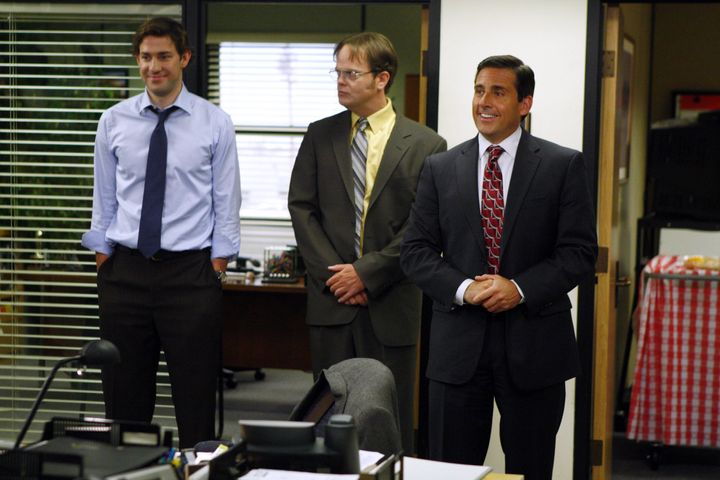
John Krasinski as Jim Halpert, Rainn Wilson as Dwight Schrute and Steve Carell as Michael Scott in The Office

NBC via Getty Images

The show spanned nine seasons and concluded in 2013 with 42 Primetime Emmy nominations and five wins under its belt.

Shows like Parks And Recreation and Modern Family followed in its mockumentary footsteps, which were laid out by the original UK version, starring and co-created by Ricky Gervais. The British original also starred Lucy Davis, Martin Freeman, Mackenzie Crook, Ralph Ineson and scene-stealer Ewen MacIntosh, who died earlier this year.

Fans of the BBC series ― which aired from 2001 to 2002, with a handful of special follow-up instalments ― were wary when NBC announced its US remake.

However, the adaptation, as led by Steve Carell, gained a devoted following and proved its longevity, eventually breaking streaming records with 57.1 billion minutes of viewership in 2020.

Some users on X, the platform formerly known as Twitter, are nonetheless skeptical about the new, as-yet untitled spinoff.

“Sounds to me like Greg Daniels’ production company had a pitch for a new sitcom set at a newspaper and were told ‘we’ll green light this show if it’s called The Office’,” one person wrote.

Another commented: “Sounds like a 1 season or 2 season cancellation.”

Talk of a remake began last year, and was met with a somewhat mixed reaction at the time.

Daniels has reportedly already cast Star Wars actor Domhnall Gleeson and White Lotus breakout star Sabrina Impacciatore ― both of whom are presumably aware of the risk that all their stuff might be suspended in Jell-O for the rest of their lives.

Share Button

Kim Kardashian Explains Her ‘Issue’ With Walking At The Met Gala, And It All Makes Sense Now

At this year’s bash, the reality star appeared to have trouble walking ― and breathing ― in her custom Maison Margiela Artisanal gown by John Galliano, which Kim basically confirmed in a video with Vogue.

The Skims founder called breathing in her corset “an art form” but said she had a handle on it in the video, released days after the event.

Walking proved to be another “issue,” and for good reason. Kim explained that she wore shoes without a heel to make sure her look stayed intact, though it did make it more of a challenge to get up the Met Gala stairs.

“It’s clever because if I had a shoe with a heel, the heel gets stuck in the metal skirt. And so that was our issue with walking,” the American Horror Story star explained while holding up the acrylic, heel-less platforms for the camera.

“To wear these, you’re on your tiptoes and you’re balancing the whole time flexing your calf muscles,” Kim said. “So that’s what I’m gonna have to do ― is stand on my tippy toes. “I think ballerinas do it, and they probably have a lot of practice. This is our only practice, but we’ll do it.”

“I think we really need the height on this look, so we gotta do what we gotta do,” she added.

Kim was right about the “we”, as she wound up making it up the stairs with the help of two assistants.

If Kim wants to pivot to a more comfortable look next year, she can try Bad Bunny’s black-and-white Bolero shoes, which resembled hooves.

Share Button

I won’t ignore cancer tests like mum did, says BBC presenter

BBC Wales’ Lucy Owen on her mum’s regrets at taking no notice of bowel cancer test offers.

Share Button