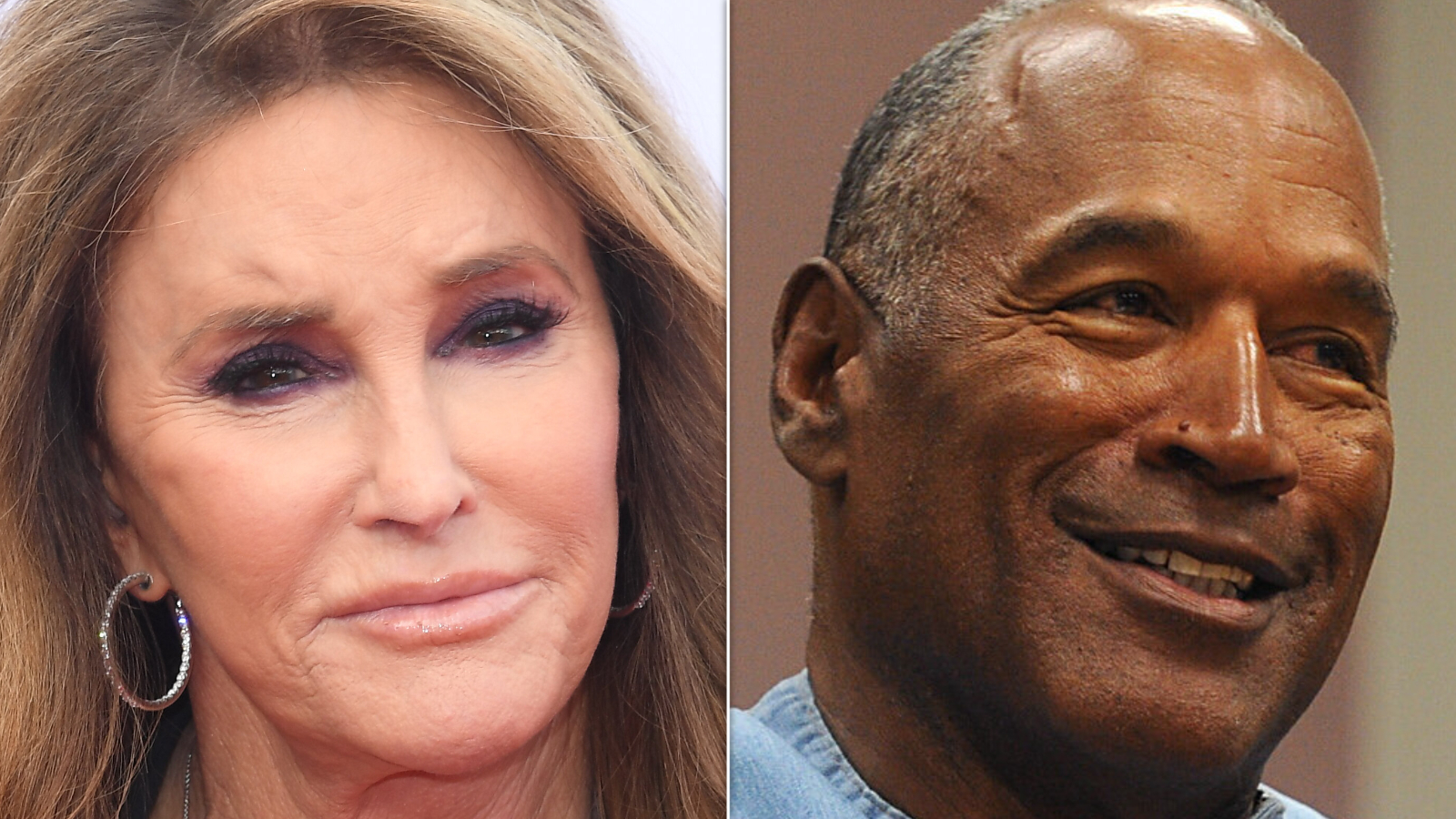
Caitlyn Jenner’s 2-Word Send-Off To OJ Simpson Is Pure Ice

Caitlyn Jenner isn’t shedding any tears over OJ Simpson’s death.

“Good Riddance #OJSimpson,” the Olympian tweeted Thursday morning, just hours after Simpson’s family announced he had died of cancer at the age of 76.

Jenner has long had sour feelings for Simpson.

In her 2017 memoir The Secrets of My Life, she described her fellow athlete as “the most narcissistic, egocentric, neediest asshole in the world of sports I had ever seen”.

Over the years, Jenner also repeatedly claimed without merit that she believed the late NFL running back was responsible for the 1994 murders of his ex-wife, Nicole Brown Simpson, and her friend Ronald Goldman.

Caitlyn Jenner posted "Good Riddance" to O.J. Simpson after news of his death.
Caitlyn Jenner posted “Good Riddance” to O.J. Simpson after news of his death.

“I knew he did it,” Jenner told Andy Cohen in 2017. “There was three people at the crime scene: DNA evidence, three people at the crime scene. Pick a murderer. How hard is that?”

Jenner apparently got to witness Simpson’s bombshell double murder trial firsthand.

Her then-wife Kris Jenner was a close friend of Brown Simpson and was previously married to Robert Kardashian Sr, Simpson’s defence attorney.

Simpson was acquitted of murder charges in October 1995 but was found liable for Goldman and Brown Simpson’s deaths in a civil suit almost two years later.

Share Button

Beautiful nebula, violent history: Clash of stars solves stellar mystery

When astronomers looked at a stellar pair at the heart of a stunning cloud of gas and dust, they were in for a surprise. Star pairs are typically very similar, like twins, but in HD 148937, one star appears younger and, unlike the other, is magnetic. New data from the European Southern Observatory (ESO) suggest there were originally three stars in the system, until two of them clashed and merged. This violent event created the surrounding cloud and forever altered the system’s fate.

“When doing background reading, I was struck by how special this system seemed,” says Abigail Frost, an astronomer at ESO in Chile and lead author of the study published today in Science. The system, HD 148937, is located about 3800 light-years away from Earth in the direction of the Norma constellation. It is made up of two stars much more massive than the Sun and surrounded by a beautiful nebula, a cloud of gas and dust. “A nebula surrounding two massive stars is a rarity, and it really made us feel like something cool had to have happened in this system. When looking at the data, the coolness only increased.”

“After a detailed analysis, we could determine that the more massive star appears much younger than its companion, which doesn’t make any sense since they should have formed at the same time!” Frost says. The age difference — one star appears to be at least 1.5 million years younger than the other — suggests something must have rejuvenated the more massive star.

Another piece of the puzzle is the nebula surrounding the stars, known as NGC 6164/6165. It is 7500 years old, hundreds of times younger than both stars. The nebula also shows very high amounts of nitrogen, carbon and oxygen. This is surprising as these elements are normally expected deep inside a star, not outside; it is as if some violent event had set them free.

To unravel the mystery, the team assembled nine years’ worth of data from the PIONIER and GRAVITY instruments, both on ESO’s Very Large Telescope Interferometer (VLTI), located in Chile’s Atacama Desert. They also used archival data from the FEROS instrument at ESO’s La Silla Observatory.

“We think this system had at least three stars originally; two of them had to be close together at one point in the orbit whilst another star was much more distant,” explains Hugues Sana, a professor at KU Leuven in Belgium and the principal investigator of the observations. “The two inner stars merged in a violent manner, creating a magnetic star and throwing out some material, which created the nebula. The more distant star formed a new orbit with the newly merged, now-magnetic star, creating the binary we see today at the centre of the nebula.”

“The merger scenario was already in my head back in 2017 when I studied nebula observations obtained with the European Space Agency’s Herschel Space Telescope,” adds co-author Laurent Mahy, currently a senior researcher at the Royal Observatory of Belgium. “Finding an age discrepancy between the stars suggests that this scenario is the most plausible one and it was only possible to show it with the new ESO data.”

This scenario also explains why one of the stars in the system is magnetic and the other is not — another peculiar feature of HD 148937 spotted in the VLTI data.

At the same time, it helps solve a long-standing mystery in astronomy: how massive stars get their magnetic fields. While magnetic fields are a common feature of low-mass stars like our Sun, more massive stars cannot sustain magnetic fields in the same way. Yet some massive stars are indeed magnetic.

Astronomers had suspected for some time that massive stars could acquire magnetic fields when two stars merge. But this is the first time researchers find such direct evidence of this happening. In the case of HD 148937, the merger must have happened recently. “Magnetism in massive stars isn’t expected to last very long compared to the lifetime of the star, so it seems we have observed this rare event very soon after it happened,” Frost adds.

Share Button

Gang culture at neurosurgery department, doctor alleges

Neurosurgeon Mansoor Foroughi alleges he was dismissed after he raised safety concerns.

Share Button

PM defends NHS record as targets missed in England

The latest figures show many patients face long waits, but the PM insists headway is being made.

Share Button

Economic burden of childhood verbal abuse by adults estimated at $300 billion globally

Childhood verbal abuse by adults costs society an estimated $300 billion (£239 billion) a year globally, show findings presented at the first international conference on childhood verbal abuse, hosted by UCL, Words Matter and the World Health Organization (WHO).

The Words Matter: Impact and Prevention of Childhood Verbal Abuse conference marks the first time that experts from around the world have come together to focus attention on the lifetime damage of childhood verbal abuse and the need to develop solutions.

Childhood verbal abuse involves behaviours that can be detrimental to a child’s wellbeing, such as belittling, shouting and threatening language.

The new study, led by Professor Xiangming Fang (China Agricultural University and Georgia State University) used data from the US Centers for Disease Control and Prevention’s Violence Against Children Surveys, in four countries: Cambodia (1212 participants), Kenya (1099 participants), Colombia (1415 participants) and Moldova (906 participants), to analyse the effects of childhood verbal abuse on selected health outcomes, including mental distress, self-harm, drug use and problem drinking.

The study then estimated the Disability-Adjusted Life Years (DALY) lost (the total amount of healthy life years lost due to people dying prematurely or living with a disability caused by a common disease or health problem in the community) due to health outcomes attributed to childhood verbal abuse to estimate its economic burden.

These DALY losses were then converted into monetary value — assuming that one DALY was equal to the country’s per-capita Gross Domestic Product (GDP).

The mean economic burden of childhood verbal abuse across the four countries was found to be 0.34% of GDP. When this figure was applied to global GDP, it equated to approximately $300 billion every year.

Meanwhile, the DALY losses for outcomes attributed to childhood verbal abuse were significantly great than corresponding estimates for breast cancer and liver cancer in the four countries studied, and similar to the Disability-Adjusted Life Years lost to hypertensive heart disease.

Conference Chair, Professor Peter Fonagy (UCL Psychology & Language Sciences), said: “Verbal abuse of children by adults is all too common, but is one of the most significant modifiable causes of life-long mental health disorders.

“Tackling it gives us a powerful lever to prevent mental health disorders and their enormous cost to both the UK and global economy.

“I am delighted that with the Words Matter charity, we have an organisation finally focusing on this problem. Bringing greater awareness to childhood verbal abuse has the potential to dramatically reduce the economic and psychological burden of psychiatric disorders.”

Previous research from experts at UCL and Wingate University* found that childhood verbal abuse can be as harmful as other forms of abuse and have significant adverse impacts on children’s mental and physical health and development — leading to anxiety, depression, eating disorders, self-harm, substance abuse and even suicide.

Professor Xiangming Fang said: “The economic burden of childhood verbal abuse by adults that we have quantified clearly highlights the shocking hidden cost of the damage it causes to children throughout their lifetime. However, this is likely a considerable underestimate given the impact of childhood verbal abuse on several outcomes including healthcare utilisation costs and legal system expenses, which were not included in the analysis due to data unavailability.

“There is clearly a significant opportunity for economic growth by ending childhood verbal abuse, and by revealing these figures, we hope this form of childhood maltreatment will be given the attention it deserves. Vital now is undertaking more research and devoting funds and resources to preventing it, so the cost to society can be reduced.”

Jessica Bondy, Founder of Words Matter, said: “For too long, childhood verbal abuse by adults has gone under the radar, yet it is all around us. We hope this conference helps put the issue firmly on the map and galvanises action. It is possible to bring an end to childhood verbal abuse with greater awareness, understanding and collaboration across the globe to devise solutions. We must act now, given the lifelong impact on children’s mental and physical health and wellbeing and the monumental cost to society. Let’s build children up, not knock them down, and create a better future for children.”

Tim Loughton MP, Chair of the All-Party Parliamentary Group for Children and former Children’s Minister said: “By convening this conference, the work of Words Matter and its expert advisers is filling a gap in understanding the harms that can be inflicted on children from the way adults communicate with them and the routes for prevention. Whilst we are all too familiar with the damage done to children as a result of physical violence, verbal abuse is more insidious and pervasive, impacting so many whose mental health has already been deeply affected due to the Covid pandemic.

“We all have a duty of care to treat children with respect and that includes the words and language we use with them. This conference highlights how much words really do matter and how if used poorly, they can have lasting implications for children and our economy.”

Former Health Minister and Chief Executive of the NHS Confederation and currently Opposition Whip, Lord Philip Hunt of Kings Heath said: “All children deserve to grow up happy and healthy, but millions are suffering verbal abuse by adults which has for far too long been hidden in the shadows. Thanks to the work of Words Matter, we now know that this is not only impacting children’s mental health and development but is also, as this new study shows, having a huge cost on society as a whole. We all want children to develop armed with the tools to lead confident and productive adult lives and the words they hear from adults are so important in building self-esteem and confidence. By shining a light on this abuse, lives can and will be changed.”

Study limitations

The $300 billion is likely a considerable underestimate given the impact of childhood verbal abuse on several outcomes, including healthcare utilisation costs and legal system expenses, which were not included in the analysis, due to data unavailability.

Additionally, costs associated with chronic illnesses such as diabetes, heart disease, and cancer were not taken into account.

Multiple risk factors can contribute to the occurrence of any disease. When attributing a disease to these factors the maximum attribution is capped at 100%. However, if multiple risk factors are involved and overlap, the sum of DALY estimates for all risk factors may exceed 100%. Failure to fully account for these inter-correlations could potentially result in overestimation of the figures instead.

The field lacks reliable longitudinal data to assess the long-term repercussions of childhood verbal abuse.

The absence of high-quality cohort studies that adopt a lifetime perspective in economic data estimation may lead to a substantial underestimation of the economic impact of childhood verbal abuse.

Prioritising the collection of longitudinal data on the consequences of childhood verbal abuse should be a primary focus of future efforts.

Share Button

Breakthrough promises secure quantum computing at home

The full power of next-generation quantum computing could soon be harnessed by millions of individuals and companies, thanks to a breakthrough by scientists at Oxford University Physics guaranteeing security and privacy. This advance promises to unlock the transformative potential of cloud-based quantum computing and is detailed in a new study published in the influential U.S. scientific journal Physical Review Letters.

Quantum computing is developing rapidly, paving the way for new applications which could transform services in many areas like healthcare and financial services. It works in a fundamentally different way to conventional computing and is potentially far more powerful. However, it currently requires controlled conditions to remain stable and there are concerns around data authenticity and the effectiveness of current security and encryption systems.

Several leading providers of cloud-based services, like Google, Amazon, and IBM, already separately offer some elements of quantum computing. Safeguarding the privacy and security of customer data is a vital precursor to scaling up and expending its use, and for the development of new applications as the technology advances. The new study by researchers at Oxford University Physics addresses these challenges.

“We have shown for the first time that quantum computing in the cloud can be accessed in a scalable, practical way which will also give people complete security and privacy of data, plus the ability to verify its authenticity,” said Professor David Lucas, who co-heads the Oxford University Physics research team and is lead scientist at the UK Quantum Computing and Simulation Hub, led from Oxford University Physics.

In the new study, the researchers use an approach dubbed “blind quantum computing,” which connects two totally separate quantum computing entities — potentially an individual at home or in an office accessing a cloud server — in a completely secure way. Importantly, their new methods could be scaled up to large quantum computations.

“Using blind quantum computing, clients can access remote quantum computers to process confidential data with secret algorithms and even verify the results are correct, without revealing any useful information. Realising this concept is a big step forward in both quantum computing and keeping our information safe online” said study lead Dr Peter Drmota, of Oxford University Physics.

The researchers created a system comprising a fibre network link between a quantum computing server and a simple device detecting photons, or particles of light, at an independent computer remotely accessing its cloud services. This allows so-called blind quantum computing over a network. Every computation incurs a correction which must be applied to all that follow and needs real-time information to comply with the algorithm. The researchers used a unique combination of quantum memory and photons to achieve this.

“Never in history have the issues surrounding privacy of data and code been more urgently debated than in the present era of cloud computing and artificial intelligence,” said Professor David Lucas. “As quantum computers become more capable, people will seek to use them with complete security and privacy over networks, and our new results mark a step change in capability in this respect.”

The results could ultimately lead to commercial development of devices to plug into laptops, to safeguard data when people are using quantum cloud computing services.

Researchers exploring quantum computing and technologies at Oxford University Physics have access to the state-of-the-art Beecroft laboratory facility, specially constructed to create stable and secure conditions including eliminating vibration.

Funding for the research came from the UK Quantum Computing and Simulation (QCS) Hub, with scientists from the UK National Quantum Computing Centre, the Paris-Sorbonne University, the University of Edinburgh, and the University of Maryland, collaborating on the work.

Share Button

Can health secretary name NHS trusts performing well?

Victoria Atkins is challenged to name some health trusts meeting their targets to cut waiting lists.

Share Button

‘Absolutely Nuts’: Boris Johnson Launches Furious Attack On Rishi Sunak

Boris Johnson has launched a furious attack on Rishi Sunak’s “absolutely nuts” policies as prime minister.

The former PM took aim at Sunak’s plan to ban the sale of tobacco to future generations and also suggested the government is not spending enough on defence.

Johnson’s comments, at a conference in Canada, are the latest salvo in his ongoing feud with the man he believes plotted to bring him down as prime minister.

Sunak announced at last autumn’s Tory Party conference in Birmingham that anyone currently aged 14 or under would never be able to buy tobacco products in their life.

The measure has sparked a backlash within his own party, with dozens of Conservative MPs expected to vote against the plan when it comes to parliament next week.

Johnson said some of Sunak’s policies that are “being done in the name of conservatism” are “absolutely, absolutely nuts”.

He said: “I see my beloved party… we’re banning cigars. And what is the point? The party of Winston Churchill wants a ban. I mean, donnez-moi un break as they say in Quebec. It’s just mad.”

On defence spending, Johnson said: “Now is the moment for an even more robust posture.

“We all need to recognise the world is more uncertain, more dangerous, we all need frankly to be spending more on defence — that goes for the UK as well as everybody else.”

Johnson’s remarks come just two weeks after Sunak bemoaned the “hospital pass” he had been handed by his predecessors when he became PM in 2022.

Share Button

My Toddler Refused To Drink Milk, So I Tried These Calcium-Rich Foods Instead

The first year of an infant’s life is dependent on milk. Whether you choose to breast feed or give formula, milk makes up all the calories they need.

Of course after 6 months of age you can start weaning them on to food, but this is to get infants ready for eating solids as part of their daily diet by 12 months. Before that, food is essentially getting them to practice the skill of eating.

However, if they are eating solids, the milk intake will be less than it was when they were infants.

Above the age of 12 months, children can have full fat cows milk instead of formula, and the NHS recommends you give your child at least 350ml (12oz) of milk a day.

But what happens if your toddler refuses milk all together?

My daughter began to refuse milk completely at 14 months after we decided to transition her to a beaker instead of bottle. This came as a shock because for the first year of her life all she did was drink milk.

She also wasn’t great at eating solid foods at 14 months, but that might have been because of the amount of milk she was drinking before she quit cold turkey.

After a lot of stressing, I learned that if your child doesn’t drink milk, it’s actually OK as long as you make up the calcium in other ways.

Children from the age of 1 to 3-years-old need 350mg of calcium a day and the NHS suggests you can give two servings of foods made from milk, such as cheese, yoghurt or fromage frais if your child doesn’t have milk.

You should be giving your child a variety of calcium-rich foods as well as keep offering milk as they might eventually find their way back to it. According to the Centre of Family Medicine you can try adding milk to foods to up their intake.

These foods can include:

  • pancakes,
  • scrambled eggs,
  • smoothies,
  • breakfast cereals
  • oats/porridge

With foods that are usually made with water, you can also try replacing with milk.

If you’re really worried about the lack of calcium your child is getting, make sure to contact your GP.

Share Button

New migraine pill could help 170,000 in England

The oral treatment – the first of its kind – could soon be available after being recommended for NHS use.

Share Button