Two artificial intelligences talk to each other

Performing a new task based solely on verbal or written instructions, and then describing it to others so that they can reproduce it, is a cornerstone of human communication that still resists artificial intelligence (AI). A team from the University of Geneva (UNIGE) has succeeded in modelling an artificial neural network capable of this cognitive prowess. After learning and performing a series of basic tasks, this AI was able to provide a linguistic description of them to a ”sister” AI, which in turn performed them. These promising results, especially for robotics, are published in Nature Neuroscience.

Performing a new task without prior training, on the sole basis of verbal or written instructions, is a unique human ability. What’s more, once we have learned the task, we are able to describe it so that another person can reproduce it. This dual capacity distinguishes us from other species which, to learn a new task, need numerous trials accompanied by positive or negative reinforcement signals, without being able to communicate it to their congeners.

A sub-field of artificial intelligence (AI) — Natural language processing — seeks to recreate this human faculty, with machines that understand and respond to vocal or textual data. This technique is based on artificial neural networks, inspired by our biological neurons and by the way they transmit electrical signals to each other in the brain. However, the neural calculations that would make it possible to achieve the cognitive feat described above are still poorly understood.

”Currently, conversational agents using AI are capable of integrating linguistic information to produce text or an image. But, as far as we know, they are not yet capable of translating a verbal or written instruction into a sensorimotor action, and even less explaining it to another artificial intelligence so that it can reproduce it,” explains Alexandre Pouget, full professor in the Department of Basic Neurosciences at the UNIGE Faculty of Medicine.

A model brain

The researcher and his team have succeeded in developing an artificial neuronal model with this dual capacity, albeit with prior training. ”We started with an existing model of artificial neurons, S-Bert, which has 300 million neurons and is pre-trained to understand language. We ‘connected’ it to another, simpler network of a few thousand neurons,” explains Reidar Riveland, a PhD student in the Department of Basic Neurosciences at the UNIGE Faculty of Medicine, and first author of the study.

In the first stage of the experiment, the neuroscientists trained this network to simulate Wernicke’s area, the part of our brain that enables us to perceive and interpret language. In the second stage, the network was trained to reproduce Broca’s area, which, under the influence of Wernicke’s area, is responsible for producing and articulating words. The entire process was carried out on conventional laptop computers. Written instructions in English were then transmitted to the AI.

For example: pointing to the location — left or right — where a stimulus is perceived; responding in the opposite direction of a stimulus; or, more complex, between two visual stimuli with a slight difference in contrast, showing the brighter one. The scientists then evaluated the results of the model, which simulated the intention of moving, or in this case pointing. ”Once these tasks had been learned, the network was able to describe them to a second network — a copy of the first — so that it could reproduce them. To our knowledge, this is the first time that two AIs have been able to talk to each other in a purely linguistic way,” says Alexandre Pouget, who led the research.

For future humanoids

This model opens new horizons for understanding the interaction between language and behaviour. It is particularly promising for the robotics sector, where the development of technologies that enable machines to talk to each other is a key issue. ”The network we have developed is very small. Nothing now stands in the way of developing, on this basis, much more complex networks that would be integrated into humanoid robots capable of understanding us but also of understanding each other,” conclude the two researchers.


Share Button

A wetter world recorded in Australian coral colony

When climate scientists look to the future to determine what the effects of climate change may be, they use computer models to simulate potential outcomes such as how precipitation will change in a warming world.

But University of Michigan scientists are looking at something a little more tangible: coral.

Examining samples from corals in the Great Barrier Reef, the researchers discovered between 1750 and present day, as the global climate warmed, wet-season rainfall in that part of the world increased by about 10%, and the rate of extreme rain events more than doubled. Their results are published in Nature, Communications Earth and Environment.

“Climate scientists often find themselves saying, ‘I knew it was going to get bad, but I didn’t think it was going to get this bad this fast.’ But we’re actually seeing it in this coral record,” said principal investigator Julia Cole, chair of the U-M Department of Earth and Environmental Sciences.

“Studies of the future tend to use climate models and those models can give different results. Some may say more rainfall, some they say less rainfall. We’re showing that, at least in northeastern Queensland, there is definitely more rainfall, it’s definitely more variable and it’s definitely already happening.”

The study, led by U-M researcher Kelsey Dyez, analyzed core samples drilled from a coral colony situated at the mouth of a river in northern Queensland, Australia. During the summer rainy seasons, rainfall filtering into the river picks up nutrients, organic material and sediments, which are then carried to the river mouth and discharged into the ocean, washing over the coral colony.

As the corals are bathed in this freshwater outflow, they pick up geochemical signals from the river and record them into their carbonate skeletons. The core samples of the corals display faint bands of lighter and darker material. These bands reflect each rainy and dry season the coral lived through. The bands also hold information about the climate in each season, just as trees’ rings record climate patterns during the years it grows.

“We want to know, as we warm the earth, are we going to have more rainfall? Less rainfall? Maybe different parts of the Earth will respond differently?” Dyez said. “This project is especially important because we’re able to put that warming and changes into context. We are able to record rainfall from the period before we have instrumental records for this part of the world.”

To accurately determine how much rain fell each rainy season, and how many extreme rain events occurred during each season, the researchers compared instrumental rainfall records that began in the 1950s to the corresponding years in the coral. This gave the researchers a calibration period that they could use to determine the relationship between the coral characteristics and the amount of rainfall that fell each rainy season as long as the corals were alive, all the way back to 1750.

The coral core was taken from a remote region off northeastern Queensland by the Australian Institute of Marine Science. The land surrounding the river watershed is also in a protected area, meaning that nutrients and sediment flushed into the river by rains are unlikely to be generated by human activity.

“This is a region that has experienced pretty big swings in recent years between floods that have been devastating to communities, and then drier periods,” Cole said. “Because northeastern Australia is an agricultural region, how rainfall changes in a warmer world is of real tangible importance. People might not sense a few degrees Celsius of warming, but they really suffer if there’s a drought or a flood.”

To reconstruct rainfall, the researchers used four different measures. First, the researchers looked at the luminescence of the bands in the coral. When they shine a black light on the coral, organic compounds in the coral cause it to fluoresce. The brighter the band fluoresces, the more organic compounds came down the river and were deposited onto the coral, reflecting a season of heavy rainfall.

The researchers also measured how much of the element barium is contained in each of the bands. The coral skeleton is composed of calcium, but when barium is deposited onto the skeleton, it can replace calcium. The more barium detected in the band, the more river discharge was flowing over the coral.

The researchers then looked at stable carbon isotopes (carbon-12 and carbon-13) within the coral. The more the ratio of these two isotopes favors carbon-12, the more water must have been coming down the river from greater rainfall.

Finally, the researchers examined stable oxygen isotopes (oxygen-16 and oxygen-18). When the ratio of these two isotopes favors oxygen-16, it is a signature of additional precipitation and freshwater coming down the river.

Because the coral record is located off northeastern Australia, the researchers wanted to understand if the whole of Australia experienced similar rainfall. Looking at instrumental rainfall records across Australia, the researchers found that the increased rainfall patterns did not occur evenly across Australia.

“It’s not actually that well correlated to western Australia. That’s too far away. But for most of eastern Australia, there is a significant correlation. And that’s where many people live,” Dyez said. “It’s especially strong across Queensland, which is where a lot of these rainfall extremes are happening right now.”

Share Button

Holographic message encoded in simple plastic

There are many ways to store data — digitally, on a hard disk, or using analogue storage technology, for example as a hologram. In most cases, it is technically quite complicated to create a hologram: High-precision laser technology is normally used for this.

However, if the aim is simply to store data in a physical object, then holography can be done quite easily, as has now been demonstrated at TU Wien: A 3D printer can be used to produce a panel from normal plastic in which a QR code can be stored, for example. The message is read using terahertz rays — electromagnetic radiation that is invisible to the human eye.

The hologram as a data storage device

A hologram is completely different from an ordinary image. In an ordinary image, each pixel has a clearly defined position. If you tear off a piece of the picture, a part of the content is lost.

In a hologram, however, the image is formed by contributions from all areas of the hologram simultaneously. If you take away a piece of the hologram, the rest can still create the complete image (albeit perhaps a blurrier version). With the hologram, the information is not stored pixel by pixel, but rather, all of the information is spread out over the whole hologram.

“We have applied this principle to terahertz beams,” says Evan Constable from the Institute of Solid State Physics at TU Wien. “These are electromagnetic rays in the range of around one hundred to several thousand gigahertz, comparable to the radiation of a cell phone or a microwave oven — but with a significantly higher frequency.”

This terahertz radiation is sent to a thin plastic plate. This plate is almost transparent to the terahertz rays, but it has a higher refractive index than the surrounding air, so at each point of the plate, it changes the incident wave a little. “A wave then emanates from each point of the plate, and all these waves interfere with each other,” says Evan Constable. “If you have adjusted the thickness of the plate in just the right way, point by point, then the superposition of all these waves produces exactly the desired image.”

It is similar to throwing lots of little stones into a pond in a precisely calculated way so that the water waves from all these stones add up to a very specific overall wave pattern.

A piece of cheap plastic as a high-tech storage unit for valuable items

In this way, it was possible to encode a Bitcoin wallet address (consisting of 256 bits) in a piece of plastic. By shining terahertz rays of the correct wavelength through this plastic plate, a terahertz ray image is created that produces exactly the desired code. “In this way, you can securely store a value of tens of thousands of euros in an object that only costs a few cents,” says Evan Constable.

In order for the plate to generate the correct code, one first has to calculate how thick the plate has to be at each point, so that it changes the terahertz wave in exactly the right way. Evan Constable and his collaborators made the code for obtaining this thickness profile available for free on Github. “Once you have this thickness profile, all you need is an ordinary 3D printer to print the plate and you have the desired information stored holographically,” explains Constable. The aim of the research work was not only to make holography with terahertz waves possible, but also to demonstrate how well the technology for working with these waves has progressed and how precisely this still rather unusual range of electromagnetic radiation can already be used today.

Share Button

Breathe, don’t vent: Turning down the heat is key to managing anger

Venting about a source of anger might feel good in the moment, but it’s not effective at reducing the rage, new research suggests.

Instead, techniques often used to address stress — deep breathing, mindfulness, meditation, yoga or even counting to 10 — have been shown to be more effective at decreasing anger and aggression.

Researchers analyzed over 150 studies involving more than 10,000 participants and found that what really works to reduce anger is lowering physiological arousal — in other words, turning down the heat. Activities that increased arousal overall had no effect on anger, and some activities made it worse — particularly jogging.

“I think it’s really important to bust the myth that if you’re angry you should blow off steam — get it off your chest,” said senior author Brad Bushman, professor of communication at The Ohio State University. “Venting anger might sound like a good idea, but there’s not a shred of scientific evidence to support catharsis theory.

“To reduce anger, it is better to engage in activities that decrease arousal levels,” Bushman said. “Despite what popular wisdom may suggest, even going for a run is not an effective strategy because it increases arousal levels and ends up being counterproductive.”

The study was led by first author Sophie Kjærvik, who completed the review for her Ohio State dissertation. It was published online March 11 in the journal Clinical Psychology Review.

Kjærvik, now a postdoctoral fellow at Virginia Commonwealth University, said the work was inspired in part by the rising popularity of rage rooms that promote smashing things (such as glass, plates and electronics) to work through angry feelings.

“I wanted to debunk the whole theory of expressing anger as a way of coping with it,” she said. “We wanted to show that reducing arousal, and actually the physiological aspect of it, is really important.”

The meta-analytic review was based on 154 studies involving 10,189 participants of different genders, races, ages and cultures. The study selection and analysis were guided by the Schachter-Singer two-factor theory, which assumes that all emotions, including anger, consist of physiological arousal and mental meanings. To get rid of anger, you can work on either of those.

Several previous meta-analytic reviews have focused on changing mental meanings using cognitive behavioral therapy, which works. However, Kjærvik and Bushman said a meta-analytic review on the role of arousal would fill an important gap in understanding how to resolve anger. Their analysis focused on examining both arousal-increasing activities (e.g., hitting a bag, jogging, cycling, swimming) and arousal-decreasing activities (e.g., deep breathing, mindfulness, meditation, yoga).

Results showed that arousal-decreasing activities were effective at fending off the fury in labs and field settings, using digital platforms or in-person instruction, and in group and individual sessions across multiple populations: college students and non-students, people with and without a criminal history, and individuals with and without intellectual disabilities.

Arousal-decreasing activities that were effective at lowering anger across the board included deep breathing, relaxation, mindfulness, meditation, slow flow yoga, progressive muscle relaxation, diaphragmic breathing and taking a timeout.

“It was really interesting to see that progressive muscle relaxation and just relaxation in general might be as effective as approaches such as mindfulness and meditation,” Kjærvik said. “And yoga, which can be more arousing than meditation and mindfulness, is still a way of calming and focusing on your breath that has the similar effect in reducing anger.

“Obviously in today’s society, we’re all dealing with a lot of stress, and we need ways of coping with that, too. Showing that the same strategies that work for stress actually also work for anger is beneficial.”

In contrast, activities that increased arousal were generally ineffective, but also produced a complex range of outcomes. Jogging was the most likely to increase anger, while physical education classes and playing ball sports had an arousal-decreasing effect — suggesting to the researchers that introducing an element of play into physical activity may at least increase positive emotions or counteract negative feelings.

Finding that increasing arousal was not the answer to anger corresponded with previous work led by Bushman that linked venting anger with continued aggression.

“Certain physical activities that increase arousal may be good for your heart, but they’re definitely not the best way to reduce anger,” Bushman said. “It’s really a battle because angry people want to vent, but our research shows that any good feeling we get from venting actually reinforces aggression.”

That being the case, the authors noted that many arousal-decreasing interventions shown to lower the heat of anger are free or inexpensive and easy to access.

“You don’t need to necessarily book an appointment with a cognitive behavioral therapist to deal with anger. You can download an app for free on your phone, or you can find a YouTube video if you need guidance,” Kjærvik said.

Share Button

Women waiting 10 years for endometriosis diagnosis

New figures show the average wait in Wales to have the condition diagnosed is the longest in the UK.

Share Button

Rwanda Scheme Will End Up Costing Taxpayers Billions Of Pounds, Claims Think Tank

The government’s Rwanda scheme will end up costing taxpayers billions of pounds, according to a leading think-tank.

A new report by the Institute for Public Policy Research (IPPR) says the UK will have to pay up to £230,000 for every asylum seeker deported to the east African country.

That is around five times as much as it currently costs to house an asylum seeker in the UK.

In total, the IPPR estimates that the Rwanda policy will cost the government between £1.1 and £3.9 billion to deport the 20,000 asylum seekers who have entered the UK via so-called “irregular routes” since last year.

The findings come as MPs prepare to once again debate Rishi Sunak’s flagship Safety of Rwanda Bill.

The prime minister hopes that the first deportation flights will take off in the spring – although transport secretary Mark Harper yesterday refused to guarantee that any deportations will happen before the election.

Marley Morris, the IPPR’s associate director for migration, trade and communities, said: “Aside from the ethical, legal and practical objections, the Rwanda scheme is exceptionally poor value for money.

“For it to break even, it will need to show a strong deterrent effect, for which there is no compelling evidence.

“Under the government’s plans, billions could be sent to Rwanda to remove people who have already arrived irregularly since the Illegal Migration Act was passed.

The only winner from this scheme appears to be the Rwandan government itself, which has already secured hundreds of millions without doing much at all.”

As part of the Rwanda deal agreed by home secretary James Cleverly in December, the UK has to pay £370m up front to the Rwandan government, followed by a further £120m once 300 people are sent there.

The UK also has to pay £20,000 for each person deported, plus up to £150,874 per asylum seeker to cover the costs of asylum processing and integration.

For each person who leaves Rwanda, the UK is also expected to pay an extra £10,000 to facilitate their departure.

According to the IPPR, the total cost of sending one asylum seeker to Rwanda could be as much as £228,000.

But a Home Office spokesperson said: “The report makes a number of assumptions and modelling calculations that we do not recognise.

“Without innovative solutions, the cost of housing asylum seekers could reach up to £11 billion per year by 2026.

“Illegal migration costs lives and perpetuates human trafficking, and it is therefore right that we fund solutions to break this unsustainable cycle.

“The best way of saving taxpayer money is by deterring people from coming here illegally in the first place, and our partnership with Rwanda intends to do just that.”

Share Button

In The Least Surprising News Ever, Vladimir Putin Has Won The Russian Election

Vladimir Putin has been re-elected Russian president after winning a landslide victory in the country’s election.

In a result that was a surprise to absolutely no one, he won another six-year term in charge after receiving nearly 88% of the vote.

The three other candidates – Nikolai Kharitonov, Vladislav Davankov and Leonid Slutsky – were predictably miles behind, with none of them managing to poll more than 4%.

It will be his fifth term as president of Russia, having first been elected to the post in 2000. He was also the country’s prime minister between 2008 and 2012.

Foreign secretary David Cameron dismissed the result by insisting the elections had not been “free and fair”.

He said: “The polls have have closed in Russia, following the illegal holding of elections on Ukrainian territory, a lack of choice for voters and no independent OSCE [Organisation for Security and Co-operation in Europe] monitoring.

“This is not what free and fair elections look like.”

But former Russian president Dmitry Medvedev, a close ally of Putin, took to X (formerly Twitter) shortly after the result was announced.

In a bizarre post, he said: “Congratulations to all Russia’s enemies on Vladimir Putin’s brilliant victory in the election of the President of the Russian Federation. And a thank you to friends for the support.”

The result was never in doubt because no candidates opposed to the war in Ukraine were allowed to stand.

One potential opposition candidate who did attract some popular support, Boris Nadezhdin, was barred from running a month ago.

Some voters did register their opposition to Putin’s regime by vandalising voting booths during the three-day election.

Footage emerged online of one woman pouring ink into a ballot box after voting, while there were also arson attacks at some polling stations.

Thousands of voters also took part in a “noon against Putin” protest at polling stations across the country and at Russian embassies around the world.

Share Button

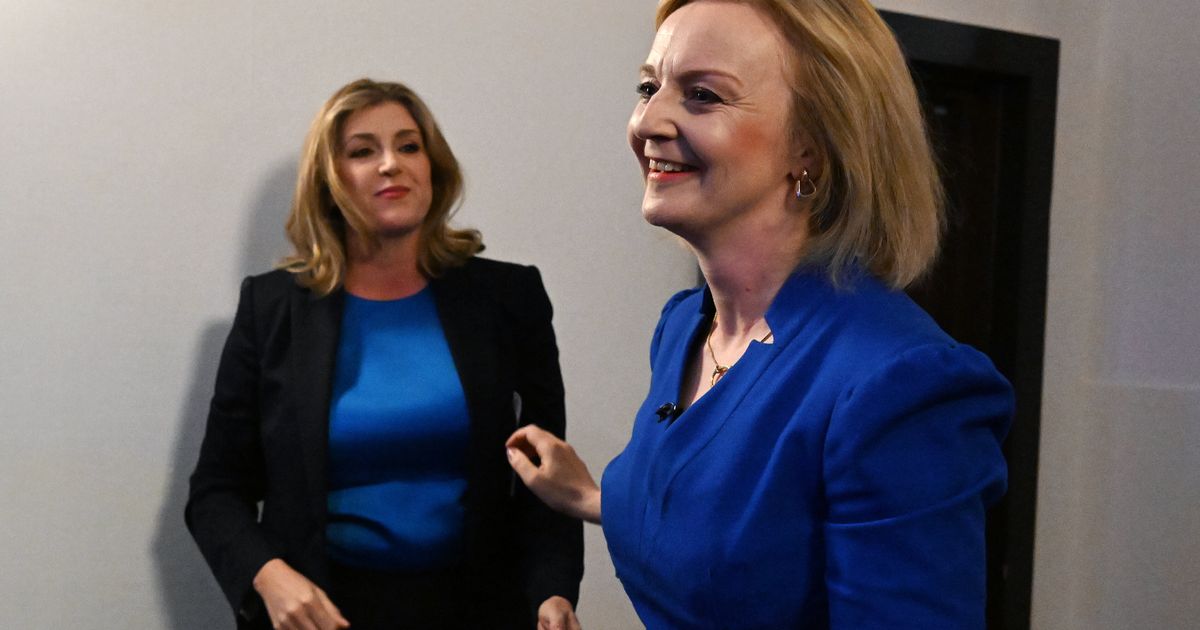
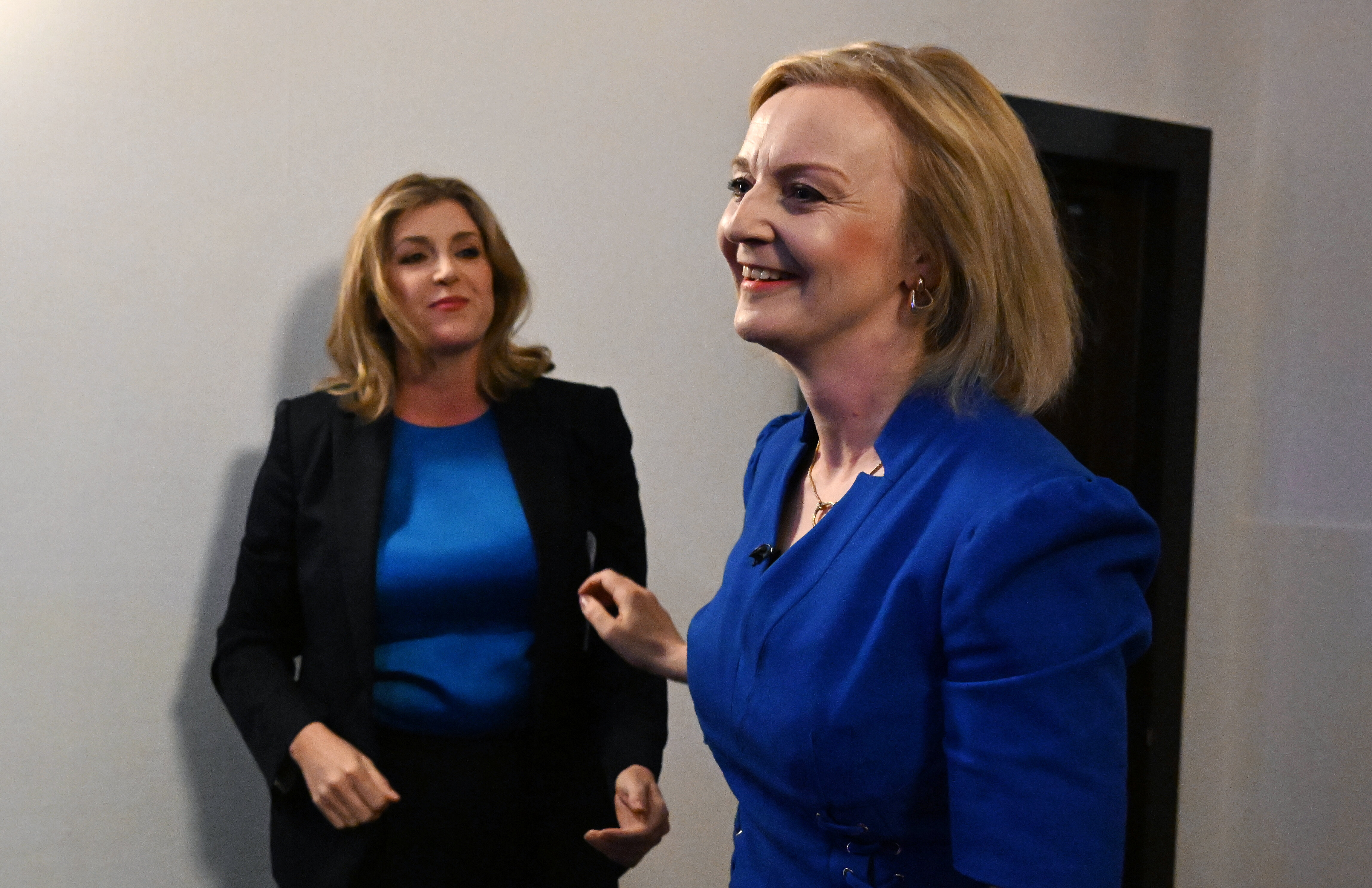
A Video Of Penny Mordaunt Endorsing Liz Truss Has Left People Questioning Her Judgement

A video has re-emerged of Penny Mordaunt backing Liz Truss amid mounting speculation she could be the next prime minister.

The clip, which has been watched more than half a million times in the last 24 hours, shows Mordaunt praising Truss’s “bold economic plan”.

She also claims Truss “embodies the vision and values the British public”.

The video was filmed during the first Tory leadership contest of 2022, after Mordaunt had left the race.

In a speech to Tory members, she says: “Who can lead? Who can build that team and deliver for pour country? Who does have that bold economic plan that our nation needs?

“Who’s got reach, who can relate to people, who understands that people need help with the cost of living now? And who is going to rightly clobber our opponents?

“Who is going to hold seats and win back councils, and who most embodies the vision and values the British public had in their heads and their hearts when they voted in 2016 and 2019?

“At the start of this final phase of the contest I didn’t know the answer to those questions, but I’ve seen enough to know who the person that I’m going to put my faith in is. And that is Liz Truss.”

Truss went on to last just 49 days in No.10 after her chancellor Kwasi Kwarteng’s mini-Budget triggered an economic crisis.

Tory rebels are reportedly planning to oust Rishi Sunak and replace him with with Mordaunt as the opinion polls continue to suggest the party is heading for catastrophe at the general election.

But the video of Mordaunt endorsing Truss has led social media users to question her suitability to lead the country.

Share Button

20 Seasons In, Here’s What Grey’s Anatomy Has Meant To Longtime Fans

When Grey’s Anatomy fan Seyward Darby says she keeps up with new episodes of the long-running medical drama, “people look at me sideways,” she said.

As a fellow fan, I often hear a similar sense of disbelief: “I can’t believe you still watch that show.”

But we’re not alone. Grey’s Anatomy is still one of the most-watched dramas on network television, and Thursday marks the beginning of its 20th season (seriously…seriously… seriously!).

After 420 episodes and almost two decades on the air, the legacy of Grey’s Anatomy and its effect on pop culture has been long discussed. It diversified casts. It attracted people to the medical field. It celebrated women for being ambitious and complicated — and for having good sex. It drew attention to social and political issues, such as gay rights and gun violence (sometimes imperfectly) that other shows often avoided completely. It launched the careers of creator Shonda Rhimes and original cast members Ellen Pompeo, Chandra Wilson, Katherine Heigl and Sandra Oh (and many other actors, writers and producers affiliated with the show).

It also became the longest-running prime-time medical drama on television, outlasting more characters than I can name, both of its spinoffs (Private Practice and now Station 19, which was just cancelled), multiple showrunners (Meg Marinis is succeeding Krista Vernoff) and its titular lead character (Pompeo departed the show as a series regular last season).

Dr. Meredith Grey (Ellen Pompeo) on an episode of Grey's Anatomy last year, during her last appearance as a main cast member. The show begins a staggering 20th season on Thursday.
Dr. Meredith Grey (Ellen Pompeo) on an episode of Grey’s Anatomy last year, during her last appearance as a main cast member. The show begins a staggering 20th season on Thursday.

Though all these accomplishments are noteworthy, what’s less obvious and less talked about is how, for almost 20 years, Grey’s Anatomy has reached fans across the world, touching their lives, shaping their choices and making them feel seen.

In honor of the 20th season, I spoke to several fans about what the show has meant to them, why they’re still watching and what they’re looking forward to this season. The origin story of each fan makes it clear that it’s impossible to separate what they love about Grey’s Anatomy from how they fell in love with it in the first place.

Some, like mother-daughter duo Melanie French and Judy Lamb, have truly been watching since the show’s inception in the spring of 2005. French, who was in college at the time, remembers watching episodes at her sorority house on Sunday nights. Across the state, her mom, Lamb, was tuning in at home. Now they live states apart, and they’re both still watching, albeit on different timelines. With two kids and delayed streaming options, French is often behind her mom. “I tell her to get the Kleenexes ready,” Lamb said.

Darby was also in college when the show premiered, and she remembers it being on in the background of her college newspaper’s office. But she didn’t become a regular viewer until she moved to Europe after graduation and was visiting a friend in Paris during the worst weather imaginable. She couldn’t walk around the city, so she ended up hanging out in his apartment, and he had the first few seasons of Grey’s Anatomy on DVD. She binged all of them and became deeply connected to the show when Denny Duquette (Jeffrey Dean Morgan) died at the end of Season 2, shattering Izzie Stevens.

Sandra Oh, T.R. Knight, Jeffrey Dean Morgan and Katherine Heigl in the Season 2 finale of "Grey's Anatomy."
Sandra Oh, T.R. Knight, Jeffrey Dean Morgan and Katherine Heigl in the Season 2 finale of “Grey’s Anatomy.”

Scott Garfield/Disney General Entertainment Content via Getty Images

Darby could personally relate to Izzie’s story, especially the iconic scene of her lying on the bathroom floor in her pink, strapless prom dress, because her boyfriend had died suddenly the year before. “I remember when it happened that, if I just lay on the floor, the floor will hold me because I just felt like I was falling all the time,” Darby said. She still thinks often of Izzie’s scene.

Fani Mari, who lives in Greece, also discovered the show via DVD around that same time. She’d either rent them or borrow them from another girl she knew. That girl quickly became a friend.

“Our love for ‘Grey’s Anatomy’ connected us,” Mari said.

In November 2020, she was watching the show’s depiction of the COVID-19 pandemic and how it portrayed its effect on health care workers. The episodes made her curious about what life was like for people around the world during that time. The show inspired her so much that she ended up interviewing people and writing the book Hindsight 2020: Tribulations and Silver Linings During a Global Pandemic.”

Dr. Miranda Bailey (Chandra Wilson) watches over Dr. Meredith Grey during Season 17 of "Grey's Anatomy," which depicted the effects of the COVID-19 pandemic on health care workers.
Dr. Miranda Bailey (Chandra Wilson) watches over Dr. Meredith Grey during Season 17 of “Grey’s Anatomy,” which depicted the effects of the COVID-19 pandemic on health care workers.

Gen-Zer and college junior Miriam Gardner is one of the show’s younger fans. She discovered it via Netflix, binging the show over winter break during her first year of high school. It was a coming-of-age moment: Grey’s Anatomy was the first TV show she watched that had adult characters. She loved the medical aspect of the show and related to George O’Malley (T.R. Knight) always being the underdog. Also, she was, of course, drawn to the love triangle between Meredith, Derek Shepherd (Patrick Dempsey) and Addison Montgomery (Kate Walsh).

After catching up on Netflix, she started watching either live or the next day on Hulu. “I just always remember making sure I wouldn’t look at any Instagram spoilers or anything because I feel like everyone would always be talking about what happened on the episode on social media,” Gardner said.

For all these fans, Grey’s Anatomy has become a touchstone in their lives, and the characters feel like family. It’s why they’re still watching.

“When they killed off Patrick Dempsey, I was furious, and I was like, ‘I’m never watching that show again!’ And I really meant it,” French said. “And then a couple months go by, and it comes back on, and I just want to see what happens with Meredith.”

Now there’s far less Meredith. Pompeo appeared in only eight of the 20 episodes in Season 19, and she’s slated to appear in four of the 10 episodes this season. However, even the main character’s departure isn’t deterring these fans. “I definitely was skeptical at first and surprised by that [departure] because I thought they would kind of end the show whenever she left,” Gardner said. “But I definitely will still watch it to see what it’s like.”

These fans’ devotion is a testament to the world Grey’s Anatomy has created, a world that feels so real it can outlast its eras, becoming more than the intern classes, residents and (many) chiefs of surgery who propel it forward, more than its melodramatic plot arcs and enviable friendships and messy romantic entanglements.

T.R. Knight, Katherine Heigl, Justin Chambers, Sandra Oh and Ellen Pompeo during Season 3 of "Grey's Anatomy."
T.R. Knight, Katherine Heigl, Justin Chambers, Sandra Oh and Ellen Pompeo during Season 3 of “Grey’s Anatomy.”

Michael Desmond/Disney General Entertainment Content via Getty Image

Over 20 seasons, Grey’s Anatomy has become so much more than a television show.

“It’s its own extended universe, and it’s just moved so far from what it was initially and become part of our cultural discourse in a way that I just kind of imagine it going on for forever because it’s not like I’m hungering for some conclusion or eager to see where does this all wrap up,” Darby said.

She’s looking forward to the new season, to waking up on Friday mornings and streaming the show while she drinks her coffee and gives herself over to the world of Grey-Sloan Memorial Hospital and the big feelings and thoughts it inspires.

The flexibility viewers have in how they watch the show has also kept so many fans in its fold. Fans can watch weekly on ABC or the next day on Hulu. They can wait for the new season to drop on Netflix (and now Hulu) in the late summer and binge-watch the entire thing. They can even step away for a while and return, which is what Gardner is currently doing. She has been rewatching the show from its beginning and plans to continue with new episodes when she’s finished.

Niko Terho, Alexis Floyd and Harry Shum Jr. as three of the newest "Grey's Anatomy" class of interns.
Niko Terho, Alexis Floyd and Harry Shum Jr. as three of the newest “Grey’s Anatomy” class of interns.

Liliane Lathan via Getty Images

For those gearing up for the new season this week, they’re hoping to see the relationship between Meredith and Nick Marsh (Scott Speedman) develop, looking forward to the return of Arizona Robbins (Jessica Capshaw) and wondering what’s going to happen to the new intern class after Simone Griffith’s (Alexis Floyd) wedding that didn’t happen, Jules Millin’s (Adelaide Kane) declaration of love and the medical drama that could ensnare them all. They’re also still celebrating Miranda Bailey’s Catherine Fox Award for her contributions to and advocacy of reproductive health care and waiting to see what social issues the show engages with this season.

Ultimately, what becomes clear from these conversations with fans, who are at all stages of life and living all over the world, is that Grey’s Anatomy — as imperfect as it can be when social issues are handled too didactically, or the plot is dragging or a beloved character leaves — has been a gift in their lives.

I understand the feeling. I’ve grown up with the show. Its influence is evident when I “dance it out,” or call my Cristina or watch an old episode because I miss my mom (we watched our last Thursday night episode together in November of 2018 before she died).

At the end of Season 19, I began to question why I “still watched that show.” I questioned if I had the stamina to keep going, to invest in another class of interns. But I’m planning to tune in live Thursday night. I want to see what happens, and it feels fitting to mark the 20th season premiere of the show the way I first began watching it, commercials and all.

Share Button

The Cold Remedies Doctors Say You Shouldn’t Bother With

The average person catches two to four colds a year, which means most of us will suffer through roughly 200 colds in our lifetime.

With so many snotty struggles ahead of us each year, what remedies can we rely on to help us feel better fast? And do any of those viral cold cures we’ve seen online actually work?

That’s what we — Raj Punjabi and Noah Michelson, the co-hosts of HuffPost’s “Am I Doing It Wrong?” podcast — recently asked Dr. Natasha Bhuyan, a family physician and medical director of OneMedical.

“I have patients ask me all the time about [unusual] cold cures because they want to get better fast,” Dr. Bhuyan said. “One of the things I’ve heard about recently is garlic cloves up the nose. I think it’s this idea of garlic cloves acting as a decongestant. Garlic cloves up the nose can actually be really dangerous and can really irritate your nasal passages.”

Other unorthodox remedies she’s encountered involve an unexpected article of clothing.

“The other things I’ve heard about have always been related to socks,” she revealed. “One [“remedy”] is go to bed wearing wet socks. The other is put sliced up potatoes inside your socks and go to bed. It’s this thought that it’ll pull the cold virus into your feet and out of your body.”

Despite how popular these so-called “treatments” may be, there’s no evidence that any of them work.

“Some of these ‘remedies,’ at best, you laugh at them, but at worst, they can really be dangerous for people,” Dr. Bhuyan noted.

So how can we safely find some relief if we’ve been struck down by a nasty cold?

“The studies on vitamin C are pretty mixed,” Dr. Bhuyan said. “They’ve found that if you take vitamin C regularly, you might be able to reduce the duration of a cold by half a day. Does that mean that everybody should go out and start taking a vitamin C supplement? Not exactly, because even within those studies, they found there were differences on the optimal dose. Reaching for vitamin C at the first sign of a cold likely won’t help. Taking vitamin C regularly might help shorten a cold’s duration if you get a cold, but you see that’s couched in a lot of ‘ifs,’ and it might not be worth the bang for your buck.”

What about taking zinc?

“The zinc trials are not that great and the reason why is because zinc actually tastes pretty terrible,” Dr. Bhuyan said. “So, if you’re trying to do a trial and giving half the people zinc and half the people a placebo, the placebo group knows they have a placebo because we can’t make a compound that tastes as terrible as zinc.”

Zinc also comes with a lot of side effects.

“People can get nausea from taking zinc on an empty stomach. People can get upset stomachs. All of those things point to zinc coming with its own risks.”

However, it might actually help shorten a cold, even if only by a day or two.

“There are trials that show that if you take zinc at the first sign of a cough or a cold or you’re feeling a scratchy throat, [taking] 10 to 15 milligrams of zinc might reduce the duration of a cold,” Dr. Bhuyan said.

Dr. Bhuyan told us that if we want to try a particular remedy, it’s always a good idea to chat with our doctor first, and, ultimately, our best weapons to feel better when we have a cold are the simplest ones — and they’re both free.

“Water is helpful because it can help break up your mucus. Staying hydrated and giving yourself water is a good idea,” Dr. Bhuyan advised. “It doesn’t necessarily mean it’s going to stave off the cold or prevent the cold, but I tell people rest and fluids is really the key.”

We also chatted about what happens if we eat dairy when we have a cold, why a hot toddy might not be the best drink choice if we’re feeling under the weather, and much more.

After you’ve had a listen to the full episode above or wherever you get your podcasts, subscribe to “Am I Doing It Wrong?” so you don’t miss a single episode, including our investigations of the ins and outs of tipping, how to score the best deals on airline tickets, how to apologise or vanquish your credit card debt, how to find love online or overcome anxiety, online shopping, tips for taking care of your teeth, pooping like a pro, secrets to booking and staying in a hotel, how to deal with an angry person, cooking tips from celebrity chef Jet Tila, shocking laundry secrets. and more.

Need some help with something you’ve been doing wrong? Email us at AmIDoingItWrong@HuffPost.com, and we might investigate the topic in an upcoming episode.

Share Button