Two-thirds of new mothers have been forced into “tough choices” due to 25% price rise, a survey says.


Two-thirds of new mothers have been forced into “tough choices” due to 25% price rise, a survey says.
The digital expansion follows the success of the Covid vaccination programme, NHS England says.

In the future, a little saliva may be enough to detect an incipient cancer. Researchers at the University of Gothenburg have developed an effective way to interpret the changes in sugar molecules that occur in cancer cells.
Glycans are a type of sugar molecule structures that is linked to the proteins in our cells. The structure of the glycan determines the function of the protein. It has been known for a while that changes in glycan structure can indicate inflammation or disease in the body. Now, researchers at the University of Gothenburg have developed a way to distinguish different types of structural changes, which may provide a precise answer to what will change for a specific disease.
“We have analysed data from about 220 patients with 11 differently diagnosed cancers and have identified differences in the substructure of the glycan depending on the type of cancer. By letting our newly developed method, enhanced by AI, work through large amounts of data, we were able to find these connections,” says Daniel Bojar, associate senior lecturer in bioinformatics at the University of Gothenburg and lead author of the study published in Cell Reports Methods.
AI enhanced method found the patterns
There are also other research groups that study the substructures of the glycan in search of so-called biomarkers that describe what is wrong. This often involves statistical tests using mass spectroscopy to find out whether the level of individual sugars is significantly higher or lower in cancer. These tests have too low sensitivity and are not reliable because different sugars are structurally related and therefore not independent of each other.
Daniel Bojar’s research team uses a new method that includes AI, which takes these problems into account and can find the patterns in the data sets where others fail.
“We can rely on our results; they are statistically significant. If we know what we are looking for, it is easier to find the correct result. Now we will take these biomarkers and develop test methods,” says Daniel Bojar.
New mass spectrometer
During the fall, his research group received SEK 4 million from the Lundberg Foundation to purchase a state-of-the-art mass spectrometer. This instrument will serve as an AI platform to support researchers in the study of glycans, for example in lung cancer samples. The aim is to detect the cancer earlier to improve the chances of recovery.
“We want to develop a reliable and rapid analytical method to detect cancer, and also the type of cancer, through a blood sample or saliva. I think we might be able to perform clinical tests on human samples in 4-5 years,” says Daniel Bojar.

Brigham researchers’ findings support developing public health interventions that incorporate components of environmental health literacy alongside cancer screening efforts.
The world’s climate crisis has wide ranging implications for human health. But how do our perceptions about climate change influence our intentions when it comes to personal health? A new study by investigators from Brigham and Women’s Hospital, a founding member of the Mass General Brigham healthcare system, used the National Cancer Institute’s annual Health Information and National Trends Survey (HINTS) to analyze adults’ views on climate change and their interest in cancer screening. The study found that individuals who saw climate change as a personal health threat were also more likely to endorse interest in cancer screening. The results are published in the Journal of the National Cancer Institute.
“Our findings suggest that individuals who are more aware of the potential health impacts of climate change may also be more overall health conscious, which may drive their interest in preventive healthcare measures, such as cancer screening,” said senior author Alexander P. Cole, MD, assistant professor in the Department of Urology and the Center for Surgery and Public Health at Brigham and Women’s Hospital. “Awareness of climate change impacts could also prompt individuals to take more proactive steps to protect their health in the face of environmental threats.”
Previous studies have uncovered both direct and indirect links between cancer and climate change. Certain climate change consequences, such as ozone depletion and the emergence of more environmental carcinogens, can cause cancer. And extreme weather events can disrupt cancer care as well as access to health care in general.
In the current study, Cole and colleagues analyzed responses from adults who completed the HINTS survey in 2021. Each respondent’s perceived risk of climate change to their personal health was categorized as “no harm” or “little harm” versus “some harm or “a lot of harm.” Researchers also assessed each respondent’s interest in getting screened for cancer the following year, categorized as “not at all” and “a little” versus “somewhat” and “very.”
The study found that 54 percent of survey respondents felt that climate change would cause “some” or “a lot” of harm to their health. Respondents also showed 73 percent higher odds of being interested in cancer screening when they felt that climate change posed “some” risk to their health and 84 percent higher odds when they perceived that climate change could harm their health “a lot.”
Other findings showed that respondents who were younger, female, and more educated were more likely to perceive climate change as a health threat. And that non-Hispanic Black and Hispanic populations expressed a higher interest in cancer screening than non-Hispanic White populations.
“We see room for improvement in climate change awareness overall as well as some racial disparities underlying some of the differences in awareness,” said first author Zhiyu Qian, MD, a urology resident in the Department of Urology and research fellow at the Center for Surgery and Public Health at Brigham and Women’s Hospital. “There are a lot of ways to interpret this and one could be that more vulnerable populations are already feeling more of the impacts from climate change.”
The authors note that their study is retrospective and does not prove causation, but future studies could explore whether climate change awareness directly impacts screening behavior. The research team is continuing to investigate specific ways that cancer care can be impacted by climate change, such as in the relationship between extreme weather events and cancer care. They are also working to improve sustainability in cancer care and adaptability of the healthcare system, such as by increasing the accessibility and quality of telehealth.
Moreover, addressing the root causes of climate change can yield advantages in lowering cancer risk. A prominent example is the reduction of meat consumption, which not only diminishes greenhouse gas emissions but also mitigates a significant cancer risk factor. Additionally, lifestyle modifications like active commuting and preserving greenspace have been associated with decreased cancer risks, while also supporting environmental health.
“Cancer care is multidisciplinary and extremely complex. You need a well-functioning healthcare system for it to work,” said Cole. “Raising awareness is a big piece as is changing the healthcare system. There are so many exciting opportunities to do this through public awareness, healthcare delivery, and lifestyle and diet modifications where you can do things that are great for planetary health as well as for patients’ health and cancer risk.”
Authorship: Additional authors include Edoardo Beatrici, Quoc-Dien Trinh, Adam S. Kibel, Stacy Loeb, and Hari S. Iyer.
Disclosures: QDT reports personal fees from Astellas, Bayer, and Janssen, outside the submitted work. QDT reports research funding from the American Cancer Society, the Defense Health Agency, and Pfizer Global Medical Grants. APC reports research funding from the American Cancer Society and Pfizer Global Medical Grants.
Funding: APC reports research funding from the American Cancer Society and Pfizer Global Medical Grants (Prostate Cancer Disparities #63354905), by the Bruce A. Beal and Robert L. Beal surgical fellowship of the Brigham and Women’s Hospital Department of Surgery and a Physician Research Award from the Department of Defense (#PC220342).

A climate policy that raises the price of carbon-intensive products across the entire U.S. economy would yield a side benefit of reducing nitrate groundwater contamination throughout the Mississippi River Basin.
The Gulf of Mexico, an important U.S. fishery, also would see modest benefits from the nitrate reductions. These were among the conclusions of a recent study published in the Proceedings of the National Academy of Sciences (PNAS).
The study, led by four early career researchers, three of them from Purdue University, combined four scientific models to simulate how different aspects of climate policy, agricultural economics and the environment would interact. A major feature of the study traced how nitrogen that humans have converted into other forms, called reactive nitrogen, flows through the environment.
“Food production is generating a lot of the reactive nitrogen. Some comes from energy as well,” said study co-author Thomas Hertel, Distinguished Professor of Agricultural Economics at Purdue. “This is a big problem. The reactive nitrogen ends up in rural groundwater. Some of it ends up in the atmosphere. And of course, it ends up in the streams and eventually the Gulf of Mexico.”
Excessive fertilizer use creates a growing number of water-quality concerns, said Shan Zuidema, a research scientist at the University of New Hampshire’s Earth Systems Research Center. “Our models showed that with this climate policy, U.S. carbon emissions could significantly decline, which would translate into about a 3% to 4% reduction of the Gulf of Mexico dead zone in an average year.”
One of the study’s four linked models analyzed various issues related to climate change economics. Another model linked local policies to national and international agriculture prices, land use and the environment. A third produced an estimate of nitrate leaching in the entire Mississippi River Basin based on changes in fertilization rates and land cover. The fourth simulated vertical water exchange between the ground and atmosphere and horizontal transport through runoff and stream networks.
Central to the study was the “nitrogen cascade” concept that the University of Virginia’s James Galloway and his co-authors published in 2003. The concept states that a single nitrogen atom may trigger a cascade of effects in the atmosphere, terrestrial ecosystems, freshwater and marine systems, and on human health.
The PNAS study documented how much nitrogen gets harvested with the remainder getting put into the environment.
Galloway, UVA’s Sidman P. Poole Professor Emeritus of Environmental Sciences, who was not a co-author of the PNAS study, noted that for more than 100 years, an abundant supply of nitrogen has fueled agricultural production.
“Tracking these nitrogen losses, and trying to mitigate them, requires an approach that links economics, agroecology and hydrology to ensure that actions at one point in the chain do not have unintended consequences at another point.” The PNAS paper “is an excellent example of the type of work that is needed,” Galloway said.
The study included an assessment of policy outcomes that assigned the social cost of carbon to estimates ranging from $51 to $152 per ton of carbon dioxide equivalents.
“Fertilizer is most affected because ammonia fertilizer is largely converted natural gas,” Hertel said. The highest carbon price in the models reduced U.S. carbon emission by almost 50%. Coupled with an increase in nitrogen fertilizer prices, this reduced fertilizer applications by about 15% for corn production across the Mississippi River Basin.
The team also considered a scenario that restored wetlands in the central U.S. Corn Belt without a climate policy. The farmers in the area grew less corn and applied less fertilizer. But that prompted increased fertilizer applications in the untreated regions, resulting in negative spillover.
“It seems like every environmental policy we look at has spillovers. They haven’t been considered before, but when you think about the economics and what we call market-mediated spillovers, they’re pervasive,” said Hertel, who founded and is executive director of Purdue’s Global Trade Analysis Project (GTAP). Hertel and co-authors include a discussion of spillovers in a recent special issue of Environmental Research Letters that focuses on global-to-local-to-global sustainability analysis challenges.
The PNAS study looked only at carbon pricing and wetlands, but many other food system interventions lend themselves to similar analyses, including how a change in our diets could affect the nitrogen cascade. “How about reducing food waste, or reducing ethanol production? Or improving nitrogen use efficiency?” Hertel asked.
In addition to Hertel, the Purdue co-authors are: Jing Liu, research economist in agricultural economics;Maksym Chepeliev, principal research economist at GTAP; David Johnson, associate professor of industrial engineering and political science; and Uris Baldos, research associate professor of agricultural economics.
The serial killer is removed from the nursing register by a panel which heard she maintains her innocence.

Former Fox News personality Tucker Carlson has poured cold water on speculation that he may join former President Donald Trump on the Republican 2024 ticket.
Trump himself has suggested he may be open to the idea of the conspiracy theorist — who frequently promoted racist and far-right talking points on his prime-time Fox show until he was fired in April — as his running mate if he secures the Republican nomination.
Advertisement
But when fellow Fox alum Megyn Kelly asked Carlson on her SiriusXM show on Monday if he would serve as Trump’s right-hand-man if requested, Carlson said it would be “so unimaginable.”
“I mean, I haven’t led a life that prepares a person for politics,” Carlson told Kelly. “As I said, I don’t think I have any horrible skeletons or anything. It’s not that. It’s just that that’s not how my brain works. I’ve never done anything like that. I can’t imagine spending time with politicians.”
In private messages that were released in March as part of Dominion Voting Systems’ defamation lawsuit against Fox News, Carlson said he hated Trump “passionately.”
To Kelly on Monday, though, Carlson ― who on the same day launched his own streaming platform ― had nothing but praise for the four-times-indicted former president.
Advertisement
“I’m a total sucker for Trump,” he claimed. “Personally, I get along with Trump really well. The closer I am physically to Trump, like if I’m with him in the room, I always love Trump and I think it’s impossible not to, and you know the experience. He’s just charming.”
Carlson called Trump “funny as hell” and “brave in his way” and said he agreed with many of his policies and was “kind of psyched to vote” for him if he becomes the GOP nominee next year.
“But serving in politics with anybody, I mean, that’s just a lot for me to think about because I just don’t think I’m really suited for that. Would anyone want to see a guy like me run for office?” Carlson asked.
“Yes,” replied Kelly. ”I thought about it a million times.”
She predicted, “You’re not gonna end your life without having been probably president, maybe vice president. I just don’t think you will.”
Watch the exchange here:
Advertisement


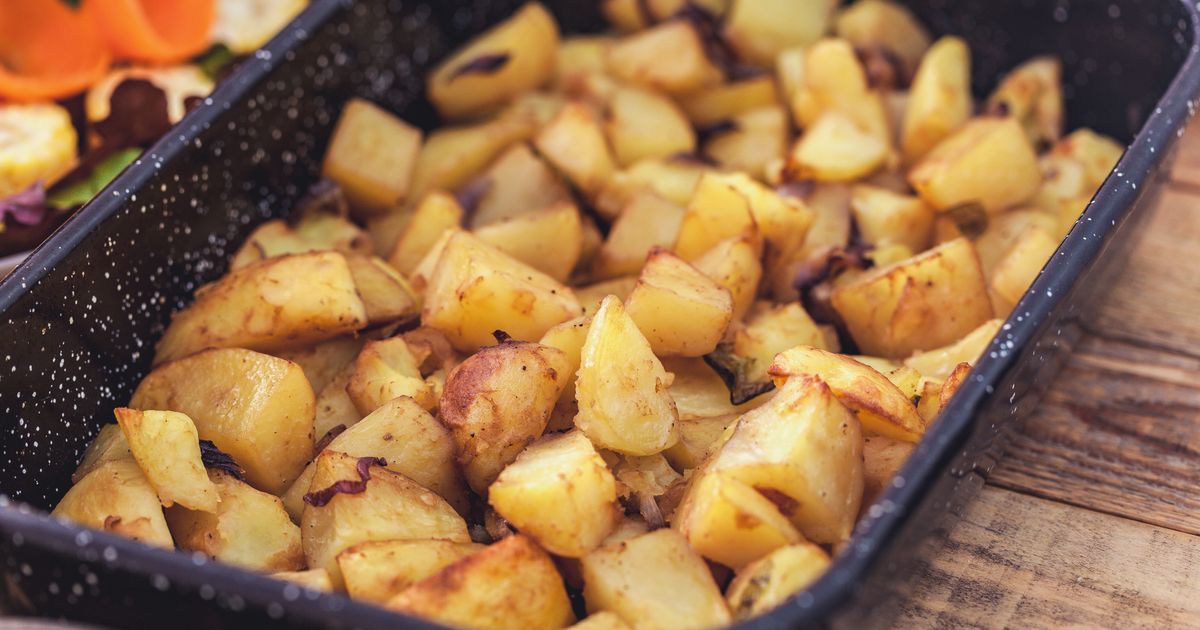
I hate to sound arrogant, but I was pretty sure I’d landed on the perfect roast potato recipe until about an hour ago.
The steps seemed so simple. Par-boil the spuds (I love roosters) for about ten minutes; put a shameful amount of olive oil in a tray to warm in a hot oven; chuff and season the spuds with semolina and herbs, and then roast. Right?
Advertisement
Wrong, it seems. Because while every other step might be legit (like, Mary Berry-approved legit), I’m making a serious mistake with my oil.
Beef tallow isn’t just a delicious, decadent addition to spuds, it turns out ― olive oil is among the worst oils you can roast your potatoes in, apparently. Specifically, extra-virgin olive oil.
It’s all to do with something called a smoke point.
The smoke point of extra-virgin olive oil is around 165-190°C, which pales in comparison to duck fat’s 190°C and rice bran oil’s 260°C.
Light or refined olive oil has a more impressive smoke point of 260°C, but it’s not as good as safflower oil’s 265°C.
Advertisement
In fact, Serious Eats puts extra-virgin olive oil right at the bottom of its smoke point chart ― meaning it’s better used as a dressing or dip than a cooking aid.
That’s because once you heat oil past its smoke point, its fats start to break down, releasing free radicals and a substance called acrolein.
Acrolein is responsible for that burned, acrid, bitter flavour we’re all trying to avoid ― so while flash-frying a quick meal in shallow levels of oil might be OK, leaving your veggies to essentially stew in split fats for an hour or more probably isn’t.
And given that most roast potato recipes call for a 200°C-ish (or 180°C fan) roasting temp for potatoes, it doesn’t seem likely that your 65-190°C-smoke-point extra-virgin olive oil will cut it.
I mean, even if you can stand the taste, a smoky oven is nobody’s idea of fun, right?
Duck fat, which has a smoke point of 190°C, could be suitable (and delicious) if you’re cooking on the slightly lower fan-assisted heat.
But good ol’ sunflower and vegetable oil, which can withstand temps of around 225°C, might be a cheaper (and perfectly tasty) option.
Advertisement
Avoid coconut oil and butter, which both have low smoke points of around 175°C. ― and if you’re craving that extra-rich taste, beef tallow has a high smoke point of 205°C.
Refined or light olive oil has a high smoke point of 260°C, so this should be fine to use too ― it’s just the extra-virgin type you need to worry about.
Ah, the joys of cooking…
Campaigners in Norfolk and Suffolk say lessons are not being learned after thousands of unexpected deaths.
A Taliban ban led to a 95% drop in Afghan poppy cultivation, a UN report finds.
