A protein in the immune system programmed to protect the body from fungal infections is also responsible for exacerbating the severity of certain autoimmune diseases such as irritable bowel disease (IBS), type 1 diabetes, eczema and other chronic disorders, new research from The Australian National University (ANU) has found.
The discovery could pave the way for new and more effective drugs, without the nasty side effects of existing treatments. In addition to helping to manage severe autoimmune conditions, the breakthrough could also help treat all types of cancer.
The scientists have discovered a previously unknown function of the protein, known as DECTIN-1, which in its mutated state limits the production of T regulatory cells or so-called ‘guardian’ cells in the immune system.
These guardian cells are crucial to preventing autoimmune disease because they suppress the effects of a hyperactive immune system, which can be extremely dangerous if not properly regulated.
The immune system is designed to protect the body from infection, but in severe cases it becomes overactivated and turns the body’s natural defences against itself.
“When this happens, the immune system wrongly perceives healthy cells as a threat, causing it to attack the body and promote the onset of autoimmune disease,” lead author Dr Cynthia Turnbull, from ANU, said.
“Although the DECTIN-1 protein helps to fight fungal infections, in its mutated state it’s also responsible for exacerbating severe autoimmune disease.
“Understanding how and why the mutated version of this protein causes autoimmunity in patients brings us a step closer to developing more effective drugs and offers new hope to more than one million Australians who suffer from some form of autoimmune disease.”
The scientists believe they can control the immune system by turning the DECTIN-1 protein on and off, like a light switch.
“Turning on the protein would lower the intensity of the immune system’s defensive response which would help to treat conditions such as autoimmune disease,” Professor Carola Vinuesa, from the Francis Crick Institute, said.
“On the other hand, turning off the protein could give the immune system a boost, sending its defensive mechanisms into overdrive and allowing the body to treat an entirely different set of diseases.
“The findings are exciting because there haven’t been many discoveries of so-called modifier proteins such as DECTIN-1, which can change the way the immune system behaves to the extent it can either cause a disease or prevent it.”
According to Dr Turnbull, this means DECTIN-1 could play a key role in treating cancer.
“Cancer cells can disguise themselves by releasing certain proteins and chemicals into the body that essentially render them invisible from the immune system’s natural defences,” she said.
“We think that by using drugs to turn off the DECTIN-1 protein, in combination with existing therapies, we can activate the immune system and help it identify and attack the cancerous cells.”
Current treatments for autoimmune?disease aren’t very effective and have a lot of damaging side effects. This is because the majority of existing treatments suppress the entire immune system rather than targeting a specific area.
“That means it might not fix the exact problem behind the patient’s disease and could inadvertently make them vulnerable to infections. Many people on these kinds of treatments also get bacterial, fungal and viral infections which can make their autoimmunity worse,” Professor Vinuesa said.
By examining the DNA of a Spanish family, the researchers discovered the DECTIN-1 mutation was responsible for exacerbating the severity of a chronic autoimmune disease suffered by the family’s only child.
“We found the family was also carrying a mutated version of another immune system protein known as CTLA-4. The CTLA-4 mutation prevents guardian cells from working properly and is known to cause severe autoimmune disease in about 60 to 70 per cent of people who carry it in their DNA,” Dr Pablo Canete, from the University of Queensland, said.
“Strangely, the remaining 30 to 40 per cent of the population who carry this mutated protein don’t develop disease.
“We discovered?the family’s only child had both the DECTIN-1 mutation and the CTLA4 mutation, while his parents had only one of each. This helped us identify why the child, who is now in his twenties, was the only person in the family to develop severe autoimmunity, ending a 20-year-long mystery behind the cause of his disease.
“By discovering the existence of mutated versions of modifier proteins such as DECTIN-1, we finally have an explanation for why some people develop severe autoimmune diseases while others don’t, even if they inherit gene mutations passed down from family members.”
Tropical coral reefs are among our most spectacular ecosystems, yet a rapidly warming planet threatens the future survival of many reefs.
However, there may be hope for some tropical reefs in the form of feathered friends.
A new study led by researchers at Lancaster University has found that the presence of seabirds on islands adjacent to tropical coral reefs can boost coral growth rates on those reefs by more than double.
And as a result of this faster growth, coral reefs near seabird colonies can bounce-back much quicker from bleaching events — which often cause mass die off of corals when seas become too hot — the international team of researchers also discovered.
The study, published today in Science Advances, focused on Acropora, an important type of coral that provides complex structures supporting fish populations and reef growth, and which is also important for protecting coastal areas from waves and storms. The researchers found that Acropora around islands with seabirds recovered from bleaching events by around 10 months faster (approx. three years eight months) compared to reefs located away from seabird colonies (four years six months).
Researchers say these shorter recovery times could prove the difference between continuing to bounce back for some reefs in the face of a warming planet where damaging bleaching events now occur much more frequently than in earlier decades.
The key to how seabirds can help tropical coral reefs to grow and recover more quickly is through their droppings. Seabirds feed on fish in the open ocean far from islands, and then return to islands to roost — depositing nitrogen- and phosphorus-rich nutrients on the island in the form of guano. Some of the guano is washed off the islands by rain and into the surrounding seas where the nutrients fertilise corals, and other marine species.
“Our results clearly show that seabird-derived nutrients are directly driving faster coral growth rates and faster recovery rates in Acropora coral,” said Dr Casey Benkwitt, research fellow in coral reef ecology at Lancaster University and lead author of the study.
“This faster recovery may be critical as the average time between successive bleaching events was 5.9 years in 2016 — a reduction from 27 years in the 1980s. Even small reductions in recovery times during this window may be key to maintaining coral cover over the short-term,” she added.
The researchers’ study focused on a remote archipelago in the Indian Ocean. They compared reefs next to islands with thriving populations of seabirds, such as red-footed boobies, sooty terns and lesser noddies, against reefs next to islands with few seabirds. The islands with few birds have populations of rats, a very damaging invasive species which is devastating to birdlife as they eat eggs and chicks. It is no coincidence that the islands with thriving bird populations are rat-free.
The reefs in the study area suffered extensive coral bleaching and mortality following marine heatwaves in 2015-16, providing an opportunity to observe, and compare, how coral on different reefs recovered. The researchers surveyed the sites from one year before the bleaching event to six years after the bleaching, and modelled the Acropora recovery for the years between surveys.
The research team sampled nitrogen stable isotope values, a reliable tracer of seabird-derived nutrients, and measured growth rates of the Acropora corals for three years.
The results showed that seabird-derived nutrients taken up by corals next to bird islands boosted coral growth rates — with the rate doubling for each unit of seabird nutrient increase.
In contrast, coral near rat-infested islands had similar nutrient values to coral found distant from islands — showing the supply of these nutrients had been virtually cut off by the lack of birds.
The scientists also undertook an experimental approach to find out if the faster growth was directly due to the nutrients, as opposed to other factors such as genetic differences in corals between different islands. They transplanted some Acropora corals between islands with and without rats.
This experiment confirmed that it was the presence of seabirds that caused the nutrient enrichment.
At an island level, coral colonies transplanted to seabird islands grew twice as fast as those transplanted to rat-infested islands. Natural coral colonies were also found to grow faster near to rat-free islands with an estimated 2.4 times faster growth rate compared to coral around rat infested islands.
Dr Benkwitt said: “We’ve been able to show a clear link between the presence of seabirds and faster coral growth. This is really exciting and encouraging that a natural solution is available to help boost the resilience of coral reefs in the face of a warming planet.
“By restoring seabird populations, corals can quickly take-up and benefit from the supply of new nutrients, and our three-year experiment shows that these benefits are not just a short boost — they can be sustained over the long-term.”
The researchers say their findings add further weight to the growing body of evidence that shows the ecological damage across ecosystems on land and sea from invasive rats on tropical islands.
Professor Nick Graham of Lancaster University and Principal Investigator of the study said: “Combined, these results suggest that eradicating rats and restoring seabird populations could play an important role in re-establishing the natural flows of seabird nutrients to the nearshore marine environment, bolstering rapid coral reef recovery which will be critical as we expect to see more frequent climate disturbances.”
Environmental benefits of seabird nutrients go beyond increased rates of coral recovery. “Growth rates of fish on reefs adjacent to islands with large seabird colonies is also faster and overall biomass of fish is 50% greater than on reefs next to islands with rats,” said Dr Shaun Wilson, a co-author of the study from the Australian Institute of Marine Science. “Consequently, rates of grazing and bioerosion by fishes is three times faster on islands with seabirds, which are key processes helping to maintain a healthy reef.”
The results of the study, which was supported by the Bertarelli Foundation as part of the Bertarelli Programme in Marine Science, are outlined in the paper ‘Seabirds boost coral reef resilience’ published by Science Advances.
The authors of the paper are Cassandra Benkwitt, Samuel Healing and Nicholas Graham of Lancaster University; Ruth Dunn of Lancaster University and Heriot-Watt University; Rachel Gunn of Lancaster University and the University of Tubingen; Cecilia D’Angelo, Maria Loreto Mardones and Joerg Wiedenmann of the University of Southampton; Shaun Wilson of the Australian Institute of Marine Science and the University of Western Australia.
This is just the first of two days in which he will be grilled over the government’s handling of the pandemic, and there was plenty of back-and-forth between the former prime minister and the counsel to the inquiry Hugo Keith KC.
So here’s a list of the core exchanges from the first day.
1. He began with an apology – but was interrupted by protests
“Can I just say how glad I am to be at this inquiry and how sorry I am for the pain and the loss and the suffering of the Covid victims,” Johnson said when he started to give evidence.
Advertisement
Four people started to protest and held up a sign which said “the dead can’t hear your apologies”. They were removed.
Johnson also said he took “personal responsibility for all decisions made”.
The Inquiry chair, Lady Hallett, also kicked off proceedings by warning Johnson about the leaks to the media, saying: “Failing to respect confidentiality undermines the inquiry’s ability to do its job fairly, effectively and independently.”
2. Johnson couldn’t explain what happened to WhatsApps from his old phone
Amid a furore that the inquiry did not have all the necessary evidence because one of the ex-PM’s phones could not be accessed, Johnson said he was not responsible for any of the apparent technical issues.
“I haven’t removed WhatsApps from my phone. I want to make that clear. I have given everything you need,” he said.
Advertisement
3 ‘Not sure’ if government decisions led to more Covid deaths
In his witness statement, the ex-PM wrote: “We – I – unquestionably made mistakes, and for those I unreservedly apologise.”
However, when pressed by Keith, Johnson did not say what mistakes he was referring to – he just admitted that, with hindsight, it was clear they needed to do things differently.
Asked if he thought government-decision making led “materially to more excess deaths than might otherwise have been the case”, he said: “I’m not sure.”
He did admit concerns about mixed messages from the devolved governments, though. He later said “the collaboration was excellent” but communication could end up being “confusing”.
4. Johnson challenged the claim the UK had the second highest number of deaths in Europe
Johnson claimed the UK was “16th out of 33 countries for excess deaths” in Europe.
However, the QC said the UK had one of the worst records for excess deaths among western European countries.
Advertisement
Johnson also blamed other factors, like the “extremely elderly population”, and the population density of the UK.
5. Cabinet ‘more reluctant’ to impose lockdown
The ex-PM said his colleagues were “more reluctant” than he was to impose lockdown-type measures.
He said: “I think it would be fair to say that the cabinet was on the whole more reluctant to impose NPIs (non-pharmaceutical interventions) than I was.”
6. Johnson admitted he read Sage meetings minutes ‘once or twice’
The PM was criticised at the start of pandemic for missing Sage – Scientific Advisory Group for Emergencies – at the beginning of 2020.
He said in retrospect it may have been “valuable to try to hear the Sage conversation”, but he was reliant on the chief medical officer for England, professor Chris Whitty and the former chief scientific adviser Sir Patrick Vallance who are “outstanding experts in their field”.
7. He did not want to sack Hancock
He defended the former health secretary Matt Hancock, who has been heavily criticised for his handling of the pandemic throughout the course of the inquiry.
Advertisement
His former chief adviser Dominic Cummings told the inquiry he had encouraging Johnson to sack Hancock, the ex-PM said: “If you’re a prime minister, you are constantly being lobbied by somebody to sack somebody else.”
He added that Cummings “had a low opinion of the health secretary”, but Johnson said: “I thought he was wrong.”
Johnson also said he does not accept Hancock was excluded from some key meetings, but said he needed to discuss some costly elements of the lockdowns with the Treasury.
Later, he expressed frustration – and rolled his eyes – at the idea in Cummings’ witness statement that he kept Hancock in cabinet as a sacrifice for the inquiry.
“I don’t remember that at all, it’s nonsense,” Johnson said, saying he thought Hancock was a good public communicator “whatever his defects”.
Advertisement
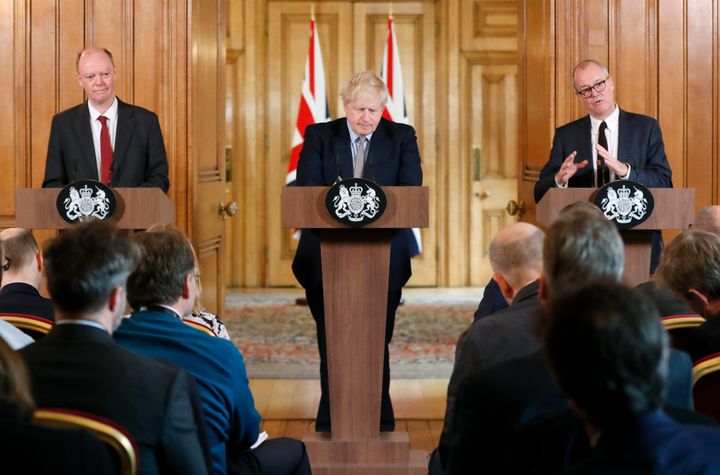
Boris Johnson, centre, Chief Medical Officer for England Chris Whitty, left, and then Chief Scientific Adviser Patrick Vallance
via Associated Press
8. Johnson disputed claims about toxic culture
Former senior civil servant Helen MacNamara told the inquiry Johnson oversaw a “toxic culture” in No.10, while top civil servant Simon Case that the top team were “basically feral”.
But the ex-PM told the inquiry that actually it was just “a lot of highly talented, highly motivated people who are stricken with anxiety” who under pressure “will be inclined to be critical of others”.
But he said it would have been worse if everyone was “so deferential” they never expressed their opinion.
9. ‘Too many meetings were too male-dominated’
MacNamara claimed there was an “obvious, sexist treatment” of women in No.10.
Johnson said: “I think that the gender balance of my team should have been better.
“I think sometimes during the pandemic, too many meetings were too male-dominated if I’m absolutely honest with you.”
10. Johnson said his senior aides chose to ‘step aside’
Johnson said his cabinet secretary Mark Sedwill and chief adviser Dominic Cummings both decided to step aside, rather than a sign he lost confidence in them.
When pressed over his relationships with them, he refused to be drawn and just said they chose to leave, saying it was “very difficult, very challenging period”.
11. Johnson responded to claims he was slow to respond to Covid
The ex-PM said the possibility of such a virus was not something that had really “broken upon the political world”, and he was not asked about it at PMQs – but noted he did become anxious about it by the end of February.
Advertisement
He added: “It was not escalated to me as an issue of national concern until much later.”
Acknowledging some predictions he saw about the potential Covid deaths in early 2020, he said: “I don’t think we attached enough credence to those forecasts.”
He claimed it was a “cloud on the horizon no bigger than a man’s hand”.
He said he could not remember expressing scepticism about the possible number of deaths.
12. Blamed a lack of communication from scientific teams
“The scientific community within Whitehall at that stage was not telling us that this was something that was going to require urgent and immediate action,” Johnson claimed.
He said he knew Covid had a 2% fatality rate, but claimed “fallacious, inductive logic” meant they did not take warnings seriously.
13. Johnson admitted that deaths in Italy ‘rattled me’
The ex-PM noted Italy had an elderly population, much like the UK, and so its 8% fatality rate “really rattled me”.
He said: “We should have twigged, we should collectively have twigged, much sooner. I should have twigged [by late February].”
Advertisement
14. Johnson seemed emotional when remembering decisions around lockdown
Weighing up lockdown and behavioural fatigue, Johnson said he was anxious about locking down too early without a vaccination programme.
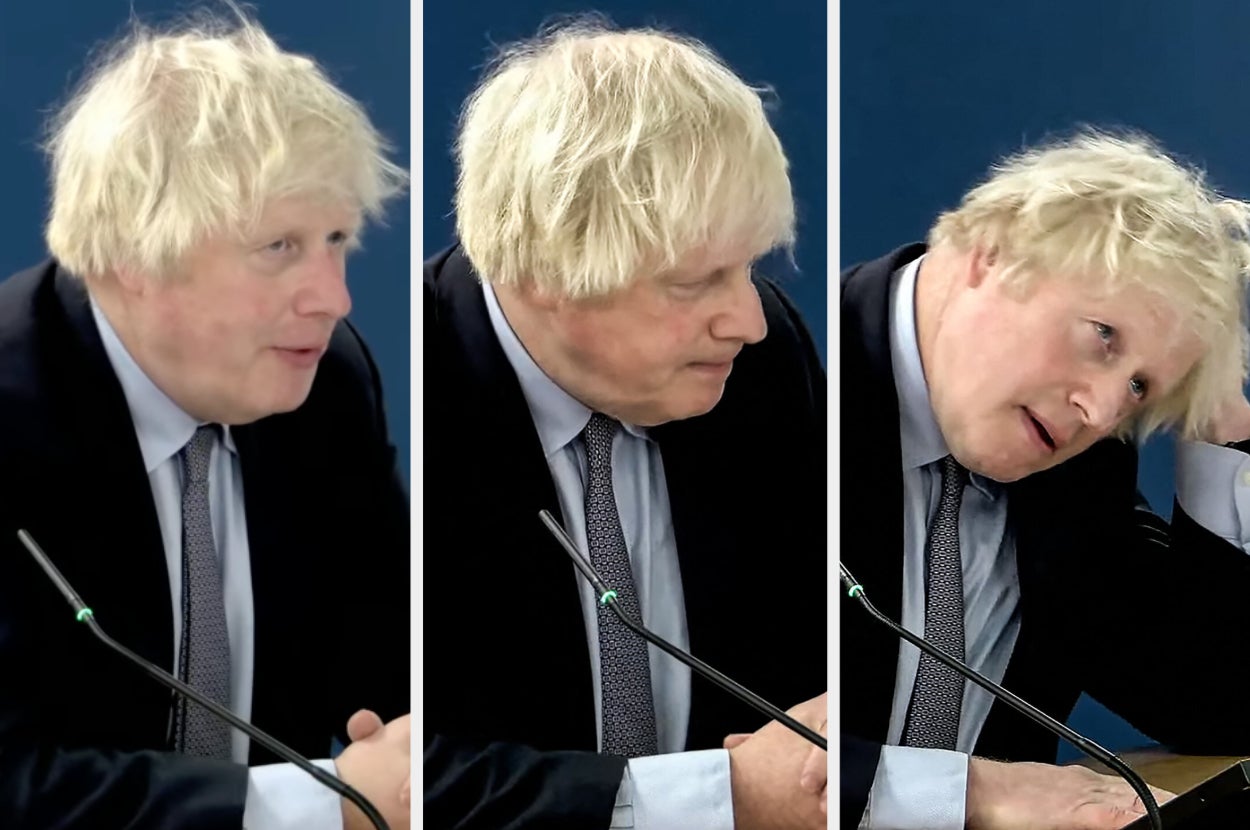
“We have to be realistic about 2020 – the whole year – that whole tragic, tragic year,” Johnson said, before taking a moment to compose himself.
He then pointed out “we did lock down – and then it bounced back.”
15. Johnson defended his work ethic
He claimed he does not accept suggestions he was doing nothing in the months before lockdown, saying he was working and having calls with Presidents Xi and Trump.
The QC replied that he was actually not suggesting Johnson was on holiday, he was just reiterating Cummings’ allegations.
16. Johnson said he did not consider ignoring any advice about lockdown
He said the view that interventions should to be imposed too early was “the prevailing view for a long time” and shared by lots of people – and so he would not have gone into lockdown earlier.
Advertisement
Suggesting it was hard to know how to respond, he said: “When you hear about an Asian pandemic that is about to sweep the world, you think you’ve heard it before and that was the problem.”
He did not consider overruling the chief medical officer – and Keith then asked if he understood Sage could not tell him what to do.
Over accusations that he showed a lack of leadership by changing direction, he said: “Of course we were changing but so did the collective understanding of the science.”
17. He expressed regret about shaking hands
Johnson told the media he went to a hospital and shook hands with several Covid patients at the very early stages of the pandemic.
“I do think I shouldn’t have done that in retrospect,” Johnson replied.
“I should have been more precautionary, but I wanted to be encouraging to people.”
The clip in question from March 2020 below:
Advertisement
18. Johnson acknowledged sports events should have been cancelled
“With hindsight, as a symbol of the government’s earnestness rather than being guided by the science, we should perhaps have done this,” he said.
But he added, “At every stage I was weighing massive costs,” and “what the government was going to do was “very destructive for a lot of people least able to bear the costs”.
19. He addressed thinking behind herd immunity
Johnson said trying to flatten the curve of infections, – which he claimed led some people to assume the government were “trying to allow this thing to pass through the population unchecked”.
However he said this would have been a “by-product” of tackling the virus.
20. Johnson was ‘bewildered’ by possible impact of intervention
Presented with a graph showing the possible impact of interventions on the NHS, he said: “I was bewildered, to be honest.”
Advertisement
With or without restrictions, he said: “In either case, we are facing an absolutely intolerable situation.”
21. One heated moment over his lockdown
Johnson rejected claims he could not make up his mind about the lockdown – which came into effect on March 23, 2020 – but said the chancellor told him it would pose a risk to bond markets so he had to make a careful decision.
“It would have been totally negligent not to have had such a conversation,” Johnson said: “I’d made up my mind – we [were] getting on and doing it, we [were] not being diverted.”
He said, “I had no other tool – literally nothing else” aside from lockdown, and he “couldn’t take the gamble with public health”.
22. Johnson stood by lockdown
He said: “I believe that it was absolutely necessary” and “helped to suppress the R-rate”.
He also cast doubt on the view that the need for a mandatory stay at home order could have been avoided if the government acted sooner – but accepted Sage lacked enough clarify on data.
Advertisement
23. Johnson said he should have spent more time with the devolved administrations
Despite saying in his witness statement that he thought it was wrong for the PM to hold meetings with the first ministers, and compared it to being a “mini EU”, Johnson said they need to get a “better way of getting a unified message”.
“Some form of integrated decision-making which does not leak is what you’re after,” he said.
24. Johnson expressed regret for saying long Covid was ‘bollocks’
The ex-PM admitted that he had written in notes about long Covid describing it as “bollocks” and “gulf war syndrome stuff” – an illness which rocked veterans from the 1991 war, but no single cause was ever identified.
He said these phrases may have caused “hunt and offence to huge numbers of people who have that syndrome”, and “I regret it very very much.”
The Covid Inquiry is shown a document referencing a study into Long Covid, which Boris Johnson had scribbled over with the words “Bollocks” and “this is Gulf War Syndrome stuff”. pic.twitter.com/QnD3zKfpk1
25. Johnson defended ‘argumentative’ culture in No.10
Johnson’s administration has been repeatedly slammed for “misogyny”, “leadership issues”
The ex-PM said he wanted a No.10 where ideas can be challenged, and he said: “It was occasionally argumentative, but that was no bad thing.”
Advertisement
He also said the country required “continuous, urgent action”, and claimed he spoke bluntly sometimes “because I wanted to give people cover to do the same”.
He also said the PM should go into meetings when decisions are being made – but that was not happening.
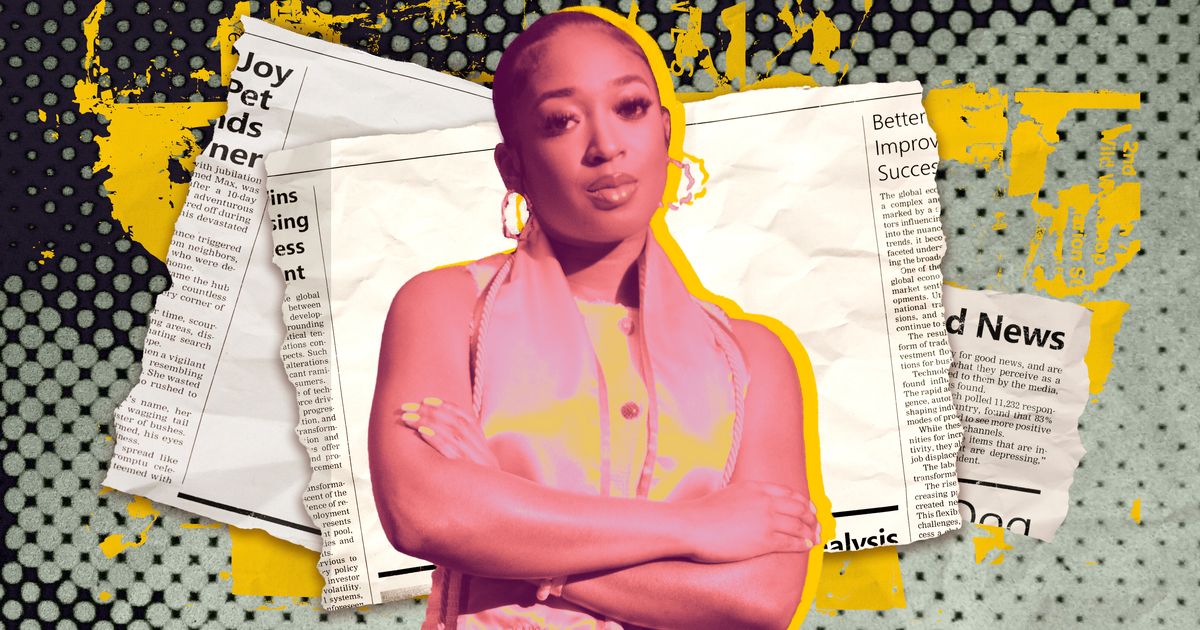
Every day, Kelsey Russell wakes up, eats breakfast and scans the day’s top headlines — but not the way you and I do. She props up her phone camera, pulls out a print newspaper or magazine, and hits “record,” spending nearly an hour laying out the deets of an article for her followers. Then, it’s off to class.
Russell, 23, is a pretty unconventional influencer. While her content has landed her at brand events, award ceremonies and even on “The Drew Barrymore Show,” the secret to her success can be found in her daily routine.
Advertisement
After classes — Russell is pursuing a master’s degree in sociology and education at Columbia University — she leaves one educational institution to return to another: her Harlem apartment. She winds down most evenings by scanning news pages, first for her own enjoyment and then for her audience’s clarity-driven consumption. Another hour is spent annotating the pages and researching in preparation for the comprehensive TikTok she’ll film the next morning.
“I got a subscription to the Sunday New York Times — the physical copy — for my birthday, and I think that bad, Gen Z biddies should read the newspaper,” Russell said, in her first media literacy-related piece of content this past summer. “And in order to bring back the newspaper, I’m going to literally document, every day, what I learn.”
This post marked the beginning of her journey to break down articles from various newspapers and magazines on TikTok. In a few months, Russell amassed an audience hooked on her snappy personality and her knack for synthesising information in a palatable and colloquial way.
Advertisement
Sourcing information from both local and national outlets, Russell largely tackles stories abut politics, economics and social justice through the lens of communities of colour. In a time full of uncertainty and a thirst for news and analysis we can rely on, Russell offers a port in the storm of information swirling around us.
Russell credits her father for her penchant for print media. Images of him sitting at the kitchen counter in their Atlanta home, newspaper in hand, are cemented in her mind. During her undergraduate studies at Boston University, he’d often mail her articles that reminded him of her ― most of which Russell kept but ignored. However, in 2020, there was an investigation in her home state that changed her perspective.
When Ahmaud Arbery, a Black man, was killed by three white men in Georgia, Russell’s father quickly became well-versed in the details of the case ― long before most mainstream publications caught on. He felt empowered to be ahead of the curve on news that affected his community, and this got Russell thinking.
“Being Black ― the fact that we’re just out here getting murdered, like everywhere. I realised, there’s something in print media where there are always going to be journalists trying to cover really small local towns,” she says, emphasising the importance of telling our own stories when we need to.
Russell’s lived experience as a Black woman is not the focal point of her videos; she aims to focus mostly on the subjects and sources involved. However, being a Black person wholly informs her quest for knowledge and her digital career.
Advertisement
“I think about it every day,” Russell says, referring to her racial identity. “Coming from a family of educators and entrepreneurs, we value education so much because we know people can’t completely take it away from us, yet they continuously try to.”
“The oppression of thought, learning and education has not [happened] solely to the Black American community,” Russell says. “That has been a tool used since the beginning of this earth to oppress. But Black Americans are the best example to look at what happens when you limit people’s access to reading, to writing, to education.”
This oppression is part of both our history and our present situation, Russell tells me. And she wants to be part of disrupting that.
There are dangerous and largely false narratives about Black Americans that mainstream media outlets often perpetuate. Our achievements and our agency are often disregarded or omitted, and it’s time to subvert that. “For me, the importance of being a Black woman is that I will continue to interact with these white supremacist media while I also uplift media that is not a part of that regime,” Russell says.
Advertisement
Russell’s TikTok content is as much for herself as it is for her community. Although she has become a trusted news resource for her audience, reading print media has also become integral to maintaining her mental health.
“I felt the sense of anxiety leave my body,” Russell says, recalling how she felt after making her first newspaper-related video. “It was all because I picked up the paper, which seemingly should be a thing that should make me more anxious, more depressed, and it didn’t. It actually felt like a healing moment.”
Russell says she fell back in love with learning about the world, no matter how grimy it is — because there are also beautiful moments of happiness and empathy to home in on.
Just a few months ago, Russell was in the same boat as many Americans, grappling with anxiety and choosing to avoid the news. But drawing on advice from her therapist, Russell invoked her childhood zest for information and read the newspaper to face her fears without potential distraction from digital devices.
Advertisement
Information overload, increased misinformationonline and digital fatigueare fixtures of life for Gen Z. Despite this, Russell believes that we should double down on our engagement with news — not turn away from it. We can be the front line of a media literacy revolution if we continue to have discerning, galvanising scholars like Russell to guide us.
“Just because we have so much information doesn’t mean we know how to process it, and doesn’t mean we know what to do with it,” Russell says. “Do everything you can to not go numb, because your emotions are the coolest thing ever. The way you feel about things, that’s what gives you passion. It’s up to us to interact with the news institutions that already exist, to either change or demolish [them], whichever one we want to do.”
Portman starred as Padmé Amidala, a role she would reprise in the sequels Attack of the Clones and Revenge of the Sith, back when she was just 18 years of age.
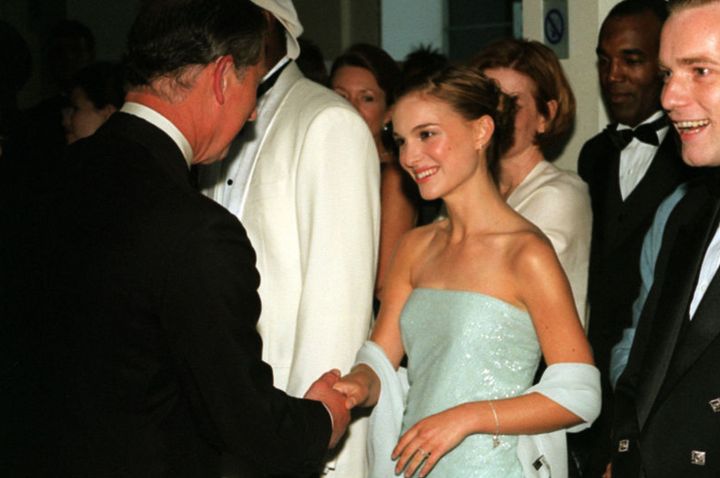
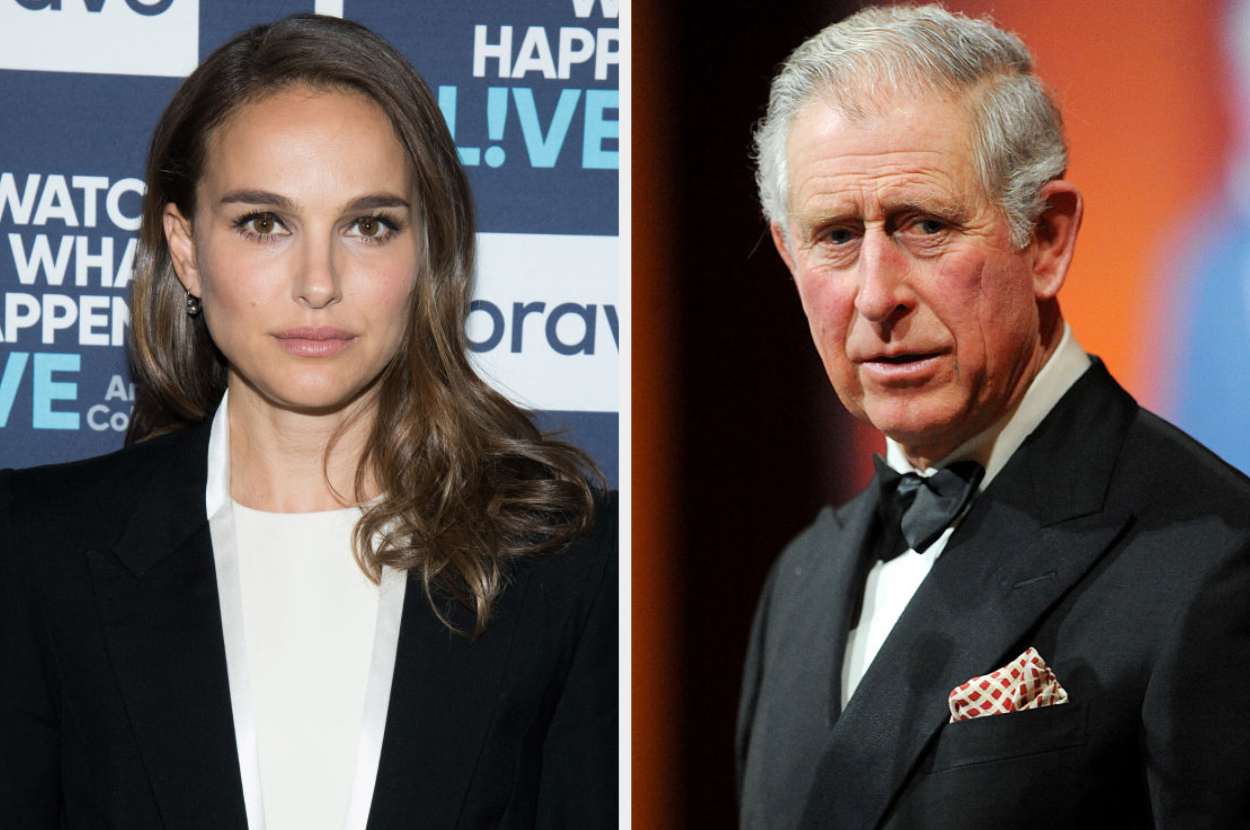
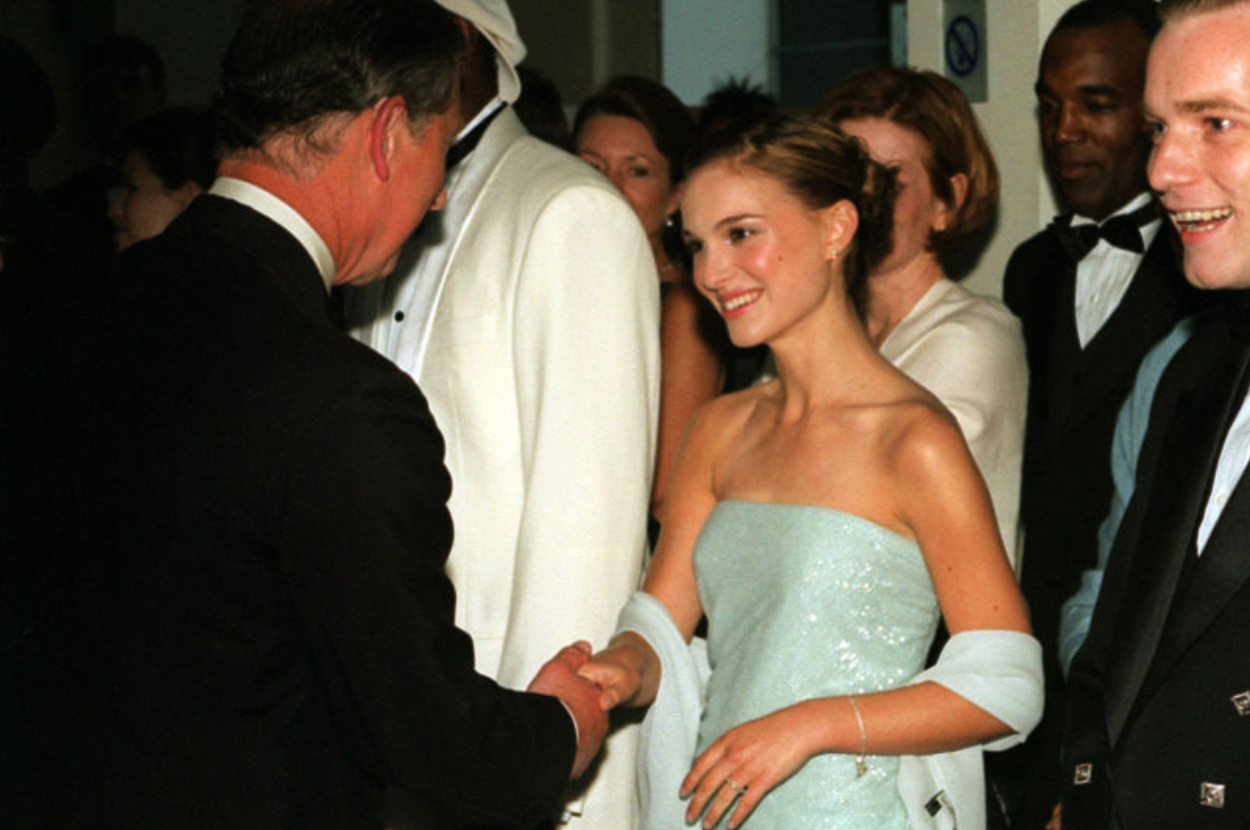
Whilst discussing her experience on set and her willingness to reprise the role in future Star Wars properties, Cohen asked Portman what she thought of getting to meet The Royal Family at The Phantom Menace premiere back in ’99.
“I remember Prince Charles, he was then Prince Charles, asked me if I was in the originals. I was like, ‘No, I’m 18!’ But he was very friendly.”
The original Stars Wars saga began in 1977 with Star Wars, and kickstarted the careers of leads Mark Hamill, Harrison Ford and Carrie Fisher. Portman, meanwhile, was born only two years old when the final film – Return of the Jedi – was released in 1983.
Advertisement
Then Prince of Wales meets Natalie Portman at The Phantom Menace Royal Film Performance at the Odeon Leicester Square
John Stillwell/PA Images via Getty Images
The actress, who had already starred in blockbuster Léon: The Professional by the time she appeared in her first Star Wars film, also revealed it was her first time working digitally with a green screen, which was “amazing”.
“I don’t think anyone was shooting that way then. It was my first time working with a green screen. It was a whole new set of skills to pick up and a whole new world to enter.”
The Phantom Menace was only Portman’s sixth feature film. She has since gone on to star in the likes of Closer, V for Vendetta, Thor, Jackie and Black Swan, for which she won a Best Actress at the 83rd Academy Awards.
Portman admitted to Cohen that even though no one has asked her to reprise her Star Wars character, she would be open to doing so.
“I’ve been in Star Wars movies”, she told Waititi, who was forced to admit that he had forgotten she’d starred quite significantly in the prequel trilogy.