Thousands of patients remain in hospital each day despite being well enough to leave, data shows.


Thousands of patients remain in hospital each day despite being well enough to leave, data shows.

Some unexpected shark strandings and subsequent surprises following autopsies have, ironically, taken marine biologists millions of years back in time as they look to the future with concern. Adding chapters to an evolutionary tale involving the infamous megalodon shark (the “Meg”), they think their work suggests there are more warm-blooded sharks out there than previously believed, and — based on the Meg’s demise — these species may be at great risk from warming seas.
Some of the most famous sharks, like the white shark or the extinct megalodon, are unusual in being among the mere ~1% of shark species to be considered warm-blooded or “regional endotherms.”
It had always been thought warmer muscles help fish be powerful and athletic, with regional endothermy only seen in apex predators like the great white or giant tuna. But there has also been some debate about when regional endothermy evolved, and whether extinct species like the megalodon was warm bodied.
In a new study led by Trinity College Dublin, researchers have found that a relatively ancient (but still-living) shark species — the smalltooth sand tiger, thought to have diverged from the Meg at least 20 million years ago — has anatomic features suggesting it is a regional endotherm. Coming hot on the fins of a similar shock that slow-moving, filter-feeding basking sharks are also regional endotherms, the researchers now believe there are more warm-blooded sharks than science thought, and that warm bloodedness evolved quite a long time ago.
Dr Nicholas Payne from Trinity’s School of Natural Sciences was senior author of the study, published this week in Biology Letters. He said:
“We think this is an important finding, because if sand tiger sharks have regional endothermy then it’s likely there are several other sharks out there that are also warm-bodied.
“We used to think regional endothermy was confined to apex predators like the great white and extinct megalodon, but now we have evidence that deep water ‘bottom dwelling’ sand tigers, and plankton-eating basking sharks also are warm bodied. This raises plenty of new questions as to why regional endothermy evolved, but it might also have important conservation implications.”
The research team (including scientists from University of Pretoria, ZSL, University of Zurich, Swansea University, Smithsonian Tropical Research Institute and University College Dublin College of Agriculture Food Science and Veterinary Medicine) undertook dissections of dead smalltooth sand tiger sharks that washed up in Ireland and the UK in making their discoveries.
advertisement
Dr Haley Dolton, also from Trinity, was lead author of the study. She said:
“Our understanding of science continually grows and it’s becoming clear that whenever regional endothermy evolved in the past it has been retained in a growing number of shark species with very different life styles. When we first realised that the smalltooth tigers have traits associated with regional endotherms I thought ‘here we go again!’, but the next time we see it in another species I might be a little less shocked.
“The discovery itself is very interesting for a marine biologist, but it also has major implications from a conservation perspective for regional endotherms. We believe changing environments in the deep past was a major contributor to the megalodon’s extinction, as we think it could no longer meet the energetic demands of being a large regional endotherm. We know the seas are warming at alarming rates again now and the smalltooth tiger that washed up in Ireland was the first one seen in these waters. That implies its range has shifted, potentially due to warming waters, so a few alarm bells are ringing.”
The numbers dying from the disease have risen steadily over the past 10 years, figures show.
Now a class C drug, possession for recreational use will carry a prison sentence of up to two years.

New maps of more than 1,000 deep-seated landslides in the Puget Lowlands of Washington State provide evidence of the last major earthquake along the Seattle Fault about 1,100 years ago — and may also hold traces of older earthquakes along the fault.
Clusters of landslides offer a potential record of earthquakes, if researchers can determine when the landslides occurred. The new study published in the Bulletin of the Seismological Society of America combines information about the location of these Puget Lowlands landslides along with new dates obtained from measuring the surface roughness of the landslides.
The combination of data helped Erich Herzig of the University of Washington and colleagues uncover strong evidence of the last known major Seattle Fault earthquake, thought to be a magnitude 7 to 7.5 event. (A recent study suggested that there may have even been a double earthquake at the time in the region.)
The researchers compared their new landslide map to ground motions generated by different Seattle Fault earthquake scenarios. The scenario that best matches the landslide clusters, they found, is one that produces the strongest shaking in a west to east band from west Seattle to Mercer Island and the bluffs bordering Puget Sound.
“While other studies have refined our understanding of the overall strength or timing of the 1,100-year-old Seattle Fault earthquake, to our knowledge, this is the first study that has attempted to characterize the locations of strong shaking,” Herzig said.
Herzig and colleagues also uncovered other landslide clusters at 4600-4200 years ago, 4000-3800 years ago, 2800 to 2600 years ago, and 2200 to 2000 years ago that could be signs of older Seattle Fault earthquakes.
They began by mapping more than 1,000 deep-seated landslides across the Puget Lowlands — deep-seated refers to landslides where the slide plane lays below the roots of the trees — using a technique called airborne lidar.
advertisement
“Airborne lidar is a technology where a plane mounted with lasers is used to measure the shape of the land surface in detail, even through vegetation,” Herzig explained. “In the past few years this technology has been able to produce maps at one meter resolution or better, which is essential for measuring roughness as we do in the paper.”
Measuring the roughness of a landslide surface is a relatively new technique used by scientists to estimate the age of a landslide, he noted. The general idea is that ground surfaces roughen after the mass movement of rocks and soil, so that landslide deposits are the roughest right after the landslide occurs and become smoother over time. By modeling this age-roughness relationship, with information from landslides dated by other means such as carbon dating, researchers can estimate when a particular landslide took place.
For the landslides in the BSSA study, Herzig and colleagues calculated roughness by measuring variations in the land surface in a 15-meter-wide circle. Carbon dating of wood at some landslides provided data for calibrating the landslide ages.
The researchers uncovered spatial patterns in the landslides that correlate with the ground motions predicted by models of Seattle Fault earthquakes. They also noted that the timing of landslides in the Puget Lowland fits better with a model of a pulse of landslides at the time of the last major Seattle Fault earthquake, rather than a model of landslides happening steadily through time.
The researchers said their method offers a powerful new way of extracting information about past earthquakes from landslide data.
“This method is best suited to understanding landscapes that have hills that are steep enough to have landslides, and that have infrequent but powerful earthquakes,” Herzig said. “In the U.S., that could mean other locations in the Puget Lowlands area, or places in the New Madrid seismic zone. Other locations around the world could also be interesting to study, such as the Hinagu Fault zone in Japan, or the Hellenic arc in Greece.”

Anaphylaxis — a severe allergic reaction that may include a skin rash, nausea, vomiting, difficulty breathing, and shock — from a food allergy sends 200,000 people to the emergency room annually in the United States.
Because pinpointing a food allergy could mean life or death, an accurate diagnosis is critical.
Oral food challenges — when a patient ingests increasing doses up to a full serving of the suspected food allergen under supervision of a medical provider — are the diagnostic standard as skin and blood allergy tests have high false positive rates.
Although a highly accurate diagnostic test, patients often experience anaphylaxis during oral food challenges necessitating an epinephrine injection.
A team of University of Michigan researchers developed a method that measures water loss from the skin to predict anaphylaxis during oral food challenges before it becomes clinically evident.
The results are published in The Journal of Clinical Investigation.
“This method could enhance the ability to detect and predict anaphylaxis during oral food challenges prior to the need for epinephrine, greatly improving patient safety and comfort,” said Charles Schuler, M.D., lead author of the study and an immunologist at Michigan Medicine.
advertisement
Building on existing research
During anaphylaxis, the dilation or widening of the blood vessels increases heat and water loss from the surface of the skin.
Previous research has assessed facial thermography, which uses a specialized camera to detect heat patterns emitted from the skin, as a method to predict anaphylaxis.
However, this method requires optics expertise, tightly controlled conditions and for the patient to sit still for an extended period — making this an impractical choice, especially for assessing food allergies in children.
The researchers validated the use of transepidermal water loss, a measurement that represents the amount of water that escapes from a given skin area per hour, by comparing its ability to detect anaphylaxis with biochemical and clinical observation methods.
They found that transepidermal water loss increases during food allergy reactions and anaphylaxis.
advertisement
The rise in skin water loss correlated with biochemical markers of anaphylaxis and substantially preceded clinical detection of anaphylaxis.
“Transepidermal water loss measurement can be done in office without specialized equipment, affixed to the skin and works in children making it a vast improvement from previous attempts at early anaphylaxis detection methods,” said Schuler.
Schuler’s research group is currently recruiting participants aged 6 months to 5 years old for a pilot clinical trial, Predicting Peanut Anaphylaxis and Reducing Epinephrine, that monitors transepidermal water loss from the forearm during a peanut allergy food challenge.
Results will help pinpoint values associated with anaphylaxis to determine “stopping rules” to end oral food challenges, hopefully reducing the need for epinephrine injections.

Biochar, a charcoal made from heating discarded organic materials such as crop residues, offers a path to lowering atmospheric carbon dioxide (CO2). New maps, made from a first-of-its-kind high-resolution global dataset of crop residues, reveal areas where the residues may be sustainably used to produce biochar.
The research finds that 12 countries have the technical ability to sequester over 20% of their current total greenhouse gas emissions by converting crop residues to biochar. Bhutan leads the way with the potential to sequester 68% of its emissions in the form of biochar, followed by India, at 53%. The study, “Potential for Biochar Carbon Sequestration from Crop Residues: A Global Spatially Explicit Assessment,” published in the journal GCB Bioenergy.
“We are entering an unprecedented era in which even a rapid and profound reduction in fossil fuel use will not be enough to avoid severe harms to both humans and ecosystems from climate change,” said co-lead author Dominic Woolf, a senior research associate in the School of Integrative Plant Science at Cornell University.
“We also need to draw down excess CO2,” he said. “Making biochar from crop residues is one of the few tools we have that can do this at scale without competing for land.”
Biochar improves soil fertility and benefits plant growth, while also offering a way to remove CO2 from the atmosphere. When added to soils, biochar sequesters carbon in the soil for centuries.
The study finds that if the total amount of crop residues generated by agriculture globally were converted into biochar, it would sequester a maximum of one billion metric tons of carbon stored annually. Three-quarters of that carbon would remain sequestered after 100 years, which represents enough to offset about 80% of all greenhouse gas emissions from agriculture.
“Even when considering limitations on sustainable residue harvesting and competing usage for crop residues — such as livestock feed — the global biochar production potential is approximately half of that amount,” Woolf said.
When considering these limitations, potential global biochar production amounts to 510 million metric tons of carbon per year, with roughly 360 million metric tons remaining sequestered after 100 years.
“The high-resolution maps of crop residue production and biochar sequestration will provide valuable insights and support decision-making related to biochar production and investment in biochar production capacity,” Woolf said.
The study was funded by the Nature Conservancy and the Bezos Earth Fund.
The King’s Speech promises a crackdown on vaping aimed at children.
I grew up in a small Southern town where everyone knew everyone else’s business, and often gossiped about it. That’s typical of many small towns in America, but I never found myself at the centre of any of that gossip.
That all changed when at 56, I launched an OnlyFans account that immediately took off and made me a huge adult entertainment star.
Advertisement
To say that my career change was out of the ordinary is an understatement. After 30 years of working a corporate job and raising a family, my life was mundane. I felt trapped in a loveless, sexless marriage and wondered if this was all there was to life.
I let my hair go grey during the Covid-19 pandemic. Bitterly unhappy, I put on weight. I drank a lot of wine. I cried – a lot. After years of battling bulimia, finally overcoming it and making healthy choices, I was heading in the wrong direction once again.
Desperate to make a change, I gathered up all of the courage that I had inside and asked for a divorce. I decided that I would rather be alone than unhappy in my relationship, and I felt at that time that I would probably be alone for the rest of my life.
Then I met Cam.
I was intrigued by this well-spoken, highly intelligent man 20 years my junior. He was the most handsome man that I had ever seen, so I was convinced that he couldn’t have felt the same electricity I did when our eyes met for the first time.
Advertisement
But I was mistaken.
To my amazement, he asked me out, and our relationship quickly turned physical. I was blown away to find that my sensual side, which I had repressed for so many years, was just waiting for the right person to revive it.

Courtesy of Rae Richmond
Our connection was magic. It was electric. It was wild.
The camera soon came out. We found that we enjoyed taking pictures and making videos of ourselves in intimate moments. It was so exciting and added a new layer of intensity to our bedroom romps.
Cam made me feel like the most beautiful woman in the world, and as a result, my confidence soared. I started taking care of myself again — emotionally, mentally and physically. Cam is a personal trainer, so he helped me find a routine that worked for me, and I was thrilled by how it made me feel and look.
We started talking about the possibility of sharing our sexy pics and videos on OnlyFans, and the thought was a huge turn-on for both of us.
Advertisement
Because I have a business background, I started to research the mature entertainment creator niche and learned that men in their 20s, 30s and 40s were the primary demographic for content made by women my age. I once would have been surprised by that, but having a 36-year-old boyfriend who was totally hot for me made me realise that the age-gap fantasy is definitely a thing!

Courtesy of Rae Richmond
I asked Cam If he really thought that anyone would be interested in watching a 56-year-old woman take her clothes off and have sex. He laughed and said: “Baby, the way you do it — definitely!”
I first posted on OnlyFans on May 7, 2023. Just a few months later, I am already one of the most successful creators on the platform, which blows my mind.
As soon as I launched my account, I began to gain popularity through my various social media platforms and started getting requests to do podcasts and interviews.
Advertisement
It’s been extremely empowering for me to own my own sexuality as Cam and I have fun creating our scenes. He is quite creative and conceptualises most of our content, which we love making. We often act out storylines and use things like fluorescent paint and black lights to bring something extra to our photos and videos. Our real-life passion and chemistry translate very well onto film, and my subscribers absolutely love it.
While I keep my real identity secret for safety reasons, I am not ashamed of what I do, and I’m very proud of the work Cam and I do together. The response to my content has been overwhelmingly positive, so I was not prepared for the reactions from many of the people in my hometown when they found out about my sexy new career.

Courtesy of Rae Richmond
I’m not sure who first learned about my OnlyFans account. My guess is that someone in my hometown subscribed without knowing it was me and then got the surprise of their life once they realised who I was, or maybe someone’s husband became a subscriber. I may never know for sure.
I started receiving hate-filled messages from someone who knew my real identity and called me a “hypocrite” (because I am a Christian and attend church regularly). They posted on social media, tagging both my stage name and real name, and said that people who knew me should “see what I’m really like”.
Advertisement
I was so hurt and puzzled – I would never do anything to hurt anyone, and whoever did this had malicious intent. The hateful words they spewed at me, including comments that I’m serving Satan and going to hell, cut me to the core.
The situation quickly snowballed from there as more and more people found out about my career. People I barely know are angry that I didn’t tell them about my new life, as if they somehow had a right to this information.
Weeks later, I am still receiving messages, and people are still talking about me in thinly veiled, passive-aggressive posts on social media. They’re claiming “my world will come crashing down” and condemning “people who live double lives.”
A few people from my hometown sent supportive messages but asked me not to tell anyone about their support for my new career — because they were worried they would also become targets of this mob.
I’ve tried to explain to the few people who have been willing to listen that I’m still the same person I was before. I’ve asked a few of them to explain to me where their rules for my life are laid out.
Advertisement
Could I have sex with my 20-years-younger boyfriend or not? Would that be OK with them as long as we didn’t film it? Is it OK to film it as long as we don’t let anyone watch it? Is it a sin because I put it on the internet for people to watch, or was it already a sin? What about what they’re all doing in their bedrooms? Do other people have a right to have an opinion on that? Did any of them have sex outside of marriage or live with their partner? Is any of this anyone else’s business? Are they suggesting that we should all have to put it all out there and let everyone vote on it?

Courtesy of Rae Richmond
It all sounds ludicrous, doesn’t it? And you probably won’t be shocked to learn that I never got a single answer to any of my questions. I’m tired of defending myself.
In the end, all I know is that we are all responsible for our own choices, and I’m happier than I’ve been in years.
I knew going into this that I would need to grow a thick skin because I wasn’t sure what the reaction would be. I did develop that thick skin, but what I didn’t know was that I was going to need it to protect me from those who were supposed to be my friends. I’ve certainly discovered who I can truly rely on and, in many cases, there is a fine line between hater and (supposed) friend.
Advertisement
I’ve learned to stand up for myself, trust my own instincts, and make my own decisions and proudly stand by them. I’ve learned to lean on those who offer me unconditional love and support and to sidestep everyone else. I’ve learned that when a woman takes control of her life, some people will be scared, and they’ll go to great lengths to try and bring her down. I’ve learned that none of that matters because I know who I am, I’m not ashamed, and I refuse to be shamed by narrow-minded busybodies.
I’m going to keep creating my content and expressing myself in whatever way that Cam and I choose. As long as it works for us, we enjoy creating it and my subscribers love it, everyone else will just have to live with it. They might also want to ask themselves why they care so much about how another person chooses to live their life when it has no impact on them whatsoever.

Courtesy of Rae Richmond
Someone once told me that it costs $0.00 to mind your own business, but that’s apparently too expensive for some people. I believe they may be on to something there. Even if we don’t agree with one another, there is no reason why we cannot be kind and respectful of others’ choices.
My OnlyFans account continues to grow in popularity, and I will continue to live my life unapologetically — hopefully using my social media platforms to encourage other women to do the same. The best advice that I have for anyone who may find themselves in a similar situation would be to stay true to yourself and what you believe in and continue to follow your heart and your dreams. Always remember, if they throw bricks at you, don’t throw them back — pick them up and use them to build your empire!
Advertisement
Rae Richmond grew up a bit sheltered in a small town in Virginia. She was a wallflower who finally began to blossom and come out of her shell in her 50s. Richmond says she’s “finally exploring different facets of myself” through her onscreen work as a top content creator. In her spare time, she enjoys working out, cooking and baking for friends and family, and taking her two dogs on long walks. In addition to OnlyFans stardom, she is currently voice acting on erotic audio books and writing a book of her own. She has an OnlyFans course for creators in development and expects to launch it in late November. To learn more about her, visit https://linktr.ee/raerichmond777.
Do you have a compelling personal story you’d like to see published on HuffPost? Find out what we’re looking for here and send us a pitch.






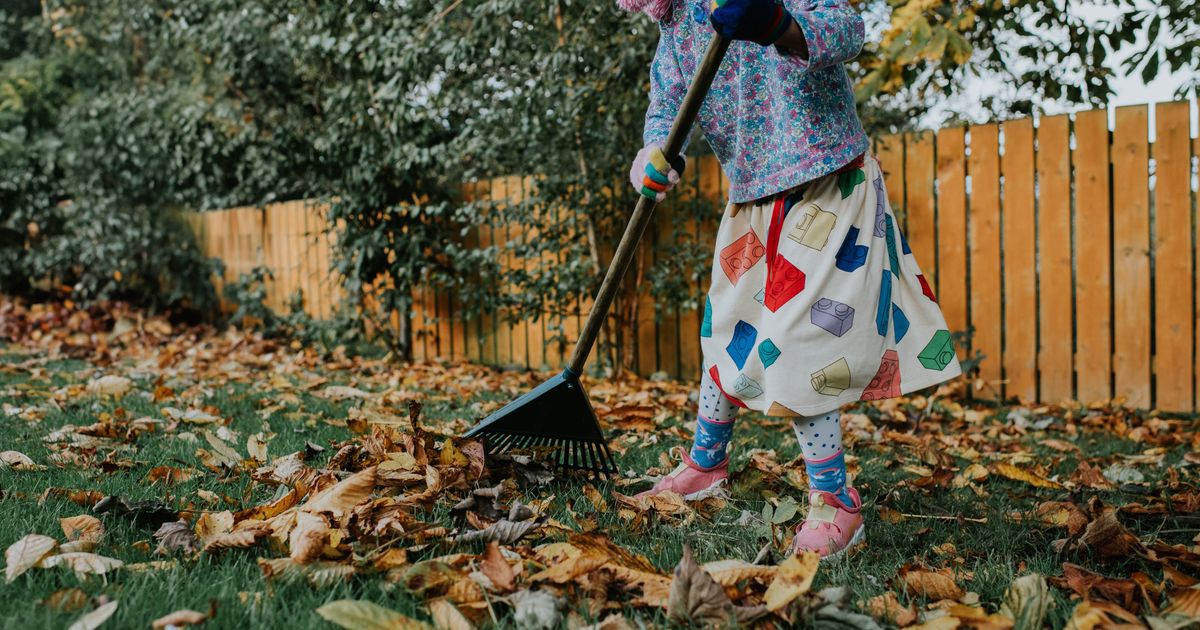
Can we call it “winter” now? I mean, I know it’s just turned November ― but the sun’s down before 5pm, my extra-thick coat has come out of its vacuum-packed home, and my garden’s autumn bounty has officially faded away.
We’re not the only species to feel the shift, either. Birds, bats, hedgehogs, and bees are starting to struggle in the less-plentiful season ― but it turns out that digging a teeny-tiny hole in your garden could help.
Advertisement
“Combined, our gardens provide a space for wildlife larger than all our National Nature Reserves, so by gardening in a wildlife-friendly way, we can help our spiky companions move around safely and find a home,” The National Wildlife Trusts shared.
But unless the critters have a way into your garden, all of that land is practically useless to animals.
“Hedgehogs must feed intensively and be in great condition before hibernating if they are to have enough reserves to last the winter,” Wild About Gardens says.
In fact, the average hedgehog roams 2km a night. To get into prime resting state, they need access to food ― and somewhere to hibernate in the first place.
Advertisement
We’ve written before about how helpful it can be to pile your dead leaves into a leaf bay or heap rather than removing them entirely (this helps to provide insects and shelter for hedgehogs and other beasts).
We’ve also shared how meat-based cat and dog foods can nourish hedgehogs when left out in your garden ― but without a hedgehog hole to access these, your efforts might be futile.
Cutting a small hole in your fence panel with a coping saw, and digging under your pence, removing bricks from walls all work, the RSPCA says. “Hedgehogs can travel through gaps as small as 13x13cm, so these gaps don’t need to be large,” they add.
Of course, you’ll want to get your neighbour’s permission before creating the hole ― especially if you want to create a multi-garden hedgehog highway all down your street with the help of your neighbours.
“Keep an eye out for neighbours doing work on their gardens, or using fencing contractors ― this is the perfect opportunity to get a hedgehog hole put in,” The Wildlife Trust suggests.
Advertisement
The Wildlife Trust’s Hedgehog Street programme encourages people to link their gardens to create a hazard-free, insect-rich pathway. You can go to their go to the national network at Hedgehog Street to record your own hedgehog hole.
Right, I’m off to dig a hole…

