I Married My Boyfriend’s Best Friend. People Think They Know The Full Story, They Don’t

We’re at a dimly lit restaurant, the kind 30-somethings swap for the clubs of their 20. Across from me and my husband, Greg, sit potential new friends we met in the hallway at our son’s daycare.

After enough stop-and-chats at pickup, we figured it was time – dinner on a balmy Saturday night in the thick of a hot Chicago summer.

We’re halfway through appetisers when the other wife asks, “So, how did you two meet?”

It’s a classic first-date-with-potential-friends question. Poor thing, she has no idea what she’s stepped into.

For most people, the “how we met” story is a gift, one of a couple’s greatest hits, perfect fodder for an evening with new friends. But Greg and I have a different kind of story. That’s why he nudges me under the table, our code to tell the simple version. To be fair, he thinks he looks worse in the story than I do. I disagree. But I’ll let you be the judge.

“Oh, we met through a mutual friend,” I say.

It’s true. Technically.

Adam was our mutual friend. It’s just not the whole truth.

The wife isn’t buying it. She tilts her head, eyes narrowing as she glances at her husband.

“Really?” she says. “You look like you have a story.”

Those looks are anxiety and hesitation. She’s not wrong. We do have a story.

Greg shoots me a tight, uneasy smile.

Here’s the thing: I don’t think either of us comes off looking bad. It’s just that telling it feels a lot like getting naked in front of someone you just met. And while I’m weirdly used to that feeling – metaphorically, I mean – Greg is not.

I’ve lost a lot of people for someone my age. After a while, vulnerability becomes muscle memory. I’m basically an emotional nudist at this point.

More than anything, I feel like we owe the story to Adam – like his legacy demands it. Otherwise, the parts of him that remain – his stories and the love he left behind – they evaporate. And he’s already so gone. The least we can do is keep his thread alive in how we met. Greg knows that, which is why he lets me begin.

“I knew it,” the wife says, excited now. “Come on, tell us the real story. We can handle it.”

Adam was our mutual friend. It’s just not the whole truth.

Here’s another thing: the more someone insists they can handle something, the less they actually can. That’s not confidence. It’s anxiety pretending to be confidence. I know this because my anxiety does this all the time.

“Can you?” Greg asks, half-joking. Even her insistence tells me she probably can’t. But I’m already halfway in, so I begin.

“I used to date Greg’s best friend, Adam.”

Her smile falters.

“Oh my God, what a scandal,” she says, trying to play it light.

And this is the part where she’s absolutely going to feel like an asshole.

“Well… not exactly. Adam died. He had an undetected heart condition,” I say. “We started dating after he passed.”

The wife looks like she might throw up.

The husband mutters, “Oh my God.”

I don’t blame them. It’s a lot. Most people aren’t prepared for this plot twist with their burrata.

“It’s OK,” I say, gently.

Greg adds, “It’d be a normal story if we were in a nursing home.”

“Yeah,” I say. “Very on-brand for your 70s. Less so at 26.”
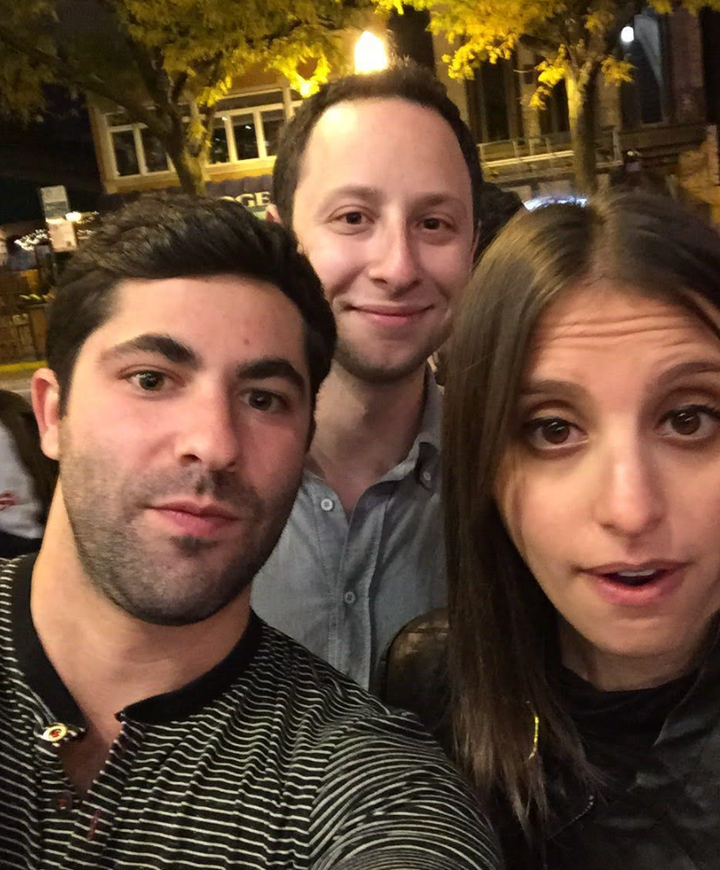
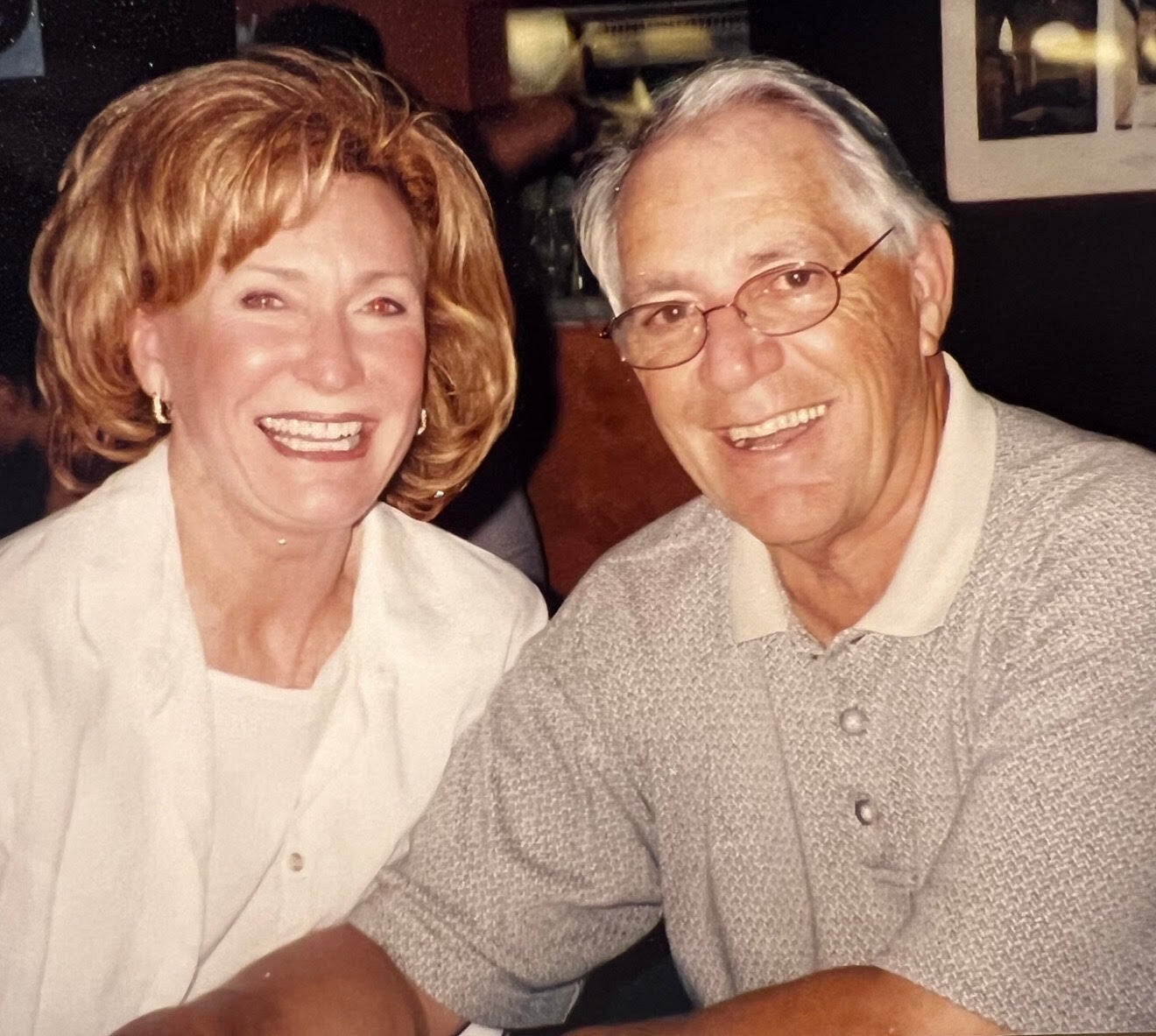
The author, Greg (left) and Adam out to dinner in 2015.

Courtesy of Nicole Garelick

The author, Greg (left) and Adam out to dinner in 2015.

The full backstory is that I first met Greg on Halloween 2013, though I wasn’t looking for him. I was on a street corner in Chicago dressed as Aziz Ansari, already tipsy, already confused. I’d been Instagram-stalking Greg’s best friend, Adam, who had piqued my interest. We had mutual friends from college, and he was always photographed with a cup of coffee and a far-off look, like he knew something the rest of us didn’t.

Greg showed up in a lot of Adam’s posts, so when I ran into him that night, the first thing I said was, “Hey, where’s Adam?” Greg, having never met me, let alone me dressed as Aziz Ansari, responded with something like, “Who and what are you?” I introduced myself. He drunkenly wandered away.

I didn’t end up finding Adam that night, but we connected not long after. We started texting, then emailing, and eventually we started dating about three months later. We were together for three and a half years.

Greg was a fixture in our world – wild, entrepreneurial, energy abounding. Adam loved him, so I did too. Over the years, we double-dated plenty, and I watched Greg move in and out of relationships.

A few months before Adam died, Greg moved abroad to start a travel company. He had flown back for a friend’s wedding, which we were all attending together. That same week, Adam had a health scare, something like a seizure, but the doctors couldn’t explain it. That’s the thing about being young and seemingly healthy. No one checks your heart.

The afternoon before the ceremony, Greg and I had some alone time while Adam was visiting a friend. I told him how worried I was about Adam. He reassured me that Adam was probably fine, because most 27-year-olds are.

I have only two photos from that weekend. One is a picture Adam took of me on the phone. The other is one he took of Greg and me holding hands. Adam had made us pose together. It made him laugh to think of us as a couple.
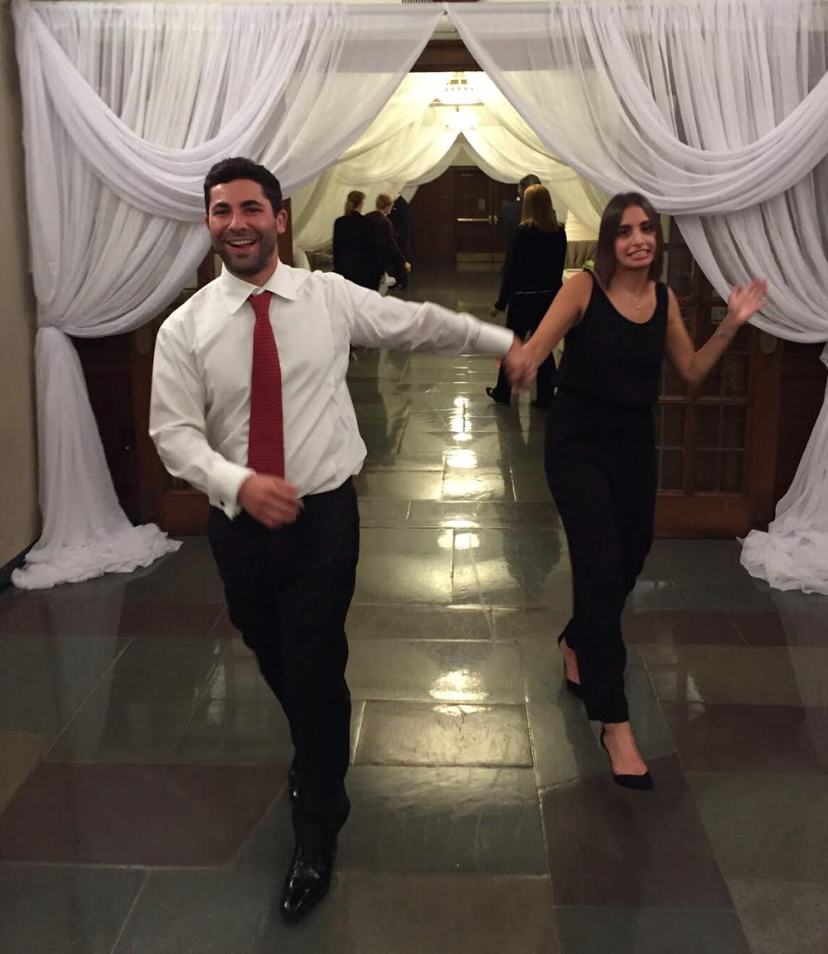
The author and Greg at a friend's wedding in 2015.

Courtesy of Nicole Garelick

The author and Greg at a friend’s wedding in 2015.

Two months later, Adam died.

Greg flew in for the funeral, along with every other person who had ever known or even brushed past Adam. Greg stood by my side the entire time. I think this is probably the part where Greg thinks he looks bad, like it was his plan all along, or he was trying to be, as Bette Midler sang, The Wind Beneath My Wings. But it wasn’t like that. Nothing felt premeditated; it was natural.

He was there when my knees gave way at the burial, putting a hand on my shoulder. At the shiva, as well-meaning mourners swarmed, Greg graciously offered me a Xanax (which I desperately needed). Later, once the dust had somewhat settled, he suggested I might need to get away.

I was in grad school at the time, training to become a therapist, arguably the worst possible setting for a loss. Greg invited me to visit him and another friend in Buenos Aires over spring break. With nothing tethering me to the present, I said yes. That trip became the only thing I looked forward to. In the months before I left, I grieved, unravelling a life I’d built with Adam and still reeling from losing my mom a few years earlier. I was drowning.

Greg called me every day. He made sure I was eating, drinking water and going to class. His voice kept me afloat. But if you’d asked me then, I’d have said, “He’s like a brother to me.” (Side note: If you ever describe someone as “like a brother,” there’s a good chance you’re going to sleep with them. That’s the plot of every romantic movie, but I was too far gone to recognise it.)

When spring break finally came, I found out our other friend couldn’t make it right away. It would just be Greg and me for a few days. That’s when I got nervous. But I got on the plane anyway.

I landed in Buenos Aires around 10pm, barely breathing. When I got to Greg’s apartment, I found him waiting on the corner of his quiet street in the darkness of the Argentine fall. After a quick shower, he took me to a loud bar. We were both awkward, so to quell the awkwardness, we each ordered two drinks. We talked about Adam. About travelling. About everything. My grief loosened its grip just a little.

Later, back at his apartment, we both cried. At some point, I started eating rice cakes, and then I remember getting my computer to put on some music.

Neither of us remembers who made the first move, but I’m pretty sure it was Greg. And that’s how we started dating.

The couple across from us sits in stunned silence. Greg clears his throat and asks, “So… how did you two meet?” They answer, in unison, “Hinge.”

I smile faintly. There’s something I feel in that moment that isn’t exactly jealousy, but it’s close – an awareness of the simplicity of their story. A clean beginning, uncomplicated by loss. A simple story for a party that doesn’t cause any eyebrows to raise or mouths to go agape or leave you feeling like you’re in the emotional nude.

Greg and I don’t have that story. We crashed into each other in the wreckage of something devastating and built something out of the rubble. Our path wasn’t perfect. People were hurt. There were complicated feelings about us being together, and it was absolutely not love at first sight. It took grief, time, Buenos Aires, and a man who called me every day just to make sure I was still getting out of bed every morning.

In the 10 years since, I’ve come to understand that the messiness is what makes our relationship work. There’s a rare honesty between us – an authenticity that comes from having met each other at our most undone.

When you fall in love in the rubble, you don’t get to perform the beginning; you just have to be yourself. There was never any doubt that Greg could support me at my worst; after all, we started there. And the willingness to tell the real version of how we fell for each other is its own kind of love story for Adam, and I want us to tell it because we’ll always be indebted to our dear mutual friend.

Nicole Garelick is a San Francisco-based writer and creator of The Performance Plan, a Substack newsletter about the comedy of getting life wrong. Her writing has appeared in Hey Alma, Spread the Jelly, and Katie Couric Media. She lives with her husband and two young kids, who give her a lot of material. She is represented by Jennifer Simpson at CAA.

Do you have a compelling personal story you’d like to see published on HuffPost? Find out what we’re looking for here and send us a pitch at pitch@huffpost.com.
Share Button

As A Teen, I Wrote A Famous Musician A Fan Letter. 23 Years After His Death, I Finally Got A Response

When I was 17 years old, I wrote Elliott Smith a fan letter.

It was the year 2000, and I was a high school senior in Dallas. I had never written a fan letter to anyone, but I felt connected to Elliott, despite the fact that we didn’t really have that much in common.

He was, after all, a man in his 30s who had tattoos and wore an assortment of black band tees, while I was a teenage girl who shopped at Abercrombie & Fitch. He sang about drinking and drugs; I hadn’t even tried my first beer.

He had the aura of a defiant nonconformist, while I was a pleaser and overachiever, writing for the school paper, singing in the choir, and joining an endless stream of extracurriculars and clubs to pad my college applications.

But Elliott seemed like the quiet type, and so was I, with high social anxiety and low self-esteem. He seemed like an outcast, and I often felt out of place and lonely in the Texas suburb where I grew up, even with family and friends around me.

He seemed sad; I was a bit sad too.

But what really mesmerised me most about Elliott was his vulnerability. He laid himself so bare in his music, and when I listened to his songs, it felt like reading a diary. It wasn’t just the lyrics – it was his soft singing style, his careful finger-picking, the way he layered vocal tracks so tenderly. I felt like I knew him, like I was a friend he trusted with his secrets.

I wanted to reach out to Elliott to thank him, and convey how important his music was to me. I found an address for his record label, Kill Rock Stars, in the liner notes of one of his CDs, and I mailed the letter. And then I waited.

Months passed, and no response. Maybe I sent it to the wrong address, I thought. I never really expected to hear back, but I did wonder if he even got it.

Graduation came and went. I headed off to college. Elliott didn’t release any new albums.

And in 2003, he died violently and tragically at the age of 34.

The subject line read “Fwd: Elliott Smith biography.” My former boss had passed along a message that was sent to my old work email – the one associated with my maiden name, which no one had called me in years. It was 2023, and I had recently turned 40.

The email was from a writer named Jamie Fisher, who said she was working on a biography about Elliott Smith.

“I’m wondering if you’re the same Kirby Van Amburgh who wrote a fan letter to him around 2000,” she wrote. “His family still has the letter, and I was wondering whether you got a response.”

I sucked in my breath. This means Elliott got my letter! I thought. He must have read it, right? And if he kept it, maybe it meant something to him.

I responded to Jamie immediately. Even though I hadn’t gotten anything from Elliott, she still wanted to talk to me, so we set up a time to chat on the phone the next week.

Before our phone call, Jamie also sent me a photo of my letter to Elliott. It was handwritten on notebook paper, both sides. In the letter, I wrote that I was a 17-year-old girl who had bought all of his CDs.

I think your music is really addictive. It’s so original and creative. I’ve never heard anything like it.

I shared that I liked to play the piano and guitar and sing. I told him that he was an inspiration to me, that listening to his music encouraged me to create my own style.

I try to write my own songs and make them as unique and personal to me as your work is to you.

But I didn’t want to be a musician as a career, I said.

I want to be a writer.

I praised him some more and said that even if my letter never reached him, it was OK.

You are worth the time it took to write this, and you’ll keep kicking ass.

I told him he was incredible and thanked him. I signed it with a “Sincerely.”

If Elliott did in fact read the letter, I could see why he kept it. I’m sure it was refreshing to get something so wholesome.

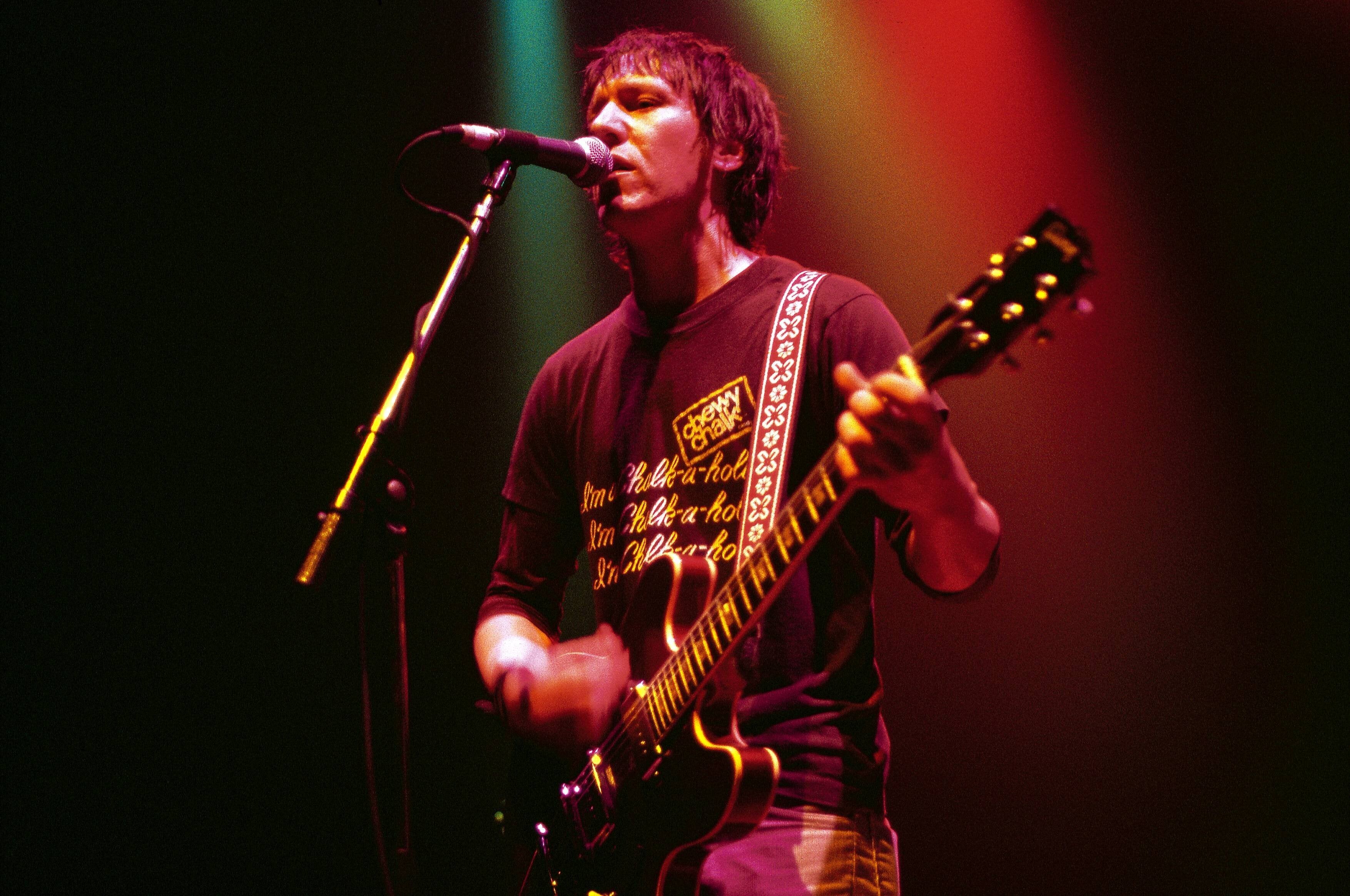
Elliott Smith.

C Brandon via Getty Images

Elliott Smith.

In the days that followed, I went up into the attic and pulled out my old high school diaries, skimming the pages for mentions of Elliott. I had written about him several times: I journalled about buying my first Elliott Smith CD and hearing the spidery notes of Speed Trials trickling through the speakers of my Magnavox boombox. And I wrote about my letter, saying, “I hope he gets it. I hope he likes it!”

When we finally got on the phone, Jamie asked if I had continued with my writing or music, and I told her about my winding career path: I was a teacher for several years, then worked at a nonprofit for the next decade. I had dabbled in freelance writing here and there, but it never went anywhere. At one point, I wrote a novel for kids, but it was never published.

I told her I had recently transitioned to a job as a writer for a market research company, which I really enjoyed because I got to write every day, albeit in a different way than I envisioned when I was 17.

I talked about my songwriting and how I was in a musical duo with my friend Todd in the early aughts. We put out an EP, some singles, and even a couple of music videos, filmed in Todd’s backyard. It was all just for fun, but it was also a bit stressful sharing my songs and putting myself on display like that.

I explained that creative writing – both on paper and in music – was emotionally difficult for me. Unlike writing for business, when I wrote anything personal, I felt an intense fear of being exposed. I put so much of myself in my fiction, essays, poems and songs. I was terrified of releasing them for public consumption because any rejection of my creative work felt like a rejection of me as a person. Perhaps that’s why I was so in awe of Elliott: he shared so much of himself in his art, in a way that I never quite could.

After a while, Jamie paused and said that she didn’t reach out to me just because of the book. There was another reason.

“Elliott wrote you a response.”

I literally burst into tears.

He did? I choked out. Jamie started crying too.

She said that Elliott’s letter was in the box with my letter. She didn’t know why he never sent it. Maybe he didn’t have a stamp and then forgot about it. At any rate, it was there, waiting to be found.

Jamie read the letter to me over the phone.

Dear Kirby, I read your letter and it made me happy – thanks.

Elliott wished me success with my writing, whatever success meant to me personally. He talked about his love of reading and recommended an author he was really into at the moment, Mikhail Bulgakov. He shared that he sometimes secretly wished he was a writer instead of a musician, as his music so often diverged from mainstream tastes.

He thanked me for adding a little brightness to his day.

I’m glad you see creativity in yourself, the world needs as much of it as it can get, so go out and kick ass!

He signed it with a heart.

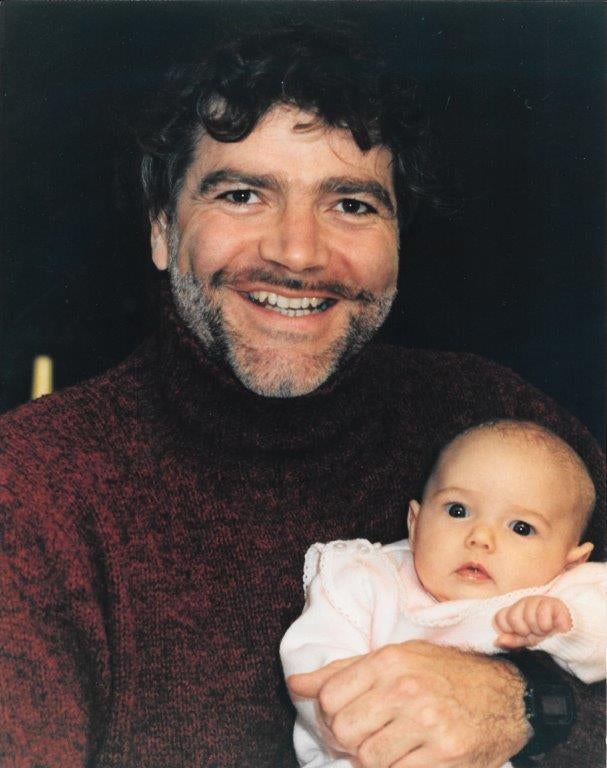
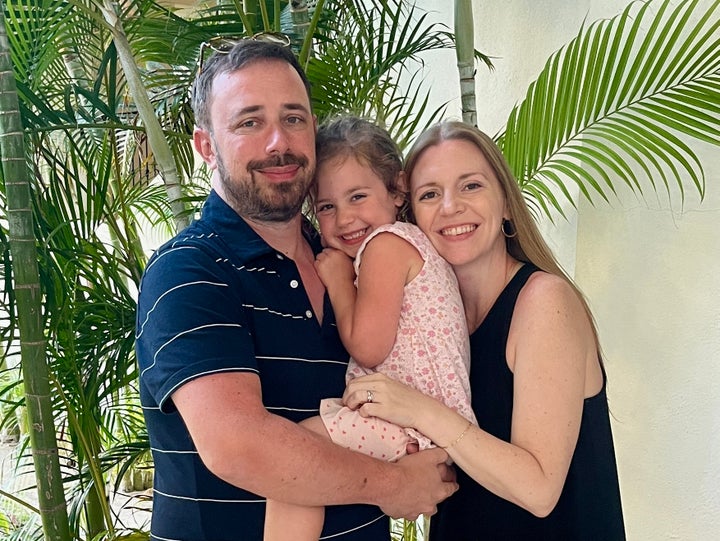
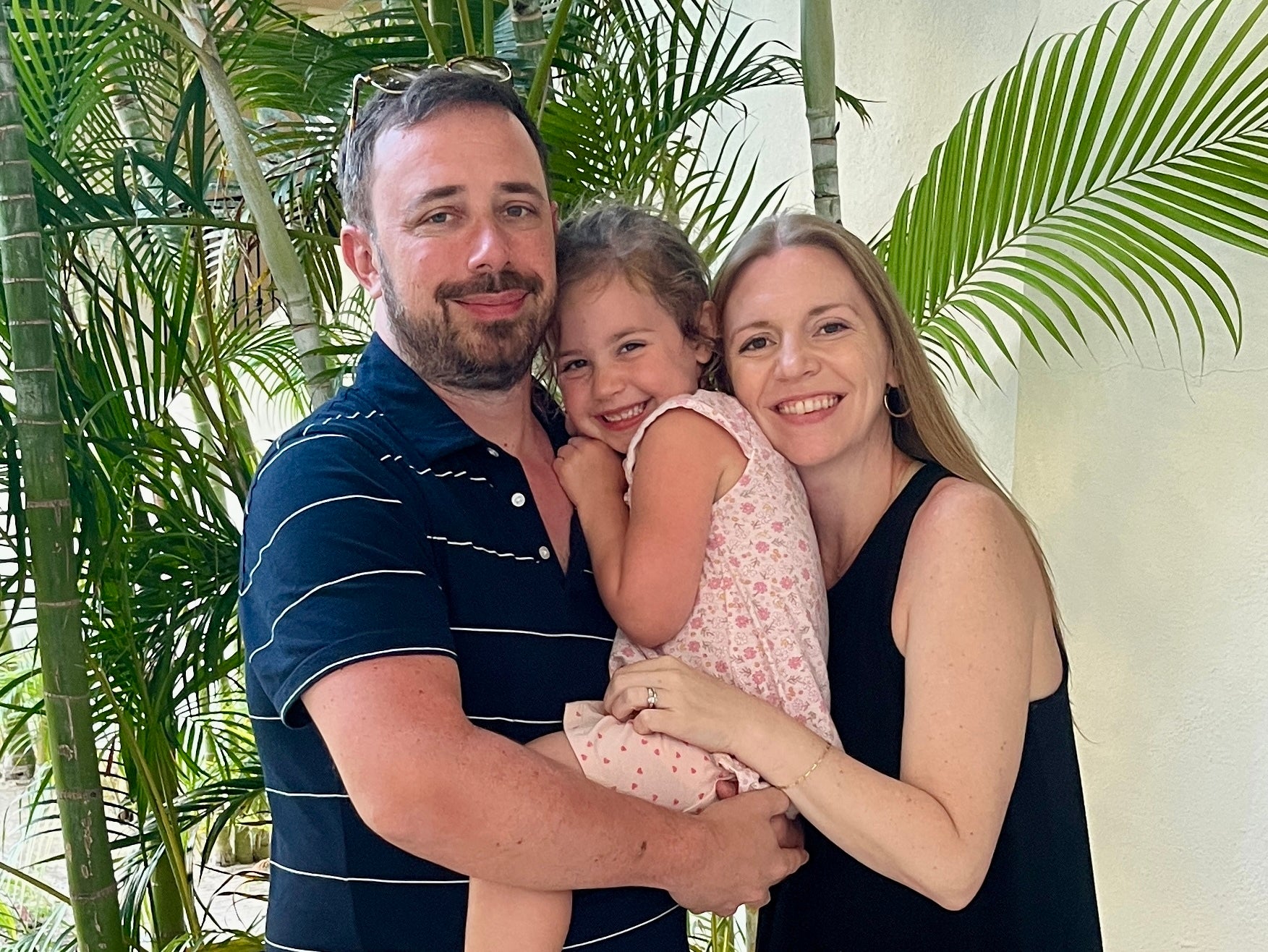
The author with her husband and daughter (2025).

Photo Courtesy Of Kirby Rock

The author with her husband and daughter (2025).

After my call with Jamie, I felt a surge of inspiration. Since having my daughter three years earlier, I had stopped going to my writing group, and I hadn’t written a song or even played my instruments in a long time. But now I felt the urge to return to my writing and music, even if for no other purpose than bringing me joy.

In the months that followed, I brought my guitar down from the attic. I played Old MacDonald Had A Farm for my daughter over and over, building the calluses back up on my fingers. I wrote her an original song about handwashing, Scrubbly Bubs and Bubs and Scrubs (which was well received). Last year, along with my husband and two other dads, I played a three-song acoustic set of Raffi covers for our kids’ class at school. It was thrilling to see them laughing and clapping and dancing, a crowd of generous and adoring fans.

I rejoined my writing group. I wrote a little book about potty training for my daughter (which was less well received). I revisited a short story about alien abduction that I had initially drafted and abandoned several years earlier. I wrote a bad poem about the lizards on my back porch. I wrote this essay. Now I write and write and continue to write.

After I told one friend about Jamie’s call, he asked if I was upset that I never got the letter when I was a teen. I said no. Strangely, I was almost thankful that Elliott never sent the letter. It felt like his words were meant for me at age 40, not age 17. I received his encouragement when I really needed it – not when I was already full of excitement and hope and possibility, but later in life, when I needed to be reminded of the spark inside of me.

I wrote to Elliott years ago to thank him. And in a way, I wrote this to thank him again.

Nobody Broke Your Heart, an intimate biography of Elliott Smith by Jamie Fisher, will be released by Penguin Random House on Aug. 25.

Do you have a compelling personal story you’d like to see published on HuffPost? Find out what we’re looking for here and send us a pitch at pitch@huffpost.com.

Share Button

It Was Too Late To Fix My Relationship With My Dying Father, So I Taught Children To Read Instead

I hadn’t seen my dad in five years when my sister texted me that he had fallen at home. After I had my first child, the childhood abuse I had previously overlooked to keep the peace suddenly became incomprehensible, and I chose to become estranged from him.

But when I found out he was dying, I knew time was running out to reconcile. I didn’t want to regret missing it.

On my first visit to see him, I brought flowers and kneeled by his bedside. He was thin, jaundiced and bedridden. His fine hair was snowy and delicate over his scalp, his movie star cheekbones more prominent than ever. His brown eyes still looked like mine.

But he didn’t recognise me. He stared at me and looked away repeatedly, his expression bewildered and hurt.

“Who are you?” he asked.

I was stunned and told him who I was.

“Is it OK that I’m here, or would you prefer I go?” I asked.

“You can stay. I’m just surprised. It’s been a long time.” There was grief and accusation in his voice.

“I know,” I said.

I wouldn’t apologise for the estrangement. He wouldn’t apologise for the abuse. We wouldn’t talk about the past when death was so close.

When I left, I kissed his forehead and promised I’d be back.

A few weeks later, I signed up to be an early literacy volunteer, teaching young children to read. Once a week, I spent an hour with the students during their lunch break, reviewing the alphabet and helping them sound out words while they ate orange slices and whole wheat pizza.

Then I would spend an hour with my dad at the healthcare facility where he lived for his last five months. We would share a few minutes of small talk, I would feed him small bites of baked fish or tater tots, and we’d watch TV.

The two things were connected. My father’s side of the family is full of educators. My dad was a professor for more than 50 years. He’s the reason I have post-traumatic stress disorder, but he’s also the reason I love literature, travel, art, food and languages. His mother – my namesake – was once a missionary-teacher who rode on horseback four miles every day to reach her students.

“Teaching is a spiritual thing,” my dad said.

I thought volunteering to help children read would connect me to my dad and our family as he was dying. The kids were at the beginning of their lives and education, while my father, the professor, was coming to the end of his.

I volunteered on Mondays. Usually, I visited my father at the end of the week. My weeks were measured in the bookends of life.

There were six schools where I could volunteer – all underfunded and with low reading test scores. I chose the one closest to my childhood home, my dad’s house. I was a kindergartener in that neighbourhood the first time my dad squeezed my wrists so hard that bruises encircled them for weeks.

The school was a rectangular building made with dark bricks. I had passed by it countless times as a child. From the outside, it looked institutional in the late September sun. But inside, I was surprised by how light it was. The hallways were painted white and worn in places with scuffs and pencil squiggles – imprints from students growing up.

Three large trees grew in the foyer outside the library. Their shiny green leaves wove a canopy over the grey and blue tiles where kids walked from recess, lunch and library time. That’s where I met the kids with whom I’d be working, affectionately called Book Buddies.

The volunteer program coordinator handed me two folders, each bearing the name of a little boy. We had two assignments for the day. The first was to complete “getting to know me” sheets. The second was to assess how many letter names and sounds they knew.

I asked them their birthdays, their favorite colour and to draw their favourite food. My first buddy knew the letters in his name but no others. My second buddy surprised me by knowing all the letters and their sounds, but he said them quietly with his eyes downcast.

The author volunteering for the Book Buddies program

Photo Courtesy Of Virgie Townsend

The author volunteering for the Book Buddies program

At the school, there was the squeak of sneakers as kids ran in the hall and the voices of teachers announcing it was time to line up. There were boxes of small books, word games with dice, pencils, plastic utensils and thin straws for chocolate milk cartons.

Over time, I learned my first buddy loved to take a big sip of chocolate milk and burp and then we’d laugh together. He introduced me to his kindergarten friends. In the winter, his boot shoelaces were always undone, so I tied them before he returned to class.

My second buddy rarely made eye contact but read everything I put in front of him perfectly. He was reserved, but told me he lived with his dad and loved reading books the program gave him.

I praised both kids for their reading, hard work and the progress they made.

Sometimes after volunteering, I’d drive by my childhood home. With my father gone, the house stood empty.

At the healthcare facility, there was a crane to lift my dad, who used to hike by the Sequoias near his own childhood home. There were nurses who joked as they spooned medication into his mouth and the blare of televisions playing at full volume. There were cartons of Ensure and automatic hand sanitiser dispensers.

Sometimes my dad seemed stronger. On a good day, we watched Star Trek, and he laughed out loud for the first time in a while. When I left, he called after me in a strong voice, “Love you, honey.”

But organ failure is a rollercoaster with many ups and downs, all heading toward the inescapable end. Mostly, I worried about the emergence of new symptoms like the jaundice and itchiness that came and went. The bones I hadn’t seen before, jutting clavicle and breastbone. Lost fat on his fingers, every knuckle visible beneath the thin skin.

On a cold January day, I was with my dad when he began seizing. The seizures were quick, full-body and terrifying. He didn’t remember them – he just thought he’d fallen asleep for a minute. The doctor said there was nothing else they could do.

Four days later, he was unconscious. His breaths were long, slow and gasping. His TV was off. He had stopped responding to us. I asked my sisters for a minute alone with him. Everything we had left was in that small room.

“I hope that in whatever comes next, you receive the love you didn’t get as a child and you’re able to give that love to yourself and others in return,” I told him. “If there’s regret or anything else you’re carrying, you can put it by the wayside. You don’t have to carry it for me.”

He died the next morning. After he took his last breath, I watched the pulse in his neck grow fainter until I couldn’t see it beating under his skin anymore.

“Dad, I’m just going to check your pulse, OK?” I said. I placed two fingers on his neck – a place I had never touched before – and felt no movement.

Before the funeral home director placed him on the gurney, I kissed his forehead one final time and then wept.

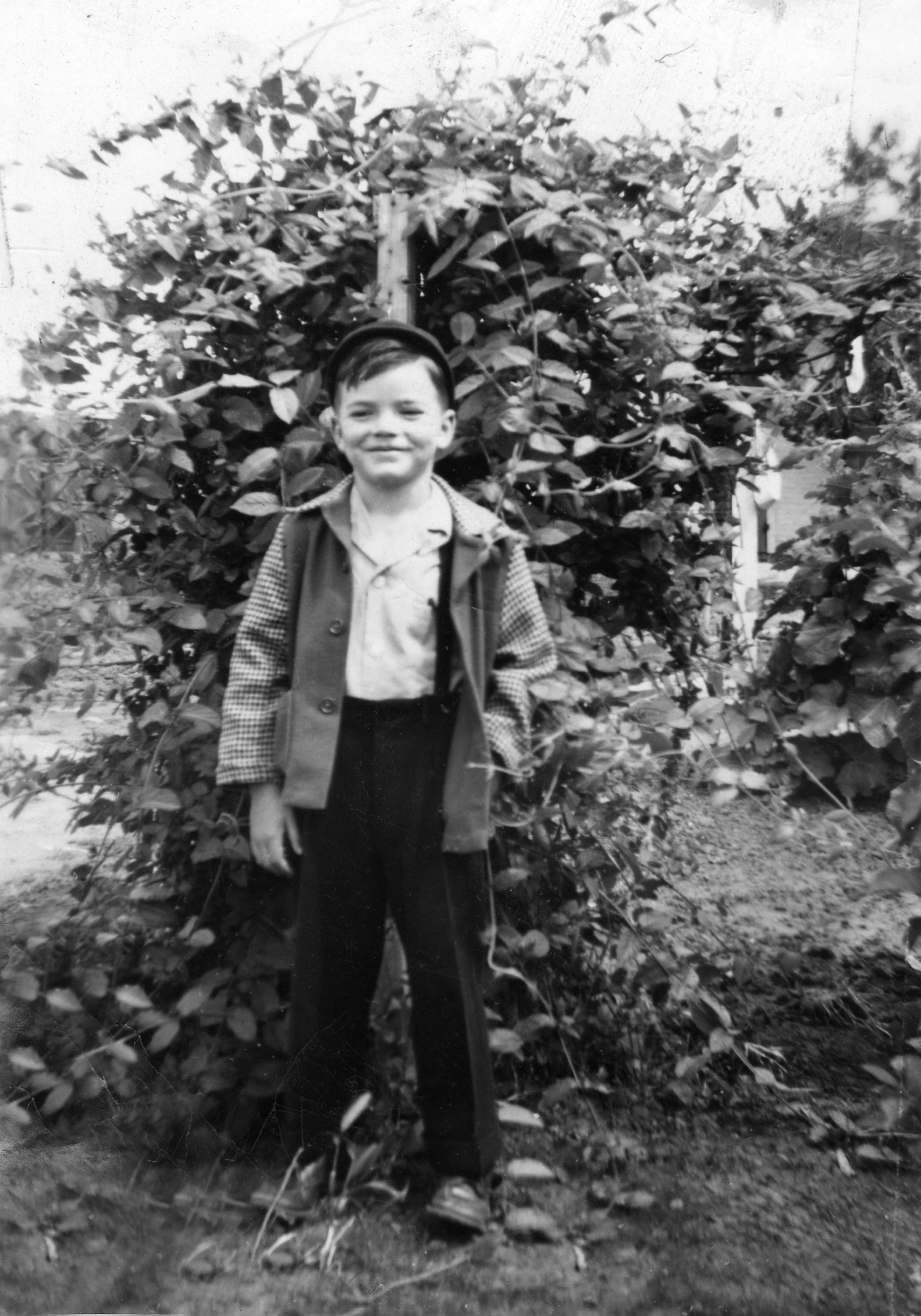
Depleted by grief and the paperwork that accompanies a parent’s death, I didn’t return to volunteering for a month. Sometimes I’d look at a photo of my dad from when he was 5 years old – the same age as my own son and my volunteering buddies.

In the picture, my dad wore a black cap over his dark hair, and his left hand was in the pocket of his checkered coat. Although I knew he had an unsafe, loveless childhood, he beamed a proud smile. I wished I could go back in time to protect that little boy.

The author's father, John Townsend, at 5 years old

Photo Courtesy Of Virgie Townsend

The author’s father, John Townsend, at 5 years old

When I went back to the school, my first buddy walked up to me with his lunch tray and a mildly scolding expression on his face.

“Where have you been?” he asked, as if I were a child who missed curfew.

“One of my family members was sick,” I said, smiling. “I’m back now.”

I was glad to be in the school, reading with the kids under the trees in the foyer. One day, as I arrived, my buddy was standing in the lunch line. He saw me, exclaimed to a friend, “That’s my Book Buddy!” and ran to hug me.

Later, when my second buddy caught a cold, I gave him tissues to take back to class because I knew he’d be too shy to ask the teacher. I helped another student carefully cut out a booklet for herself to take home to read. I made sure one of their classmates didn’t leave behind her lunchbox.

Little acts of care I wish had been given to the children that my father and I once were.

On the last day of volunteering, we held a party in the school library. I helped my buddies don plastic gold medals and paper graduation hats. We gave them backpacks with books, a toy keychain, bubbles and a red bracelet that said, “I love to read.”

“Do you love to read?” I asked my buddy, who was now reading several levels ahead of where he began.

He looked down bashfully and nodded with a smile, his two front teeth missing. We listened to a story about joyriding farm animals and played sight word bingo with candy. Then I tied his shoelace one last time, wished him a great summer, and watched him walk back to class.

I realised that while a child cannot heal their own parent, I could give that care to my kids and to other children who needed it. It was too late for my dad, but it might be right on time for them.

Do you have a compelling personal story you’d like to see published on HuffPost? Find out what we’re looking for here and send us a pitch at pitch@huffpost.com.
Help and support:

If you, or someone you know, is in immediate danger, call 999 and ask for the police. If you are not in immediate danger, you can contact:

  • The Freephone 24 hour National Domestic Abuse Helpline, run by Refuge: 0808 2000 247
  • In Scotland, contact Scotland’s 24 hour Domestic Abuse and Forced Marriage Helpline: 0800 027 1234
  • In Northern Ireland, contact the 24 hour Domestic & Sexual Violence Helpline: 0808 802 1414
  • In Wales, contact the 24 hour Life Fear Free Helpline on 0808 80 10 800.
  • National LGBT+ Domestic Abuse Helpline: 0800 999 5428
  • Men’s Advice Line: 0808 801 0327
  • Respect helpline (for anyone worried about their own behaviour): 0808 802 4040
Share Button

Want The Secret To Lasting Love? Here’s The Hard Truth

During my senior year of college, I dated a boy who was tall, dark-haired, and smoked a lot of weed. (If I’d had a checklist, those would have been the boxes on it at the time.)

We talked easily, about everything from medieval art to music, and I found his lanky limbs and soulful eyes very appealing. But despite how much we enjoyed each other’s company, both in bed and out of it, I didn’t, fundamentally, feel anything. If he’d told me he never wanted to speak to me again, I wouldn’t have cared, except that I’d have needed to get my weed from someone else.

That’s when I came up with the theory of the third thing.

The premise is that there are three things that make you fall for someone. The first is a physical connection. The second is an intellectual connection. And then there’s the third thing… whatever mysterious ingredient makes you imagine a future together. My friends and I spent hours sitting on the floor of my dorm room, listening to Matchbox 20 and drinking diet Snapple with vodka, trying to unravel what the third thing could be.

I was a good student. I was naturally shy and awkward, but I was also used to thinking things through and figuring them out. In middle school, I’d analysed my classmates’ social interactions, realising that when someone told a story about themselves, you were supposed to respond with a story on a similar topic.

In high school, I’d made a checklist of all the things I needed to do to be cool (start reading Seventeen magazine, stop walking around with a book in front of my face, keep gum in my backpack and offer it to my classmates after lunch).

In college, I’d turned my attention to boys. It was easy to kiss them on sticky bar dance floors and meet them for coffee dates at the student centre. But I wanted to fall in love, and I wasn’t sure how to do it. If I could figure out the third thing, then I’d know the formula. I’d know how to find someone who I was really excited about.

I dated regularly throughout my 20s, but nothing lasted. Then, following another breakup, I found myself spending a lot of time on the phone with my friend Dan. We’d dated briefly when we first met years before on study abroad. He was awkwardly, gawkily handsome, and was one of the smartest people I’d ever met, dropping references to Byzantine emperors into casual conversation. However, at that time, there just wasn’t that third thing.

Then, suddenly, eight years later, there was. I wasn’t sure what had changed. I still didn’t know what the third thing was, but something was different, even if I couldn’t identify it. For years we’d just been friends – albeit friends who drunkenly made out occasionally when we ended up in his car together late at night. And now we were spending all our time thinking about each other. How had this happened? And what were we going to do about it?

As it turned out, we were going to get married. Three years later, we found ourselves holding hands and saying vows in a historic library in Providence. We ate cupcakes, drank prosecco, and spent the night dancing with our friends and family among the stacks. It was the happiest day of my life; I’d found a smart, handsome man whom I loved, and who loved me. We had chemistry; we could spend hours talking, and most importantly, we had the third thing. I felt like I’d gotten exactly what I wanted.

Except that after 10 years of marriage, it wasn’t what I wanted anymore. Dan’s brooding moroseness, which I’d found appealing, had begun to seem whiny. My quest for self-improvement, which he’d found admirable, had begun to seem exhausting. It had started to drive me crazy that he sang to himself. It had started to drive him crazy that I left the cupboard doors open. These were things that we’d lived with for years. They hadn’t been a problem. And now, suddenly, they were, and I wasn’t sure why.

There were other, bigger issues. We were politically divided. We wanted to spend our time in very different ways. My marriage didn’t end just because we no longer had the third thing. But that was part of it. We were still attracted to each other. We still talked about everything as easily as we always had. But we no longer had that ineffable thing that made us feel romantic about each other.

We tried. We left our son with his grandparents over the 4th of July weekend, went to a local brewery for IPAs and pepperoni pizza, shared a joint and had sex in front of a mirror. We sat side by side, feeling miles away from each other, and watched fireworks explode into distant sparks of light. We went to two different couples’ therapists. They gave us worksheets. We did the worksheets. We still didn’t love each other anymore.

The hardest thing about the end of the marriage wasn’t the loss of the present. At the time, we were sleeping on separate floors of our old suburban house, trying not to touch when we passed each other in the stairway. But in my imagined future, we were going to be one of those elderly couples who travelled around the country in an RV, who went to see independent films and had season tickets to the local symphony. We were going to sit side by side at our son’s graduation, and when he crossed the stage, unimaginably tall but still wild-haired and bright-eyed, we were going to squeeze each other’s hands.

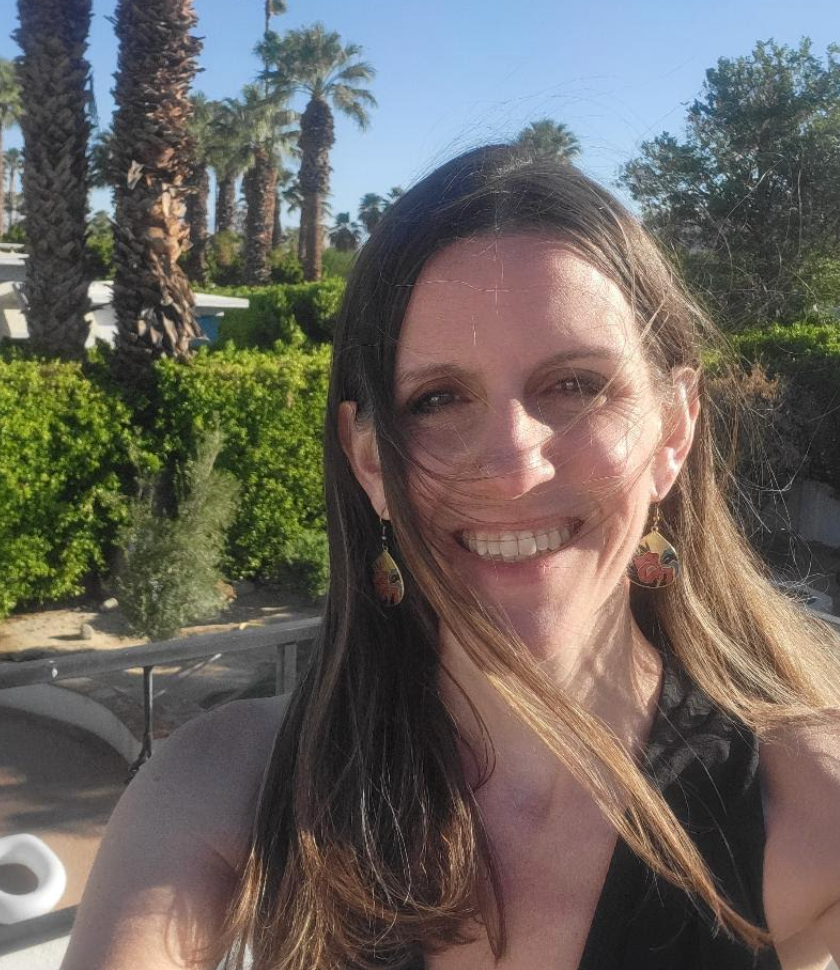
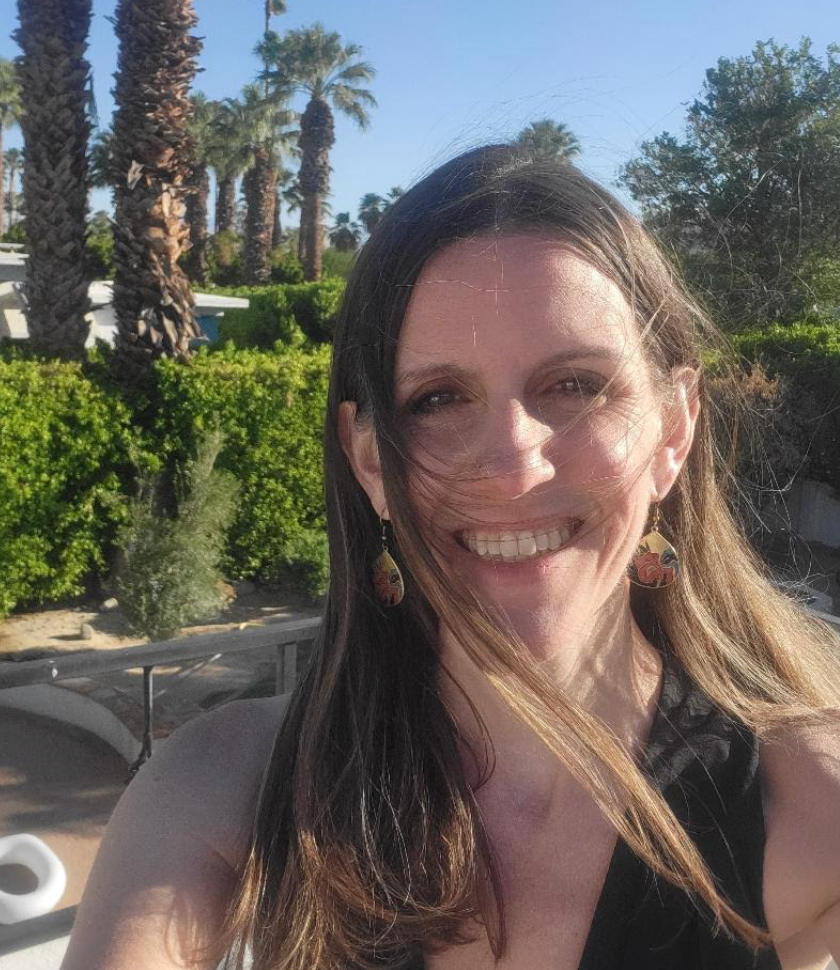
The author on vacation in Palm Springs.

Courtesy of Lia Romeo

The author on vacation in Palm Springs.

Instead, I was single and dating again in my 40s. From everything I knew about ageing while female, I figured that dating at that age would be some kind of barren wasteland. Instead, I discovered that the apps had come along and made it easy. I could go on a date with someone new every night if I wanted, and for a while I did. I was doing things I thought I’d never do again, like kissing strangers at the entrance to the subway. And for the first time, I was dating women, which was something I’d always wondered about. When I was younger, I’d gone from one man to another, and suddenly I wondered if maybe the reason I’d had trouble figuring out the third thing was that I didn’t want to be with a man. Maybe my newfound queerness held the answer I’d been seeking.

I started dating a beautiful woman with long blonde hair, tattoos and a sweet smile. We sent each other passages from books, we talked about theatre, we spent hours making out. Still, despite how much we enjoyed each other’s company, both in bed and out of it, there was no third thing. We were mutually unserious, and after a few months things came to an end.

I think someday I’d like to fall in love again, but I’m also terrified because I’m finally coming to understand that there isn’t a formula. I’m realising that the third thing is different at different times, or for different people. That it’s something that can appear out of nowhere… and can disappear, too. That sometimes love just goes away, and if I find it again, it might go away again, no matter how hard I try not to let that happen.

I’ve finally figured out that I might never figure it out. If the third thing comes my way again, it’s just going to be because I’m lucky. I can’t control whether I find it; I can only control whether I’m brave enough to say yes to it. I don’t know whether I will be.

For now, I write, I teach and I worry about the world, and I watch my son use Magna-Tiles to build rainbow castles reaching up towards the sky. Sometimes I swipe right on strangers, and meet them for hikes or cups of coffee. I walk my dog around the neighbourhood in the spring and watch the crabapples bursting into improbable, extravagant bloom. The flowers drift down from the trees as I walk underneath them. I reach out my hands to catch them, and I end up empty-handed, but later, when I get home, I find myself picking delicate pink petals out of my hair.

Lia Romeo is a playwright, essayist, novelist, and screenwriter. Her plays have been produced off-Broadway, as well as regionally and internationally, and her essays have appeared in the Washington Post, the New York Times, and other national publications. She is currently at work on a screenplay.

Do you have a compelling personal story you’d like to see published on HuffPost? Find out what we’re looking for here and send us a pitch at pitch@huffpost.com.
Share Button

A Doctor Saw Something Unusual On A Very Intimate Body Part. She Didn’t Know She Was Saving My Life

The appointment with my primary care physician (PCP) was for a routine physical. I expected a clean bill of health. After all, I’d had no issues and was having the physical as part of my New Year’s checklist, along with getting my car’s oil changed and switching out my furnace filter.

I told my doctor I was between gynaecologists because my former OB-GYN hadn’t been able to answer basic questions about the postmenopausal symptoms I’d been having. I asked for a referral, but given it would take four months or longer to see a new OB-GYN, my PCP suggested she could perform a pelvic exam, along with a pap smear and cervical swab, just to get me up-to-date on all routine tests.

As she completed the exam, she asked if I was aware of a large freckle on my labia just outside my vagina. Not being a contortionist, I wasn’t aware of this strangely shaped grey spot that my doctor photographed in order to show me.

It looked like so many other age spots on my arms and legs that have popped up over the years as a result of days in the 1970s sun, before any of us used sunscreen. Still, my doctor suggested I see my dermatologist soon.

At the dermatologist’s office, she also showed little concern, thinking the spot was of no consequence, but should be examined nonetheless.

“I’m 99% sure it’s nothing,” were her exact words as she performed a biopsy of the freckle, slicing it from my skin and placing it in a vial for testing. Taking her cue, I’d nearly forgotten about the whole thing when I received a call on Tuesday morning a week later. Having lived through my late husband’s cancer experience, I knew that no doctor makes an “all clear” phone call at 8am.

I realised, instead, she was going to tell me bad news. And she did.

The cells placed in the vial were melanoma, specifically, a labial or vulvar melanoma. Though I was familiar enough with melanoma to know that, as a pale redhead with previous sun exposure, I should be checked for them annually, I had no idea one could occur literally where “the sun don’t shine”.

My dermatologist explained that the freckle was in situ, meaning in the very beginning stage of becoming cancerous and only involved the top layer of skin. I would need surgery to remove it – something she wasn’t equipped to do.

The next two days were spent ascertaining the seriousness of my diagnosis and finding a surgeon willing to undertake this procedure, which would involve not only removal of the freckle, but also getting clear margins around it.

In the case of a melanoma like this, the surgeon would seek one-centimeter margins, removing a fairly large portion of tissue in the shape of a football from a tight space with many nerve endings and highly sensitive skin. Because of the unusual location and delicacy of the surgery, I spent hours navigating the local healthcare system, as I attempted to find a surgeon who would accept the task.

"I participate in a long-term cancer screening program," the author writes.

Courtesy of Lori Tucker-Sullivan

“I participate in a long-term cancer screening program,” the author writes.

My dermatologist referred me to gynaecology. In that department, especially without having an established relationship with a doctor, there was no one who would take my case. From there, I was sent to gynaecological oncology within the cancer centre. Several calls there also resulted in no doctors willing to move forward. While I wanted only for this cancerous lesion to be removed from my body, I was instead tossed from department to department as staff tried to determine who was best prepared to perform this unusual procedure.

Finally, I was referred to a melanoma surgeon within the skin cancer department. A nurse phoned on day three and said the surgeon was well-practiced in these types of melanomas and would take my case. She could squeeze me in to meet with her a week later, and scheduled surgery for the week after that. I phoned my children and we made plans for my daughter to travel from Chicago to be with me for my appointment. We had a plan, and I felt better, but I didn’t realise how large a bullet I had just dodged.

Throughout my late husband’s three-year experience with head and neck squamous cell carcinoma, we tried to stay away from online searches and rabbit holes. His cancer was understood primarily to affect heavy smokers and drinkers, though he was neither. It was through our own and his doctor’s research that we learned his cancer was caused by the human papilloma virus or HPV. Having that knowledge provided his care team with a more specific approach, one that, though too late to save him, has allowed for better treatment protocols today than existed in 2009.

However, researching a cancer diagnosis can also lead to anxiety rather than calm or focus. Remembering this, I refrained from any internet searches until I met with my new cancer surgeon, a young woman whose matter-of-fact demeanour quickly calmed me. Once in her office, I peppered her with the questions I’d been too afraid to type into a search engine: How did this happen, why had I never heard of melanomas in this location, and, most importantly, what was the long-term prognosis? Her answers were surprising.

Because of their location, labial melanomas are rarely caught at an early stage as mine was. Usually, according to my surgeon, they are not caught until they begin to cause discomfort, bleed or become a large mass. By that time, the melanoma has grown deep into the skin and excision, and removal is more difficult. And because of their location close to many lymph nodes, they can spread aggressively. I looked across the room at my daughter, who had lost her father to cancer when she was just 13, and noticed we had the same shocked look on our faces as we understood the situation: had my diagnosis come later, my outcome could have been completely different.

Nearly 40% of vulvar melanoma patients present with regional or metastatic disease (Stage III or Stage IV) compared to only 13.6% of cutaneous melanoma (those on more common areas like arms, legs, back, etc), which means vulvar melanoma is more likely to have spread via the lymph system by the time the patient presents to the doctor. A patient at Stage III has a five-year survival rate of about 48%. At Stage IV, that drops to a 25% rate of survival. Though vulvar or labial melanomas are rare, they most often occur in older women. And while I was beating myself up for my preteen suntanning, there is no definite connection between vulvar melanomas and sun exposure.

Though melanoma is the sixth most common cancer in women, only 0.2% of 100,000 women per year will be diagnosed with a labial melanoma, which primarily affects white, postmenopausal women in their 60s. The rarity of the diagnosis also means there’s little study of these cancers, though there also appears to be no connection between them and HPV or other STDs. As stated in a study by the National Institutes of Health (NIH), these melanomas are often asymptomatic and presentation is delayed by that and a lack of easy self-examination.

The author with her late husband Kevin, prior to his cancer diagnosis.

Courtesy of Lori Tucker-Sullivan

The author with her late husband Kevin, prior to his cancer diagnosis.

Surgery took over an hour while I was under anaesthesia, and recovery took a few weeks, during which it was important to restrict movement and keep the wound very clean. Pain meds kept the discomfort at bay but didn’t address the lingering worries. In addition to my physical care, I also met with my therapist to continue processing how close I came to a much more serious situation and how I might turn my gratitude into advocating for prevention in others.

Because the freckle on my labia was caught when it was, I was told I have a less than 3% chance of recurrence and no further treatment. My surgeon will check me every six months, and my new dermatologist, who specialises in vulvar cancer, will see me every three months for two years. Provided nothing new is discovered, I’ll return to annual check-ups. But my prognosis is this good only because it was detected so early.

When I returned for a follow-up appointment with my primary care doc, she reminded me that many postmenopausal women skip regular pelvic exams, or are confused about how often they are needed. Instead, they should speak with their doctors about the frequency, which is based on their personal health history, and whether they currently have symptoms.

Just as most dentists now check for oral cancer, doctors other than oncologists can help examine for vulvar cancer. A simple request to a gynaecologist to check the skin for unusual spots during your regular pelvic exam, or a request to the dermatologist to include the vulva during your annual skin checks, are easy ways to possibly detect cancer at an earlier stage.

At my primary care doctor’s office, we hugged, tearing up as the two of us realised what her attention and urging had prevented. Bringing my awareness to a seemingly innocuous spot in an unusual place prevented me from having a terrible and possibly fatal diagnosis. For that I am forever thankful.

Lori Tucker-Sullivan is a writer and educator in Detroit. Her work has appeared in The New York Times, Washington Post, Salon, and others. Her book, “I Can’t Remember if I Cried: Rock Widows on Life, Love and Legacy,” was released in 2024 and profiles widows of her favorite musicians and what they taught her about grief. She is currently at work on a memoir of her marriage bookended by home renovation and her late husband’s cancer diagnosis.

Do you have a compelling personal story you’d like to see published on HuffPost? Find out what we’re looking for here and send us a pitch at pitch@huffpost.com.

Share Button

When My Husband Died, I Thought My Life Was Winding Down. I Couldn’t Have Been More Wrong.

Three years ago, I stood beside my husband Al’s bed and prepared to say goodbye.

After 25 years of marriage, cancer was taking him where I could not follow. Before he died, he looked at me and said something that shocked me at the time.

“Diane, you’ll need another man.”

I immediately dismissed the idea. I was 80 years old. I had already experienced a full life. What on earth would I need another man for? I certainly wasn’t looking for one.

Then life did what life often does. It ignored my plans.

Just a few months after Al died, friends introduced me to a man named Bob. I welcomed it because I was experiencing what I later discovered, after many late-night Google searches, was called “widow’s fire,” a fierce longing for intimacy and closeness after losing a spouse that, despite being surprisingly common, few people talk about.

Some people, including some of my children, thought it was too soon for me to begin dating. But grief doesn’t follow a timeline.

I wasn’t looking to replace Al. No one could. But for 25 years of marriage, I had been part of a pair. Suddenly, I was standing alone. The silence and loneliness were overwhelming.

What I realised was that I didn’t want to spend the rest of my life alone. I wanted companionship, laughter, conversation and, yes, physical attraction. And to my surprise, I found that in Bob, a kind, funny and handsome man who understood that loving him didn’t mean I loved Al any less.

Bob and I have been together for more than two years. We are deeply committed to one another, but marriage isn’t part of our equation. At our age, we’ve learned that relationships don’t need to look a certain way to be meaningful. What works for us is love, honesty and a healthy dose of practicality.

That practicality was put to the test recently when Bob and I embarked on a 22-day adventure through Norway, France and Spain. With me at 82 and Bob at 83, travelling halfway around the world requires a little more planning than it did a few decades ago.

Before we left, I sent an email introducing my daughter and son-in-law to Bob’s brother and sister. Not because we were planning a family reunion. Because we were 82 and 83 years old and about to cross an ocean together.

“Should we get lost along the way and need your assistance,” I wrote, “you now can connect with one another and try to retrieve, grieve or rejoice from our far distant travels.”

I also informed everyone that I had travel insurance in case my body needed to be shipped home and that Bob had thoughtfully prepared his own end-of-life arrangements. My children thought it was hilarious. Bob’s family may have thought I was crazy. They’re not entirely wrong.

But if you’re going to travel the world in your 80s, you learn to laugh about the realities that come with it. Like money. People don’t like talking about finances in matters of romance, but they should.

In our case, I happen to have a larger wallet than Bob. Before we left, we talked openly about expectations. I agreed to pay for the trip itself, including the airline tickets. Bob was perfectly willing to fly economy. I was perfectly unwilling to sit in first class without him. The good Lord knows I’m spoiled, and I wasn’t going to be up front sipping champagne while the man I loved was squeezed into seat 34B. Besides, I like him next to me.

We agreed that he would cover many of the extras along the way, including meals, excursions and spontaneous treats. There were no complicated contracts. Just two adults having an honest conversation.

Widowhood taught me many things. Like I wish more people understood that discussing money isn’t unromantic. Avoiding it is.

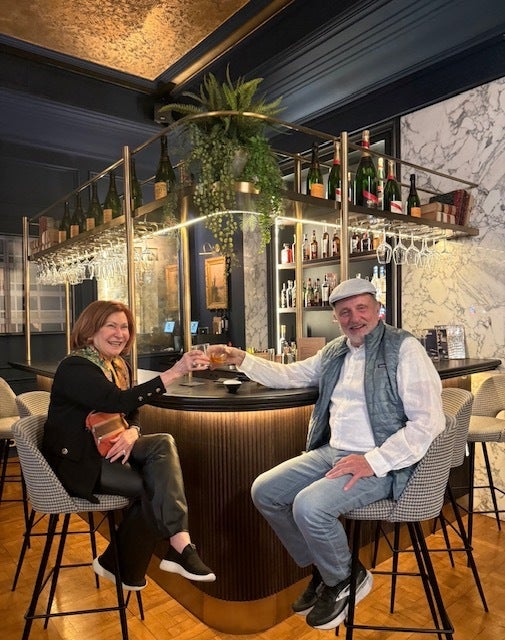
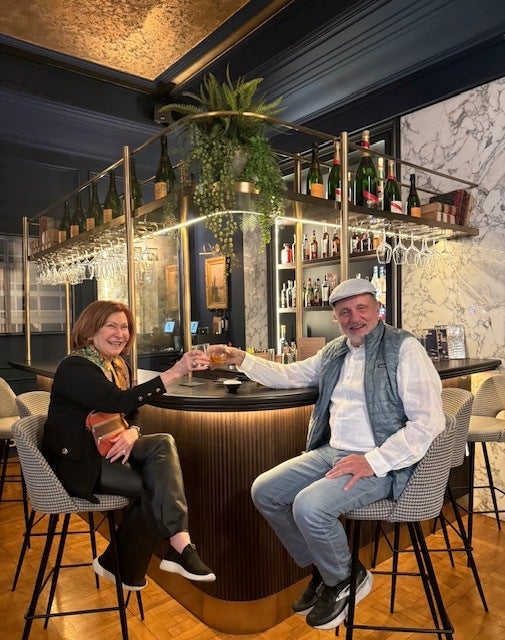
The author and Bob ending a long day at the hotel bar with their favorite drink, Old Fashioneds.

Photo Courtesy Of Diane Heiler

The author and Bob ending a long day at the hotel bar with their favorite drink, Old Fashioneds.

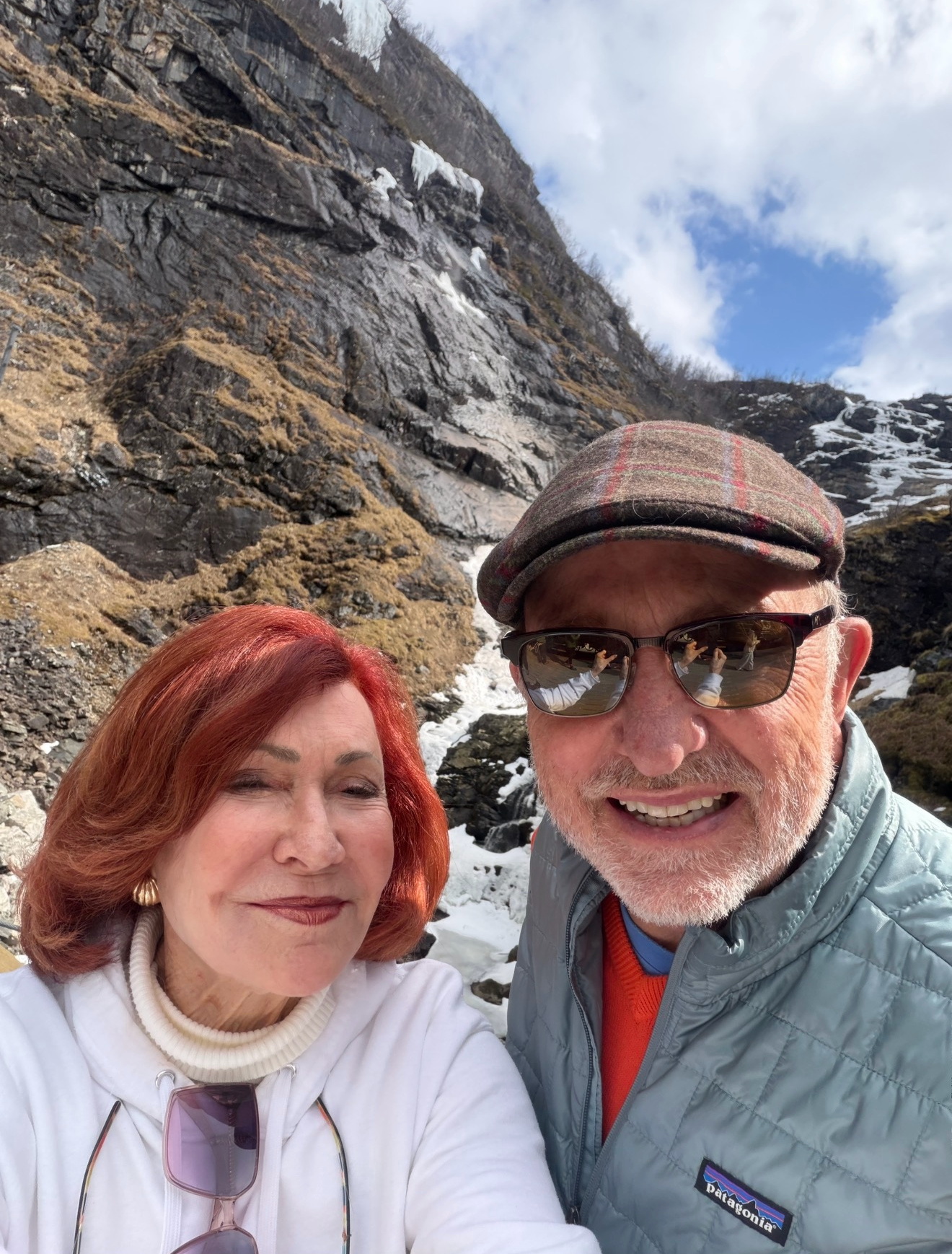
The trip itself became a lesson in something even bigger. Standing in Norway, surrounded by glaciers that looked as though they belonged on another planet, I found myself thinking about Al. He loved to travel.

The glacier train rides were breathtaking. The scenery was so beautiful it almost didn’t seem real. It was colder than a witch’s teat but magnificent. Al and I had never made it to Norway together, and I couldn’t stop thinking about how much he would have loved it.

Unexpectedly, I didn’t feel guilty. For a long time, widows are made to feel that happiness somehow betrays grief. It doesn’t. Missing Al and loving Bob can occupy the same space. Both things are true.

Bob understood that. He never tried to compete with my memories. He simply stood beside me while I carried them. That’s one of the many reasons I love him.

Norway also introduced me to two things I never expected: iced cider and brown cheese.

The cider was delicious.

The cheese was downright addictive.

I liked it so much that I packed half a pound of it in my suitcase and hauled it through France, Spain and all the way back home to Florida.

At 82 years old, apparently, I travel internationally with contraband cheese.

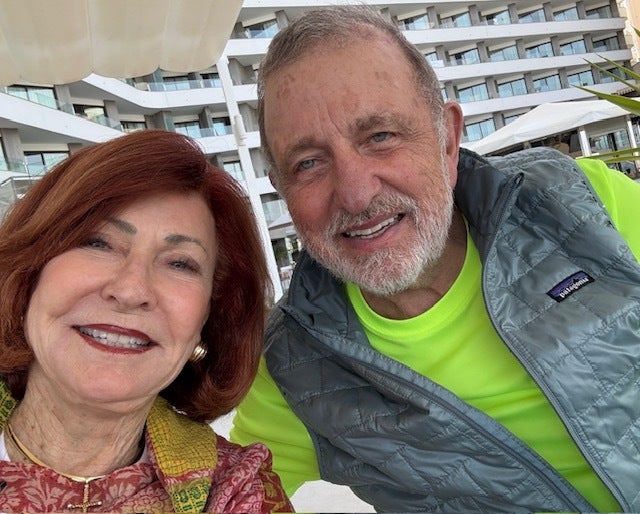
The author and Bob sailing on a catamaran through Sognefjord, Norway's largest and one of its most breathtaking fjords.

Photo Courtesy Of Diane Heiler

The author and Bob sailing on a catamaran through Sognefjord, Norway’s largest and one of its most breathtaking fjords.

Then there was Bergen.

The minute we arrived, I announced to Bob, “I could live here.”

It had everything I love: beauty, charm, walkability and friendly people. We spent our days wandering old streets, taking in spectacular views and pretending, just for a moment, that we belonged there.

Next came France.

Of all the places we visited, Normandy affected me the most.

Standing among the endless rows of white crosses at the American Cemetery overlooking Omaha Beach, I felt humbled in a way that is difficult to describe.

The older I get, the more familiar loss becomes. Friends die. My spouse died. Parents die. Even pieces of ourselves disappear. The woman I was at 40 no longer exists. Neither does the woman I was before widowhood.

Yet there I was, halfway around the world, still creating memories. Still laughing. Still planning. Still living.

Spain brought its own lessons.

I use wheelchair assistance because of a painful foot. Bob uses a cane. Airport assistance services managed to leave us at the wrong gate on two separate occasions, causing us to miss our flights.

After missing our second flight, I told Bob I could have learned to become a professional tango dancer in less time than it took airport personnel to move my behind through that airport. For two days we were shuffled from gate to gate while trying not to lose our sense of humour. Thankfully, we succeeded.

By the time we reached Mallorca after nearly three weeks abroad, we realised something. We may have been tourists, but we didn’t particularly want to be around tourists anymore.

Maybe we were tired. Maybe we missed our own beds. Or maybe we had officially become old people. Either way, home was sounding awfully good.

Traveling at 82 also comes with one unexpected advantage: I no longer care about impressing anyone.

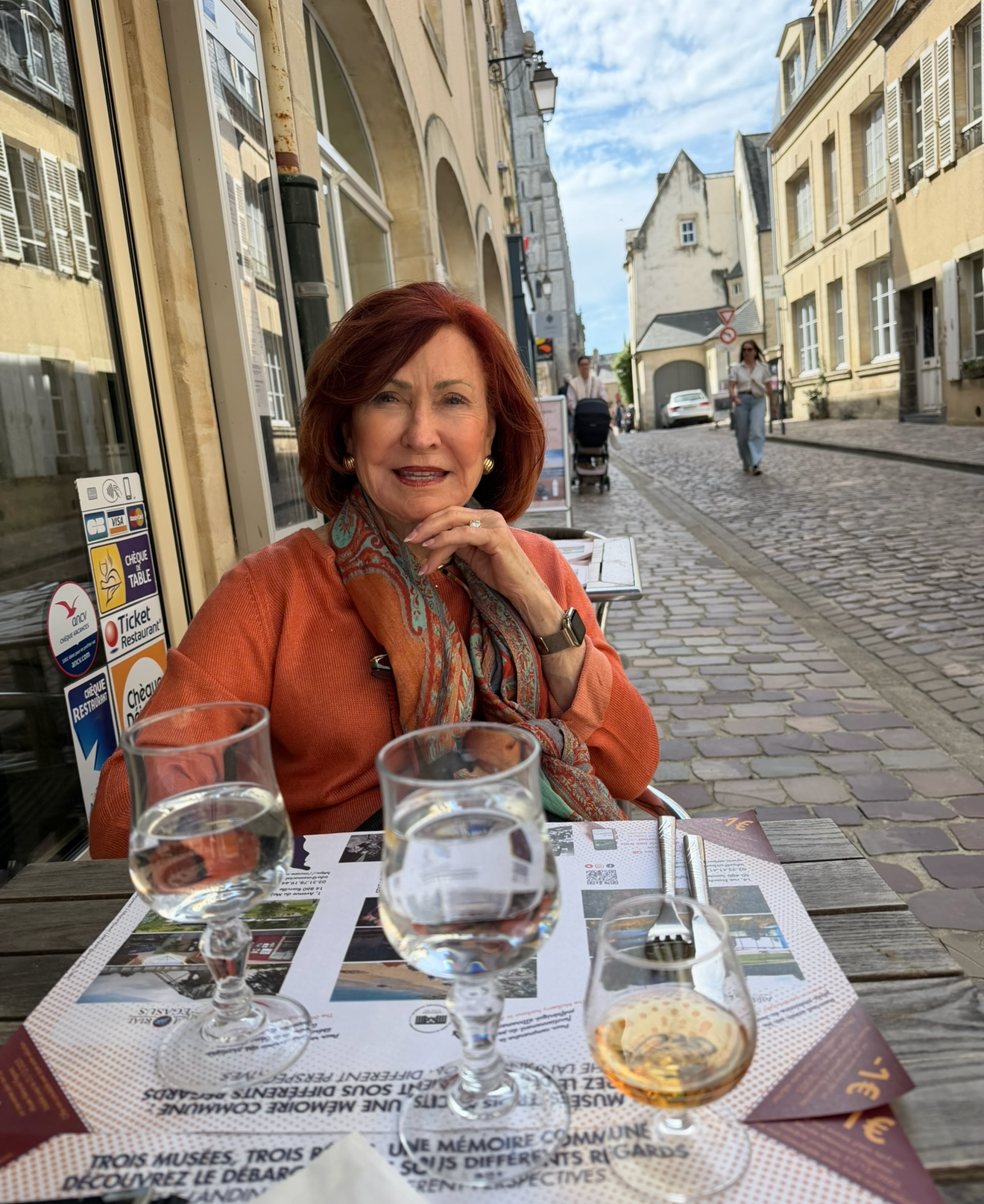
The author having a delicious meal at Le Marsala in the heart of beautiful Bayeux, France.

Photo Courtesy Of Diane Heiler

The author having a delicious meal at Le Marsala in the heart of beautiful Bayeux, France.

When I was younger, I packed as though every day required a completely different outfit, matching shoes, jewellery and accessories. These days, I pack for comfort, practicality and the occasional nice dinner.

For 22 days abroad, Bob and I shared one checked suitcase, and we each carried a small bag. It wasn’t because we were trying to prove anything. It’s simply that we’ve learned what matters and what doesn’t.

I’ve discovered that one scarf, one pair of comfortable shoes and a little confidence can carry you remarkably far. That’s one of the gifts of ageing. You spend less time worrying about how you look and more time enjoying where you are.

At this age, I’ve learned that nobody really cares what you’re wearing, whether your hair is perfect or if you’ve packed the right shoes. What people remember is whether you laughed, loved, showed up and enjoyed the journey.

And that’s true whether you’re standing on a glacier in Norway, wandering the streets of Barcelona or simply sitting beside a koi pond at home with someone you love.

The greatest surprise of the trip wasn’t Norway’s glaciers, Normandy’s history or Barcelona’s architecture. It was realising how comfortable I have become with this unexpected chapter of my life.

If you had told me three years ago, while I was sitting beside Al’s hospital bed, that I’d be crossing Europe with another man, I would have told you that you were out of your mind.

If widowhood has taught me anything, it’s that we don’t honour those we’ve lost by stopping our lives. We honour them by continuing to live them.

When Al died, I thought my story was winding down. Instead, it simply changed genres.

The author and Bob enjoying a drink by their hotel's pool, overlooking the beautiful yacht basin in Mallorca.

Photo Courtesy Of Diane Heiler

The author and Bob enjoying a drink by their hotel’s pool, overlooking the beautiful yacht basin in Mallorca.

These days, I’m perfectly content sitting beside that pond with Bob discussing books, sports, grandchildren, politics or whatever we’re streaming on Netflix. Twenty years ago, I would have called that boring. Now I call it happiness.

One of the most damaging myths about ageing is that life becomes smaller. I’ve found the opposite. Life becomes more precious. At some point, every one of us realises our time is finite. The horizon becomes visible. Oddly enough, that’s what makes each day matter more.

At 82, the future looks different than I imagined. It includes a new love. A few more aches and pains. Occasionally a wheelchair. And gratitude for every single day I still get to wake up and see what comes next.

Al knew all this before I did. He knew I would need companionship. He knew I would need laughter. He knew I would need someone to sit beside me on airplanes and hold my hand during life’s inevitable turbulence. Most of all, he knew I would need a future.

As it turns out, he knew me better than I knew myself.

Diane Heiler is the author of “A Widow’s Fire: An Intimate Memoir of Heartbreak, Survival and Moving On.” Widowed in 2023 after caring for her husband through his battle with cancer, she writes about grief, resilience and finding joy again after profound loss.

Do you have a compelling personal story you’d like to see published on HuffPost? Find out what we’re looking for here and send us a pitch at pitch@huffpost.com.

Share Button

I’m A 41-Year-Old Single Mum. I’m Over Dating Men My Own Age.

“Who are you waiting for tonight?” Jon, a bartender who has witnessed several of my dates over the years, asks. He tucks his shaggy hair behind his ear before handing a customer a cocktail, then situates himself in front of me and leans on the bar like an old friend, which, at this point, given I’m a regular at this brewery, he pretty much is.

Before I can answer him, my phone buzzes. I glance down and read the message quickly. “Just parked,” it says. I place it face down and look up to meet Jon’s curious gaze.

“Just some guy!” I shrug, taking a sip of my beer and drumming my fingers on the dark wood of the bar. “I don’t know. He seems cool. He’s a musician.”

Jon laughs. “Of course he is,” he says knowingly. He knows I have a soft spot for musicians. And younger men. “How old?” he grins.

I shake my head. “Mind your business.”

A few minutes later, I glance to my right and see the lanky 29-year-old I’ve been chatting with on a dating app through the large, garage-style windows. He’s walking quickly because he knows I’ve been waiting, even though I actually don’t mind sitting at a bar alone.

I like getting to a date early, ordering a drink, and settling in. Still, I find his hustle endearing. I watch him raise his hand to his mouth then release a cloud of smoke into the air before tugging the brewery door open.

He recognises me from behind right away. My long, wavy hair is usually a dead giveaway. I feel his presence behind me, turn my head slightly, and smile before he slides onto his stool.

I’m not often nervous on first dates because the truth is, I don’t care all that much how they go. Why would I? I’m not invested yet, so I’m not overcome by nerves. But not long after he sits down, I’m almost completely at ease. It feels like I’m talking to an old friend who happens to be cute, kind and, well, tall.

I’ve been on maybe a dozen first dates since one of the most brutal breakups of my life, and I haven’t been interested in anyone. But there is something refreshingly gentle about the way this man talks to me.

He’s nervous, but not overly so. And despite his nerves, he manages to laugh at my dumb jokes. He asks me about my writing career, my kids and my Stevie Nicks T-shirt.

Side note: He’s nearly a decade younger than me. But our conversation flows easily. It doesn’t feel forced. And by the end of the date, I’m fairly certain I’m going to see him again.

I didn’t always date younger men. In fact, just after my divorce at age 33, I actively avoided it, imagining that a dose of 40-something maturity was what I needed. I was a grown woman with kids, after all. I didn’t want someone I had to teach. I wanted someone I could learn from. Someone responsible, stable. A grown ass man, if you will.

Dating my own age or older (given I was early to marry and early to divorce) just made practical sense. Or so I thought.

I dated around. A lot. I kept an open mind, and I didn’t discriminate based on the usual criteria – job, height, religion. It was important to me to focus on genuine connection rather than checking boxes that, at the end of the day, don’t matter all that much.

But even with an open mind, and an open heart, more often than not I ended up deeply disappointed by the men I went out with, or sometimes even ended up dating. I did fall in love with an older man – once. But after that relationship imploded, while I continued to seek out what I thought were appropriately aged men for me, I started to feel a sense of hopelessness.

The men I was going out with might’ve been older, but they weren’t more evolved, and they definitely weren’t wiser. In fact, a lot of them seemed to be regressing, as if age and failed relationships had eaten them alive.

Many felt emasculated and emotionally destroyed by their own divorces or past relationships. And while almost all of them said they went to therapy (and even listed it on their dating app profiles), it didn’t show.

After dating them – or sometimes, just meeting them once – I suspected that they used therapy to make themselves feel better, rather than to actually change.

Age had just made them more set in their ways and that rigidity left me annoyed, hopeless and bored to death of hardened men who said they wanted love but were deeply self-involved.

Meanwhile, on the dating apps, men in their 50s seemed to have no qualms about advertising that they wanted a young, hot, “drama-free” woman. I started to ask myself why I couldn’t date younger.

"I have zero shame about the fact that I’d rather date men who are younger than me. In fact, I think more women should do the same," the author writes.

Photo Courtesy Of Sarah Bregel

“I have zero shame about the fact that I’d rather date men who are younger than me. In fact, I think more women should do the same,” the author writes.

Was I missing out on connections because I had my age filter set to 35+? Maybe. Maybe not. But dozens (hundreds?) of bad dates later, I decided it was worth looking into – even if only for the experience.

So, I started going on dates with younger men. They weren’t all great. Some lived with their parents or were downright toddleresque. But there were some good surprises, too, like that the younger men I was going out with wanted to try new things. They had a spark. They had confidence that was intact. They were fun and open-minded in a way I didn’t often see in older men.

Likewise, they were more interesting – and interested – and they weren’t afraid to show it. I felt like my confidence in dating had been restored.

Recently, the Netflix show Age of Attraction, which I happily binged, showcased older women dating younger men. While it’s more common in our culture to see older men dating younger women, the series also highlighted the opposite dynamic. And not so surprisingly, some of the women on the show expressed that they felt seen and cared for in a way they had imagined they might never experience again.

As I watched, I felt understood, and at the same time, like I better understood the dynamic I had been living.

While we’ve been led to believe it’s only men who prefer dating younger, two can play at that game. Anecdotally, dating younger guys may help older women who are still vibrant and full of life feel seen. But some researchers say that women are more satisfied when they have younger partners. And according to 2025 research published in the Proceedings of the National Academy of Sciences (PNAs), both men and women experienced higher levels of satisfaction on first dates with someone younger. Therefore, it’s likely not lack of interest that keeps women from dating younger. It’s fear of judgement.

The end of my date with the younger musician, who did go on to become my boyfriend, was further proof. After he paid for dinner (without even making me reach for my wallet), I invited him back to my house for one more beer. We sat knee to knee on my couch, and my two dogs curled up on either side of us.

We listened to music and talked about concerts and politics before finally, I told him that 11pm was past my bedtime, and he had to go home. I walked him to the door, then stood on my tippy-toes as he hovered over me. A smile spread across my lips just before we kissed for the first time.

Age isn’t just a number, no matter what anyone says. With it comes experience and new ways of looking at life. But for a lot of older men, whose lives or romantic relationships didn’t pan out the way they’d planned, their experiences haven’t exactly shaped them for the better. It hasn’t equipped them for partnership, love or even romance. It’s often done precisely the opposite.

And to be real, I have enough of my own battles, demons and stressors to fight. I don’t need a man I have to drag through life or who weighs me down or makes me feel heavier. I’d rather be with someone who lifts me up and makes me feel seen, or no one at all.

In the end, the musician and I went our separate ways, for reasons unrelated to age. Now I’m back to dating again at 41, which mostly just looks like staying open to connections, or scrawling my phone number for a cute, younger bartender while paying my tab, like I did last week. It looks like occasional swiping on men from around 25 to 40; I toggle the age limits sometimes.

I’m not opposed to dating older men again, but I have my guard up with them. Younger men still feel more confident, open and less fragile.

As a single mum in my 40s, I’m not exactly dating to marry. But I am dating with the intention of solid connections, and younger men have been refreshing where men my age and older were mostly frustrating.

I have zero shame about the fact that I’d rather date men who are younger than me. In fact, I think more women should do the same.

Do you have a compelling personal story you’d like to see published on HuffPost? Find out what we’re looking for here and send us a pitch at pitch@huffpost.com.
Share Button

I Lost My Daughter To Cancer. 4 Well-Meaning Words Left Me Feeling More Alone In My Grief

When we hear about the death of a child or young adult, we are unsettled, unmoored. Such deaths are out of the natural order. And if it could happen to your child, it could happen to mine. Life is never safe once you have children.

When my daughter died of cancer at age 40, some people remained silent, distancing themselves, as if the death of a child might be bad luck, contagious. Other well-intentioned people hesitated, retreated, reaching for a safe landing.

“There are no words.”

“Your loss is unimaginable.”

“I can’t imagine what you are going through.”

Why is it so easy to find words for joyous occasions – births, graduations, weddings – yet we lose language when seeking words to console and comfort the bereaved? Death humbles us, revealing the empty spaces in language.

I understand. I do. My daughter’s death left me without words. It is incomprehensible to lose a child. Grief isn’t one emotion; it is a tsunami of sadness, anger, shock, pain, helplessness and deep yearning. Perhaps reaching for the shorthand, “There are no words,” is an easier way to say: There will never be words large enough to express this sadness.

After Alex died, I fell into many empty spaces in language, especially the space where I had no name for myself, a parent who has lost her child. Names exist for a child who has lost a parent (orphan), or for a woman who loses her partner (widow), but what do we call an orphaned parent?

Recently, though, I stumbled upon vilomah – a Sanskrit word that means “against the natural order.” The word vilomah embraces the primal injustice of outliving one’s child, inverting the generational order, an upside-down world. Parents expect to predecease their children, not bury them. To be a vilomah is to become an unwanted messenger from a distant point of human existence.

Bereaved parents – vilomahs – aren’t surprised when we learn the word bereavement has its roots in Old English, meaning to deprive, rob, take away. The future tense has been rearranged: Our children have been deprived of their hopes and dreams – their future – and we, their parents, are robbed of our future with them.

The author (right) with her daughter Alex at a family party.

Photo Courtesy Of Nancy Sommers

The author (right) with her daughter Alex at a family party.

But placeholders such as “there are no words” close off conversations when they most need to begin, forcing a parent who has lost so much to find words to comfort the speaker. Bereaved parents need their friends and families to be safekeepers, using specific words to describe our beautiful children, reminding us that our children live on in their memories.

I needed words of comfort to bring her back – stories about her light and love, her acts of kindness and courage. I needed to hear people say her name – Alex – and surround me with words of love.

Here’s what I want to say to everyone: be brave. There are no perfect words to comfort the bereaved, no comfortable words for something so uncomfortable. You can’t fix my loss, but you can hold in your hearts everything about Alex that made her specific and human – her love for birthdays and balloons, pandas and popsicles, dresses with pockets, Japanese art and fashion design, running marathons and then ultramarathons, making everything look so easy.

You can reminisce joyfully about photos of Alex at the finish line of her 100-mile runs, beaming with a thumbs-up, or about the ways in which she celebrated life’s small pleasures and brought family along for the celebration. Her beautiful curls and welcoming smile that felt like a hug, or the big-hearted gifts she gave – she was a spectacular gift-giver.

Or her love for s’mores and ice cream cake, sushi and dumplings, for growing dahlias and daisies, for the multitudes she contained. These loving, specific words capture the light Alex carried, the vividness with which she lived her life.

When someone says, “There are no words,” I hear “That’s all there is to say,” and when they say, “Your loss is unimaginable,” I hear “I will not try to imagine your loss.” These expressions allow speakers to retreat, staying emotionally adjacent to the bereaved parent’s loss, leaving us isolated, sealed off, deprived of moments of true connection.

When friends and family tell an Alex story or ask for one, they open the uncomfortable spaces in language and let my daughter live on in words.

Bereaved parents live with the geography of our grief, becoming familiar with its peaks and valleys, its edges. Our grief doesn’t disappear; its tail is long. No worries if you didn’t bring the casserole or cannoli; there is plenty of time to offer comfort to a bereaved parent and honour a child’s memory.

I am grateful to the many friends who continue to lift up Alex’s name and carry grief with me – like the neighbour who cooked Alex’s favourite dumplings each month for an entire year, leaving them on our front porch with a simple one-word note reading “love”. For the friends who plant dahlias to honour Alex, or wear dresses with pockets remembering her, and the friends who are listening presences, lingering in the backyard to talk about Alex.

And I am always grateful to the wonderful friends and family who put April 2, Alex’s birthday, and July 15, the day she died, on their calendars, knowing these are both rough days for me and important days to honour Alex’s memory.

A Jewish proverb reminds us of why we need to try to fill the empty spaces in language: “One dies twice – the first time when a body stops breathing; the second time when a name is no longer spoken.”

To a bereaved parent, silence feels like forgetting. Whenever someone speaks the name of my beloved child and asks about her, her life story is kept alive.

If you know a bereaved parent, reach out with loving words and gestures, show up and help carry their grief – and do it again. And again. Become safekeepers of memory – tell a story; ask for a story. Help a bereaved parent find the spaces where their beloved child continues to live.

There are always words.

Do you have a compelling personal story you’d like to see published on HuffPost? Find out what we’re looking for here and send us a pitch at pitch@huffpost.com.
Help and support:

  • Mind, open Monday to Friday, 9am-6pm on 0300 123 3393.
  • Samaritans offers a listening service which is open 24 hours a day, on 116 123 (UK and ROI – this number is FREE to call and will not appear on your phone bill).
  • CALM (the Campaign Against Living Miserably) offer a helpline open 5pm-midnight, 365 days a year, on 0800 58 58 58, and a webchat service.
  • The Mix is a free support service for people under 25. Call 0808 808 4994 or email help@themix.org.uk
  • Rethink Mental Illness offers practical help through its advice line which can be reached on 0808 801 0525 (Monday to Friday 10am-4pm). More info can be found on rethink.org.
Share Button

I Wrote About My Choice To Be Child-Free. I Expected Some Strong Reactions – But Not This

The morning it went live, my alarm jolted me from sleep well before sunlight filled the sky. I grabbed my phone, swiped it open to see the headlines, and there, smack dab in the middle of my news feed, I saw my name. The day had hardly begun… and I was already trending.

I had revealed my most private feelings about my reproductive life and detailed how my choice not to have children was repeatedly called out in professional settings. I was confident that whether I had kids or not did not determine my worth as a person. In the 21st century, it should not be controversial to say that some women choose other paths. And, still, that morning, I was nervous about sharing all this in such a public way.

Those nerves only proved my social conditioning. Women without kids are still viewed within the context of rigid stereotypes. I was anxious about how my essay – and I – would be perceived, and I worried it wouldn’t be good.

Then something unexpected happened. I was inundated with messages. Over the next week, my Instagram, the essay’s comment section, and even my work email were flooded with a huge outpouring of gratitude and positivity. Women wrote to thank me for sharing what they felt but couldn’t vocalise, for helping dispel the myth that women without kids are selfish and cold, and for making it clear that women don’t need to apologise for choosing not to have children. More people felt like me than I ever would have guessed.

Most of these messages were from women who, like me, did not want to be mothers. Women who knew that their reproductive freedom was hard fought and well deserved, but still wrestled with strong societal expectations. Some of the messages I received, however, were from women with kids who wished they had been told at some point in their lives that they had other options. I even received notes from men who had witnessed their partners’ or wives’ value reduced to whether or not they were a mother. What united all of these people was a simple wish: for women to be valued beyond their reproductive choices.

I would be lying, though, if I said all the responses I received were positive. A proportion of these notes were filled with anger and resentment. A few of them even veered into harassment. Like the positive messages, these all had a unifying theme.

“You stupid idiot,” wrote one person, “will feminism take care of you when you’re old and dying?” Feminism, responses like these implied, was to blame for my decision to pursue a life as a successful surgeon, to follow the instincts that told me I did not want children of my own and that my life could be complete without motherhood.

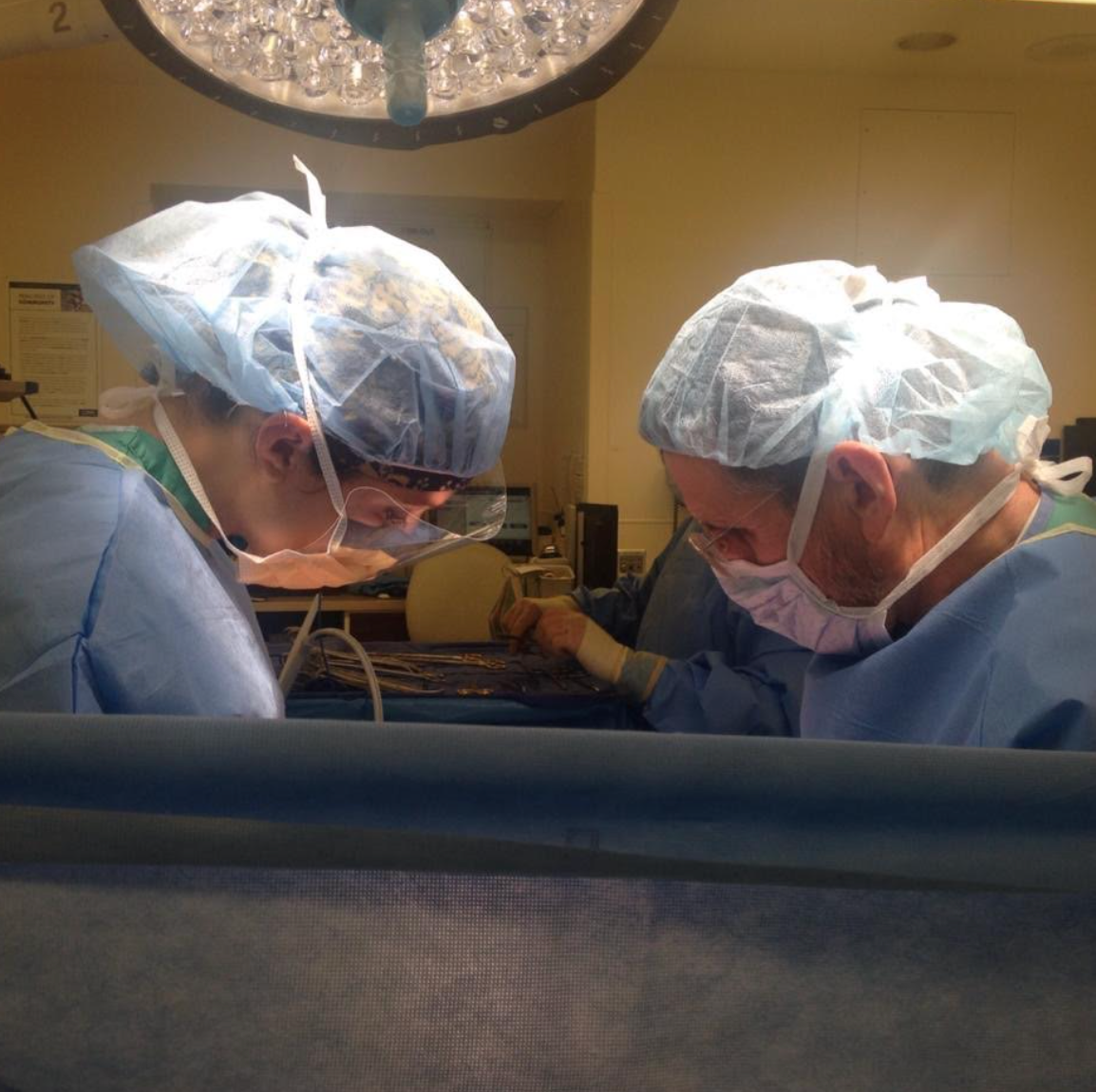
The author, left, in the operating room.

Courtesy of Caitlin A. Smith

The author, left, in the operating room.

To some degree, I expected to receive messages like these from men, but I was surprised to find that many of the negative replies were, in fact, authored by women. They insisted my own take on my own life could not be trusted and that I was lying about feeling fulfilled. I would never be happy, they insisted, and never know true love or joy. My life would always be incomplete, they said, since I had been misled by a wolf in sheep’s clothing into a life without meaning. That wolf was, apparently, feminism.

These sentiments are not new, even if they have been emboldened by the current presidential administration. Feminism has long been a societal scapegoat. The wave of feminism championed by figures like Gloria Steinem encouraged women to free themselves of society’s expectation that all women must have children and stay in the kitchen. However, in recent years, this narrow definition has been heavily critiqued for the way it may appear to overlook and undervalue the labour involved in motherhood. This version of feminism has also estranged women from different backgrounds by centring the experiences and priorities of only white middle class women.

Women who find deep meaning in child rearing and significance in their work at home have felt alienated by mainstream versions of the movement. Some have even fled progressive politics because they found more alignment in conservative platforms, which often embrace domestic life and labour as a woman’s truest calling. There are even those who have argued that feminism has “ruined” motherhood by allowing women to pursue alternative paths in life and by encouraging the declining birth rate. Furthermore, the experiences, voices, and struggles of marginalised, non-white, and queer women have not always been included in the mission of some approaches to / forms of feminism, leaving many searching for alternative frameworks to fight for all women’s rights.

As the derogatory messages I received in my inbox show, the societal skepticism of women without children is not going anywhere, especially now that we have high-powered conservative think tanks pushing regressive gender roles and opposition to feminist movements. They, too, take the stance that feminism has damaged the traditional family structure by allowing women to believe their lives can be fulfilled without motherhood and marriage.

At the same time, conservatives like JD Vance, who is well known for his animosity towards single women without children, are using their large platforms to claim that women who pursue professional careers are causing social unrest.

Instead of addressing the real lack of support mothers face in this country, Trump is also making an explicit play to push motherhood on American women. Since my essay was published, we have seen proposals for a baby-bonus cash payout for new mothers, childbirth medals, and a federally funded tax-advantaged savings account seeded with $1,000 for any child born between 2025 and 2029, all aimed at selling women on partaking in a traditional nuclear-family lifestyle.

As a paediatric surgeon who helps children every day, I do not understand how I could be viewed as an enemy of the state. Unfortunately, I still see this belief play out – even at work.

In fact, a mother recently asked me a series of personal questions to suss out whether I was capable of performing her child’s routine surgery. After inquiring about my qualifications, she asked me directly whether I was a mother. “No,” I told her, and I asked her why she wanted to know. After a bit of rambling, she concluded with an unconvincing apology, noting, “But I think women should be able to do all kinds of jobs… or whatever.”

I don’t mind questions, and I understand parents put a huge amount of trust in their children’s doctors, especially when it comes to surgery. However, this specific encounter was yet another reminder that even a woman’s value in professional settings can be tied back to their reproductive choices.

I knew a question like this didn’t belong in that hospital exam room and had nothing to do with my skill as a surgeon, but it’s no surprise women feel this way. After all, we are all taught to view women without children as less capable and less committed to the care of others.

At the time I wrote my original essay, I had hoped such sentiments about women without children were declining. But in the weeks after it was released, I watched Kamala Harris’ choice to not have children of her own get repeatedly dragged through the mud. The derogatory rhetoric about women without children has, sadly, only accelerated since I awoke to find myself trending on my phone screen.

I, however, have never wavered in my belief in my value as a childfree woman. Because of the women who have come before me, I have been able to live a life full of joy, meaning, and fulfilment – on my own terms. I will continue to use my voice to ensure others can do the same.

Caitlin A. Smith is a surgeon and writer in the Pacific Northwest. Her personal essays on surgical training and experiences have appeared on Doximity. She is currently writing her first book, a firsthand account about the life and experiences of women in medicine. Find her at @miseducationofaknife on Instagram and Substack.

Do you have a compelling personal story you’d like to see published on HuffPost? Find out what we’re looking for here and send us a pitch at pitch@huffpost.com.
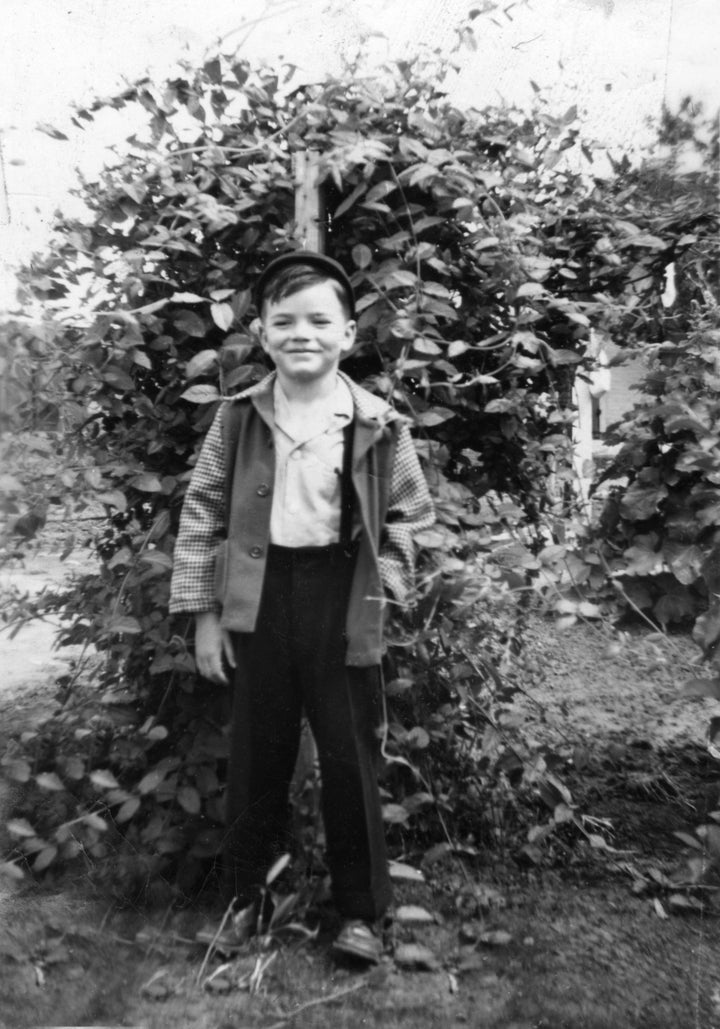
Share Button

I Write Thrillers. I Never Saw the Plot Twist Coming In My Own Marriage.

I have always prided myself on having a sixth sense for deception, an ability to spot the lie buried in the casual comment or the discrepancy in a story that exposed what someone is working to hide. I figured that’s what made me a great thriller writer.

In 16 books published over 25 years, I’d been constructing elaborate plots where people led double lives and hid horrible truths with both blatant lies and simple misdirection.

My protagonists were always law enforcement – inspectors and detectives, a medical examiner – sharp-eyed women trained to see through shiny veneers to notice the small inconsistencies that eventually cracked the case.

And yet, for two and a half years, I missed the most obvious plot twist of my life: my husband was having an affair with his massage therapist.

The irony isn’t lost on me. Somedays, the irony is suffocating.

It was a Friday afternoon in December 2022 when I found out. Our kids were home from college for the holidays, and our family was preparing to head to Mexico to join my sister and her family for a week of sun, sand and margaritas.

I discovered his affair not through any brilliant investigative work nor the careful attention to detail I so prided myself on. Instead, the discovery came from a charge on a credit card statement – a session with a couples counsellor we hadn’t seen in almost a decade – that caused an uncomfortable pit in my stomach.

I sometimes wonder whether the appearance of that pit meant that suspicion had been planted before then – whether there was a part of me, deep and buried, that sensed the rot beneath the carefully maintained façade.

When I reached out to my husband, his phone was turned off. For more than two hours, the pit grew as he remained unreachable and our adult children began to sense something was wrong. When his phone finally came back online, I confronted him with the charge and asked what was going on.

“I’m almost home. Let’s talk then,” he responded. So casual. So calm.

When he arrived, he asked if we could talk without the kids.

“What’s going on?” I demanded when we were alone. “I’m not in love with you anymore,” he said in the same tone you might mention the oil light has come on in the car.

“Who are you in love with?” I asked.

Love was energy; it didn’t just dissipate into the ether. It went somewhere else.

“There’s no one else,” he told me.

The author and Georgie in San Miguel de Allende, Mexico, in 2025

Courtesy of Danielle Girard

The author and Georgie in San Miguel de Allende, Mexico, in 2025

He acted normal for the next 24 hours. In weak imitation, the kids and I tried to act normal, too, to prepare for our trip and the small Christmas celebration we planned before leaving.

The following morning, Christmas Eve, we were set to depart for our vacation when I woke at 4am with the memory of something my husband said when our friends divorced: “A man never leaves his marriage unless there’s someone waiting for him.”

I roused him at 4:04am and asked again, “Who are you in love with?” When he didn’t answer, I started to guess. I got it in two. On the first guess, he protested loudly. On the second, he went silent.

That was answer enough.

“How long?” I asked. If I’d written the scene, I like to think I’d have been more creative, but creativity evaporated in the panic of that moment.

I shouldn’t have been surprised that he lied again. It took more than three weeks to get him to admit that the relationship had been going on for almost two and a half years. Three years later, there are details that never quite squared and lies that were never ironed out.

As a thriller writer, I’ve spent countless days imagining the worst things people can do to each other. I’ve sat in coffee shops and on airplanes and at my desk and invented murders, betrayals, psychological torture.

I’ve been inside the heads of liars and manipulators and people who destroy others without remorse. That experience made me believe I understood human darkness with a clarity others lack. But understanding it for the benefit of a story and living through it are entirely different things.

The author at Shakespeare and Company, Paris, in 2024

Courtesy of Danielle Girard

The author at Shakespeare and Company, Paris, in 2024

For days after I found out, I moved through my life like a stranger. Every object felt suspicious, every memory potentially false. Had he been thinking about her when we were in Nashville for my birthday the month before? Was he texting her from our bed when I was in the kitchen and setting up the coffee machine for the next day? How many times had he said “I love you” while mentally planning his next Friday massage appointment?

“Really? Your massage therapist?” I asked once, during one of those miserable circular conversations where nothing gets resolved and everything gets worse. “A 50-year-old man and his massage therapist. It’s so cliché.”

The comment clearly stung, as if I’d insulted his creativity rather than his fidelity.

“We were friends first. She listened to me,” he said.

“I listen to you,” I said like a petulant child.

“You’re in your office, working, or you’ve got your nose in a book for the podcast.”

He wasn’t entirely wrong.

Once our kids had left for college, I’d shifted my focus to my writing and working harder than ever as my career took off. I’d stopped working on the marriage. My shiny new toy was the book; his worked out the kinks in his neck, ones put there by 30 years with me.

That December, I was neck-deep in a manuscript about a detective investigating a pregnant surrogate who goes missing. It was a book I’d been so excited about six months earlier, one I’d been confident was my darkest, most psychologically complex book yet.

After I learned my husband’s secret, I couldn’t write a word.

Every time I sat down at my desk, I’d cry or stare at the blank page, wondering why I bothered. What did these pretend murders matter? What did my clever plot twists signify when I’d missed the biggest one in my own life?

Beyond the logistical fears about my own future was another terrifying realisation: I no longer wanted to write the detective book. Overnight, I’d lost interest in stories about detectives solving crimes, justice being served through shootouts and the court system, about the bad guys getting caught and punished. Suddenly, those seemed too neat, too fake, like fairy tales and not the Grimm’s variety.

Real betrayal, I learned, doesn’t get solved in 300 pages. Real deception doesn’t wrap up with a satisfying twist where everything makes sense and the protagonist emerges stronger and wiser. Real betrayal sits there, ugly and unresolved, in the middle of your life while people take sides and you fill the garage with items you once cherished and no longer want to see.

I started thinking about the kinds of stories that had never interested me – messy ones where the protagonist doesn’t figure everything out and there are no clear villains, just people making terrible choices for complicated reasons. Stories set in the ugly places I’d never wanted to go until now.

When I found my way back to the page, I rewrote the surrogate story, cutting the point of view from the detective, and placing the biological mom at its centre with her best friend from high school as the surrogate who vanishes four days before the baby is due.

In this new version, the story focuses on these women who were friends in high school and the complications of their long, intense friendship.

Though there is a big moral question at the centre of the book, as well as a fun, juicy plot, it was the interactions between the characters themselves that allowed me to explore the messy reality of life that I was living through while writing.

My divorce was finalised at the end of 2023, a few months after I got a new agent, six months before my agent sold that book, Pinky Swear, at auction for release earlier this year. It was the hardest book I’ve ever written and the best.

The author at home with "Pinky Swear"

Courtesy of Danielle Girard

The author at home with “Pinky Swear”

The one I’m writing now is trickier, more complicated. It’s about a woman who discovers her husband’s long affair with a massage therapist.

My husband was married to a thriller writer for almost 30 years. This can’t come as a surprise to him. Still, this is not a memoir. There’s a murder, for starters. But there are echoes from my own experience in the details, like the secrets that begin small and seem harmless … until they’re not.

While the main character is not me, the protagonist is walking in my own, uncomfortable shoes, trying to construct a narrative to make sense of chaos, and working to find a path forward when the narrative crumbles.

Every time I drive downtown, I scan the cars, the street, the store or restaurant for my ex-husband and his girlfriend. I still haven’t seen them together, though I know that they are. I wonder what I’ll feel when I do – a fresh wallop of despair? Closure? I have run the scenario a hundred times, and I still don’t know.

What I do know is that the writing I’m doing now feels like what I should be doing. Not because detective fiction isn’t important or valuable, but because I’d been using it as a way to imagine I could manage the outcome and somehow avoid the terrible things that happen to people who I imagined weren’t as studious or as prepared.

For months, I’d been plotting elaborate lies and deceit in that first draft of Pinky Swear while missing the simple, stupid truth: that the person sleeping next to me was a stranger. That I was so good at inventing characters for mysteries, I’d forgotten to be curious about the one I’d married.

I see now what those books were really about: control. The illusion that if you’re smart enough, observant enough, careful enough, you can see the betrayal coming. You can solve the crime. You can write your way to safety.

But you can’t. Life isn’t a thriller, and there’s no genius detective who’s going to figure it all out – no satisfying final chapter where all the pieces fit. At least, not in my life. Instead, there are just little clues I recognised far too late about the person I thought I knew becoming someone I never knew at all.

The book I’m working on now – the one about the woman who discovers her husband’s two-and-a-half-year affair with his massage therapist – will be called Happy Ending.

It won’t be neat or easy, but it might be happy. I hope it will be.

Danielle Girard is the USA Today bestselling and award-winning author of several novels, including the Annabelle Schwartzman series and Pinky Swear. She is also the creator and host of the Killer Women Podcast, where she interviews the women who write today’s best crime fiction. A graduate of Cornell University, Danielle received her MFA in creative writing at Queens University of Charlotte, North Carolina. When she’s not traveling, Danielle lives in the mountains of Montana.

Do you have a compelling personal story you’d like to see published on HuffPost? Find out what we’re looking for here and send us a pitch at pitch@huffpost.com.

Share Button