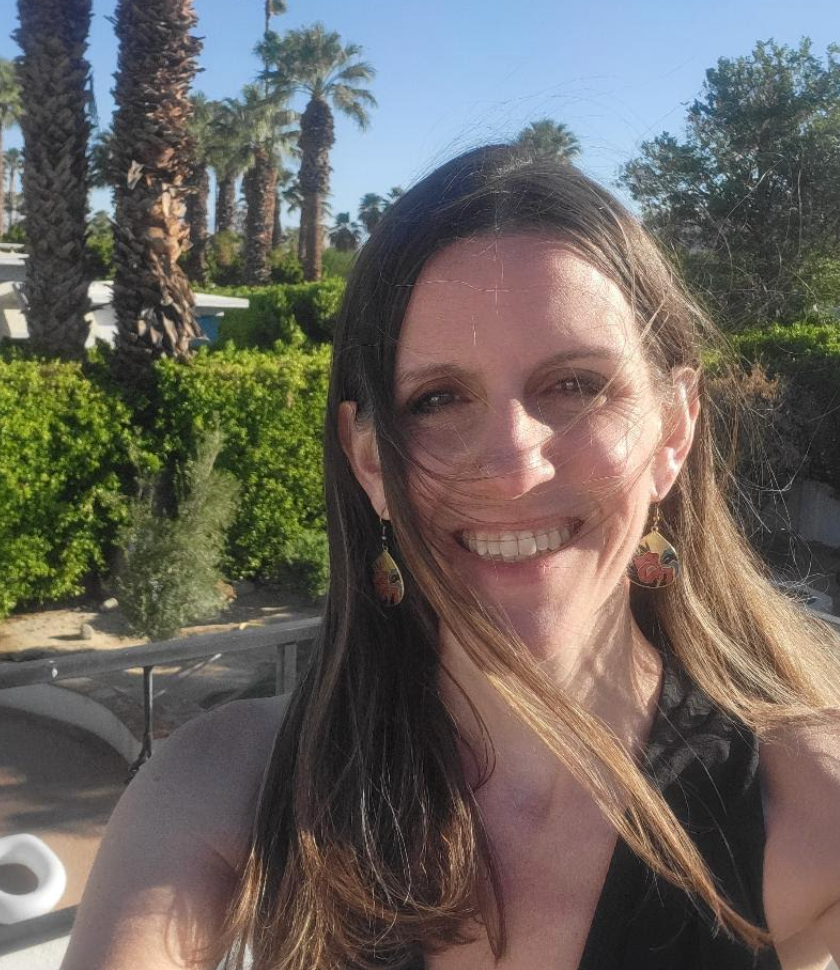
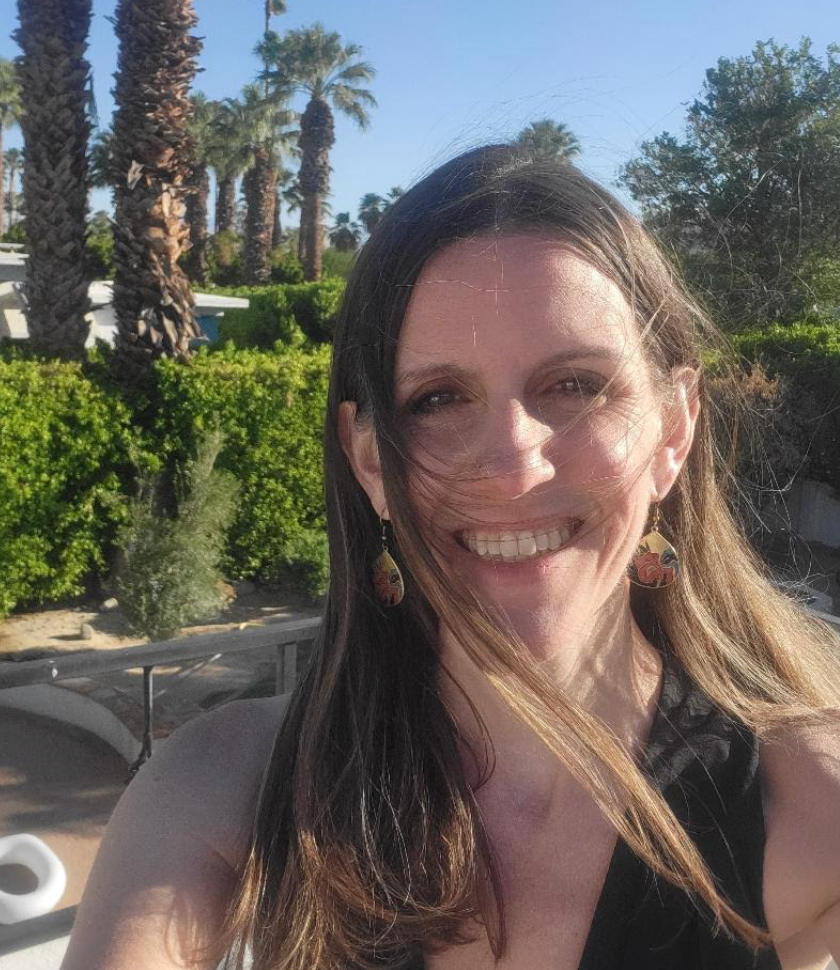
My Senior Dog Couldn’t Walk Anymore. Before She Died, She Led Me To My Husband.

“JUST BRING BACK MY MAYAAAAAAAA,” I sobbed into the phone to my then-boyfriend of two years, Tom.

He had just left our East London apartment for a two-hour journey to the specialty vet hospital, where our 13-year-old paralysed chiweenie waited to be picked up. Housebound with Covid, I waited impatiently for him to return with the love of my life.

Tom knew that Maya had always been my soulmate. She had been at my side since I was 19 and going to college in Greenwich Village. She gently snorted in my bag as I snuck past security into my film class, where a treat from my professor awaited her. Bouncy and bright, Maya romped through the city with me, often drawing adoration from passersby for her cuteness.

We were inseparable. I would wake to the surge of traffic or the rumble of street construction below, Maya nuzzled into my dark hair. Up we went to the coffee shop’s takeout window, where, surprise, surprise, more treats were ready for her taking. On the subway, to friends’ houses, on road trips across state lines, and on flights home to sunny, smoggy Los Angeles, Maya came along every step of the way.

During Hurricane Sandy, it was Maya and me against the world. No power, no running water. Maya and I traipsed along the Westside Highway at twilight, a Blessed Virgin Mary candle ablaze as a torch, walking past what felt like a post-apocalyptic downtown.

Maya even moved across the pond with me to London when I turned 30 – a reset after a five-year relationship abruptly ended.

She first moved in with my mum, who FaceTimed me at least four times a day while I spent the longest three months of my life waiting for her to arrive.

When she finally did, I felt whole, like I could exhale and lean into my new London chapter.

A few months later, Maya, almost 12, lost mobility in her back legs. I placed her in a leather duffel bag (unzipped, of course), threw in some blankets and rushed into the November night to the same specialty vet hospital, which would become our refuge for the next three years.

Still in my yoga pants and sweatshirt from that afternoon, the only thing I could think about was getting Maya better. I kept reassuring her, “It’s OK, it’s going to be OK,” even though I was ultimately reassuring myself. Stroking her soft face and trying to keep the tears back, I knew our lives would never be the same.

“Intervertebral disc disease,” the neurologist said. “She needs a spinal fusion immediately.” With only a 50% chance of regaining movement in her hind legs, I began to prepare for whatever came next.

Maya glowed in her new neon pink set of wheels. She zipped along the Hackney Canals with even more flair than before, drawing even more smiles in her new form than she had on four legs.

It was during this period that I met Tom. We both swiped right, and I planned for him to meet Maya on our third date. By then, I had accumulated a handful of dog sitters for her. While she could be home alone for up to four hours, for special nights out, I needed backup.

Maya was still figuring out her new self and was scooting all over the apartment in her white puffy diapers. As soon as I brought Tom up to meet her, Maya had an accident all over a floor pillow. Embarrassed, I began to apologise.

“It is not a bother,” he laughed as he picked her up. “Come on, you. Let’s get you cleaned up,” he cooed as he reached for the kitchen roll.

It was at that moment that I knew Tom was here to stay. During lockdown, he would drive from the other side of London and spend the entire weekend with us, giving Maya baths, making a duvet fort for her so we could watch The Twilight Zone, and going for long walks with Maya rolling beside us. He would even adorn her with origami crowns. My plus-one became a plus-two.

Tom and Maya in our yard in London, December 2020.

Photo Courtesy Of Jordan Ashley

Tom and Maya in our yard in London, December 2020.

On our first family holiday in summer 2020, we rented a cottage in the Cotswolds, where Maya rolled in green fields sprinkled with cows grazing. When she grew tired and needed a rest, Tom would scoop her up in his arms, like a bride being carried over the threshold, and blow on her face to cool her down.

When the three of us finally moved in together, our priority was securing a ground-floor apartment so Maya could come and go with ease. Our entire existence centered on Maya. It was never just Tom and me, but rather the three of us, moving as an imperfect unit into this new, cohesive life together.

As our love deepened, Maya’s age began to catch up with her. Despite being the ultimate roller girl, more health issues began to pile on: hyperparathyroidism, myoclonic seizures, pancreatitis and blindness. During this time, she would be up all night, distressed, howling and crying.

We took turns, surviving on three hours of sleep, our collective mental health wearing down, yet we persevered. On these late nights, I would turn on sound bath playlists, sing to her and do everything in my power to keep her settled on the futon we had set up in the living room. We would not give up on our Maya.

In January 2024, we celebrated her 16th birthday together. Our only measure of time was her comfort. As long as she was still eating, still bright-eyed and not in pain, we kept going. She had traded in her wheels for a stroller, and we pushed her everywhere, her head poking out to take in the breeze.

Maya was on a cocktail of medication, and our lives revolved around the rituals of caring for her – giving her syringes of medicine, hiding pills in peanut butter, cooking for her. She was a metronome, and our lives played to her rhythm.

Maya flew home with me that spring. By now, she could not be left alone, so it was easier to travel with her to ensure round-the-clock care. During this time, I felt Maya’s clock was running out.

Maya's 15th birthday party in London, February 2024.

Photo Courtesy Of Jordan Ashley

Maya’s 15th birthday party in London, February 2024.

I knew an engagement was just around the corner. I had found the ring in his sock drawer, and I kept saying how important it was to me to have Maya at our wedding. She would be the bouquet, as I dreamed of carrying her down the aisle.

Tom would not be marrying just me; he would also be making a vow to her.

Within 48 hours of returning to the UK, Maya was rushed to the emergency vet because she could no longer breathe on her own. We began Googling videos on how to build an oxygen chamber at home from a plastic storage container. Tom found all the parts we would need and was ready to pick up the oxygen tank when the call came. It was time.

We sat with her on our laps for five hours, crying as we looked through all the photos of our many adventures over the years: Maya gliding in Williamsburg, a soggy Tom holding an even soggier Maya after a lake dip, Maya in her skulls and crossbones sweater, us singing happy birthday to her. And then my worst fear finally happened. Her spirit had grown too big for her now very tired body.

I was devastated. I don’t remember getting into the car or Tom driving us home. He held my hand and, through his own tears, led me into our now very empty apartment. Even though he was tucking me into bed and telling me to try to rest, I felt truly alone for the first time in 16-and-a-half years.

The engagement came six weeks later, while I was waiting for a taxi to Heathrow to fly back to New York. It would be the first time I would be in the city without her. Maya’s vet gave me an envelope of bluebells to plant in her honour. On that solo trip back to NYC, I walked down Sixth Avenue, turned left onto 13th Street, and stood in front of the apartment where Maya and I first became inseparable.

Maya's representation at the author's wedding in the Cotswolds, July 2025.

Photo Courtesy Of Jordan Ashley

Maya’s representation at the author’s wedding in the Cotswolds, July 2025.

Maya had always been my constant, my heartbeat outside my body. Losing her was like losing a piece of myself, the glue that held my world together. Kneeling, I spread some dirt beneath a tree and scattered the seeds.

Across the ocean, I knew my person was waiting for me. His love for Maya over those four years was one of the greatest acts of devotion I had ever witnessed. Our love for her and the shared grief of her absence would now be a journey Tom and I would navigate – together.

Jordan Ashley, Ph.D., is a writer and the founder and executive director of Souljourn Yoga Foundation, a nonprofit creating transformational yoga retreats that support girls’ education worldwide. Learn more at souljournyoga.com.

Do you have a compelling personal story you’d like to see published on HuffPost? Find out what we’re looking for here and send us a pitch at pitch@huffpost.com.
Share Button

I Never Believed In The Death Penalty – Then I Was Selected To Be A Juror For A Serial Killer’s Trial

I was 14 the first time I really thought about the death penalty. Every day in freshman English, our teacher wrote a new question on the whiteboard. Before class began, we had to write a short essay on the topic. One day, the prompt read: “What is your opinion on capital punishment?”

Until that moment, I hadn’t given it much thought. Whenever I heard that someone had been sentenced to death, I just assumed they probably deserved it. But I’d never been asked to consider whether it was morally right.

I wrote my first sentence with a No. 2 pencil: “I believe the death penalty is appropriate when a serious crime has been committed.”

Then I stopped. I picked up the eraser and erased it. I realised I couldn’t, in good faith, justify capital punishment.

Unlike my answer to the question on the board, death wasn’t a decision that could be undone just by picking up an eraser. Death was final. So, from that moment forward, I knew where I stood: I was against the death penalty.

As I grew older, my opposition to the death penalty never faded. It became a core part of my identity, a topic I often returned to in conversations with friends, or sometimes even strangers.

The more I read about the topic, the more disturbed I became by how unevenly capital punishment is applied. Two people can commit the same crime and receive completely different sentences, depending on where the crime occurred, or on their access to money and legal resources.

I learned about the many people who were executed and later found to be innocent. I began donating to The Innocence Project, an organisation that works to free the wrongfully convicted. At times, my donations were small. But it was my way of staying connected to a belief I had carried since I was 14.

I never expected that 20 years later, I would again be confronted with the same question written on that whiteboard. But this time, it wasn’t hypothetical.

In April 2025, I received a jury summons. I didn’t have time for jury duty, but the court’s website said most proceedings last only two to three days. I assumed I would not be selected, and if I was, I expected it to be brief.

Ultimately, I was selected to be a juror, and I quickly realised this wouldn’t be the case. It was a trial of an accused serial killer who was alleged to have murdered eight people: Andrew Remillard; Parker Smith; Salim Richards; Latorrie Beckford; Kristopher Cameron; Maria Villanueva; his mother, Rene Cooksey; and her partner, Edward Nunn.

As the scope of the case became clear, I knew that a death sentence was a real possibility, and I felt conflicted about moving forward as a juror. But as I listened to other potential jurors answer the attorneys’ questions during selection, I began to think maybe I belonged there. I hoped I could keep an open mind and bring nuance to deliberative conversations.

One of the most difficult days as a juror was when the youngest daughter of Maria Villanueva testified. Maria had been abducted and sexually assaulted. Her lifeless body was found in an unpaved alley – nearly naked, surrounded by trash cans and cigarette butts.

After listening to her talk about her mother, I had a 6pm dinner reservation for pasta and drinks with my neighbours. The juxtaposition felt shameful, but I was desperate to think about anything other than what had happened in court.

After months of testimony, the jury deliberated on whether or not the defendant was guilty. We found the defendant guilty on all charges, but the jury still had to determine if the defendant would receive life in prison with no release or the death penalty.

Before the sentencing phase of the trial began, the victims’ families read their impact statements.

When Kristopher Cameron’s partner spoke, I knew her words would hurt.

“Our son was only 10 months old when his father was taken. My daughter never got to meet him. My kids will never experience dances or donuts with their dad. He had dreams. Now all we are left with is the void his absence will carry.”

Kristopher’s children will never hear his voice or watch him walk through the front door after work and kiss their mother. Instead, they’re left with ashes on a mantle. They won’t know his smell, his laugh, or how it felt to hug him. They will never unwrap a gift with a tag that says, “From Dad.” Kristopher’s murder ended one life, but it also fractured every life he was connected to.

After several more months of listening to the prosecution and the defense arguing over mitigating circumstances, it was time for the jury to deliberate again. We immediately took a preemptive vote.

I was the only one who didn’t instantly vote for death.

The author with his dog.

Photo Courtesy Of William Ehlers

The author with his dog.

Attempting to keep an open mind, for six out of the eight counts, I voted as “undecided”. For the murder of the defendant’s mother and her partner, I voted in favour of life without parole.

I braced for the judgement from the other jurors. I explained that I had tried to consider all the mitigating circumstances related to the defendant. He had been abused. I know his childhood was difficult, and I know that he had a problem with drugs. Legally, these factors all allowed us to grant leniency. But any attempt to have these conversations fell on deaf ears.

Many jurors refused to acknowledge the defendant’s history of drug abuse and mental illness, despite expert testimony from both the defense and the prosecution. All the mitigating circumstances were irrelevant to them. The only thing that mattered was making sure the defendant was executed.

It didn’t feel like justice for the victims – it was vengeance toward the defendant.

After just a few days of deliberation, I knew if I didn’t change my vote to execute, I’d be the cause of a hung jury, which meant the sentencing phase would have to be retried, a process that would take months. A new group of jurors would be tasked with deciding a sentence for a verdict they hadn’t delivered. And there was no way to know how long it would be before the new trial began.

I sat on the floor of the jury room hallway, creating a list.

If I choose death, that’s it. He’s dead.

But if I choose life, the jury will hang. His sentence will be retried, some new set of jurors will go through it all again, and the victims’ loved ones will be denied closure.

There was no option that did not harm someone, if not many people. There was no option that minimised the damage. I’d gone into this trial initially believing I would not vote to execute the defendant under any circumstance. I romanticised the idea of refusing to crack under pressure, and the mercy I would be extending to someone. But after a week of sleepless nights and several bottles of wine, I knew what I had to do.

“All in favour of life for count one, regarding Parker Smith, raise your hand.”

“Now, all in favour of death, raise your hand.” Twelve votes.

I was forced to put my hand up for each individual charge until I had voted for death six times. I couldn’t bring myself to vote for death regarding the murder of the defendant’s mother, Rene Cooksey, and her partner, Edward Nunn, because I did not believe the defendant was in a coherent state of mind when he committed these murders.

Once the vote was done, I managed to lift my head off the table, only to drop my face into my palms and weep. I couldn’t hold back any longer. I could hear backpacks zipping as the other jurors packed up their belongings to head out for lunch, while I just cried.

The defendant had been arrested on Dec. 17, 2017. Exactly eight years later, we turned in our verdicts. They were read out loud the next day.

Being a juror on a capital murder trial unearthed frustrations with our system that I never knew existed. I always knew that I didn’t support capital punishment, but I supported it even less after this experience.

I know I will always partially regret my decision. My life will forever exist in two sections: before trial and after trial. If I was able to give in on my most strongly held belief, what do I really believe in, and what do those beliefs even mean? Being responsible for an execution is a burden I will carry with me. While the death of each victim brings me sorrow, so does the inevitable death of the defendant.

I wish the trial hadn’t ended this way. But I wish there didn’t have to be a trial at all, because I wish that all eight victims were still here. I think about Andrew, Parker, Salim, Latorrie, Kristopher, Maria, Rene and Ed constantly. I will always do my best to make sure they live on.

I chose death, not because I wanted the defendant to die, but to bring closure to the families and to allow the victims to finally rest in peace. Although I know I am going to carry the burden of that choice with me forever, I hope it lifted at least a little of that burden off them.

Do you have a compelling personal story you’d like to see published on HuffPost? Find out what we’re looking for here and send us a pitch at pitch@huffpost.com.

Share Button

A Couple Asked Me To Help End Their Marriage. They Didn’t Expect A 30-Year-Old Secret To Come To Light.

“You made a sex tape?!”

Susannah turned to her husband, Ron, mouth agape. He looked down, his cheeks reddening.

“It was right after college. I was experimenting,” he mumbled, twisting in his seat. “No big deal.”

As a couples therapist, I am always looking for how to mend the frayed edges of a relationship, but Susannah and Ron were different: they had come to my office to end their marriage.

I practice what I call breakup therapy — a short-term treatment I developed for couples who want to end their relationships without bitterness.

The premise is counterintuitive: instead of looking forward toward separate futures, we look backward at the relationship itself. It’s structured to look at the beginning, middle and end of their time together with exercises that focus on both their gratitude as well as their resentment.

The work culminates with the couple crafting a shared narrative about their union and literally writing it down – a story of what worked and ultimately what did not. Then, I ask them to sign it. In this way, they resolve the many unanswered, and often unasked, questions that can trap couples in recriminations and keep them from moving on.

The idea was born from my own bitter divorce. After my split, I was plagued by questions that repeated on an endless loop in my brain: “What was I thinking?”; “Why didn’t I see that red flag?”; “What is wrong with me – I’m a therapist and I should have seen what was happening.”

Then, one day, my therapist asked me a different question: who was I when I decided to marry? Suddenly, my internal feedback loop stopped.

“You’re asking me who I was, not why I married him?” I said, skeptically.

“Yes, I am,” she answered. “Marriages can be as much about identity as they are about a union. What were you trying to solve — or avoid — by marrying him?”

The question unlocked something for me. I’d been full of anger at myself, but I hadn’t really taken responsibility for my own actions. With her help, I crafted a story that I could hold onto about what function the marriage had served for me. Truly owning my choices helped me have more compassion for myself and less anger. The most startling realisation? When I had created a story that hung together, the nagging questions ended for good.

I have seen this same process unfold for many couples. But often, in the course of these sessions, new things surface.

“Susannah?” I said, surprised to hear the hurt in her voice. “This feels like a big deal for you. Why is that?”

Ron and Susannah had not been the most willing subjects for breakup therapy. During our first session, Ron blurted out: “You’re like a medical examiner doing autopsies on dead relationships! Your scalpel hurts. I don’t think you know what it feels like to be humiliated.”

“I wouldn’t be so sure,” I answered softly. “I have a teenager.”

Ron was not mollified.

“This feels stupid,” he said on another occasion. “She’s done, I accept that. What is there to say? This feels like horseshit.”

“See what I’m working with here?” Susannah said, throwing up her hands and shifting away from Ron on the couch. “I knew he wouldn’t take this seriously.”

“No, he’s right,” I said. “If it’s really true that you fully accept and understand her decision, Ron, then this is horseshit. But is that true?”

His silence was all the answer I needed.

Over the next few sessions, we went over how they’d fallen in love (“It just made sense, we fit”); the birth of their three children (“The unit held us together”); the unraveling of their connection (“We were ships in the night for as long as I can remember, but then one day I woke up and just wanted more from life”).

We mapped the patterns their marriage had fallen into over the course of three houses, two cross-country moves and their children’s exodus from home. It was a saga spanning decades.

Then, in our fourth session, Ron mentioned the sex tape.

“Something about this is landing hard on you,” I said to Susannah, her mouth still ajar. “Why?”

“Yeah, why?” Ron echoed.

Susannah paused and looked out the window.

“It’s that you … you tried something that – I don’t know – was out there … bold and different.”

A tear welled in a corner of her eye.

“It’s not you. You’re not brave! Or, at least you haven’t been with me, not in all these years together.”

Then she began to cry. Ron and I looked at one another.

“Susannah?” Instantly, I regretted breaking the silence.

“All this time, I decided you just couldn’t try new things,” she managed after a while. “I gave up.”

Ron put up his palms. “What is happening?” he said, exasperated.

“But if you can do that …” she continued. “What was it? Did I just not ask? Did I build my life around a lie?” She looked lost. “Was it that you never really loved me enough?”

She turned back to Ron and banged her fist on the couch.

“I did ask! I asked you to look at porn together when we stopped having sex, to take classes with me, to go on that whale-watching tour. … You just ignored me!”

This time, I held my tongue.

“Is that a thing?” she went on, turning to me. “That you can reach the end of a relationship and not even have known what was possible?”

“I made that tape 30 years ago,” Ron blurted out. “She’s upset over something I did when I was a totally different person!”

This was the impasse that I had expected, that arrives in most of my breakup therapy work – the moment when two people realise that as well as they think they know each other, there are things they don’t know or have lost track of. It’s my job to help them hold that bitter realisation. Then it’s my job to help them arrive at forgiveness or some kind of reconciliation – if not with each other, then with what happened to them.

“It was 30 years ago, Ron,” I said. “But you aren’t a different person. You’re the same person, and she’s wondering why you couldn’t have been that with her.”

I turned to Susannah and said, “You have a right to be hurt, but were you truly honest with him? Did you give him the space and the safety and the encouragement to be that person? Do you think you both can forgive each other for what you weren’t?”

It was three weeks before they appeared again in my office, having canceled two sessions in between appointments.

“I was stirred and moved by what happened here last time,” Susannah began. “When we left, I thought: Maybe there’s enough left between us?”

Ron’s eyes were downcast.

“But I realised I can’t,” she said. “I just can’t open up that part of me with him anymore. I want … I need this divorce.”

I nodded. “Ron? How do you feel?”

“I can see where we are … I’m not fighting it.” His voice broke. “I’m just really sad.”

Often it requires some kind of shock to break through the built-up layers of anger, resentment and disappointment in a couple in order to illuminate the cracks in their relationship – something true that has been avoided or left unsaid. In this case, it was the surprise of an ancient transgressive act that lay bare how little they knew each other and how misaligned they’d become.

Susannah moved closer to Ron on the couch and laced her fingers with his.

“You guys seem calmer – closer. Tell me what you are feeling,” I said.

I knew something about that calm after the storm. After my own divorce, we had maintained an uneasy truce for years, until one long car ride after dropping our daughter at camp. As we rode in silence, I suddenly remembered my therapist’s question: Who was I when I decided to get married? For the next two hours, we talked over that question and everything else, and together realised how lonely we had been — two Israelis who, instead of understanding why we had both chosen to leave, had clung to each other and to a shared language. Before long, we were laughing as we had not laughed since the early days of our marriage.

“So, where do we go from here?” Ron asked me in their last session.

“Well, in my experience, when a marriage ends, a different relationship can sometimes be created,” I said. “That’s up to you guys. All endings are sad, but not all endings have to leave you broken. There’s an opportunity here to get to know each other in a different way. And …” I leaned forward to make eye contact with each of them “… to know yourselves better.”

After they left, I sat quietly in my chair for a while. I allowed myself to remember that moment in my therapist’s office when I realised that I had been using my marriage to escape a question I had been avoiding and what a relief it had been to finally face it.

When a sex tape from decades ago unlocks two people’s grief, it’s not so much about the end of the road as it is about the roads never taken – the versions of a marriage they never tried. It is a sad moment, but also a generative one.

They’d come to me to bury their marriage. What they found instead was a way to know each other – maybe for the first time in years – even as they said goodbye.

Note: Names and some details have been changed to protect the identities of the individuals appearing in this essay.

Sarah Gundle, Psy.D., is a psychologist in private practice and an assistant professor at the Icahn School of Medicine, Mount Sinai Medical Center. She is currently writing a book about breakups. You can find her on Instagram @dear_dr_sarah.

Do you have a compelling personal story you’d like to see published on HuffPost? Find out what we’re looking for here and send us a pitch at pitch@huffpost.com.
Share Button

I’m A Writer Who Is Beginning To Lose Her Words. I’m Terrified Of What Will Happen Next.

I should’ve known it was coming for me – the fog, the forgetting, the cognitive impairment. My father, his brother, their mother, their grandmother all had it… I just didn’t expect how it would come for me.

At 54, it seems my forgetting is linked to a neurodegenerative disease. But even before my own memory and language issues began, I’d written about and wondered what my own neurological inheritance might be.

In 1981, I spent several afternoons in the peacefully lamp-lit office of an elderly, retired professor and child psychologist and underwent a variety of aptitude tests and personality assessments. It turned out I was a “highly sensitive” 5th grader with the vocabulary of a high school senior.

While most of the kids in my Midwestern neighbourhood rode their bikes, played flag football and Frogger, I was tucked away reading book after book. When I ran out of books, I’d spend entire afternoons seated cross-legged on the floor, poring over the pages of a set of hand-me-down Encyclopedia Britannicas. I dog-eared pages. I made notes in the margins on the Dalai Lama, the Great Alaska Earthquake of 1964 that registered a 9.2 on the Richter scale, and gladiolus — one of August’s (my) birth flowers that my paternal grandmother grew in her 4-H award-winning garden.

I’ve loved and collected words like treasures for as long as I can remember.

In March 2023, I started experiencing marked muscle weakness in several areas, most noticeably my left forearm. With any exertion, the muscles rippled beneath the skin, and my finger strokes on the keyboard weren’t landing as efficiently as they once had. Words were missing letters: Knoledge. Languge. Mariage.

My struggle with short-term memory increased. I mixed up words in conversation, and it felt like words I’d used frequently had been stowed away on shelves in my brain that I could no longer reach. Then came things like walking out of the kitchen with the faucet running, leaving the refrigerator door open, forgetting the stove burners were on and, recently, putting a container of yogurt in the drawer with my Pyrex lids.

The next few months brought resting tremors and trouble swallowing. My speech grew sluggish in the evenings when I was most fatigued. Now, I’m also experiencing more consistent, significant autonomic dysfunction, with a myriad of other symptoms.

In May 2024, almost exactly two years after I’d completed my midlife MFA in creative writing at 50, I was diagnosed with mild to moderate cognitive impairment. This brain – which I’ve filled with 10 years of study in higher education, ideas for essays, books yet to be written, language, memories of my children, their children, my parents when we were all much younger – is forgetting.

"This photo is from my hooding ceremony when I received my first masters degree in my 40s."

Courtesy of S.C. Beckner

“This photo is from my hooding ceremony when I received my first masters degree in my 40s.”

The first results read something like, “On the WMS-IV Logical Memory Subtest, immediate recall for two short stories was in the low average range. Delayed recall was impaired. Retention of information was impaired. On a 15-word list-learning task (RAVLT), she demonstrated a fluctuated learning curve and an impaired total learning score. Immediate recall was impaired. Delayed recall was impaired. Phonemic verbal fluency (FAS) was impaired. Semantic verbal fluency was impaired.” Impaired. Impaired. Impaired. Where did my words go?

The most recent results revealed “frontal subcortical dysfunction likely consistent with Multiple System Atrophy” – the neurodegenerative disease I was diagnosed with late last summer. Multiple System Atrophy, or MSA, is like if the worst forms of Parkinson’s Disease and ALS bore offspring. There’s no cure, and little treatment. It’s considered a terminal diagnosis with a life expectancy of five to eight years from symptom onset, maybe 10 if you’re… lucky? I’ve been told and read that every patient progresses differently. I’m nearing the three-year mark since my initial symptoms started.

I rebel against the forgetting, rebel against the losing – when I remember to. I pray. I meditate. I play word games on my cell phone well into most nights, as I’ve lost the ability to sleep for more than an hour or two in a stretch. Scrabble. Wordle. Words with Friends. Word Stacks. I work to sharpen the edges of my dulled memory, preserve what’s still firing in my brain, and search for the words that have already been wiped clean from the slate of my brain.

How many words could I spell with the letters V O I D E N? Void. Vine. Vino. Din. Dive. Ion. Dove. Done. Nod. Id. End. I plugged the letters into allscrabblewords.com to see how many I’ve missed. The site lists 55 words for that letter combination. I found 11.

Everything is different now. Each day arrives with some measure of frustration and fragility. When I have the capacity, I make lists of words that I most want to remember: Fecund. Cacophony. Loquacious. Serendipity.

My words, thoughts, and ideas are now submerged deep in a vat of midnight dark molasses and some days I can no longer retrieve them. They’re buried so deeply, and I am tired – brain thick with fog, limbs heavy as though they’ve been dipped in concrete. I know the words are still there – they have to be. I’ve studied and loved them for so long.

As a writer, storyteller, teacher, and someone who loves to be in conversation, the idea of losing those things is almost unbearable at times. In 20 years of marriage, I’ve written letters to my husband. In the beginning, letters of love and wanting, and more recently, letters of apology, request, and reflection.

I’m sorry you ended up with a sick wife.

The fear of the future washes over me and I can’t imagine the language and words that have made me who I am will be gone.

The author at her desk in 2022.

Courtesy of S.C. Beckner

The author at her desk in 2022.

In recent months, I’ve felt like the light of who I am is maybe starting to dim. I know that sounds dramatic, but I don’t know how else to describe it. I continue to try to write something every day, each word, every cohesive sentence – another rebellion. Whether it’s working on bits and pieces of a new essay or article I’ve had an idea for, trying to write new copy for a work project, or a journal prompt, I tell myself I have to keep writing. My desk houses stacks of Post-it notes and shards of scrap paper with scrawled notes, ideas, and words I don’t want to forget.

Some days, a paragraph might take several hours. Other days, I crank out sentence after sentence, only to return to the page to find missing words and ideas that don’t quite make sense or a story told out of order. Losing language, intellect, and what I’ve worked so hard to learn is like losing pieces of the woman I’ve worked so hard to become post full-time motherhood – a part of who I’ve always been, yet only recently had the opportunity to discover.

I hold onto my language, cradle the words I still have close to my chest like I once held my children, now long grown and living all over the country. I hold the words close like I once held those encyclopaedias while I read, then returned to them again and again. Alongside the words, I think of the faces of my children and their children. I imagine them older. In my own forgetting, I hope not to be forgotten, so I leave pieces of myself behind on the page.

S.C. Beckner is a freelance copywriter, essayist, and editor. Her work can be found at Salon, Business Insider, NBC Think, as well as other platforms and literary publications. S.C. is currently working on her memoir in essays. She lives in coastal North Carolina with her dog.

Do you have a compelling personal story you’d like to see published on HuffPost? Find out what we’re looking for here and send us a pitch at pitch@huffpost.com.
Share Button

The Latest Version Of Celebrity Thinness Isn’t Just Annoying, It’s Dangerous. I Should Know.

Every time I see Ariana Grande on the red carpet or in interviews lately, I feel a mix of fear and anger. Not at her, her beautiful spirit, breathtaking voice or right to move through the world in the body she chooses. But at what she’s come to symbolise.

Extreme thinness is back, and it’s being packaged as aspiration. Grande and Cynthia Erivo are everywhere promoting Wicked in interviews, photo shoots, red carpet events. Their bodies and the ultra-thin bodies of other celebrities – small, smaller, smallest – are glamourised and showcased with the media positioning Grande as one the main figures to be celebrated.

Even though there has been some criticism, it’s been drowned out by the mega promotion machine that celebrates these figures, and plasters them everywhere with great fanfare.

And this is happening at the same moment weight-loss drugs like Ozempic and Wegovy have become omnipresent.

These drugs are now so widespread – and will be even more so with the soon to be released pill forms – and easily obtained that people are using them whether or not they medically qualify. Not for diabetes, not even for health problems ostensibly related to “obesity”.

But to chase the kind of extreme thinness that’s on every magazine cover, every blockbuster press tour and in every curated celebrity post.

This comes after millions of women, myself included, have spent years trying to unlearn the toxic messages we were fed in our youth. That beauty equals thinness. That discipline means restriction. That our bodies must be controlled and minimised to be acceptable.

We fought for size diversity, for the radical idea that you can be beautiful, strong and worthy without disappearing. And just as that movement was starting to shift the cultural tide, here comes this trend of pharmaceutical shrinking that pretends thinness is wellness.

This isn’t about calling out celebrities, and it isn’t about body shaming. It’s about the unspoken message all of this is sending: when it comes to health, thinner is always better. This isn’t just frustrating. It’s dangerous.

A danger I know intimately.

When I was a teenager, my mother used to say, “If you only lost weight, you could be beautiful.” She equated being thin with the worth of a woman, and believed it would grant her access to power, success and opportunities.

I was a 14-year-old desperate to fit in with the cool kids. So when a popular girl in my high school freshmen class turned to me and asked how much I weighed, I answered without much hesitation.

“About 130 pounds.”

She looked at me in horror, “Oh, my God. I would kill myself if I ever weighed that much.”

I stood there, the fluorescent hallway lights buzzing above me, trying not to let the heat rising in my face show. She had confirmed what my mother had drilled into me, that the most important thing to be was thin.

My mother had done everything in her power to get me to lose weight: She’d pushed, pleaded, threatened, bargained. And she wasn’t the only one spreading the message of thin worship. This was the 1980s, the era of low-fat everything, Slim Fast and Jane Fonda workout tapes. No one was talking about mental health or eating disorders, no one I knew anyway.

Instead of motivating me, this made me feel like there was something wrong with me. That I was unworthy and unlovable the way I was. So when I was 15, I went into the bathroom one afternoon, locked the door and pushed my fingers down my throat.

As soon as I emptied my stomach, I felt an avalanche of self-loathing and disgust, but also a kind of relief. I sat on the cold tile floor, throat burning, face tear-streaked, clutching the white porcelain bowl. That started a secret life I carried for the next 30 years.

Decades of compulsive binging and purging, of painful highs and crashing lows. Of hiding behind locked doors and running showers to muffle the sound of vomiting. Of looking into a steamed-up bathroom mirror at a version of myself I hated.

The author in high school, around age 15.

Photo Courtesy Of Rebecca Morrison

The author in high school, around age 15.

The new thinness cult isn’t just happening on red carpets. It’s happening on TikTok. In classrooms. In text threads between friends. It’s shaping how young people define health, beauty, morality. As a result, eating disorders are on the rise, especially among young girls. Treatment centres are seeing a dramatic spike in patients.

I don’t know these celebrities’ stories, their health journeys, or their reasons. But it’s not about personal beauty choices. It’s about systems. About money. About power. About a $450 billion global beauty industry and $163 billion weight loss market that thrives when we hate ourselves enough to keep spending.

My anger is at the cultural shift that’s pushing people, especially kids, toward disordered eating, mental health crises and lifelong shame.

By the time I was in my 40s, I’d found a way to make peace with my body. I finally believed, like so many others that had seen the body acceptance movement gain ground, that it was OK to be who I was. That worth didn’t have to be determined by how little I weighed.

Now, millions of women like me are seeing this latest cultural shift and thinking: We already fought this battle. We already lived through the eating disorders, the shame, the isolation, the obsessive calorie counting. We were finally starting to believe that health came in many forms, that beauty wasn’t synonymous with being smaller.

We deserve a culture that refuses to treat weight loss as a moral victory. So does the next generation – so young people don’t grow up thinking they need to hurt themselves to be beautiful or valued, like I and countless others did.

Do you have a compelling personal story you’d like to see published on HuffPost? Find out what we’re looking for here and send us a pitch at pitch@huffpost.com.

Help and support:

Share Button

I Spent Weeks Near Death In The ICU. Asking My Doctors To Do 1 Thing May Have Saved My Life

What’s your name? Taylor Coffman.

Do you know where you are? The hospital.

What is the date? February 17, 2022.

Who’s the president? Biden.

What’s the capital of Canada? Uh-oh. Ottawa? Do Americans typically know that?

I tried to respond to my new internist, but the answers didn’t flow from me. Each one caused a stutter the size of Mariana Trench — and it terrified me.

Plus, I was twitching so badly, my arms were practically useless.

I’d been in the hospital for a month. Zach, my husband, was at home in our apartment taking care of my newborn baby with my mother. It wasn’t easy for them: small apartment, new baby, one bathroom, my life hanging in the balance.

For the last few weeks, I’d been cycling in and out of the ICU. Zach had even gotten “the talk” — a doctor had called in the thick of the night to tell him that I might not make it home. Many thought I would likely not survive. They didn’t fully know what was wrong with me, except that everything was going wrong with me.

Four weeks earlier, I had my baby by C-section. Moments later, I was rushed into another surgery because my vitals started to plummet and I was bleeding out rapidly.

I didn’t even get to hold my baby. There was no skin-on-skin — only chaos, panic, and then I didn’t wake from my anesthaesia. It was a living nightmare. I did wake up eventually, and four days after giving birth, I finally met my daughter before she went home — without me.

After having my baby, I endured three rounds of ICU intubation, multiple abdominal surgeries, a body full of blood clots, heart failure and kidney failure with a dash of severe sepsis and pneumonia and a long list of other scary conditions I’d never want to Google. I was a forever-changed, half-dead person.

Once I was removed from the ventilator for the final time — and I was able to speak again — a rotating cast of doctors visited me every day, and told me different things about my condition. It felt like some absurdist theatre play. I had practically the same conversation over and over and over in a spin cycle of frustration and a maze of murky next steps.

My case was especially challenging because I had so many bodily systems failing and that required a slew of doctors. I had a fetal maternal medicine team, residents, an internist, a cardiologist, a hematologist, a nephrologist, an infectious disease specialist, a pulmonologist, a surgical team and maybe a few others I’ve forgotten.

“I’m a project manager at my day job, and you all have got to get organised working across fields,” I complained to one of my many physicians. “Everyone is telling me something different.”

In response to my speaking up, my doctors finally put a text chain together so they could all communicate in one place.

It’s possible that text chain saved my life — and it may never have been created if I hadn’t said something.

"This is a moment from my nine months on dialysis in 2022," the author writes.

Photo by Becca Murray

“This is a moment from my nine months on dialysis in 2022,” the author writes.

I realised, if I was going to live, I’d have to project-manage my recovery. I had power. I could assert myself. My doctors cared deeply about my survival, so I reasoned it was time to start asking them for what I needed instead of passively riding my tidal wave of medical torment. My skin was grey and my kidneys didn’t work, but I wasn’t weak — not where it counted the most. I had my mind and I had my voice back, so I needed to use it.

I was many tests away from an official diagnosis but my wise haematologist had a theory that I have a particularly nasty disease called atypical haemolytic uremic syndrome, or aHUS. It’s wildly rare and kills a lot of people who get it. The disease strikes women in particular because it often hides in the body until a trigger — like pregnancy — sets it off.

After a few stable days, I began to feel a progressively increasing shake and stutter in my body. I tried to project manage by sharing my new symptoms with my doctors. “This isn’t me,” I said. “Something else is really wrong.”

My newly assigned internist told me it might be a side effect of my medicine. Other doctors suggested I was stressed and recommended I take clonazepam to ease my anxiety.

Suddenly, a few hours later, everything in my perception began mysteriously repeating three times in a row, like being stuck in a horrific deja vu loop, and then I could no longer speak.

It turned out my body was poisoning my brain with toxins because my kidneys were failing. I desperately needed dialysis, but there were no machines available at this massive cutting-edge hospital… and my nightmare continued longer than it should have.

I was beyond angry and frustrated. Despite constantly keeping my many providers apprised of my symptoms, I was now at the point of toxic encephalopathy and experiencing aphasia and nervous system tremors with deja vu.

Why had I been dismissed when I spoke up about the warning signs I was experiencing?

The data doesn’t look fondly on the system. A 2009 study showed middle-aged women with the same heart disease symptoms as men were twice as likely to be diagnosed with a mental health issue. The Journal of American Heart Association found that women possibly experiencing a heart attack wait 29% longer in ERs than men.

Recently, the CDC reported 1 in 5 women experience mistreatment during their pregnancies, and the stats are markedly worse for Black women, resulting in higher rates of tragic maternal mortality.

I know that doctors often have it rough in a broken system. I sympathise with their challenges and fatigue. But it should be on the medical industry and educational institutions — not patients — to make strides to overcome these pressures.

I am also not saying we should always distrust our doctors. I believe in science and I believe in their training and expertise. But after everything I experienced, I now know there are ways patients can better support our providers, and I know that engaging with them and playing an active role in our care is not only vital — it can mean the difference between life and death.

Now, I approach health care differently.

The author on vacation with her husband and daughter.

Courtesy of Taylor Coffman

The author on vacation with her husband and daughter.

While doctors certainly have knowledge and training that I do not, I am an expert on myself. We work together and truly listen to each other to make the best decisions about how to treat my conditions. I urge them to communicate in a clear way that helps me understand exactly what is happening and I continue to voice my concerns until I am satisfied that they understand what I’m experiencing.

When I know something is wrong, but I’m not sure exactly what, I become a researcher. I organize a list of bullet points about what I am feeling in the notes app on my phone and bring it to my appointment.

I also do my homework. Though many doctors say they hate it when patients look for information on the internet — and Googling symptoms can lead to troublea new study shows it may not be as harmful as once thought, and there are many great digital resources to consult.

If I want a test or procedure that a doctor doesn’t agree I need, I ask them to annotate my request in the notes. Written records have weight. I also often ask medical professionals if it’s okay to record the appointment using my phone’s voice memo recorder.

When we see doctors, we’re often overwhelmed by all of the information we’re receiving and the big emotions we’re feeling and it’s amazing how much we can miss.

My current doctors are invested in my care and I like them all. But, at the end of the day, it’s a relationship based on their ability to keep me well. If I don’t see progress, I get a second opinion, and it’s okay if they know that. It’s not personal. These doctors often end up consulting each other.

Most people don’t want to be a squeaky wheel, but be a squeaky wheel. Research shows being an empowered patient can improve health outcomes. I respect boundaries and I’m kind, but I’m insistent. If I commit to a plan with the doctor, I don’t slack. It’s not always easy, but when I’m doing everything that’s asked of me, if a treatment doesn’t work, then it’s not on me.

Five grueling weeks after giving birth, I finally went home to my baby. It turned out that my hematologist was right — I do have aHUS.

Today, I’m doing quite well by chronic rare disease standards. There is no cure for aHUS, but it’s one of the very few rare diseases with an approved treatment. After nine months of dialysis, my kidney regained some function and left me with stage 3 kidney disease. I currently get infusions every eight weeks to keep my aHUS from causing more damage, but otherwise, I’m busy being a mom to my active toddler.

While the experience was a roller coaster, I did find my voice in that hospital bed. I learned the importance of advocating for my needs and, most crucially, to trust myself when something is wrong.

This piece was originally published in February 2024 and is being rerun as part of HuffPost Personal’s “Best Of” series.

Read more about Taylor’s story on Rare Disease Girl Substack.

Taylor Coffman is a multi-hyphenate creative from the East Coast. As an actor, Coffman has recurred on HBO’s “Silicon Valley” directed by Mike Judge, CBS’s “Life in Pieces,” Rachel Dratch’s “Late Night Snack,” and has appeared in Ryan Murphy’s “FEUD.” Behind the scenes, she worked for many years at Jimmy Kimmel Live; one of the nation’s most listened-to NPR stations, KPCC; and in podcasting at LAist Studios. She lives in Santa Monica with her musician husband, Dustbowl Revival’s Zach Lupetin, her daughter and a very needy rescue dog named Sunny.

Do you have a compelling personal story you’d like to see published on HuffPost? Find out what we’re looking for here and send us a pitch at pitch@huffpost.com.

Share Button

My Best Friend And I Are Straight Married Men, And We Tell Each Other ‘I Love You’

“I love you,” Doug said to me.

“I love you, too,” I answered before we pushed the red hang-up buttons on our iPhones at the end of our weekly call.

My wife gave me a funny look, as she did weekly, at the affectionate way we always concluded our conversations. I suspect his wife did, too.

Doug has been my best friend since 1980, when we played Little League baseball together in Providence, Rhode Island. His team, which had yellow uniforms, was coached by a rough guy who would line the boys up before every game and whack their groins with a bat to make sure they were wearing their cups.

My team, outfitted in blue uniforms, was sponsored by a social club in the working-class Fox Point section of the city. Our end-of-the-season party was held in the smoky, dimly lit bar of our sponsors, where we sat at chipped wooden tables to consume our sodas and pizza.

A couple of regulars, parked in their usual spots, would watch us with bemused smiles as they nursed their beers. Some of us would end up occupying those same bar stools when we grew up. Some wouldn’t.

At the time, it was hard to predict who would fall into which camp.

Doug and I met on the base paths, though we can’t remember if he was running and I was playing first base or the other way around. Looking at us, it wasn’t obvious that this was a friendship that would deepen for decades.

Even at that age, he was tall, handsome and had an easy way with people that drew them in. I was of average height, skinny and more of a smartass. He was a Red Sox fan, while I followed my dad, a native of the Bronx, in rooting for the Yankees. His family was Protestant; mine Jewish. He became a lawyer; me, a doctor.

Our relationships with our fathers drew us together, though, as we both struggled to navigate them. My dad helped coach my baseball team, and in an effort to dismiss any accusations of favouritism, went overboard in proving that I would receive no special treatment.

He drove to games, the team’s baseball equipment packed loosely in the trunk of his Dodge Dart, while I walked separately. When I struck out, he threw his hat into the dirt of the dugout’s floor, disgusted at my inadequacies. If I missed a throw to first base, he wouldn’t talk to me for days.

Doug’s Dad, an owlish history professor who spent most of his time in a home office from which we were eternally banned, never attended a game. Sometimes, he wouldn’t even notice Doug for days.

One father too present, the other too absent. Doug and I turned to each other to make sense of these dads – and for reassurance that we weren’t bad kids.

When my dad threw a tantrum at my batting foibles, I’d look across the field and meet Doug’s calm brown eyes. Not your fault, they’d say. I came to his games to cheer him on.

“We loved each other, even back then. But at that age, at that time and where we grew up, we would never say it out loud.”

Siblings – and we each had one – are thrust upon us. Best friends you get to choose. And we chose each other.

We loved each other, even back then. But at that age, at that time and where we grew up, we would never say it out loud.

As is true with any long-term relationship, we had our ups and downs. In high school, Doug’s father finally noticed him, didn’t like what he saw, and Doug left to join his mother, who was living in Massachusetts.

We lost touch until our first summer after starting college. Doug tracked me down to the restaurant where I was working and left me a note with his address and phone number – he was staying with his sister by then. We took up again as if no time had passed. I still have the note.

Over the following years, we met each other’s girlfriends and went out to restaurants and movies as couples. I told him excitedly that I was going to propose, and he did the same before his proposal. Then, after the fact, we called each other to review every detail of how it had gone. We organised each other’s bachelor’s parties, were groomsmen at one another’s weddings and were early visitors to see each other’s first children.

We didn’t express our love, though, until my wife and I separated, in 2004. Doug and his wife had divorced by then after she stunned him one night by announcing that they were inherently incompatible and might as well just get it over with. For months after their split, I talked with him daily and told him he was a good person, that he was loveable. Eventually, he believed me.

I remember the exact moment we said it, too. I had moved to a dingy apartment that I had furnished with a small kitchen table, two chairs, an old couch and a futon. Broken, devastated at my own failure in marriage and at the thought of losing my young son, I sat on the bare floor of the bedroom sobbing into the phone as Doug listened, soothed and calmed.

“I love you,” he said, stressing the I. “I love you.” No matter what I thought of myself, or what the rest of the world might say, Doug would always love me.

“I love you, too,” I answered, reassured by him, and as if we had been saying these words to each other for years.

This time, he called me every day for months until I could reassemble the pieces of myself, the closing signature to our conversations now firmly established.

“I kiss my boys and tell them how much I love them just as much as I do my daughter.”

We both married again, both to women, both happily, and served as each other’s groomsmen one more time. Our families get together every year, despite the thousand miles that separate us, and our kids refer to the adults as uncles and aunts. We’re not gay – though we joke that if we were, we would choose each other as husbands.

Our wives look at us funny when we say that, too.

A cultural shift has occurred in the 40 years since Doug and I played Little League baseball with each other, and it isn’t as strange today for two straight men to express their feelings for one another as it once was.

However, we recognise that our openness still isn’t the norm, so we try to model how we treat each other for our children, so hopefully, it will be the norm for them. We say the words as they listen to our calls, and I kiss my boys and tell them how much I love them just as much as I do my daughter.

Over time, Doug and I developed our routine of weekly phone calls, and text a lot in between. The topics of our tête-à-têtes range from how work is going to recent bike rides to the occasional boyhood reminiscence, but always settle on parenting.

I now attend my kids’ sporting events and cheer them on from the sidelines. Doug coaches his daughter’s soccer team. Still, we worry about the relationships we’ve developed with our own children. I ask Doug for advice on how he would handle the issue of the week that has arisen in my family, and he does the same with me. I tell him how much I admire the father he has turned into; he echoes the compliment back.

And then we tell each other “I love you,” a lot more comfortable in saying the words out loud than when we were younger, and maybe a little more comforted in the dads we, ourselves, have become.

This piece was originally published in June 2021 and we’re rerunning it now as part of HuffPost Personal’s “Best Of” series.

Mikkael A. Sekeres, M.D., M.S. is Chief of the Division of Hematology and Professor of Medicine at the Sylvester Comprehensive Cancer Center, University of Miami. He is a widely published essayist and the author of “When Blood Breaks Down: Life Lessons From Leukemia” (The MIT Press). Follow him on Twitter at @MikkaelSekeres.

Do you have a compelling personal story you’d like to see published on HuffPost? Find out what we’re looking for here and send us a pitch!

Share Button

I Was Terrified Of Public Speaking For Years. Here’s How I Finally Conquered My Fear

When my younger sister called in November 2022 to say she was getting married, I was slow to connect the dots.

“YAAAAY!” I screeched into the phone. Meg had been my maid of honour a couple of years earlier, and now I’d be hers. I turned and roared over my shoulder, “Meg and Ken got engaged!” in the general direction of my husband, Nick.

From 10 feet away, he grinned and winced, possibly reflecting on his own marriage to a human car alarm. However, after a giddy few minutes of chatter, the realisation hit me like a bridal bouquet to the face: “Oh, crap.”

“Yep,” Meg said.

“I have to give a speech at your wedding, don’t I?”

“Yep,” Meg confirmed.

And just like that, my excitement mutated into 270 days of dread.

Some people get butterflies in front of an audience. For me, it’s killer bees. My extreme fear of public speaking, or glossophobia, isn’t mere nervousness – it’s a personal horror show.

My symptoms are intense: chest pain, a churning stomach, and knees so trembly I’d make a newborn giraffe look graceful. As in any good scary movie, the danger feels real.

Whether it’s five people or 50, my nervous system floods with adrenaline like I’m facing Hannibal Lecter instead of some barely interested co-workers.

Why such an extreme reaction? Science has my back. The human brain is wired to perceive public speaking as a genuine threat, a response rooted in our evolutionary history.

When we look at an audience, all those eyes staring back can trigger the same primal fear our ancestors felt on the savannah. As comedian Deborah Frances-White said in her 2015 Ted Talk, “the fear of public speaking is essentially the fear of being eaten because audiences look a lot like lions”.

Logically, I know I’m not in mortal danger, but my lizard brain disagrees. The fear is bad enough, but the social pressure – the dread of being judged and the lack of control – makes it worse.

I panic about losing my train of thought, about saying something stupid that gets immortalised in a group chat, and about mispronouncing words I should know. (A co-worker once called me “brave” for using the word niche in a presentation. Is it nitch or neesh? I learned a dozen synonyms so I never have to say it again.)

My fear is irrational, but I’m not alone.

Comedian Jerry Seinfeld once joked that for many people, their top fear isn’t death – it’s public speaking. “This means, to the average person, if you have to be at a funeral, you would rather be in the casket than doing the eulogy,” he quipped.

Of course, plenty of things are scarier than public speaking. In the 2024 Chapman University Survey of American Fears, nearly 29% of respondents named it as a top phobia. It didn’t even crack the top 10 list.

Still, for people who do have this fear, it can be paralysing – even for those accustomed to the spotlight.

I’ve never gone near a world stage, and I hope to keep it that way. But I find comfort in horror stories like these, as if they’re talismans that might protect me against embarrassment.

I’m unsure when or why my glossophobia started, but by high school, I avoided public speaking at all costs. That choice profoundly shaped my experiences, friendships and mental health. Although I was interested in theatre, for instance, I stuck to stage crew. Auditioning for the fall play was simply out of the question.

Yet as my fear of public speaking swelled, so did my love for writing. English class became a sanctuary. Unlike public speaking, writing offered the glorious freedom to edit what I wanted to say, to tinker until my words felt just right. I could substitute one for another, sculpt them into sentences, and create something resonant and articulate and unmistakably me.

After high school, I attended the University of Iowa, home of the world famous Writers’ Workshop. The sidewalks of downtown Iowa City are studded with bronze plaques honouring writers like Flannery O’Connor and Kurt Vonnegut.

As an English major, I devoured works by George Eliot, David Foster Wallace and Mary Oliver. I found my voice in literary critiques and painstakingly crafted essays. The written word never made my palms sweat, at least not until the due date. And I made sure to avoid any elective that mentioned “oral presentation” in its syllabus.

Core classes were another story. For my social science credit, I took Introduction to American Foreign Policy. That end-of-semester presentation still haunts me. I remember the hot flush of my cheeks, the stuttering of my heartbeat, and the sickening realisation that my audience was too uncomfortable to make eye contact.

But that’s the thing about public speaking: the more you avoid it, the more daunting it becomes.

With each presentation, I unconsciously trained my brain to accept distress as part of the process. I convinced myself there was nothing I could do to overcome my fear. My worsening anxiety shaped my career prospects, too.

As I approached graduation, I ruled out public-facing professions like teaching and law. Instead, I envisioned myself as a book editor, accompanied by a red pen and the relative safety of solitude.

By 2010, when I landed my first publishing job, my public speaking fear was debilitating. As it turned out, making books required constant collaboration. The corporate environment only made things worse. Each workday felt like a high-stakes performance, and my older colleagues were intimidating with their dark suits and Blackberries. And there were So. Many. Meetings. I came home drained every night.

“I had to talk in a meeting today,” I’d groan to my then-boyfriend Nick, collapsing in a heap on the couch.

“And you knew what you were talking about,” he’d respond gently. But logic offered little comfort in the face of my mental and physical anguish.

As time went on, I discovered that promotions and new jobs didn’t alleviate my distress – the stakes only got higher. The irony was hard to swallow. I had an English degree, a discipline rooted in critical thinking and the beauty of language.

Yet there I was, reduced to a Wacky Waving Inflatable Tube Man in front of people who rattled off buzzwords like “synergy” with a straight face.

My panic about public speaking was all-consuming. It kept me up at night, savaged my weekends, and manifested as migraines. It held me back from new opportunities – No way I can do that job, I’d think.

I tried to compensate by overpreparing for presentations, but robotic rehearsals usually backfired. Instead of boosting my confidence, I felt like an actor searching for a cue card. And the typical “overcome your fear” advice never seemed to help.

Think about your audience. Trust me, I am.

Make eye contact. But now I’ve forgotten what I was saying.

Try a power pose. Well, I’m standing on a step stool because I’m too short for the podium, so that ship has sailed.

Five years passed. Finally, I asked for help.

In 2015, during an annual checkup, I blurted out that public speaking anxiety was ruining my life. I had friends who took Xanax for their anxiety disorders, I explained. Was that an option for me? My doctor sat back in her seat and said something that shocked me: “I understand.”

She told me she suffered from the same fear and coped by taking a beta-blocker before speaking at conferences. I perked up.

Beta-blockers are often prescribed for heart conditions. They’re not FDA-approved to treat performance anxiety, but for decades, physicians have prescribed them “off label” as relief from its physical symptoms. These medications block the effects of adrenaline, essentially stopping the “fight-or-flight” feeling in its tracks. No shaking, no racing heart, and, unlike Xanax, no risk of addiction.

My doctor wrote me a prescription for propranolol – a tiny orange tablet to swallow 30 minutes before public speaking. She explained it had minimal adverse effects and that I was a good candidate for it. A little drowsiness instead of blistering panic? I practically skipped to the pharmacy.

That 10-milligram pill changed my life.

Propranolol doesn’t treat anxiety itself, so profound dread remained my constant companion. But during my next presentation, I was startled to discover my legs didn’t wobble when I approached the podium. My hands were steady and dry as I clutched the remote. Most surprising of all, my head stayed clear.

With the humiliating physical symptoms under control, I could focus on what I needed to say. I wasn’t enjoying myself, but the situation was tolerable. After I returned to my seat amid applause, I went limp with relief. And what was that – a tiny twinge of hope? Finally, I had something in my tool kit to help me function like a normal adult.

I had intended for propranolol to be a temporary solution to my public speaking fear, but it soon found a permanent home in my purse. The medication helped with performance evaluations, job interviews, difficult conversations, and – let’s be honest – Election Night 2020.

That year, I moved into a senior leadership position at work and started running meetings instead of attending them. It was a whole new fear unlocked.

“I wouldn’t know you were nervous if you hadn’t told me,” a work friend remarked once. “You seemed so chill today.”

“Excellent. I’ve fooled you all,” I joked.

On the outside, propranolol did help me appear calmer in the spotlight. But the internal doomscrolling remained, and the contrast between my exterior composure and inner chaos made me feel like a fraud.

In 2021, I took a big step and found a therapist. Erica (not her real name) wasn’t seeing patients in person because of the pandemic, but telehealth suited me fine.

Over the next couple years, Erica taught me to trust “Future Jenna.” I discovered I didn’t need the ritual of overpreparing. I could ignore the inner voice that said, You suck at presentations, because years of evidence proved otherwise.

I realised I didn’t need propranolol every time. Instead, Erica taught me grounding techniques like progressive muscle relaxation. She helped me understand that adrenaline before public speaking could be energizing rather than something to suppress with medication. And, ultimately, Erica listened to a lot of yapping about Meg’s wedding, which was planned for August 2023.

Each exciting wedding planning milestone – dress shopping, food tasting – was also a stressful reminder of my impending speech. Meg would’ve let me off the hook if I’d asked, but hot, squirming shame held me back. I was the older sister – the matron of honour. I didn’t want to let her and Ken down.

As mid-August rolled around, I felt ready. I had written a heartfelt, funny toast. And I decided to give it without propranolol. It would be a test of my hard-won coping strategies, in front of the friendliest audience I could hope for.

Meg’s wedding arrived on a scorching hot Chicago day. And it’s true that I overprepared: I printed and stashed not two but three copies of my speech. It’s also true I had no trace of propranolol in my system. I finally learned vulnerability doesn’t make us weak – even if your knees shake during a wedding toast.

At the reception, when the DJ called my name, Nick squeezed my hand hard. As I stood to accept the microphone, my heart started galloping – not entirely without fear, but mostly from sincere joy. I turned to my beautiful sister and my new brother-in-law and beamed.

There’s a video of the speech somewhere. I’m still working up the courage to watch it.

Jenna Jakubisin is an editor and science writer. She has an MA in Science Writing from Johns Hopkins University and a BA in English from the University of Iowa. Her work has appeared in Undark, Science Editor, and others. She lives and works near Chicago, Illinois.

Do you have a compelling personal story you’d like to see published on HuffPost? Find out what we’re looking for here and send us a pitch at pitch@huffpost.com.
Share Button

I Spent Years Nearly Drinking Myself To Death. Then A Stranger Sent Me A Photo That Made Me Turn My Life Around

Four years ago, I woke up in an ICU in Thailand. My liver was failing. I was drinking three bottles of wine a day, chasing it with whiskey, and swallowing handfuls of Valium. I wasn’t trying to numb the pain anymore – I was trying to kill myself. I just didn’t have the guts to do it all at once.

Moving to Thailand was supposed to be my big fix. Back in Ireland, I’d built and sold a successful media company with 40 staff members across three cities. On paper, I was doing well.

In real life, I was a wreck. I’d been a functioning alcoholic for years, hiding behind client meetings, late nights, and a culture where drinking hard was seen as normal. I was burned out, lost, and clinging to the hope that sunshine and distance might change something.

It didn’t.

In fact, Thailand made it worse. The freedom, the quiet, the time – it gave my addiction space to grow. With no structure around me, I lost the plot completely. I drank until I blacked out, every day, for months. I was surrounded by beaches and blue skies, but I wanted to disappear.

The ICU stint scared me straight. It was rock bottom. I left the hospital and never touched a drink again. I woke up and realised I had two options: keep going and die, or stop and face everything I’d been running from. That was the day I quit. I haven’t had a drink since.

But getting sober was just the start. I needed something bigger to hold onto. Something that gave the days shape.

That’s when the dogs came in.

At first, it was just a couple of strays I saw around the island. They were sick, mangy, limping. I left out some food. The next day, more showed up. Then more. Before I knew it, I was feeding dozens – then hundreds. The need was overwhelming. Thailand has millions of street dogs, and most of them are barely surviving.

Nobody else seemed to be doing much. So I figured maybe I could.

What started as something to keep me busy became the centre of my life. Today, I run a sanctuary called Happy Doggo. We feed more than 1,200 dogs every day. We rescue the ones that have been hit by cars, dumped, abused, and left to die. We also fund the sterilisation of thousands a month, which helps stop the suffering before it starts.

These dogs have been through the worst, but they still want to trust. They still look at you with hope. That guts me every time.

One dog in particular changed everything.

Her name is Tina.

I got a WhatsApp message one day – a photo from someone I didn’t know. It showed a dog chained under a shack up in the mountains. She was skin and bones, her fur was matted, and she was lying in her own filth. Her eyes were what really got me: broken, but still alert. I’ve seen a lot of rough cases, but this one hit different.

I called Rod, my Aussie mate who helps with rescues, and we drove up into the hills. When we found her, she didn’t move much. Her chain was short, the ground was hard, and her body looked like it had given up. But when I reached out, she leaned into my hand. No fear. No flinching. Just surrender.

The locals weren’t fussed. They said she was old, or maybe hit by a car. They didn’t argue when I asked to take her.

The author with rescue puppies in Thailand in 2023.

Courtesy of Niall Harbison

The author with rescue puppies in Thailand in 2023.

The vet didn’t sugarcoat it. Tina was riddled with parasites, she was anaemic, and her kidneys weren’t great. But the shocker was she was a golden retriever. You don’t see many of those on the streets here. The vet reckoned she’d been used for breeding, over and over, and then dumped when she couldn’t deliver any more litters. Used, then thrown away.

That night, I wanted to give Tina something good. A proper meal. Real food. Something she hadn’t had in a long time.

It nearly killed her.

At the time, I didn’t know that starving dogs can’t handle big meals right away. Within an hour, her stomach ballooned. She started struggling to breathe. I freaked out. My colleague Valeria knew what it was – bloat – a deadly condition where the stomach fills with gas and can twist. If it’s not treated fast, they will die.

We didn’t have a vet on hand. It was just us, a needle, and a lot of panic. Valeria stuck the needle in and released the gas. It hissed out like a pressure cooker, and I thought, maybe, just maybe, we’d bought her a bit more time.

That night, I sat beside Tina listening to her breathe. I thought about the times I nearly died – all the nights I’d wanted it to end – and here I was, doing everything I could to keep this broken little dog alive.

Over the next few days, Tina stayed close. She slept in my bed. Ate tiny meals. Slowly, her fur started growing back. Her eyes softened. She wagged her tail. One day, after a bath, a tuft of hair stuck up like something out of an ’80s music video. I looked at her and thought, You’re Tina Turner.

That’s how she got her name.

The author with Tina in Thailand in 2023.

Courtesy of Niall Harbison

The author with Tina in Thailand in 2023.

Tina became the face of Happy Doggo. People connected with her story – and I think it’s because we all love a comeback. I certainly do.

She reminded me of myself. Shackled. Exhausted. Written off. But still here. Still trying.

Before all this, I thought success meant money, nice things, a big exit. I had those, and I was miserable. Now, I go to sleep knowing I’ve helped someone survive another day – even if that someone is covered in fleas and chewing my flip-flop. I’ve never felt more grounded.

Sobriety gave me my life back. But the dogs gave me a reason to live it.

People ask why I do this – why I spend my days scooping poop, chasing donations, running around after sick animals. The answer’s simple: because someone has to. And because, somewhere along the way, they saved me, too.

I wrote a book about Tina – and about all of this. It’s called Tina: The Dog Who Changed the World. It’s her story, but it’s mine as well. A story about getting knocked down, and choosing to get up again. About how the smallest life can give you the biggest reason to keep going.

There are 500 million street dogs in the world. I’ve made it my mission to save half of them. Sounds mad, I know. But I believe in impossible things now.

I believe a dog can save a man’s life. And I believe Tina wasn’t just a dog. She was the start of everything.

The author holding the first book he published, "Hope: How Street Dogs Taught Me the Meaning of Life."

Niall Harbison is an author, former tech entrepreneur, and street dog rescuer based in Thailand. A recovered alcoholic, he now runs Happy Doggo, a nonprofit that feeds and cares for more than 1,000 street dogs every day. His memoir, “Hope: How Street Dogs Taught Me the Meaning of Life,” became a Sunday Times bestseller, and his latest book, “Tina: The Dog Who Changed the World,” which appeared on the New York Times best-sellers list in 2025, honors the rescue dog who started it all. Follow his journey at happydoggo.com, on Instagram (@niall.harbison and @wearehappydoggo), or on YouTube at http://youtube.com/@wearehappydoggo.

Do you have a compelling personal story you’d like to see published on HuffPost? Find out what we’re looking for here and send us a pitch at pitch@huffpost.com.
Help and support:

Share Button

When I Was 7, I Stopped Feeling Any Kind Of Pain – Now I Know Why

I got my wisdom teeth pulled without anesthesia or laughing gas.

When the dental surgeon sent me home with a packet of prescription-strength Advil, I didn’t take it. Instead, I drove to the community centre and taught my weekly guitar class, my cheeks swelling into grapefruits as my students practiced their D-G-A chord progressions.

Ego-wise, calling out wasn’t an option (I was only loveable because I was reliable, I told myself) and this didn’t warrant a sick day, anyway. I barely felt a thing.

I also don’t remember feeling discomfort when my knee popped out in gym class, or when I fainted during a sweltering marching band parade, or when my appendix almost exploded.

My high pain tolerance didn’t just apply to physical wounds, either; it also dulled the emotional ones. Fear, guilt, awkwardness, jealousy, grief, heartache – I could numb it all.

I learned this skill when I was 7 years old.

My older brother had undiagnosed bipolar disorder. Emotions swelled inside of him, too big to contain, so he’d punch holes in the walls, or burst into our rooms at 3am, or threaten to end his life. Reactions only fuelled the fire – my mother’s anxiety and my father’s guilt like kindling below the log.

Coaxing my brother up from a low or down from a high required a calm, collected presence – someone who could stifle their reactions and use logic to mediate the situation. Someone whose own emotions didn’t get in the way. I was the ideal candidate.

By middle school, my parents had started relying on me to deescalate his episodes. When I succeeded, I was called all of the things I wanted to be: a good girl. The easy one. Such a blessing. Twice, the dispatchers on the other end of the 911 call complimented my maturity and bravery. So did the cops who took my brother to yet another inpatient facility.

Eventually, I wore my robotic mask into the world to see how other people responded. Teachers loved that I got straight As and never spoke out of turn. Friends stopped calling me bossy. Adults deemed me “one of the most well-mannered children they’d ever met”.

It seemed that everyone else liked me better when I had no needs of my own, so somewhere along the line, my emotional suppression went from a temporary tactic to a permanent state of being. By the time my best friend died by suicide when we were 19, I felt almost nothing.

The author and her best friend Will on a trip to Disney World in 2008, four years before his death.

Courtesy of Maria Cassano

The author and her best friend Will on a trip to Disney World in 2008, four years before his death.

This skill had its perks, but it also had its detriments: all logic and no emotion makes Maria an abysmal girlfriend. The only thing I could feel was the hit of dopamine that accompanied a new love interest, so I sabotaged relationship after relationship in pursuit of it.

Yes, I was incapable of feeling pain – but I was also incapable of empathy, vulnerability, and connection.

At 28, I ended a three-year relationship with a good guy so I could pursue an impulsive fling with a not-so-good one. Something had to give. I was tired of being a romantically inept robot. Desperate to figure out what was wrong with me, I booked an appointment with a psychologist who specialised in childhood trauma.

Right off the bat, she diagnosed me with a dissociative disorder.

If I were capable of feeling anything, I would’ve felt relief. My high pain tolerance suddenly made so much sense.

According to WebMD, “dissociation is a break in how your mind handles information,” and that includes sensory inputs from your body.

One study in The Journal of Pain found that those with PTSD-induced dissociation exhibited hyposensitivity to pain. Basically, the higher the dissociation, the higher the tolerance. An overload of trauma can cause the nervous system to shut down entirely.

In one of our intake sessions, I asked my therapist why I felt so addicted to my numbness. Her response was fascinating.

“Your body has its own pain-relief system, and it actually produces opioids,” she said. “When you’re dissociated, the endogenous opioid system is in overdrive. You’re pumping out endorphins all the time to protect yourself from emotional or physical pain. Like any drug, it’s addictive.”

In other words, I didn’t need anaesthesia because I was constantly making my own.

I wanted to be human again. I wanted to feel love, joy and gratitude – but, like a bottle of Vicodin, dissociation was my coping mechanism.

The author playing guitar in her bedroom at the height of her dissociative disorder.

Courtesy of Maria Cassano

The author playing guitar in her bedroom at the height of her dissociative disorder.

So much of my identity was tied up in my numbness. I believed I would no longer be fiercely reliable. I’d have to call out sick from work. I’d have to stop answering my phone at all hours of the night for the people who loved me because I lacked boundaries. I’d be susceptible to illness, anxiety, stress, and worst of all, heartbreak. I would no longer be the girl who could handle anything.

I didn’t know who I was without my dissociation, but I wanted to find out.

Four weeks after my diagnosis, I started Eye Movement Desensitization and Reprocessing, or EMDR. It’s a psychotherapy technique that uses bilateral eye movements to stimulate memory processing, which helps the brain recover from trauma. Essentially, you focus on your worst memories and move your eyes back and forth.

My hopes were not particularly high. How could something as small as eye movements fix something as big as depersonalisation-derealisation disorder?

But EMDR worked, and it worked fast.

In my first EMDR session, my therapist told me to focus on my earliest negative memory while I watched a blue square bounce back and forth on my computer screen. I did it once: Nothing. Twice: Nada. Three times: Nope. And then the dam broke open. Sensations poured into my cells. I could feel everything, all at once.

One emotion loomed especially large, casting a shadow over the rest: I was terrified of being unlovable. That’s why I left everyone else before they could leave me — before they could sense the messiness underneath the cold, polished armour.

This odd therapy technique completely overrode my body’s hyperactive pain-relief system. Over the next 48 hours, I experienced all of the hurt, grief, abandonment and heartache I had blocked out for the past two decades. It was excruciating, and I wanted nothing more than to turn back into a robot.

The author and her boyfriend Seb picking apples on a gorgeous fall day.

Courtesy of Maria Cassano

The author and her boyfriend Seb picking apples on a gorgeous fall day.

But with the help of EMDR and this knowledgeable, compassionate therapist, I kept going. We spent the next four years sifting through these memories and emotions, finally processing them so I could let them go.

When pain arose, I felt it. I let the messiness settle in my body, making peace with its presence. Despite the raw discomfort of vulnerability, the hurt of rejection, the guilt of past mistakes, and the occasional panic attack, I resisted the foggy, familiar lure of numbness.

I’m still tempted by it – I’m sure all addicts are – but I’ve never gone back.

Now, I’m in a healthy relationship with a kind, supportive man. He slept over one night two years ago and never left, but I don’t feel the urge to jump ship. I no longer want to chase the dopamine hit of someone new. I want this man to know and accept every part of me, the way I’ve come to know and accept every part of myself.

While I’m not cured (healing is a nonlinear, never-ending road), I’ve learned that pain is a fundamental part of life. Without it, you’re not truly living. It’s the catalyst for transformation. It’s the compass that leads you toward growth. It’s the contrast that illuminates all the beautiful parts of being a fractured, feeling human being.

Maria Cassano is a writer and editor whose work has appeared in Bustle, CNN, Food & Wine, Allure, NBC, The Daily Beast, Elite Daily, and YourTango, among dozens of other publications. Represented by Emma Fulenwider at WordServe Literary, Maria’s memoir about healing from dissociation, “Numb, Party of One,” is currently out on submission to publishing houses. Learn more about it at mariacassano.com/numb.

Do you have a compelling personal story you’d like to see published on HuffPost? Find out what we’re looking for here and send us a pitch at pitch@huffpost.com.
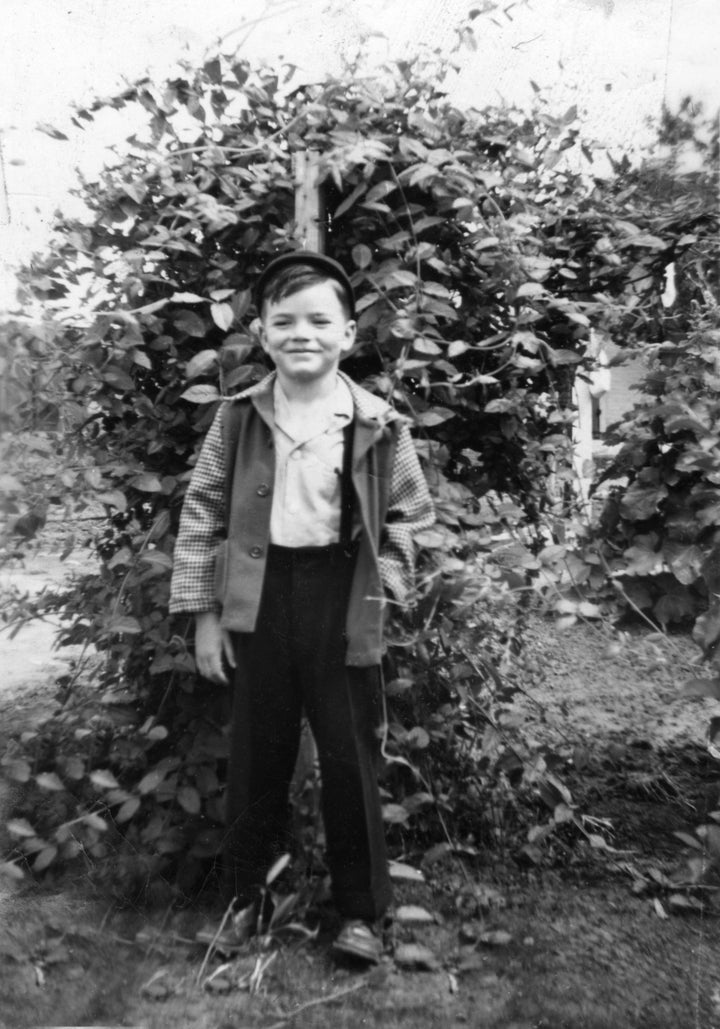
Share Button