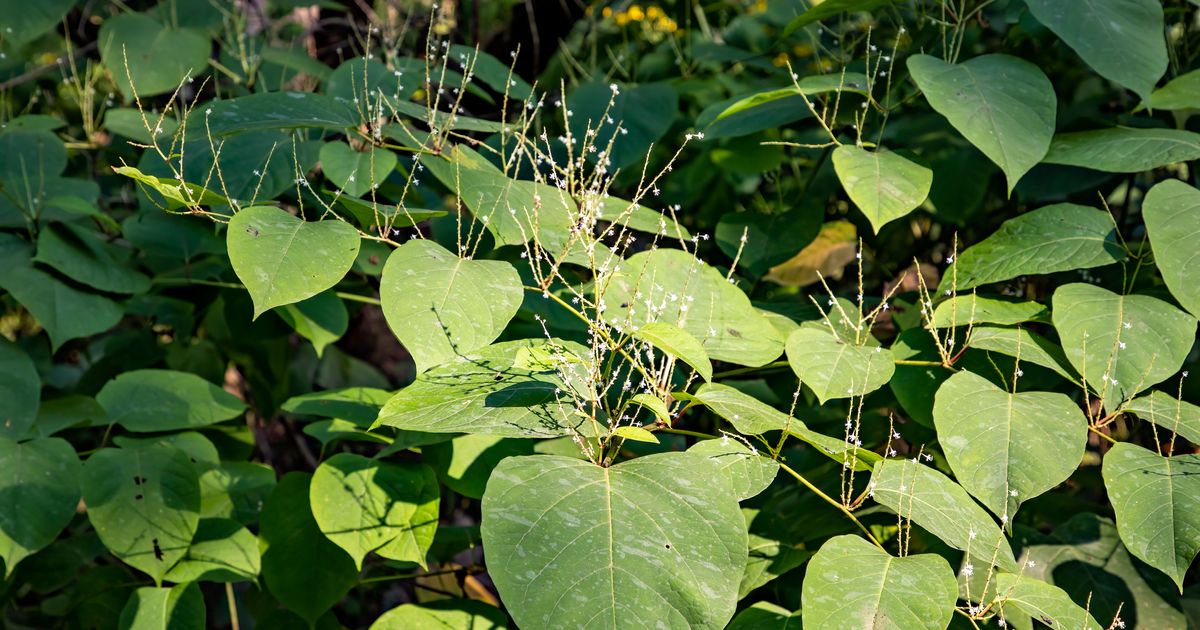
Revealed: UK’s Biggest Japanese Knotweed Hotspots

We’ve written before about how much Japanese knotweed can affect the value of your property.

The invasive plant is notoriously hard to kill and can damage the foundations of your home.

In fact, Japanese knotweed can be so devastating that you can be fined thousands for knowingly spreading the plant throughout your neighbourhood or into the wild (you can even be jailed for up to two years).

So, it’s a good idea to work out how at-risk your postcode is. Luckily, Environet has taken the data from its Japanese knotweed heat map (which documents over 58,000 known infestations throughout the UK) to find the biggest hotspots for the weed in 2023.

Here are the top ten affected locations, and some advice on what to do if you do spot the plant:

The top ten Japanese knotweed hotspots in the UK are, in order:

  1. Swansea, with 1,350 known cases in 2023
  2. Bolton, Machester, with 1,010 cases
  3. Bristol, with 986 cases
  4. Cardiff, with 872 cases
  5. Preston, Lancashire, with 857 cases
  6. Nottingham, with 803 cases
  7. Derby, with 711 cases
  8. Caernarfon, Gwynedd, with 708 cases
  9. Llanelli, Carmarthenshire, with 706 cases
  10. Bridgend, with 664 cases.

You can use Environet’s Japanese knotweed heatmap to find out exactly how common Japanese knotweed is near you.

What do I do if I see Japanese knotweed?

First of all, Nic Seal, CEO of Environet, says that vigilance is key. “Make sure you know what knotweed looks like and how it differs from other common garden weeds like ivy and bindweed, so you can keep an eye out for it in your garden and neighbourhood,” he warns.

You can email a photo of the plant to Environet’s free ID service at expert@environetuk.com if you’re not sure what you’re looking at.

“Knotweed is easily identifiable during summer, but as we head through the autumn and into winter, the above-ground growth dies back and it becomes much harder to spot. It’s also easier to conceal, so anyone viewing a property to buy should be extra careful,” Seal adds.

Simply lifting the plant out of your soil won’t stop growth, as Japanese knotweed “can grow from a tiny fragment of root or rhizome in the soil”.

To treat the issue properly, you need to use chemical weed killers which are best administered by pros.

And because Japanese knotweed is classed as ‘controlled waste’ under the Environmental Protection Act 1990, you can’t just bury or burn it after you’ve tackled the issue.

You’ll have to “use a registered waste carrier and an authorised landfill site or suitable disposal site,” according to Gov.uk.

You must also “notify the Environment Agency at least one month before you bury knotweed” (it’ll have to be at least five metres deep), make sure you only burn knotweed on the site it came from, and check with your local council to make sure it’s permitted in the first place.

Fun, fun, fun…
Share Button

Keanu Reeves’ Girlfriend, Alexandra Grant, Explains Magic Of ‘Falling In Love As An Adult’

Visual artist Alexandra Grant is offering a rare glimpse into her years-long romance with Keanu Reeves.

At the Los Angeles Beverly Arts Icon Awards last week, Alexandra told People magazine that her partnership with the actor is “interdependent and independent in the best ways”.

“The good news about falling in love as an adult is that I had built my own career by the time that my relationship had begun,” she said when asked about her solo appearance at the event.

“I feel very confident in the relationship on the red carpet. I feel confident on it alone.”

She went on to praise the John Wick star, and noted their ability to bring out the best in each other.

“What I love about Keanu and our exchange is that we’re pushing each other to build new roads,” she said, calling him “such an inspiration”.

“He’s so creative, he’s so kind. He works so hard,” Alexandra added.

Alexandra Grant and actor Keanu Reeves pictured in April 2023

Elyse Jankowski via Getty Images

Alexandra also told People that the relationship has had a marked impact on her art.

“I had a studio visit a few years ago, and this very kind, very high-level person said, ‘I can see that your work has gotten happier,’” she said.

“That’s real. We’re all human beings. We’re animals. We’re expressing from where we are and certainly feeling happier. I think the work is happier.”

Alexandra and Keanu first became friends over a decade ago, having collaborated on the book Ode To Happiness in 2011.

The pair made their public debut as an item at the LACMA Art + Film Gala in November 2019.

The artist remembered their appearance getting lots of attention during a 2020 interview with British Vogue, saying: “I think every single person I knew called me in the first week of November, and that’s fascinating.”

Share Button

How to save plants from climate change? Just ask them

Redwoods and oaks that thrive on California’s coastline and coastal mountains might soon start finding it harder to survive. Human-caused climate change is altering the temperatures and rainfall patterns to which those and other trees are accustomed, and many have already been pushed close to the edge of what they can endure.

Identifying suitable new habitats will soon become a matter of life or death for some California native species, according to Lawren Sack, a UCLA professor of ecology and evolutionary biology. But if those trees could talk, where would they tell scientists they wanted to live?

In a new study, a team led by Sack and other UCLA biologists deciphered a secret language in leaves and woody stems that points to the species’ optimal habitats. Scientists could use that information to better identify new locations where they could establish new populations of plants and to develop better protections for their existing habitats.

Surprisingly, scientists and conservationists don’t yet have a reliable way to determine the optimal environment for any given plant species; they tend to base their judgments primarily on the locations where plant species currently grow. But for many plants, their current habitats aren’t ideal.

California, for example, has a wealth of species unique to certain climate niches and found nowhere else in the world. But agriculture, industry and urban growth have pushed many of them to the edges of their habitats, and climate change has only exacerbated the problem. So while it might seem logical to move species to habitats like those where they’re currently located or to only protect their current habitats, either approach could imperil the species’ future survival.

The new research, published in Functional Ecology, describes a statistical model that estimates each species’ preferred temperature and amount of rainfall based on its height; the size, wilting point, anatomy and chemical composition of its leaves; and the density of its wood.

Then, using that data, the scientists created a statistical model that predicts what temperatures and rainfall amounts each species preferred — not merely not what it could tolerate. The model also enables the scientists to estimate how mismatched a plant is from its native climate.

advertisement


“Plant species can directly reveal to us their climate preference and their vulnerability to potential climate change in the ‘language’ of their leaves and wood,” said Sack, the paper’s senior author. “Now that we know this, if you give us a leaf and a piece of wood, we can give a good scientific prediction of where the plant prefers to live.

“We are tuning in to what the plants are telling us about their preferences, in the language of their tissues and physiology, aiming to help them survive escalating climate challenges.”

Sack, working with UCLA postdoctoral scholar Camila Medeiros and an international team analyzed 10 distinct leaf and wood traits from more than 100 species in a range of environments mostly within the University of California Natural Reserve System. The ecosystem types the scientists analyzed — desert, coastal sage scrub, chaparral, montane wet forest, mixed riparian woodland and mixed conifer broadleaf forest — cover about 70% of California’s land area.

“The correspondence of leaf and wood traits with species’ climates is striking,” said Medeiros, the paper’s first author. For example, species native to warmer, drier climates tend to be shorter in stature, with thicker and denser leaves and lower wilting points — traits that enable them to continue photosynthesis when water is scarce and to grow faster when water is more readily available.

“The reflection of species’ preferred climate in their wood and leaves evidently arose from millennia of evolution that matched plant physiology to climate across California,” Medeiros said. “We also found that many plants in the ecosystems we sampled were occupying locations that differed in climate from what we estimated to be their optimal niche. As climate change ensues, we think this will tend to aggravate the sensitivity of many species, including common trees like the California buckeye and shrubs like the purple sage and California lilacs.”

Scientists have long been divided over whether plants’ functional traits could be used to accurately predict their climate preferences. And until now, no test combined all of the available state-of-the art measurement technologies — for example, vapor-pressure osmometry to determine plants’ wilting points — with advanced statistical modeling.

“Some previous studies analyzed individual approaches one by one, but our study was new in simultaneously applying all of them, and this gave us unprecedented predictive power,” Medeiros said.

Medeiros also said the approach could be used to help prioritize which threatened species are most in need of conservation.

The research was funded by the National Science Foundation and the UC Natural Reserve System.

Share Button

A close-up of biological nanomachines: Researchers take a deep look at peroxisomal processes

Every system has its waste disposal system. The cell organelles known as “peroxisomes” dispose toxic substances and fats in the human body, among other things, and, in doing so, they prevent serious illnesses. The “Pex” group of proteins (peroxisomes biogenesis factors) keep these “detox units” functioning properly — and a team of researchers at Münster University headed by Prof. Christos Gatsogiannis have now been the first to show, at the atomic level, how these highly complex processes proceed. The success story — now acclaimed with the study being published in the journal Nature Communications — was made possible as a result of the University’s new high-tech microscope.

“We can imagine peroxisomes being like miniature factories which specialise in different tasks,” Gatsogiannis explains. “First of all, they are known for ‘detoxifying’ the cell. They act as cellular waste disposal units in our cells.” This waste can be excess fatty acids, for example, or toxic substances from the environment: at least 50 different processes of this kind are attended to by cell organelles only 0.5 micrometres in size (1 micrometre = 1 millionth of a millimetre).

Something that is particularly important for the system is the role played by peroxisomes in fat metabolism. This is because they not only dismantle the fats, they also convert them into usable energy which itself is indispensable for a variety of processes in the body. Without peroxisomes, dangerous quantities of certain fats can accumulate, which would give rise to serious health problems. This is why age-related illnesses are often associated with peroxisomal malfunctions, e.g., loss of hearing or sight, Alzheimer’s, diabetes or cancer.

Each of these processes requires a series of specific enzymes. The peroxisomes, however, are surrounded by a biological membrane which the proteins cannot readily permeate, which means that they have to be imported. This importing mechanism needs energy and a further group of proteins — the Pex group. “Just like a truck, which transports products from one place to another, the transportation of enzymes requires a transportation protein, energy and well-thought out logistics in order to work efficiently,” is the comparison drawn by PhD student Maximilian Rüttermann, a member of the team. “And, again just like a truck, the protein is used again or recycled until ultimately it falls apart or disintegrates.”

This recycling mechanism is the only energy-intensive step in the entire importing process. The main role is played by the perixisomal AAA-ATPase complex Pex1/Pex6: this “biological nanomachine” unpacks and unfolds the spent proteins so that they can be recycled or disposed of. AAA-ATPases are basically a kind of cellular cleaning crew which keeps the inner surroundings of the cell clean, functional and ready for the demands of life. It is less surprising, therefore, that most of the malfunctions in peroxisomal biogenesis are associated with mutations in Pex1 or Pex6, with up to 60 percent of all cases being attributable to a rare genetic disorder in which the patient’s cells are not able to form peroxisomes. This is something which the general public is not aware of, as patients affected die as a rule just a few days or weeks after their birth — and there is no known cure as yet.

The team of researchers headed by Gatsogiannis has now shown, for the first time and in atomic detail, how the peroxisomal AAA-ATPase processes other enzymes in order to keep the detox units functioning properly. To this end the researchers used the cryogenic electron microscopy method. “Investigating a highly dynamic complex such as AAA-ATPase Pex1 Pex 6 is like watching a car engine running,” says Rüttermann. “You generate millions of images from all angles while it’s running and then, on this basis, produce a three-dimensional model in all its various states.” In spring this year, the team put into operation a state-of-the-art cryogenic electron microscope. The new acquisition, costing 7.5 million euros, makes it possible to investigate proteins and biological nanomachines at the atomic level and thus decrypt the secrets of how cells function.

The high-resolution structures show how the Pex1 and Pex6 proteins work together synchronically. They pull out of the membrane a substrate similar to the import receptors used in order to enable them to be recycled — a unique mechanism, comparable to a row of arms which, step by step, pull a thick rope in pairs and, in the process, untie its knots. “The atomic structures and an understanding of the mechanism of this complex nanomachine now enable us to understand important steps in peroxisome physiology in health and disease,” says Gatsogiannis in conclusion. “It is now possible to relate all known mutations to their function, in order to understand their chemical consequences and, as a result, understand the causes of metabolic disorders.”

Share Button

Investigating the role of greener plastics for Japan’s carbon neutral goals

Japan has a plastic problem. Thanks in part to an overabundance of packaging, the country is the second largest producer of plastic waste per capita.

While plastic pollution is a well-known cause for concern, an often-overlooked issue is how plastics contribute to global warming. Plastics are a surprisingly large cause of carbon emissions, with roughly 4.5% of global emissions caused by the plastics sector.

Now, joint research between Kyushu University and Yokohama-based start-up company, Sotas Co., Ltd, has investigated the potential for Japan’s market to incorporate a greener plastic supply chain.

“The Japanese government has pledged to achieve carbon neutrality by 2050. However, the predominant method that Japan uses to get rid of plastic waste is ‘thermal recycling’ or incineration, which releases carbon dioxide into the atmosphere,” says senior author Professor Andrew Chapman, from Kyushu University’s International Institute for Carbon Neutral Energy and Research. “We have examined whether switching to more sustainable recycled plastics and bioplastics is a competitive and effective alternative to current carbon reduction policies.”

The researchers began with an economic and environmental assessment of six commonly used plastic types, based on whether they were made using virgin, recycled or bioplastic. They scored the plastics using four different criteria: global warming potential, cost, recyclability and perceived quality for manufacturers. Depending on the weighting given to each factor, the researchers calculated how desirable each plastic was under a number of scenarios.

In general, the researchers found that virgin plastics, which are made directly from fossil fuels, are perceived to be the highest quality, but have a high global warming potential and are relatively expensive.

Recycled plastics, on the other hand, are cheaper and also have a lower global warming potential. However, plastics with a higher blend of recycled material were perceived to be of lower quality and recyclability also varied greatly for each plastic type.

advertisement


“One issue is that it can be physically harder to separate out some types of plastics before recycling and additionally, some plastics can only be recycled a certain number of times,” says first author Yuuki Yoshimoto, President of Sotas Co., Ltd. “It’s therefore important to establish a robust, centralized chain of custody to keep track of how many times a piece of plastic has been recycled to provide quality assurance to end users.”

The analysis also revealed that bioplastics, which are made from plants, have the lowest global warming potential. Some bioplastics can even be carbon-negative, as the plants take in carbon dioxide from the atmosphere as they grow, which is then sequestered in the material.

However, bioplastics are much more costly to make than virgin or recycled plastics, and, as drop-in replacements are not always available, currently perform less well regarding perceived quality. Additionally, starch-based bioplastics require arable land to grow the crops.

“Food versus plastic production is not a fight we want, as land resources are very limited in Japan,” says Prof Chapman. Instead, the researchers suggested further funding for research into cellulose-based bioplastics, which can be sourced from wood pulp.

One additional factor that could help bridge the gap in the cost between bioplastics and virgin plastics is the consumers’ willingness to pay. Prior research suggests that consumers are willing to pay more for environmentally-friendly products, which the researchers plan to investigate in detail and incorporate into their analysis.

“This is a complex situation, with no one-size-fits-all solution,” concludes Yoshimoto. “Ultimately we hope this analysis can help policymakers decide what recycling processes to support, and to inform manufacturers which plastics can best meet their manufacturing and carbon reduction goals.”

This research also considers the economic efficiency of carbon reduction via plastic recycling and bioplastic replacement, broadening the potential policy approaches which can be pursued by policymakers.

Share Button

Unleashing the power of AI to track animal behavior

Movement offers a window into how the brain operates and controls the body. From clipboard-and-pen observation to modern artificial intelligence-based techniques, tracking human and animal movement has come a long way. Current cutting-edge methods utilize artificial intelligence to automatically track parts of the body as they move. However, training these models is still time-intensive and limited by the need for researchers to manually mark each body part hundreds to thousands of times.

Now, Associate Professor Eiman Azim and team have created GlowTrack, a non-invasive movement tracking method that uses fluorescent dye markers to train artificial intelligence. GlowTrack is robust, time-efficient, and high definition — capable of tracking a single digit on a mouse’s paw or hundreds of landmarks on a human hand.

The technique, published in Nature Communications on September 26, 2023, has applications spanning from biology to robotics to medicine and beyond.

“Over the last several years, there has been a revolution in tracking behavior as powerful artificial intelligence tools have been brought into the laboratory,” says Azim, senior author and holder of the William Scandling Developmental Chair. “Our approach makes these tools more versatile, improving the ways we capture diverse movements in the laboratory. Better quantification of movement gives us better insight into how the brain controls behavior and could aid in the study of movement disorders like amyotrophic lateral sclerosis (ALS) and Parkinson’s disease.”

Current methods to capture animal movement often require researchers to manually and repeatedly mark body parts on a computer screen — a time-consuming process subject to human error and time constraints. Human annotation means that these methods can usually only be used in a narrow testing environment, since artificial intelligence models specialize to the limited amount of training data they receive. For example, if the light, orientation of the animal’s body, camera angle, or any number of other factors were to change, the model would no longer recognize the tracked body part.

To address these limitations, the researchers used fluorescent dye to label parts of the animal or human body. With these “invisible” fluorescent dye markers, an enormous amount of visually diverse data can be created quickly and fed into the artificial intelligence models without the need for human annotation. Once fed this robust data, these models can be used to track movements across a much more diverse set of environments and at a resolution that would be far more difficult to achieve with manual human labeling.

This opens the door for easier comparison of movement data between studies, as different laboratories can use the same models to track body movement across a variety of situations. According to Azim, comparison and reproducibility of experiments are essentialin the process of scientific discovery.

advertisement


“Fluorescent dye markers were the perfect solution,” says first author Daniel Butler, a Salk bioinformatics analyst. Like the invisible ink on a dollar bill that lights up only when you want it to, our fluorescent dye markers can be turned on and off in the blink of an eye, allowing us to generate a massive amount of training data.”

In the future, the team is excited to support diverse applications of GlowTrack and pair its capabilities with other tracking tools that reconstruct movements in three dimensions, and with analysis approaches that can probe these vast movement datasets for patterns.

“Our approach can benefit a host of fields that need more sensitive, reliable, and comprehensive tools to capture and quantify movement,” says Azim. “I am eager to see how other scientists and non-scientists adopt these methods, and what unique, unforeseen applications might arise.”

Other authors include Alexander Keim and Shantanu Ray of Salk.

The work was supported by the UC San Diego CMG Training Program, a Jesse and Caryl Philips Foundation Award, the National Institutes of Health (R00NS088193, DP2NS105555, R01NS111479, RF1NS128898, and U19NS112959), the Searle Scholars Program, the Pew Charitable Trusts, and the McKnight Foundation.

Share Button

New insect genus discovered in one of the most biodiverse rain forest regions in the world

The Allpahuayo-Mishana National Reserve in Peru has often been described as the most biodiverse rainforest in the world. For example, in recent decades, scientist have discovered several new bird species from the region. Researchers from the University of Turku in Finland have studied the insect biodiversity in Allpahuayo-Mishana for over 20 years. In their latest study, the scientist described a new wasp genus, Capitojoppa, to science.

In their newly published study, the researchers describe a new wasp genus Capitojoppa to science, categorising it to the subfamily Ichneumoninae.

“Wasps belonging to this subfamily are usually large and colourful, especially in the tropics, and as larvae feed internally on moth and butterfly caterpillars and pupae. We have studied the biodiversity of ichneumonines in the Allpahuyao-Mishana National Reserve with the samples collected by the researchers of the University of Turku in Finland. In our studies, we have discovered several species unknown to science which we will describe in the future. The current study kicks off this research,” says Doctoral Candidate Brandon Claridge from the Utah State University in the United States.

The Allpahuyao-Mishana National Reserve first gained prominence in the scientific community in the late 1980s when an American botanist Alwyn Gentry documented the highest number of tree species at a single locality known to date.

“Gentry wanted to discover how many tree species can grow in 2.5 acres (one hectare) of the Amazon rainforest. In his study, he discovered nearly 300 tree species in that one 2.5-acres research patch. We have studied the insect biodiversity in the same research areas since 1998 and report some of the highest numbers of insect species in the world from this region. We also found Capitojoppa near the same research hectare used by Gentry,” says Professor of Biodiversity Research Ilari E. Sääksjärvi from the University of Turku, who collected the specimens during his field studies.

Species unknown to science are described in research journals. Their names often describe the species’ characteristics or range.

“The name Capitojoppa tells scientists a great deal about the characteristics of the newly discovered wasp genus. The wasps of the genus have a large head, which is reflected in the capito part of the name. It also refers to the barbet bird genus Capito found in South America, which have a large and strong beak. The joppa part of the name refers to the wasp genus Joppa that the Capitojoppa resembles. The specific species name amazonica refers to the Amazon,” Claridge explains.

Finnish researchers helped in the conservation efforts of the Allpahuayo-Mishana Reserve in the 1990s.

“Allpahuayo-Mishana is a part of the Amazon that has an unprecedented abundance of species. Due to the region’s complex geological history, there are several different types of rainforest growing in the Reserve. The species biodiversity of many organisms is highest on the whole planet at Allpahuayo-Mishana. We actively continue our studies in the region. Unfortunately, the area is currently changing rapidly due to human activities. With our insect studies, we are trying to find out how the impact of human activities, such as climate change, alter the nature in the rainforest,” says Professor Sääksjärvi.

Share Button

Decreasing biodiversity may promote spread of viruses

How are environmental changes, loss of biodiversity, and the spread of pathogens connected? The answer is a puzzle. Researchers from Charité — Universitätsmedizin Berlin have now described one piece of that puzzle in the journal eLife, showing that the destruction of tropical rainforests harms the diversity of mosquito species. At the same time, more resilient species of mosquitoes become more prevalent — which also means the viruses they carry are more abundant. If there are many individuals of a given species, those viruses can spread quickly.

For their study, researchers from Charitéteamed up with the Leibniz Institute for Zoo and Wildlife Research (IZW) to investigate how clearing rainforests to make way for coffee or cacao plantations or human settlements affects the prevalence and biodiversity of mosquitoes and the viruses they carry. The study, which brings together the fields of virology and biodiversity research, was led by Prof. Sandra Junglen, head of the Ecology and Evolution of Arboviruses research group at the Institute of Virology at Charité.

For their research work, the team first caught mosquitoes around Taï National Park in the West African country of Côte d’Ivoire. There is a broad range of land uses there, from pristine rainforest to secondary forest, cacao and coffee plantations, and villages. “We identified the species of mosquitoes we had caught and tested them for viral infections,” explains Kyra Hermanns of the Institute of Virology at Charité, the first author of the study. “Then we looked at how the composition of mosquito species differs across the different land use types, where certain viruses are present, and how prevalent they are.”

Resilient mosquito species prevail over others

There are many different viruses in a healthy ecosystem such as a pristine rainforest. The main reason is that there is a broad range of animal species living there that can carry the virus, acting as hosts. This is because viruses are always tied to their hosts.

If there is a change in the ecosystem, it affects the viruses as well, Junglen explains: “We discovered 49 virus species, with the greatest diversity of hosts and viruses observed in untouched or minimally disturbed habitats.” Most of the 49 different virus species were relatively rare in the areas studied. However, nine of them were commonly found in multiple habitats, with the prevalence of five virus species increasing in habitats that had been disturbed and reaching the highest figures in human settlements.

“This means that the clearing of tropical rainforests causes a decrease in biodiversity across mosquito species, which changes the composition of host types. Some resilient mosquito species have multiplied very successfully in the cleared areas, bringing their viruses with them,” Junglen explains. The composition of a given community of species thus has a direct effect on the prevalence of viruses: “If one host species is very abundant, it is easier for viruses to spread,” the virologist notes. “All of the viruses we found to be more common were demonstrated to be present in a certain mosquito species. The viruses belong to different families and have different properties. That means we were able to show for the first time that the spread of the viruses is attributable not to a close genetic relationship, but to the characteristics of their hosts — especially those mosquito species that adapt well to changing environmental conditions in habitats that have been disturbed.”

New insight into the dynamics of infectious disease

The viruses the researchers found only infect mosquitoes and, as things currently stand, cannot be transmitted to humans. Still, they are a valuable model for understanding how changes in the diversity of a community of species affect the presence and prevalence of viruses. “Our study makes clear just how important biodiversity is, and that decreasing biodiversity makes it easier for certain viruses to thrive because it causes their hosts to become more abundant,” Junglen notes.

“Previously, these kinds of processes were studied almost exclusively using individual pathogens and individual hosts. Now we have a more complete picture that we can use for further research,” she explains. As their next step, the researchers plan to study additional habitats in other countries, with one goal being to pinpoint the exact factors that affect the diversity of mosquito species under land-use change, and the characteristics that viruses need to have in order to spread with their hosts.

Share Button

Exploring the effect of water on seismic wave attenuation in the upper mantle

The oceanic lithosphere, which constitutes the top layer including Earth’s crust and mantle below the oceans, has long intrigued scientists due to its peculiar behavior. This layer appears to glide over a weaker region below called the asthenosphere, characterized by high seismic attenuation and low shear wave velocity. The asthenosphere has different physical properties such as lower viscosity than the lithosphere, resulting in a sharp boundary called the lithosphere-asthenosphere boundary (LAB). The exact reasons behind these distinct properties and how they enable the lithosphere to move over the asthenosphere are not clearly understood.

While partial melting occurring near mid-ocean ridges due to high temperatures can produce such anomalous conditions, it fails to account for the sharp and large drops in the velocity of seismic waves observed at the LAB far from mid-ocean ridges. Understanding the origin of this seismic wave velocity drop and attenuation at the oceanic LAB is crucial for deciphering the asthenosphere’s low viscosity and how it facilitates the movement of tectonic plates over the Earth’s surface, giving rise to mountain-building processes, earthquakes, and volcanism.

In this regard, a team of researchers from Japan, led by Professor Takashi Yoshino from the Institute for Planetary Materials at Okayama University, has recently investigated the effect of water on the seismic properties of titanium-free olivine rocks, similar to those found in the asthenosphere. Their study was published in Volume 120, Issue 32 of the journal Proceedings of the National Academy of Sciences on 31 July 2023.

“We experimentally determined the seismic wave attenuation characteristics, parameters for ascertaining the softness of the lithosphere and asthenosphere, under high temperature and pressure using our short-period oscillation generation technology,” explains Prof. Yoshino.

The team studied the anelastic properties of the olivine rocks under conditions which resemble the LAB beneath the old oceanic floor — 3 GPa pressure and temperatures ranging from 1,223 to 1,373 K. They employed in situ X-ray monitoring and subjected the olivine rocks to mechanical testing by generating forced vibrations over a wide range of seismic frequencies — 0.5 to 1,000 seconds — through their unique short-period oscillation technology.

The experiments revealed that water had a significant effect, enhancing the energy dispersion and reducing the elastic moduli of the rocks across a wide range of frequencies. Additionally, the researchers observed a seismic attenuation peak at higher frequencies of 1 to 5 seconds, which became more pronounced with increasing water content. “The presence of water induces attenuation at higher frequencies, leading to a decrease in the velocity of seismic waves. The presence of water also weakens the asthenosphere, which allows the lithosphere to move smoothly over it,” says Prof. Yoshino.

These observations suggest that the oceanic asthenosphere must contain water. This difference in water content between the two layers constituting the LAB can explain the sharp velocity drops as well as the near constant attenuation observed over a wide frequency range in the asthenosphere.

Notably, the researchers acknowledge that their conclusion assumes a negligible effect of iron on hydrogen-related defects in the rocks, indicating the need for further research to explore the anelastic properties of iron-bearing olivine rocks.

Prof. Yoshino highlights the long-term implications of their findings. “The presence of water in the asthenosphere can provide important insights into volcanic and seismic activities, thus facilitating their prediction and detection,” he speculates.

Overall, this study contributes to our understanding of tectonic plate movement, paving the way for better comprehension of various tectonic activities.

Share Button

One-hour training is all you need to control a third robotic arm, study finds

One-hour training is enough for people to carry a task alone with their supernumerary robotic arms as effectively as with a partner, study finds.

A new study by researchers at Queen Mary University of London, Imperial College London and The University of Melbourne has found that people can learn to use supernumerary robotic arms as effectively as working with a partner in just one hour of training.

The study, published in the journal IEEE Open Journal of Engineering in Medicine and Biology, investigated the potential of supernumerary robotic arms to help people perform tasks that require more than two hands. The idea of human augmentation with additional artificial limbs has long been in science fiction, like in Doctor Octopus in The Amazing Spider-Man (1963).

“Many tasks in daily life, such as opening a door while carrying a big package, require more than two hands,” said Dr Ekaterina Ivanova, lead author of the study from Queen Mary University of London. “Supernumerary robotic arms have been proposed as a way to allow people to do these tasks more easily, but until now, it was not clear how easy they would be to use.”

The study involved 24 participants who were asked to perform a variety of tasks with a supernumerary robotic arm. The participants were either given one hour of training in how to use the arm, or they were asked to work with a partner.

The results showed that the participants who had received training on the supernumerary arm performed the tasks just as well as the participants who were working with a partner. This suggests that supernumerary robotic arms can be a viable alternative to working with a partner, and that they can be learned to use effectively in a relatively short amount of time.

“Our findings are promising for the development of supernumerary robotic arms,” said Dr Ivanova. “They suggest that these arms could be used to help people with a variety of tasks, such as surgery, industrial work, or rehabilitation.”

The study was funded by the EU H2020 NIMA (FETOPEN 899626), TRIMANUAL (MSCA 843408) and CONBOTS (ICT 871803) grants.

Share Button